https://www.instagram.com/reel/DSCZk2pAkH-/?igsh=MXQ5YzBlMWs2dzlhZw==

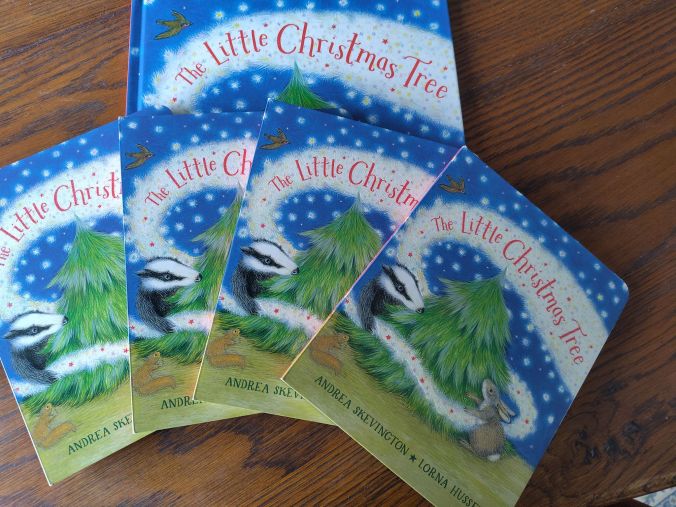
Thank you, good people, for the interest you’re taking in my Christmas picture book. I’ve been keeping an eye on availability, where I can, and it does seem to be selling well. It goes out of stock every now and again on Amazon, and they rustle up a few more copies.
Local bookshops have it in stock or to order. For local friends, Woodbridge Books have copies, and St Mary’s House too the last time I asked.
So, I’m rather bashfully encouraging you to order a copy if you were thinking of doing so, as they may well be in short supply for last minute shopping.
It’s available in two formats – a hardback and a slightly abridged board book for the very young. Both are illustrated by Lorna Hussey, and her artwork is enchanting and much loved by small people.
You can find out more about the book by searching on this blog, but this link will give you a good way in.
You can order it from your usual online places, such as….
Direct from the publisher here
Online Bookshop.org supporting local bricks and mortar ones here in the UK here
I’m delighted that it’s widely available in the USA too.
May you have a peaceful and blessed Advent.
The new editions of my first story are making their way into bookshops ready for Christmas, and I know that some of you are coming across them. That’s so good, and a little bit exciting!
It’s given me the opportunity to take another read of the story, and think about it in the context of the world we’re living in now, and I’ve noticed something else.
Previously, I’ve thought about it telling a story into our shifting and stormy climate – and you can read more about that here. Today is the first day COP 30, so it seems particularly appropriate to be thinking of the importance of woods to regenerate our land, how important it is to treasure the natural world and give it space and time to return to strength and function. (If you’re not familiar with Prince William’s Earthshot Prize, I would commend that to you as a hopeful, active antidote to political wranglings – necessary as these may be.)
I’ve also thought about it as a version of Mary’s radical, prophetic message in the passage we refer to as the Magnificat, and you can read more on that here. And once again, the contrast she draws between the mighty and powerful, and the hungry, speaks directly into our unequal world.
What’s been on my mind this year is the matter of welcome – how we welcome, or not, those who have to flee their homes.
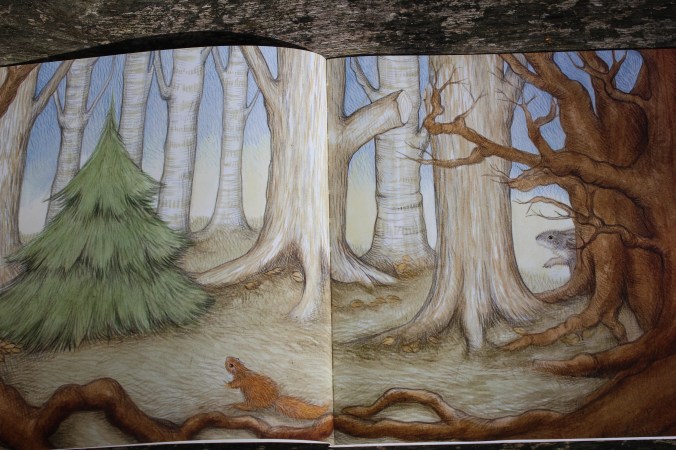
I love Lorna Hussey’s warm and intricate illustrations. Thank you Lorna!
In the story, a storm rips into the wood, and the animals are looking for a place to shelter. They find one in the branches of a little fir tree, who welcomes them in. When I first told the story to my own children years ago, I never thought such an action might be controversial, or political. It was simply a practice of kindness, empathy, hospitality. These have always been regarded as Christian virtues, and those who read the scriptures will be well aware that welcoming strangers, and treating the poor and the vulnerable with compassion, is commended again and again. These qualities are upheld by ethical systems in all cultures across the world. And yet, here we are.
Of course, the global situation is complex, and it’s vital we have good, fair systems which work for all people. Of course, those who profit from exploiting those who are seeking sanctuary should be prevented and brought to justice. Those things are part of the empathy, and the welcome. It is the shift of heart which troubles me, towards hostility and violence towards those who have in all probability already experienced a great deal of it.
Can we reconnect with our deep, inbuilt response to the troubles of others – to seek to help how and where we can? Just up the coast here in Suffolk houses are being bulldozed as the sea bites ever bigger chunks out of the coast. Of course, there’s no comparison with those in the Caribbean and Asia who are suffering the most appaling tragedies from our changing climate, but it’s enough to awaken some fellow feeling, and to imagine how little it would take to find ourselves displaced and relying on kindness – both the kindness of individuals and the kindness of efficient, just and compassionate systems.
In the story, it is the Little Christmas Tree who welcomes the animals, and we share the warmth and compassion and richness that comes from that simple act. There is real joy in it. The book ends with a kind of party.
We can think too of the first Christmas, where a displaced mother was offered somewhere to have her child, and soon after the family became refugees in Egypt running from a tyrannical and jealous Herod. I’ve written about in the link above.
There is much need of kindness, and it is as precious and profound as ever. Perhaps we can remember times when we have both given and received when in need, how good that was – difficult, sometimes, but good.
As we approach Advent, let’s see if we can cultivate kindness, and welcome, and look for local ways to help people who may need it most.
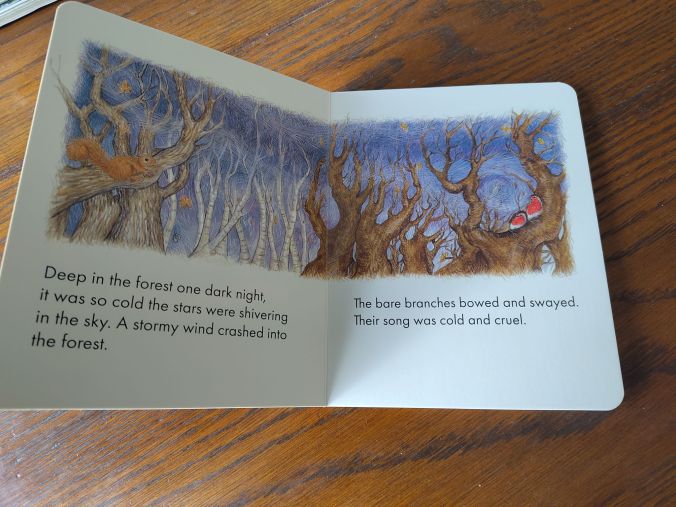
The book is available in two editions, a hardback and a board book. You can order them from your local bookshop, or the usual online places.
Here are a few links:
Direct from the publisher here
Online Bookshop.org supporting local bricks and mortar ones here in the UK here
I’m delighted that it’s widely available in the USA too.
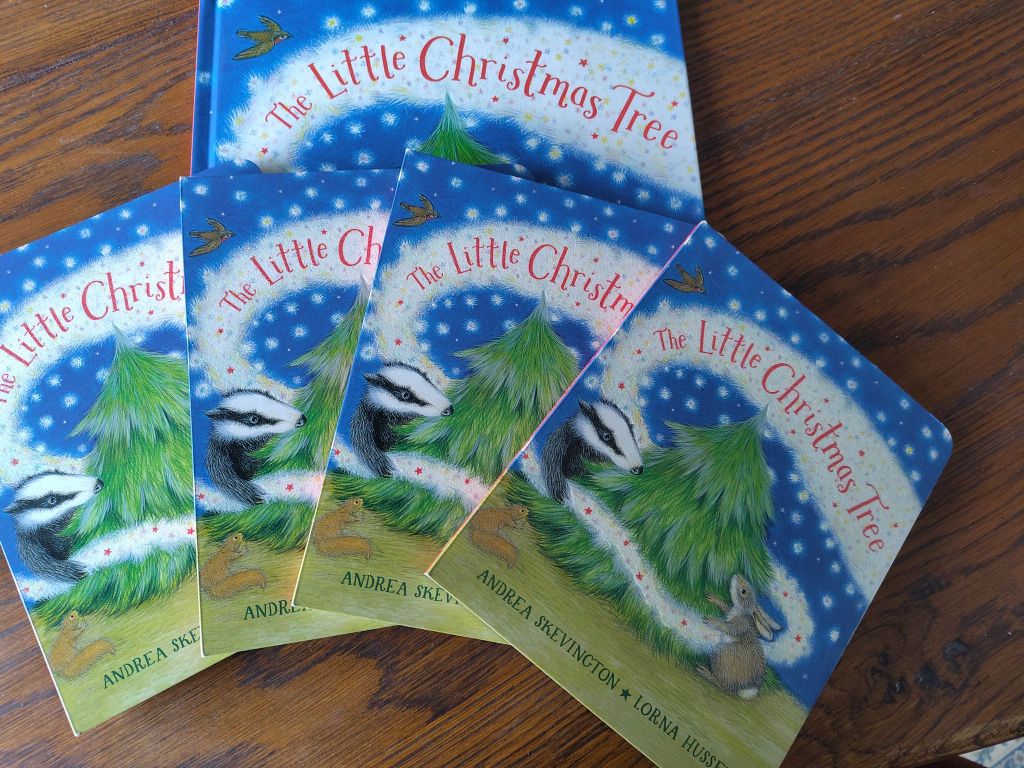
I’m so pleased that my first story has come out as a board book today. It looks so appealing for young readers and listeners with Lorna Hussey’s gentle artwork of the woodland animals.
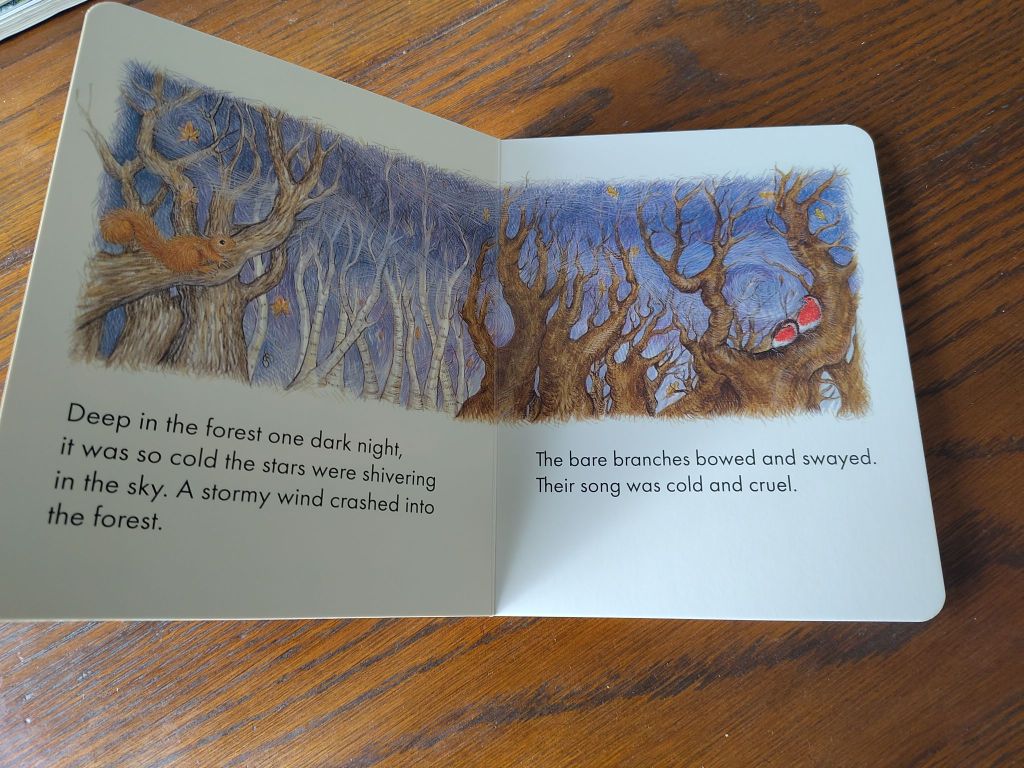
The story is abridged a little for the format, just perfect for little ones, and I hope it will find it’s way into many hands.
Local bookshops will be able to order it for you, usually for next day delivery, if not in stock. Also available at all the usual places you get books. You could try Eden Books


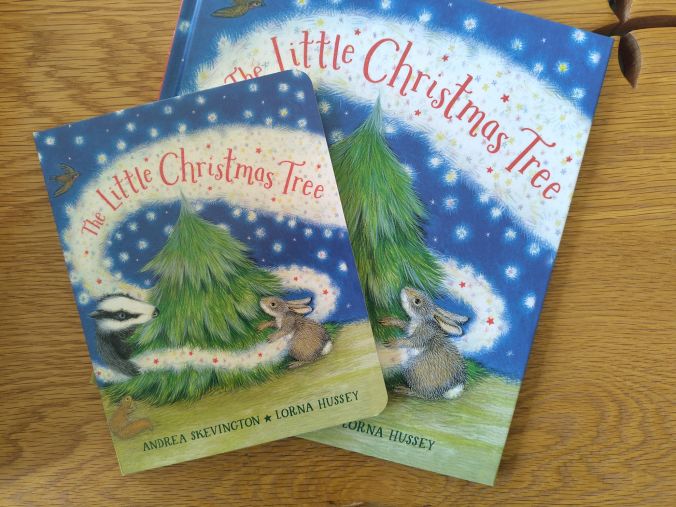
My new books are here! I’ve just been unpacking them, and I thought I’d share them with you right away.
Thank you to SPCK for these copies, they’re looking delightful. There’s something new, too. The smaller one is a board book. It’s slightly abridged, but still has all of Lorna’s enchanting illustrations. I particularly like the way the sparkles have a texture to them. I can imagine little fingers following the trails of stars across the pictures.
I say my new books, these are new editions of the first book I ever had accepted for publication, and it’s still very close to my heart. I’m so glad it’s been given a shiny new edition.
The story of offering shelter and welcome, which is such a moving part of our Christmas traditions and Nativity plays, seems particularly apt at the moment. It’s worth reminding ourselves of the value of kindness and humility.
I’ve written about the book elsewhere on this blog. If you’d like to find out a little more, here’s some suggestions….
The Little Christmas Tree – a few pictures!
The Little Christmas Tree – some ideas for 2020
The Little Christmas Tree and Mary’s Song
The Little Christmas Tree – a beautiful BSL video telling of the story.
The hardback is available now, and the board book will be out in a few weeks. I’ll post some links below, but if you are lucky enough to have a local bookshop, they should be able to get them for you for the next day if not in stock.
For now, I’m just going to go and enjoy my lovely books!
Here are some links as promised:
you can order from the publisher SPCK
and from Bookshop – this link is for the hardback, and this for the board book to preorder on the site.
Also, wherever you usually order books.
Thank you for your support and encouragement over the years, I really appreciate it.


I’m sharing this post again, September 2025 as part of the Season of Creation some Christian traditions are marking at this time. Meanwhile, I’m continuing to work on a collection of poems for Wild Goose, The Year’s Circle – and this poem is part of that work. I’ll be sharing more on that as we go along.
I hope you find this post a helpful starting point for contemplation.
Additional note, 24th September 2023. I am delighted that this post has appeared at The Cottage, Diana Butler Bass’ rich and thought-provoking Substack, this morning. I’ve admired her work for many years, and it’s such an honour, and very exciting for me, to find myself in her company today, under Inspiration. It’s a profound exploration of envy and gratitude, and a reflection on the deep drivers of our climate and ecological crisis. It’s well worth reading and allowing it to do its inner work on us. You can do so here.
Original post, published 12th July 2021, emerging from lockdowns:
As we are beginning to venture out a little more, we thought we would pay a visit to Ely, and the vast indoor space of its ancient cathedral. They often have contemporary art there, which helps the old stones continue to sing, giving a new perspective on ancient truths. We knew that Gaia, an installation by Luke Jerram, was going to be there in July, and so we went and saw this beautiful, astonishing sight. The comparative emptiness of the cathedral space made it all the more powerful as it floated above us.
And as the space is vast, and it takes time to walk up to, around and beyond the piece, you do have time and space in which to allow the work to speak to you, to stir up responses, and to pray. I am sure that one of the intentions is to give us all an opportunity to experience something like “earthrise”, when the astronauts first saw the whole of the Earth from space, and how that shifted their perspective, and began to change the way all of us are able to see our home. The staggering, indescribable beauty of the whole called out my sense of awe, which sat uncomfortably alongside my awareness of the damage we are doing to our precious, unique home.
In the setting of the cathedral, as Gaia hangs in the nave under the painted ceiling which tells the long stretch of the Bible’s story, I found the language of repentance surprisingly, and helpfully, came to mind. Repentance both in our more familiar understanding of sorrow for wrongdoing, and desire to amend, and in the possibly more ancient meanings carried in the old texts, of returning home, and of undergoing a profound change of mind – a paradigm shift in the way you see.
Much of my writing celebrates the beauty of the natural world, how lovely, precious, and vulnerable it is. But sometimes, that love spills over into grief. So the old stones, and the old story, seemed illuminated by our current crisis, and, in turn, those ancient words seemed to express something necessary, and powerful, and, in the end, with the potential for hope.

Gaia at Ely Cathedral
She seems to float, lit up with her own light,
slowly turning, blue and blooming with clouds
as we walk up, look up, small before her.
While above our steps,
the familiar painted roof
rolls on, telling its painted story,
from the tree, and the garden,
on towards this
fathomless shining beauty,
the ‘all’ that was so very good
in that beginning.
Now as she turns
we see how she hangs
below the story’s last scenes –
the gift of a beloved child
held on his mother’s lap,
held forward towards us,
loved and given and giving,
and the wounded golden king,
who gives still.
And below, below hangs the whole shining Earth,
dazzling, vast with sea,
turning and flowering with clouds
from the southern ice-shine,
melting although we do not see her weep,
And the land, those small green swathes
and swags, are dressed in white too,
a veil of vapour,
while the deserts spread brown
and red above our eyes.
The lands are small, countries
seem tales we tell.
What is certain is this one great
flow – ocean and ice and cloud –
and the unseen winds that bear them
through our blue, breathing air.
And the people stand beneath her,
lit by ice, and hold up their hands
as if to carry her, or hold her,
or save her from falling.
How beautiful it is.
How strange and wondrous
that we should be creatures
who live within so much living perfection.
And as she turns slowly
under the child and the king,
I wonder, what do those
familiar words mean now,
‘the sins of the world’,
as the stain of our reckless harm
seeps through the blue and green,
through all this living glory,
And is there any hope in our
waking up to beauty with grief
and loss, even as dust and ashes
float across the sky,
across us all, late as we are
in our repenting?
And is there hope,
hope that we might be granted
this grace – time
for amendment of life,
to tend the garden
with its leaves and fruit,
shining and greening,
to take part in the work
of loving and healing,
of restoration,
of making all things new.


I’m working away at my collection of poems, The Year’s Circle, weaving together the seasons of the year and the seasons of the readings many churches follow. And we’re coming up to the story we call the Transfiguration – when three of his friends see Jesus in an otherworldly, shining – vision? or what was it? – with Moses and Elijah from the Hebrew Scriptures. It’s a pivot point in the gospel accounts, important and central, and also strange.
Some have interpreted this event as a revelation of Jesus’ true identity, and perhaps a foreshadowing of the resurrection appearances, and perhaps a glimpse of the Universal Christ – a theme explored by Richard Rohr in his book of that name.
As usual, there is no explanation, no interpretation in the gospel accounts. And there’s something about the event which encouraged me to explore the way it asks questions of us – what we think is really real, and really lasting. How we see – do we see glory? Do we see cloud? Those explorations reminded me of the medieval work, The Cloud of Unknowing, and how beneficial it is to be open and patient with things that are beyond our understanding. It feels like a story to sit with in contemplation, expanding our way of seeing, inviting us into a deeper and truer experience.
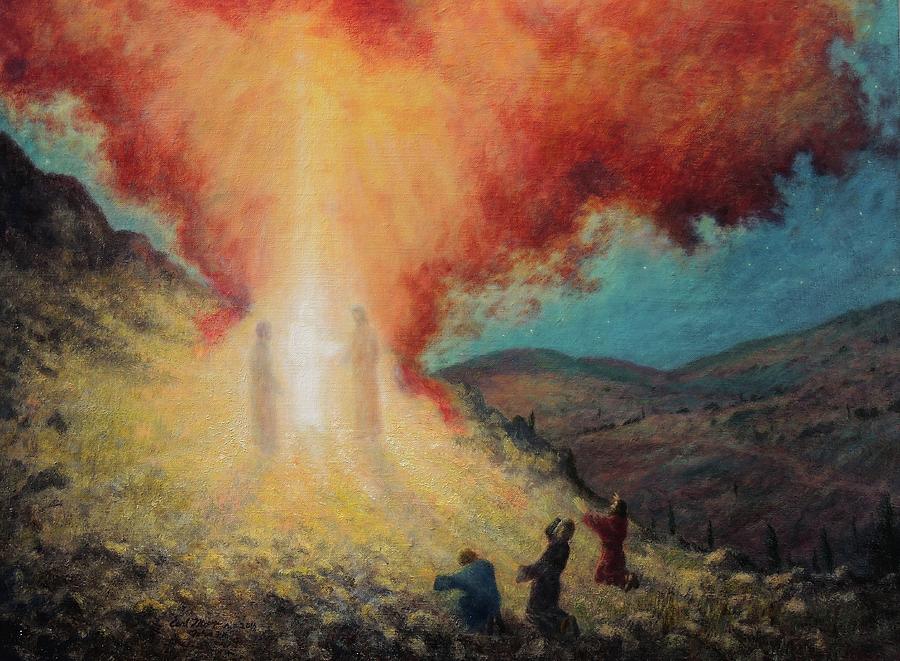
Earl Mott’s painting of the Transfiguration
When I was reading Luke’s account I was struck, as I often am, by his ordering of the events. There seems to be a theme emerging, with questions of who Jesus was, and also, what greatness might mean. And so I wrote a short series picking up those themes and exploring them. There are other events woven through that are not covered by the following sequence of poems – the Feeding of the Five Thousand, for instance – which is developing a sequence all of its own.
If you are looking for something to use in your devotions or public worship for the Feast of the Transfiguration (on 6th August), the parts stand alone, and can be used singly. But I was intrigued by the flow of ideas and wanted some space to ponder them on the page. I began with Herod, troubled and awkward in his guilt, and moved through the stories to the little child, standing in the midst of them.
So, here it is….. four poems following a trail.
Who?
Luke 9, Matthew 16-18
I Herod
Herod found you a
question he did not
know how to answer.
Perplexed, he heard
whispers that you
were John back from
the dead, a ghost to
stalk his conscience,
shock his dreams,
or the great Elijah,
or another prophet.
He sought you out, he tried
to see you. Perhaps to
ask you who you were.
What might have been,
what could have been,
if he had met you then?
II Peter’s confession
You asked those who knew you best,
Who do they say I am?
and
Who do you say I am?
To the first, they gave the
answers that blew in the air
like smoke, whispers that
swirled dark around
Herod’s palace, and
through courts and crowds.
John the Baptist, back from the dead.
Elijah. One of the prophets.
And to the second – a moment’s
pause, an intake of breath,
a strangeness rising – to be
asked to name, to more than name,
one they knew daily, and loved,
and still, barely understood.
How to give answer
to such a question?
But Peter did. The vast
words formed in his mouth.
He called you Messiah,
the Christ, the anointed one.
How good it is to be seen,
to be known, to be understood.
How warmed you were by those words.
Enough to give him a new name –
Rock – and a new identity – foundation stone.
For all his impulsiveness, changeability,
you knew him as deeper, and truer.
And yet a sadness enters here.
The anointed one does not
walk in greatness.
The road you will take is
hard and stony. A way of weeping.
And a warning enters too –
those who consider themselves
God’s guardians will subject
you to death, yet death
will not hold you.
Such words cannot
be borne. Such an
upending, a
contradiction,
such pain.
They fall to the earth
like so many
hard-shelled seeds,
trodden into the dirt
and snatched up by
dark, shining beaks.
Sometimes our seeing falls away
and we catch a glimpse of
deeper truth. We say we see the light
Away from everyday thinking,
on the mountain, in prayer,
weighted with sleep.
Perhaps we see a beloved face
lucent in sudden light.
But here, on this mountaintop,
three friends lifted up their eyes
and saw – what shall we say?
to whom shall we compare him?
Shining like the sun, as white
as light, as bright as lightning –
the one they walked with,
ate with, laughed with.
Was it like the lifting of a veil, or
perhaps a dragonfly splitting his
dark skin to emerge a jewel?
Was it a peering through
the door of heaven, or
coming to see the glory
of things here, and now?
I do not know.
I do know it feels
a moment of endless truth.
And in that moment, Jesus,
Elijah and Moses do
not speak of the glory
that blazes around them,
they talk of the pain that
is to come – as ones
who can understand.
I hope there was some
comfort in it.
Something like comfort
too in the sightless
seeing cloud,
shekinah,
that reveals how we
do not and cannot see –
God is beyond us
And yet is with us,
as close as mist
filling our lungs,
beading on our skin,
as close as one we love.
And then they hear that true voice
speaking tenderly, calling him
beloved, and saying to listen,
to listen to their dazzling friend.
Words they will carry in their hearts,
words which in turn will carry them
on that long wide-eyed walk
down the mountain,
and through all that is to come.
As above, also reference to Isaiah 40
IIII Greatness
It is not what we think.
Greatness is not the pomp,
the power, the show,
the mountaintop.
It is the welcoming of a
little child. It is the being
like a little child.
In doing so, we draw
closer to the one
who calls Jesus
beloved,
the Son I love.
Greatness, a costume
cloak of purple and foil.
Let it slip from your
shoulders. Let it
fall.

As ever, I’m sharing with you work in progress. There may be some tweeks and amendments before things land in the book – Wild Goose, Iona Publishing, next year.
Also, as ever, please feel free to use any of my material that helps, referencing this blog as your source. I love to hear about where my poems fly to, and where they land.
Here is a link to some more I’ve written on the Transfiguration. It includes extracts from my retelling, and some thoughts on how we might come to see more truly. I hope you find it nourishing.

Armando Alemdar Ara, from Liturgy Tools
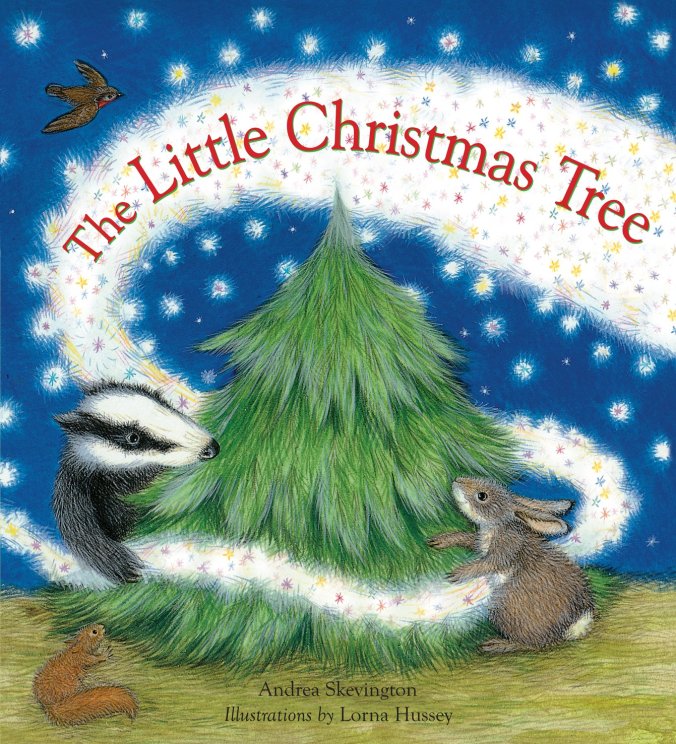
Just in case some of you are very organised people who like to plan ahead for Christmas, you might like to know that a new hardback edition of this beautifully illustrated book is coming out on August 22nd.
It was my first book and I love it, and I’m thrilled it’s coming out again for a new audience. And if you have little ones in your life who are of an age for a board book, it’s coming out as one of those too – publication date for that is 26th September. That edition is slightly abridged, but with all the delightful pictures of woodland animals by the very talented Lorna https://www.instagram.com/lornahusseyillustrator/.
To those who follow this blog from the USA, the publishers were keen to say that the book will be available over the Atlantic, too.
Both can be pre-ordered now. Pre-orders do help with publicity and planning, so if you feel inclined, it would be a great encouragement. Meanwhile, the paperback version is still available.
If you are lucky enough to have a local bookshop, they can get them for you. Here’s a link to the publisher’s website for online orders. Of course, it’s also available in all the ususal places for ordering books.
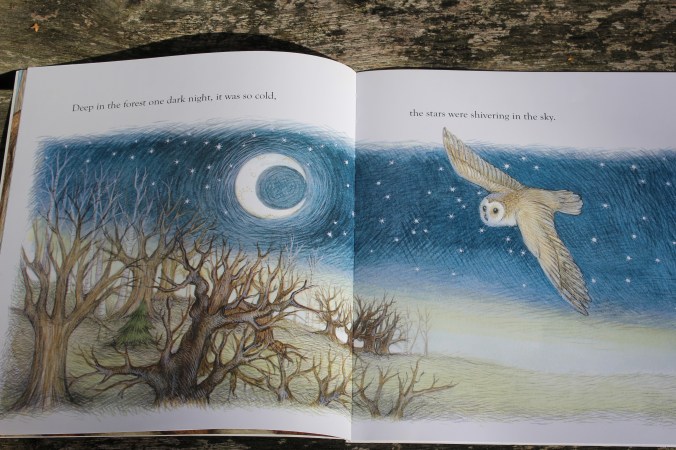
Here’s how it begins…
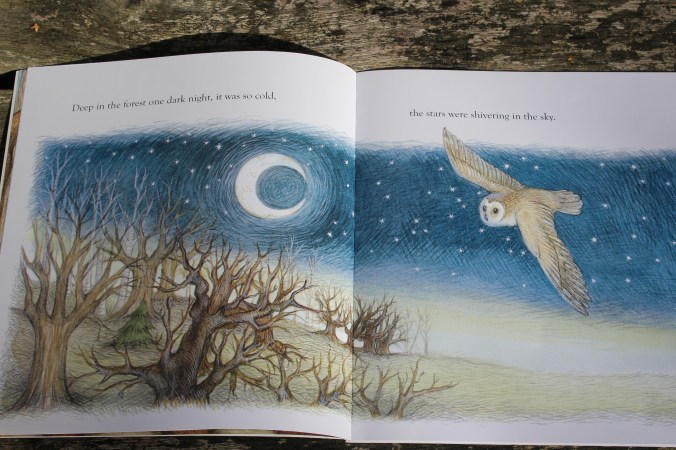
And you can read more about it elsewhere on my blog, for example…
The Little Christmas Tree – a beautiful BSL video telling of the story.
The Little Christmas Tree – a few pictures!
The Little Christmas Tree – I’ve been thinking ….

Thank you all for your support and encouragement. My mind has been full of the poems I’m weaving together for my poetry collection lately, and I’m aware I haven’t been posting on here quite as often as sometimes – I’ll try to keep remembering to do that! And next year, there’ll be lots to share!
I’m continuing to share with you some poems I’m working on for a new book, The Year’s Circle, which will be out next year – with Wild Goose of Iona Publishing. You can read more about that here.
As I’m settling into the work, I’m finding it so rewarding. I love looking for threads and connections between things, and so I’m weaving together poems which follow the pattern of the church year and poems drawn from nature. I’ve always found the natural world rich with image and meaning, and that is particularly true of the wild beauty of late spring.
This poem has been a bit of a knotty one to unravel, but now I think it’s settled and working. I’m giving it to you a little early, in case anyone is looking for a poem for Ascension (this year, Thursday 29th May) . At the beginning of the book of Acts we find this account of Jesus being taken up, and I have been wondering about what it might mean for us.
I thought first of what it must have been like for his friends, a kind of second losing. They are still caught up in their concerns – they are still thinking of a kingdom with power and borders. And every day, now, we are seeing the pain of kingdoms and borders, the terrible suffering of the people of Gaza and the long history of cause and effect that leads to children, the frail, the displaced and the wounded – starving. It’s shocking and distressing. I find those images fill my inner vision as I read the words of the disciples. And I notice that their nationalistic hopes do not align with the task set them by Jesus.
I have wondered about the complete change in perspective that Jesus seeks to share. I think it might help us, and give us a way of seeing that opens us up to a better way.
He is not speaking of kingdoms with borders. He is sending them out – over borders, without consideration of the divisions between peoples we might make – to the whole earth. A shift in thinking, a higher, more inclusive view. So, in this poem, I try to explore that shift.
The poem has two strands. The experience of Jesus’ friends as he slips away from them, and this wider way of seeing he invites them to share.

Hidden/All things – Ascension
Perhaps it had seemed a partial
parting, a gradual letting go.
In life, they had lived with him,
travelled dusty roads,
slept under stars,
ate bread and shared a cup.
Then, after that dark Friday,
that bright Sunday, there
came these strange, sudden
meetings, brief comings and goings,
words they found hard
to understand – such
puzzling reassurance.
And still they ate together,
and he spoke of another
presence who would
come to them, be with them.
And despite their questions
of nations and times,
his was always a wider vision.
Always wider and other
Out to the old enemy
and the ends of the earth
Everywhere and everyone
And then at last they came
to this last parting,
and he was taken up
in rolling clouds and
hidden from their sight,
a long perspective
they could not yet share
that saw the whole blue
green turning Earth and all things –
things in heaven and things on earth –
holding together reconciled
all very good and all beloved.
Above all, beloved.
Acts1:1-11
Colossians 1:15-20
This image is of Gaia by Luke Jerram, when it was at Ely Cathedral. As I’m playing with the arrangement of poems in The Year’s Circle, I’ve placed my poem inspired by this artwork in a group that follows this one on the Ascension – a group that begins to explore our perception of the Earth as an interconnected whole. You can read the Gaia poem here.
And, in the spirit of the original Sunday Retold, here are some passages which might be of interest.
‘The disciples never knew when Jesus would appear among them – but appear he did, telling them more about the kingdom of God, and kindling hope in their hearts.
“Wait in Jerusalem and you will receive God’s gift. You remember how John baptized with water? In a few days, you will be baptized with the Holy Spirit of God.”
Another time they asked him, “Lord, will Israel be a great kingdom again now?”
“That’s not for you to know. The Holy Spirit will come and fill you with power, and then you will tell everyone what you have seen and heard. Start in Jerusalem, and Judea, but then go out beyond Israel to Samaria, and even further – to the whole earth!”
Then Jesus was lifted up, above and beyond the earth, and a cloud hid him…….’
Ascension Day
‘Christ has no body now on earth but yours, no hands but yours, no feet but yours…. Yours are the feet with which is to go about doing good, and yours are the hands with which he is to bless us now.’
St Teresa of Avila
From Prayers and Verses

The beach at Walberswick.
So, this Sunday Retold is a little different. The retelling is a poem, which you’ll find below. Some of you may remember that I’m absolutely delighted to be bringing out a book of poems next year, based on the cycle of the seasons – both in nature and in the readings that many churches follow. You can find out a little more about that here. Wild Goose, the publishers, are happy for me to share some pieces in progress with you here as I work on the book.
It seems good to start with Easter, and this week – of the poems I’ve been working on – the one that seems most nearly there is one that happens to tell the story of this week’s gospel reading, John 21:1-19.
It’s such a rich passage, and there is so much that could be and has been said. I think the reason this poem has come most readily is connected to the warmth and tenderness I felt when reading the story. Although we often focus on the extraordinary elements – and they are there, sure enough – I warmed to the ordinary. Once again, Jesus is feeding his friends. He knows they have been working all night, and he anticipates the depth of their hunger, their cold, their disappointment, and their need for this breakfast. It is a feature of these Easter stories, how often eating together is involved, how simple and reassuring the talk.
And here, we see the dance of grace – forgiveness for Peter, yes – but there is also the simple lifegiving grace of sharing food, of receiving, and giving. Of giving, and receiving. It is a revolutionary gift economy in fishing and sharing, in forgiveness and purpose, and its something I’ve missed before…. Perhaps I’ve been too caught up in the strangeness, or the textural intricacies, or the story being about Peter, to see how this new life is also about cooking breakfast for hungry people, and them having enough – strength, fish, new beginnings – to feed others in turn.
I love Wendell Berry’s phrase, “practice resurrection”, and this Easter, I’m wondering what that might mean….

But here is the poem.
Overflowing
Gathered around the fire,
dripping with lake-water
and morning chill,
they warmed themselves
in quiet, not asking who it was
who cooked them breakfast
on charcoal and hot stones.
After such a night, such an empty-
netted night of no-going-back
to the old life, of cold,
of hunger, of ropes
against skin,
they sat on the shore
with the smokesmell
of griddled fish and fresh
bread filling their senses.
In the dawn shadows –
the last stars fading,
the first light gleaming –
you handed them this
feast – loaves and fishes,
bread broken – you fed them
and warmed them.
This is how it flows,
the dance of new life.
We may be fisherfolk with
empty nets, but you
guide our hands. And we are
overflowing. You cook breakfast,
and we share a feast.
And then, and then,
the invitation, the instruction,
the grace to Peter and perhaps to all –
Feed my lambs,
Feed my sheep, my sheep.
We receive, and we give,
we give, and receive, for
there is enough.
There is grace enough to
break the nets and yet
the nets are whole, and look,
still the sea is full of fish
Overflowing
Dancing
In the new light of dawn.

The Little Free Pantry at St Andrew’s Church, Melton – one of many now springing up.

This story, of the miraculous catch of fish, and Peter’s restoration, is included in my retelling pictured above.
 Andrea Skevington