Tea-maker

sunday-social-teacups


A while ago, I found myself in Ipswich hospital.  Once things had calmed down a bit, I was moved to Brantham  Assessment Unit, where the lady described in the poem brought me tea.  As well as the NHS doctors who diagnosed, and prescribed medicine that made me better, there were people whose presence, kindness, and generosity of spirit was remarkably healing.  She was one of them.  It was so precious at the time, and still now the memory helps.  A simple cup of tea – it meant so much.

So often we think there is very little we can do for people, that our small gestures, our smiles and cups of tea and gentle touch  can’t make much difference in the face of whatever they are experiencing.  We are wrong when we think that – I know now.  It gave me hope and comfort.

If anyone knows who this lady is, and can pass on my thanks, I would be so grateful.
You can hear a recording of the poem by clicking on the title.

Tea-maker

Here, among the bleeping machines,
the close together trolleys,
and the thin curtains,
there are gifts.

A high slit of window, through
which I see a tree’s green
shimmering in far away light.

And you, lady,
aquamarine turban folded on your head,
swaying to the rhythm of the song
you hear, and hum
so deep, humming from the heart.
It is my gospel song.
You make tea for us,
stranded as we are,
as if it were a sacrament.
You hold each cup a moment,
as if in prayer, and you pass
mine to me with kindness.
I receive it, and feel the blessing of it.
Healing and peace,
presence,
here, even here.

Barns

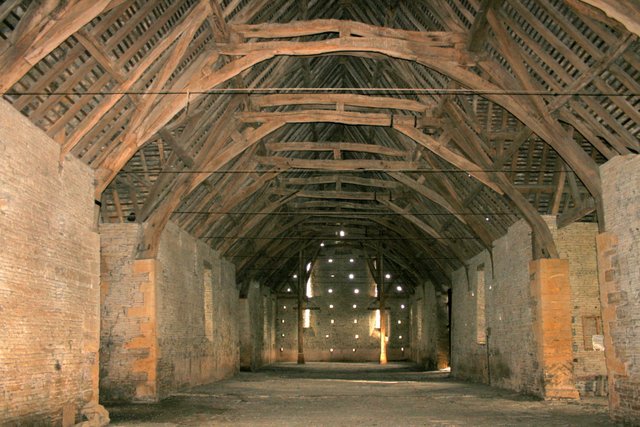
Middle Littleton Tithe Barn

Middle Littleton Tithe Barn, National Trust

barleyfield

Lectionary reading for Sunday, 31st July – Luke 12:13-21

The fields are golden now, and the recent heat has ripened the grain.  The barley is being harvested, the wheat waits a little longer.  It is good to see food grown and treated with care. Full barns help through the winter, as they have for generations.

So, now, as harvest is happening, as barns are being filled, as heavy machines trundle through the Suffolk lanes, the Church calendar gives us this story to consider – a warning against greed.
This story is a profound challenge to those of us now with full cupboards, stuffed wardrobes, too many shoes.  It is unique to Luke, where it is followed by “do not worry….”, reminding us that the ravens have no barns, and yet are fed.  The two together form a call to a simplicity of life, and a reliance on God, that is at odds not only with our society, but with our instinct.

Let’s go back to the beginning of the story.  Jesus is asked to intervene in a quarrel between two brothers – and, characteristically, does not. It is interesting to note how many times Jesus is invited to act as judge, and declines.  Instead, he often shines a light on the motives of the one asking him to do so, the one who is sure he is right.  In this case, the motive seems to be greed.  Greed needs to be guarded against, to be actively resisted.  Jesus seeks to turn on its head our notion that life is measured in the abundance of possessions, that life consists of stuff.  We often talk as if this were a new, modern phenomena, this way of looking at life.  Clearly, it is not.

Clearly, though, it is a danger we are facing this day, now, as we are besieged from the outside by the call of so many things, and experience within ourselves the desire for them, as well as the tendency to judge and measure and compare our things with the things of others. I am not sure we have a contemporary word which quite  expresses the old idea of”covet” – the last of the ten commandments prohibits it, even so.

From The Bible Story Retold

One day, when Jesus was speaking to the crowds, someone stood up and said “Teacher, tell my brother to share our inheritance – to divide up the family land fairly!”  Jesus said “Who made me an umpire in your squabbling match?”  Then, he said to the crowd, “Watch out for greed – it can sneak up on you.  Your life is about much more than what you own.

“Once there was a rich man, whose fields were full of ripe, golden grain, ready to harvest.  When it was gathered in, there was so much grain that his barns were creaking and straining with the weight of it.  He couldn’t store any more.  This troubled the farmer – for he wanted to keep it all. ‘I know!’ he said to himself with a smile. ‘I’ll tear down these barns and build big new ones, then I’ll live the high life! I’ll fill my belly and drink my wine and have a good time!’

But God didn’t see it like that. ‘You fool!  You are going to die tonight – then what will happen to all your fine things? They won’t be any use to you then!’” Jesus looked at the people gathered around him. “That’s how it is for anyone who stores up things for themselves, leaving no room for God!”


The distribution of the harvest is an essential matter of social justice.  We remember the story of Ruth, the provision of gleaning rights for the poor and the foreigner. We remember the bias towards the hungry we encounter in the Hebrew Scriptures.  Full barns can be a blessing for the whole community.

Jesus reminds his listeners of the purposes of plenty, and of the life-corroding effects of greed.  It is not easy – but wherever we are, we can begin.  We can begin to hold things lightly, to remember that all belongs to God, that where we have, we can give, and bless, and meet the needs of those who have less.  We can begin to pass on something, one thing.  We can come to know the lightness and freedom of this generous, open way of living.

To give is an act of resistance against our own capacity for greed. Giving, sharing, and working for justice, are powerful.  They can transform all involved. Perhaps, as we enact this different way of living, we can begin to see how it can make room for God – God who is love – generous, gift-giving, open-handed love.

I wrote the following prayer in response to the feeding of the five thousand, where the crowds were fed far from shops and barns.  It seems to follow on from this story, too.

From Prayers and Verses

Lord Jesus, who broke bread beside the lake and all were fed,
thank you for feeding us.
Lord Jesus, who asked his disciples to pass food to the crowds,
may we do the same.
Lord Jesus, who saw to it that all the spare food was gathered,
may we let no good thing go to waste.
Lord Jesus, who gave thanks,
we thank you now.

If you would like to use the reading and the prayer, please do so, mentioning the source.

Bees

IMG_0565.JPG

IMG_0570.JPG

IMG_0572.JPG

Hot and thundery, the English summer arrives – it’s too much all at once, at least for me.
Here is a small poem written watching the bees through my window, on the powerful, vivid, lavender.
It is also a poem touching on transformation, something that is beginning to emerge as a theme, although I am not quite sure where it is taking me……. which is perhaps, the point.

Bees

I watch them on the lavender,
each purple flowerstem a pendulum of bees,
keeping time with its humming weight,
White and red tailed, bumble and carder.

A few honeybees come, too,
so few, and already yellow
with sweetness.
And butterflies – cabbage whites,
bright as paper – unfolding
in the scent of flowers.

When the summer storms come,
when storm-rain falls in drops
as big as bumblebees, and
hail clatters against the glass,
they rise, as one, and fly
between the drops, too fast
for me to know where they shelter.

They return to rainwashed flowers
one by one as I gather a few new stems
bright, fragrant, and roll them
slowly in a jar of sugar,
ready, in the time to come,
for delicate sweet biscuits,
icing for dainty cakes.

I do not have the alchemy of bees,
but I have my own, under this roof.

The Good Samaritan

The good samaritan

The Good Samaritan  Vincent van Gogh

So, this week, we are surrounded by political and economic uncertainty after the  UK’s Brexit vote.  In a national climate of increasing distrust, and anger, and division, many churches will be given this reading to consider on Sunday – the parable of the good Samaritan.  It is strong medicine – at least, I find it so.  It challenges me deeply, differently each time.  Reading it again, now, its force comes home anew.

From The Bible Story Retold

WHO IS MY NEIGHBOUR?  (Luke 10:25-37)

The teacher of the Law stood up, narrowing his eyes in the bright sun.  He had heard people talk about Jesus, now he wanted to test him out.

He pitched his opening question: “Teacher, what must I do to inherit eternal life?”

But Jesus offered the question back to him, giving him the chance to show his knowledge. “What is written in the Law?  How do you interpret it?” The teacher’s answer was to quote the scriptures word-for-word: “’Love the Lord your God with all your soul, strength and mind’, and ‘Love your neighbour as you love yourself’.”

Jesus smiled.  “It’s a good answer.  If you do all that, then you’ll have eternal life!”  “But….” the teacher of the Law added in a loud voice,  “but who is my neighbour?”  Jesus answered him with a story.

“Once, a man was travelling from Jerusalem to Jericho.” The crowd could imagine this journey – the road’s steep rocky sides, its twists and turns, its dust and heat. “As he made his way along,  a band of robbers crashed down the rocky slope onto the road – they had him surrounded.  The man gasped, horrified, but there was nowhere for him to run. They stripped off his clothes and beat him to the ground.  They left him lying in the dust, half-dead, while they went to gloat over their takings.

“So there he was, lying helpless in the heat of the sun, when a priest came by.  The priest did not stop, he gave the man a wide berth, crossing quickly to the other side.  A priest can not touch blood, or a body – that would make him “unclean” by Law, unable to work in the Temple, wouldn’t it?” Jesus nodded towards the teacher of the Law, then carried on. “Next came another religious man: a Levite.  He, too, saw the man lying bleeding, and still.  He, too, walked by on the other side, lifting his robes a little to avoid touching the blood on the road, and peering anxiously into the rocky shadows.

“Then, in the distance, came the steady clop of a donkey’s hooves.  The donkey carried a third man, but this time, he had nothing to do with the Temple.  He was a Samaritan.” Again he turned to the teacher, who was looking smug now.  Samaritans didn’t keep to the law – so he wouldn’t know the right thing to do. “The Samaritan saw the broken figure lying bleeding on the road, and his heart was filled with pity. He leaped down, cleaned and soothed his wounds with wine and oil, and tore strips of cloth to make bandages.  He slipped his arms under the man and heaved him onto his donkey, leading him gently to an inn.  He sat with him all night, giving him sips of water and wine.  The next day, he spoke to the innkeeper. ‘Here are some silver coins.  Look after him, and if you spend more, I’ll pay you on my return.’

For a third time Jesus looked at the teacher of the Law and asked him  “Now, you answer my question.  Which one was a neighbour to the injured man?”

The teacher of the Law shifted uncomfortably. “The one who was kind to him.” He answered quietly.  Jesus replied, “So go, and do likewise!”

It seems that the teacher of the law was opening a theoretical debate about what constitutes rightness in God’s eyes.  It doesn’t seem to have that much to do with God, or people, even though he correctly identified the commands to love as the highest ones.  Perhaps his question, “who is my neighbour”,  was an attempt to place a limit on the breadth of the command to love.  Perhaps this person is one I should love, but I can overlook another.

As was his custom, Jesus does not respond in kind, in debate, which can often stimulate the mind and bypass the heart.  Instead, he tells a powerful story.  Stories can change us.  They can reframe the way we see things, they can stir up powerful responses – outrage, pity, compassion, love.

And love is the aim, the way, the goal.   The teacher of the law was right about that.  Here, it trumps other laws – those who seek to maintain their personal holiness and safety while leaving a bleeding man in the road  are seen in sharp focus.

It is a foreigner who loves, and is commended.  So often, groups praise the good deeds of those who are the same as them, in nationality, or creed, or other ways, and overlook goodness where it is found elsewhere.  Jesus does not do that. Jesus, in word and deed, shows us what love looks like, and it is resourceful, and strong, and relentless even in the face of death. It overrides boundaries and borders.  Jesus commends the goodness of one outside the Jewish tradition, and asks the expert in Jewish law to learn from him, to be more like him. The teacher of the law seems to be open to the lesson, too.

If some in our national debate are speaking words that divide people from their neighbours, we can remember that each of us can seek to live differently, demanding as that is. It is a humbling thing.  There is no room for pride in the face of such a call to love – it is so often beyond our own resources.   But, what seems quite astonishing to me is how little it can take to make a difference. I am sure we can all remember people, known or unknown to us, whose gestures of love and solidarity, whose practical kindness, whose simple acknowledgement helped us when we were in trouble.  We can pray for open-hearted courage, we can pray for eyes to see the needs of those we walk past as we go about day by day. If we dare, we can ask God to move us to pity. But if that seem too much for us today,  we can remember that the smallest gift of lovingkindness bears the hallmark of God.

How good it is when we remember that each human being has dignity, infinite worth, and so offer to all our respect and compassion.  We can look for good in others, wherever they are from and whatever our differences. We can seek to overstep boundaries, and reach out a hand, remembering that love is from God.
Another way is possible.

Beloved, let us love one another, for love is from God, and whoever loves has been born of God and knows God.  1 John 4:7

From Prayers and Verses

Lord Jesus,
Make me as kind to others as I would want to be to you.
Make me as generous to others as I would want to be to you.
May I take time to help them as I would want to take time to help you.
May I take trouble to help them as I would want to take trouble to help you.
May I look into the faces of those I meet and see your face.

BASED ON MATTHEW 25:37–40

Stamps

Stamp1024_105444k

I have been thinking about the apparently small things that connect us, that help, in times of trouble.  Living in a market town, you often see some of the same people in the street, and in the shops, as you go about running errands, dealing with the necessary things of life.  Sometimes the tiniest of connections can change your day, can make you feel closer the rest of your human family.  And sometimes, going out partly in search of such connection, you find you are able to give, as well as receive.
At least, I hope so.
So often, we underestimate the power of these small, slight gestures.
They matter.


Stamps

Two of the blinds were down,
Position Closed, but yours
hovered, unreadable, just
above your head.

There was   no queue,
and I approached you
cautiously,
clutching thick manila
envelopes.

Are you open? I asked.
As you raised your head,
I saw trails of tears down
your smudged cheeks,
such large heavy drops.

First class, two –
I’m so sorry.
You smiled, and
I stretched out my
hand and touched
fingertips to the glass,

Passed warm coins
through, which you
held a moment,
then gave me stamps,
straightening your back.


New Book News!


IMG_0561.JPG

We arrived back from a few days away to find that, as usual, some post had built up behind the door.  One of the envelopes was quite fat, and it contained a contract for a new book with BRF!  Good news!  It’s a book on the I Am sayings of Jesus,  with an emphasis on how we can respond, and embed these deep truths in our lives.

This book idea began when I was writing a series of meditations for BRF’s Quiet Spaces and found there were too  many ideas, too much to say, to compress into that concentrated format.  I am so grateful they were open to the idea of reading more.   I have till next May to write it, so it will be a while before it is available, but I shall keep you posted on this blog, and hopefully post a few snippets for you to try for yourselves.

I would also like to say thank you to the dear friends who have encouraged me, and especially the St John’s Church Advent Retreat, who patiently listened and tried out various ideas I had been developing, and helped no end with their thoughtful and generous response.

That was not the only post, though.  There was also a parcel containing this:


IMG_0554.JPG

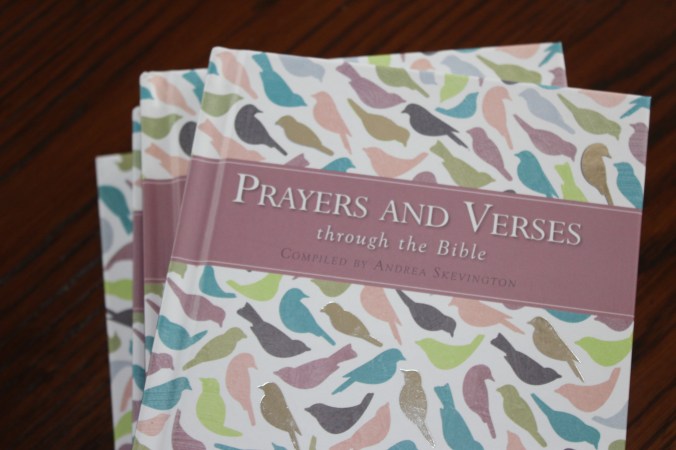
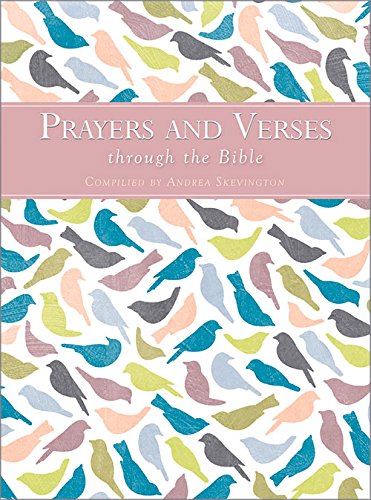
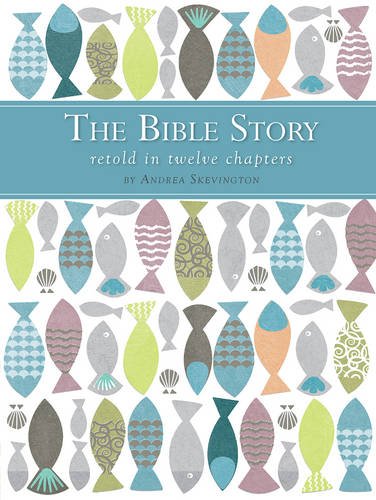
Recently published, it’s the first time I have held Prayers and Verses in my hands, and it is a beautiful piece of work from Lion. It’s always a strange thing, to see your words printed on a white page, to see the way what you hoped for – something where the different verses and prayers seem to  interact with each other and enrich each other – might be happening on the page.  Below you will see it with its companion volume, The Bible Story Retold.


IMG_0557.JPG

And here is a spread from the book – I hope you will excuse the slightly variable focus!
In the UK we are facing a time of huge uncertainty, and I thought I would share with you these few prayers and verses. They are reflecting on the time of Exile in the Jewish story, which seems to be a relevant theme for many, whatever their nationality.

IMG_0555.JPG

Thank you for taking the time to read this little bit of good news.  May there be more good to come for you, too.

Consider

IMG_0495

Last week, I shared with you a poem about daily walks through   Fen Meadow  .
Here is another.  As it is the time for buttercups, buttercups creep into this one, too!

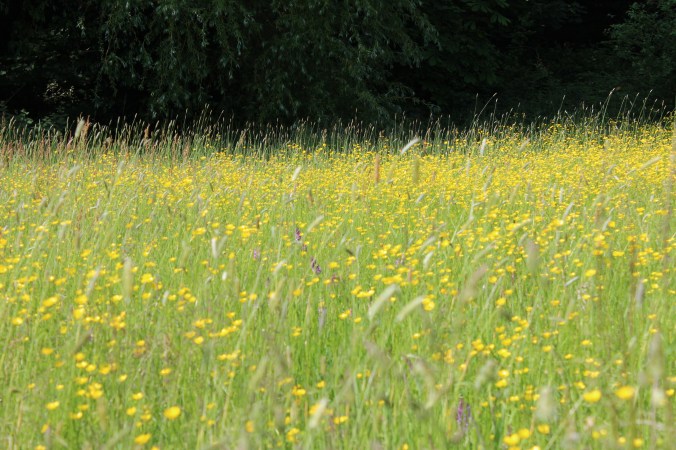
I often find walking the best time for praying, and thinking.  There is something about the rhythm of your body, of your feet in contact with the earth, that quiets the mind and makes prayer easier – at least for me.  As I was walking and turning over my worries/prayers before God, I felt that I was being reminded to pay attention instead to where I was.  In particular, the phrase “consider the lilies of the field” came into my mind.  Now, the lilies of this particular meadows are these beautiful buttercups that grow tall among the grasses, splashed with orchids and clover and birdsfoot trefoil. So, I spent a while considering them, and it was impossible not to feel my heart lift at the sight of so much beauty.

The next day, I approached my walk more enthusiastically – looking forward to seeing the buttercups again.  The sun was shining, they would be perfect.  When I arrived, a large sit-on mower was being driven up and down over the long grass, noisily spraying all that was left of the wild flowers behind it. It felt as if I had just begun to notice something good, when it was mown down.  The poem tells what happened next – if “happened” is the right word!


CONSIDER

I walked behind as he
mowed buttercups down –
scattering gold through
the cut grass –
I gleaned the shattered stems
to carry home.

But, as they wilted in a jar,
they darkened, and drew
to themselves the thought
of other things cut short –
of life, and joy, and hope,
of beauty crushed,
of anger that narrows to
silence –

And yet, today, I came back,
saw the ground  newly
hallowed by many
small shining flowers –
open, nodding to the blowing wind,
running over with saffron light.

Cut down, we flower again, again.
How it all murmurs constantly,
as the shuttle flies across
the loom, and bare feet
are dusted with gold.
And which of you by being anxious can add a single hour to his span of life? And why are you anxious about clothing? Consider the lilies of the field, how they grow: they neither toil nor spin,  yet I tell you, even Solomon in all his glory was not arrayed like one of these.   
Matthew 6:27-29

Prayers and Verses – It’s publication day!

prayers and verses cover

It’s here!  Prayers and Verses is officially published.
US readers, it’ll be a little longer, but it’s coming

Thank you to all my dear friends who have helped and encouraged me as I put this collection together, and for the loan of books!   Thank you also to those from far away who have been reading the snippets on this blog, it is so good to be connected to people spread far and wide.  Thank you, too for your encouragement.  Our connections with each other are all so precious.

Some things from the book:

May God make safe to you each steep,
May God make open to you each pass,
May God make clear to you each road,
And may he take you in the clasp of his own two hands.
FROM CARMINA GADELICA


Wherever you go,
May God the Father be with you.
Wherever you go,
May God the Son be with you.
Wherever you go,
May God the Spirit be with you.


May the Lord bless you,
may the Lord take care of you;
May the Lord be kind to you,
may the Lord be gracious to you;
May the Lord look on you with favour,
may the Lord give you peace.
FROM NUMBERS 6:24–26


Prayers and Verses – 3 The burning bush

prayers and verses cover

UK publication date – Friday 17th June 2016

bible retold cover

It’s nearly here!  the official publication date for Prayers and Verses!
I thought I would share something from Chapter Three of both books – Prayers and Verses and The Bible Retold.
The story of Moses, and how people escaped from slavery, is absolutely central to our understanding of the story of the Bible as a whole. It is truly remarkable.  Written records usually tell the story of the victor, of the rich and powerful.  This ancient narrative tells the story of the slaves, the powerless, the people pushed to the edges.  It says that God is listening to them, and is sending someone to bring them out of slavery, into freedom.

Prayers for those who labour under heavy loads, who bear much sorrow, are included at the opening of the chapter in the prayer book.  The Hebrew scriptures are full of reminders to be compassionate, to remember the hardship, and to let it soften your heart towards others that suffer – strangers in a strange land.  That is why the story is recalled again and again, because it has the capacity to centre us once more on love, on justice, on humility.  It builds our faith that God does listen, and then respond. The faithfulness of God is spoken of again and again. And the turning point of the story is when Moses is stopped in his tracks by the burning bush, and the experience of God he has there.  At a time when he must have felt he had blown all his chances, and had let down his people, this prince of Egypt encountered God when he was simply living out his own life on the edges, as a humble shepherd.  This encounter changed everything, as encounters with God tend to do.

To go alongside this snippet of story, I have chosen an extract from Prayers and Verses which will, I hope, encourage us to open our eyes to the possibility of God being present with us as we go about our daily lives.

Then, one day, as the sheep grazed on the slopes of Mount Sinai, Moses saw something: it was bright flames leaping up from within a bush.  He began walking towards the burning bush, curious, because he saw that although it was crackling with flames, the bush was not being burned up. And then a voice called from within the flames.
“Moses, Moses!”
“Yes?”
“Don’t come any closer.  Take off your shoes, for you are on holy ground!”  Moses obeyed the voice.
“I am the God of your forefathers: the God of Abraham and Isaac and Jacob…”

Moses hid his face, afraid to look on God.

“… and I have heard the cries of my people.  I have seen their suffering, and felt their pain.  I want to pull them out from under their slave masters’ whips and bring them to a good, gentle land: a land of plenty.  You are the man I have chosen to send to Pharaoh.  You will rescue my people form Egypt.”


Grant us a heart wide open to all this beauty; and save our souls from being so blind that we pass unseeing when even the common thornbush is aflame with your glory, O God our creator, who lives and reigns for ever and ever.
WALTER RAUSCHENBUSCH (1861–1918)


Dear Lord, Help us to see you today in all the ordinary things when we walk, and talk, and play; help us to know that the whole earth is full of your glory, and that the ground is holy. Amen
The world is charged with the grandeur of God. It will flame out, like shining from shook foil.
GERARD MANLEY HOPKINS (1844–89)