Poem: The Blackbird – Lockdown poems 7

Lockdown Poem News!

I am delighted to be able to share with you that this poem was featured on BBC Radio 3’s The Verb on Friday 15th May at 22:00 BST.    You will be able to find a recording of the poem on the link above, under the date.  The programme is entitled Birdsong.     If you start at the beginning, you’ll hear a marvelous piece on nightingales, but if you are short of time, my contribution is just after 20 minutes in. You can read more about being on the programme here.

It’s so exciting!

IMG_0981

Welcome back to the garden. It’s been a harder week, this week, with much, and much needed, rain. It has felt more confined, being more indoors. I have ended up watching more news, and felt more sucked into our strange, shifting reality, our uncertainty.

As you may have gathered, these Lockdown Poems tend to emerge in bursts, and find their way here a little while later, so this poem was one that came on one of the brighter, sunnier days. Coming back to it now, it helps to connect with a time when it was less hard work to be in the moment, to settle into stillness, and to be open. It reminds me of all that. It reminds me of the connection we can feel to the creatures we share our space with, and what riches we can find in such connection.

IMG_0982

I hope, whatever your week has been like, you can take another moment to listen to the birdsong, as we did together in the last poem, and hear its dark and beautiful strangeness.

blackbird2

A female blackbird – I can’t find the name of the photographer to credit this.

The Blackbird – lockdown 7

The blackbird lands just
behind my shoulder,
I hear the air in his throat,
I hear the slight preparations
for song,
then song.

I scarcely dare move my pencil,
and yet, my pencil moves.
Oh, for the gift of
interpretation of tongues,
that I might write,
in words, that song,
that meaning, the cares
belonging to this small soft being
with its deep globe eyes
and stabbing beak.

I see you, I hear you,
in all your dark and
beautiful strangeness,
as you shift from
spreading branch
to spreading branch,
open to receive you.


Poem: The Wood – Lockdown poems 6

Welcome back to the garden for the next in this series of Lockdown Poems.  These strange lengthening days are bringing us new experiences – some are very unwelcome, but others have something to show us, something that might help us navigate our way to a better world after….
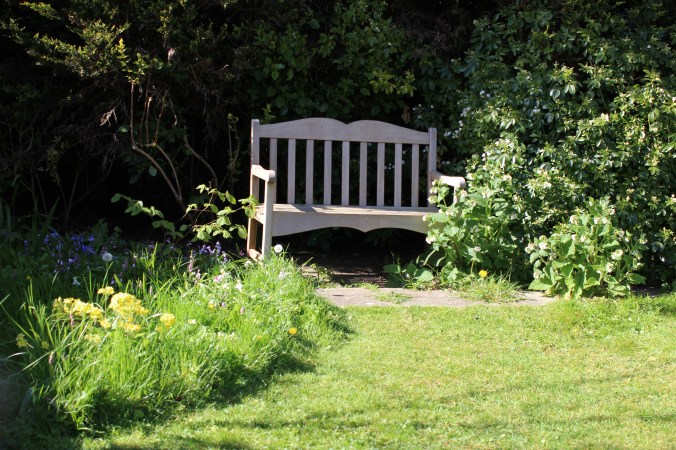
I hope you are finding moments of tranquility.  You are welcome to come and sit on this bench in your imagination, and hear the sounds of spring.

IMG_0982

What has struck me, like so many others, is the birdsong we can hear as our human hubub has quietened.  Although we live very near a small wood, I haven’t heard the birdsong from it before – not from the back of the garden, well past dawn.  Sometimes, in May, you can hear the dawn chorus before the traffic begins, but now there is very little traffic, and the wood’s loudness is astonishing.

IMG_0980


I hope you can hear birdsong where you are.  Here’s a link to a recording of the dawn chorus in the UK if you’d like to listen

So, here’s another poem which emerged from my practice of trying to deepen into contemplative prayer, but being open to the sounds of the natural world as they speak.

The wood – lockdown 6

This April morning,
not even particularly early,
I sat on this bench,
allowing my breath to deepen,
and settling into presence,
and into Presence,

I heard, for the first time,
the sound of the wood –
not too far away,
across the grey snake
of the road.

I heard it like a distant choir,
together and rejoicing,
or an orchestra playing jazz –
wild, improvised,
I heard it as the sound of life,
reaching me even here,
across the silent road,
unquenchable,
green through the blue air,
calling the trees awake,
calling the bluebells – up, up,
and flowing round
the fragile white anemones
as they bow their many heads.


Poem: Two Trees – Lockdown poems 5

IMG_0982

The next poem that came from this Lockdown is a little different from the others at first glance.  Once again, it was emerged on the page, and has had minimal tweeks.  I was intrigued to find it there.  Its subject is the trees in the Garden of Eden, and it asks tentative questions about human nature, and the human experience, which they raise for me.  I have wondered before why the fruit of the tree of knowledge of good and evil was prohibited, when so many religious systems seem very preoccupied with such knowlege.  I have wondered too how Jesus’ warnings against judging help us understand that, and balanced those warnings with the image of knowing a tree by its fruit, as he advises us to do.

I find it helps to allow the images – of trees, and fruit – to grow in our minds, and see what kind of shoots emerge. This is not a theological exploration, but a poetic instinct. Here,  I have been asking questions of myself, in a kind of uncertain echo of a chatechism, and allowed the questions to be there, partially or inadequately answered.  What if there is a choice, moment by moment – the fruit of the knowlege of good and evil, the fruit of life?  Might that have something to say to us as we seek to choose life, again and again?  Can we say yes to life, moment by moment, even in these moments?

IMG_0970

I don’t have two trees growing in the centre of my garden, but I do have this tree, whose early morning shadow delights me.  I hope you can make it out. The early light was tricky.  I thought I’d offer it to you to see if it might help give another image to add to the trees in this poem – a growing tree and its shadow.


Two trees – lockdown 5

Two trees grow in the midst of the garden; the tree of life and the tree of the knowledge of good and evil.   paraphrase from Genesis 2:9

What if we stand
in the middle of the garden,
choosing the wrong tree,
moment by moment,
again and again?
There they both grow –
tall, beautiful,
pleasing to the eye,
laden with fruit.

And we are drawn to one,
not the other, at least at first.
Wanting power to say things are
this, or that, the illusion of
control, wanting to judge,
wanting to be right.

Do we need to lay all that
hollow fruit aside in order
to eat from the tree of life?
I think so, yes,
Maybe empty-handed is better.

And what if we had made
a different choice
from the beginning?
Chosen that other tree,
unprohibited,
free.
What indeed!
And yet we did not,
and ever since, we have
hungered for its fruit.

And can we choose differently
now, each day, each moment?
I think so, yes, I think that we can
set down the fruit that
sours and spoils,
and choose life
again, and again,
and again.

Poem: Red Leaves – Lockdown Poems 3

I’ve been spending time with my notebook, while we’ve been in lockdown.  Usually, the words come from what’s going on around me, grounding myself in my ground.  I am aware how fortunate I am to have sight of new leaves, as here, but I hope these small verses give you a place where your imagination can connect with the spring, wherever you are.

They are just moments as they come.

IMG_0989

IMG_0985

The subject of this poem springs from the story of Moses and the Burning Bush, which you can read about here.

IMG_0982

A moment in the garden, shared with you.

IMG_0986

IMG_0988


Red leaves   lockdown 3
Oh, the sun through those red leaves,
shiny and shining,
And here, too, the smokebush,
just kindling to red flame,
before the leaf-smoke thickens,
as the sun’s light strengthens.
You can almost feel them growing,
as you bask in their cold fire.

It’s all holy.
All this good earth.
As my knees feel the
softness of grass,
and the air smells so of green,
and of the damp warming soil,
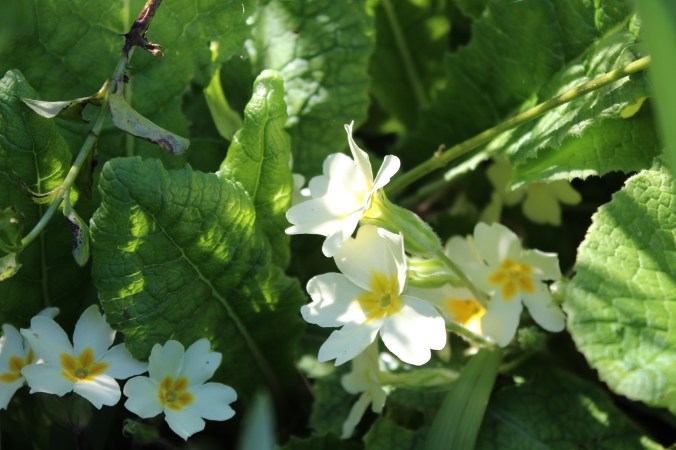
and grass, and primroses.

Yes.  This place.
Yes.  This time, even this.

Featured Image -- 5148

Poem: Owls – Lockdown Poems 2

IMG_0982

Welcome back, thank you for joining me again.    I hope we can take a few minutes to rest here.

I’m sharing another of my lockdown poems – simple, largely as they appear from my pencil – in the hope you’ll find some companionship, something that helps.  This one begins not in the garden, with light and green, but in the middle of the night.

Waking at night, or disturbed by dreams, thoughts race away.  If I remember to catch myself, I try to pause, to breathe, to notice.  Sometimes, you’re lucky enough to hear something wonderful, which breaks through the patterns of thoughts.
It’s been owls for me, lately. The night has its consolations.


IMG_0983


Owls – lockdown poems 2

Three nights now,
I have heard a pair of owls
in the garden.

 
Startled awake, suddenly,
by a fragment of
remembered news,
of fear,
and then, suddenly,
there they are –
the owls, calling
to each other, and,
it seems, to me.

Now, morning, and I look
up at the solemn black windows
of the barn, great eyes,
one shiny with a film of sky,
one matt and sightless.
I am glad we did not fix that glass.

There is room for an owl’s drawn in wings,
room to fly into that attic darkness,
where the peacock butterflies blink
their wings awake after the winter,
room to fill that desolate space
with life. May it be so. May it be so.

Poem: Today, sound. Lockdown Poems1

IMG_0981

As I mentioned in yesterday’s post, I am writing during this lockdown – as a way of expressing something, as a way of grounding myself in the physical experience of where I am, of keeping some kind of a record of what this time feels like, which is very different from what watching the news feels like, at least for me.  What emerges from this practice is simple, free, unpolished.

My notebook comes with me into the garden, and so it’s to the garden that I invite you now, especially if you are in a place where you have no view of green growing things, and hear no birdsong. I am aware how fortunate I am to have such a place, and how much harder it is to navigate this time without sight of spring.  So I hope that, as I share these poems with you, you can come outside in your imagination, and sit on the bench, and rest awile in the sun.


IMG_0974

Today – sound.  
Lockdown poems 1

Today, it is quiet.
Cars, if they pass at all,
come one by one, strung out,
separate,
dark beads running along
a dark thread.
The old sound comes, and goes,
comes, and goes.

Here, today, in this green space,
we hear, instead, the buzz of
long-tongued bees, feasting
and drunk among the primroses.
Primroses, spilling yellow,
everywhere, in the lawn
on which a faint dark
line threads – the path
of a soft deer
who comes by night.
And above, now,
buzzards and hawks
have the high sky to themselves,
flying in their wide circles.

I hear now, as if for the first time,
full birdsong, triumphant, liberated.
Suddenly an audience has turned
from its spent tables
towards this wide green stage,
and listened, amazed,
as loud song rises louder,
louder, knowing it will be heard.


A Poem for a time of isolation – Rooted

Update: 3rd April 2020.
While out for our household proscribed exercise this evening, we saw a pair of water voles playing in the stream where I saw the one in the poem.  We stayed still for quite a while, and watched them in and out of holes in the bank, and back and forth across the stream.  It was such a joyous thing to see!  That, and the loud birdsong, and clear air, made a simple walk deeply satisfying.

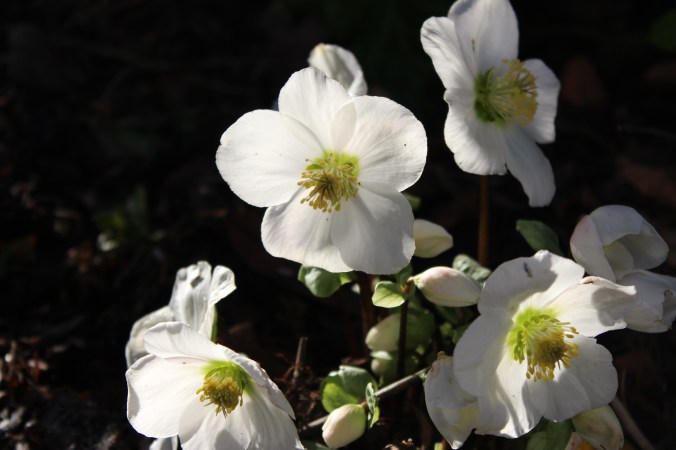
I wrote this poem some time ago, after the joy of seeing a water vole in meadows near our home.  It’s an experience I think about a lot.  I thought about it today…. I will get back to the poem later, I promise, but I can’t go there yet.  I can’t get to that place of stillness right away, I have to look at the things immediately before us as far as I can. Here is today, this morning, a very small beginning of a change in how we live…..
IMG_0773.JPG

It’s so sad, this keeping away from ones you love.  I, like many of you, have cried at the thought of keeping away from family and friends, and also cried when I have heard of doctors cancelling their weddings, and keeping separate from their own families, and working in such difficult conditions, to try to treat those suffering from the effects of coronavirus.

I thought about this on a small trip to the corner shop – not sure whether even this is a good idea, with the slightest of sore throats.  I put on some old leather gloves, thin, so you can still open a purse, and pick things up,  an old fashioned form of contactless.

There were hardly any cars, which was pleasant, and made it easier for us pedestrians to step into the road to avoid each other.  I am grateful to those who counterbalanced this distance with a smile, and a hello. Two items only, for everything, in the shop, and even so, there was little. I knelt on the floor to retrieve the second last loaf of bread from the back of the lowest shelf, and thought that tomorrow, I would start baking my own as I felt so bad taking it. There was someone I knew in the shop, and our distant conversation, and distant air kissing, seemed to start a ripple of laughter, as others avoiding contact found they could still smile and wave to counterbalance the dance of solitariness, of avoiding each other, we were all keeping up, without music.

IMG_0866

As an antidote, back home, I planted three rows of veggies – borlotti beans, butter lettuce, red chard – these gentle things help.  What also helped was doing something that might help someone else….Yesterday, I tended the Little Free Pantry .  It’s a perfect way for people still out, but who want to avoid crowded shops, to pick up or donate some food. I also added my name to the list of local volunteers happy to put things on the doorstep of others isolated inside.  A little of this can help with anxiety.  It can help us be reconciled to the distance we have to keep from loved ones.

If we have to slow down, if we have to disengage, then maybe, having felt the anxiety, we can see if we can find some gifts within it.
814b5d7fb683fa9a622570a639addec8--mary-oliver-quotes-darkness-quotes

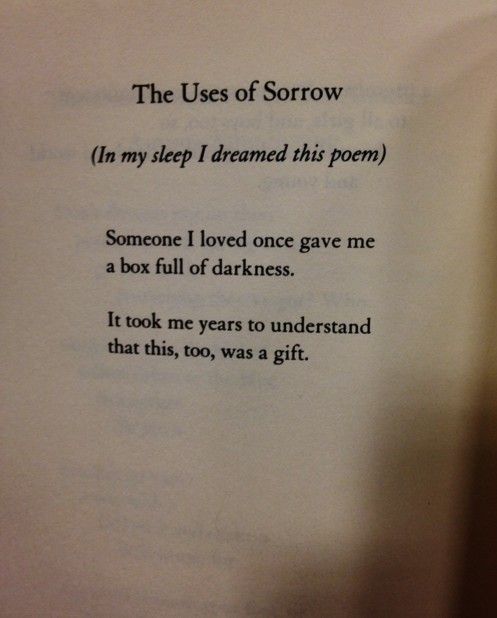
Mary Oliver

Maybe, even as we acknowledge the weightiness and pain of the current crisis, we can begin to imagine how the world might emerge, how we might emerge, differently, from it.

Have you heard that dolphins have returned to Venice, and that those living in Wuhan report that the sky is blue, and full of birdsong now?   Maybe, if we live more quietly, we will live more rootedly, more connected to our place and its people.  Maybe, given time, a less frenetic, more sustaining way of being might be made.  Maybe, we have an opportunity now, for some kind of a beginning, if not anew, then perhaps differently.

What would you like it to be? What kind of world, what kind of way of living, do we want?

IMG_0473

HOW TO BE ROOTED

First, you must suspend
all effort, all purpose.

Simply crouch in the damp,
thick grass, and feel your
sense of self seep through
your skin, your feet, into the
air – the earth – the water.

And as the muscles
around your eyes slacken,
and you let in light,
you become aware
of a nuzzling in the
grass, an earth-dark
water vole sliding
into green water.

As your heart slows
a pheasant walks by,
bright among the grasses,
and three ducks fly low
under the oaks, the
beat of  wings
all about you.

Stay still, and you will
sense the scrape
of the crickets through
the back of your hand,
and the tiny spiders,
yellow with newness,
weaving through your hair.
So that, when the
strong green tendrils
of the earth begin to
creep about your feet,
you will know in wonder
that rare thing –
how the world is,

unseen.


May you be blessed, and well.  May you breathe deeply, and freely, may you know you are loved and connected to all, may you feel peace.
 

Remember you are dust….. Ash Wednesday, for life.


van-gogh-the-sower

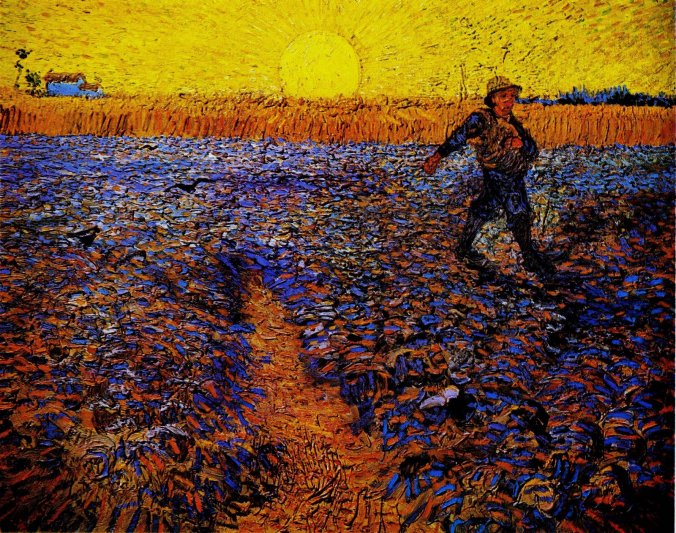
I’ve been thinking a lot about being the same stuff as the earth as I’ve been pottering around in the garden watching spring emerge, and reflecting on the parable of the sower, and other stories Jesus told.

IMG_0773.JPG

img_0786

Ransoms, or wild garlic – as I made dumplings with them, and enjoyed them, I felt part of our local wood.

Today, Ash Wednesday, I emptied our Baxi grate, and carried the ash to the compost heap, getting covered in the stuff as a gust of wind blew.  It was a far more comprehensive ashing than we normally receive in church, and it felt given to me, a reminder of my state as dust, ash, earth.  As I stirred them into the first grass clippings of the year, and yesterday’s lemon peel from Shrove Tuesday, I thought about the beloved tree that we lost in our garden, and how it’s kept us warm this winter. I gave thanks for it. I thought too about Malcolm Guite’s Sonnet for Ash Wednesday, that speaks of the burning of the world’s forests.  I though how complex and delicate our relationship with the rest of the natural world is, and how easy it is to abuse and neglect its care.

It’s good we have these days and seasons – Ash Wednesday is right for penitence, and even lament, as we consider how separately we have tried to live from all that is good and true and sustaining.  How we have broken the Shalom, the peace and harmony of God’s intent for us and for all things.

It holds its own remedy, too.   People are normally given a cross of ash at a communion service, the great reminder and restorer of our unity with God, with each other, with the gifts of the earth in the form of bread and wine.  With the gift of Jesus.  Also, a reminder that we are one with the earth puts us in our place, and that place, if we stay with it long enough,  is a deep unity and kinship.  And that circled my thinking back to the parables, back to the talk I gave at Girton College ten days ago. It might help in the context of the burning of our world, and our state of being ash and soil.  Jesus told stories that speak deeply to our nature, and the nature of God and the world.  As we are made of the same stuff as earth, we can rediscover that connection, and in it find hope for an amendment of life, living more fully and abundantly, more joyfully and humbly and thankfully.

As we enter this season of Lent, may we be quiet enough to hear the whisperings, and the stirrings, of – not just new life, but a new way of living. We can repent – the Hebrew word normally translated such carries a meaning of turning back home, the Greek of having a change of mindset.  Both of these carry great hope – the reign of God is very close, all around, within us, if we but look and see.

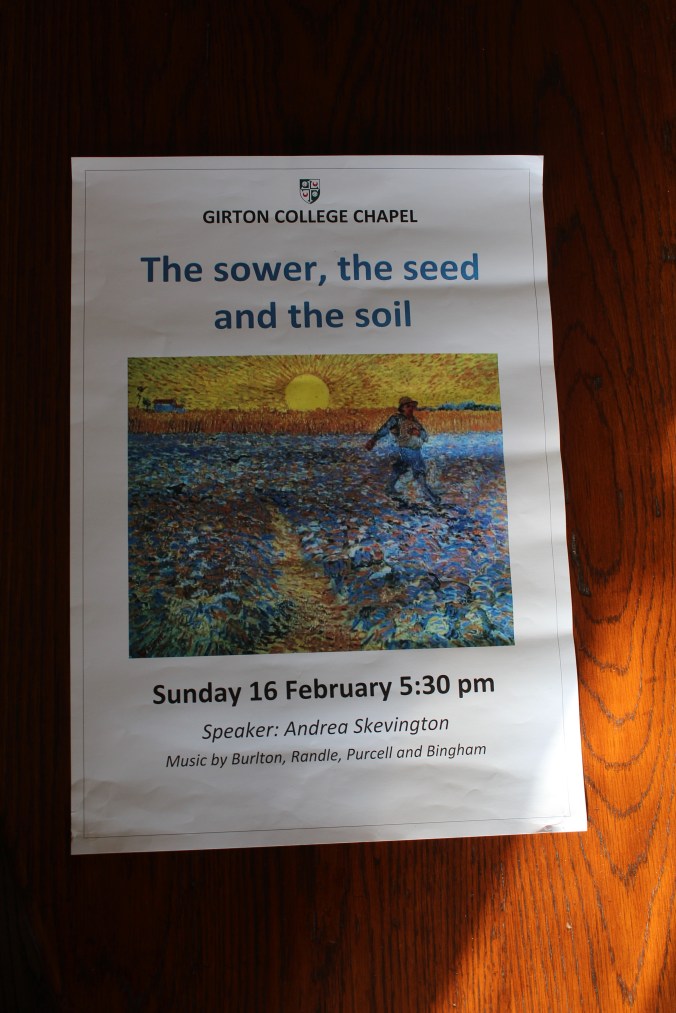
The sower, the seed, and the soil. A talk at Girton College Chapel.


IMG_0956

Last Sunday, I had the enormous privilege of speaking at Girton College Chapel. Malcolm Guite, the chaplain and poet, invited me to speak.  I’d been for the 150th anniversary celebrations last year, and Malcolm is continuing to invite Old Girtonians back this year too.

220px-Girton_College_Chapel_Window

It was so good to be back, and in the chapel which was good to me as a student.  It’s a beautiful, safe, nurturing space, and it also has a superb acoustic, which means that at evensong, you feel immersed in the roll of the music.  The choir are excellent, well worth hearing, and it was particularly good to have music by another Old Girtonian, Rhiannon Randle.  Her new work, Our Burning World, was performed on Monday.  You can read about it on her website linked above.

van-gogh-the-sower

One of Vincent van Gogh’s astonishing paintings of The Sower

Malcolm very generously gave me some flexibility to talk about what was on my mind, and I decided to follow where my thoughts, readings and prayers are taking me and talk about one of the parables.  I’ve been particularly drawn to Jesus’ parables of the natural world, curious to find out how he noticed to the flowers of the field, the birds of the air, and the work of tending soil for food.

Having driven to Cambridge through the tail end of a storm, it seemed very appropriate to be speaking from a parable of the soil. It is good to return to the gospels for wisdom, especially as humanity seems to be on the brink of a crisis in our relationship with the rest of creation.

Malcolm has kindly published the text of the talk on the College Website.  You can read it
here.

My thoughts on the parables are gradually taking shape into something, I hope it will be another book.  Sometimes, I know that there is some treasure to be dug, but I’m not sure what it will be until the digging is well underway.  So, I shall return to my digging, and see what good things I unearth along the way.


If you’d like to read more about seeds and sowing, you can look elsewhere on my blog, as below.

Sunday Retold – The Sower and the Seed 16th July 2017

November Sowing

Sunday Retold – Small Seeds, from Luke 17


The Little Christmas Tree – I’ve been thinking ….

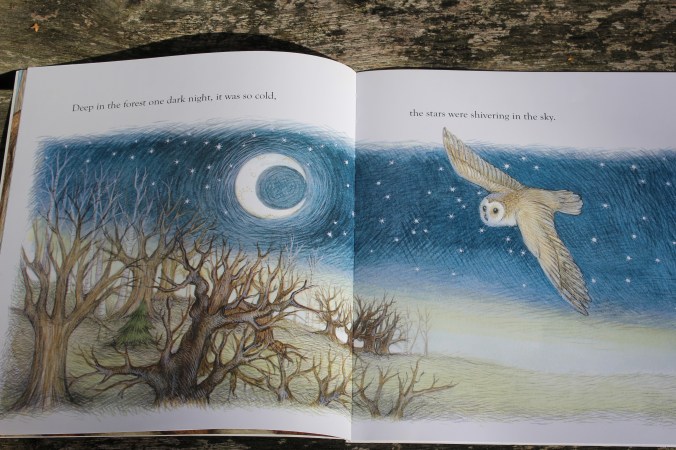
I was checking availability of my Christmas book, and was very pleased to see that Amazon had rustled up a few more copies, when I looked at the cover, and started thinking…..

christmas tree

I was thinking of how much more I know now about how precious woodland is to all the life of the planet.  The story came to me years ago now. I have always loved woods, but this year the urgent necessity of protecting the natural world – and forests in particular – has really come home to many of us.  Including me.

And so as I read this simple story again, I read it with a deeper awareness of the peril all us creatures face, and how vital it is that trees remain to shelter the creatures of the wood – and indeed all of us, one way or another. The kindness, the interconnection, the sanctuary provided by one small fir tree  provides safety for all the other creatures in the storm.  That kindness is blessed by the smaller stars of Christmas night, and the angels who fill the sky with their songs.

Now, as well as a tale of Christmas night, and Christmas itself, I see it as a story of hope for all of us who are trying to feed and shelter nature over the winter – in our own gardens, or in the wider countryside. A story of hope for all of us who are trying to do small and simple things to make the world safer and better for all its inhabitants – whether it’s reducing plastic, or taking the bus. These small acts matter, the Little Christmas Tree shows us.  They matter a great deal.

I hope that children, and their parents, will feel that message of hope, and the love of natural places, running through the words and beautiful pictures of this storybook.


img_0627


You can, of course, ask your local bookshop to order you a copy, or order one from any number of online book places.