A couple of years ago, during lockdown, I felt drawn to explore the stories of Moses and the Exodus.
One of these was inspired by Moses and the burning bush, where he takes off his shoes because the ground is holy. This poem now finds itself at Diana Butler Bass’ The Cottage, as part of her marking of the season of creation. It’s so good to be part of this beautiful musing on an important season, to be marking a shift in awareness as we begin to pause and reconsider our relationship with the rest of life on this dear blue-green planet.
I hope the link below will take you to her rich and thoughtful exploration of this theme.
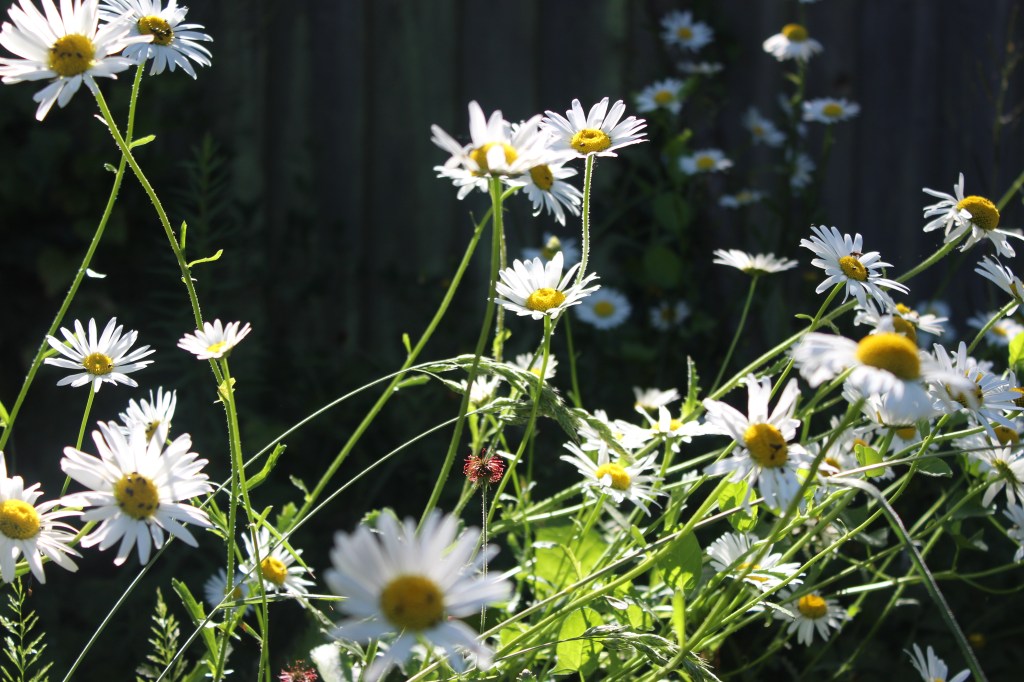
Gradually, we’ve been reducing the size of the unmown places in the grass. It’s been growing so fast this year, and the flowers have had a second and a third go. The sun and the rain have kept everything flourishing. There are small frogs and grasshoppers, and many bees still. It’s worth going very slowly, giving everyone a chance to hop out of the way, and leaving places of refuge. Little by little….
I wish I’d taken a picture of this patch above in the week before it was cut, when a round shape appeared flattening the stems. We were pretty sure it was the muntjac who is a regular visit to the garden – earlier this year, there was a youngster too. You can read more about the deer in the garden here and here. She is a joy. I do worry about her crossing the road between the woods and the garden, about the speeding cars – but the only time I have ever seen her trotting along the road, everyone stopped and waited for her to be safe. Kind drivers!
As I sat by her space I imagined her presence. I felt the hum of the cars through the ground. And I thought of all the places where the creatures who used to make a home no longer do – all the absences. I felt the loss, even as I felt the beauty and abundance of this late flowering meadow. And so this poem emerged, in fits and starts. It’s taken its time, has a basenote of loss, and I hope it carries the gentle tenderness of the deer, and the many creatures I feel kin to even in this one garden.
What the space holds
There is a space in the long grass, a flattened disc of green stems, while all around late flowers nod. A curved bowl, waiting, rimmed with golden light.
Low down, face close to grass, I hear the hiss of breeze through stems, the buzz of bees, crickets, even, perhaps, butterfly wings. But there is no trace of whoever comes here, night after night, and circles, and settles to sleep. Too sweet a hay-smell for fox or badger, too big for cat.
I open my mind’s eye to the night, quiet, and across my heart a dark shape with long, delicate legs steps gently, picks her way through the black shimmer of stems and fills this space with a shadow – a shadow whose heart beats and ears twitch. I see a dream-deer, breathing, her brown sides rising and falling as the space fills with living warmth, with the softness of deer, with the gentleness of one who comes by night.
And as I dream, as I treasure the absent deer, I think of all the empty spaces and places, holding now only memory, fading, or worse, nothing. I think of the absences that there have been and that are yet to come.
Patterns cut out of sky where flocks of birds, tumbles of bees and butterflies are not, but once were. The rivers where there were fish, who are not. Places where the beavers and the big cats and the red squirrels are not, and their spaces cradle nothing, empty and mourning, Earth’s arms aching.
This soft round space that has become a bowl of dreams does not know if the sweet deer will return tonight, as car sound rumbles through the earth.
This bowl in the grass ringing with her absence, with the absence of all creatures who are not here, but who once were, as I run my finger around the rim, and feel the tremor of loss upon me, and through me. May she be safe. May she and all creatures be safe.
The final lines of blessing draw on the Buddhist practice of metta, or lovingkindness, meditation, which I have found deeply helpful and incorporate into my prayer and contemplation regularly.
When I was writing about the spaces where creatures are not, I remembered a wonderful Matisse exhibition we went to of his cutouts, done in his final months and filling his rooms with birds and flowers. I imagined the pieces of paper uncuring from his scissors and falling to the ground. I wondered if what we would be left with would be these negative spaces, with the birds and flowers no more, or if we would find our hearts opened to care for those we share this beautiful green world with.
Growing a garden which you hope will enrich and support wildlife, as well as provinding beauty for your own eye, is always full of suprises. This is no formal experiment, where we surveyed the insect and bird populations before we began to do things differently – in no small part because the process is changing and evolving and not based on a single decision point.
Last time I shared a poem with you, I hinted at the mysteries of not knowing. There are so many creatures I have no name for, yet, and I’m content to find out slowly. You can read that last poem, about the twilight creatures, here. This new piece carries a description of an unknown insect. I’m afraid I didn’t have my camera with me, and still don’t know what it was. Maybe one day I’ll find out! (Edit 22/7/23 see end of post)
This second “Unknown” poem also holds within it a reflection on seeds, and our tendency to see things as small acts.
Unknown – Oxeye daisy
This morning, the oxeye daisy cradled an insect I had never seen before. Unknown, unimagined, strange and handsome.
Long, black, elegant, with an abdomen scriven in yellow runes. It stroked its long, curled antennae tenderly, as if they were locks of hair. Not knowing me, it knew no fear. It did not fly as I gazed.
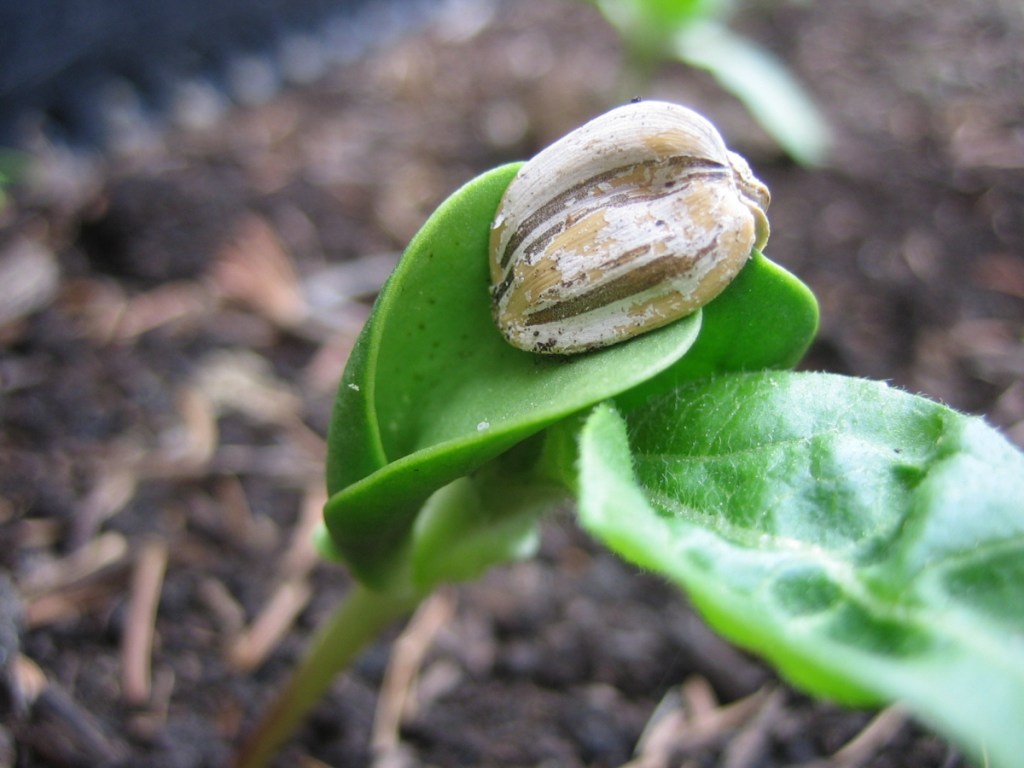
That small pinch of seed from last year – tiny, dry as sand – each day brings a new and wondrous fruitfulness, an unanticipated beauty, a new joy, a new abundance. The scattering of it was no small act, it seems. And I am coming to think that there are no small acts, after all.
For those of you who are interested in the readings followed by many churches, now is a time when the parable of the Sower is often called to mind – along with other seed related parables. This reflection on the scattering of seed, and the fruits that follow, draws on the insights of those stories. You could begin to explore those insights here, and here
Edit 22/7/23: In the comments below Caroline suggests it was a longhorn beetle. Here’s a picture from the Natural History Museum – a spotted longhorn beetle. It’s the one I saw! Welcome to the garden, little friend.
Once again, I am astonished, delighted and honoured to find something I wrote has made its way in the world, and is keeping the most excellent company with Diana Butler Bass as she shares from the last day of the Wild Goose Festival in The Cottage.
Please do take the time to read her reflections, and those she has gathered. It is a rich feast, with much to refelect on. The theme of Sower and Soil seems more relevant than ever as our soils become depleted on many levels. I am very struck by Cathleen Falsani’s reflections on the parable of the Sower from Matthew’s Gospel, which really resonate with me.
The parable is one I’ve returned to again and again, it seems to carry richer and different meanings whenever I encounter it. Here are some links to posts on the subject, in case you’d like to follow today’s readings.
Welcome back to the blog! Thank you for joining me here in the garden again.
One of the great joys of summer evenings is going outside to look at what’s happening in the warm, long twilights. In particular, I love to look for bats as they tumble and swoop over the long grass, and above the shrubs. Last year, we had a bat recorder in the garden, part of Transition Woodbridge’s wildlife corridors project. It’s fascinating to find out what treasures we have, and to work together to try and encourage more. There was an evening event with feedback, and you can find out a bit more about it here, following the links. I was sad to have missed it, as we were away. But I know there are bats here.
The garden at night is a very different place from in the day, quite mysterious. I’ve been thinking about the many creatures who come to or live in the garden who I don’t know and can’t name. I’m learning all the time, but the more you find out, the more you realise how much you don’t know. I’m learning too not to mind the mystery, to find out what I can but to just enjoy the beauty and variety of creatures we get to see, and hear. To notice the detail and the behaviour of creatures that may in time help me to find out what they are, but now the noticing is enough, and a real source of delight. We know the muntjak and the fox, and a hedgehog from time to time, are there at night, we hear an owl and know there are mice, and probably voles, but the unknown creatures bring something special to the experience of being in the garden too, Not rushing to id everything, but instead being open to observe with awe, is something I’m coming to love. You don’t need to know what things are called to appreciate them. You can also do your own naming!
So this theme, of unknown and unnamed things, begins to unfold in this poem. I think there might be a few more pieces exploring this way of seeing too.
I don’t have the tech for night-time photography, so the words will have to do.
Unknown June twilight 10 o’clock
We went outside to look for bats, up against the navy and turquoise sky, up among the slick sycamore leaves, up above the long grass where pale moths flutter.
We waited in the thickening dark, quieting, and then saw a black shape twisting and swooping amongst the other night-flyers – a heavy beetle lumbering, ghost-moths, silver gnats.
In the day, all can seem sweetness and light. The smell of roses and lilies hanging in the soft air. Our own familiar world, we can think.
But now, darkness reaches closer than our outstretched fingertips. The bat flies overhead, joined by another, and another, and we hear sounds too down in the long grass down in the deep cover of the borders. A rustling and a moving that grows louder as the space is transfigured by darkness, strange creatures blooming in the imagination, unknown and unnamed.
As looking up again, I see the gathering stars sometimes obscured by stretched and fluttering wings. There is so much unknown to me, so many names have never been on my lips. The quietness of unknowing is upon me, even as
I seek to learn. And I find I am discovering, mainly, what it is to live in wonder, to walk slowly, and in awe.
Last month we took a few days to visit Norfolk, staying by the Wash. UK viewers of Winter Watch and others may have seen some awe-inspiring film of one of the UK’s greatest wildlife events – sometimes called the Snettisham Spectacular. Maybe you’ve been lucky enough to see it for yourself. We decided we’d go and try and catch this sight, when a very high tide drives the birds off the mix of saltmarsh and water, into the air in huge flocks, and down into lagoons cared for by the RSPB. Their website (linked above) will help you get a taste of what its like, as well as some information about when these high tides happen.
Of course, there are never any guarantees with nature, but we got up very early and went to Snettisham in the dark, on a cold February morning, full of anticipation. I’d decided on flasks of coffee – which turned out to be an excellent idea! It was the most moving experience, deeply awe-inspiring, to see a landscape so full of life, and the wildness behaving freely as it should. I am sure that there have been times when there were more birds, and more wild, here, but it was nonetheless a glimpse of a more beautiful world, the world closer to how it should and can be.
You may also be aware that this precious landscape is vulnerable, and a new development could have a huge impact. If you want to find out more about that, you could begin here.
I wanted to try and capture the beauty of what we saw, and also the depth of experience that aroused in us and the others perhaps who were gathered there, and so this poem recounts the journey through the dark, and into the dawn-light of this beautiful sight.
Out in the Wash-marsh, the dark-before-dawn, we walked uncertainly, deeper in, listening warily for water sounds, mud sounds, as we heard, out on our right, the loudness of bird and tide. Restless, growing, imminent.
The path seemed so long in the dark, unknowing and unseeing as we were. On and on until at last we came out of hedge-shadows and reed rustles, out on the open bank of shingle, with a chill wind blowing, with the dark softening into the grey of mist and ice-fret, as out of the greyness emerged a gathering crowd, moving, looking, watching that density of black birds emerging too, out there on the mudbanks and sandbanks, crowding as the water was rising, All prickling with anticipation, all readying for flight.
Through a lens you could see the black backs of oystercatchers, tens of thousands, all facing one way, bright beaks aligned like many compasses.
And further out, paler knots, rippling over the shrinking land, their voices sounding together as water lapped and lapped ever deeper, full of fish washed in on this rapid tide, followed by the hungry seals, heads up, and hunting.
The bird noise grows, and the waders begin their great lift, A few at first, tip toed, up and down like dancers performing the perfect jete. Then, as waves pour over their islands and there is no room for all these birds,
They lift and stay lifted, from the edges, like a great cloth, swirling now above fast running water rilled with small waves.
And then the oystercatchers begin to pour like dark smoke, like sentient smoke, as one, all to the right, pour down into the lagoons behind us.
While the knots, catching the rising light, rise too, turning pale now, loud with cries and loud too with wings, like a great crowd running joyously, like a shining cloud swirling in the wind but with mind, with being, with will, a great pale creature rustling and winding through the air over us, close and low, and then down in a whispering snake’s head behind.
And again, and again, rise up more swirls of birds, faster and wider by the tens of thousands, of wings all together, birds turning together, a miracle of unity,
As wings beat like hurried feet as more people rush to look up, and the waves take more and more ground from under us all.
And I cannot tell you what joy, what exultation – And I write from longing to tell you what joy, what exultation, we humans, standing, feel in this wide and wild abundance, this wild and wide abandon. This deep unity, this wide-wild-eyed seeing into the communion of things.
As a sudden sound is added even to all this loud crescendo, like thunder, like jets,
The rise and beating of great wings – pink footed geese beyond number, beyond measure,
filling the sky with clouds of moving birds, spinning fast now into great skeins that wind over the deep distance, loud and louder bright on the dawn,
Bright with the wonder of wings lifting, Bright in this new, steady, giddying light. A light that washes through us all A light that holds us all As dawn breaks us wide open.
I hope this gives you a glimpse of how beautiful a sight it was, and how transformative.
Yesterday evening I had the great privilege of reading this poem to open a series of talks organised by the Woodbridge Climate Action Centre. Local friends, tickets are free, and are going fast. The series is called Regenerating Living Landscapes, Working with Nature.
It is possible that a recording of last night’s event may become available. If it does, I’ll make sure there’s a link to it here.
19th May Note: As you can see from the list above, tonight is the last talk in the series. Once again I’m delighted to have been asked to read something, and the poem I’m going to read is A Good Place, which is also on this blog. As usual, click through to read it.
Ely Cathedral’s powerful statue of Mary, by David Wynne
As we approach the third sunday of Advent, the word we turn to is Joy. And, as part of that turning to joy, many also remember Mary. In particular, her response to the angel’s message when she was invited to participate in this story of “God-with-us”… but more on that later.
As I look at this statue, I find Mary’s stance compelling. It is open and powerful, it feels like a “yes” which accepts and trusts what will be, even if it is beyond the mind’s understanding. Pictures of Mary often show her looking more afraid, more passive. This work captures a moment of glorious, positive choice. But there is something else. The slight downward tilt of her head seems to acknowledge the difficulties caught up in this acceptance, and the enormity of that choice. There is awe and vulnerability here too – vulnerability captured in that bare foot peeking out.
Among the fields and vineyards of Nazareth, in Galilee, lived a girl named Mary. She was soon to be married to Joseph, a carpenter, who could trace his family back to David, the shepherd king.
Then, one day, astonishing news burst into Mary’s quiet, hopeful life. The angel Gabriel came to her with a message. “God is with you, Mary!” Mary gasped, and fell to her knees. “Don’t be afraid. God smiles on you!” The angel spoke the astounding words gently, lovingly. “You will have a son and name him Jesus. He will be called great – the Son of the Most High God! The Lord God will give him the throne of his ancestor David, and his kingdom will never end!”
For a moment there was silence, as Gabriel’s words filled the air – and Mary’s mind. “But how can this be, as I am not yet married?” Mary asked. “God’s Holy Spirit will enfold you. Your child will be holy. Even Elizabeth, from your own family, is going to have a child, despite her age! She is now in her sixth month. So you see, nothing is impossible with God!”
Mary raised her eyes to Gabriel’s face. “I am God’s servant. Let it be as you say.” And the angel let her alone, her mind spinning with the strange words.
Then Mary thought of Elizabeth. “The angel knew all about her – I must go to her.” She got ready, and set off quickly for Elizabeth’s home in Judea to the south, near Jerusalem.
As soon as she arrived at the house, she hurried to Elizabeth and took her hands. At the sound of Mary’s voice, the baby leaped inside Elizabeth, and the Holy Spirit filled her. She understood at once what had happened to Mary.
“You are blessed among all women, and blessed is your unborn child!” she said. “Why have I been so honoured? Why should the mother of my Lord God come to visit me?” Elizabeth laughed, and put Mary’s hand on her belly. “You see how my child leaps for joy at the sound of your voice?”
Then, Mary speaks out extraordinary words, which in turn echo the words of Hannah when she said goodbye to her long-awaited son, Samuel (I Samuel 2) . You can read Mary’s words – the Magnificat – in my version here, and also more about Mary and Elizabeth’s time together.
It strikes me how deeply Mary entered into uncertainty, with her acceptance despite her questions – “how can this be?” She is setting out on a path that will cause her pain, but the angel’s words focus on a bigger picture, an unknowably big picture. There is a vision of what will be, the good that will come from her choice. There is tenderness and reassurance here as she asks the question, honouring her uncertainty, the impossibility of comprehending what this may mean. And there is also a gentle, tactful suggestion of a path to be taken. A path to her cousin Elizabeth – who is also caught up in this great bursting through of hope and joy into a world marked with difficulty and pain. And that path will bring her companionship with someone who will believe her, and will support her, and to whom she can offer love and encouragement in turn.
Sometimes, during Advent, we are also reminded of John the Baptist – Elizabeth’s son – and his question to Jesus when he was in prison: “Are you the one who is to come, or should we expect someone else?” You can read the account here. What I love about this reading is the way Jesus reassures John in a way he will understand, echoing the prophet Isaiah. There is a tenderness and deep compassion here too. We can almost hear an echo of their mothers’ relationship in this question, this uncertainty, and this reassurance. Jesus then goes on to speak to those listening who may, we presume, be shaken by John’s question – or critical of him for doubting. The compassion of Jesus’ response can reassure all of us. It is hard for us to understand, and doubt and question and uncertainty are here embraced and not feared.
So our focus on joy is one where joy can be experienced despite our frailties and uncertainties. It does not come with knowing the answers, having things all neatly wrapped up, but in the courage to enter into the mysterious life of something beyond and greater than ourselves. Perhaps here is the only place it can be found.
We mentioned Isaiah above. Here is part of the passage paired with the reading about John in the Church of England readings for this week. You can read it all here.
The desert and the parched land will be glad; the wilderness will rejoice and blossom. Like the crocus, it will burst into bloom; it will rejoice greatly and shout for joy. The glory of Lebanon will be given to it, the splendor of Carmel and Sharon; they will see the glory of the Lord, the splendor of our God.
Strengthen the feeble hands, steady the knees that give way; say to those with fearful hearts, “Be strong, do not fear; your God will come, he will come with vengeance; with divine retribution he will come to save you.”
Then will the eyes of the blind be opened and the ears of the deaf unstopped. Then will the lame leap like a deer, and the mute tongue shout for joy. Water will gush forth in the wilderness and streams in the desert. The burning sand will become a pool, the thirsty ground bubbling springs. In the haunts where jackals once lay, grass and reeds and papyrus will grow.
And a highway will be there; it will be called the Way of Holiness; it will be for those who walk on that Way.
Once again, we have a vision of how the world could be, restored and flourishing. A highway through the wetlands bursting with life, and even those who lack strength and steadiness will walk it.
And I call to mind COP15, the biodiversity conference currently taking place in Montreal. When so much of the beautiful life of our world is diminished, we so need this vision of restoration and abundance. We need this vision of life and joy, of a better way of being in the world. And then we need to walk into it.
We thank you for being born among us, sharing with us what it is to be human. we thank you for showing us a way to live, full of grace and truth. Light up our path, and let us walk with you.
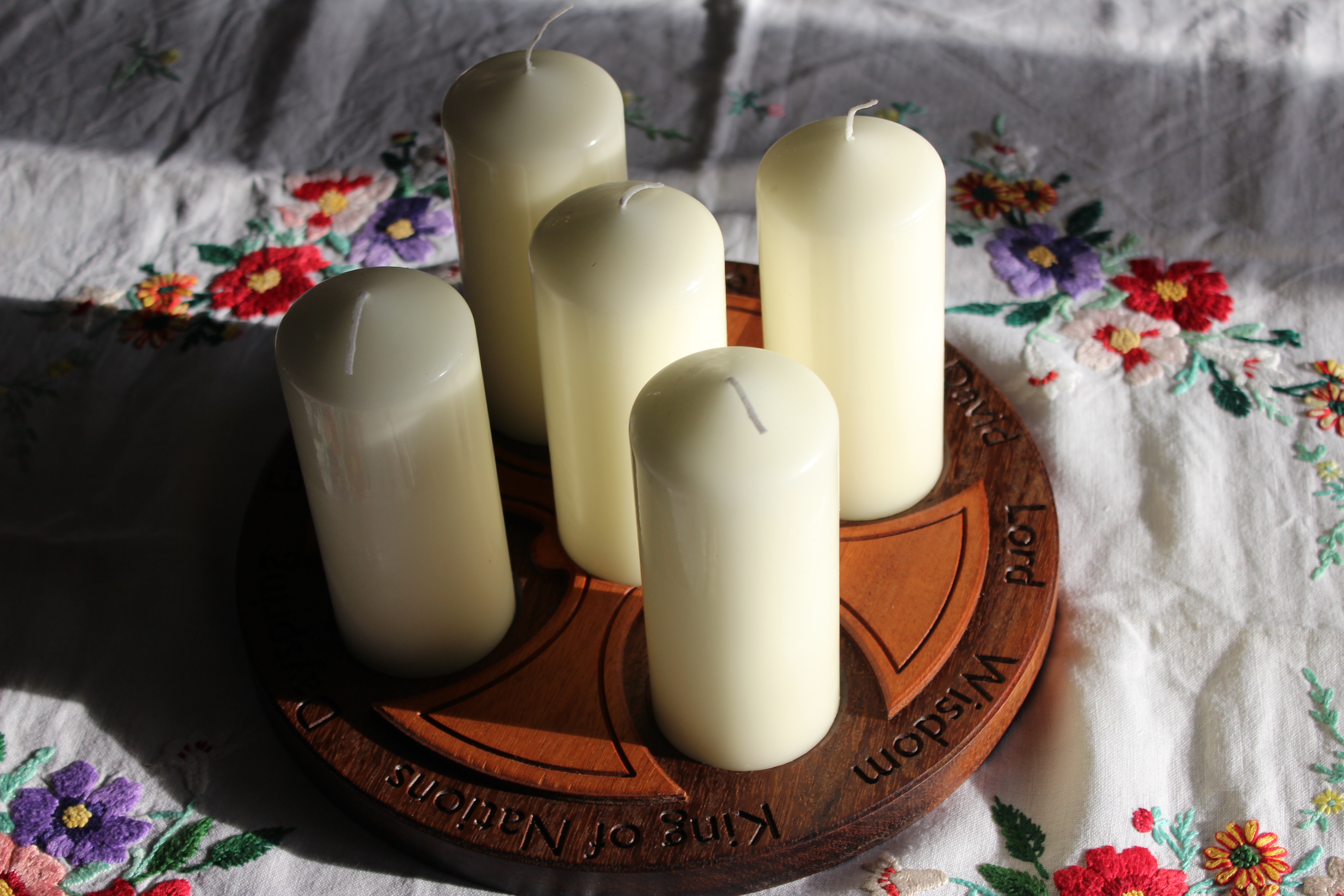
It’s the first of December, we’re entering into Advent proper now. This post is in preparation for the second Sunday of the season, and for many the theme of the week is Peace, following on from Hope last week. Tree stumps also feature.
Once again, we are engaged in a radical practice of seeing what could be alongside what is. As with the thoughts on Hope, we’re not trusting to wishful thinking, or pretending real obstacles to peace don’t block our way.
They dress the wound of my people as though it were not serious. “Peace, peace,” they say, when there is no peace.
Says Jeremiah . And I’m sure we all know the distress of having some deep issue dismissed, and peace proclaimed when what that means is people keeping silent about weighty matters. That is no peace. We are in search of something much more radical.
How to hold on to some kind of centre, some kind of Peace, in the midst of all that surrounds us? Whether that’s deep matters of justice, distress, and hurt, or our more daily concerns of lists and duties and timetables and so many forgotten-to-do-in-time things? How to hold on to a centre, and to peace, in the midst of loss, and loneliness, and Christmas pasts? This Sunday, the second of Advent, the theme of peace is much needed.
Once again, readings for this week turn to the prophets. A longer meander through the section of Isaiah we read from below will reveal much that preceeds the talk of peace. There are words which seek to uncover injustice and untruth, addressing past conflicts and wrongdoings. This isn’t peace which seeks to bandage over matters that need deeper healing, this is peace as a result of a long process of radical transformation. It’s a vision of the dream of God for the world. Of the growth and new life possible in things which seem beyond hope of greening.
A shoot shall come out from the stump of Jesse, and a branch shall grow out of his roots. The spirit of the Lord shall rest on him, the spirit of wisdom and understanding, the spirit of counsel and might, the spirit of knowledge and the fear of the Lord.
The wolf will live with the lamb, the leopard will lie down with the goat, the calf and the lion and the yearling together; and a little child will lead them. The cow will feed with the bear, their young will lie down together, and the lion will eat straw like the ox. The infant will play near the cobra’s den, and the young child will put its hand into the viper’s nest. They will neither harm nor destroy on all my holy mountain, for the earth will be filled with the knowledge of the Lord as the waters cover the sea.
Isaiah 11: 1-2, 6-9
I am very struck by the image of the tree stump – cut down, presumed dead, or unproductive – springing back into life. We see again the hope in even the most hopeless situations, the determination of life. Many have looked back at these words of Isaiah and seen the coming of Jesus in them. In the shoot springing up, and in the little child who will gently lead. Born into most unpromising circumstances – homeless (at least temporarily), under enemy occupation and the cruel rule of a local puppet tyrant – there is a deep promise of peace and hope in the coming of Jesus. This new growth will take a suprising form. This dream of a new world will grow under the surface, in hearts and lives. Appearences are deceptive.
Even my beautiful dead cotoneaster, picture at the top of this post, harbours life. Although the plant itself hasn’t sprung up from dead roots, other things have. Birds perched in the branches, dropping seeds, and now the light has reached the ground, things are growing. And the dead wood is a haven for so many small creatures. I wrote about the tree here.
And deeper, and further into the prophecy, we have the harmony of all creatures, including humans, living at peace. We have an ecology of plenty and playfulness, of trust and abundance. As we meditate on the possibilities of peace, and the world as it may be, can we catch a vision of what that might be like? As we see the number of trees, the whole landscapes and ecosystems, that have been lost, how might these words speak into that situation with hope, justice and peace?
You might consider writing down your own vision for how such a just, peaceful, restorative, abundant world might appear. You might wish to pray “Your kingdom come, your will be done, on earth as it is in heaven.” from the Lord’s Prayer. What comes to mind as you pray that bold and transformative prayer? And as we pray, so we seek to live. How might we live this week in response to this vision, this dream, this prayer?
And as we do so, we could turn to this week’s gospel reading. Trees come up here, too….. John the Baptist, preparing the way for the ministry of his cousin Jesus, speaks of knowing trees by their fruit. What their lives produce.
Under the white heat of the sun, far from shade, the murmuring crowds gathered. Some had walked through city streets, others through fields and vineyards, but all had come out into the stony, dusty Desert of Judea to see one person. It was John, son of Zechariah, who stood by the river Jordan.
John was no polished performer – he looked wild, dressed in rough clothes of camel hair held together by a leather belt. He was thin, eating only the locusts and wild honey he could find in the desert. But his words were full of power, full of life and holiness. He called out in a loud voice “Repent! Turn your lives around and come back to God! His kingdom is near. Come and be washed clean!” And many came forward, full of sorrow for the wrongs they had done, and John baptized them in the River Jordan.
There some among the religious leaders who came and joined the crowds to look holy in front of everyone else – they thought they were good enough already, and had no real need to change. “You snakes!” the Baptist spat: “We can tell what you are like by what you do – just as you can tell a tree by its fruit. Don’t think you can fool anyone with show-religion!”
But most who came were hungry for a new beginning. For John taught them to hope. In his words, they caught a glimpse of something beyond their everyday lives. They understood that John the Baptist was preparing the way for something, or someone, astonishing. “I baptize you with water, for repentance. But you wait. There is one coming after me who is so much greater. I am not even fit to carry his sandals for him. He will baptize you with the Holy Spirit and fire – a baptism that will wash you inside out.”
In Luke’s Gospel, we get an insight into what this preparation for the one who is to come might look like in practice
“Even now the ax is lying at the root of the trees; every tree therefore that does not bear good fruit is cut down and thrown into the fire.” And the crowds asked him, “What then shall we do?” In reply he said to them, “Whoever has two coats must share with anyone who has none; and whoever has food must do likewise.” …..
Luke 2:9-11
We remember the Advent traditions of giving – not just to friends and relations, but to others as they have need. What John the Baptist is calling people to, to prepare for the coming of the Kingdom of God, looks a lot like sharing, like generosity of spirit, as we are able. Perhaps this is a way towards Peace. As our readings take us closer to Christmas, to the birth of the one who we have been waiting for – springing up like a new shoot – we will find a clearer focus on the Prince of Peace who is to come, and the way of peace he walked.
Hope, and Peace
Perhaps we can make time to keep our eyes open for signs of new growth in the winter gloom, when all seems cold. Are there shoots appearing? Are there signs of new life? Can we pursue peace by looking for justice, and by sharing as far as we are able? We can share kindness, and patience, and perhaps a smile to cheer someone’s day. Perhaps we can do more than that. If we have the choice to simplify things for ourselves, we may find we have a little room to share with others. Might that be a path to a more peaceful Christmas?
Wherever you are in your Christmas preparations today, may you know Peace.
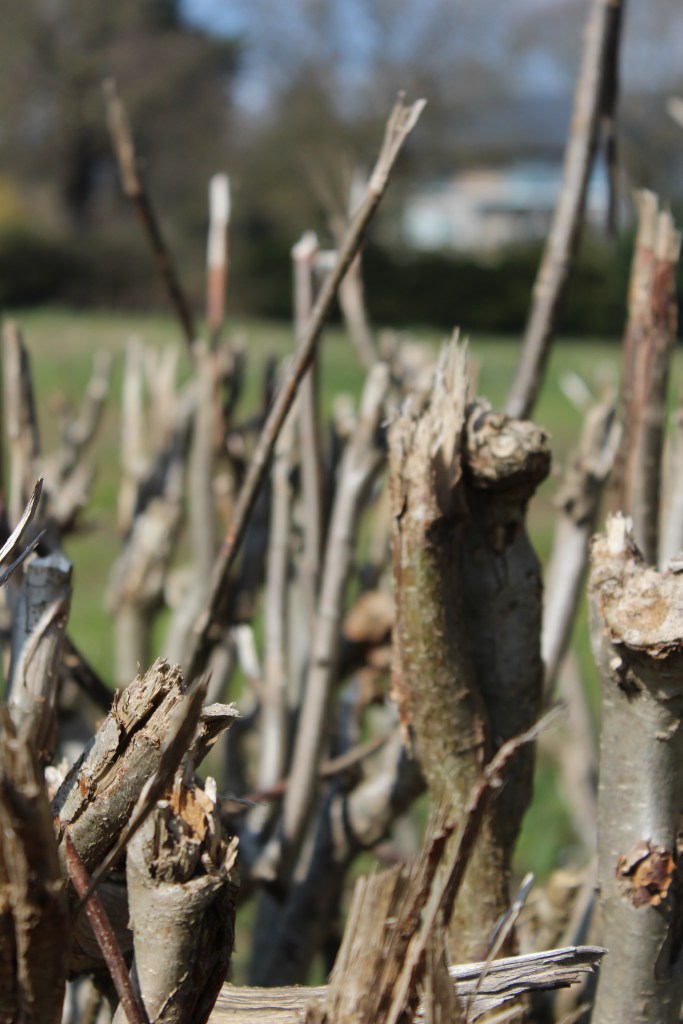
This photo is of an apparently dead, flailed hazel hedge near where I live. Despite this treatment, it has put out some new growth. How many years it’ll withstand such an onslaught, I don’t know. But I am heartened to see the new shoot growing up from a very unpeaceful process. You can read more about the hedge here.
As a small stone, dropped in a pool, sends ripples to its furthers edges, help us know our small actions of love and kindness can do great good. … Help us do the good things we can, trusting you will use them.
I’m really pleased to be part of Transition Woodbridge’s Wildlife Corridors project. You can read more about Transition Woodbrige here, and Wildlife Corridors here.
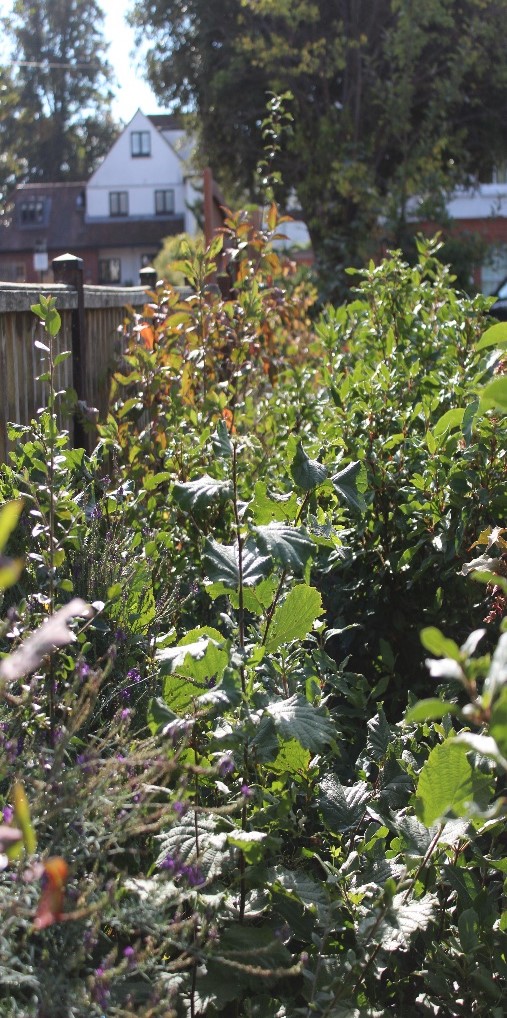
We’re a group of all sorts of people from about the town who are seeking to make it a bit more wildlife friendly, and learning and sharing as we go. So below, you’ll find a little story about one of our hedges which I wrote for the group’s newsletter. We’re beginning to do more of this – passing on our often falterning steps towards a different way of thinking about our gardens. Here, our hedge had a beetle problem, and we tried a gentler and more natural approach to the plague of viburnum beetles than we might have done in the past. We’re delighted that the hedgeline is gradually becoming much more beautiful, diverse, and better for a wider range of creatures than simply the dreaded viburnum beetle!
After the account, you will find a poem drawing on this same hedge, and its story of renewal.
A hedge story – from pest control to native beauty.
It was a thin strip of dark green, between drives and walls. Our viburnum hedge joins what’s left of the original roadside hedgerow with holm oak and wild cherry plums to the network of gardens and trees behind. A narrow corridor of life, but with precious winter flowers for the bees, and just occasionally, a wren or a bluetit nested there. It was part of the planting we inherited.
A few years ago, it began to sicken dramatically. Viburnum beetle. It looked devastated, and I had my doubts if it would recover. We consulted the RHS website, cut away the worst of it, and scraped out some of the soil underneath where the grubs overwinter. As I did so, I felt the poverty of the soil – it was grey, had no structure, with no visible worms or other minibeasts. So we piled on the homemade compost and autumn leaves. We also decided to enrich it more permanently with native plants – for as it was, it could not renew itself, and the long strip of monoculture was an easy target for the dreaded beetle.
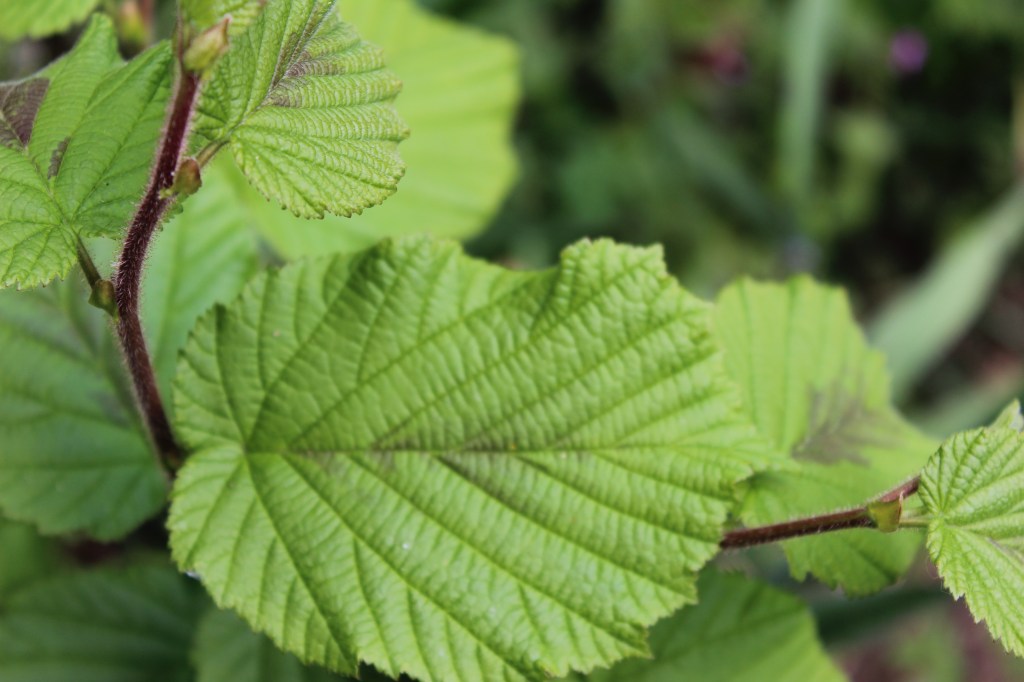
I bought some bare rooted spindle from Botanica and interspersed these with hazel that the squirrels had kindly planted around the garden. In the autumns to come, I’m hoping for a blaze of butter yellow hazel, with bright red leaves and pink/orange berries from the spindle. All to fall to the ground and feed it.
It’s limped through this year’s drought, but we’re getting there. It’s drawn in so many more creatures already. The insects are returning. The soil has worms, and frogs and mice make their way along it. At night bats hunt over it, and by day, the dragonflies. Many plants are finding their way there, each making their own contribution. At first, it was mustard garlic. Now, there’s purple toadflax, birdsfoot trefoil, various bedstraws and all manner of other plants. Butterflies and caterpillars, bees and hoverflies, and a healthy range of beetles are making a home here.
There’s a trellis separating our neighbour’s drive from this hedge and, in consultation with them, we’ve planted garden seeds and cuttings – vetch and perpetual sweet peas to improve the soil, honeysuckle, roses and jasmine. Again, I hope that next year it will be truly beautiful.
And as for the beetle attack… there have been a few nibbled leaves in the last two years, but nothing more than that. And, if some of the original plants die, there is plenty of life to take advantage of the light and air they leave. We have moved from a dark monoculture to a diverse and increasingly native abundance, with so much more food for all life. The viburnum still gives flower at a time of year when the natives are quiet, and deep cover too for plants and animals and birds. But the natives are making their presence felt now, and bringing so much beauty, diversity and abundance. It’s becoming a joy, and an example of how gentle care can slowly move a garden to something far more alive. I’m watching what it’s doing with real delight. What will be next?
And now the poem…..
Green ink 1 Hedge
And the garden now is my poem. So this hedge, this long line of joy and work, rhymes its meanings back and forth, carries them through seasons, through drought and cold by bird and frog and bee. Carries deep memory of the land, of wood and hedgerow, orchard and field, and deep hope too, for what may be, and what is becoming. And growing.
For joy and work wrought it, and renewed it, planted these saplings of spindle and hazel that will be red and gold as leaves fade in late sun, fade to such an illuminated brightness.
And I see what may be, what are, sweet rose cuttings unfolding, and growing, as honeysuckle twines, and jasmine – tiny, with tiny leaves – grows now in warmth, and sweet peas begin their work of rising up from hard coiled seeds.
All this abundance given freely by the garden and gathered, and tended, and shared, as she freely gives more – wind-blown seeds and bird- carried berries filling the earth to overflowing, as together we make a line of such richness and beauty, thought and imagining, sibilant as the wind whips through it, sounding like words spilling on the page. These words. This page.
I would write in green, I have written in green, working with all this life. Patient, resting in its waiting, and growing, and fading, ending, and beginning again. And again. This long line of green.
This is a poem, in two parts, drawing on my morning practice of yoga in the garden. It’s patchy at this time of year, depending on rain, and sometimes cold, but there are some mornings where you catch a break in the changing weather, and know why this is a good way to begin.
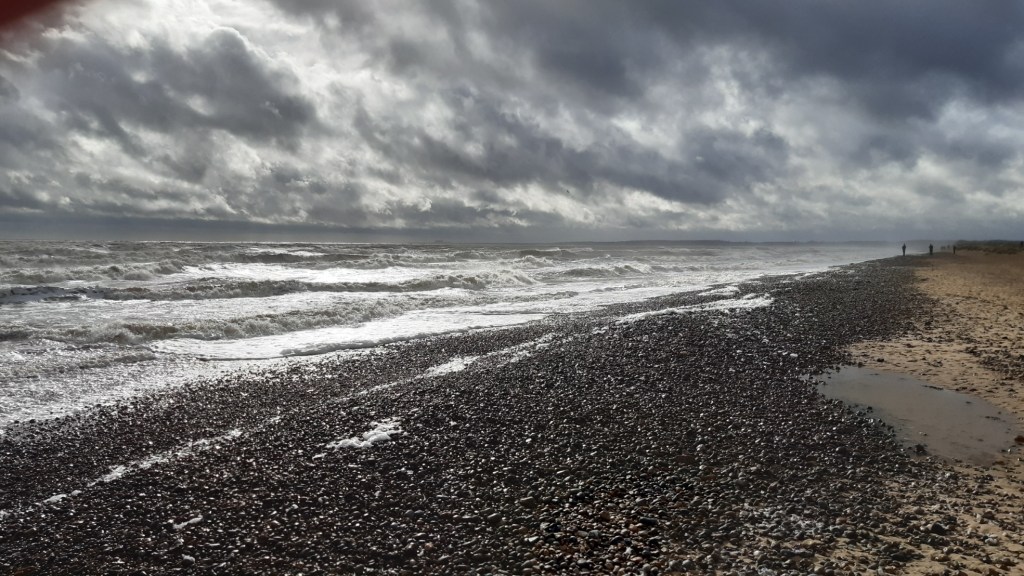
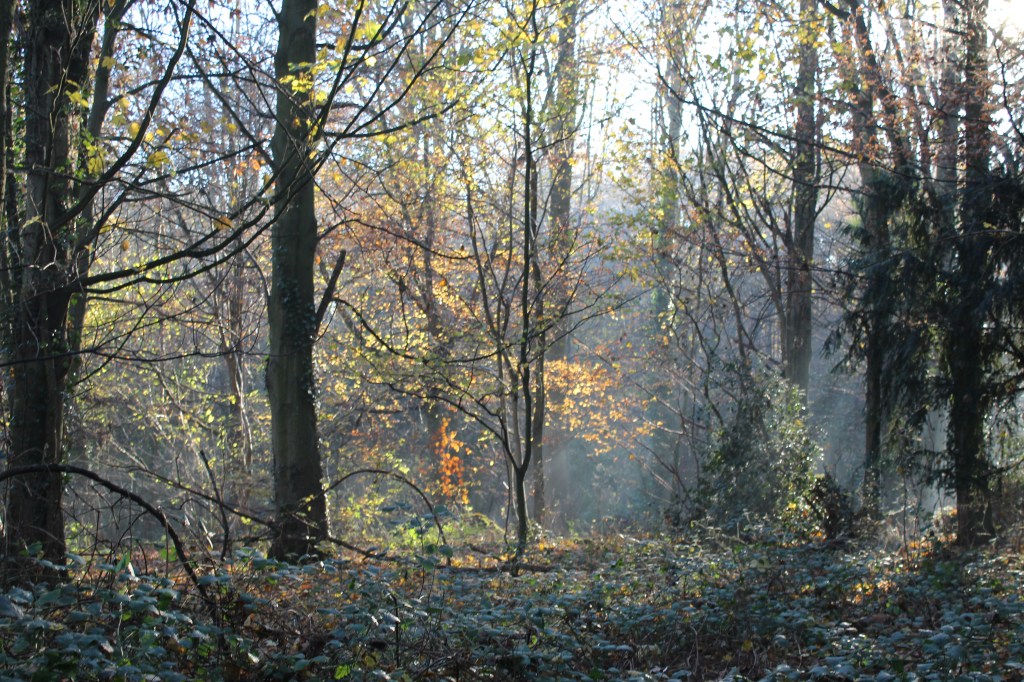
I took no photos at the time, being lost – or found – in the moment, and so I include for you here some other pictures filled with light, and dark, hoping they will fill your eyes with something good. This morning, as I breathed in the light and the air, I was aware of gratitude rising within me, gifted to me. I know that American friends are turning their attention to Thanksgiving at this time of year, and so, even as winter begins its approach, I am reminded to hold on to the practice of gratitude in darkening days.
I wasn’t sure quite where to go with this poem. There were two things – the experience of suddenly becoming aware of the beauty of the sky – and that beauty itself. So I’ve noodled around with it until it sits in two parts. So, this is where it is at the moment.
On looking up
So this is how it was, this morning: Early, feet bare on cold grass, I raised my head, stretched my arms, and as I did so, I remembered to look up – to open my eyes wide. I remembered to took up and breathe in deep and full, breathe in that cool morning air, early, before the smell of road runs through it.
Or maybe, it was more like this: Raising my head, stretching my arms, breathing deep of the cold clear air, my mind beginning to steady and settle, my eyes opened – all at once – to the strange dazzling luminosity of the sky. And that sight filled me as surely as the cold air. For a moment, hands high, my smile broke open as wide as my gaze, open as it was to this sky.
Sky as dizzying, vertiginous depth, and falling. Sky, too, as ever-present wonder, and catching. I do not know which it was, but I know that the beauty of it fills me, nourishes me, changes me. And I am thankful.
******
For in looking up, I saw the sky’s unknowable dizzying depths, its many layers, its films of light moving across each other, and for a moment I held a cool breath in wonder, and in looking, and what felt like falling.
Highest, or deepest, the moon, partial and pale, and floating beyond the crumpled white-blue linen of high clouds and new sky. And below, moving fast across them, hurried and bright, the rapid soft pink and orange of clouds blowing in from the north.
And holding up my gaze with each deepening breath I see, below the clouds, how the dark lines of birds begin their overflight. Gulls, risen from their night-roost on the river, coming inland to forage in harrowed field, overflowing bins, wherever they find what they need. And below them, the crowd of starlings, chattering, still holding a loose shape of past murmurations, trailing after from their hushing reedbeds.
Each layer of sky lower, closer, faster, sliding against each other in wild reckless beauty as my body fills with north wind, lungs as cool as fresh water on a summers day. The morning beginning at one with these things, with joy in these things, with yes to these things, with thankfulness for all these daily wondrous things.













 Andrea Skevington