Firstly, an apology if you don’t like wasps. I promise this is the only photo you’ll see here. If you can bear to persevere and read the poem, you’ll see how I’ve shiften a little in my view of them, and I hope that might help.
Picture – Gedling conservation trust – Common wasp
Thank you for bearing with me as I took a bit of a break from writing here over the summer. I do hope to share more with you as the days shorten and outside is a little less enticing.
There are notes in my notebook, ready for some further sharpening of my pencil. One of the things that’s really struck me this year has been the absence of insects here in the UK. Wet and cold earlier in the year, while not newsworthy compared to other weather events, seems to have stricken many of our insects and affected those birds and bats who feed off them. I am pleased to see the garden lighting up with wings, late as it is, and that has lifted my spirits. It’s been a strange, unsettling time, though, looking at the flowers that normally draw bees and butterflies, and finding them empty. I’ve wondered when to cut the meadows down, and left it late, so the last flowers might provide something for these missing friends.
Earlier in the year. A feast spread, but where are the guests?
The Butterfly Conservation trust have just published the results of their Citizen Science Survey, and found that the numbers are very low this year. You can read more about that here.
It’s also been strange to enjoy picnics without being troubled by wasps. I have been suprised to find I miss them, and worry about how they’re doing.
And so this morning, I saw a wasp. One of so few this year. And I wrote this.
Wasp
This morning, eating breakfast, slow, I heard a buzz and a tap against the light-streaming windows.
Buzz and tap, buzz and tap. I turned, saw a wasp on the window, and felt joy rising, and knew how strange it was to feel that joy at the sight of her – joy, and compassion, too, as she bumped and bumped against our shining window.
Oh, hello, I whispered, Don’t be afraid, you’ll be out in no time!
And, glass and paper in hand, I released her. She lingered a moment on the rim, gently waving her stinger up and down, then spread wings, flew into the clear September light, bright with late flowers.
And I laughed. Years ago, I would have flapped her away, swatted her even, afraid. And here I was, whispering to a wasp. Years ago, there would have been hundreds.
Not this one solitary marvel, striped, miniature perfection, buzzing and beautiful, in search now of the sweetness of a fallen apple, the ivy thick with bees.
Precious, so precious. Late as it is, I am learning how precious life is.
Edit: 11th November 2025
I was sent this film of the poem by Joseph Davidson. Do watch it, it’s very good.
Monday is Earth Day, when many of us especially remember the gifts of the Earth, its fragility, and our responsibilities towards it. Today (Saturday) in my town we’re having a bit of a celebration down by our river, focusing on good local food and organisations which are seeking to care for our patch of Earth. There’s music and friendship and crafts and storytelling, and local businesses who are doing things differently – beautiful local bread and saffron and wild venison and plants and flour ground by our tide-mill among other things. It’s a good way to mark the occasion.
This spring, I’ve been enjoying Simon Armitage’s beautifully illustrated new collection, Blossomise, in collaboration with the National Trust. I highly recommend it. It’s a celebration of the blossom season, transient and determined, which for us starts in February with this lovely cherry plum, or mirabelle, and is carrying on from one tree to another in our growing collection of fruit trees. We have one apple who is always alarmingly late, but the buds are beginning to swell. Maybe by mid May, if its mild, it may offer the season’s swansong. I also highly recommend the beautiful Orchard by Benedict McDonald and Nicolas Gates – I sent a copy to my MP as a gift when she was Secretary of State for the Environment.
I have been thinking of the Japanese love of blossom, and how it’s fleeting ephemeral nature makes it so precious to them, and to the rest of us. In some ways, it’s a modest theme for such an expansive day – when we consider the whole of this green Earth, but I kept being drawn back to it, so here we go. I think what draws me to it is twofold: there’s something about the dazzling beauty of blossom which is so transient, so easily lost which reminds me of the beauty of all the trees, and oceans, and rivers, the great all of the good Earth which we love and are harming and are called to tend and care for. And secondly, there is the draw of the particular. When I look at the big picture, I am often overwhelmed and frequently despairing, and so I choose to focus on the small, the local, the actions I can take for the trees in my area, the bats who will soon be flying over my garden, the sorry state of my – of our – local river. So this poem I’m sharing with you for this day is, like blossom, small and light.
The most beautiful thing
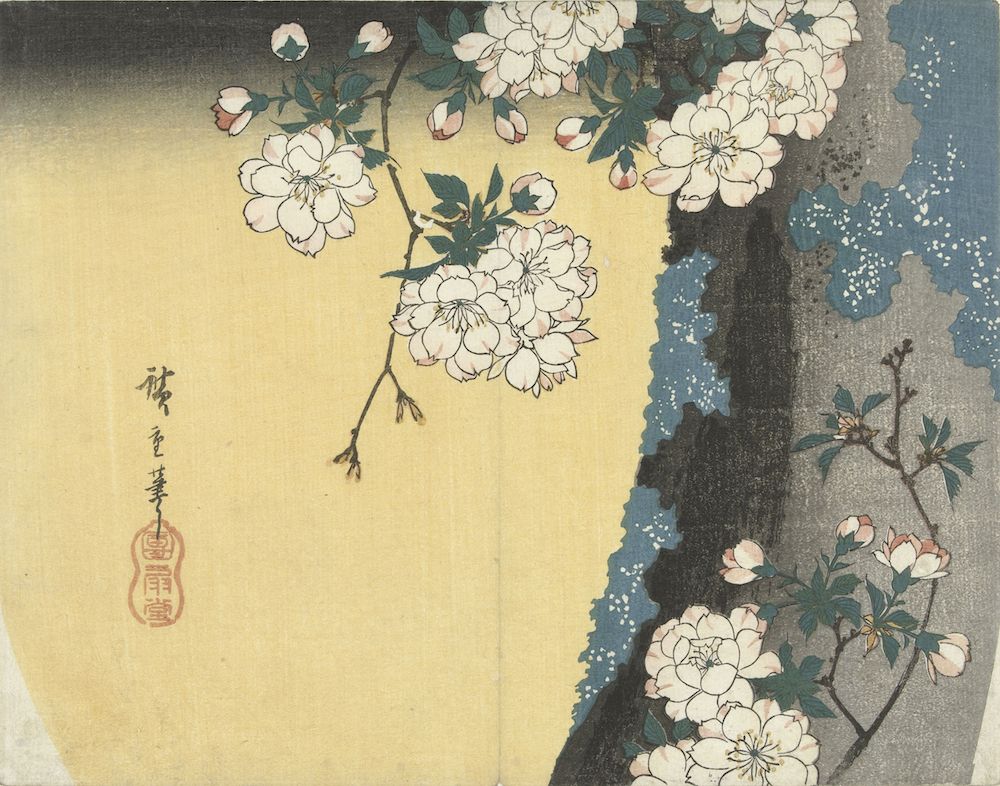
Outside, the blossom is in full glory now, white star-flowers, delicate as tissue, on black, angled branches – like a print by Hiroshige.
I gathered a blown branch from the ground, and brought it in to shimmer on my mantelpiece in a tall green bottle. It is the loveliest thing in the room, the loveliest thing I might call mine – mine, perhaps, not as possession, but in relation – as in sister of mine, the dancing blossom tree.
For dance she does as the cold wind blows, gusting and wild, in a snowstorm of petals that dress the air about her.
And sister she is too, although the resemblance is slight. We share kinship in chilly breezes and soft rain, nourished alike by this deep dark soil, and made of it, depending on the same gifts of Earth for our brief time of flourishing. This felt kinship, truly the most beautiful thing,
As like her, I dance in the gusting wind, and like her, I look for tomorrow and the promise of sun, and birdsong, and I too hope for the gentle buzz of bees and the fruit that is to come.
Hiroshige blossom
If you are looking for readings for Earth Day, you might find something on this blog to suit. Please feel free to use my work, saying where you found it.
Here are a few suggestions, but if you search by Nature, Creation, Green, there will be many others
I thought I might mention here a few podcasts I like to listen to – I’ll just name them as there are so many different podcast providers. A thing I am noticing amongst those who are working with the land and especially the rewilders is the most deep sense of joy, purpose and accomplishment. There is a rising change in our relation to the rest of the natural world, and perhaps a thing we can all do is cultivate a love and practical care of our place, and find others to work with. So, here are some listening suggestions….
The Jane Goodall Hopecast The Knepp Wildlands Podcast Rewilding the World with Ben Goldsmith The Rewild Podcast with James Shooter Learning How to See with Brian McLaren – latest season is Seeing Nature Wild Podcast by Grange Project How to Save a Planet (for a more North American emphasis)
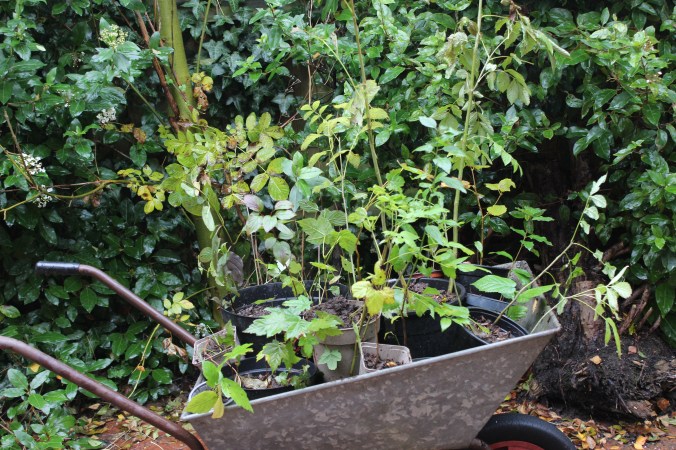
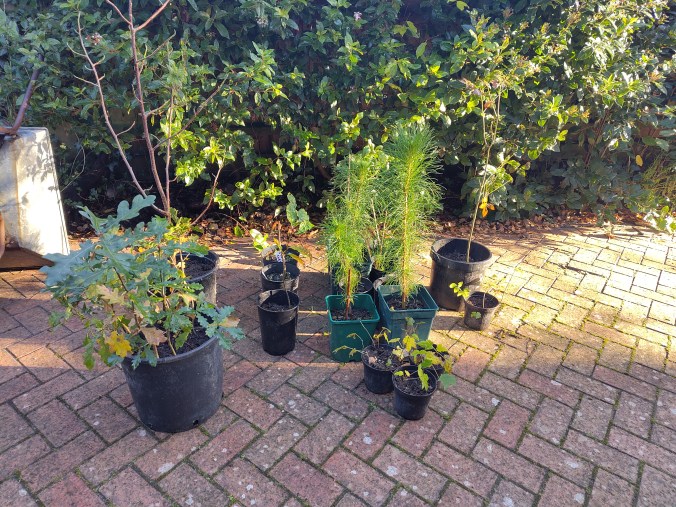
A little tree rehoming scheme……Some of the saplings dug up from my garden and very kindly donated by others. I’ve passed on about 270 now to local people who are planting woods, orchards and hedgerows. Strangely, it seems to be a notion that has found its moment!
Happy Earth Day. May the place where you live flourish. May the places your food grows be bountiful. May your air and water be clean and life-giving.
This New Year, I’m picking up the occasional series, Sunday Retold. Many churches follow a set pattern of readings, so communities up and down the country are gathering around the same stories, the same prayers, and meditating on them together. Often, at least one of the passages appears in my retelling of the Bible, The Bible Story Retold, and so it seems a good idea to share that with you. If you’d like to use any of the material on this blog please do, and please say where you got it from. My books should be available to order at all the usual real life and online places.
Samuel Dedicated by Hannah at the Temple by Frank W.W. Topham
Anyway, this week is a story often shared with children – at least in part. The central character is the boy Samuel, son of Hannah. He was a much longed for child, who was given to the service of God in the temple at a very young age. Eli, the priest, was given charge of him.
The set reading is 1 Samuel 3:1-10, and here is my retelling:
The boy Samuel learned how to serve God in the shrine. And he slept by the lamp of God’s presence, close to the holy ark of the covenant. One night, in the darkness before dawn a voice called out, “Samuel, Samuel!” So Samuel got up and went to Eli, who was ond, with failing eyes. “Here I am! You called me!” Samuel said. Eli stirred. “I didn’t call you! Go back to sleep!” So he did. But there was the voice again. “Samuel, Samuel!” The boy got up again and went to Eli. “You called, and I came!” “No I didn’t call you. Go back to sleep.” But, when Samuel woke Eli a third time, he wondered what this voice could mean. Perhaps God was speaking. “Go back and lie down. If you are called again, say, ‘Speak, Lord, your servant is listening.'” So Samuel went back to bed and lay there, waiting, hardly daring to breathe. “Samuel, Samuel!” came the voice. Samuel remembered Eli’s words. “Speak, Lord, your servant is listening!” And so God spoke to Samuel. God said that the right to be priests would be taken away from Eli’s family, because his sons had donw wrong, and Eli had not stopped them. They would be punished. In the morning, Samuel had to tell his tacher what God had said. ”God is God, and will do what is best!” Eli sighed.
From The Bible Story Retold in Twelve Chapters
Often, when this passage is shared, the empasis falls on listening to God’s voice, and being ready to respond. We’ll get back to that in due course, but for now I’m following my immediate reaction to this passage today, and how it might help us navigate this difficult new season we’re in.
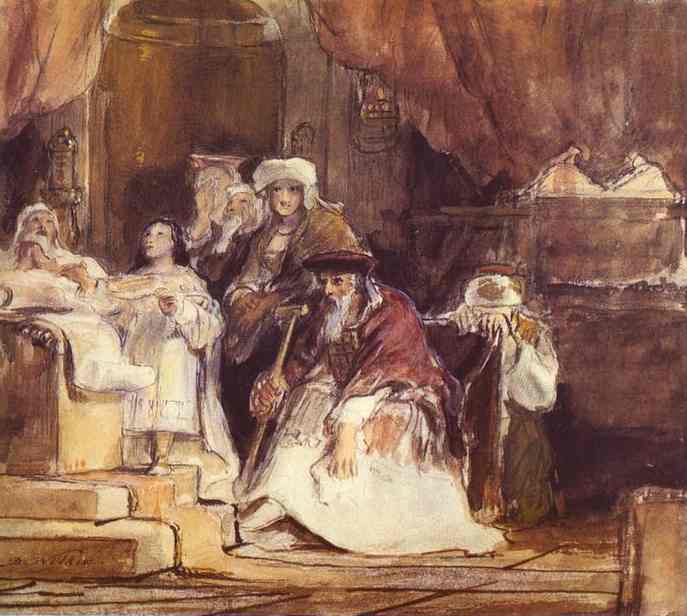
Samuel in the Temple by David Wilkie
What a message for a child to have to deliver to their high-status, powerful teacher – you and your line have fallen short of the standards expected of you, and your position will be taken away from you. It must have been terrifying for Samuel to have to speak up, even with Eli’s encouragement. I can imagine him shaking in his sandals. Although this story is often a Sunday School favourite, I don’t think many teachers and others in authority would be bold enough to encourage youngsters actively speaking up in condemnation of their elders. And yet, as so often, these stories show God’s leaning towards the powerless, the young, the outsider. So often, the perils of power, and the shortcomings of those who practice it, are central to this counter-cultural narrative. Indeed, as we follow on with Samuel’s story, of how the people of Israel ended up with a king, we see that pattern all the more strongly.
As a story of a child challenging conventional ideas of power, and who has it, the story of the boy Samuel sits well in the season. It’s one of the Epiphany stories in which the rich, the wise, the powerful humbly bow before a mother and child in a simple, working house. It also follows on well from Mary’s radical song in the early stages of her pregnancy, which in turn draws on the words of Hannah, Samuel’s mother, when she leaves her son in Eli’s care. I love the dense connections which imaginatively weave all this together, so rich patterns emerge from the threads. I love the way the lectionary puts things near each other, and then sees what connections and conversation arise like a good host.
And so, back to what struck me today on reading this passage – the wisdom of the child, the going astray of the elders and those in power. I thought of the prophesy “And a little child will lead them” (Isaiah 11.6), and how, today, the young who lives will stretch out far into this century are trying to shake us awake, to speak to us of those things which they care about and will affect their lives and the lives of their children. They see that the way we are living is doing harm, they see the injustice and the destruction more clearly than those of us who may have become immured to it. They see that the structures of power seem to protect the powerful and ride roughshod over those whom the scriptures speak highly of – the widow, the orphan, the outsider, the poor, the young, the old. We need those in power to be humble enough, like Eli, to hear their voices, and to act in their interests. Intergenerational justice is a concept that is coming alive now – especially in terms of debt, and the damage to the ecosystems on which we all depend. We need to pay attention to those who have no voice, and give due respect to the rest of the natural world, as well as to the young. Can we, at the beginning of this year, resolve to notice our natural bias towards the rich and powerful, and seek to listen to the young and the powerless? I think that would be good for us all.
Here in the UK, many have been moved, outraged, saddened and stirred to speak up by the ITV drama, Mr Bates vs The Post Office. It was a powerful drama, compassionately acted. I am always curious, though, about things which really catch the public mood – why this, why now? And I think part of it is the theme of people with power who feel immune and distant from the consequences of their actions, who listen to each other rather than to ordinary people – in this case their employees. I think there is a rising sense of injustice about how some are gathering so much to themselves, while others are stripped of what they have, and what they might come to have in the future too. And this injustice reminds me of the words of the prophets, including the child Samuel.
Of course, this passage carries many meanings, and this critique of power is one amongst many – but it is one that chimes with the biblical narrative as a whole. When we’re thinking of how we might live by it, another question naturally arises – how do we know, in a world of so many voices, which ones to heed? In this passage it is Eli who wonders whether the voice might be God. Yet history is littered with terrible tales of those who were convinced they were acting for God, or doing what was right, and going horribly wrong. Often the very worst things are done by those who claim good motives. And that should give us all pause. I touched on an exploration of this theme in my book, “Jesus said, I Am. Finding life in the everyday” in the chapter on Jesus, the good shepherd, when he talks about the flock knowing his voice.
Of course, knowing the voice, and distinguishing it from the voices of those who would lead us to harm, is no easy thing. I think it helps to come to a place where we don’t see the path ahead of us as a narrow tightrope – one false move and we are lost – but that we look for the relationship, and recognise the freedom to walk behind the shepherd, listening for the voice. ……. History is full of the mistakes people have made, thinking they are doing the right thing but going terribly wrong. I do not ee us going so wrong when we seek to follow the way of love, seeking to keep our eyes fixed on Jesus, and learning from him.
And so, noticing the topsy-turvy nature of the gospel, the way things are not what they seem, let’s be ready to listen, be ready to respond to those promptings and quiet voices which would guide us better than the pomp and power and authority which make so much noise and show.
Dear God, When we hear a mighty wind, strong enough to shatter roci, when the ground underneath us shakes like an earthquake, when fire comes from mountains, help us to know these sounds of power and anger are not your voice. Help us to listen in the silence for your whisper. Help us to wait for your whisper
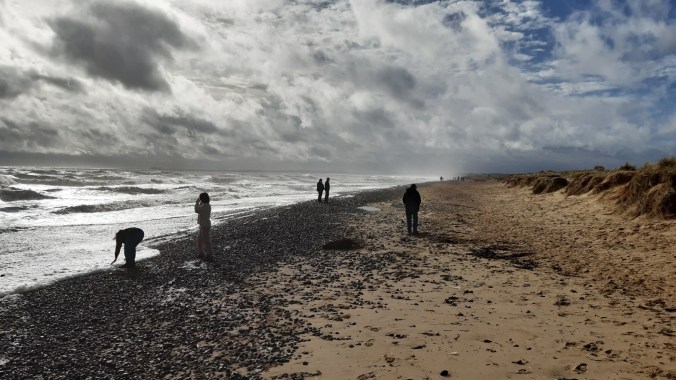
All the photos in this post were taken by my husband on a wild and stormy day at Walberswick.
The poem I’m sharing with you today was written at a previous New Year. We nearly missed the foot ferry between Southwold and Walberswick while out on a long winter’s walk with our family. It ran till sunset – and sunset was upon us. Today, I’m glad for this poem, glad I wrote it and by it am able to remember this magical evening at the turn of the year, the time we spent together on this Walberswick walk, and the strange feeling of being suspended between the two shores, the two closed gates, in the hands of the ferryman whose course was sure even though it seemed to slant so across the water.
So too with time, in the space between two years, when we look back at what has been, and look forward to what will be. We are glad to spend time with those we love, and perhaps especially miss those who are not with us. Love glimmers in this golden limpid darkness between times.
Perhaps in this space we can dream of a shore with warm, welcoming lights, with togetherness, with hope. Perhaps we may find we can be such a shore for each other, and keep lights of hope and welcome burning in the long cold nights.
May you have a blessed, happy new year. Thank you so much for your time and company on this blog. I value that gift very much.
I’ve shared with you another poem about winter walking along this shore, and a murmuration of starlings. Such an awe inspiring dance of togetherness. You can read that here.
Crossing the Blyth at sunset, at the turn of the year.
We walked fast towards the ferry – nearly too late – and saw the ferryman on the other side, the gate closed behind him. But we waved, and he came, his blue boat a long wide curve across the river.
Behind him the setting sun, the treeshapes black against the orange sky, How beautiful it is. He helps us on board, offering me his hand with nautical courtesy, and then shuts the gate firmly behind us.
So we thank him, and our blue boat begins to churn those golden waters rippling with a fast tide, as we seem to hang for a time between those two closed gates, between those two jetties, in neither one space, nor the other. We are somewhere else instead, where all is gold, where darkness lies behind, where the lights of the houses and the wide-open pub are ahead of us, lights that warm with the hope of welcome.
We are suspended for a while in this Adnams-blue boat with the diesel and the saltsmell and the cry of the birds, bathed in light, trailing an ice hand in water the same colour as the light. Here we are. This moment. Between two moments. How beautiful it is.
Ely Cathedral’s powerful statue of Mary, by David Wynne
As we approach the third sunday of Advent, the word we turn to is Joy. And, as part of that turning to joy, many also remember Mary. In particular, her response to the angel’s message when she was invited to participate in this story of “God-with-us”… but more on that later.
As I look at this statue, I find Mary’s stance compelling. It is open and powerful, it feels like a “yes” which accepts and trusts what will be, even if it is beyond the mind’s understanding. Pictures of Mary often show her looking more afraid, more passive. This work captures a moment of glorious, positive choice. But there is something else. The slight downward tilt of her head seems to acknowledge the difficulties caught up in this acceptance, and the enormity of that choice. There is awe and vulnerability here too – vulnerability captured in that bare foot peeking out.
Among the fields and vineyards of Nazareth, in Galilee, lived a girl named Mary. She was soon to be married to Joseph, a carpenter, who could trace his family back to David, the shepherd king.
Then, one day, astonishing news burst into Mary’s quiet, hopeful life. The angel Gabriel came to her with a message. “God is with you, Mary!” Mary gasped, and fell to her knees. “Don’t be afraid. God smiles on you!” The angel spoke the astounding words gently, lovingly. “You will have a son and name him Jesus. He will be called great – the Son of the Most High God! The Lord God will give him the throne of his ancestor David, and his kingdom will never end!”
For a moment there was silence, as Gabriel’s words filled the air – and Mary’s mind. “But how can this be, as I am not yet married?” Mary asked. “God’s Holy Spirit will enfold you. Your child will be holy. Even Elizabeth, from your own family, is going to have a child, despite her age! She is now in her sixth month. So you see, nothing is impossible with God!”
Mary raised her eyes to Gabriel’s face. “I am God’s servant. Let it be as you say.” And the angel let her alone, her mind spinning with the strange words.
Then Mary thought of Elizabeth. “The angel knew all about her – I must go to her.” She got ready, and set off quickly for Elizabeth’s home in Judea to the south, near Jerusalem.
As soon as she arrived at the house, she hurried to Elizabeth and took her hands. At the sound of Mary’s voice, the baby leaped inside Elizabeth, and the Holy Spirit filled her. She understood at once what had happened to Mary.
“You are blessed among all women, and blessed is your unborn child!” she said. “Why have I been so honoured? Why should the mother of my Lord God come to visit me?” Elizabeth laughed, and put Mary’s hand on her belly. “You see how my child leaps for joy at the sound of your voice?”
Then, Mary speaks out extraordinary words, which in turn echo the words of Hannah when she said goodbye to her long-awaited son, Samuel (I Samuel 2) . You can read Mary’s words – the Magnificat – in my version here, and also more about Mary and Elizabeth’s time together.
It strikes me how deeply Mary entered into uncertainty, with her acceptance despite her questions – “how can this be?” She is setting out on a path that will cause her pain, but the angel’s words focus on a bigger picture, an unknowably big picture. There is a vision of what will be, the good that will come from her choice. There is tenderness and reassurance here as she asks the question, honouring her uncertainty, the impossibility of comprehending what this may mean. And there is also a gentle, tactful suggestion of a path to be taken. A path to her cousin Elizabeth – who is also caught up in this great bursting through of hope and joy into a world marked with difficulty and pain. And that path will bring her companionship with someone who will believe her, and will support her, and to whom she can offer love and encouragement in turn.
Sometimes, during Advent, we are also reminded of John the Baptist – Elizabeth’s son – and his question to Jesus when he was in prison: “Are you the one who is to come, or should we expect someone else?” You can read the account here. What I love about this reading is the way Jesus reassures John in a way he will understand, echoing the prophet Isaiah. There is a tenderness and deep compassion here too. We can almost hear an echo of their mothers’ relationship in this question, this uncertainty, and this reassurance. Jesus then goes on to speak to those listening who may, we presume, be shaken by John’s question – or critical of him for doubting. The compassion of Jesus’ response can reassure all of us. It is hard for us to understand, and doubt and question and uncertainty are here embraced and not feared.
So our focus on joy is one where joy can be experienced despite our frailties and uncertainties. It does not come with knowing the answers, having things all neatly wrapped up, but in the courage to enter into the mysterious life of something beyond and greater than ourselves. Perhaps here is the only place it can be found.
We mentioned Isaiah above. Here is part of the passage paired with the reading about John in the Church of England readings for this week. You can read it all here.
The desert and the parched land will be glad; the wilderness will rejoice and blossom. Like the crocus, it will burst into bloom; it will rejoice greatly and shout for joy. The glory of Lebanon will be given to it, the splendor of Carmel and Sharon; they will see the glory of the Lord, the splendor of our God.
Strengthen the feeble hands, steady the knees that give way; say to those with fearful hearts, “Be strong, do not fear; your God will come, he will come with vengeance; with divine retribution he will come to save you.”
Then will the eyes of the blind be opened and the ears of the deaf unstopped. Then will the lame leap like a deer, and the mute tongue shout for joy. Water will gush forth in the wilderness and streams in the desert. The burning sand will become a pool, the thirsty ground bubbling springs. In the haunts where jackals once lay, grass and reeds and papyrus will grow.
And a highway will be there; it will be called the Way of Holiness; it will be for those who walk on that Way.
Once again, we have a vision of how the world could be, restored and flourishing. A highway through the wetlands bursting with life, and even those who lack strength and steadiness will walk it.
We so need this vision of restoration and abundance. We need this vision of life and joy, of a better way of being in the world. And then we need to walk into it. We can be part of bringing it into being.
We thank you for being born among us, sharing with us what it is to be human. we thank you for showing us a way to live, full of grace and truth. Light up our path, and let us walk with you.
I’ve just discovered the beautiful Waterlands podcast from the Wildfowl and Wetlands Trust, which is relevant to the greening of barren places. Why not listen?
Waking up this morning, on the first day of Advent, there’s the lightest dusting of snow on the ground. The sun shines, and late autumn leaves glow even as the wind blows down from the north with its biting edge and splinters of ice. Apparently, short eared owls have been blowing in from Scadinavia, but I don’t think they’ve got as far south as Suffolk yet. So, it does feel like the seasons are changing, that Winter is here, and Advent comes along with its glimpses of Hope. Tradition has it that’s the theme of the first Sunday of this season, and that seems a good place to start. Our current Decembers are some distance from the old practices of having Advent as a time of quiet, reflective, waiting – a little like Lent before Easter. It’s so at odds with the flashing lights and loud shops and busyness, that understanding, but we can perhaps catch moments where those wintering practices are possible, and might help us….. pools of quiet light where we can breathe and think, where the cold sharpens our perceptions.
I’m also intrigued by the more medieval practice of putting yourself in the place of the people of Israel as they waited, not quite knowing what they were waiting for. Of not naming Jesus and Christmas, but instead allowing what we long for to be recognised and owned and prayed and worked for. In our context we join so many people throughout history who have felt the future to be shifting and uncertain, and who have longed for a kinder, gentler and more beautiful world. Taking some time to know and feel what we lack, what kind of world and lives we desire, might help us too face a troubling future with some courage and determination.
So Hope is a good place to begin.
Ah, hope. I’ve been turning over in my mind what it means to nurture hope in a world which seems increasingly unstable in climate and economics and culture. I’ve settled, for now, on making a distiction between hope and optimism. So, for me, I’m thinking of optimism as an opinion that things will work out. Something tied to outcomes. I see hope as a stance, an attitude of the heart and spirit, that it’s always worth looking for what brings life, for what is good. It does not require us to be naive about the dangers and difficulties around and within us. We are called to be as wise as serpents, and as gentle as doves – Matthew’s gospel.
Nonetheless, it’s worth working as if the world-as-it-could/should-be is here, emerging amongst us, small as the signs and growth may be. Not a glib avoidance strategy that it’s all fine, really, it’s all going to be fine…. but as a deliberate and courageous stance. I remember being very struck, on reading the Gospels at school as a teenager, with how the message I heard was about how the Kingdon of God was already here, or close at hand, or within and among us – a real and emerging presence, despite the very real difficulties. With the cost of living crisis bringing fear and hardship, and with the climate noticiably more unstable, we need courageous hope that’s prepared to work to refashion things around us in defiance of what we see. There is real power in such acts.
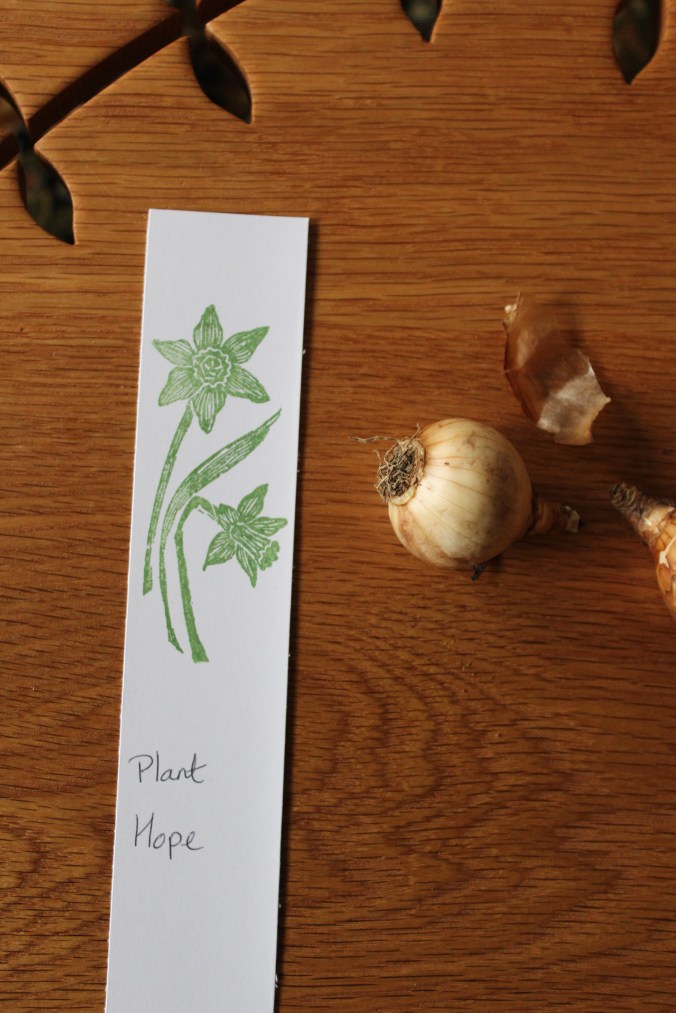
The picture of the bulbs and the bookmark at the top of this post relates to an action I took with some friends in our local high street to coincide with COP 26. We handed out bulbs and bookmarks, and encouraged people to think about ways they could plant hope. You can read more about that here. My last post shares a sliver of a project which is coincing with this year’s conference.
As Advent begins, we re-read the words of the prophets together. They often spoke into desperate, unpromising circumstances with a mixture of a vision to hold in our hearts, and actions for our hands to do. Those actions can be prophetic themselves, speaking out and making plain God’s dream for the world – a beautiful, hopeful vision strong enough to withstand hard times – brave enough to choose to be born to a poor family, who sheltered in a stable, and had to run from a murderous tyrant. This is how hope was offered to the world, in the infant Jesus.
During this Advent series, I’ll share with you some extracts from my books. Here’s something from The Bible Retold , as the retelling of the Hebrew scriptures comes to an end, and we look forward..
As the walls were rebuild, so were the people. For God was building them into a new kind of kingdom. Isaiah the prophet wrote: “This is how to truly serve me: unbind people who are trapped by injustice, and lift up those who are ground down. Share your food with the hungry, and clothe the cold – that is how to live in the light!”
The people listened to his words of bright hope. “There is much darkness in the world, but your light is coming! All nations will be drawn to you, and they, too, will shine!” ….
“A child is born to us, a son is given. Authority will rest on his shoulders, and his names will be Wonderful Counsellor, Mighty God, Everlasting Father, Prince of Peace. His kingdom, his peace, will roll across the lands, and he will reign on the throne of David for ever.”
We give thanks for the work that is being done right now, in our communities, to clothe, and feed, and seek justice. May we have the courageous vision to join with that work of light.
The days are dark, Dear God, give us your true light.
The days are dark, Dear God, give us your true life.
The days are dark. Dear God, give us your true love.From Prayers and Verses
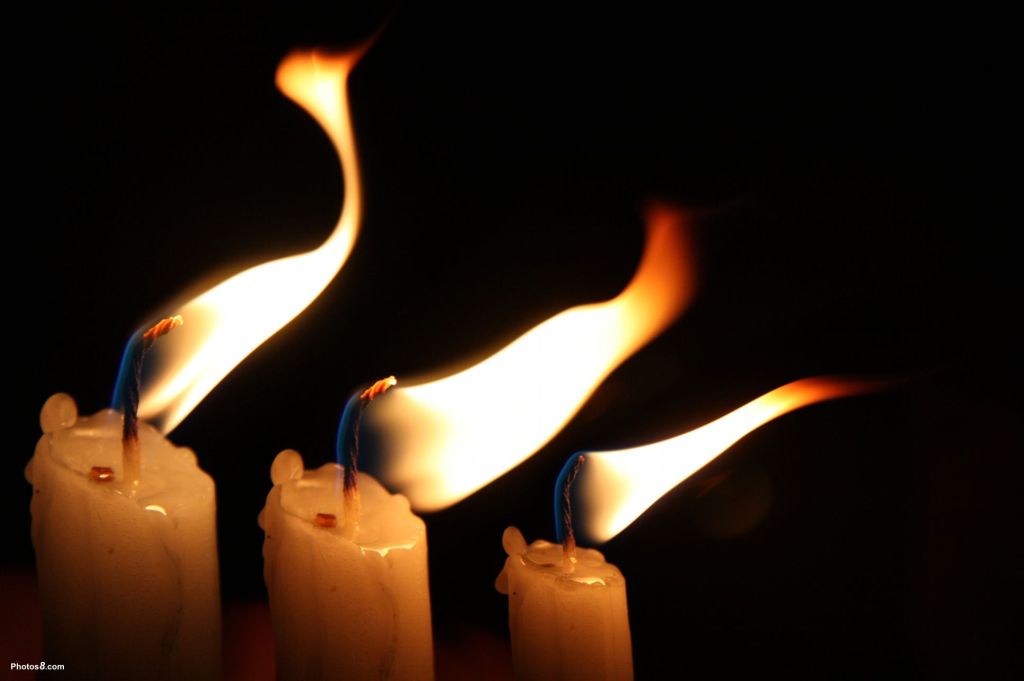
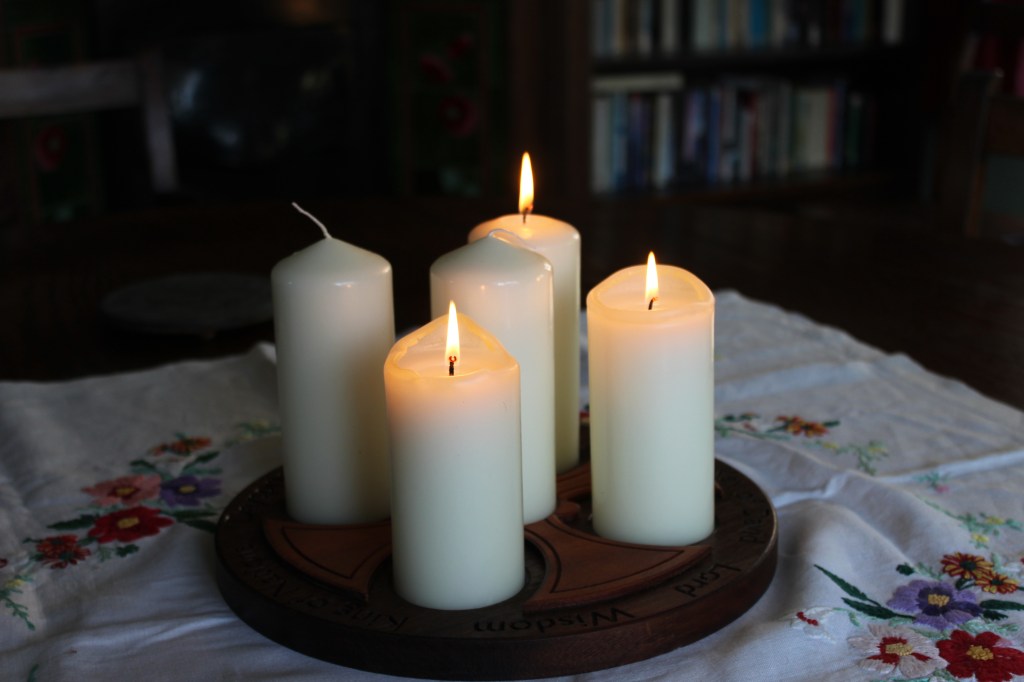
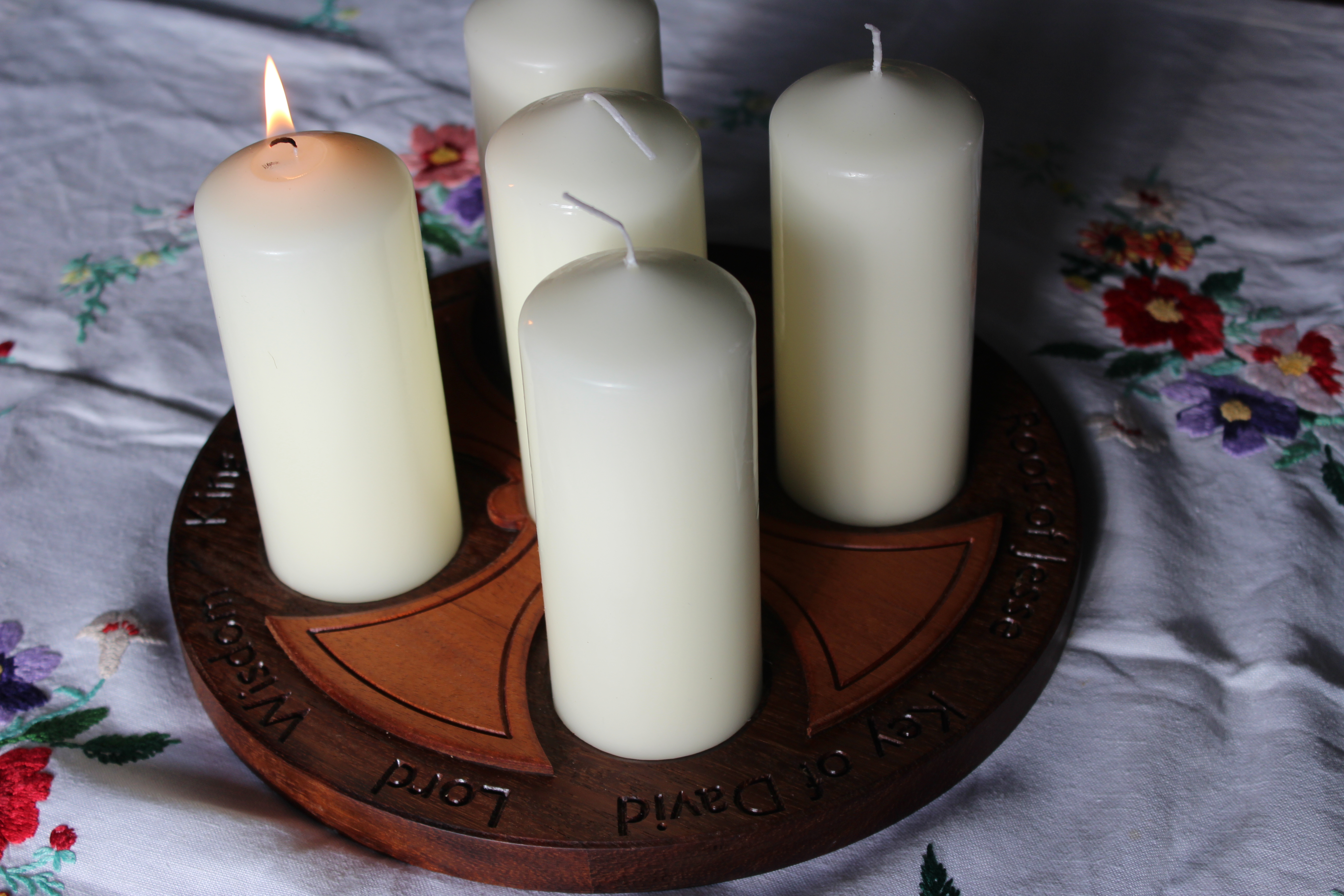
The Advent Candle Ring is from the good people at The Chapel in the Fields It gives me great pleasure to know that the oak at the base was once a lectern, and the lighter wood on top a dining table. The words written around it are from the ancient chants, the “O” Antiphons. These chants came into being when people did not call for Jesus to come at Christmas, but instead used names from the Prophets – like Emmanuel, God with us – to name their hopes. The first few centuries of the Christian Era saw these great prayers, the “O” Antiphons, sung during Advent, calling on Christ to come now, and to come again. You can listen to the old chant, and read Malcolm Guite’s sonnet which draws on it, and much more, here.
This coming week, let’s hold on to hope, look for signs of the life of God breaking through, and see where we can be part of that move towards a more beautiful, loving, hopeful world.
I must admit to feeling disheartened in the run up to another COP, where the oil and gas companies seem to be seeing the talks as an opportunity to do business, rather than prioritise moving to cheaper and cleaner and more local alternatives. The powers that be sometimes seem especially powerful.
So here’s a tiny, smaller-than-David-vs-Goliath idea which is currently happening in my drive. Just in case any of you good readers feel similarly, and are looking for small but meaningful actions. There’s a lot of us who care, who want to leave the world in as good a state as we can. So, rather than despairing over what isn’t happening, here’s something that is. Mighty oaks from little acorns and all that…..
It all started a couple of weeks ago, when my husband came across one of our old neighbours digging tiny tree seedlings out of a council flowerbed. Unsuprisingly, he asked her what she was doing. She replied that a friend of hers had two acres she was trying to replant as woodland, and was looking for trees. Now, I express unease on a regular basis about the number of tree seed- and saplings I pull out of our garden. The squirrels are very keen on planting nuts, which germinate remarkably well for instance….. So, he mentioned it to me, and I got in touch with the lady with the two acres. I dug out all the readily available saplings, and began to collect them from other people. The first load of about 100 trees went to her, and to someone else who has twelve acres they’re rewilding.
I wondered if other people might have spare trees in their garden, so emailed my friends at Transition Woodbridge, who passed the message on. Trees are arriving most days, and another person has expressed a need for small native trees, especially ones suitable for growing in a hedge. Another friend also has a number of oaks springing up in her allotment. So we have more sources of trees, and more places where they can go. It’s always good when actions become collective, when people gather together and all do the little bit they can.
Now, who knows where this will go, but for now, I reckon we’ve easily been able to provide a new home for getting on for 200 infant trees. That’s not nothing. That is something. It’s food for insects and birds, it’s shelter, it’s improved soil fertility and water management, it’s less carbon and more oxygen. It’s one in the eye for despair, too.
So, here’s to taking the small actions we can. You never know where they might lead. In 100 years from now, those nine tiny oaks might be home to many creatures, having a profoundly positive impact on soil, air and water …. And carbon. Nearly all life on the planet is carbon based, after all.
The practice of wandering – often around the garden – contines to be a a helpful one for me, quieting and contemplative. The practice of standing still and looking, too. Quite a lot of apparent “nothing” seems to be fertile ground, after all. Something catches my attention, as if it is saying: ‘look, here is something, a marvel, a meaning, a glimpse of beauty’. I am coming to think they are happening all the time, and what makes the difference is my openness to seeing, hearing and knowing them.
And so, when the sun broke through after the rain, I went outside, and sat on my coat, and looked. Some distance across the lawn, I saw a bright red light, flashing, and, curious, saw a drop of rain acting as a prism. I watched it for as long as the angle of light made it shine with colour. It called to mind two ancient stories – the burning bush, and the flood – from the Hebrew Scriptures. How the world is full of epiphanies. And again, I was in awe of the way the natural world – of earth and fire, water and air – invites us to listen, to pay attention, to wonder.
A solitary shining drop
Just now, I saw the sun catching a raindrop as it rolled so slowly down a sedum stem, fleshy and green.
It shone through red, rich, neon and ruby, flashing as the stem swayed in the breeze, taking the drop through that one ray of light, back and forth.
Then it suddenly changed to the dazzling blue of cobalt and lapis lazuli – oh, heavenly blue. Heavenly blue.
Just now, for a moment, this treasure made of light and rain, this solitary shining drop becomes a tiny shard of promise, a slim fragment of the arc that holds the sun and the rain.
It all speaks. All speaks. In the mind’s quiet, and in a flash of brilliance that turns your head. A gentle whisper and a burning bush, both. A drop and a rainbow. The world shines with meaning, murmuring, as the green earth is drenched by sun and rain.
Last Friday, during storm Babet, Suffolk experienced some of the most severe flooding in England. It was good to be able to stay home and keep in touch with friends, making sure they were safe. Many people have lost their homes, their businesses and their posessions. Tales of help and rescue are still emerging. Places that have not flooded in living memory have been badly effected. We are used to threats from the sea in this part of the world, but think of ourselves as living in a dry place, unused to severe storms. The climate is changing, and it is unsettling.
As I’m writing this, the next storm is about to arrive, with a weather warning for wind beginning this evening. The mild, even warm, air holds so much moisture, the trees are still in leaf, the roots in soft soil. This morning I hurried to pot up a whole load of tree seedlings for a friend of a friend who is planting a small wood nearby, and I marvelled at how easily they slid out of the earth.
This strangely perturbed and perturbing season of weather is full of beauty, plants and flowers still growing vigorously on the first day of November. The air is full of insects and birdsong. Frogs are hopping whenever I disturb the plants in the garden. As I sat in a patch of warmth I remembered some words of Robin Wall Kimmerer which I love, from a book I treasure:
“Even a wounded world is feeding us. Even a wounded world holds us, giving us moments of wonder and joy. I choose joy over despair. Not because I have my head in the sand, but because joy is what the earth gives me daily and I must return the gift.” ― Robin Wall Kimmerer, Braiding Sweetgrass: Indigenous Wisdom, Scientific Knowledge and the Teachings of Plants
And as I began to write, that idea seemed particularly rich and right for the moment, and for always. What gifts we receive. I hope we can return such prodigal generosity, and care for the Earth. We do need the Earth to continue to care for us.
After the storm, October ‘23
There is a low sun slanting gold across all this humming green, all this hidden life whispering through each bending blade, and the birds sing loud after the silence of the storm, as loud and full as spring.
And the sun warms my skin after the floods and the rain and the rising dark waters, and my skin is soothed and comforted even as my mind is troubled.
What will become of us, what will become of us all, as the air heavies again with water, burdened, and that water, fallen, heavies, burdened, with brown earth, for each year brings more strangeness.
And yet, even so, the light drips with gold, shining through translucent wings, insects swaying in those wailful choirs, in many tiny flocks, rising and falling in the gusting warmth, more and more each year.
It feels so small, this heart-response to so much perplexity. And small it is.
And yet it is something to marvel at the beauty that is still offered, daily, to say yes, and thank you, for the green overflowing of all this life, and to tend within my reach. To receive, to love, to speak, to tell you even of these rain-drenched dripping flowers – look, heavy and ripe and bowing – and dare to hope that in some deep and barely discernible way this care, this love, this joining of eyes upon beauty, is the softest whisper, almost beyond hearing, of mending and healing and knitting together, stitched through with golden, endless light.
This poem also owes a debt to John Keats, and his incomparable Ode to Autumn.
As we come to the end of the Season of Creation, I offer a harvest of seeds.
I love the way seeds spread in the garden, finding new nooks and crannies to settle, new places where plants will grow and in their turn offer flowers to the insects, seeds to the wind and the birds.
As I was watching fluffy seedheads catch the breeze a few weeks ago, I felt my attention catch on the seeds. I felt that insistent “look!” which comes sometimes, and alerts me to some depth, some beauty, some meaning. It’s always worth attending to. And this time I saw the reckless generosity, the persistence of seeds, unfolding to me a truth about creation’s blythe insistence on hope. Each offering of seeds represents so many second chances, fresh starts, try agains. And the word forgiveness came to mind – as if the seeds were offering a chance of Spring despite, in the face of, the ways we continue to undermine and deplete the natural world. The seeds a sign of forgiveness, a chance to try again, an ever repeating offer of new life.
Some of you who have been good enough to follow this blog for a while may remember that I return often to the themes of the parables – the stories Jesus told – especially the ones that speak of the natural world. I love the way Jesus quotes the psalms to explain this mysterious teaching method – “I will open my mouth in parables; I will utter things hidden from the foundation of the world.” (Matthew 13:35) The Hebrew Scriptures tell of a vibrant world saturated with the glory of God, of living things being animated, and full of wisdom, if we will but pay attention. I hope to write more about that another time, but for now, I’ll return to seeds. If you’d like to read more about the parables and the seeds on this blog, you can look here and here to begin with.
The poem I’m sharing with you today is full of touches from the Gospels, and another day, if I can, I might unpack them for any of you who are interested. I felt the call to “look” was an invitation into all sorts of deep truths……But I hope the piece stands on its own, open to all who look with wonder.
But for now, below, the poem. It’s been one of those pieces that has revealed its meaning to me in the process of writing, that has felt like a discovery or an uncovering. I wanted to share it with you today, this last day of the Season of Creation. I hope I haven’t hurried it along too much – it’s been taking its time. I hope it is ready. We’ll see!
The grace of seeds.
Seeds are blowing in the breeze, gentle, white and light. Fairies, I used to call them as a child, back when the world was full of seeds, and butterflies, and glimmers of enchantment.
I breathe slowly and long into all this ripening. All this, all, glows with a deeper life – light and colour under the skin, shining with a song of greening and ripening.
Each seedhead releasing a kind of forgiveness that falls with the seed, falls to the earth bearing new beginnings, seventy times seven. Life wills to live, despite all we have done. Life uncoils again, and again. I am humble before it. Before the caterpillars on the toadflax, the frog stirring beneath the strawberries.
The world is indeed full of grace. We do not deserve these chances, again, and again, and again. And yet, deserving is not the point. Seeds fall, it is the very nature of things, and blow on the breeze. Each one offering multitudes. It is the way of seeds.
Might this grace, one day, even today, catch us in its loving web as the trumpets of bindweed blaze out a song of liberation, and the blackbirds tumble fearlessly, hungrily, in the hedge’s ripeness?
For the seeds float still, and the air is still full of enchantment. Life whispers, it calls us, it sings to us. Does it know we will turn towards it, at last, wooed and wonderstruck, and learn we belong, have belonged all along? We might, we may, we can. Those dry seeds show us how.
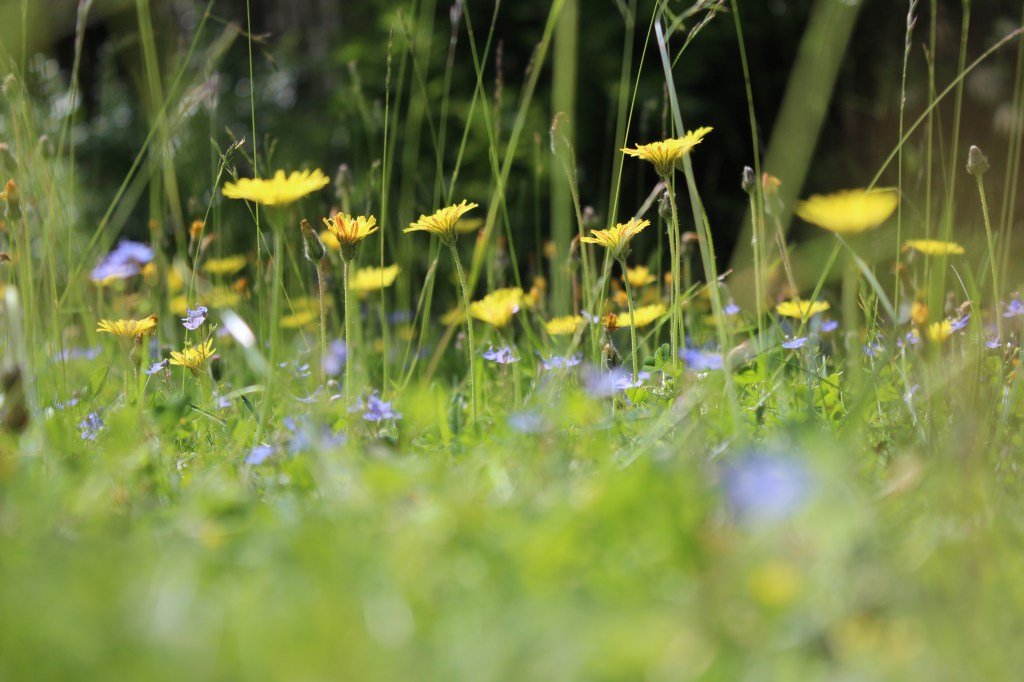
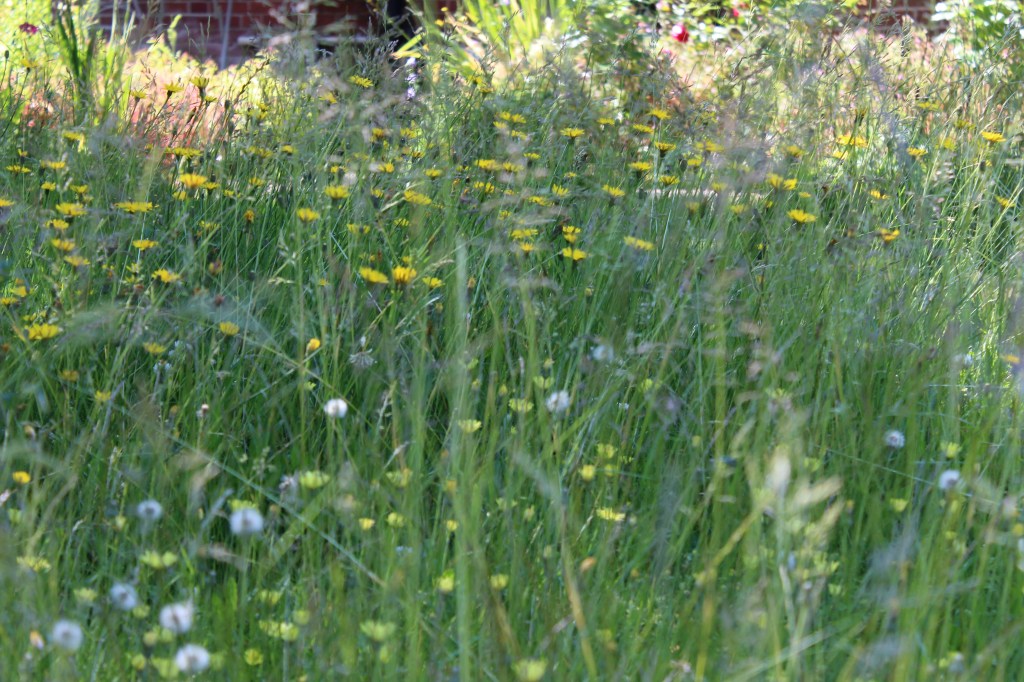
All the pictures are from the garden – and the narrow strip outside the wall by the road, where I’ve been sprinkling seeds for years.















 Andrea Skevington