The practice of wandering – often around the garden – contines to be a a helpful one for me, quieting and contemplative. The practice of standing still and looking, too. Quite a lot of apparent “nothing” seems to be fertile ground, after all. Something catches my attention, as if it is saying: ‘look, here is something, a marvel, a meaning, a glimpse of beauty’. I am coming to think they are happening all the time, and what makes the difference is my openness to seeing, hearing and knowing them.
And so, when the sun broke through after the rain, I went outside, and sat on my coat, and looked. Some distance across the lawn, I saw a bright red light, flashing, and, curious, saw a drop of rain acting as a prism. I watched it for as long as the angle of light made it shine with colour. It called to mind two ancient stories – the burning bush, and the flood – from the Hebrew Scriptures. How the world is full of epiphanies. And again, I was in awe of the way the natural world – of earth and fire, water and air – invites us to listen, to pay attention, to wonder.
A solitary shining drop
Just now, I saw the sun catching a raindrop as it rolled so slowly down a sedum stem, fleshy and green.
It shone through red, rich, neon and ruby, flashing as the stem swayed in the breeze, taking the drop through that one ray of light, back and forth.
Then it suddenly changed to the dazzling blue of cobalt and lapis lazuli – oh, heavenly blue. Heavenly blue.
Just now, for a moment, this treasure made of light and rain, this solitary shining drop becomes a tiny shard of promise, a slim fragment of the arc that holds the sun and the rain.
It all speaks. All speaks. In the mind’s quiet, and in a flash of brilliance that turns your head. A gentle whisper and a burning bush, both. A drop and a rainbow. The world shines with meaning, murmuring, as the green earth is drenched by sun and rain.
As we come to the end of the Season of Creation, I offer a harvest of seeds.
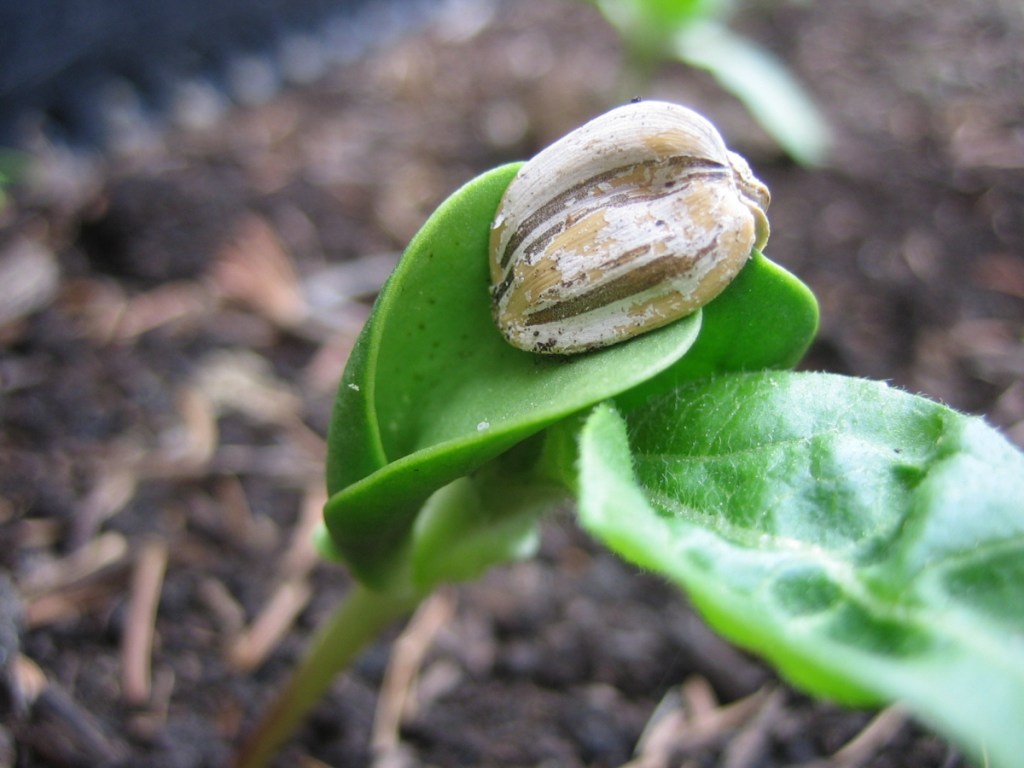
I love the way seeds spread in the garden, finding new nooks and crannies to settle, new places where plants will grow and in their turn offer flowers to the insects, seeds to the wind and the birds.
As I was watching fluffy seedheads catch the breeze a few weeks ago, I felt my attention catch on the seeds. I felt that insistent “look!” which comes sometimes, and alerts me to some depth, some beauty, some meaning. It’s always worth attending to. And this time I saw the reckless generosity, the persistence of seeds, unfolding to me a truth about creation’s blythe insistence on hope. Each offering of seeds represents so many second chances, fresh starts, try agains. And the word forgiveness came to mind – as if the seeds were offering a chance of Spring despite, in the face of, the ways we continue to undermine and deplete the natural world. The seeds a sign of forgiveness, a chance to try again, an ever repeating offer of new life.
Some of you who have been good enough to follow this blog for a while may remember that I return often to the themes of the parables – the stories Jesus told – especially the ones that speak of the natural world. I love the way Jesus quotes the psalms to explain this mysterious teaching method – “I will open my mouth in parables; I will utter things hidden from the foundation of the world.” (Matthew 13:35) The Hebrew Scriptures tell of a vibrant world saturated with the glory of God, of living things being animated, and full of wisdom, if we will but pay attention. I hope to write more about that another time, but for now, I’ll return to seeds. If you’d like to read more about the parables and the seeds on this blog, you can look here and here to begin with.
The poem I’m sharing with you today is full of touches from the Gospels, and another day, if I can, I might unpack them for any of you who are interested. I felt the call to “look” was an invitation into all sorts of deep truths……But I hope the piece stands on its own, open to all who look with wonder.
But for now, below, the poem. It’s been one of those pieces that has revealed its meaning to me in the process of writing, that has felt like a discovery or an uncovering. I wanted to share it with you today, this last day of the Season of Creation. I hope I haven’t hurried it along too much – it’s been taking its time. I hope it is ready. We’ll see!
The grace of seeds.
Seeds are blowing in the breeze, gentle, white and light. Fairies, I used to call them as a child, back when the world was full of seeds, and butterflies, and glimmers of enchantment.
I breathe slowly and long into all this ripening. All this, all, glows with a deeper life – light and colour under the skin, shining with a song of greening and ripening.
Each seedhead releasing a kind of forgiveness that falls with the seed, falls to the earth bearing new beginnings, seventy times seven. Life wills to live, despite all we have done. Life uncoils again, and again. I am humble before it. Before the caterpillars on the toadflax, the frog stirring beneath the strawberries.
The world is indeed full of grace. We do not deserve these chances, again, and again, and again. And yet, deserving is not the point. Seeds fall, it is the very nature of things, and blow on the breeze. Each one offering multitudes. It is the way of seeds.
Might this grace, one day, even today, catch us in its loving web as the trumpets of bindweed blaze out a song of liberation, and the blackbirds tumble fearlessly, hungrily, in the hedge’s ripeness?
For the seeds float still, and the air is still full of enchantment. Life whispers, it calls us, it sings to us. Does it know we will turn towards it, at last, wooed and wonderstruck, and learn we belong, have belonged all along? We might, we may, we can. Those dry seeds show us how.
All the pictures are from the garden – and the narrow strip outside the wall by the road, where I’ve been sprinkling seeds for years.
Growing a garden which you hope will enrich and support wildlife, as well as provinding beauty for your own eye, is always full of suprises. This is no formal experiment, where we surveyed the insect and bird populations before we began to do things differently – in no small part because the process is changing and evolving and not based on a single decision point.
Last time I shared a poem with you, I hinted at the mysteries of not knowing. There are so many creatures I have no name for, yet, and I’m content to find out slowly. You can read that last poem, about the twilight creatures, here. This new piece carries a description of an unknown insect. I’m afraid I didn’t have my camera with me, and still don’t know what it was. Maybe one day I’ll find out! (Edit 22/7/23 see end of post)
This second “Unknown” poem also holds within it a reflection on seeds, and our tendency to see things as small acts.
Unknown – Oxeye daisy
This morning, the oxeye daisy cradled an insect I had never seen before. Unknown, unimagined, strange and handsome.
Long, black, elegant, with an abdomen scriven in yellow runes. It stroked its long, curled antennae tenderly, as if they were locks of hair. Not knowing me, it knew no fear. It did not fly as I gazed.
That small pinch of seed from last year – tiny, dry as sand – each day brings a new and wondrous fruitfulness, an unanticipated beauty, a new joy, a new abundance. The scattering of it was no small act, it seems. And I am coming to think that there are no small acts, after all.
For those of you who are interested in the readings followed by many churches, now is a time when the parable of the Sower is often called to mind – along with other seed related parables. This reflection on the scattering of seed, and the fruits that follow, draws on the insights of those stories. You could begin to explore those insights here, and here
Edit 22/7/23: In the comments below Caroline suggests it was a longhorn beetle. Here’s a picture from the Natural History Museum – a spotted longhorn beetle. It’s the one I saw! Welcome to the garden, little friend.
Once again, I am astonished, delighted and honoured to find something I wrote has made its way in the world, and is keeping the most excellent company with Diana Butler Bass as she shares from the last day of the Wild Goose Festival in The Cottage.
Please do take the time to read her reflections, and those she has gathered. It is a rich feast, with much to refelect on. The theme of Sower and Soil seems more relevant than ever as our soils become depleted on many levels. I am very struck by Cathleen Falsani’s reflections on the parable of the Sower from Matthew’s Gospel, which really resonate with me.
The parable is one I’ve returned to again and again, it seems to carry richer and different meanings whenever I encounter it. Here are some links to posts on the subject, in case you’d like to follow today’s readings.
We’re in the season of Celtic Advent now, which starts a little earlier than the beginning of December ….. so I hope you don’t mind my bringing up the subject of Christmas.
Copies of my children’s book, The Little Christmas Tree, are available, but I’ve noticed a few suppliers aren’t carrying a large stock, so, if you’re considering buying a copy for a youngster in your life, it might be worth placing an order with your local bookshop or one of the online ones – like Bookshop.org, which supports independent bookshops in the UK – soon.
It’s a beautiful book, illustrated with real tenderness and detail by Lorna Hussey…
Last year, there was a powerful BSL version of the story made and posted on Youtube. You can find more about it, and a link to the video, here. I found it very moving to watch. It’s so good when a story works its magic, rises from the page, and finds life in new forms like this.
Once again, I find, as I revisit this story, it has a real resonance with our current global difficulties – the animals are threatened by a storm, and it is a tree in the forest that offers them shelter and hope. I wrote some more about this reading of the story elsewhere on this blog, and you can find that post here. I feel the simple story of kindness and hospitality has some hope and direction to offer us as we think about the difficulties wild creatures are facing, and what they need to find safety and security.
But it is, most of all, that simple Christmas story of kindness and hospitality.
I was chatting to a friend the other day – via screens, of course – and we were mulling over what Lent might look like this year. We were thinking that so many of us have given up so much, and experienced various levels of loss and renunciation over the past year, that we wondered if we could reframe our thinking about Lent. Maybe this year we need something more plainly hopeful, and nurturning of new growth. This ties in with what I have been drawn to doing this late winter season, which is contemplating the parable of the sower, with its hopeful scattering of seed, its false starts, disappointments, failures, and as the seasons roll on, hope and fruitfulness.
So I thought I’d share with you some mediations drawn from the parable as we go through Lent, and find our way through this season of preparation for Easter in our strange new pandemic world. Other nature parables may find their way in too.
Firstly, here is the parable, from my retelling.
Once, when Jesus was surrounded by a crowd of eager listeners, he told them this story.
“One dry, bright day, when the wind was still, a farmer went out to sow seed. He took handfuls of grain from the flat basket he carried and, with a flick of the wrist, scattered seed, hopeful for its growth. But some of the seed fell on the path, where the passing of many feet trampled it, and the birds swooped down and ate it. Some fell on dry rock. After the soft rains, it swelled and sprouted. But then it withered, for its roots could find no water. Some landed among the thorns, which grew so fast that they soon smothered the tender new shoots. But some landed on good soil, where it grew up, and ripened. When the time was right, the farmer came back and harvested a crop from it, a hundred times more than was sown.”
After the crowds had gone, and Jesus was left with the disciples, they asked him “What does that story mean?” And Jesus answered:
“The seed is the word – God’s word. The seed that fell on the path is like the seed that falls in some hearts – it’s snatched away by the devil before it takes root, before those people begin to believe. The seed that falls on the rocks is seed that falls where there is little depth – at first, God’s words bring joy to those people, but there are no roots, and when trouble comes their faith withers away. The thorny places are like hearts choked up with worry, with riches and pleasures. There’s no space for God’s word to grow. But some seed does fall on good soil – the word takes root in hearts that are ready, and they hold on to it. In time, the word gives a rich crop in people’s lives, and they are fruitful.”
As we’ve been in enforced separation, and isolation, and solitariness, I’ve felt my need for conneciton more than ever. I’ve become increasingly aware of our interdependence, interbeing even, our bonds to the whole order of things as well as to other humans. The soil is our hearts, we read, so can we find our way back to a deeper understanding of soil, and our own natures?
Last year, before the lockdowns began, when we could still travel and meet and share, I gave a talk at my old college on this parable. I’d been thinking about how Jesus invites us to consider the flowers of the field, and the birds of the air, and to learn of God from them. Aware of how much damage humanity has done to the wildflowers and the birds, I was struck by what meanings we might learn now.
Here is a small extract:
But in this story, Jesus invites us to see ourselves as soil. Our hearts are soil. Often here we rush into wondering what kind of soil we are, whether we are good soil or bad soil – whether we measure up to some fruitfulness criteria, or not.
I’d like to linger awhile, though, with this ancient and unattractive idea that we are simply soil. I feel it may hold a glimmer of hope. Our language teaches us that humans are humus, made of the same stuff as earth. And from the Hebrew Genesis story – Adam is the one formed from the earth, and the earth is Adamah: dark clay. Ash Wednesday reminds us of this in the context of our sin and death. Today, I want to think of how it relates to our growth, our life. We are brothers and sisters of the earth, made of the same stuff. Can we see ourselves, and the earth, like that?
If we can, we might catch at something important, an antidote to what ails us. Perhaps the crisis we have wrought upon the life of Earth may have its root in seeing ourselves as too separate, too superior to listen to the soil, and the birds, and the weeds.
We can learn much from soil, and we can begin with a simple truth: soil is precious, and it is being lost and degraded – possibly like the human heart. Possibly both need a more tender and wise handling than they are getting in our culture. Soil, whether it is under our feet, or our own hearts substance, can be improved, tended, nurtured back to health.
This Lent, I feel drawn to practices that are nurturing and hopeful, rather than austere. Even so, there is another way of looking at Lent which may be part of this hopefulness. Maybe our ancient practices of restraint, and simplicity, may have wisdom we need in our current difficulties.
In times gone by, Lent was a lean time of year, as the winter was ending. It was a time when the world was waking up to life, when eggs were laid and young were born and cows produced milk again. Without some restraint, this fragile new life would not have had a chance to develop. Humanity chose to wait until the fullness of spring, after Easter, before relieving the winter’s hunger. This calls to mind the ancient Hebrew practice of the year of Sabbath. As well as having a day, once a week, when people refrained from economic and agricultural activity, there were also whole years when the land was permitted to rest, and the people dependend on what the land produced. These times of rest for the land were an important practice for God’s people, nurturing their awareness of their dependence on God. For land was less a possession to be used, more as a gift to be shared for the blessing and feeding of all. Perhaps we can look again at this quiet, gentle living with the land. Perhaps as we enter Lent, we can consider whether there are ways in which we can practice restraint for a season, to ensure the future flourishing of the land, and of the earth. To see restraining our desires as a spiritual discipline is something we can turn to once again.
As we face the degradation of ecosystems, and the loss of so much life, we can construct a form of Lenten fasting to protect and nurture the Earth, to bless the earth and all its communities of being. We are already engaged in abstaining from our pleasures and normal lives to save the lives of others, perhaps more vulnerable than us. We know how hard and necessary it is. Perhaps we can learn from this experience, and gently, kindly, nurture other Lenten practices of simplicity to promote the flourishing of all.
And so, as we reflect on the possibility of new growth as the deep snow melts, of spring and hope and lengthening days, I’d like to share with you this reflection as I put myself in the place of the sower, walking over the land. I am brought up sharp by hearing how degraded our soil has become, how future harvests are threatened by the thinning out of the complex life of the soil. I am greatful that the soil I have here is good, and that a careful spade will unearth many myriad of living things. So this reflection has meandered away from the parable, drawing on my own awareness of how dependent we are on the soil. I hope to continue to share these snatches of meditation with you as we go through Lent. I hope you will join me.
A blessing for the soil.
I bless the soil I walk on I bless the richness of the life I can neither see nor understand.
I give thanks for the fruitfulness of the earth. I give thanks for the falling and rising of green things. I greet the creatures, many legged, single celled, that do the work of life-from-death. May we protect and cherish this foundation. May we nurture good soil. May it be sheltered by plants, free from rocks and thistles.
May we learn in humility what it needs.
More on Ash Wednesday – Remember you are dust. This year, we have all had cause to think of our frailty. To know that we, and those we love, are fragile beings. The words of the traditional Ash Wednesday service have a new and sadder resonance this year.
If you’d like to follow my book, Jesus said I am, for Lent, you can find out more here. There’s lots of material on this blog.
Note, 25th March. This note is by way of apology. I was intending to make this a series running through Lent this year, and haven’t done so. I had a commission for New Daylight – I haven’t done anything for them before, and it took me a little while to get into the groove. That series of meditations will be published next year, also on parables. I wrote on the relationship rather than nature parables, and I couldn’t quite get my head around doing both things! I’ll tell you more about the New Daylight work nearer the time.
The Sower keeps calling to me though, there’s more to explore, and I’ll find a way of doing that with you in due course. Thank you for your patience!
Note, September 2023:
I’m delighted that this blessing for the soil has found its way to a piece Diana Butler Bass shared for this year’s Wild Goose Festival. Please do take a look at her gathering of deep and nurturing wisdom, here.
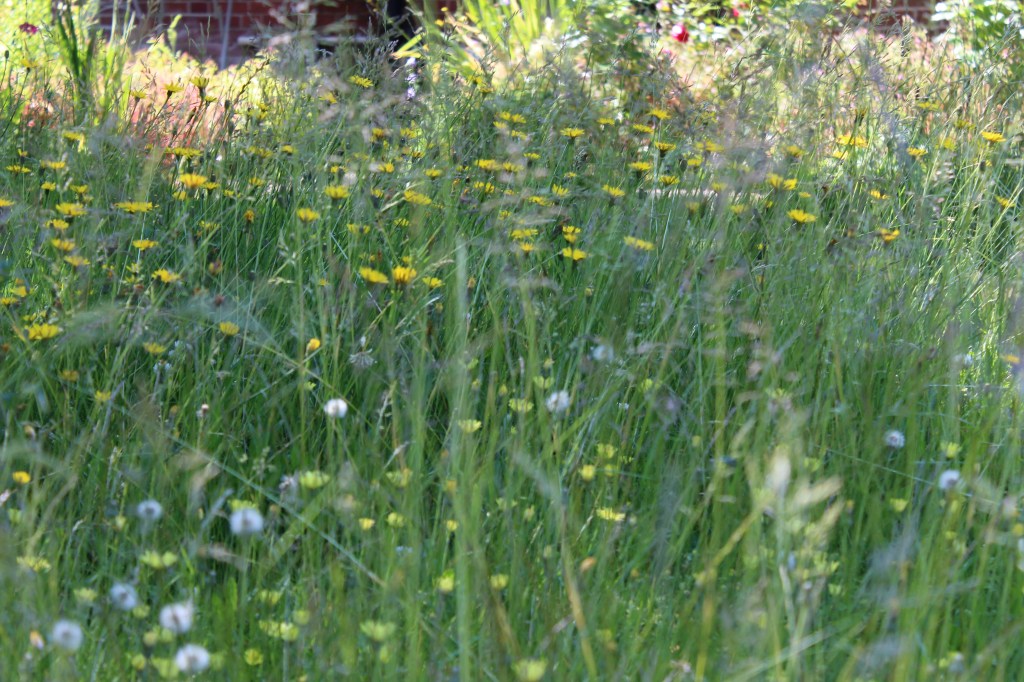
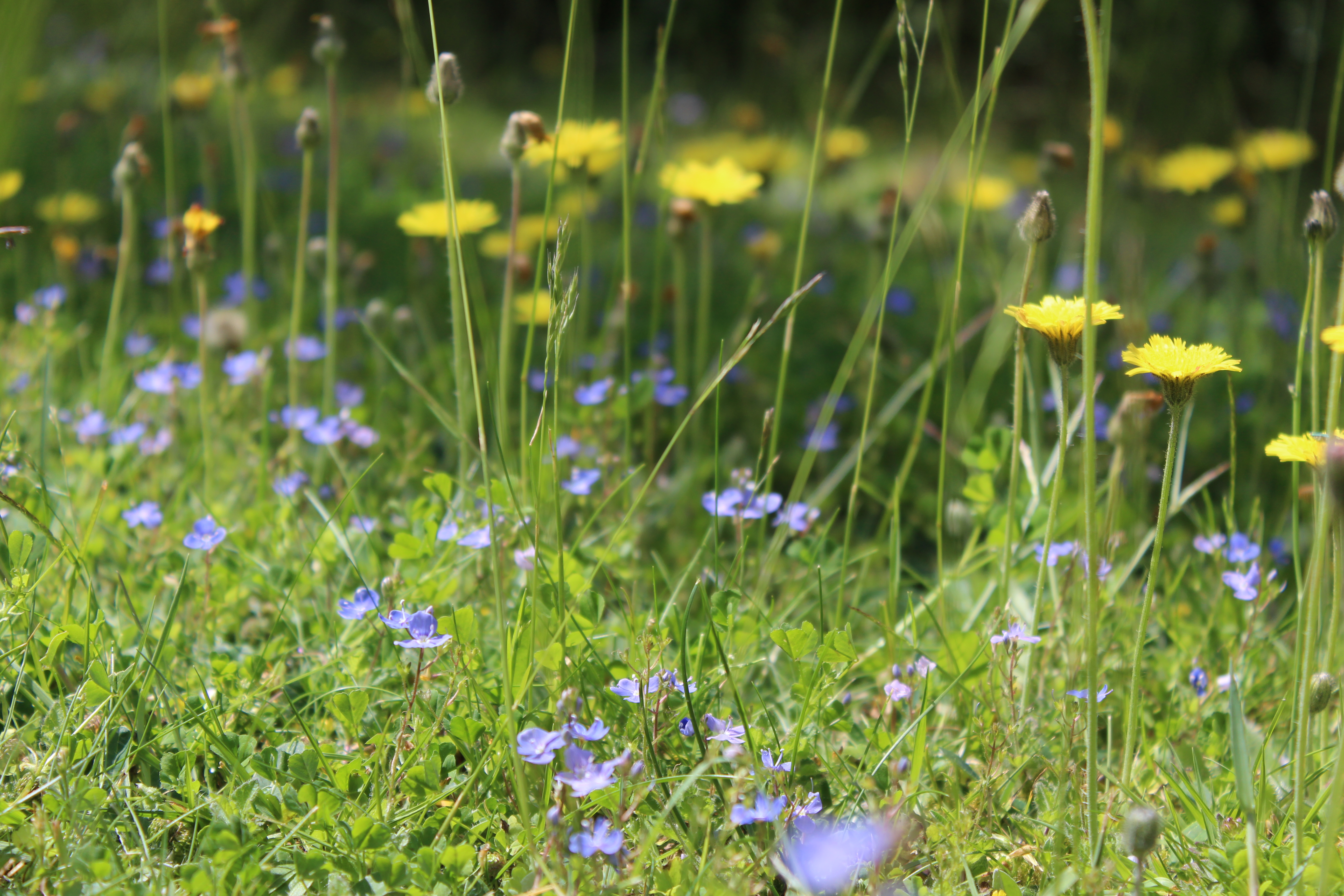
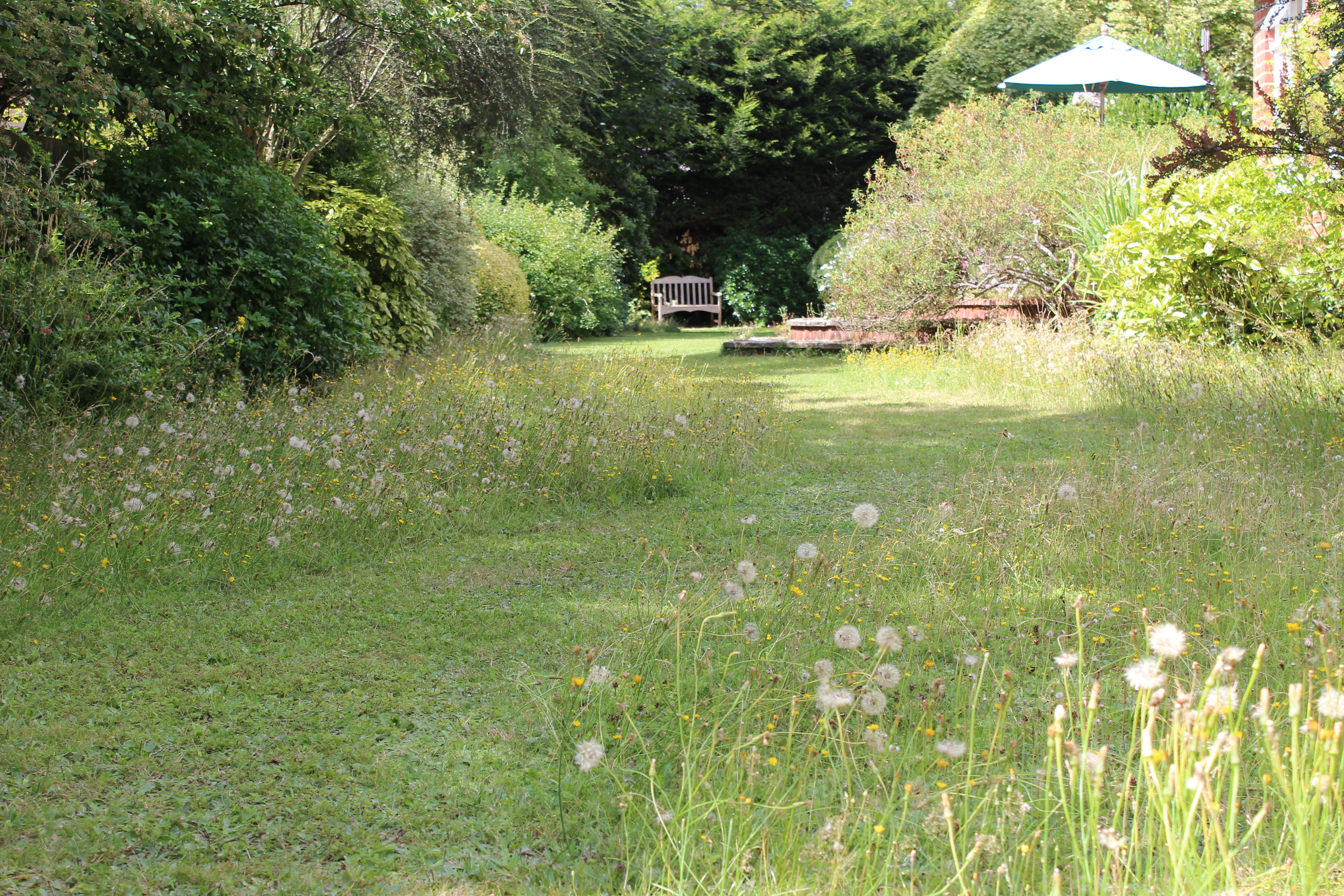
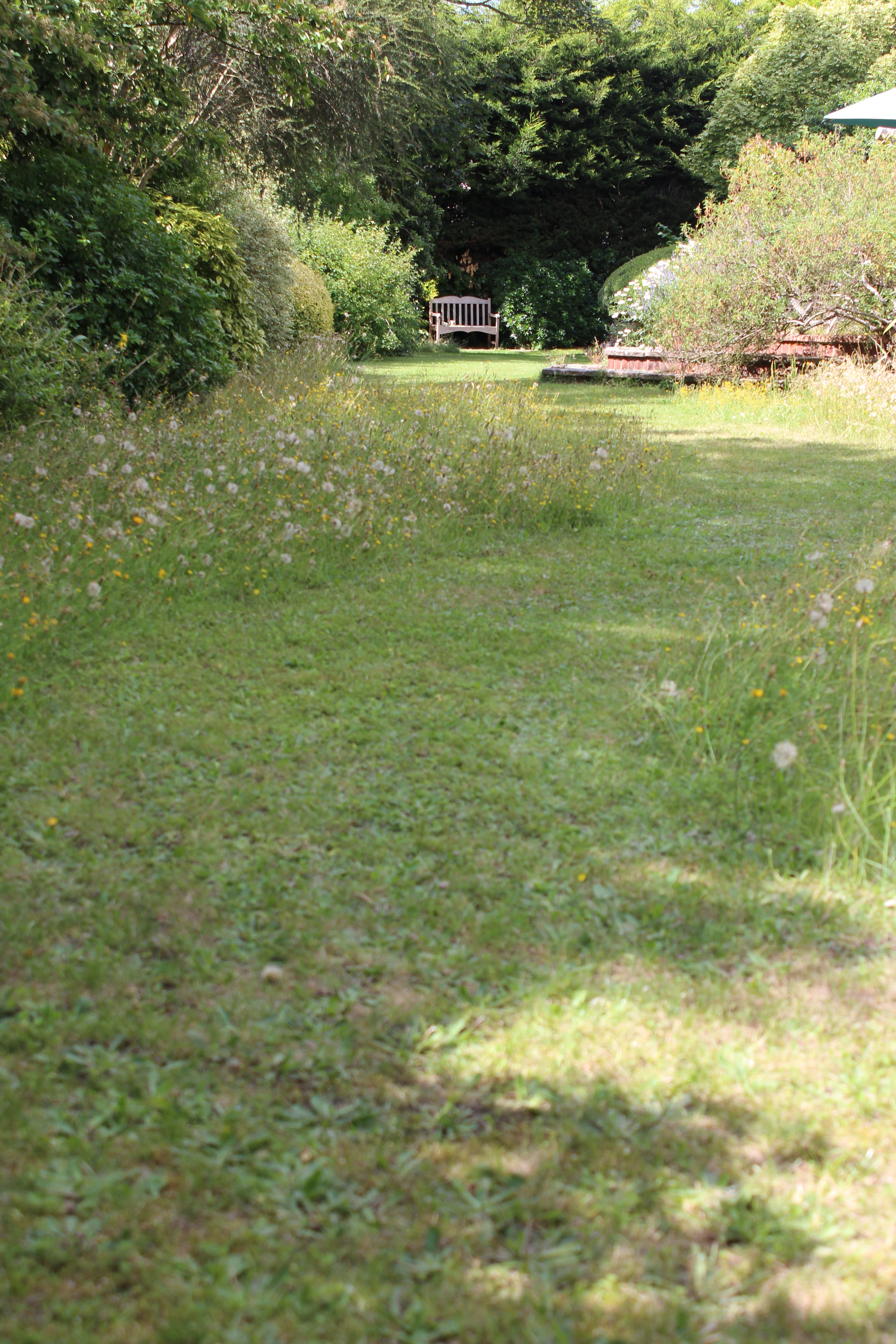
We’ve been leaving more of the lawn long this year, especially at the end pictured, where the grass has been unsuccessful, and other plants want to grow. It’s been so good to see butterflies and bees above the flowers, and, in close inspection, to see so many small creeping things below.
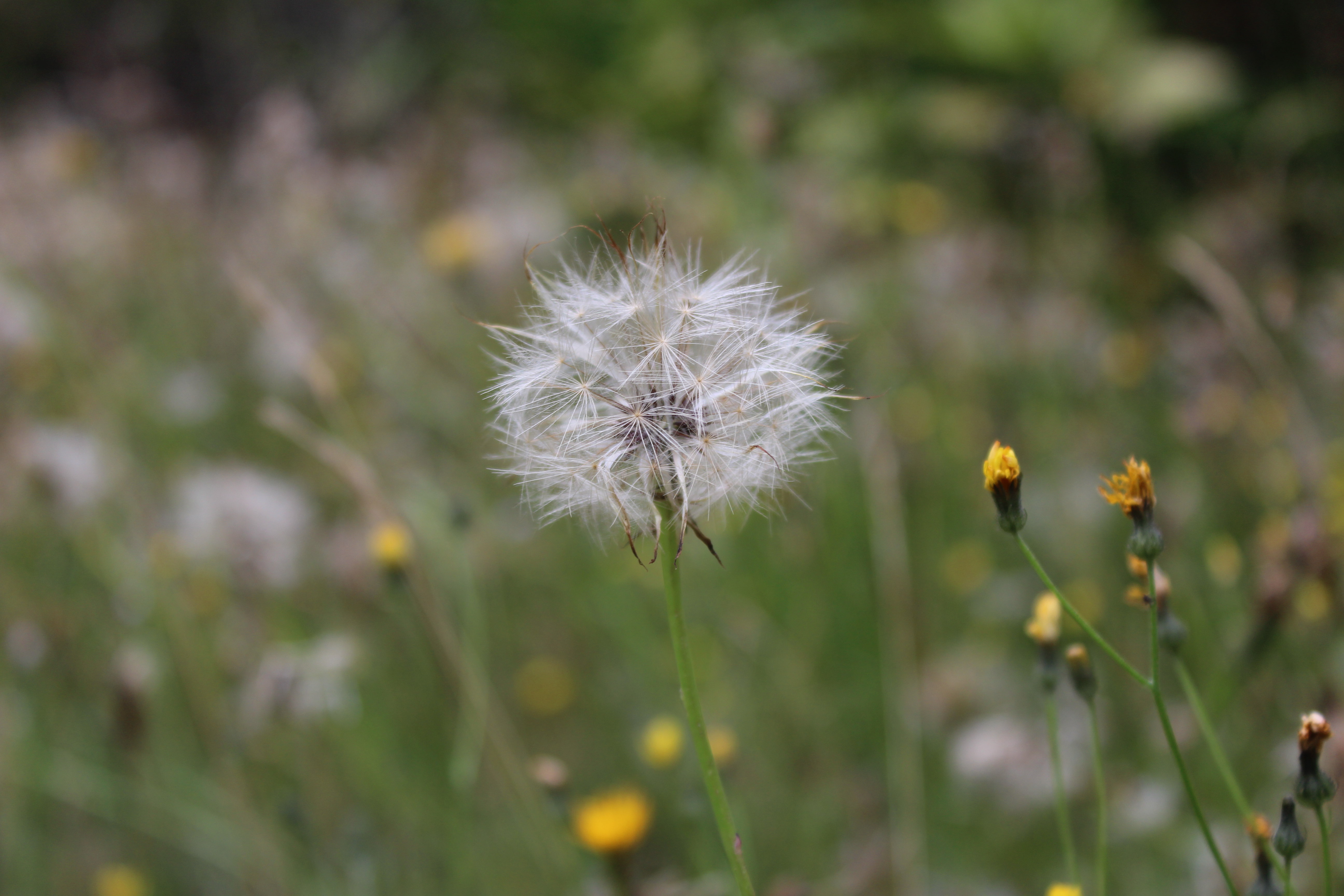
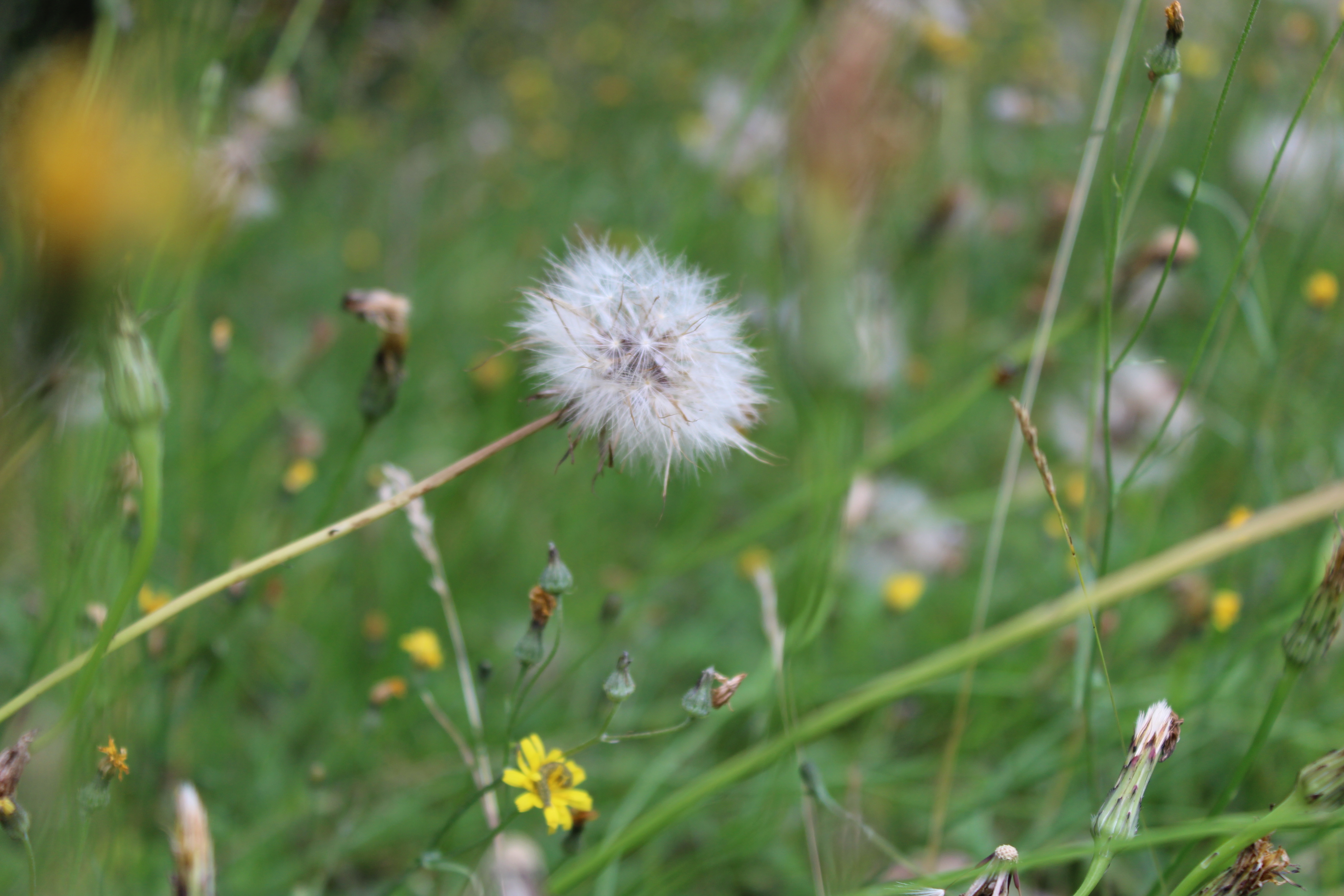
We have various heights of hawkweed growing prolifically now, and I particularly love their seedheads – like dandelion clocks.
There is something very special about these windborne seeds – their profligacy, abandon, opportunism – which I find good to think about right now. When our movements and interactions are reduced as we seek to keep one another safe from the virus, I find it helps to think of these seeds blowing freely. You never know where they will go, and what their impact will be. The task of the plant is to produce the seeds, and to release them to the wind.
It reminds me of the extravagance of the parable of the Sower, and of the many times Jesus talks of seeds falling to the ground. These things help remind me to be less attached to outcome, to just do the task before me, and to trust the blowing of the wind.
Meadow
I love the softness of this path
mown through the long grass,
the many yellow flowers.
How it curves to here, where
the old gate is bound by ivy,
where the silver birches,
planted as chance seedlings,
are growing tall and graceful
above wild strawberries.
I love the round seedheads,
the not-dandelion-clocks
of hawkweeds,
that dip their opaque globes
in the breeze,
and the self-heal,
and the speedwell,
beneath.
The seeds shake in the breeze,
and blow free.
The lightest fragments of life.
Who knows where they will
blow to?
Who knows, the smallest of
things – a thought,
a hope, a prayer,
can be borne up
by many breezes,
and tumble and travel
through many airs,
and find a place to catch,
to break open, to root,
and to grow.
As I was coming to the end of writing the Lockdown Poems, a couple of things were tugging at my attention. One was the thought of doing a series of poems on the I Am sayings, revisiting some of the prose and prayer from my book. The other was the huge sweep of the cry for justice that is circling the world – the cry for racial, environmental, and economic justice. One of the things the coronavirus crisis has done has been, as we’ve said before, to reveal painful things – to draw back the veil and show aspects of society that many of us have been fortunate enough to be able to overlook.
As I was looking at the origins of the I Am sayings – Moses’ experience with the burning bush – I was deeply struck by the relevance of the Exodus story to our current world situation. I would encourage you to read Exodus Chapters 1-3 to start with, if you can, and see what strikes you. Many things opened up for me, and I intend to explore them imaginatively and prayerfully, inhabiting the story, and asking for wisdom. I hope I’ll return to the I Ams again, but for now, these matters seem too pressing to ignore.
We can see how the story of Exodus progresses. It begins with forgetfulness. Forgetfulness of the way Joseph, ex-slave, ex-prisoner, had saved the country from famine with his vision and good management, forgetfulness of how we are all interconnected, and bring gifts to our situation. The Egyptians forgot, and were afraid. Their enslavement of the Hebrew people is told as an act of weakness, not strength. How that fear led to justifying the terrible law for the slaughter of baby boys – a story echoed in the Gospel here, where the baby boys of Bethlehem were killed, and Jesus’ family escaped to Egypt. At the time of Exodus this was the known world’s richest and most powerful empire, and the process of unravelling that power and wealth seems to be begun within that unjust law. So contrary to all that is good and right in human relations was it, that it carried the seeds of its own undoing. And maybe that sheltering of the infant Jesus was, knowingly or unknowingly done, a kind of restitution.
In this story of Exodus, I’m powerfully struck how the action of one young woman changed nations. Her compassion was the point of turning. That is not to say that we measure our small acts of kindness by their global impact, or only do them if we feel there will be some kind of payback, but that this story reveals the hidden power of compassion, and can offer encouragement to us to not think better of our moments of better feeling, but to act on them – to reach out and help, offer what we can. What those feelings and acts accomplish is, in many ways, not our business. We can offer them, release them, and what happens happens. If we praying people, we can simply offer them to God, with no thought of future benefipayback. They can cease to be our own. Of course, we can try to be mindful of unintened negative consequences, but we seek to act from love and goodness independent of outcome for ourselves. For Pharoah’s daughter, if she survived to the time of the plagues and freedom for the slaves, this mercy to Moses may not have seemed such a good act after all.
The other thing which struck me forcibly was the fact that she acted from a place of safety, and privilege. She did something that would have brought swift punishment if someone else had done it. She seems to have used her safety almost without thought of the consequences, to help this one child. We don’t know any surrounding information – what her attitude to her father’s law was before, or after. All we know is this one thing about her. This one act. Maybe it can encourage us to listen to one another, in different circumstances, to speak of our difficulties when we experience them, and to speak and act for others when they cannot do so for themselves.
And here is another thing our current crisis has revealed – deep wells of compassion and community, the capacity of people to act to help and support people they know, and don’t know. The veil drawn back has shown us good, too. There is hope in this deeper reality.
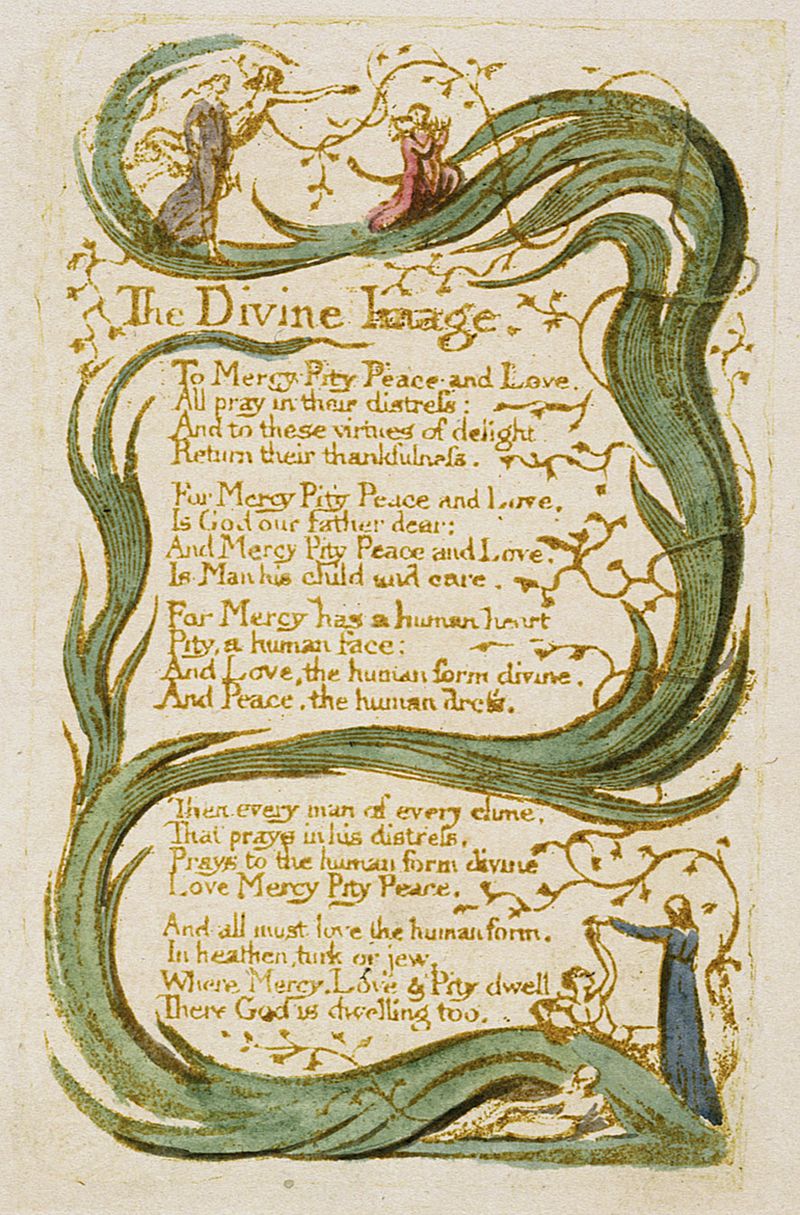
The ending of this poem carries an echo of William Blake’s The Divine Image, which is incredibly apt for our current situation. It was published in 1789, and carries its message of equality in language of the time. It’s a powerful read.
There are major shifts happening in the world right now, and I am attempting to listen, to keep my mind open, to pray, and to understand, and to act.
You named him Moses,
drew him out of
that small ark,
a precious cargo.
Out of the Nile-reeds,
where crocodiles wait,
out of the flood and the snakes
and the hum of mosquitoes,
out of the sentence of death
your father had passed.
In that moment, your heart responded,
the moment when you heard him cry
hungry, closed in the dark
and the silence
of his pitch-black basket,
in a moment, you reached out your hand,
and touched – not a slave-child,
but simply a hungry one, alone.
From your place, at your father’s side,
standing in his love for you,
you saved one small life
from his fearful stony heart’s rage,
from the might of law and empire.
Marvellous princess, you did more.
You paid a slavewoman wages,
you acted with justice and mercy,
you saw a child, and not an enemy.
And so you are remembered,
you are thanked by generations
yet unborn
For an act of kinship with one
from a feared race,
as golden Nile-waters
swirled and eddied and
rippled outwards, outwards
from the place where you stood,
shining in the light of dawn.
Mercy bore, in you,
the beauty of a human face.
Thank you to those who have recently joined in following this journey of the imagination, and attention, through the experience of lockdown. We still face pandemic, and uncertainty, as we begin to think about how to emerge. It’s good to have your company here in these difficult times. I hope the lockdown poems, fragments, give you moments of tranquility.
This one isn’t quite like most of the others, and I wondered about including it. It’s more a clearing of the mind and spirit in the morning after a troubled night. But we all have troubled nights, perhaps more especially now, so I hope this small poem helps. I wondered also about changing the line where I talk of consent, consent to the work of the nightshadows in disturbing the day…. I am well aware that many times the shadows do their work without our co-operation, but I kept it, as it recorded how I felt in that moment. Having noticed, I could, at that moment, chose to decline. Many times I have not felt that choice.
It helped me sit, in the early morning, and set my intention to sing the song I had found in the night.
Night Music Lockdown 22
The night has been casting shadows
again, long fingers of darkness
seeking to pluck at my mindstrings,
heartstrings,
but I know today
they only draw
their discordant melody
from me if I consent.
So I watch their fretful
silent movements,
acknowledge them,
bless them even,
and turn away
to the starfilled skies,
to the nightingale,
to the birds that begin
so early, so early now
to sing.
I choose their song.
I choose too,
to be a small
singing creature
in that great dawn chorus,
while the darkness
does what work it must.
The mood of the Lockdown is changing considerably. It seems fraying and fractured, with grief and anger rising and being held alongside our deep care for each other, our families and communities.
Many are returning, or facing the prospect of returning, to something not normal, but strange and different. Some are relieved, some are afraid, most are, I suspect, both.
The words of Wendell Berry’s wonderful and sustaining poem, The peace of wild things, keep coming into my mind. They sum up for me what I am seeking to do in these Lockdown poems, and what I am doing in my life. Keeping grounded in the beauty and grace I am experiencing in the spring, and finding in them a deeper beauty and grace than the surface, than the expected. It speaks to something more, within and beyond, as if, by considering the lilies of the field, we may find a deeper truth and insight.
So here is a poem about trees, and also about the shadows that can fall across life, and the possibility of growth, even so.
I decided to include this one, even though it is imperfect.
Yellow-leaved Maple Lockdown Poems 18
I am watching these strange pink
and buttery leaves unfold on the maple,
its long green flowers
covered with bees.
All its life till now
the tree’s canopy leaned back,
partial, growing around the
darkness of that old cedar,
now gone,
as it sought the light.
So now, new leaves are opening
on those thin bare branches
to the south,
exploring that new clear space,
leaves growing where
they did not, before.
Its shape is becoming an
open dome, it will be complete,
and even now is gilded, shining,
and mosaiced with lapis blue light.
Under it feels a holy place.
Patience. Patience.
When the shadow has passed,
the growth will begin,
and be seen.















 Andrea Skevington