The ‘Mary, at your feet’ poems – Two

Lazarus

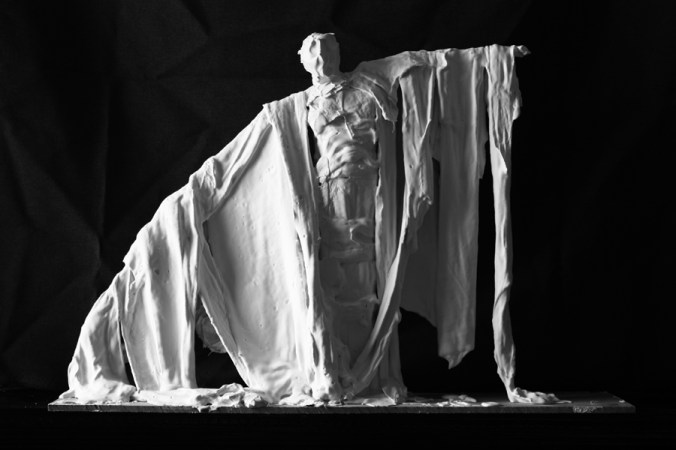
Lazarus, by Jacquie Binns, with her permission.

We come to the second in the ‘Mary, at your feet’ sequence.  This, too, was read at the Alive festival, 2014.  It contains a bigger reversal than a poem can hold – from death to life, for it draws on Mary’s response to the death and raising of her brother Lazarus.

Martha went out to meet Jesus when he finally arrived, and their exchange is sorrowful and powerful and contains words of life and hope.  Mary stays inside, and when she finally goes to Jesus, we feel the depth of their mutual grief. In John’s gospel, where we find this account, the raising of Lazarus plays a crucial role in the events that lead to the crucifixion – the themes of death and life, life from death sound like a returning motif in a piece of music. Here, standing by Lazarus’ tomb, Jesus weeps with Mary, in the company of many who also grieve there.  And then, everything changes.

I am very grateful to Jacquie Binns for permission to use this photograph of her work. She is a textile artist and sculptor of rare vision, and it was an honour to meet her a few years ago, when I saw this piece. It is haunting and breathtaking.  I was particularly struck by the whiteness of the bindings, the light and whiteness seem so cold.  The set plaster holds the fabric grave-clothes in this one moment when the viewer sees Larazus for the first time, before we begin to know the power of what it is we see.

You can read the first poem in this sequence here.


Mary, sister of Lazarus, at your feet a second time

She sits in the shuttered room,
the room where her brother had laid,
dying, dead, the messengers sent out
returning empty, with no reply,
like prayers that bounce  off ceilings
or stick to the roof of the mouth,
choking with sorrow.
When you stay by the Jordan
that shuttered room is where Mary stays.

This is her shadowed valley, the dark forest of her path,
foreshadowing yours, it is all foreshadowing you.
The room where her brother had laid,

how can she ever leave it now?

But leave she did, at last, when you called for her,
she came quickly, running, trailing darkness behind
her weeping.  Mary, once more at your feet,
and when you saw her weeping, you wept too.

You know us in our grief.  You come to us, call to us.
In our darkest, most shuttered places,
your spirit moves, breaks with ours.
Death lay heavy upon you, too, and all the sooner for
this, what you do now, standing before that tomb.

For now, you who are Life,
Word made warm and beating flesh,
and weeping,
call Lazarus out,
You, who are life, and will rise,
call out one who is dead from the cold tomb.
You watch as they run to free him from the graveclothes,
pull darkness from him, calling in strange bewildered delight,
and you see Mary’s face as she sees now,
her brother, who was dead, once more in light,
astonished, seeing your glory, part of your glory,
as she weeps again, is weeping again
breathless with joy.


John 11:1-50

You can read the third poem here


The ‘Mary, at your feet’ poems – One


Two years ago, in May, I was thinking about the three times Mary of Bethany was at Jesus’ feet.  One story is recounted in Luke, the other two in John, where they are a part of the extraordinary Lazarus narrative.  I wanted to explore them more, and I did so in what turned into a series of three poems.  I read early versions of these poems at a local Christian festival, Alive, and as the time of year comes around again, I find I am remembering them, and going back to those thoughts.  I share the first one with you today, and the others will come in their own time, over the next week or so, as I continue to turn them over in my mind.

This first one draws on the story in Luke’s gospel where Jesus visits the home of Martha and Mary, and Mary sits at his feet.  I have not referred to Martha directly, except for in the title.  I do feel her lack. I wonder, in particular, what happened next.  Maybe there are some poems to write about her, too.

There is so much to ponder in this story, but what caught my attention was how hard it is for us to be still, to be.  We are so distracted, so pulled by so many things. We can end up  feeling that those things are what define us. That it is what we do, or think, or believe, or  how people view us that makes us who we are. Just being doesn’t seem enough, but our efforts to be more or different or better than we are can be life-sapping.
Acceptance can be hard to accept!

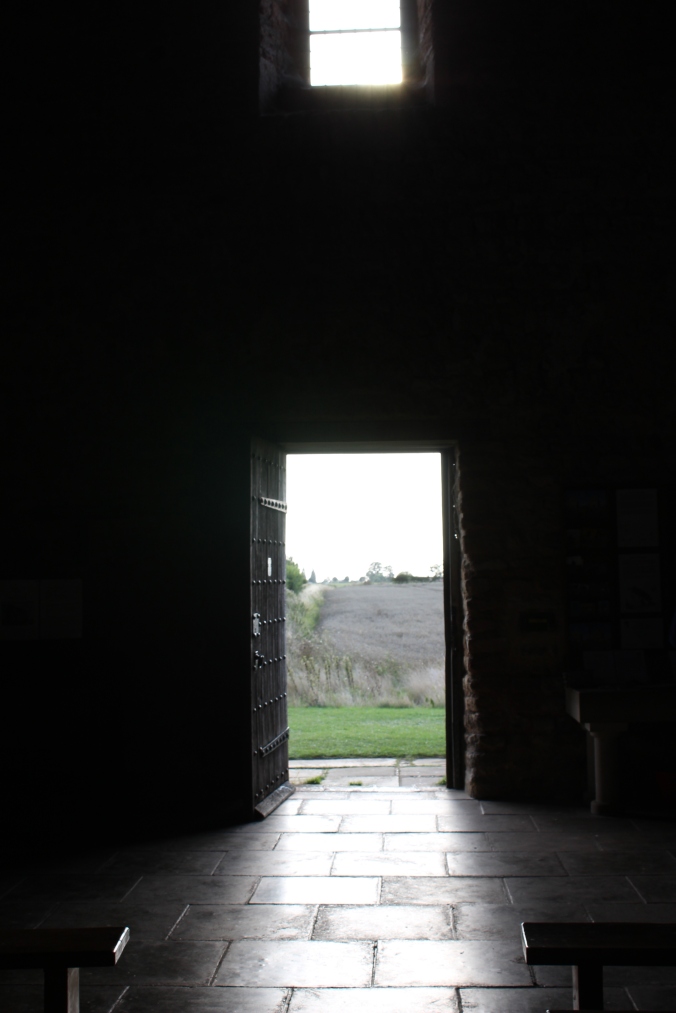
In writing this poem, I hoped to create a place of stillness. The kind of place where contemplative prayer begins.  A place where we can open up a little to love, and light. A place where we know we are welcomed.

The photograph is taken in the Chapel of St Peter on the Wall, Bradwell on Sea, Essex.

IMG_0366.JPG

Mary, sister of Martha, at your feet for the first time

You came in search of rest
away from the road,
that bright, shadeless road,
where so many came,
and you gave so much.

You came and sat down
in the cool room,
the shutters pulled
against the heat,
and Mary sat, too,
and it was enough.
Just sat, quietly, at your feet,
her face turned up to
yours as she listened.
And you saw how the light
fell across her,
as if for the first time.

And this is what you want,
what you long for.
Not the elaborate
preparations we would make,
not ourselves swept and
scrubbed to perfection,
our acts and our
thoughts impeccable
in lifeless rows,
but to be,  here in this light,
to be, here at your feet,
Luke 10:38-42


You can read the second poem here

and the third one here

Glad

It’s easy to see why the English  discuss the weather – on Monday, I lit a fire, and today is warm enough to throw open the doors.  A day when you can slow, and breathe, and see.

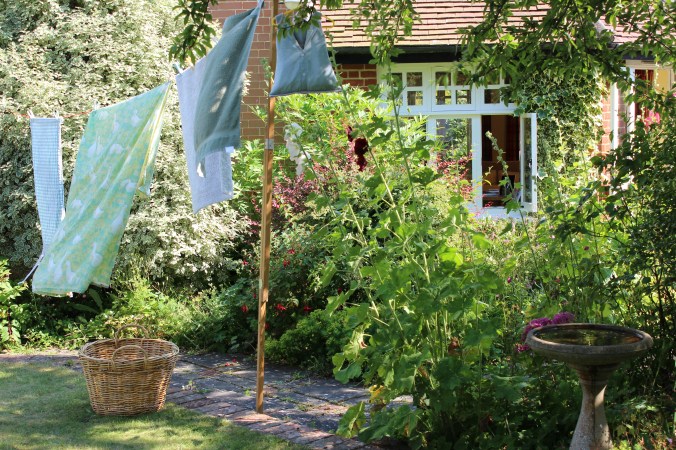
I am typing this looking out of the window you see in the picture below, looking to the place you are looking from.  The gardeners among you may notice it is a picture taken a little further into the summer, when the hollyhocks, which are babies now, grow tall.  It’s all there, waiting.

Below are a few small lines I hope will cheer your day, wherever you are.

IMG_0019


Glad

How little, some days,
it takes to make the heart glad.

A line full of dry washing,
a mother blackbird’s beak,
heavy with worms,
sweetness rising in the grass,
a breeze shot through
with the scent of flowers,

these are enough,
yes, enough.


Wind, and weather

This is my second response to the wonderful Quiet Day at Otley Hall with Malcolm Guite.
While  Trying to listen to God grew out of the day’s content, this next came from the distractions. While we were listening, and looking out at the garden full of delicate spring flowers, the weather had an agenda of its own, bringing swift and sudden bursts of snow and hail.  With the north wind came this very small verse.


IMG_0465.JPG

Wind

Who knows what the wind brings?
These clouds cross the blue sky
full of rain
and hail
and snow,
as the birds sing,
as the flowers grow.
They come if I say yes
or no –
can I say Yes to the wind?


Trying to listen to God

This week, I had the great privilege of spending a day at Otley Hall listening to some of Malcolm Guite’s most recent poems, to be published soon in Parable and Paradox  .  This collection on the sayings of Jesus is full of personal response and deep scholarship.  Those of us who were there had time to reflect on all the wisdom and beauty outside, which always helps my thinking!  It was an astonishingly good experience, and several new poems ended up among my jottings – they still feel quite tentative.

IMG_0468


IMG_0473.JPG

Here is the first.


Trying to listen to God

There is all this that speaks –
the electric green grass,
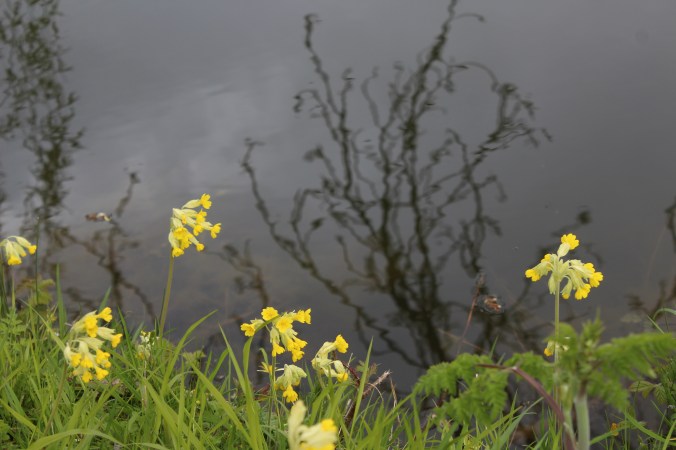
the cowslips and fritillary lilies –
I know I am to consider them,
consider it all.
The song the trees sing today –
their tender beauty
like the beauty of a child –
will not be repeated tomorrow.
Today is the day to hear it.

There is all this
and stories too –
The Kingdom is like this, like that –
slipping past the guard of ego
and reason
they work their slow growth
Seeds that crack the
dark tarmac,
the grey concrete,
soften the callouses our own
stories have worked.

For there is all that too –
the stony weights,
the things that choke.
How does good soil get to be
good?
I wonder, as I am shaken,
as my ground is cleared.


IMG_0471.JPG

Pulling up trees

IMG_0442

IMG_0444

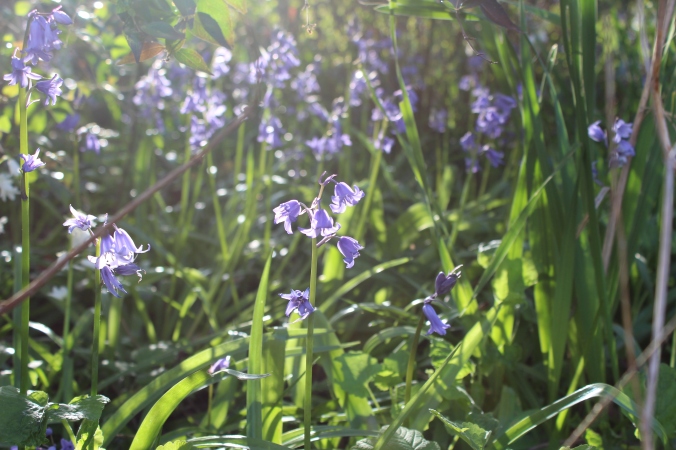
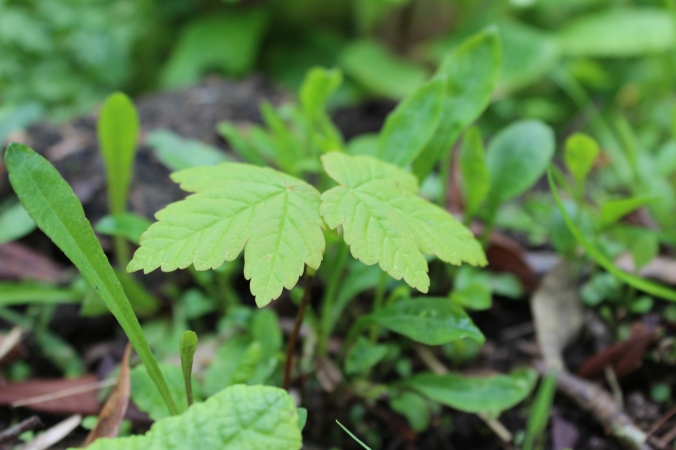
I am sure that all of us who are have responsibility for a little bit of land know what it is to turn your back for a while, then find  it is growing with such glorious, irrepressible speed that you have no hope of getting it back to whatever plan you had.  If, like me, you have a secret preference for wildflowers and woods, it can be hard to pull things up.  I keep the runaway primroses and bluebells – but runaway trees!  Much as I love a wood, I have to remove them. The tension, wanting but not wanting order, is something I explore in this small poem.  I also touch on the more-than-reality of fairy tales, so often expressing some of the deeper workings of our spirits.


Pulling up trees

How quickly this place becomes a wood!
Last year, while I was sleeping,
seeds fell and grew, fell and grew, and now
as the year wakes, these small brown sticks
are all topped with leaves –
miniature sycamore, tiny ash.

How easily they pull up from the damp earth –
one long strong root, going deep,
and side filaments that resist, then
give, satisfyingly.
Such destruction –
I am the giant of my fairy tale.

Open lawns of grass, clusters of flowers –
bluebells and primroses – would be
swallowed up in a dense picket of saplings,
so close the squirrel and the bird
would find it hard to move,
the deer’s path would
no longer be straight –
my garden a wood
that grew while
I was sleeping.

IMG_0449.JPG

IMG_0452.JPG