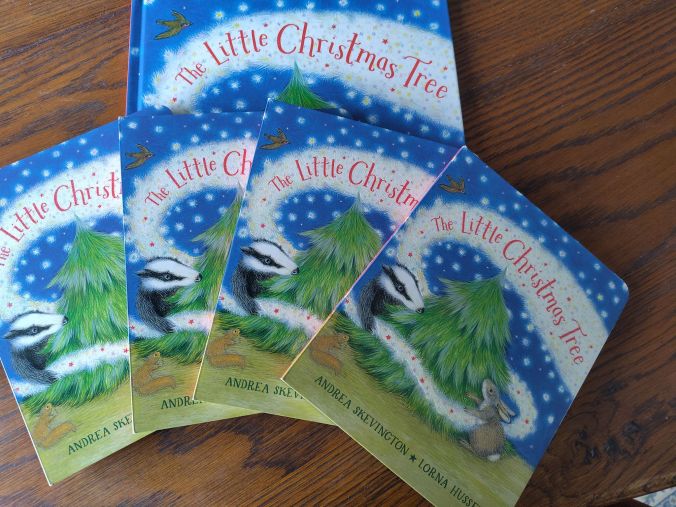
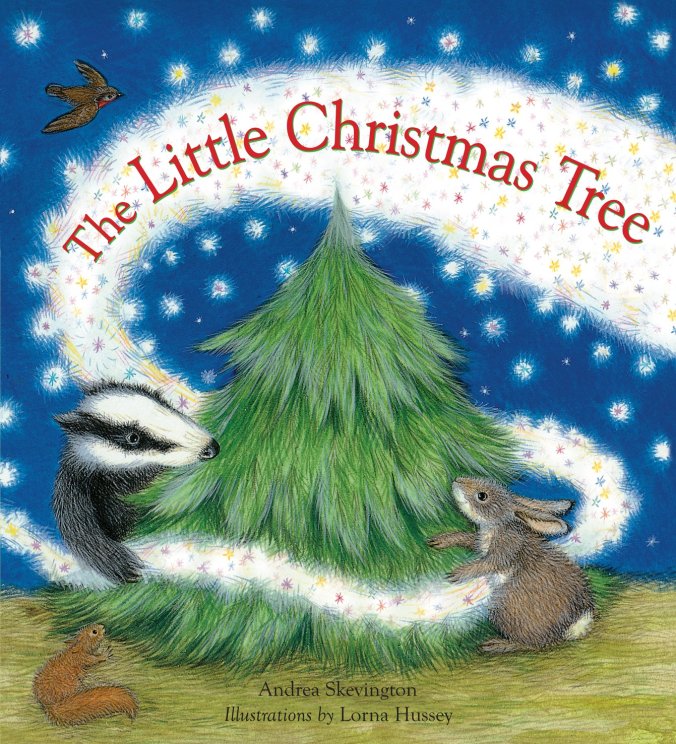
Thank you, good people, for the interest you’re taking in my Christmas picture book. I’ve been keeping an eye on availability, where I can, and it does seem to be selling well. It goes out of stock every now and again on Amazon, and they rustle up a few more copies.
Local bookshops have it in stock or to order. For local friends, Woodbridge Books have copies, and St Mary’s House too the last time I asked.
So, I’m rather bashfully encouraging you to order a copy if you were thinking of doing so, as they may well be in short supply for last minute shopping.
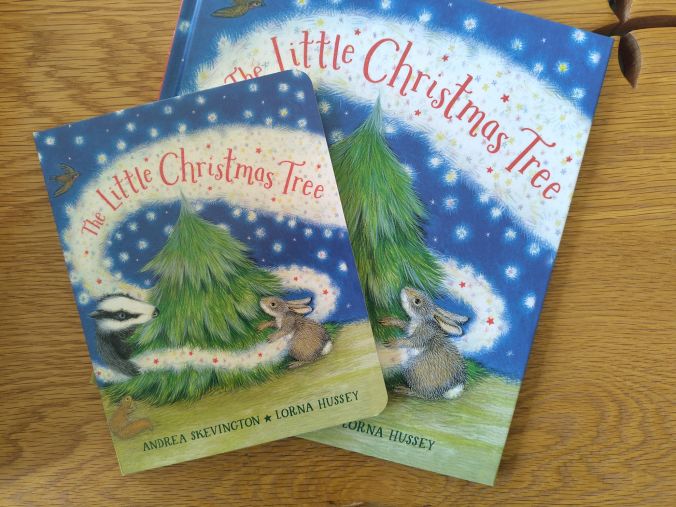
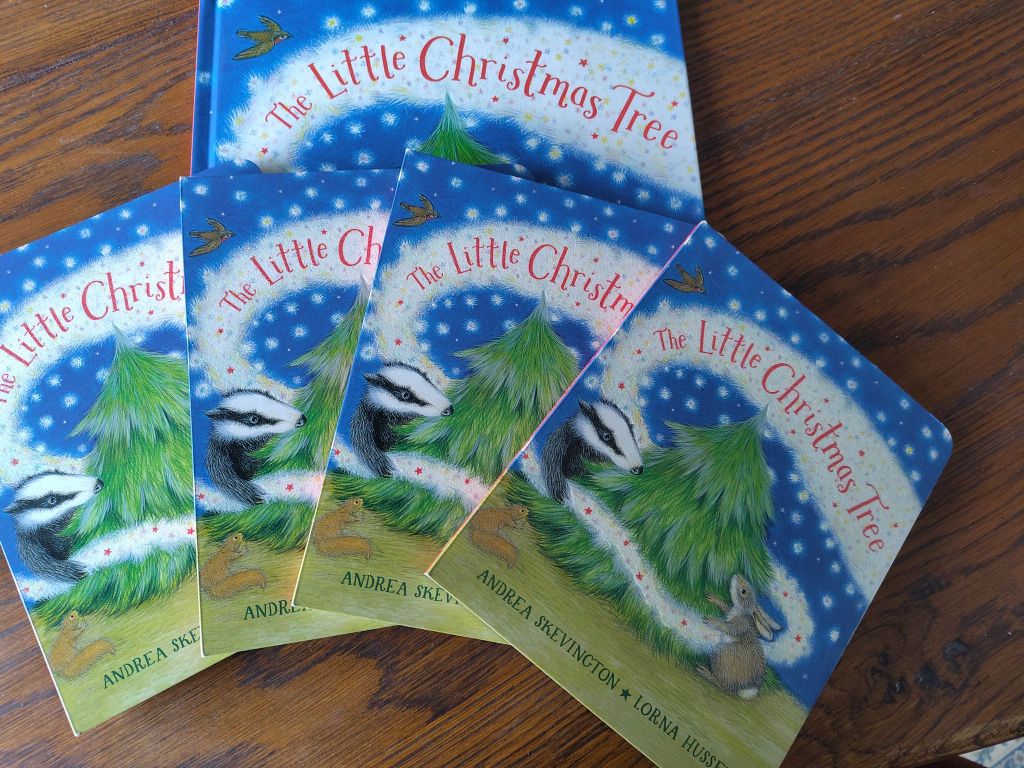
It’s available in two formats – a hardback and a slightly abridged board book for the very young. Both are illustrated by Lorna Hussey, and her artwork is enchanting and much loved by small people.
You can find out more about the book by searching on this blog, but this link will give you a good way in.
You can order it from your usual online places, such as….
The new editions of my first story are making their way into bookshops ready for Christmas, and I know that some of you are coming across them. That’s so good, and a little bit exciting!
It’s given me the opportunity to take another read of the story, and think about it in the context of the world we’re living in now, and I’ve noticed something else.
Previously, I’ve thought about it telling a story into our shifting and stormy climate – and you can read more about that here. Today is the first day COP 30, so it seems particularly appropriate to be thinking of the importance of woods to regenerate our land, how important it is to treasure the natural world and give it space and time to return to strength and function. (If you’re not familiar with Prince William’s Earthshot Prize, I would commend that to you as a hopeful, active antidote to political wranglings – necessary as these may be.)
I’ve also thought about it as a version of Mary’s radical, prophetic message in the passage we refer to as the Magnificat, and you can read more on that here. And once again, the contrast she draws between the mighty and powerful, and the hungry, speaks directly into our unequal world.
What’s been on my mind this year is the matter of welcome – how we welcome, or not, those who have to flee their homes.
I love Lorna Hussey’s warm and intricate illustrations. Thank you Lorna!
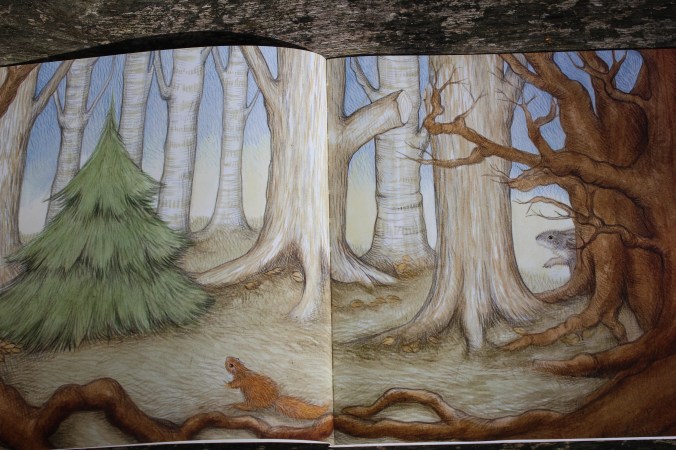
In the story, a storm rips into the wood, and the animals are looking for a place to shelter. They find one in the branches of a little fir tree, who welcomes them in. When I first told the story to my own children years ago, I never thought such an action might be controversial, or political. It was simply a practice of kindness, empathy, hospitality. These have always been regarded as Christian virtues, and those who read the scriptures will be well aware that welcoming strangers, and treating the poor and the vulnerable with compassion, is commended again and again. These qualities are upheld by ethical systems in all cultures across the world. And yet, here we are.
Of course, the global situation is complex, and it’s vital we have good, fair systems which work for all people. Of course, those who profit from exploiting those who are seeking sanctuary should be prevented and brought to justice. Those things are part of the empathy, and the welcome. It is the shift of heart which troubles me, towards hostility and violence towards those who have in all probability already experienced a great deal of it.
Can we reconnect with our deep, inbuilt response to the troubles of others – to seek to help how and where we can? Just up the coast here in Suffolk houses are being bulldozed as the sea bites ever bigger chunks out of the coast. Of course, there’s no comparison with those in the Caribbean and Asia who are suffering the most appaling tragedies from our changing climate, but it’s enough to awaken some fellow feeling, and to imagine how little it would take to find ourselves displaced and relying on kindness – both the kindness of individuals and the kindness of efficient, just and compassionate systems.
In the story, it is the Little Christmas Tree who welcomes the animals, and we share the warmth and compassion and richness that comes from that simple act. There is real joy in it. The book ends with a kind of party.
We can think too of the first Christmas, where a displaced mother was offered somewhere to have her child, and soon after the family became refugees in Egypt running from a tyrannical and jealous Herod. I’ve written about in the link above.
There is much need of kindness, and it is as precious and profound as ever. Perhaps we can remember times when we have both given and received when in need, how good that was – difficult, sometimes, but good.
As we approach Advent, let’s see if we can cultivate kindness, and welcome, and look for local ways to help people who may need it most.
The book is available in two editions, a hardback and a board book. You can order them from your local bookshop, or the usual online places.
I’m so pleased that my first story has come out as a board book today. It looks so appealing for young readers and listeners with Lorna Hussey’s gentle artwork of the woodland animals.
The story is abridged a little for the format, just perfect for little ones, and I hope it will find it’s way into many hands.
Local bookshops will be able to order it for you, usually for next day delivery, if not in stock. Also available at all the usual places you get books. You could try Eden Books
Just in case some of you are very organised people who like to plan ahead for Christmas, you might like to know that a new hardback edition of this beautifully illustrated book is coming out on August 22nd.
It was my first book and I love it, and I’m thrilled it’s coming out again for a new audience. And if you have little ones in your life who are of an age for a board book, it’s coming out as one of those too – publication date for that is 26th September. That edition is slightly abridged, but with all the delightful pictures of woodland animals by the very talented Lorna https://www.instagram.com/lornahusseyillustrator/.
To those who follow this blog from the USA, the publishers were keen to say that the book will be available over the Atlantic, too.
Both can be pre-ordered now. Pre-orders do help with publicity and planning, so if you feel inclined, it would be a great encouragement. Meanwhile, the paperback version is still available.
If you are lucky enough to have a local bookshop, they can get them for you. Here’s a link to the publisher’s website for online orders. Of course, it’s also available in all the ususal places for ordering books.
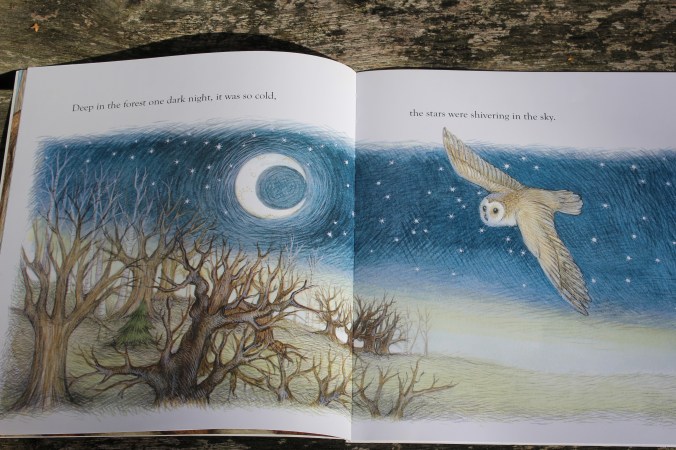
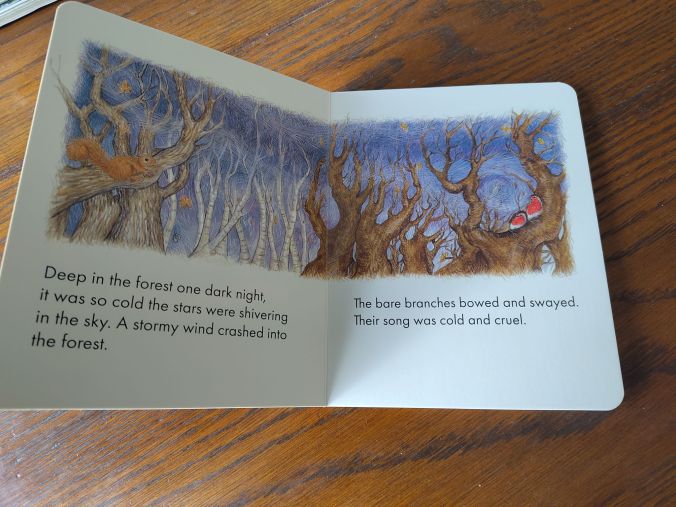
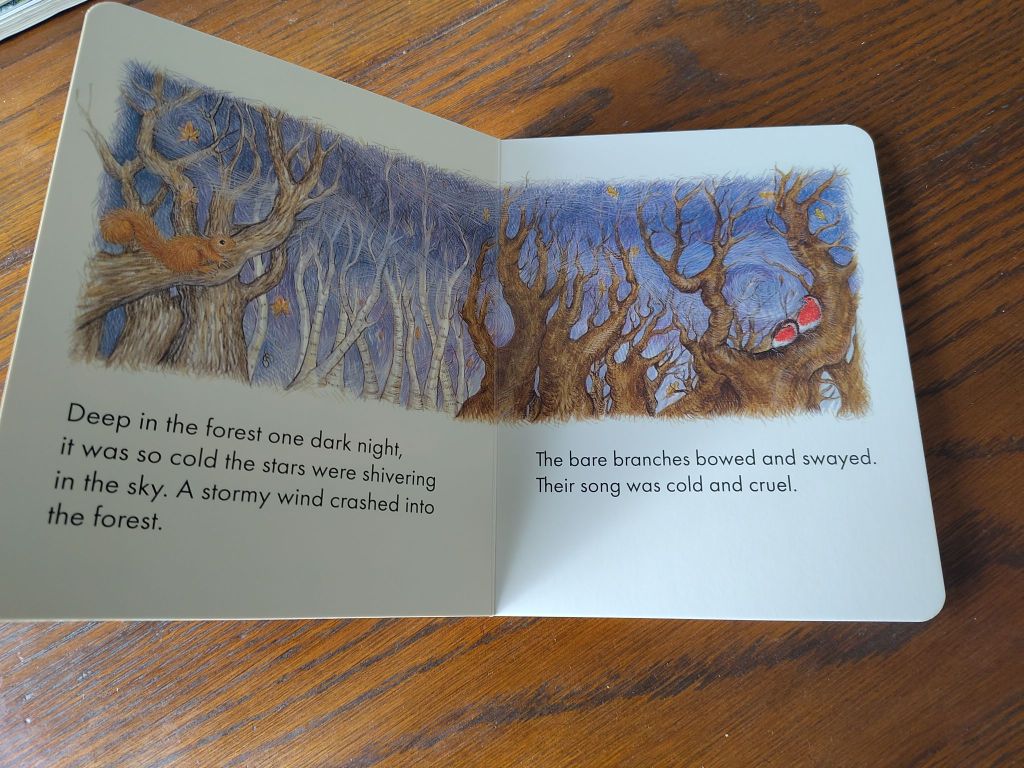
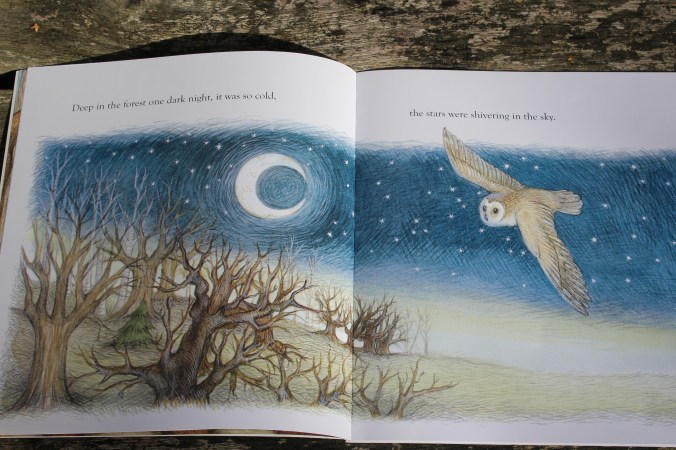
Here’s how it begins…
And you can read more about it elsewhere on my blog, for example…
Thank you all for your support and encouragement. My mind has been full of the poems I’m weaving together for my poetry collection lately, and I’m aware I haven’t been posting on here quite as often as sometimes – I’ll try to keep remembering to do that! And next year, there’ll be lots to share!
The solstice has come, the longest night, and we are now in those few days when light and darkness are poised together, equal. Here, the clouds have blown away, and the wind is mild, if wild. In the garden I see new shoots beginning, green and bright, and tiny catkins, and there is light, at least for a few hours, and a promise of lengthening days. For now, though, it’s a time for fires and gathering. It’s a hard time of year, where we need shelter and warmth and companionship – powerful and beautiful in its own right, and also full of the promise of light to come. I hope that what follows can offer you a moment of reflection and mystery as we think of Jesus, entering the world so precariously, helplessly vulnerable. The Prince of Peace born into dark times, with the strangest of fanfares, the most unpromising of resting places.
I’m not quite in a place of tinsel and jollity, though. I’ve been haunted by an image from Bethlehem this year - Christ in the Rubble – where the Lutheran church there has replaced its more traditional nativity scene with one that vividly demonstrates the reality for babies being born in Gaza now. We need the message of Christmas, with its offer of healing, love, forgiveness, presence, as much now as we ever did. The wonder of One laying aside power, and emptying himself for the sake of all.
The Roman Emperor, Caesar Augustus, had ordered a census throughout the whole empire, when all the people would be counted, and taxed. The orders spread along straight Roman roads, and were proclaimed first in the white marble cities and ports, and then in the towns and villages of the countryside.
Even quiet Nazareth heard the news, and Mary and Joseph began to gather together their belongings, ready to travel to Bethlehem. That was Joseph’s family home: he was descended from King David, of Bethlehem. They set off south on the crowded road, for the whole empire was travelling. But, for Mary, the journey was especially hard, and the road seemed never ending. It was nearly time for her baby to be born.
At last they came to Bethlehem, but it was not the end of their troubles. The city was noisy, bustling, and heaving with crowds, and Joseph searched anxiously for somewhere quiet for Mary to rest – her pains were beginning, and the baby would be born that night. The inn was already full of travellers, and the only place for them was a stable. There, among the animals, Mary gave birth to her firstborn son, and wrapped him up tightly in swaddling bands and laid him in a manger full of hay. Then, she rested next to the manger, smiling at the baby’s tiny face.
There were shepherds who lived out on the hills nearby – the same hills where King David had once watched over the flocks, long ago. The sheep were sleeping in their fold under the shining stars, while the shepherds kept watch. Their fire flickered and crackled, and the lambs would bleat for their mothers, but they were the only sounds. All was peaceful. All was well.
Suddenly, right there in the shepherd’s simple camp, appeared and angel of the Lord, shining with God’s glory and heaven’s brightness. The shepherds gripped each other in terror, their skin prickling with fright. “Don’t be afraid, I’m bringing you good news – it will bring joy to all people!” The shepherds listened, awestruck, their faces glowing with the angel’s light. “This is the day the good news begins, and this is the place. In the town of David, a saviour has been born. He is Christ, the Anointed One, the one you have been waiting for. And this is the sign that these words are true: you will find a baby wrapped tightly in swaddling bands, lying in a manger.”
The shepherds watched as light was added to light, voice to voice, until they were surrounded by a dazzling, heavenly host of angels, all praising God and saying “Glory! Glory to God in the highest, And on the earth be peace!”
And then, in an instant, the angels were gone, and the shepherds were left in dark night shadows, listening to the sound of a distant wind. But their eyes still shone with heaven’s light. “Let’s go and see for ourselves!” they called to one another as they raced over the dark, rocky fields to Bethlehem. There, they found Mary and Joseph, and, just as the angel had said, they found the baby wrapped tightly in swaddling bands and lying in a manger. They saw him with their own eyes, and spread the angel’s message to all they met. “The Promised One has come! The Christ, the Anointed One, has been born!” The angel’s words were on everyone’s lips that night in Bethlehem. And, as the shepherds made their way back to their sheep, bursting with good news, Mary kept their words safe, like treasures, in her heart.
What can I give Him, Poor as I am? If I were a shepherd I would bring a lamb; If I were a wise man I would do my part; Yet what I can, I give Him – Give my heart. Christina Rosetti 1830-1894
Also from Prayers and Verses, a poem I wrote as a child.
The dawn is breaking, the snow is making everything shimmer and glimmer and white.
The trees are towering, the mist is devouring all that is in the reaches of sight.
A bell is ringing, the town is beginning, slowly, gradually, to come to life.
A candle is lighted, and all are excited, for today is the ending of all man’s strife.
The light is coming into the world.
Please feel free to use the extracts, saying where they are from.
It’s getting closer to Christmas. This year, The fourth Sunday in Advent is rather overshadowed, falling as it does on Christmas Eve – the day when, for so many, and for so many years, the season of Christmas began. But its themes are precious, and the heart of the feast. It’s worth making a little space amongst the cooking and present wrapping and welcoming and general getting ready to hold the truth of Love coming among us at Christmas.
As it’s hard to make that little bit of space, here are the words to a carol that can perhaps sound in your mind whatever you’re doing in the moment…… to transform the activity into something holy and generative. A contemplation for busy hands.
Love came down at Christmas, Love all lovely, Love Divine, Love was born at Christmas, Star and Angels gave the sign.
Worship we the Godhead, Love Incarnate, Love Divine, Worship we our Jesus, But wherewith for sacred sign?
Love shall be our token, Love shall be yours and love be mine, Love to God and all men, Love for plea and gift and sign
Christina Rosetti 1840-1894 One of the beautiful lyrics included in my Prayers and Verses.
There is a mystery we can enter into as we draw close to the year’s midnight, in this darkness where something hopeful and joyous is emerging. And the sign of it is love. Simply love: the token and the gift and the sign. As we approach Christmas, we can reaffirm that gift of love. We can consider what it might mean this week, for us, to live from a place and awareness of love. If Love came down at Christmas, what would that look like for me, at this time? Can we accept the gift and sign of this love? Can we receive it and allow it to change us, so we too are part of the new growth of this silent, midwinter spring?
One of the readings for today, from Isaiah 7, includes the name for the one to be born….. Immanuel, translated as God with us.
It’s a profound promise. That God is with us. Even when we are unsure what we mean by God, even when we lose sight of what might seem clear in clear daylight, maybe we can come to know that we are held and accompanied in love. This, to me, is increasingly the heart and core and hope I hold onto. That God is indeed with us. And it is good to become alive to this in the bleak midwinter – as Christina Rosetti also wrote.
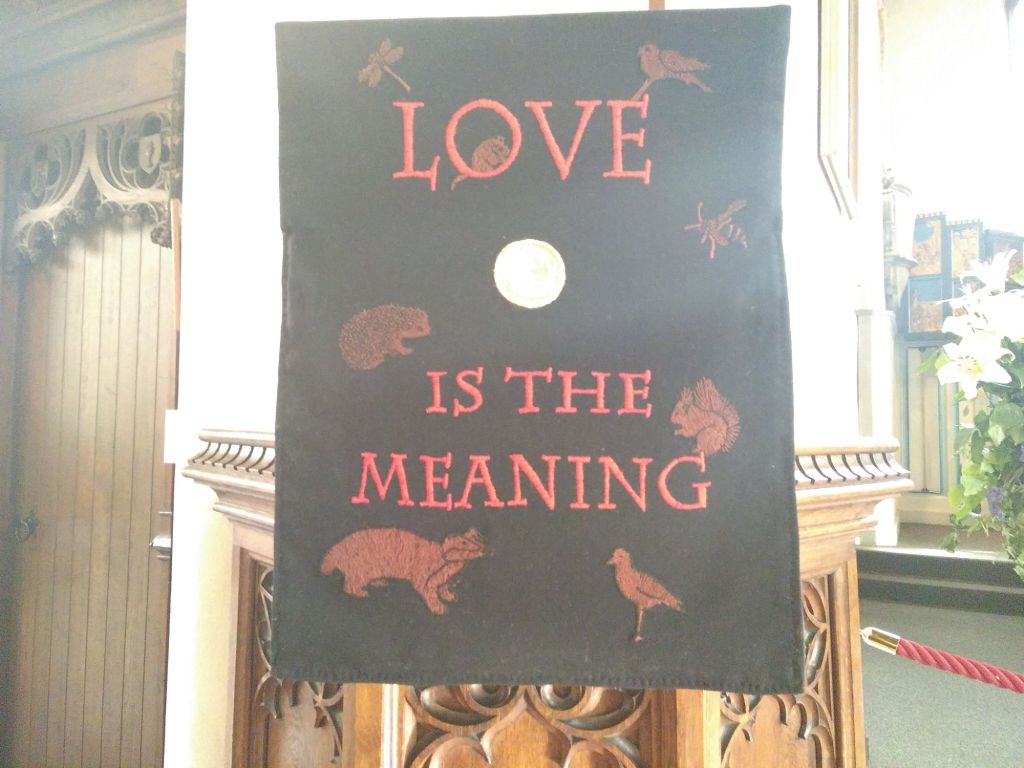
This autumn, we went to a beautiful celebration of Julian of Norwich’s wisdom and words by contemporary artists. It’s her 650th anniversary. The exhibition was held in three churches in the city. The title was ‘Love is the meaning’, taken from the revelation that Jesus’s meaning is indeed love. It is so restoring and freeing to know that love is the heart of the good news of Christmas.
With apologies for the poor photo quality! They are very fine works.
Marja Almquist
‘And in this he showed me a little thing, the quantity of a hazel nut, lying in the palm of my hand, as it seemed. And it was as round as any ball. I looked upon it with the eye of my understanding, and thought, ‘What may this be?’ And it was answered generally thus, ‘It is all that is made.’ I marveled how it might last, for I thought it might suddenly have fallen to nothing for littleness. And I was answered in my understanding: It lasts and ever shall, for God loves it. And so have all things their beginning by the love of God.
In this little thing I saw three properties. The first is that God made it. The second that God loves it. And the third, that God keeps it.’
Julian of Norwich
Alex Egan
Julian’s insight reminds us of the inextinguishable love of Jesus born among us, and dying among us too. A deep hope springs from that love for us, and for all that has been made. It gives us a way to walk in the world, secure enough to be bold in the love we give, for we have received. It doesn’t overlook the pain of the world, but provides a profound companionship and meaning in the midst of it.
The gospels are full of hardship and difficulty, and love, companionship and healing. I am increasingly valuing the questions and uncertainties in the story – where things that seem bad, are turned to the good, and that which seems good, turns out to be less so. We can see instead how these things might work towards love, friendship, wholeness. It is easy to lose sight of how hard it must have been to be birthing in such hard conditions, but that very difficulty gives us hope in our own upturned places.
You might like to scroll up to the Caravaggio picture above – intensely beautiful even in its portrayal of an exhausted Mary and ill clad shepherds. It’s worth following the eyes in this picture, to notice where everyone is looking, and what those looks communicate. There is something in the space between – the space between mother and child, held in the gaze of the shepherds – the love, the deep bond, which means so much. The artists were right to value it. There is a fine net of love and wonder being spun here, despite the destitution of the setting. This is deep looking indeed.
Some years ago I attempted a paraphrase of the beginning of John’s gospel. A friend read it last Sunday at a contemplative carol service, where it opened the dark evening. I thought I’d share it with you today.
Beginning
It started with the Word, who was there before the dawn of time – before the earth, the waters, the stars – there with God, was God. For in the beginning, there was simply nothing else.
But then, the Word began to work. When the Word spoke, the universe spun into song, and all things came into being. Without the Word there was only empty blankness.
For the Word, the universe burst into life like a desert after rain. This was the Word’s work – unleashing life and light – glorious and radiant, warming our lives like the sun in spring.
This is the light which shines through our darkness – cold, smothering darkness where nothing can grow. And the darkness draws back at its touch, not understanding a light that cannot be put out.
Then, the Word, source of life and light, came into the world he made, but the world hid its face in its hands. It did not recognise him. He reached out to his people, and they turned away.
Yet to all who welcome him, believed in him, he held out his hands to give them such a gift – to know that they are a child of God, Born of God.
So the Word, the One who was there from the beginning became flesh and blood and chose to make a home with us in this fragile, changing world.
He came with open hands to bless, brimming over with words of truth. He has unlocked Heaven’s storerooms and poured down gift after gift for us.
We saw his glory with our own eyes – we saw him shining with life and light, we saw the very One who came to us from the Father.
For no one has ever seen God. But this Jesus, the One and Only, who was there at the beginning, has made God known.
The blossom buds are already there, tiny flowers formed, asleep and waiting for the days to begin lengthening just a little. They burst early, in February often. It’s all there, waiting, at this darkest time of year. How wonderful to celebrate light and birth now, when hope may be faltering. Maybe, we can treasure this lesson of darkness. We may be able to catch a glimpse of the love that came down at Christmas, and the love that received him.
Thank you for joining me in these readings and ponderings. May you have a blessed, peaceful and loving time as we draw close to Christmas.
It’s getting close now…. Last night was the longest night. We’re in that pivot moment when darkness seems to have claimed the Northern Hemisphere, but we know that in just a few days, if we look, we’ll see that the days will lengthen, by moments to begin with. And some say that the first day when it’s possible to see that growing light is Christmas day itself..
And I want to give my attention to the story, to let the wonder of it seep through me. There are still things to do, but those things are joyful. After the last few years when covid stopped us gathering, gatherings can happen. And that is so good.
Christmas always holds a mixture of joy and sadness, of gains and losses. Mindful of these, I will hold on to the wonder of love being born among us, even though the circumstances could hardly have been less promising – for circumstances are never quite what we hoped, and there’s the lesson. To look deeper than circumstance. To make a courageous decision to hold on to hope, and peace, and joy, and love, even though. For these qualities are real, and true, and enough. These things are golden strands, woven through the dark fabric.. It is where they can be found. And the One who is coming will light the way, and scatter the darkness, and hold out a helping hand.
I’ll hold on to the message of “Love came down at Christmas”, and light my candles in the fading light, and watch the rain clouds sweep across the sky, rain falling on all of us, just the same.
Perhaps later, the skies will clear, and we’ll see the stars.
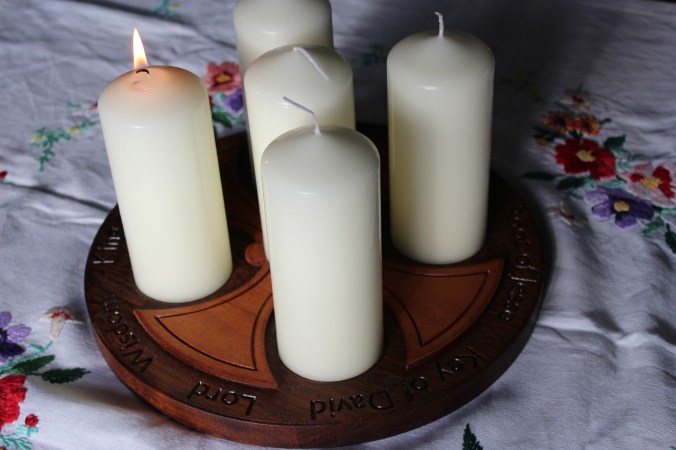
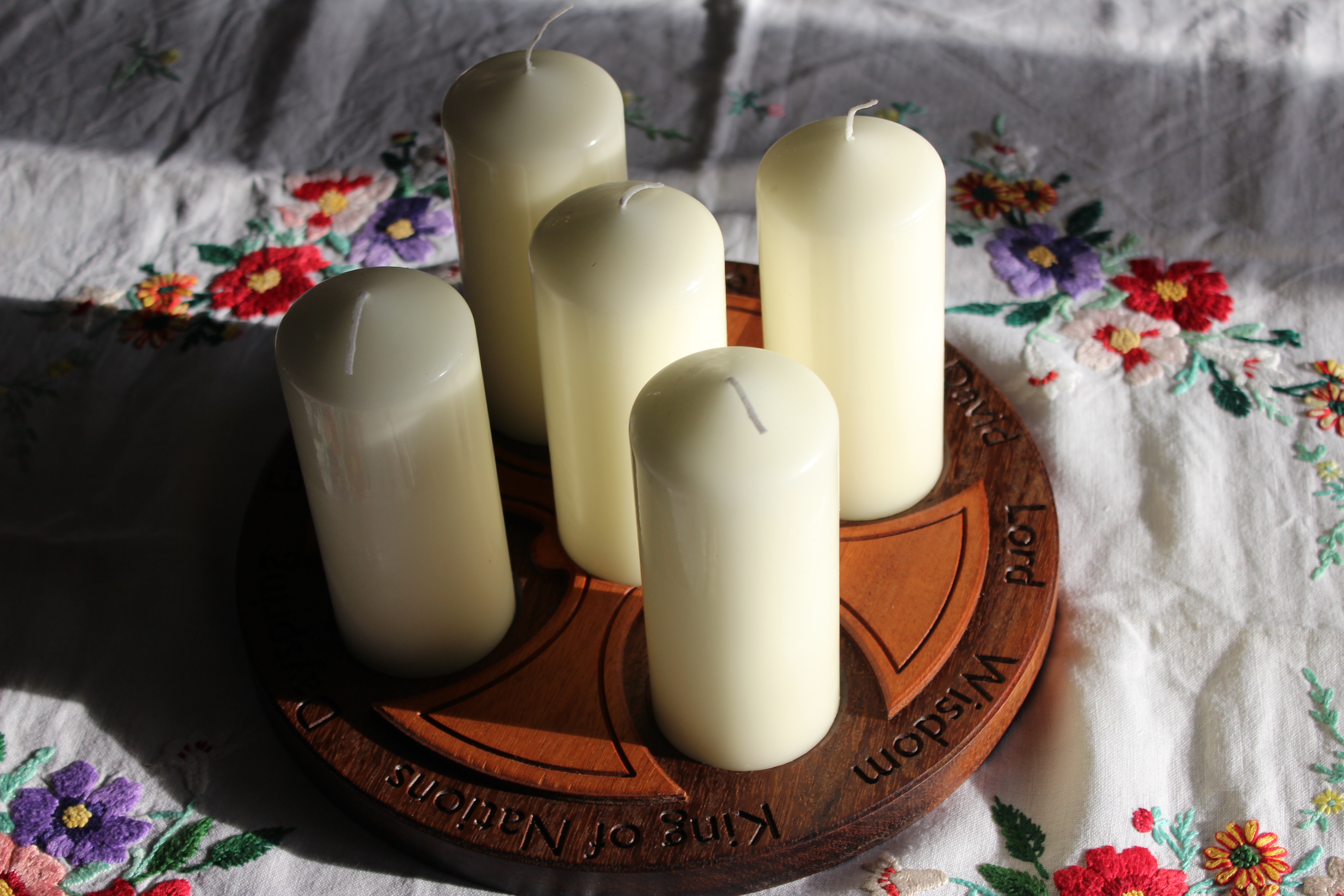
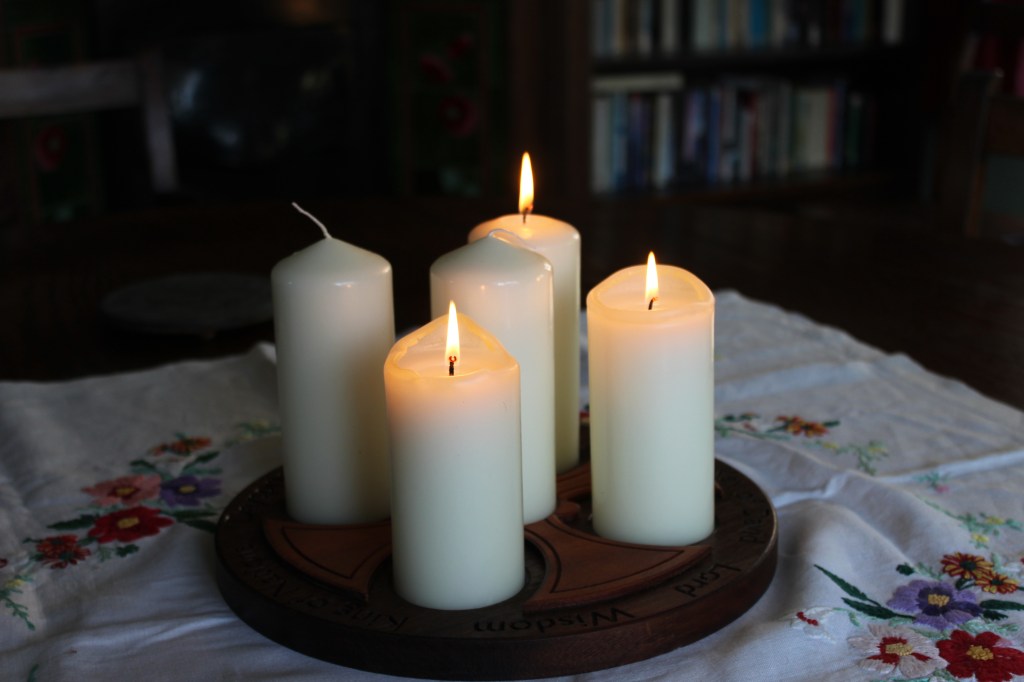
You can find out more about the candle ring, and the words around it, here.
The Roman Emperor, Caesar Augustus, had ordered a census throughout the whole empire, when all the people would be counted, and taxed. The orders spread along straight Roman roads, and were proclaimed first in the white marble cities and ports, and then in the towns and villages of the countryside.
Even quiet Nazareth heard the news, and Mary and Joseph began to gather together their belongings, ready to travel to Bethlehem. That was Joseph’s family home: he was descended from King David, of Bethlehem. They set off south on the crowded road, for the whole empire was travelling. But, for Mary, the journey was especially hard, and the road seemed never ending. It was nearly time for her baby to be born.
At last they came to Bethlehem, but it was not the end of their troubles. The city was noisy, bustling, and heaving with crowds, and Joseph searched anxiously for somewhere quiet for Mary to rest – her pains were beginning, and the baby would be born that night. The inn was already full of travellers, and the only place for them was a stable. There, among the animals, Mary gave birth to her firstborn son, and wrapped him up tightly in swaddling bands and laid him in a manger full of hay. Then, she rested next to the manger, smiling at the baby’s tiny face.
There were shepherds who lived out on the hills nearby – the same hills where King David had once watched over the flocks, long ago. The sheep were sleeping in their fold under the shining stars, while the shepherds kept watch. Their fire flickered and crackled, and the lambs would bleat for their mothers, but they were the only sounds. All was peaceful. All was well.
Suddenly, right there in the shepherd’s simple camp, appeared and angel of the Lord, shining with God’s glory and heaven’s brightness. The shepherds gripped each other in terror, their skin prickling with fright. “Don’t be afraid, I’m bringing you good news – it will bring joy to all people!” The shepherds listened, awestruck, their faces glowing with the angel’s light. “This is the day the good news begins, and this is the place. In the town of David, a saviour has been born. He is Christ, the Anointed One, the one you have been waiting for. And this is the sign that these words are true: you will find a baby wrapped tightly in swaddling bands, lying in a manger.”
The shepherds watched as light was added to light, voice to voice, until they were surrounded by a dazzling, heavenly host of angels, all praising God and saying “Glory! Glory to God in the highest, And on the earth be peace!”
And then, in an instant, the angels were gone, and the shepherds were left in dark night shadows, listening to the sound of a distant wind. But their eyes still shone with heaven’s light. “Let’s go and see for ourselves!” they called to one another as they raced over the dark, rocky fields to Bethlehem. There, they found Mary and Joseph, and, just as the angel had said, they found the baby wrapped tightly in swaddling bands and lying in a manger. They saw him with their own eyes, and spread the angel’s message to all they met. “The Promised One has come! The Christ, the Anointed One, has been born!” The angel’s words were on everyone’s lips that night in Bethlehem. And, as the shepherds made their way back to their sheep, bursting with good news, Mary kept their words safe, like treasures, in her heart.
And from Prayers and Verses . The first of these is a poem I wrote in primary school.
The dawn is breaking, the snow is making everything shimmer and glimmer and white.
The trees are towering, the mist is devouring all that is in the reaches of sight.
A bell is ringing, the town is beginning slowly, gradually, to come to life.
A candle is lighted, and all are excited, for today is the ending of all man’s strife.
O God, be to me like the evergreen tree and shelter me in your shade, and bless me again like the warm gentle rain that gives life to all you have made.
Ely Cathedral’s powerful statue of Mary, by David Wynne
As we approach the third sunday of Advent, the word we turn to is Joy. And, as part of that turning to joy, many also remember Mary. In particular, her response to the angel’s message when she was invited to participate in this story of “God-with-us”… but more on that later.
As I look at this statue, I find Mary’s stance compelling. It is open and powerful, it feels like a “yes” which accepts and trusts what will be, even if it is beyond the mind’s understanding. Pictures of Mary often show her looking more afraid, more passive. This work captures a moment of glorious, positive choice. But there is something else. The slight downward tilt of her head seems to acknowledge the difficulties caught up in this acceptance, and the enormity of that choice. There is awe and vulnerability here too – vulnerability captured in that bare foot peeking out.
Among the fields and vineyards of Nazareth, in Galilee, lived a girl named Mary. She was soon to be married to Joseph, a carpenter, who could trace his family back to David, the shepherd king.
Then, one day, astonishing news burst into Mary’s quiet, hopeful life. The angel Gabriel came to her with a message. “God is with you, Mary!” Mary gasped, and fell to her knees. “Don’t be afraid. God smiles on you!” The angel spoke the astounding words gently, lovingly. “You will have a son and name him Jesus. He will be called great – the Son of the Most High God! The Lord God will give him the throne of his ancestor David, and his kingdom will never end!”
For a moment there was silence, as Gabriel’s words filled the air – and Mary’s mind. “But how can this be, as I am not yet married?” Mary asked. “God’s Holy Spirit will enfold you. Your child will be holy. Even Elizabeth, from your own family, is going to have a child, despite her age! She is now in her sixth month. So you see, nothing is impossible with God!”
Mary raised her eyes to Gabriel’s face. “I am God’s servant. Let it be as you say.” And the angel let her alone, her mind spinning with the strange words.
Then Mary thought of Elizabeth. “The angel knew all about her – I must go to her.” She got ready, and set off quickly for Elizabeth’s home in Judea to the south, near Jerusalem.
As soon as she arrived at the house, she hurried to Elizabeth and took her hands. At the sound of Mary’s voice, the baby leaped inside Elizabeth, and the Holy Spirit filled her. She understood at once what had happened to Mary.
“You are blessed among all women, and blessed is your unborn child!” she said. “Why have I been so honoured? Why should the mother of my Lord God come to visit me?” Elizabeth laughed, and put Mary’s hand on her belly. “You see how my child leaps for joy at the sound of your voice?”
Then, Mary speaks out extraordinary words, which in turn echo the words of Hannah when she said goodbye to her long-awaited son, Samuel (I Samuel 2) . You can read Mary’s words – the Magnificat – in my version here, and also more about Mary and Elizabeth’s time together.
It strikes me how deeply Mary entered into uncertainty, with her acceptance despite her questions – “how can this be?” She is setting out on a path that will cause her pain, but the angel’s words focus on a bigger picture, an unknowably big picture. There is a vision of what will be, the good that will come from her choice. There is tenderness and reassurance here as she asks the question, honouring her uncertainty, the impossibility of comprehending what this may mean. And there is also a gentle, tactful suggestion of a path to be taken. A path to her cousin Elizabeth – who is also caught up in this great bursting through of hope and joy into a world marked with difficulty and pain. And that path will bring her companionship with someone who will believe her, and will support her, and to whom she can offer love and encouragement in turn.
Sometimes, during Advent, we are also reminded of John the Baptist – Elizabeth’s son – and his question to Jesus when he was in prison: “Are you the one who is to come, or should we expect someone else?” You can read the account here. What I love about this reading is the way Jesus reassures John in a way he will understand, echoing the prophet Isaiah. There is a tenderness and deep compassion here too. We can almost hear an echo of their mothers’ relationship in this question, this uncertainty, and this reassurance. Jesus then goes on to speak to those listening who may, we presume, be shaken by John’s question – or critical of him for doubting. The compassion of Jesus’ response can reassure all of us. It is hard for us to understand, and doubt and question and uncertainty are here embraced and not feared.
So our focus on joy is one where joy can be experienced despite our frailties and uncertainties. It does not come with knowing the answers, having things all neatly wrapped up, but in the courage to enter into the mysterious life of something beyond and greater than ourselves. Perhaps here is the only place it can be found.
We mentioned Isaiah above. Here is part of the passage paired with the reading about John in the Church of England readings for this week. You can read it all here.
The desert and the parched land will be glad; the wilderness will rejoice and blossom. Like the crocus, it will burst into bloom; it will rejoice greatly and shout for joy. The glory of Lebanon will be given to it, the splendor of Carmel and Sharon; they will see the glory of the Lord, the splendor of our God.
Strengthen the feeble hands, steady the knees that give way; say to those with fearful hearts, “Be strong, do not fear; your God will come, he will come with vengeance; with divine retribution he will come to save you.”
Then will the eyes of the blind be opened and the ears of the deaf unstopped. Then will the lame leap like a deer, and the mute tongue shout for joy. Water will gush forth in the wilderness and streams in the desert. The burning sand will become a pool, the thirsty ground bubbling springs. In the haunts where jackals once lay, grass and reeds and papyrus will grow.
And a highway will be there; it will be called the Way of Holiness; it will be for those who walk on that Way.
Once again, we have a vision of how the world could be, restored and flourishing. A highway through the wetlands bursting with life, and even those who lack strength and steadiness will walk it.
And I call to mind COP15, the biodiversity conference currently taking place in Montreal. When so much of the beautiful life of our world is diminished, we so need this vision of restoration and abundance. We need this vision of life and joy, of a better way of being in the world. And then we need to walk into it.
We thank you for being born among us, sharing with us what it is to be human. we thank you for showing us a way to live, full of grace and truth. Light up our path, and let us walk with you.
It’s the first of December, we’re entering into Advent proper now. This post is in preparation for the second Sunday of the season, and for many the theme of the week is Peace, following on from Hope last week. Tree stumps also feature.
Once again, we are engaged in a radical practice of seeing what could be alongside what is. As with the thoughts on Hope, we’re not trusting to wishful thinking, or pretending real obstacles to peace don’t block our way.
They dress the wound of my people as though it were not serious. “Peace, peace,” they say, when there is no peace.
Says Jeremiah . And I’m sure we all know the distress of having some deep issue dismissed, and peace proclaimed when what that means is people keeping silent about weighty matters. That is no peace. We are in search of something much more radical.
How to hold on to some kind of centre, some kind of Peace, in the midst of all that surrounds us? Whether that’s deep matters of justice, distress, and hurt, or our more daily concerns of lists and duties and timetables and so many forgotten-to-do-in-time things? How to hold on to a centre, and to peace, in the midst of loss, and loneliness, and Christmas pasts? This Sunday, the second of Advent, the theme of peace is much needed.
Once again, readings for this week turn to the prophets. A longer meander through the section of Isaiah we read from below will reveal much that preceeds the talk of peace. There are words which seek to uncover injustice and untruth, addressing past conflicts and wrongdoings. This isn’t peace which seeks to bandage over matters that need deeper healing, this is peace as a result of a long process of radical transformation. It’s a vision of the dream of God for the world. Of the growth and new life possible in things which seem beyond hope of greening.
A shoot shall come out from the stump of Jesse, and a branch shall grow out of his roots. The spirit of the Lord shall rest on him, the spirit of wisdom and understanding, the spirit of counsel and might, the spirit of knowledge and the fear of the Lord.
The wolf will live with the lamb, the leopard will lie down with the goat, the calf and the lion and the yearling together; and a little child will lead them. The cow will feed with the bear, their young will lie down together, and the lion will eat straw like the ox. The infant will play near the cobra’s den, and the young child will put its hand into the viper’s nest. They will neither harm nor destroy on all my holy mountain, for the earth will be filled with the knowledge of the Lord as the waters cover the sea.
Isaiah 11: 1-2, 6-9
I am very struck by the image of the tree stump – cut down, presumed dead, or unproductive – springing back into life. We see again the hope in even the most hopeless situations, the determination of life. Many have looked back at these words of Isaiah and seen the coming of Jesus in them. In the shoot springing up, and in the little child who will gently lead. Born into most unpromising circumstances – homeless (at least temporarily), under enemy occupation and the cruel rule of a local puppet tyrant – there is a deep promise of peace and hope in the coming of Jesus. This new growth will take a suprising form. This dream of a new world will grow under the surface, in hearts and lives. Appearences are deceptive.
Even my beautiful dead cotoneaster, picture at the top of this post, harbours life. Although the plant itself hasn’t sprung up from dead roots, other things have. Birds perched in the branches, dropping seeds, and now the light has reached the ground, things are growing. And the dead wood is a haven for so many small creatures. I wrote about the tree here.
And deeper, and further into the prophecy, we have the harmony of all creatures, including humans, living at peace. We have an ecology of plenty and playfulness, of trust and abundance. As we meditate on the possibilities of peace, and the world as it may be, can we catch a vision of what that might be like? As we see the number of trees, the whole landscapes and ecosystems, that have been lost, how might these words speak into that situation with hope, justice and peace?
You might consider writing down your own vision for how such a just, peaceful, restorative, abundant world might appear. You might wish to pray “Your kingdom come, your will be done, on earth as it is in heaven.” from the Lord’s Prayer. What comes to mind as you pray that bold and transformative prayer? And as we pray, so we seek to live. How might we live this week in response to this vision, this dream, this prayer?
And as we do so, we could turn to this week’s gospel reading. Trees come up here, too….. John the Baptist, preparing the way for the ministry of his cousin Jesus, speaks of knowing trees by their fruit. What their lives produce.
Under the white heat of the sun, far from shade, the murmuring crowds gathered. Some had walked through city streets, others through fields and vineyards, but all had come out into the stony, dusty Desert of Judea to see one person. It was John, son of Zechariah, who stood by the river Jordan.
John was no polished performer – he looked wild, dressed in rough clothes of camel hair held together by a leather belt. He was thin, eating only the locusts and wild honey he could find in the desert. But his words were full of power, full of life and holiness. He called out in a loud voice “Repent! Turn your lives around and come back to God! His kingdom is near. Come and be washed clean!” And many came forward, full of sorrow for the wrongs they had done, and John baptized them in the River Jordan.
There some among the religious leaders who came and joined the crowds to look holy in front of everyone else – they thought they were good enough already, and had no real need to change. “You snakes!” the Baptist spat: “We can tell what you are like by what you do – just as you can tell a tree by its fruit. Don’t think you can fool anyone with show-religion!”
But most who came were hungry for a new beginning. For John taught them to hope. In his words, they caught a glimpse of something beyond their everyday lives. They understood that John the Baptist was preparing the way for something, or someone, astonishing. “I baptize you with water, for repentance. But you wait. There is one coming after me who is so much greater. I am not even fit to carry his sandals for him. He will baptize you with the Holy Spirit and fire – a baptism that will wash you inside out.”
In Luke’s Gospel, we get an insight into what this preparation for the one who is to come might look like in practice
“Even now the ax is lying at the root of the trees; every tree therefore that does not bear good fruit is cut down and thrown into the fire.” And the crowds asked him, “What then shall we do?” In reply he said to them, “Whoever has two coats must share with anyone who has none; and whoever has food must do likewise.” …..
Luke 2:9-11
We remember the Advent traditions of giving – not just to friends and relations, but to others as they have need. What John the Baptist is calling people to, to prepare for the coming of the Kingdom of God, looks a lot like sharing, like generosity of spirit, as we are able. Perhaps this is a way towards Peace. As our readings take us closer to Christmas, to the birth of the one who we have been waiting for – springing up like a new shoot – we will find a clearer focus on the Prince of Peace who is to come, and the way of peace he walked.
Hope, and Peace
Perhaps we can make time to keep our eyes open for signs of new growth in the winter gloom, when all seems cold. Are there shoots appearing? Are there signs of new life? Can we pursue peace by looking for justice, and by sharing as far as we are able? We can share kindness, and patience, and perhaps a smile to cheer someone’s day. Perhaps we can do more than that. If we have the choice to simplify things for ourselves, we may find we have a little room to share with others. Might that be a path to a more peaceful Christmas?
Wherever you are in your Christmas preparations today, may you know Peace.
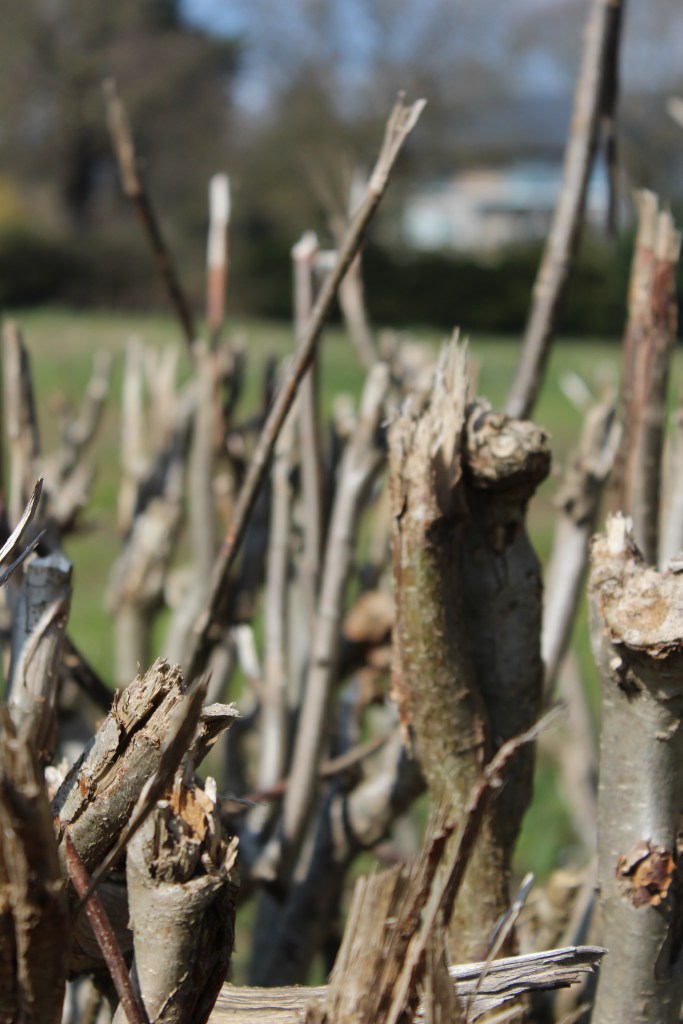
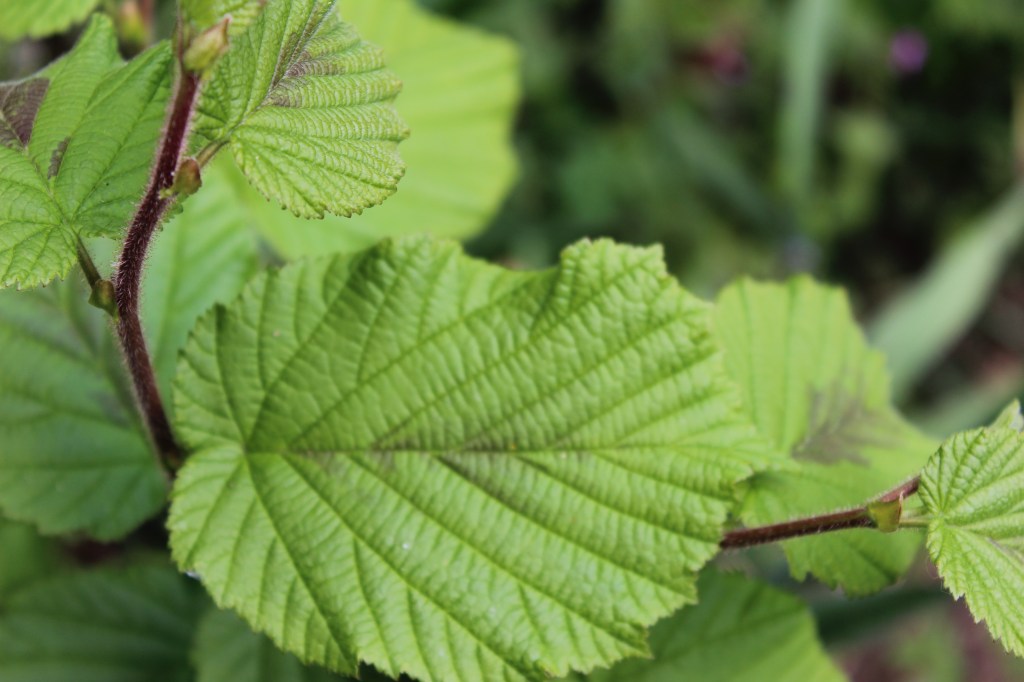
This photo is of an apparently dead, flailed hazel hedge near where I live. Despite this treatment, it has put out some new growth. How many years it’ll withstand such an onslaught, I don’t know. But I am heartened to see the new shoot growing up from a very unpeaceful process. You can read more about the hedge here.
As a small stone, dropped in a pool, sends ripples to its furthers edges, help us know our small actions of love and kindness can do great good. … Help us do the good things we can, trusting you will use them.










 Andrea Skevington