Poem: Pharaoh’s daughter, and the child. Exodus poems 1

img_0212

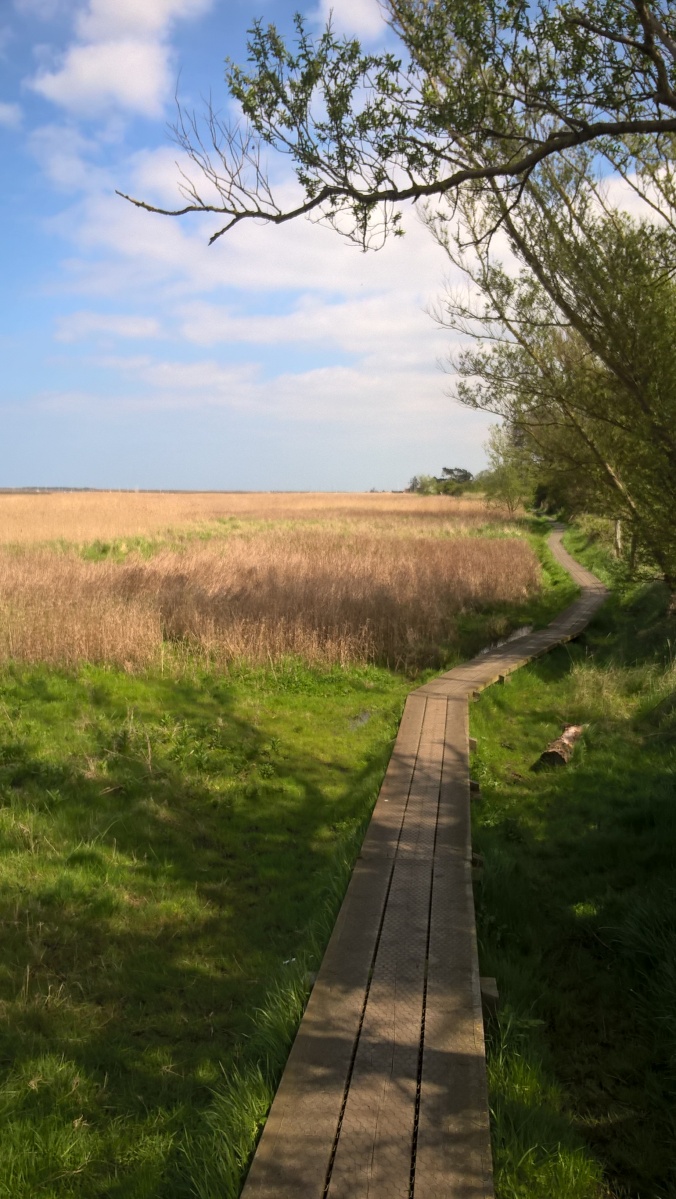
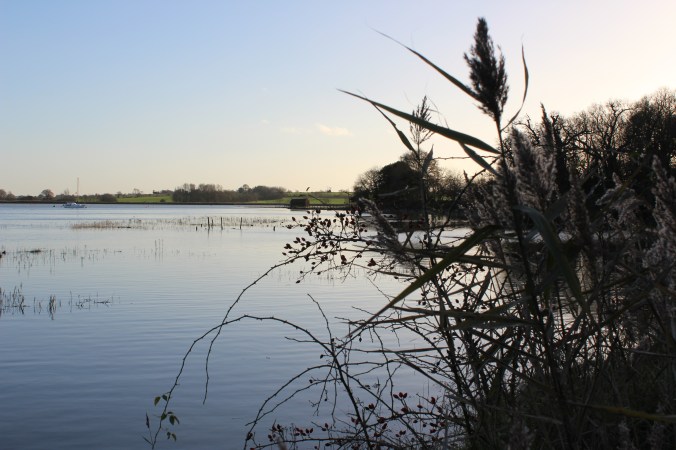
The banks of the Deben, high tide

As I was coming to the end of writing the Lockdown Poems, a couple of things were tugging at my attention.  One was the thought of doing a series of poems on the I Am sayings, revisiting some of the prose and prayer from my book.  The other was the huge sweep of the cry for justice that is circling the world – the cry for racial, environmental, and economic justice.  One of the things the coronavirus crisis has done has been, as we’ve said before, to reveal painful things – to draw back the veil and show aspects of society that many of us have been fortunate enough to be able to overlook.

As I was looking at the origins of the I Am sayings – Moses’ experience with the burning bush – I was deeply struck by the relevance of the Exodus story  to our current world situation.  I would encourage you to read Exodus Chapters 1-3 to start with, if you can, and see what strikes you.  Many things opened up for me, and I intend to explore them imaginatively and prayerfully, inhabiting the story, and asking for wisdom. I hope I’ll return to the I Ams again, but for now, these matters seem too pressing to ignore.

We can see how the story of Exodus progresses.  It begins with forgetfulness.  Forgetfulness of the way Joseph, ex-slave, ex-prisoner, had saved the country from famine with his vision and good management, forgetfulness of how we are all interconnected, and bring gifts to our situation.  The Egyptians forgot, and were afraid.  Their enslavement of the Hebrew people is told as an act of weakness, not strength.  How that fear led to justifying the terrible law for the slaughter of baby boys – a story echoed in the Gospel here, where the baby boys of Bethlehem were killed, and Jesus’ family escaped to Egypt.  At the time of Exodus this was the known world’s richest and most powerful empire, and the process of unravelling that power and wealth seems to be begun within that unjust law. So contrary to all that is good and right in human relations was it, that it carried the seeds of its own undoing. And maybe that sheltering of the infant Jesus was, knowingly or unknowingly done, a kind of restitution.

In this story of Exodus, I’m powerfully struck how the action of one young woman changed nations. Her compassion was the point of turning. That is not to say that we measure our small acts of kindness by their global impact, or only do them if we feel there will be some kind of payback, but that this story reveals the hidden power of compassion, and can offer encouragement to us to not think better of our moments of better feeling, but to act on them – to reach out and help, offer what we can.  What those feelings and acts accomplish is, in many ways, not our business. We can offer them, release them, and what happens happens.  If we praying people, we can simply offer them to God, with no thought of future benefipayback. They can cease to be our own. Of course, we can try to be mindful of unintened negative consequences, but we seek to act from love and goodness independent of outcome for ourselves. For Pharoah’s daughter, if she survived to the time of the plagues and freedom for the slaves, this mercy to Moses may not have seemed such a good act after all.

The other thing which struck me forcibly was the fact that she acted from a place of safety, and privilege.   She did something that would have brought swift punishment if someone else had done it.  She seems to have used her safety almost without thought of the consequences, to help this one child.  We don’t know any surrounding information – what her attitude to her father’s law was before, or after.  All we know is this one thing about her. This one act.  Maybe it can encourage us to listen to one another, in different circumstances, to speak of our difficulties when we experience them, and to speak and act for others when they cannot do so for themselves.
And here is another thing our current crisis has revealed – deep wells of compassion and community, the capacity of people to act to help and support people they know, and don’t know.  The veil drawn back has shown us good, too. There is hope in this deeper reality.

The ending of this poem carries an echo of William Blake’s The Divine Image, which is incredibly apt for our current situation. It was published in 1789, and carries its message of equality in language of the time.  It’s a powerful read.

Songs_of_Innocence_copy_G_object_12_The_Divine_Image

There are major shifts happening in the world right now, and I am attempting to listen, to keep my mind open, to pray, and to understand, and to act.
AA037808

Taken from Exodus Chapter 2

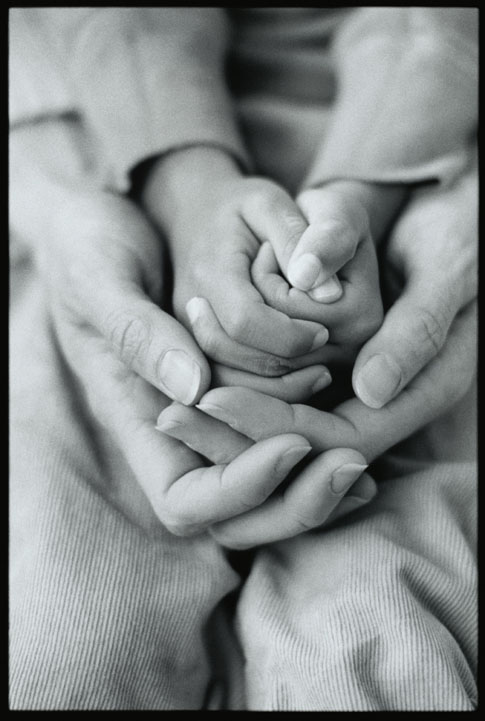
Pharaoh’s Daughter, and the child.  Exodus poems 1

You named him Moses,
drew him out of
that small ark,
a precious cargo.
Out of the Nile-reeds,
where crocodiles wait,
out of the flood and the snakes
and the hum of mosquitoes,
out of the sentence of death
your father had passed.
In that moment, your heart responded,
the moment when you heard him cry
hungry, closed in the dark
and the silence
of his pitch-black basket,
in a moment, you reached out your hand,
and touched – not a slave-child,
but simply a hungry one, alone.

From your place, at your father’s side,
standing in his love for you,
you saved one small life
from his fearful stony heart’s rage,
from the might of law and empire.

Marvellous princess, you did more.
You paid a slavewoman wages,
you acted with justice and mercy,
you saw a child, and not an enemy.

And so you are remembered,
you are thanked by generations
yet unborn
For an act of kinship with one
from a feared race,
as golden Nile-waters
swirled and eddied and
rippled outwards, outwards
from the place where you stood,
shining in the light of dawn.
Mercy bore, in you,
the beauty of a human face.
Poem: The company of bees – Lockdown 34

IMG_1035 (1)

This is the last but one of the Lockdown Poems. Something will continue on after, but whatever it is, it’s not quite this.  Whatever strange time we are in now, it’s not quite lockdown, although I know that many are still keeping at home, and we are all missing those we love and haven’t seen for months.  Thank you for your time and company as we’ve been watching this season unfold.

At times during this strange spring, I think we’ve had some painful space in which to consider the ways we live, and the injustices and destruction we have thought were inevitable.  In seeing those injustices and destructive forces stripped bare, and also in seeing the great machine of Mammon halted briefly, we’ve had a glimpse of the hope that lies at the bottom of the well of all that is not hopeful.  Nadia Bolz-Weber’s sermon to prisoners this week speaks so powerfully into the nature of hope, it’s short, and so well worth listening to. I think what we are beginning to see is the struggle of a vision of a more beautiful world, the birthpangs of something more whole and holy, that are real and painful and require effort and will.

So, this next poem started off as a morning contemplation of what was before me, and moved to a brief touching on the tragedy, or tragedies, we are facing and facing up to at present.  There is a folklore that you should tell the bees the news of those who have died, and that seems a hard task right now.

IMG_1885

I had a problem with the memory card in my camera, and by the time I sorted it out, the bees had gone deeper into the bush, and I couldn’t catch them.  Here are the tiny flowers they love. In the winter, the birds will eat the white berries.

IMG_1888


The company of bees  Lockdown 34

I will quieten my spirit
in the company of bees –
so many.
Honeybees to my right,
filling the snowberry bush with
their eager hum,
the tiny flowers constantly
visited, endlessly
searched.

Bumbles – white tailed, and red,
carder, and buff –
to my left,
climbing up the steep
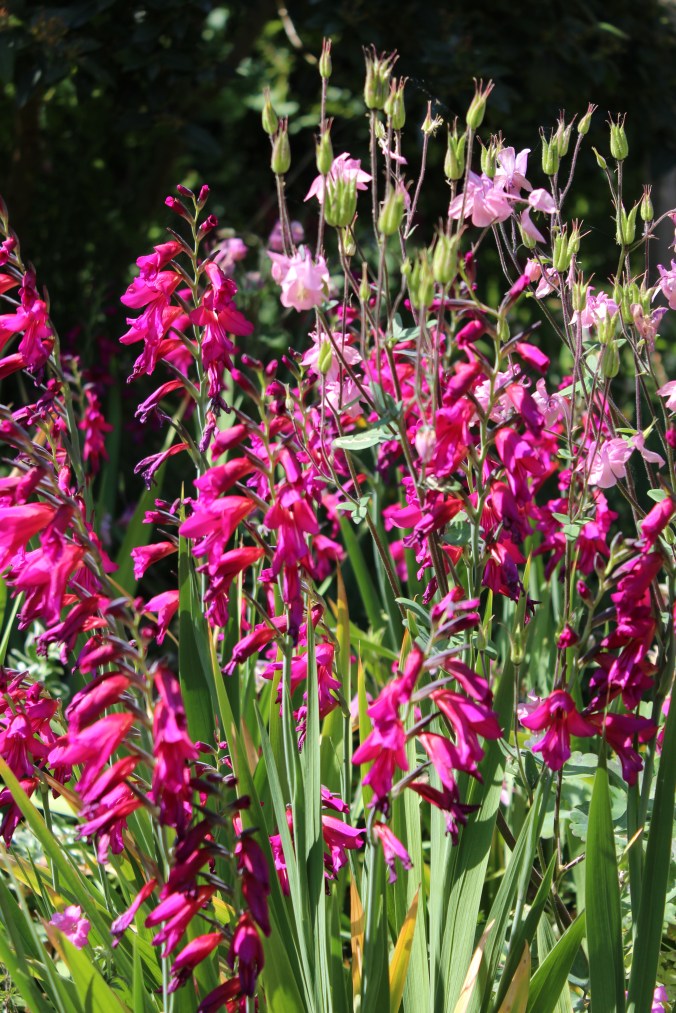
slope of the gladioli flowers.

You should tell the bees
news, they say,
tell them the news
of who has died.
There are so many,
so many now.
We must speak
our sorrows,
even though such
speaking is beyond us.
These lives
must be more than
numbers –
loves and hopes
and the seemingly
endless tide of
breath, ended.
So much had been
lost.

And what do the bees
do with our sorrows?
can they carry those
heavy loads away?
And those bees,
when do they speak
of their own loss,
the meadows stripped bare,
the poison they
bring back to
their hives,
their place of
safety and plenty
dying too?

This small place
of nectar and
kindness, it’s
all I can offer,
for both.

IMG_1889

A mown path through the wild flowers – it’ll be full of yellow when the sun comes round.  What sort of path do we wish to walk, what sort of path do we wish to make? Maybe there is a choice before us.  Can we choose life?


Little Free Pantry update

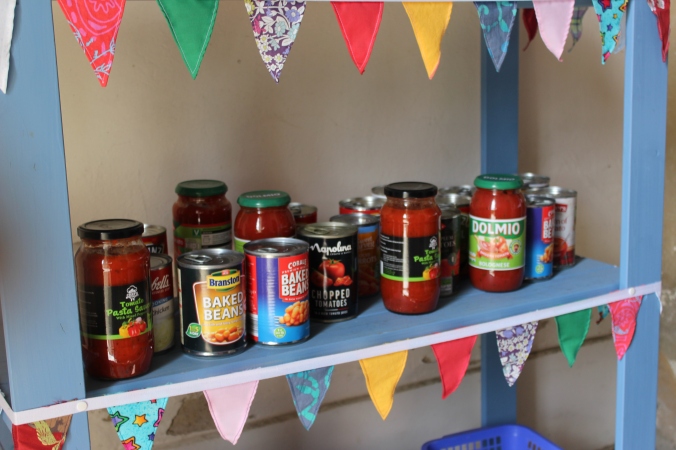
This is just a quick post to thank the wonderful people of Melton and Woodbridge for keeping the Little Free Pantry well stocked during the coronavirus crisis.

It’s in the porch of St Andrew’s church, and is opened by volunteers every day.  We aim to have it available from 10 am to 5 pm seven days a week.

IMG_0812

IMG_0813


Thank you to Elaine for the photos, and keeping an eye on things.  Thank you to everyone who has participated, either by giving or by taking food.


It’s very simple.

Give what you can, take what you need.

The porch is open, and unstaffed, so you are free to come and visit the pantry if there is no one else there, without coming in to contact with anyone else. You are free to bring food, or take food, or both. It’s free, and freely available.  It’s a sign of neighbours loving each other, and of the love of God which holds us all.


It’s so good that our community is working together in this way, taking care of each other.  A hopeful sign.


Retold: Mary visits Elizabeth

For those who have joined this blog following the Lockdown Poems, here’s a small taste of something else.  Another occasional series here is Sunday Retold, drawing on my retelling of the Bible.  This – although not on a Sunday – is part of that series.

The-Visitation-56a1094e3df78cafdaa84c7b

Pascale Deloche

We often hear this story – of how, in the early part of her pregnancy, Mary visits her older, also unexpectedly pregnant relation – as part of the cycle of stories in the run up to Christmas. It is part of the preparation for the birth of Jesus.  But traditionally, now is the time it is remembered and celebrated, in keeping with the months.

It seems very appropriate that we should read of these two women supporting each other, and being moved by the power of the Spirit to speak, just at the time of Pentecost.  The Spirit is indeed being poured out on all, young and old, men and women.  These two are obscure, unimportant to those in power, on the edges of things, and we see, yet again, that is where God is at work.  Mary sees that too.  Her words are a real challenge, upending power, pride and privilege.  Regrettably, we need those words of challenge now just as much as we ever did.  Inequalities of race, gender and wealth are still a potent source of injustice.  Mary sees justice coming, though.  The Kingdom promised is one of justice, and hope.  We can work for that, as we pray for it in the Lord’s Prayer.

We pick up the story just as the angel Gabriel has told Mary what is to be, and how Elizabeth, from her own family, is with child despite her age….

Then Mary thought of Elizabeth. “The angel knew all about her – I must go to her.”  She got ready, and set off quickly for Elizabeth’s home in Judea to the south, near Jerusalem.

As soon as she arrived at the house, she hurried to Elizabeth and took her hands.  At the sound of Mary’s voice, the baby leaped inside Elizabeth, and the Holy Spirit filled her.  She understood at once what had happened to Mary.
“You are blessed among all women, and blessed is your unborn child!” she said.  “Why have I been so honoured? Why should the mother of my Lord God come to visit me?” Elizabeh laughed, and put Mary’s hand on her belly. “You see how my child leaps for joy at the sound of your voice?”

At last, Mary could say all that was on her heart.

“I’m so full of joy my spirit is dancing
before God, my Lord, my Saviour.
God did not turn away from me
becase I am poor, and now
I will be called blessed by
all the generations yet to come.
God, the great, the holy,
has done so much for me.
God brings down the powerful,
but lifts up the weak.
The well fed are empty,
and the table of the hungry
is piled high with good things.

“God looks at us with kindness,
giving hope to the hopeless,
caring for those who trust him,
remembering his promises to our people.”

From The Bible Retold

You can read the story in context in the first chapter of Luke’s gospel.

Mary’s song, the Magnificat, makes a powerful basis for prayer. Going through each part, holding it before God, allowing it to search you and being open to the possibility of being moved to change and to act, is a worthwhile and humbling way to pray.

It is widely said and sung in Christian worship.  There are many versions you can find online.  This one is Arvo Part’s setting.

As we think of those two women supporting each other, it’s good for us to think of ways we can continue to be present for one another, and listen and share lives, even when separated at this time. It’s good, too, to remember the slow growth of a child, how much patience is needed, as we wait and work and pray for the coming of the Kingdom.

img_0609


Poem: Yoga under the sycamore – Lockdown 21

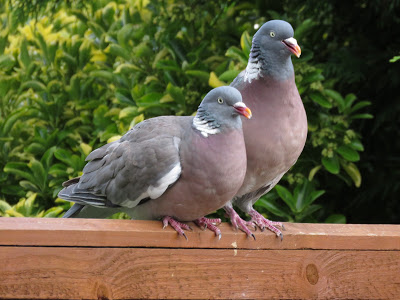
The pigeons who come to our garden, and stay, and raise their young, are slightly comical characters.  At least, I usually find them so.  Sometimes, though, I feel a deeper connection with them – like the time I accidentally exposed a nest, which you can read about here.

pigeon

I’m afraid I don’t know who took this picture of a pair of pigeons.

Once again, in this next lockdown poem, I am recording the moment, what arises as I seek to receive the gift of the moment before me. This moment came from my morning yoga practice.  I often find movement helps move me to a place of stillness and prayer more than sitting still.  I often find it settles my mind, and helps me come to a place of deep connection. Although I seek to return to prayer, I notice  when things catch my attention, and wonder if they have significance.

Once again, I begin writing in my notebook, not knowing why something has caught my attention, until it emerges from my pencil.  This poem explores the growing feeling of mutuality I have with my place – that I am sharing it with other creatures, and that we take care of each other.

IMG_0982

Yoga under the sycamore   Lockdown 21

We have come to an
accommodation,
that pigeon and I.
I know it waits on these
branches above my head
on its way to the nest –
just there, in the hedge,

and so I lay down my yoga mat
carefully, further back,
not directly underneath,
but still where the morning sun
can reach me.

I do not wish to disturb
the brooding and feeding
in the nest, so I move
with as much
slowness, and control,
and something like flow,
as I can.

I rise up, on a deep inhale,
and as I look up to the tree,
with opening leaves,
I see the pigeon’s soft underside –
pale grey, and pink, downy,
ready to warm eggs,
ready to nurture young,
and somehow,
I feel nurtured too,
to be here, included
in its care,
in the softness of
pigeon down.

IMG_1059

Poem: Yellow-leaved Maple – Lockdown 18

The mood of the Lockdown is changing considerably.  It seems fraying and fractured, with grief and anger rising and being held alongside our deep care for each other, our families and communities.

Many are returning, or facing the prospect of returning, to something not normal, but strange and different.  Some are relieved, some are afraid, most are, I suspect, both.

The words of Wendell Berry’s wonderful and sustaining poem, The peace of wild things, keep coming into my mind.  They sum up for me what I am seeking to do in these Lockdown poems, and what I am doing in my life.  Keeping grounded in the beauty and grace I am experiencing in the spring, and finding in them a deeper beauty and grace than the surface, than the expected.  It speaks to something more, within and beyond, as if, by considering the lilies of the field, we may find a deeper truth and insight.

So here is a poem about trees, and also about the shadows that can fall across life, and the possibility of growth, even so.

IMG_0990

I decided to include this one, even though it is imperfect.

IMG_0991

IMG_0992


Yellow-leaved Maple   Lockdown Poems 18

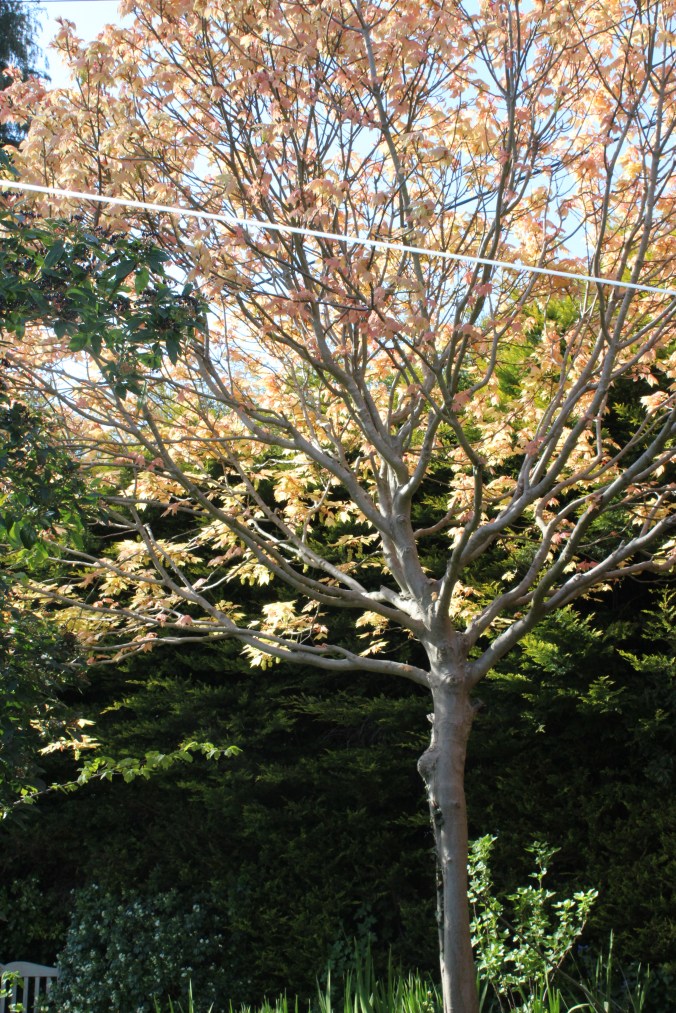
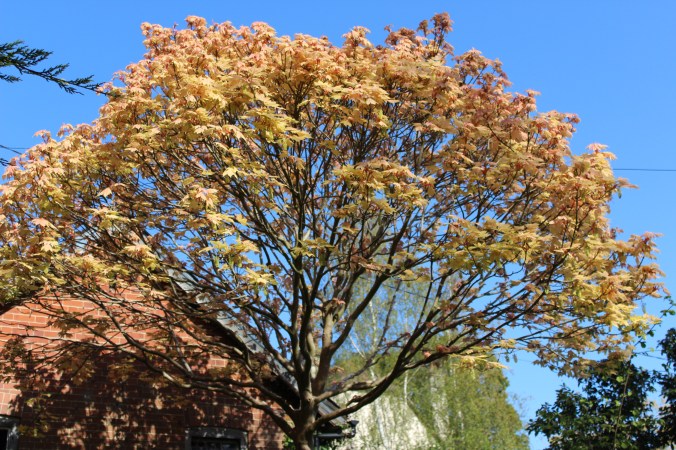
I am watching these strange pink
and buttery leaves unfold on the maple,
its long green flowers
covered with bees.

All its life till now
the tree’s canopy leaned back,
partial, growing around the
darkness of that old cedar,
now gone,
as it sought the light.

So now, new leaves are opening
on those thin bare branches
to the south,
exploring that new clear space,
leaves growing where
they did not, before.

Its shape is becoming an
open dome, it will be complete,
and even now is gilded, shining,
and mosaiced with lapis blue light.
Under it feels a holy place.

Patience.  Patience.
When the shadow has passed,
the growth will begin,
and be seen.

News from the Little Free Pantry.


litte free pantry 3

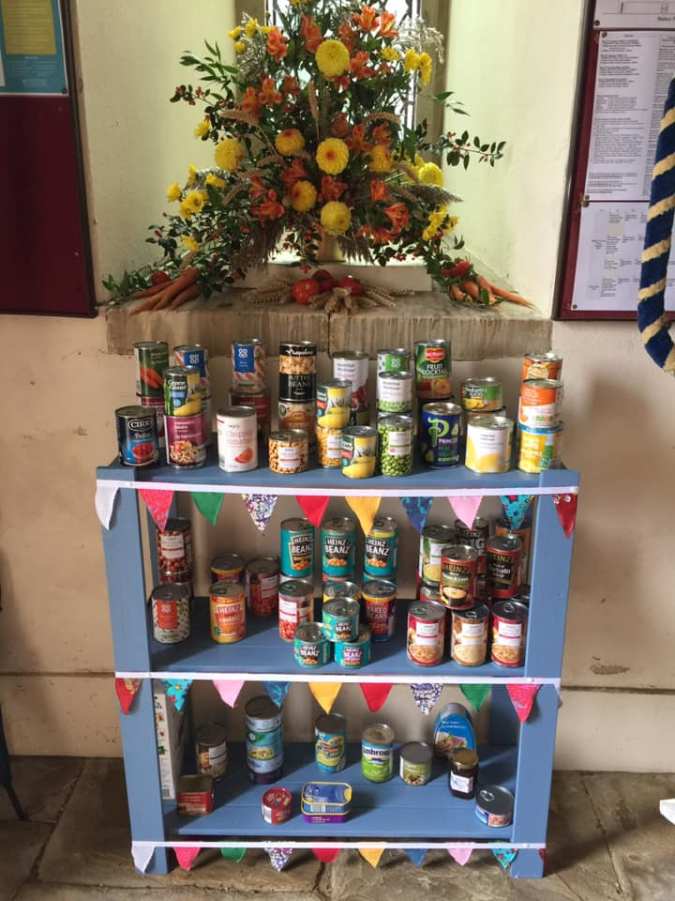
The pantry at its Harvest Festival launch

If you’ve been following this blog for a while, you  may remember posts about the Little Free Pantry at St Andrew’s Church, Melton.  It’s a simple thing –  a place where anyone can leave some tins or other food, and anyone can take what they need.


IMG_1013

Today at lunchtime

It was so sad that at the beginning of the lockdown we had to close the pantry for a while, but gradually, and in stages, and with much thinking, work and adjustment, it’s now up and running again!

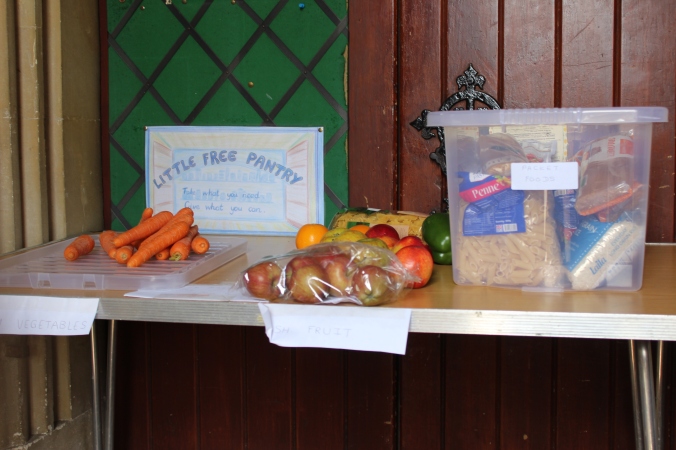
It’s back in the church porch, 10 am to 5 pm, seven days a week.   There’s an extra table, with more space for fresh produce.
The ususal rules of keeping two metres apart apply.
It’s open for both giving and taking, no need to talk to anyone, just give what you can, take what you need.

IMG_1012

I do believe it is a particularly important neighbourhood resource at the moment.  Shopping can be difficult for so many reasons – you or a family member may be vulnerable, money or time or transport may be hard to come by, the shopping experience may be anxious for all the kindness of the shopworkers.  The pantry is here, a sign of love, and of the hand of friendship we wish we could extend.

We have been so encouraged that people are making donations, and withdrawals, are joining in with this simple way of neighbours helping neighbours.

There are two other little free pantries in church porches nearby that we’ve heard of – in Grundisburg and Hasketon.  Do tell us if there are more.  It’s such a simple idea, and it works well with social isolation, maybe more places would like to set one up.


So, thank you to everyone who is using the pantry in any way.  May it bless you.


Poem: The Blackbird – Lockdown poems 7

Lockdown Poem News!

I am delighted to be able to share with you that this poem was featured on BBC Radio 3’s The Verb on Friday 15th May at 22:00 BST.    You will be able to find a recording of the poem on the link above, under the date.  The programme is entitled Birdsong.     If you start at the beginning, you’ll hear a marvelous piece on nightingales, but if you are short of time, my contribution is just after 20 minutes in. You can read more about being on the programme here.

It’s so exciting!

IMG_0981

Welcome back to the garden. It’s been a harder week, this week, with much, and much needed, rain. It has felt more confined, being more indoors. I have ended up watching more news, and felt more sucked into our strange, shifting reality, our uncertainty.

As you may have gathered, these Lockdown Poems tend to emerge in bursts, and find their way here a little while later, so this poem was one that came on one of the brighter, sunnier days. Coming back to it now, it helps to connect with a time when it was less hard work to be in the moment, to settle into stillness, and to be open. It reminds me of all that. It reminds me of the connection we can feel to the creatures we share our space with, and what riches we can find in such connection.

IMG_0982

I hope, whatever your week has been like, you can take another moment to listen to the birdsong, as we did together in the last poem, and hear its dark and beautiful strangeness.

blackbird2

A female blackbird – I can’t find the name of the photographer to credit this.

The Blackbird – lockdown 7

The blackbird lands just
behind my shoulder,
I hear the air in his throat,
I hear the slight preparations
for song,
then song.

I scarcely dare move my pencil,
and yet, my pencil moves.
Oh, for the gift of
interpretation of tongues,
that I might write,
in words, that song,
that meaning, the cares
belonging to this small soft being
with its deep globe eyes
and stabbing beak.

I see you, I hear you,
in all your dark and
beautiful strangeness,
as you shift from
spreading branch
to spreading branch,
open to receive you.


A Poem for a time of isolation – Rooted

Update: 3rd April 2020.
While out for our household proscribed exercise this evening, we saw a pair of water voles playing in the stream where I saw the one in the poem.  We stayed still for quite a while, and watched them in and out of holes in the bank, and back and forth across the stream.  It was such a joyous thing to see!  That, and the loud birdsong, and clear air, made a simple walk deeply satisfying.

I wrote this poem some time ago, after the joy of seeing a water vole in meadows near our home.  It’s an experience I think about a lot.  I thought about it today…. I will get back to the poem later, I promise, but I can’t go there yet.  I can’t get to that place of stillness right away, I have to look at the things immediately before us as far as I can. Here is today, this morning, a very small beginning of a change in how we live…..

IMG_0773.JPG

It’s so sad, this keeping away from ones you love.  I, like many of you, have cried at the thought of keeping away from family and friends, and also cried when I have heard of doctors cancelling their weddings, and keeping separate from their own families, and working in such difficult conditions, to try to treat those suffering from the effects of coronavirus.

I thought about this on a small trip to the corner shop – not sure whether even this is a good idea, with the slightest of sore throats.  I put on some old leather gloves, thin, so you can still open a purse, and pick things up,  an old fashioned form of contactless.

There were hardly any cars, which was pleasant, and made it easier for us pedestrians to step into the road to avoid each other.  I am grateful to those who counterbalanced this distance with a smile, and a hello. Two items only, for everything, in the shop, and even so, there was little. I knelt on the floor to retrieve the second last loaf of bread from the back of the lowest shelf, and thought that tomorrow, I would start baking my own as I felt so bad taking it. There was someone I knew in the shop, and our distant conversation, and distant air kissing, seemed to start a ripple of laughter, as others avoiding contact found they could still smile and wave to counterbalance the dance of solitariness, of avoiding each other, we were all keeping up, without music.

IMG_0866

As an antidote, back home, I planted three rows of veggies – borlotti beans, butter lettuce, red chard – these gentle things help.  What also helped was doing something that might help someone else….Yesterday, I tended the Little Free Pantry .  It’s a perfect way for people still out, but who want to avoid crowded shops, to pick up or donate some food. I also added my name to the list of local volunteers happy to put things on the doorstep of others isolated inside.  A little of this can help with anxiety.  It can help us be reconciled to the distance we have to keep from loved ones.

If we have to slow down, if we have to disengage, then maybe, having felt the anxiety, we can see if we can find some gifts within it.

814b5d7fb683fa9a622570a639addec8--mary-oliver-quotes-darkness-quotes

Mary Oliver

Maybe, even as we acknowledge the weightiness and pain of the current crisis, we can begin to imagine how the world might emerge, how we might emerge, differently, from it.

Have you heard that dolphins have returned to Venice, and that those living in Wuhan report that the sky is blue, and full of birdsong now?   Maybe, if we live more quietly, we will live more rootedly, more connected to our place and its people.  Maybe, given time, a less frenetic, more sustaining way of being might be made.  Maybe, we have an opportunity now, for some kind of a beginning, if not anew, then perhaps differently.

What would you like it to be? What kind of world, what kind of way of living, do we want?

IMG_0473

HOW TO BE ROOTED

First, you must suspend
all effort, all purpose.

Simply crouch in the damp,
thick grass, and feel your
sense of self seep through
your skin, your feet, into the
air – the earth – the water.

And as the muscles
around your eyes slacken,
and you let in light,
you become aware
of a nuzzling in the
grass, an earth-dark
water vole sliding
into green water.

As your heart slows
a pheasant walks by,
bright among the grasses,
and three ducks fly low
under the oaks, the
beat of  wings
all about you.

Stay still, and you will
sense the scrape
of the crickets through
the back of your hand,
and the tiny spiders,
yellow with newness,
weaving through your hair.
So that, when the
strong green tendrils
of the earth begin to
creep about your feet,
you will know in wonder
that rare thing –
how the world is,

unseen.


May you be blessed, and well.  May you breathe deeply, and freely, may you know you are loved and connected to all, may you feel peace.


Jesus said, I am – for Lent. Chapter 4, the Shepherd and the Gate.

Hello again, and thank you for joining me on this walk through Lent, thinking about what it means to live in the light of the I am sayings, to go deeper into following the Good Shepherd.

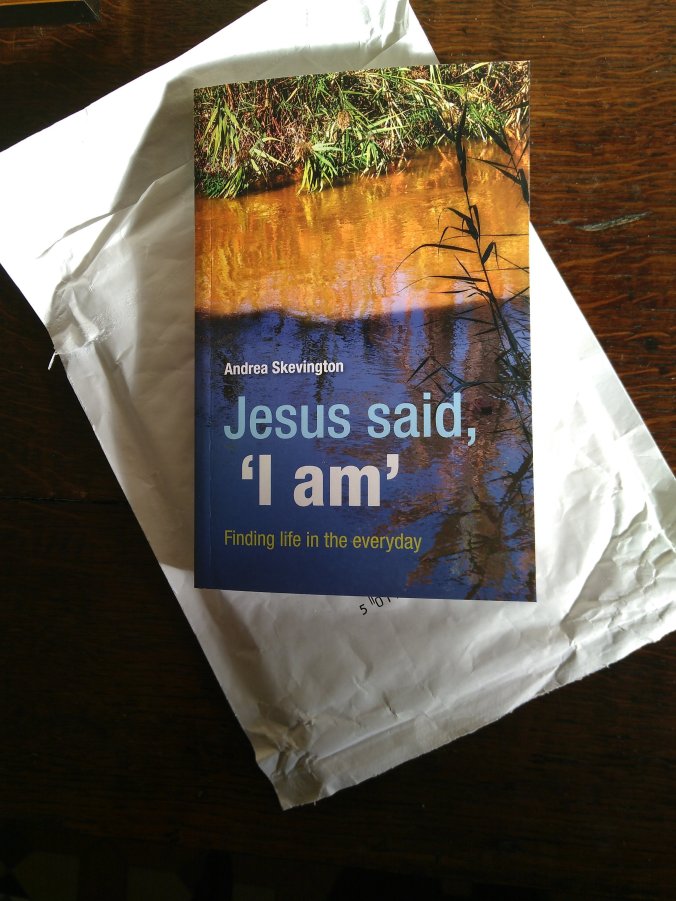
We continue to follow my book.

WP_20180504_13_18_15_Pro

Leadership is once again under the spotlight, as we face another global crisis.  This time, a pandemic.  One of the things I have been noticing is that leadership, in some places, is emerging.  People and organisations are taking decisions to protect the old and the vulnerable, even as there is confusion about what to do for the best, and as there are differences among politicians as to how to interpret the science.

Maybe, as you read this, you are restricting your social engagement.  Maybe you normally attend a place of worship, or a community gathering, and are foregoing that for the sake of others, or your own health. One of the differences between this outbreak, and ones in the past, is that our isolation can be less total, that we can meet virtually, and reach out to support each other in difficulties, even when we cannot touch each other.

How to express love and community in a time when touch is problematic, when meeting is difficult or impossible for some, presents real challenges.  But thinking about how we can best support those in our communities – whether physical or on line – gives us an opportunity to perhaps do better, and be more imaginative and thoughtful, than we have before. We can build a slower, gentler, and possibly even more connected and compassionate, way of being community.

This week, we are thinking about the kind of leader Jesus was, especially to those excluded by those people who claimed religious authority.  We hold in mind the woman taken in adultery, and the man born blind, both of whom were part of our earlier reflection on Light.

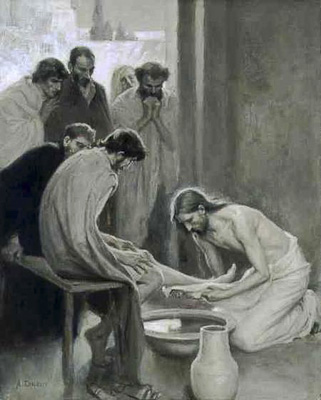
Jesus Washing Feet 11

SNM128510 Jesus Washing the Feet of his Disciples, 1898 (oil and grisaille on paper) by Edelfelt, Albert Gustaf Aristides (1854-1905) chalk and grisaille on paper 58×47 © Nationalmuseum, Stockholm, Sweden Finnish, out of copyright

As we think of the loving actions of Jesus in the picture above, we remember that we can move beyond just knowing how he demonstrated his care , to hearing the invitation to do the same, too.
It is an invitation to a way of life. And one that involves touch, and washing.  It takes some thinking through, how this might look at a time like the present, but such a meditation on the passage below might help us.


 After he had washed their feet, had put on his robe, and had returned to the table, he said to them, ‘Do you know what I have done to you?  You call me Teacher and Lord—and you are right, for that is what I am.  So if I, your Lord and Teacher, have washed your feet, you also ought to wash one another’s feet.  For I have set you an example, that you also should do as I have done to you.  Very truly, I tell you, servants are not greater than their master, nor are messengers greater than the one who sent them.  If you know these things, you are blessed if you do them.   John 13


It’s hard not to immediately call to mind the opposite of this – examples of poor leadership we may have experienced, both personally and as communities and societies – leadership which seems self-interested, and disconnected from the pain and difficulties people experience.  And we do need to acknowledge those things, and bring them into the light.

Poor leadership, or bad leadership, is very destructive of our common good, our communities, the prospects for our young people, the welfare of the vulnerable. We need good shepherds.

But, as ever, Jesus invites us to examine our own lives and ways of doing things, to think about whether we are acting as good shepherds or not, in our own sphere.


WP_20171016_16_18_46_Pro

Just about all of us have responsibilities for others in some form or other, and as citizens and members of our communities we have especial responsibilities to the young, and the vulnerable.  And so, as we consider the Good Shepherd, and less good shepherds, we can hold in mind those ways our actions and our words have an impact on others, and how we can care for and nurture one another.  We are both sheep and shepherd, just about all of us, in different ways, and at different times of our lives.  We can be cared for, and care, in our turn.

John 9:35-10:31

WP_20171016_16_17_54_Pro

This saying follows on from the one before – ‘I am the light of the world’. The setting, as we saw in the previous chapter, is the Feast of Tabernacles.  The atmosphere is hostile, argumentative, challenging to Jesus….
This good shepherd story is an answer to these questions and challenges that have been rolling on over several chapters of our reading.  Jesus often responds to questioning with a story.  Stories speak to the whole person..

Once again, Jesus has a double audience for this story – the man who has received his sight, and doubtless others outside the synagogue, and the religious leaders who threw him out.  This one story, one image, of the Good Shepherd, will have been heard differently by these two groups.  Just think, the man who had received his sight, and been thrown out of fellowship, was sought out by Jesus.  He is like the lost sheep in the other gospels.  It is so good to know that this is what the Good Shepherd does – he finds one who has been rejected.  Jesus not only healed him, but later comes to restore him, care for him, include him.

Of course, all those who listened to him on both sides will have been used to hearing scriptures that talked about good and bad shepherds.  They will have know the words of Ezekiel  on the subject, as well as holding dear the memory of David, the shepherd king.

“You have not strengthened the weak, you have not healed the sick, you have not bound up the injured, you have not brought back the strayed, you have not sought the lost, but with force and harshness you have ruled them.” Ezekiel 34:4

Jesus clearly draws on a shared knowledge of this prophecy to confront those who challenged him.  They know that the prophecy continues, saying that God himself will search for the sheep, as Jesus searched for the one who can now see.  God will gather those who are lost and scattered, and will feed them with good pasture.  God will be their shepherd, will bind up the injured, will strengthen the weak.  They will be fed with justice.  And Jesus claims this role, the role of the good shepherd, for himself.

When we can be cared for by God, the power and importance of human leaders – tyrants, emperors, Pharisees – is hugely diminished. And it sets a high bar for those human leaders, those who would be a shepherd of a flock.  That nourishing, self-giving, gentle leading of the good shepherd is our standard.

Can we follow this shepherd, and learn to nurture in our turn?

img_0630

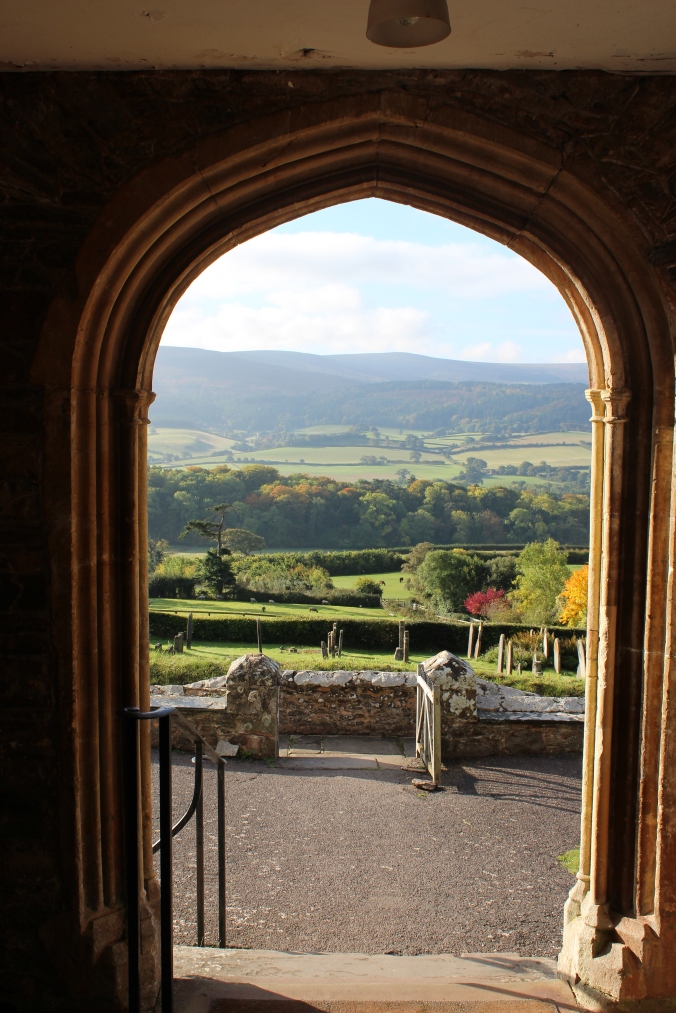
The church at Selworthy Green, with Exmoor in the distance

So, we turn, briefly, to the gate.

There is a twofold task that Jesus undertakes for us.  One is to keep us safe, to be the gate.  The other is to lead us out.  …… The shepherd would lie across the gap in the circular sheepfold at night, protecting the sheep both from wild animals and sheep-rustlers.  Jesus keeps the sheep safe……..

We need safety and refuge.  We need sanctuary.  We need to lie down and sleep in safety.  And then, as the shepherd gets to his feet and calls us out of the fold, we need to continue to find our safety in the presence of the shepherd as we step out into the new light of morning.

If God made the world, and all things hold together in Christ, we know that the shepherd knows what he is doing when he leads us out.  He knows all about the dark valley, and will not abandon us there, but it is not all dark valley.  It is also green pasture, flowing water and the kingdom coming on earth as in heaven.  Abundant life is such a marvelous promise……


Reflection and Response

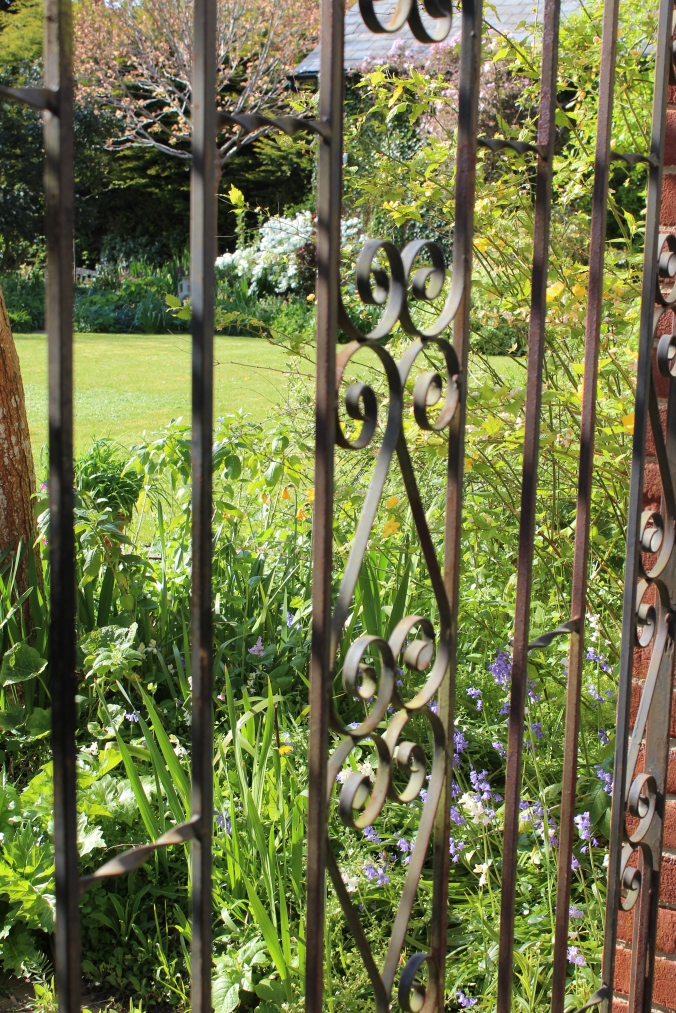
Take some time to look at the picture through the doorway above, and to reflect on on Jesus being a gate, or a door.  Sit quietly, and open your heart and mind in prayer.
What catches your attention?
How do you feel when you look at it?
Does it remind you of anything?
Can you imagine yourself walking through that landscape?
As you go out and about in your ordinary days, or as you feel drawn to a new adventure in life and faith, what does it mean to listen out for the voice of the shepherd, and to follow the Good Shepherd?  Where may he be leading you?

How comfortable can you be with not being sure about that?
Take time to commit your days and your ways to following.

Prayer for the beginning of the day:
Good Shepherd, you know what lies before me today.
Help me to hear your voice, and remain close to you.
Guide me beside still waters, keep me at peace.
Nourish me with your presence, let me have enough to give.
Let me follow you this day, and always.

Prayer during the day:
Good Shepherd, let me see you ahead of me,
and know which way to go.


Good Shepherd
Write down ways in which you have some leadership and/or influence with others.  Each of our lives touches others; we all make ripples in our ponds.

Ask God to help you learn to be a good shepherd in these situations, and to follow the good shepherd.

Write down any action or insight that comes to you. Resolve to follow it this week.

Listen/hear
Remember a time when you felt really listened to, and a time when you did not.  What was the impact of both occasions? Resolve to be a more attentive listener this week.  Give your full attention to whoever is talking to you.  Seek to understand them, really hear them, rather than putting your own point of view across.


A link to Malcolm Guite’s sonnet on the gate

If you’d like a copy of the book, you can ask your local bookshop, or order online.

Here are a few suggestions:

The publishers, BRF

Amazon

img_20181130_114736372319885.jpg

Thank you for your time and attention, for walking this way together.