Poem: The most beautiful thing, for Earth Day

Monday is Earth Day, when many of us especially remember the gifts of the Earth, its fragility, and our responsibilities towards it. Today (Saturday) in my town we’re having a bit of a celebration down by our river, focusing on good local food and organisations which are seeking to care for our patch of Earth. There’s music and friendship and crafts and storytelling, and local businesses who are doing things differently – beautiful local bread and saffron and wild venison and plants and flour ground by our tide-mill among other things. It’s a good way to mark the occasion.

This spring, I’ve been enjoying Simon Armitage’s beautifully illustrated new collection, Blossomise, in collaboration with the National Trust. I highly recommend it. It’s a celebration of the blossom season, transient and determined, which for us starts in February with this lovely cherry plum, or mirabelle, and is carrying on from one tree to another in our growing collection of fruit trees. We have one apple who is always alarmingly late, but the buds are beginning to swell. Maybe by mid May, if its mild, it may offer the season’s swansong. I also highly recommend the beautiful Orchard by Benedict McDonald and Nicolas Gates – I sent a copy to my MP as a gift when she was Secretary of State for the Environment.

I have been thinking of the Japanese love of blossom, and how it’s fleeting ephemeral nature makes it so precious to them, and to the rest of us. In some ways, it’s a modest theme for such an expansive day – when we consider the whole of this green Earth, but I kept being drawn back to it, so here we go. I think what draws me to it is twofold: there’s something about the dazzling beauty of blossom which is so transient, so easily lost which reminds me of the beauty of all the trees, and oceans, and rivers, the great all of the good Earth which we love and are harming and are called to tend and care for. And secondly, there is the draw of the particular. When I look at the big picture, I am often overwhelmed and frequently despairing, and so I choose to focus on the small, the local, the actions I can take for the trees in my area, the bats who will soon be flying over my garden, the sorry state of my – of our – local river. So this poem I’m sharing with you for this day is, like blossom, small and light.

The most beautiful thing

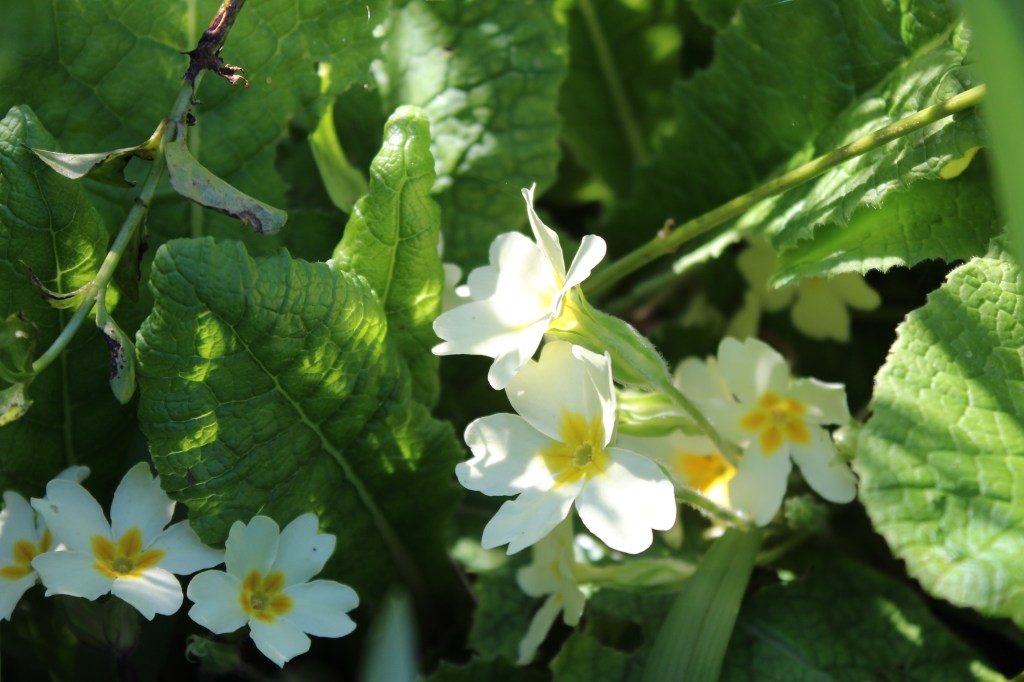
Outside, the blossom is in full glory now,
white star-flowers, delicate as tissue,
on black, angled branches –
like a print by Hiroshige.

I gathered a blown branch
from the ground, and brought it
in to shimmer on my mantelpiece
in a tall green bottle.
It is the loveliest thing in the room,
the loveliest thing I might call mine –
mine, perhaps, not as possession,
but in relation – as in sister
of mine, the dancing blossom tree.

For dance she does as the
cold wind blows,
gusting and wild,
in a snowstorm of petals
that dress the air about her.

And sister she is too, although
the resemblance is slight.
We share kinship in
chilly breezes and soft rain,
nourished alike by this deep
dark soil, and made of it,
depending on the same
gifts of Earth for our
brief time of flourishing.
This felt kinship, truly the
most beautiful thing,

As like her, I dance in the
gusting wind, and like her,
I look for tomorrow
and the promise of sun,
and birdsong,
and I too hope for
the gentle buzz of bees
and the fruit that is to come.
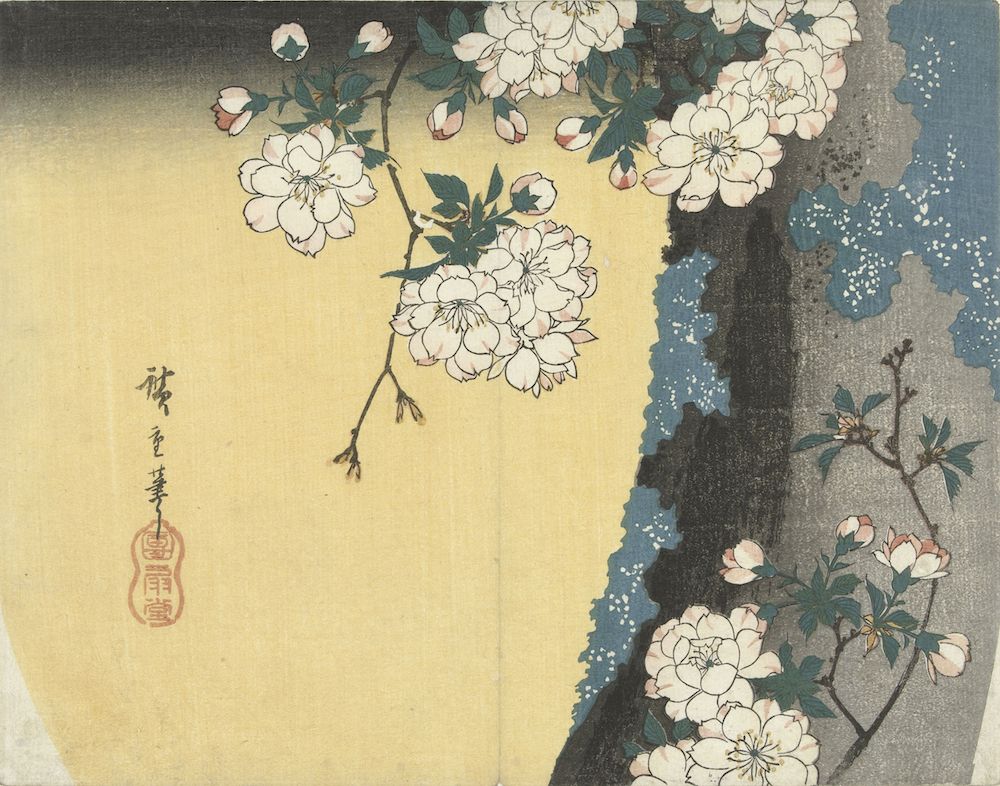
Hiroshige blossom

If you are looking for readings for Earth Day, you might find something on this blog to suit. Please feel free to use my work, saying where you found it.

Here are a few suggestions, but if you search by Nature, Creation, Green, there will be many others

Gaia at Ely Cathedral
Enough
What might it mean, to live well on a dying earth
Rooted
I hear the song of the earth
A parable
The grace of seeds

I thought I might mention here a few podcasts I like to listen to – I’ll just name them as there are so many different podcast providers. A thing I am noticing amongst those who are working with the land and especially the rewilders is the most deep sense of joy, purpose and accomplishment. There is a rising change in our relation to the rest of the natural world, and perhaps a thing we can all do is cultivate a love and practical care of our place, and find others to work with. So, here are some listening suggestions….

The Jane Goodall Hopecast
The Knepp Wildlands Podcast
Rewilding the World with Ben Goldsmith
The Rewild Podcast with James Shooter
Learning How to See with Brian McLaren – latest season is Seeing Nature
Wild Podcast by Grange Project
How to Save a Planet (for a more North American emphasis)

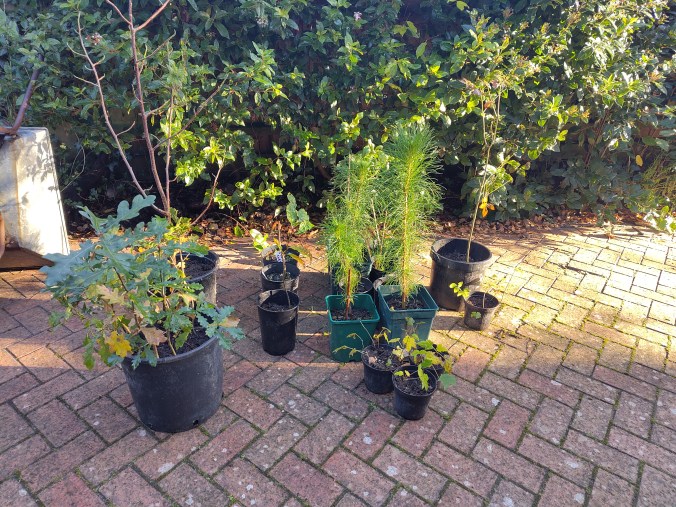
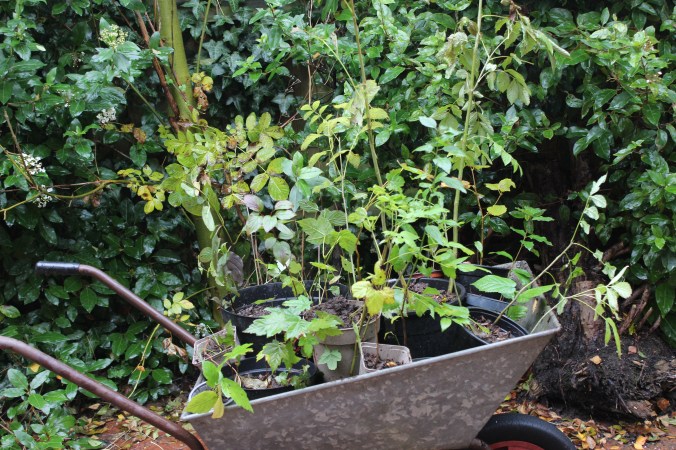
A little tree rehoming scheme……Some of the saplings dug up from my garden and very kindly donated by others. I’ve passed on about 270 now to local people who are planting woods, orchards and hedgerows. Strangely, it seems to be a notion that has found its moment!

Happy Earth Day.
May the place where you live flourish. May the places your food grows be bountiful. May your air and water be clean and life-giving.

COP 28: a small, local action – tree exchange

I must admit to feeling disheartened in the run up to another COP, where the oil and gas companies seem to be seeing the talks as an opportunity to do business, rather than prioritise moving to cheaper and cleaner and more local alternatives. The powers that be sometimes seem especially powerful.

So here’s a tiny, smaller-than-David-vs-Goliath idea which is currently happening in my drive. Just in case any of you good readers feel similarly, and are looking for small but meaningful actions. There’s a lot of us who care, who want to leave the world in as good a state as we can. So, rather than despairing over what isn’t happening, here’s something that is. Mighty oaks from little acorns and all that…..

It all started a couple of weeks ago, when my husband came across one of our old neighbours digging tiny tree seedlings out of a council flowerbed. Unsuprisingly, he asked her what she was doing. She replied that a friend of hers had two acres she was trying to replant as woodland, and was looking for trees. Now, I express unease on a regular basis about the number of tree seed- and saplings I pull out of our garden. The squirrels are very keen on planting nuts, which germinate remarkably well for instance….. So, he mentioned it to me, and I got in touch with the lady with the two acres. I dug out all the readily available saplings, and began to collect them from other people. The first load of about 100 trees went to her, and to someone else who has twelve acres they’re rewilding.
I wondered if other people might have spare trees in their garden, so emailed my friends at Transition Woodbridge, who passed the message on. Trees are arriving most days, and another person has expressed a need for small native trees, especially ones suitable for growing in a hedge. Another friend also has a number of oaks springing up in her allotment. So we have more sources of trees, and more places where they can go. It’s always good when actions become collective, when people gather together and all do the little bit they can.

Now, who knows where this will go, but for now, I reckon we’ve easily been able to provide a new home for getting on for 200 infant trees. That’s not nothing. That is something. It’s food for insects and birds, it’s shelter, it’s improved soil fertility and water management, it’s less carbon and more oxygen. It’s one in the eye for despair, too.

So, here’s to taking the small actions we can. You never know where they might lead. In 100 years from now, those nine tiny oaks might be home to many creatures, having a profoundly positive impact on soil, air and water …. And carbon. Nearly all life on the planet is carbon based, after all.

Poem: What the space holds

Gradually, we’ve been reducing the size of the unmown places in the grass. It’s been growing so fast this year, and the flowers have had a second and a third go. The sun and the rain have kept everything flourishing. There are small frogs and grasshoppers, and many bees still. It’s worth going very slowly, giving everyone a chance to hop out of the way, and leaving places of refuge. Little by little….

I wish I’d taken a picture of this patch above in the week before it was cut, when a round shape appeared flattening the stems. We were pretty sure it was the muntjac who is a regular visit to the garden – earlier this year, there was a youngster too. You can read more about the deer in the garden here and here. She is a joy.
I do worry about her crossing the road between the woods and the garden, about the speeding cars – but the only time I have ever seen her trotting along the road, everyone stopped and waited for her to be safe. Kind drivers!

As I sat by her space I imagined her presence. I felt the hum of the cars through the ground. And I thought of all the places where the creatures who used to make a home no longer do – all the absences. I felt the loss, even as I felt the beauty and abundance of this late flowering meadow. And so this poem emerged, in fits and starts. It’s taken its time, has a basenote of loss, and I hope it carries the gentle tenderness of the deer, and the many creatures I feel kin to even in this one garden.

What the space holds

There is a space in the long grass,
a flattened disc of green stems,
while all around late flowers
nod. A curved bowl, waiting,
rimmed with golden light.

Low down, face close to grass,
I hear the hiss of breeze through
stems, the buzz of bees, crickets,
even, perhaps, butterfly wings.
But there is no trace of whoever comes
here, night after night, and circles, and
settles to sleep. Too sweet a hay-smell
for fox or badger, too big for cat.

I open my mind’s eye to the night,
quiet, and across my heart
a dark shape with long,
delicate legs steps gently,
picks her way through the black
shimmer of stems and fills
this space with a shadow –
a shadow whose heart beats and
ears twitch. I see a dream-deer,
breathing, her brown sides rising
and falling as the space fills
with living warmth, with the
softness of deer, with the gentleness
of one who comes by night.

And as I dream, as I treasure
the absent deer, I think of all
the empty spaces
and places, holding now
only memory, fading,
or worse, nothing.
I think of the absences
that there have been
and that are yet to come.


Patterns cut out of sky where flocks of birds,
tumbles of bees and butterflies are not,
but once were. The rivers where
there were fish, who are not.
Places where the beavers and the big cats
and the red squirrels are not, and their spaces
cradle nothing, empty and mourning,
Earth’s arms aching.

This soft round space that has
become a bowl of dreams
does not know if the sweet deer will
return tonight, as car sound
rumbles through the earth.

This bowl in the grass
ringing with her absence, with
the absence of all creatures who
are not here, but who once were,
as I run my finger around the rim,
and feel the tremor of loss upon me,
and through me. May she be safe.
May she and all creatures be safe.

The final lines of blessing draw on the Buddhist practice of metta, or lovingkindness, meditation, which I have found deeply helpful and incorporate into my prayer and contemplation regularly.

When I was writing about the spaces where creatures are not, I remembered a wonderful Matisse exhibition we went to of his cutouts, done in his final months and filling his rooms with birds and flowers. I imagined the pieces of paper uncuring from his scissors and falling to the ground. I wondered if what we would be left with would be these negative spaces, with the birds and flowers no more, or if we would find our hearts opened to care for those we share this beautiful green world with.

Poem: River Haiku – April 2022, Updated to include Save the Deben event.

Our beautiful river, the Deben in Suffolk, is in trouble. Testing of the water has revealed that untreated sewage is being dumped. The estuary is a Site of Special Scientific Interest, rich in wildlife, and yet still this is happening. The river is the economic lifeblood of the community, with sailors and walkers, canoeists and birdwatchers all making a vital contribution to the towns and villages by its banks. Wild swimming has also become increasingly popular since the pandemic. We solved these problems long ago – having dirty, unhealthy rivers – and yet, here we are. Economics seems to be a good servant of humanity, and an exceptionally bad master. That can change. The water company – here as elsewhere – can be held to account. Reform of practice is more than possible.
You can read more about the situation and our local response here.

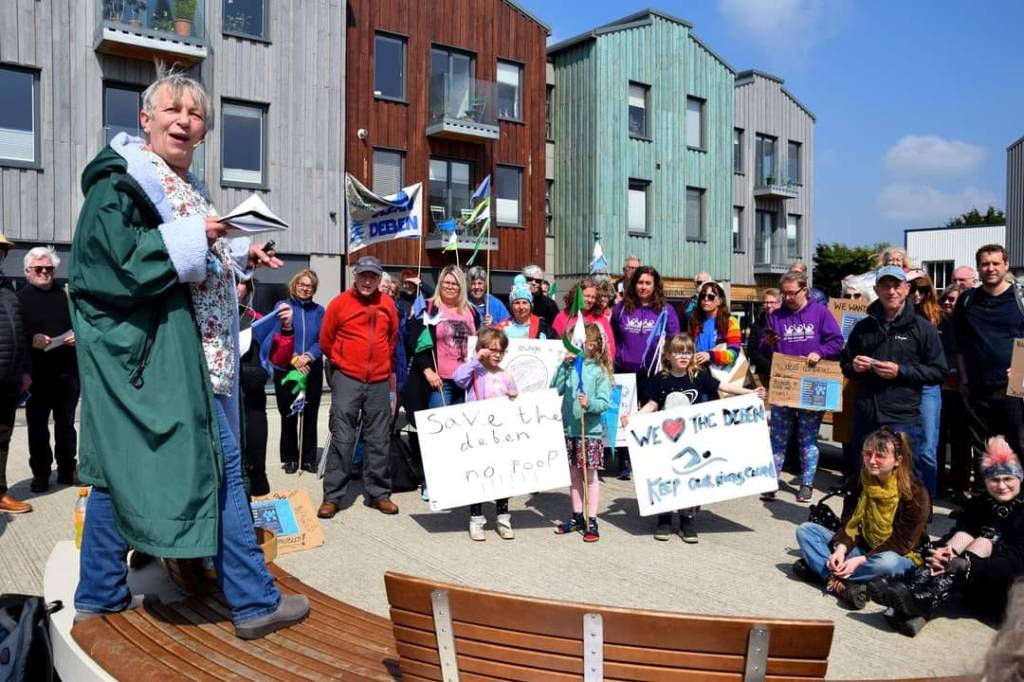
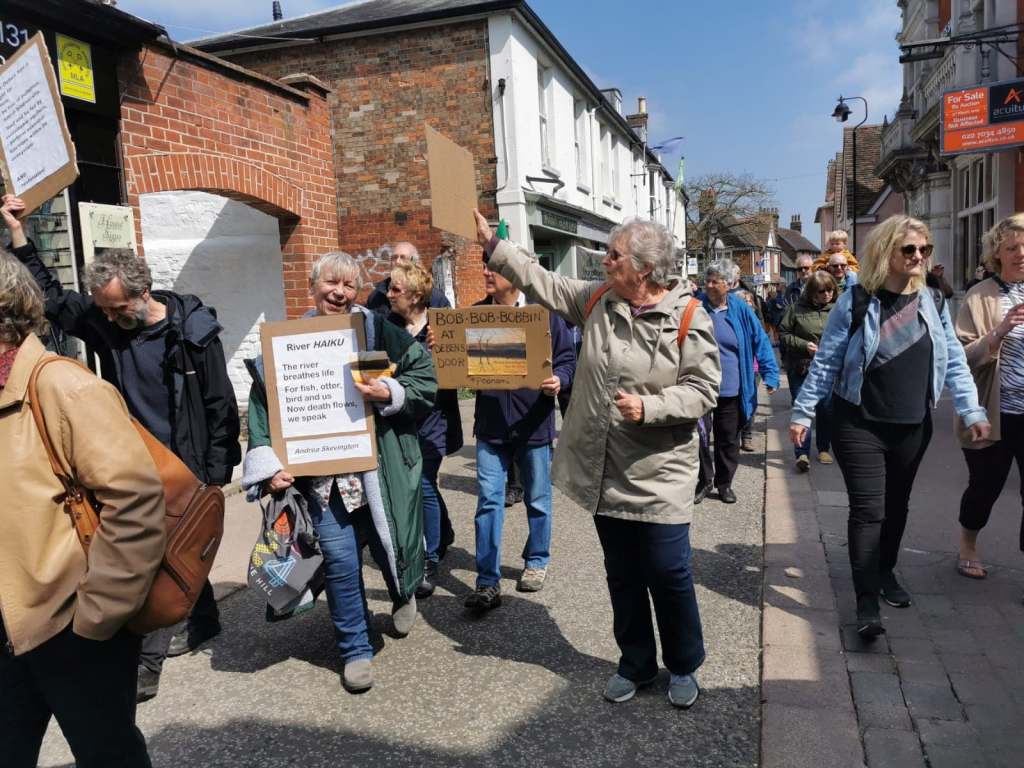
There was a rally and march on Saturday 23rd April, the National Day of Action for Water Quality.

You can see a report on Channel 4 News here.

I was very sorry not to be able to go, stuck in the garden with covid – although I couldn’t have a nicer spot to be stuck in. Counsillor Caroline Page (Lib Dems) asked if I felt up to writing a haiku that she could share on my behalf. I’m delighted to be asked and have had a go through the brain fog.

A poet herself, she read it out at the beginning of the rally.

Photo by Charmian Berry

It then joined the march…

Photo by Ruth Leach
Photo by Ruth Leach

You can see more pictures, and video clips, on twitter here

I’m very proud to be part of this fantastic community, who love their place, and seek to protect it.

Photo by Ruth Leach

River Haiku – April 2022

The river breathes life
for fish, otter, bird and us:
Now death flows, we speak.

It’s such a wondrous river. Let’s treasure our places, and care for them.

Updated 24th April 2022 to include coverage of the Day of Action.

Woodbridge Climate Action Event

I was so delighted to be asked to be involved in this local event. Our town council has a thoughtful and dedicated Climate Emergency Committee, who invited a range of speakers and exhibitors who could talk about what they are doing, and what we could do, to work more harmoniously with nature to tackle the double and linked emergencies of biodiversity loss and climate change.

If you’ve been reading this blog, you may recall that last autumn I gathered a community poem, November Leaves, and read it out at a council meeting. You can find out more about that here and here. It was following on from reading that poem at a council meeting that I was invited to begin each of the two days with a poem. As I looked through the programme, and wondered what to share, I was struck by the breadth and depth of the experience covered by the speakers.

I’d just like to briefly share with you the poems I read.

Waldringfield Saltmarshes – Seal

This thin strip of solid ground
turns away from the shore,
snaking through saltmash –
sea lavender, sea purslane,
samphire glowing
in the fading light,
the saltsmell of algae –
until we are far from
ploughed earth,
far out on this wide,
flat, dizzying
land-water-scape.

Pools of infinite grey mud,
the hiss of water receding,
we walk just as the tide
turns to ebb,
this winding path our
thin line of safety,
draped with a strand-
crust of drying weed,
studded with hundreds
of tiny white crab-shells,
oysters, mussels.
How fragile I feel myself
to be.  How quick to be lost.

After many turns further,
and further out,
we come to the place
the path stops.
On the other bank,
we can see the woods
where great white egrets nest.
At my feet, the red of a
spent cartridge hurts
my eyes
as I hear oystercatchers,
and sweet skylarks,
and water,
and wind scuffing the water.

There, at the end,
the limit of where we could go,
we saw, in the water,
the seal –
a low flat head,
intelligent eyes,
sleek and fat,
as grey and rounded
as the mudbanks –
swimming.
We crouched, concealing
our profiles from the
luminous sky,
we held our breath,
and watched its dive,
and breath, dive,
and breath.

And as it swam upstream,
we turned to go back,
retracing our steps exactly,
watching its joy,
its contentment,
as we grew closer to solid
ground, the smell of ripe
barley after rain,
and mallows,
and sweet chamomile
carried on the breeze,
welcoming us.

But the taste of the saltmash
sustained us,
sustains us,
the peace of the seal
stayed with us,
stays with us.
And the cry of the curlew
remains.


One hundred and ten years

Despite this cold
there is a shimmer
of life in the air above
the beds, where bluebells
begin their opening.

Tiny flies, and larger,
and bees, and the
occasional, beautiful,
butterfly – look, just there.

I watch them in awe,
all these tiny specks of life.
Each small thing part of
The garden’s constant dance,
each being knowing
their own irreplaceable steps.

I wonder what it was like,
over a hundred years ago now,
before the house was built,
when all this was orchard.
Did butterflies rise in dense
bright clouds as you walked
through the long grass?
Could you lie down softly
and hear the loud hum of bees
in the speckled blossom above?

Perhaps, like
Tom’s Midnight Garden,
that rich place is still here,
in the shadows.
And perhaps, I hope,
it is becoming
less ghostly, more embodied,
more visible, humming
in this shimmer of life in the air.
Growing stronger
after so many years,
as if seen with eyes
as clear and sure
as a dreaming child’s.

As the emphasis of the weekend was on action, and in particular localism, I came away feeling greatly encouraged to keep doing the apparently small things I am doing. To shop locally and seasonally, to allow the garden to grow with the aim of increasing its abundance of life, to buy less and what I buy to be as thoughtful as I can, to connect to others who are seeking to support nature and create networks where life can flourish.

The news about the climate emergency is pretty dire, but I’m trying to look at what I can do, and what we can do, and seeking to add my voice to those who are calling for change.

November Leaves Community Poem – Update!

Last time, I shared a wonderful piece of work with you. It emerged from the people of our town during the Global Day of Action for the Environment, at the mid-point of COP 26 earlier this month.

You may remember that we invited people to write down their hopes and fears for the environment on cardboard leaves, which we tied to a tree in the main shopping street, The Thoroughfare. I then wove those words together into a poem. You can read it, and more about it, here.

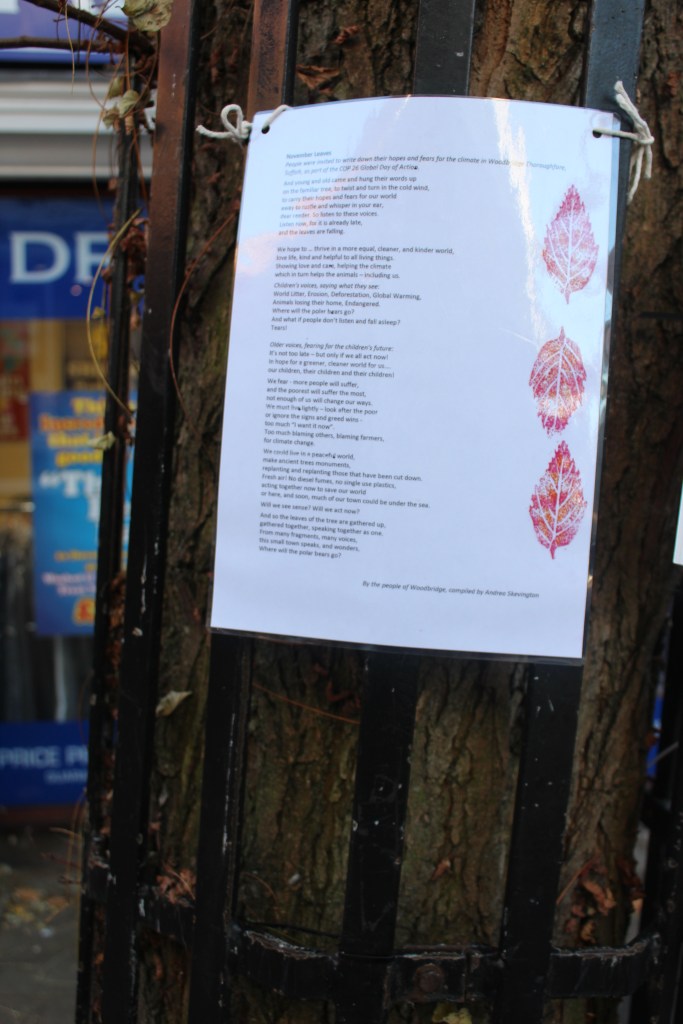
Now, the finished poem is itself tied to the tree where it began. It felt like a homecoming, tying the people’s words to the tree.

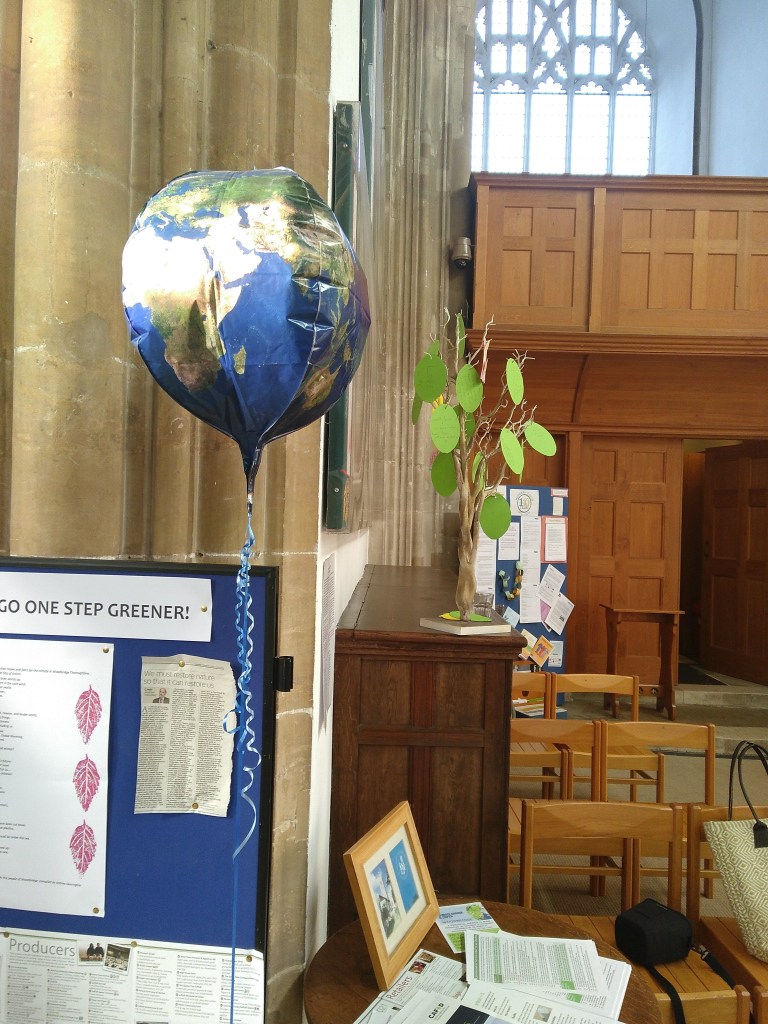
The leaves themselves seemed to precious to discard, carrying as they did such heartfelt words. St Mary’s Church in the town is taking care of them. They are hanging up near the back, as part of their display on caring for the world. It’s full of helpful, thoughtful suggestions and reflections.

There are some extra leaves so you can add your own contribution to the tree, too, as well as encouragement to “Go one step Greener”. The church is open for prayer and contemplation between 10 and 4 Monday to Saturday, unless there is a special event. Local people, it’s well worth a visit.

St Mary’s Church Woodbridge. You can see the poem on the noticeboard, and the leaves on the tree in the background.

I’ve sent a copy to our MP, Dr Therese Coffey, too.
Edit note 13th December: I’ve received a letter from Dr Coffey, with thanks for the poem and some information on what the government has done and hopes to do for the environment.

Last night, I was able to share the poem with the Town Council – reading it out and giving a physical copy. It seemed a very good, hopeful way for the meeting to start. They listened attentively and appreciatively, and responded with applause and real enthusiasm. So, if you were one of the local people who contributed their hopes and fears to the poem, do know that our local representatives have heard you, and will keep a record of your words in their minutes too.

It was so good to be able to do that. Our council are doing a great deal to take care of the beautiful place where we live, and are keen to do more. It’s good to be able to give voice to the hopes and dreams of people in the town, to share them in places where they will be heard, and will, in turn, do their work in other minds and hearts.

Each small thing matters. You never know what will grow from even these leaves.

Community Poem – November Leaves

Photo by Jacquie Tricker

Last time, I shared with you about what happened in my town for the Global Day of Action for the Environment, the mid point of COP 26. It was so good to work together with friends. Thank you, you know who you are!
You can read about that here.

This time, I’d like to share with you about the leaves hung up on the tree – you can see them fluttering in the photo above. We invited people to write down their hopes and fears for the climate on cardboard leaves, which we gathered together at the end of the morning.

I’ve turned the fragments into a found poem, and have begun the process of sending out a few copies – the first to our local MP.

I’ve decorated these copies with a lino print I did, in the spirit of craftivism. This is their philosophy, and I like it….


“If we want our world to be more beautiful, kind and fair, can we make our activism be more beautiful, kind and fair?”

It’s getting dark – apologies for the photo quality!

And so, here it is. The poem made of words written by the people of Woodbridge, supported by Jacquie and David Tricker and friends. Put together by me, with invaluable editorial support from Tracy Watson-Brown. I’d also like to thank the early years teachers who helped me read some of the contributions from our very young writers.

A special thanks goes to all the people who stopped and talked to us, and wrote down their hopes and fears for us to share with you.

November Leaves
People were invited to write down their hopes and fears for the climate in Woodbridge Thoroughfare, Suffolk, as part of the COP 26 Global Day of Action.  

And young and old came and hung their words up
on the familiar tree, to twist and turn in the cold wind,
to carry their hopes and fears for our world
away to rustle and whisper in your ear,
dear reader. So listen to these voices.
Listen now, for it is already late,
and the leaves are falling.

We hope to … thrive in a more equal, cleaner, and kinder world,
love life, kind and helpful to all living things.
Showing love and care, helping the climate
which in turn helps the animals – including us.

Children’s voices, saying what they see:
World Litter, Erosion, Deforestation, Global Warming,
Animals losing their home, Endangered.
Where will the polar bears go?
And what if people don’t listen and fall asleep?
Tears!

Older voices, fearing for the children’s future:
It’s not too late – but only if we all act now!
In hope for a greener, cleaner world for us….
our children, their children and their children!

We fear – more people will suffer,
and the poorest will suffer the most,
not enough of us will change our ways.
We must live lightly – look after the poor
or ignore the signs and greed wins –
too much “I want it now”.
Too much blaming others, blaming farmers,
for climate change.

We could live in a peaceful world,
make ancient trees monuments,
replanting and replanting those that have been cut down.
Fresh air! No diesel fumes, no single use plastics,
acting together now to save our world
or here, and soon, much of our town could be under the sea.

Will we see sense? Will we act now?

And so the leaves of the tree are gathered up,
gathered together, speaking together as one.
From many fragments, many voices,
this small town speaks, and wonders,
Where will the polar bears go?


                                                                      By the people of Woodbridge, compiled by Andrea Skevington


Local Climate March, more on Plant Hope, and a community writing project

Photo by Matthew Ling

Saturday 6th November was the mid point of COP 26, and a Day of Action where we could add their voices to the thousands gathered in Glasgow. Here in Woodbridge, a few organisations had got together to plan a march, and it soon became apparent that many were interested in joining them. So, Woodbridge Churches Together, Transition Woodbridge and the local Womens Institute did an excellent job – all working together to organise and hold a peaceful, purposeful, inspiring community action.

Photo by Charmian Berry

There were about 300 of us, which is quite a turn out for a small town. The atmosphere was energising and determined and also celebratory. There was music and speeches to inspire, and to remind us of some of the things that are already going on in the town, and the much more that could be done. We looked forward for ways to proceed, to work locally for a better and fairer place for all, as well as how to continue to let our voices be heard.

As is becoming a tradition in our town, people could leave their banners to be tied to the railings of the Shire Hall, reminding the Town Council of the strength of feeling.

Photo by Councillor Caroline Page

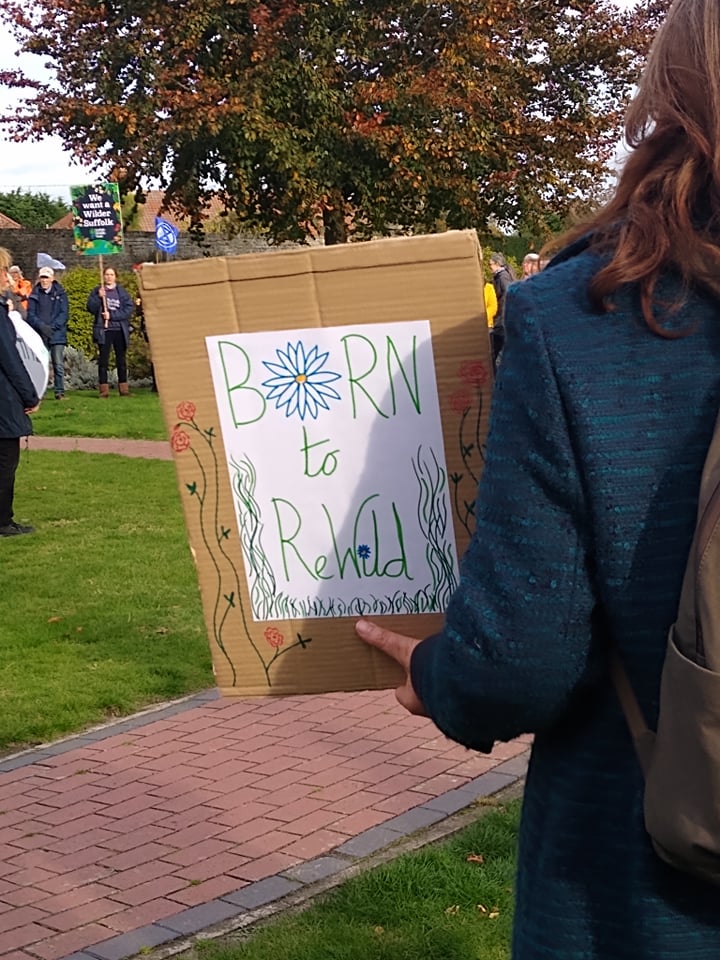
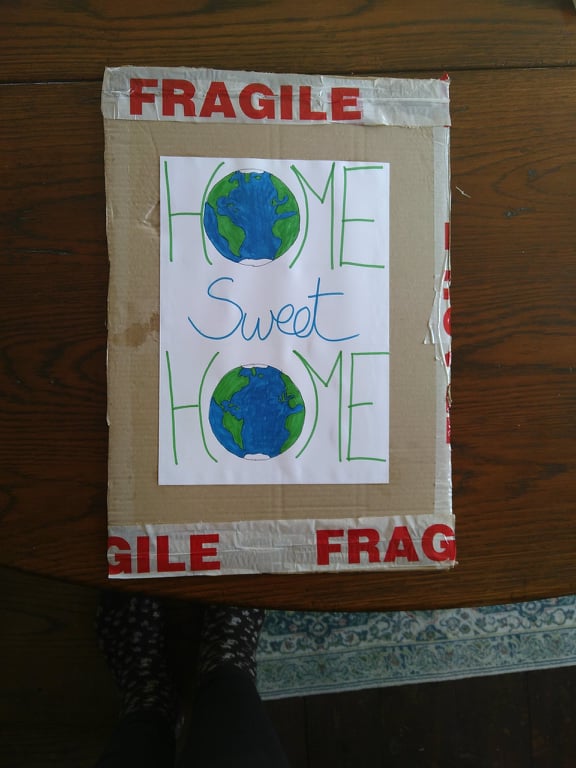
My home-made placard was double sided. Here’s the front… you might be able to see it hanging up.

One of the very positive things about a march in your local commuity is that many of us knew each other. Already, I’ve been having conversations with old friends and acquaintances who were there, and beginning to nudge forward to what we might want to do together to help green our local place even more.

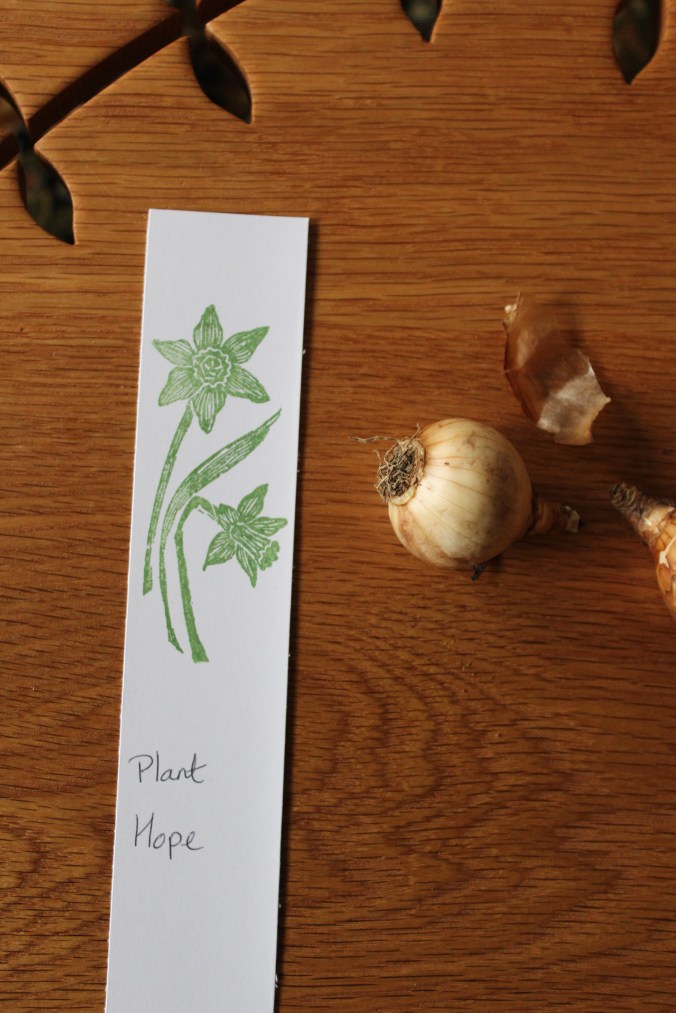
All this was in the afternoon. In the morning, I, and a few friends, were in the Thoroughfare, our main shopping street, having a small happening. Some of you who have followed this blog for a while may remember that last year I had an idea of giving out bulbs and bookmarks, inviting people to Plant Hope. You can read about it following the link. It’s so good that this year, the time seemed right to do it. Having the support of a few friends made all the difference. It was so good having the chance to talk to people about hope in difficult times, about the power of plants and nature to help us in our crisis. A very moving morning.

Photo by Jacquie Tricker

As you can see, by the time we got round to taking a photo, nearly all the bulbs and bookmarks had gone!

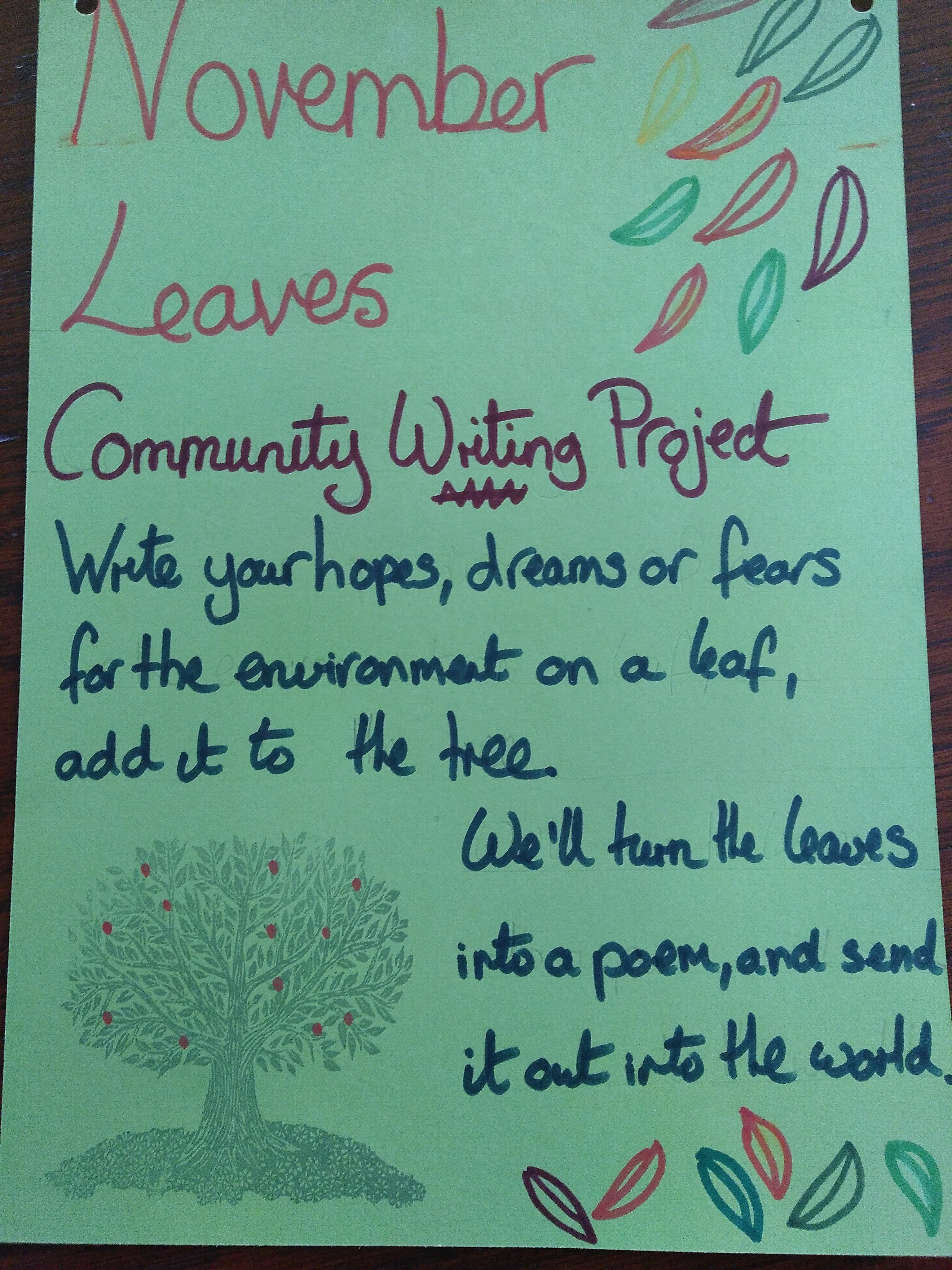
There was another aspect to our happening though. If you look at the tree, you’ll see some cardboard leaves. We invited passers by to write down their hopes, dreams and fears for the environment and hang them on the tree. We’ve gathered them up, and are in the process of turning them into a poem to send to our politicians, both local and national, and to others. It’s very moving to see what people young and old have written. It’ll be called November Leaves, and I’ll be sharing more with you on that in due course.

It was a wonderful, hopeful, sad day, a day of coming together in community, which is a thing I’ve missed very much.

It also felt like the beginning of closer engagement for many, with many organisation coming together for the common good.

Last year, I just made this one bookmark. This year, I could have given away twice as many as I made. How things grow.

Stamp by Noolibird

Update 11th April 2022:

My friend Jacquie has published an excellent article about eco anxiety and anger, and the power of finding your tribe – people you can work with to take some action. It talks about this march and action, which we did together. You can find it by following the link here.

Poem: Gaia at Ely Cathedral

As we are beginning to venture out a little more, we thought we would pay a visit to Ely, and the vast indoor space of its ancient cathedral. They often have contemporary art there, which helps the old stones continue to sing, giving a new perspective on ancient truths. We knew that Gaia, an installation by Luke Jerram, was going to be there in July, and so we went and saw this beautiful, astonishing sight. The comparative emptiness of the cathedral space made it all the more powerful as it floated above us.

And as the space is vast, and it takes time to walk up to, around and beyond the piece, you do have time and space in which to allow the work to speak to you, to stir up responses, and to pray. I am sure that one of the intentions is to give us all an opportunity to experience something like “earthrise”, when the astronauts first saw the whole of the Earth from space, and how that shifted their perspective, and began to change the way all of us are able to see our home. The staggering, indescribable beauty of the whole called out my sense of awe, which sat uncomfortably alongside my awareness of the damage we are doing to our precious, unique home.

In the setting of the cathedral, as Gaia hangs in the nave under the painted ceiling which tells the long stretch of the Bible’s story, I found the language of repentance surprisingly, and helpfully, came to mind. Repentance both in our more familiar understanding of sorrow for wrongdoing, and desire to amend, and in the possibly more ancient meanings carried in the old texts, of returning home, and of undergoing a profound change of mind – a paradigm shift in the way you see.

Much of my writing celebrates the beauty of the natural world, how lovely, precious, and vulnerable it is. But sometimes, that love spills over into grief. So the old stones, and the old story, seemed illuminated by our current crisis, and, in turn, those ancient words seemed to express something necessary, and powerful, and, in the end, with the potential for hope.

You can listen to the poem here.

Gaia at Ely Cathedral

She seems to float, lit up with her own light,
slowly turning, blue and blooming with clouds
as we walk up, look up, small before her.

While above our steps,
the familiar painted roof
rolls on, telling its painted story,
from the tree, and the garden,
on towards this

fathomless shining beauty,
the ‘all’ that was so very good
in that beginning.
Now as she turns
we see how she hangs
below the story’s last scenes –
the gift of a beloved child
held on his mother’s lap,
held forward towards us,
loved and given and giving,
and the wounded golden king,
who gives still.

And below, below hangs the whole shining Earth,
dazzling, vast with sea,
turning and flowering with clouds
from the southern ice-shine,
melting although we do not see her weep,

And the land, those small green swathes
and swags, are dressed in white too,
a veil of vapour,
while the deserts spread brown
and red above our eyes.

The lands are small, countries
seem tales we tell.
What is certain is this one great
flow – ocean and ice and cloud –
and the unseen winds that bear them
through our blue, breathing air.

And the people stand beneath her,
lit by ice, and hold up their hands
as if to carry her, or hold her,
or save her from falling.

How beautiful it is.
How strange and wondrous
that we should be creatures
who live within so much living perfection.

And as she turns slowly
under the child and the king,
I wonder, what do those
familiar words mean now,
‘the sins of the world’,
as the stain of our reckless harm
seeps through the blue and green,
through all this living glory,

And is there any hope in our
waking up to beauty with grief
and loss, even as dust and ashes
float across the sky,
across us all, late as we are
in our repenting?


And is there hope,
hope that we might be granted
this grace – time
for amendment of life,
to tend the garden
with its leaves and fruit,
shining and greening,
to take part in the work
of loving and healing,
of restoration,
of making all things new.

Looking at Gaia from behind the communion table brought to mind the words of repentance from that service, and I was aware of my sense of what “the sins of the world” might mean was creaking open a little wider.

Poem: Strange Birds, Wild Ken Hill

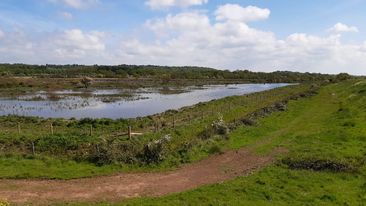
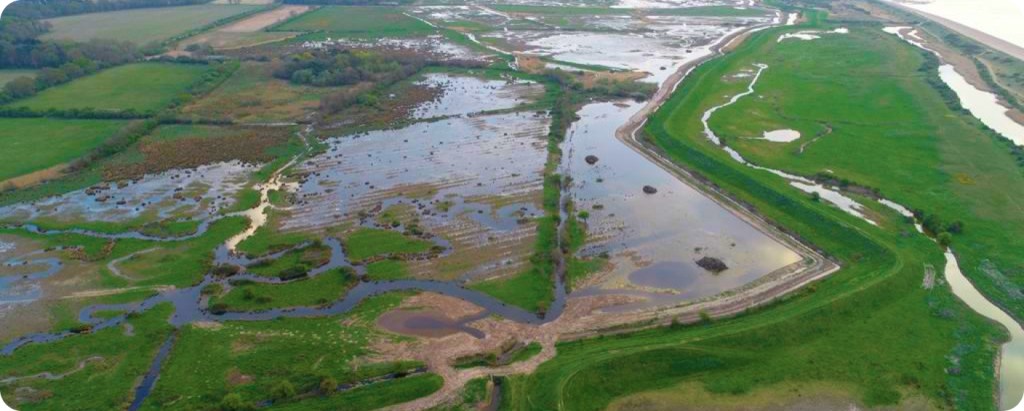
Rounding the path on the bank that holds the freshwater scrapes, with the wildest bit of Wild Ken Hill visible behind. Norfolk, UK

Last week, we decided to try to take a trip out. We haven’t been anywhere for months, with the lockdowns, and looked for somewhere to stay for a night so we could walk more coast path in Norfolk. Amazingly, we found a place very near Wild Ken Hill, where Springwatch is based this year – for non UK readers, that’s a glorious BBC live nature broadcast. Having read Isabella Tree’s Wilding, we’ve been chatting about rewilding and what we can do in our small patch to make space for the abundance of wild things. We were excited and curious to be so near a rewilding, regenerative project..

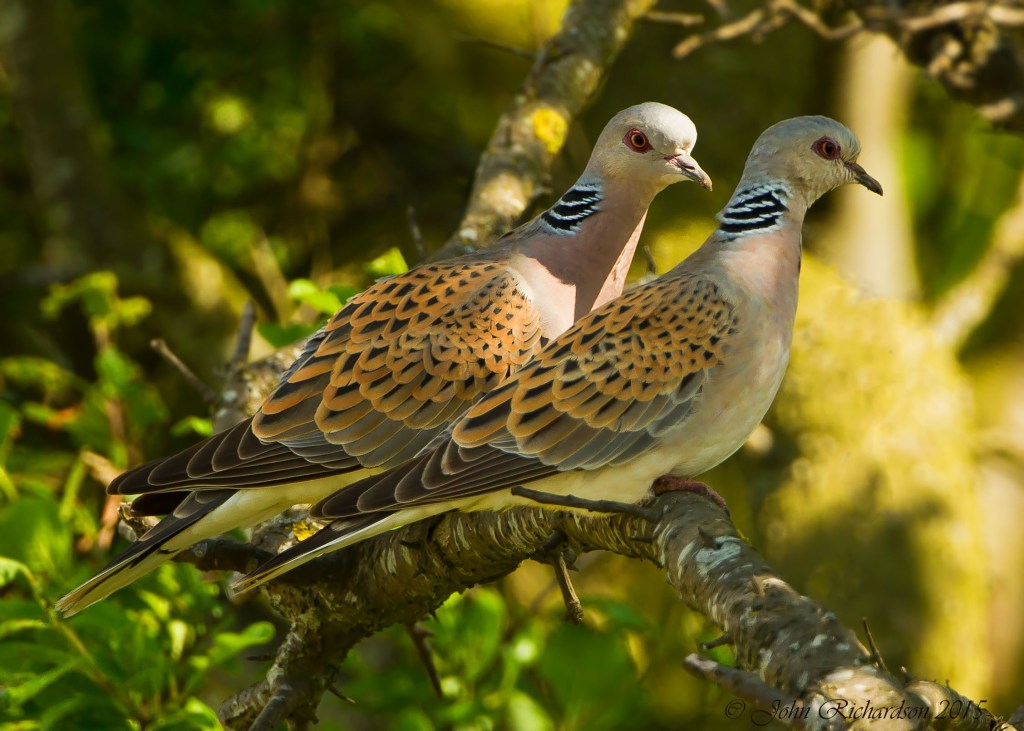
We might have expected to be immersed in wildlife, but that didn’t prepare us for the wonder of being so. Wherever we looked, there was more, and more – things we’ve never heard or seen before. Life was exuberant, everywhere, abundant in a way that was simply awe-inspiring. And then, as we were walking away from the wetland scrapes, there was another treasure. In the scub between the two banks, which strectched behind the caravan park, were turtle doves. I never thought I’d hear one.

These rare birds, all the creatures, seem happy to come if we make space for them, and refrain from harming the land. Life wants to live, it wants to return and thrive. Careful thought and work and research has gone in to providing this space, but it’s so good to know that there is hope, that the care is more than worthwhile. The joy and wonder we felt there reminded me that human flourishing is bound up with the flourishing of all things.

My husband took some pictures, and once we’ve uploaded them, I’ll share them with you here. I wanted to write my response, to share the joy and the beauty and the reverence of being surrounded by strange birds.

Photo from the Bird Guide website. If you’d like to listen to turtle doves, here’s a link.
You can listen to me reading the poem here.

Strange birds, Wild Ken Hill

Walking along the bank,
between scrub and scrape,
insects rise in unaccustomed clouds,
flying things unknown.
A small orange butterfly
rising and tumbling, keeps
ahead, just before us
until at last it settles on
this wildflower bank,
blowsy with cow parsley,
and opens its wings to the sun

while another pair of wings,
huge and white, make their
wide arches
and swoop and rise
above and beside us,
a great spoonbill
unfolding awe about its feathers,
lifted on air full of cries,
and we walk softly among
these flights of beauty
with opening reverence.

And as we move on,
under the warming sun,
we turn to look to the
other side
where May froths
with heady scent,
and there, we hear a
sound unheard before.

A soft low purring,
rising and falling,
one, then two, three,
then many,
the voice of the turtle doves,
a tremor of joy,
a long breath of wonder
in this small space,
near caravans and cars.

The yes of spring,
the yes of hope,
of awe and beauty and love,
the yes of life, in abundance,
these are borne to us
on the wings
of strange birds.

From the Wild Ken Hill website, link above.

The flowers appear on the earth;

    the time of singing has come,

and the voice of the turtle-dove

    is heard in our land.

 The fig tree puts forth its figs,

    and the vines are in blossom;

    they give forth fragrance.

Arise, my love, my fair one,

    and come away.

 O my dove, in the clefts of the rock,

    in the covert of the cliff,

let me see your face,

    let me hear your voice;

for your voice is sweet,

    and your face is lovely.

Song of Solomon, 2:12-14