Lent: Jesus said I Am….. Week 6, The Way, Truth, and Life

WP_20180507_20_33_10_Pro

WP_20180507_12_31_38_Pro

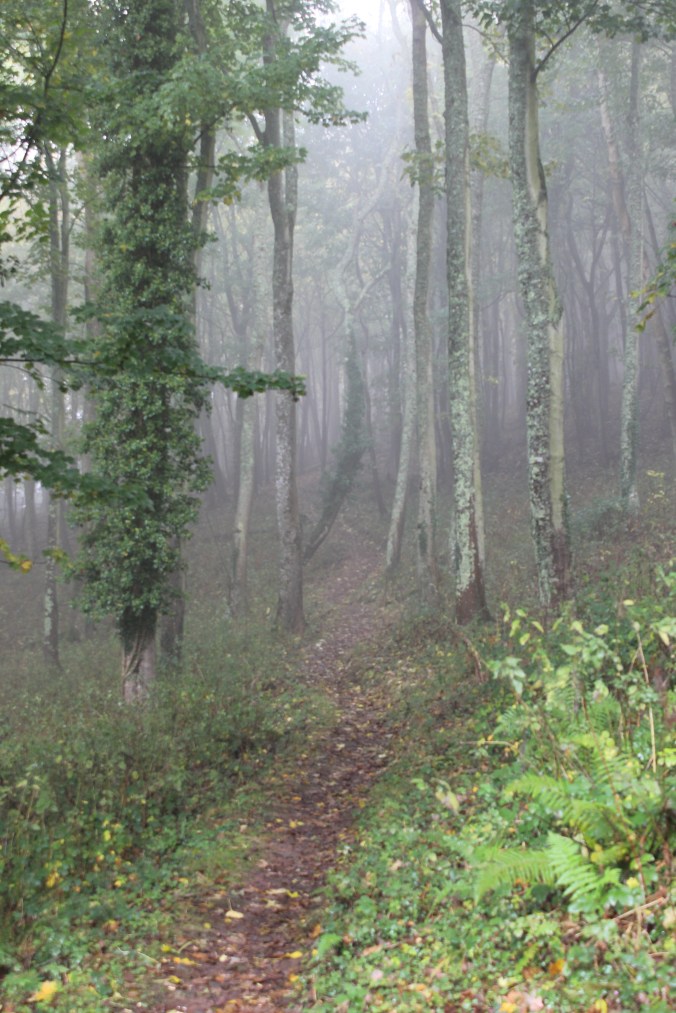
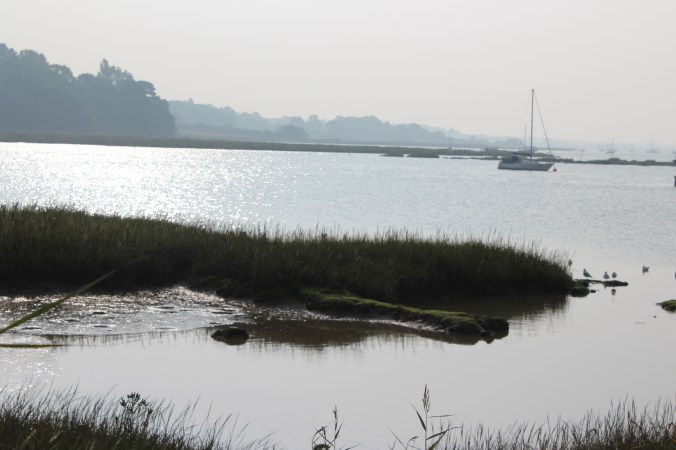
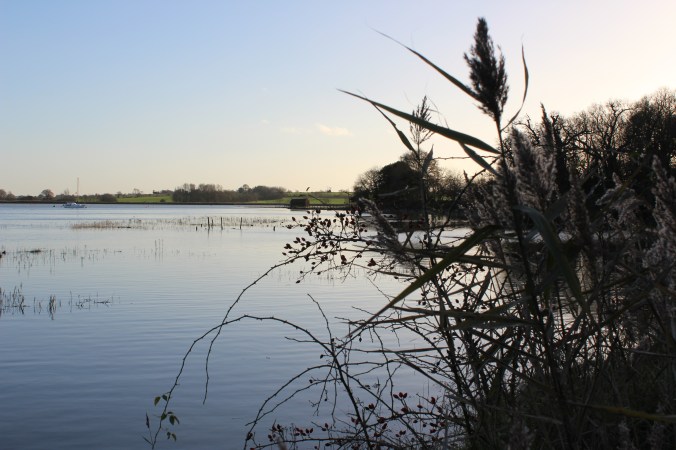
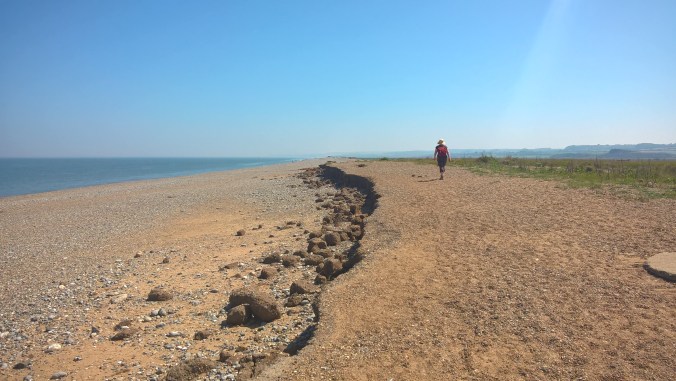
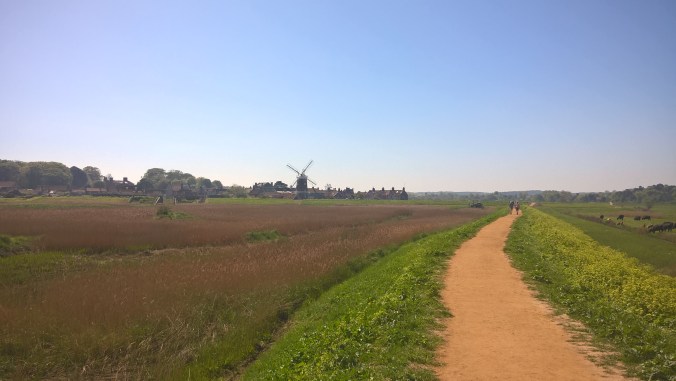
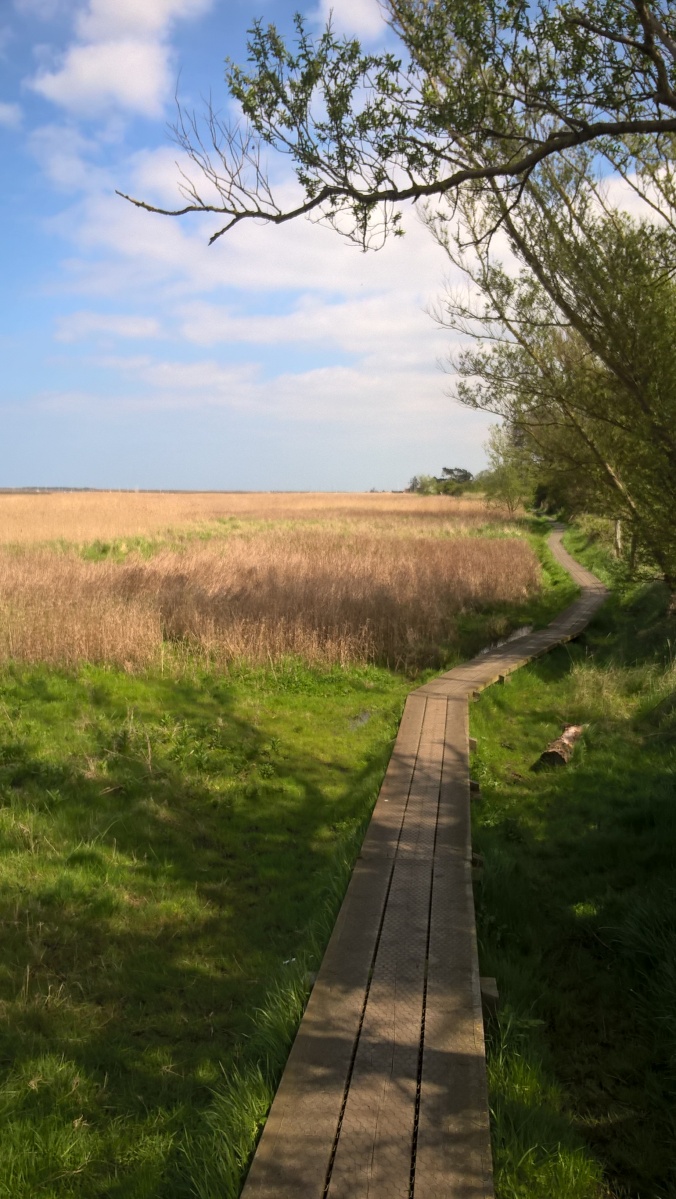
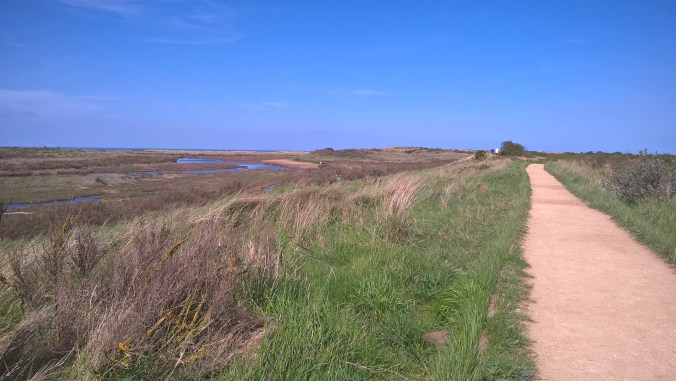
The photos in this post were taken last year, as the very short spring warmed up suddenly into summer.  We were walking the Norfolk Coast Path, which was my first long distance path – flat, and easy to navigate with the sea on one side.  It took us through many lovely, varied landscapes and small settlements.
WP_20180507_11_17_46_Pro

It helps to have an image in your mind when thinking about the Way, as we are this week.

As we enter the traditional season of Passiontide, drawing closer to the Cross, we enter too, in our reading, an intense dialogue between Jesus and his friends, in which Jesus seeks to explain the terrible thing that is going to happen.  To prepare them, and to show them the necessity for it.

We will touch on the themes of Way, Truth and Life here, and seek to work them into our days.
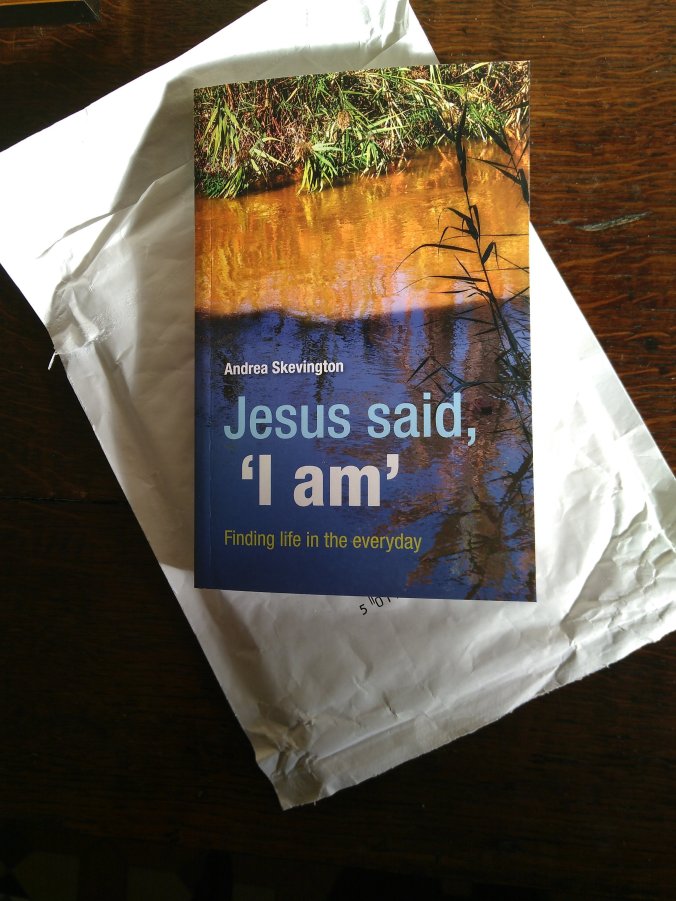
We are continuing this Lent series drawing on my book, Jesus said, I am – finding life in the everyday.

John 13- 14
WP_20180504_13_18_15_Pro

Jesus knows that the time when he will be abandoned and betrayed by his friends, and then crucified, is getting close now.  Knowing this, despite this, he loves them to the end.  Knowing that the Father had put all things into his hands, he strips and kneels and washes their feet.  He gives them bread.  In doing so and by what he says, he tries to prepare his friends for what will come – must come.  He does so with sadness and compassion.  These are dark and difficult words.  But, there is more.  There is also a vision of love, service and life itself – the way of the Spirit, the Comforter. It offers them a way they can live when Jesus is no longer with them  They do not want to see ahead to such a time.  This next ‘I am’ saying is part of all this preparation – showing them a way forward – a way that will endure.  Jesus is that way.  He will remain that way, even after.

We are not there yet, though.  We need to stand back a little and see more clearly.
Jesus Washing Feet 11

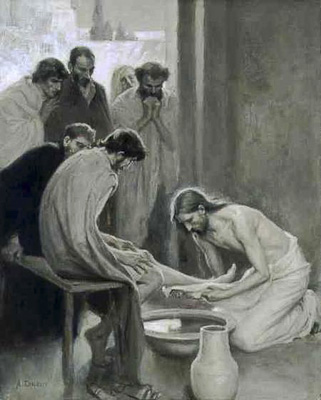
Jesus Washing the Feet of his Disciples, 1898 (oil and grisaille on paper) by Edelfelt, Albert Gustaf Aristides (1854-1905)

© Nationalmuseum, Stockholm, Sweden
Finnish, out of copyright

The towel

Jesus gets up from the table, strips off his outer clothes, wraps a towel around his waist and kneels to wash his friends’ feet.  This is part of the way ahead – the way of love and service.  It is an instruction for how they are to live when he is gone.  They are to imitate this act – and a concrete task can help us through a difficult time.  It is hard for them to receive it.  This kneeling and washing, acting like a humble servant, is part of the self-emptying way that Jesus is following, a small foreshadowing of the self- emptying of the cross.  The way of love and life passes through the darkness of death.

………

Glory

No wonder it was hard to grasp.  This is what glory looks like: tying a towel around your waist, a friend leaving to betray you with the taste of bread still in his mouth, being lifted up on a cross.

What might it mean for us, to know there is glory even here?

This encounter between Jesus and Judas – as he washed his feet, as he shared bread with him – has given me much to think about.  I wrote about it here.

However much they did not understand, his friends did seem to grasp that he was going to leave them.  That this leaving would be for them – that it would bring them the greatest good  – was beyond them.  The loss of Jesus could not be but terrible in their eyes.

And so, he tries to frame it for them.

Something profoundly essential is happening – terrible as it is – that will ultimately work for the good.

This is the only way.

A spacious home

Jesus gives them a picture of what the good will be – a picture of the host going on ahead to prepare rooms, or dwelling places. This is why he must leave, to unlock the door, to get things ready, to open and air the rooms.  It is a large and spacious illustration, one that would conjure up Middle-Eastern principles of hospitality and welcome…..

There is an expansion in these pictures, and a deep sense that Jesus will go to considerable pains, even to the loss of his life, to bring home the sheep, to make a place in the Father’s house.  Images of hospitality abound in the other three gospels, for the kingdom – images of banquets and wedding feasts and wide tables. Here, we find these: a large and hospitable house, a generous sheepfold.

It is entirely understandable that Thomas replies, “We don’t know where you are going, so how can we know the way?”  Now is the ‘I am’ moment: “I am the way, the truth, and the life”.  Can we think of a person as a destination? For that is what we are invited to do. ….

As we seek to walk along the way of love and service, we walk along with Jesus.  We remember that the earliest name given to Jesus’ people was not Christians, but followers of the Way.  We walk with Jesus, and with each other, on this path.  That is the way.

It is Jesus who is Way, Truth and Life all. That begins to shift us to a different way of understanding what these things might be.

The reality behind it all, the reality we can trust, is love.  That is why Jesus goes on ahead through what we cannot, and then comes back for us again.

The way of love is not soft, comfortable or secure.  It will take Jesus to hell and back.  It will take him to the very worst that can be done to a human being. This is the way that humanity will see God’s outstretched arms, and be liberated to enter abundant, overflowing life.  Jesus is making the way.

Way, truth and life are here.

“In him was life, and the life was the light of all people.” John 1:14

Reflection and response

John often has parallels, patterns in his Gospel.  You might like to think about Mary kneeling to anoint Jesus’ feet (see last week’s post) and Jesus kneeling before the disciples.  You can use the pictures in each post to imagine what it would have been like to be there. You might like to think about what they have in common.

jesus-washing-his-disciples-feet1

Further Study

Exodus 12:1-28
Consider more deeply these themes of the Passover: slavery and servanthood; a meal overshadowed by death and departing. Do these help your reading of the last supper?

I am struck by the fact that the Passover celebrates liberation from slavery, and this newly formed Passover – the Last Supper – includes a command to imitate the actions of a slave – washing feet – in free loving generosity.
How do you respond?

Creative Response

Foot washing
You will need: water, washable pens, paper, kitchen paper.

Imagine Jesus kneeling before you to wash your feet.  Imagine you are there, in that upper room. What do you feel at first? What do you feel at the end? You might like to paint your response.

You could use washable pens on your hands, remembering things that do not fit with the command to love.  Then dip your hands in water and watch them become clean.

Thank Jesus for his loving sacrifice and his example.  Thank him for the gift of forgiveness.

Remember a time when someone offered you love, and practical service. What was that like? Remember a time when you did the same for someone else.

Think of what it means to be a leader like this.  Where do you have opportunities to lay aside status and simply serve?


Life and Service

Love
In every situation today, take this as your starting point: how can I best love and serve this person, these people?

My Father’s House
Think about times you have received hospitality, and given it.  What stays in your mind?
Can you expand your current practices of hospitality – even a small step?


Pilgrimage

You may wish to go on a journey with a spiritual purpose and particular destination in mind.  You could travel far or go on a walking tour of local places of worship and ancient holy sites. You could use maps and photos to imagine yourself on such a journey if mobility is an issue.  You can go with friends, or alone.
WP_20180503_15_07_04_Pro


In the current state of our news and social media, I think this one is particularly relevant.  I would add to it now, as we are all empowered to generate our own content, and to share stories….. what are we spreading?  Is it true, loving, kind? Does it promote understanding or division?

Truth

Be on the lookout this week for where and how you learn about the world.  Look at your news sources.  Consider how you listen to more personal news from friends and colleagues.  Whom do you trust and believe? If you do not already do so, consider fact-checking, and reading and viewing things from perspectives that differ from your own.  What do you find out?

Be particularly alert to this question: does this presentation of the facts encourage love and peace between people, or fear, hatred and hostility?
Does it help or hinder me in loving God and loving others?


Thank you for reading.

Please feel free to share any of the material you find helpful, saying where it is from.

If you’d like a copy of the book, you can ask your local bookshop, or order online.

Here are a few suggestions:
The publishers, BRF

Amazon

img_20181130_114736372319885.jpg


We have a publication date!

Some of you kind readers may remember that I’ve been working on a book over the past year or so – exploring the I Am sayings of Jesus.

I am delighted to be able to share with you that it will be published on 19th October, 2018.  The publisher, BRF, has kindly put an early page up on its shop, although I do not think you can order it yet – I’ll let you know when that is possible.

The title is, “Jesus said, “I am” – finding life in the everyday”

As we get nearer to October, I’ll tell you more about it, and hopefully share some of my work with you.  But, to give you some idea – in each chapter I spend some time exploring and reflecting on a part of John’s gospel, trying to immerse us in what was going on for Jesus at the time, and how that might connect to us and our lives now.  Then, I go on to offer suggestions for our response.  There are some questions to prompt thought or discussion, but also creative exercises, social engagement, things to do as you go about your day, prayers for personal or community use…  It’s about how we live, and how we have life.
I hope to give you some examples soon.

It has been taking me a while to do this, so thank you for your patience, and I look forward to sharing more with you soon.

Sunday Retold – Abraham, and Nicodemus? March 12th

Part of the  Sunday Retold  series, based on the readings some churches follow week by week.

They are:
Genesis 12:1-4

John 3:1-17

Please feel free to use any of my material if it helps you, saying where it is from.

Abraham and Nicodemus?  It’s intriguing the way passages are put together.  They shine a light on each other, helping you see them in a different way.
Both of these passages speak of a new kind of beginning in God, stepping out perhaps into a radically different kind of life.  There is uncertainty, too, in the way ahead.  Abraham will be shown the way to go, but he hasn’t been so far.  The wind  blows where it will, we don’t know where.  These two stories together tell us something important about this walk, this life of faith.  Both speak of setting aside our competencies and certainties and desire for control.  Both put us in the place of learners, students, disciples even, having to be open and listening, because we have no blueprint, no map in our minds to impose on the outside.
To begin again as a little child, to set out from all you have known for – who knows?  Life made new requires courage.

From The Bible Retold

“Get up! It’s time to go!” God said to Abraham.  “You must leave your father’s household and go to the land I will show you, the land of Canaan.  I want to bless you, and make your family into a great people.  Through you my blessing will flow to everyone on the earth.”

So Abraham set off for this unknown land, with his wife Sarah and nephew Lot, and all their possessions and animals and servants.  Their long convoy travelled slowly.  Sometimes they followed great river valleys, where the grass grew green.  Other times they travelled across wide plains, throwing up clouds of dust from the hot earth.  They journeyed through many lands on their way to Canaan, and drew more people to them as they went .  When they camped at night, it looked like a town of tents

img_0682

It’s not always easy to see where we are going

The story of Nicodemus visiting Jesus by night is well known, but some of the ideas it contains have lost their anchorhold in the story, and rolled around gathering new associations as they go.  When I came to rewrite it, and when I came to rewrite it again and again with the editor, some of these difficulties surfaced.  It was one of the hardest parts of the gospel to attempt.  It contains ideas which were difficult for Nicodemus to grasp, let alone us, but it seems that the pictures Jesus painted stayed with him, gradually unfolding their meaning, until we find him and Joseph anointing Jesus’ body on Good Friday as darkness gathered.
I remember getting up at night, unable to sleep, with no idea how to tell this story.  But  I lit a fire and a candle, and prayed, and imagined what it would be like to go to Jesus at night, as Nicodemus did.

From The Bible Retold

NICODEMUS THE PHARISEE

One night, Nicodemus slipped through the dark streets of Jerusalem to visit Jesus, who was staying the city.  He came alone, not wanting to be seen. Nicodemus was an important man: a well-known Pharisee, and a leader of the Jewish people, and many of the Pharisees did not approve of Jesus.

Nicodemus came to the house where Jesus was staying, and went in.  He stepped into a room lit by a small lamp which threw a warm circle of light into the shadows.  And there was Jesus, sitting in the lamplight, ready to welcome him in.  Nicodemus joined Jesus and began to speak the words that were running through his mind.

“Rabbi, we know you are a teacher who has come from God.  The miracles you do prove that!”

As Nicodemus spoke Jesus looked into his face, searching his eyes by the warm light.  He knew this man was wise, so when Jesus broke the silence, he spoke to Nicodemus of the deep truths of God’s ways.

Nicodemus listened as Jesus spoke of God’s Spirit: how it could not be seen, but could be felt, as the wind is felt as it blows.  Jesus spoke too of a new type of birth: a birth of the Spirit, giving another chance to become like a child and to see God’s kingdom.

Then, Jesus spoke of how much God loved the world: enough to send his only son to die, so that everyone who believes in him could have a new life that would last for ever, a life full of light and truth.

Nicodemus listened, opening his mind to take in these extraordinary words. And as Nicodemus stepped out of the circle of lamplight, and walked home through the shadowy streets, he turned Jesus’ words over in his mind, beginning to understand.

WP_20170224_14_26_44_Pro.jpg

The after-effects of Storm Doris at Whitby

Perhaps you would like to do a similar exercise – imagining yourself in Nicodemus’ place, seeking light in the darkness.
You could look at the two pictures, and use them to help you as you pray through your response to these two stories.
You might like to read the  A Poem for the road – Returning  in the light of these passages, and see how they connect for you.

As Abraham set off for an unknown land,
so we begin each day, and each journey,
knowing you are with us.
Bless us on our way,
and make us a blessing to those we meet.

Dear God,
Help me to find the right way to go,
even though the gate to it be narrow,
and the path difficult to walk.

Trust in God
Let nothing disturb you,
let nothing frighten you;
All things pass;
God never changes.
Patience achieves
all it strives for.
He who has God
finds he lacks nothing,
God lone suffices.

Theresa of Avila, 1515-82

I am a pilgrim
on a journey
to the place
where God is found;
every step
along that journey
is upon
God’s holy ground.


Where are you going today?
God Bless you on your way.

Poem – Murmuration

geograph.org.jpg

Murmuration of starlings – geography.org

d1b02bda728369e9744a15039260d942.jpg

Steer – Walberswick

philip-wilson-steer-926266

Steer – Walberswick


One of the glories of winter is watching the birds – where we live, the hungry waders and migrants come to feast on what hides in the mud.  There is even, sometimes, a small murmuration of starlings over the reed-bed by our little railway station.  Collecting my daughter from there, last year, I arrived at the moment when they began.  Quite a welcome home!

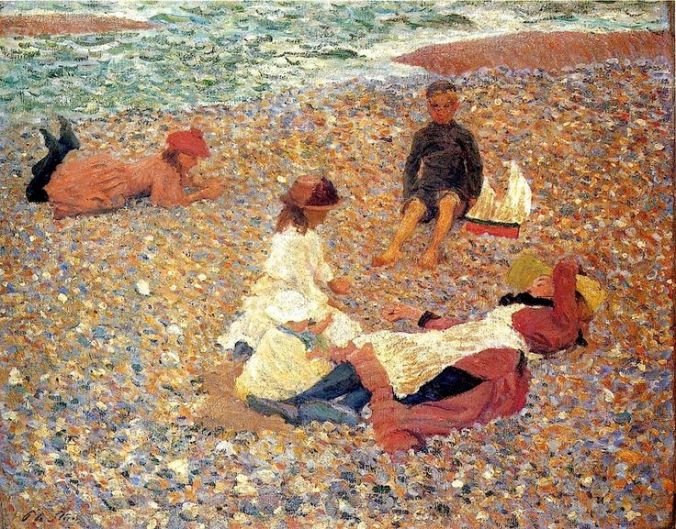
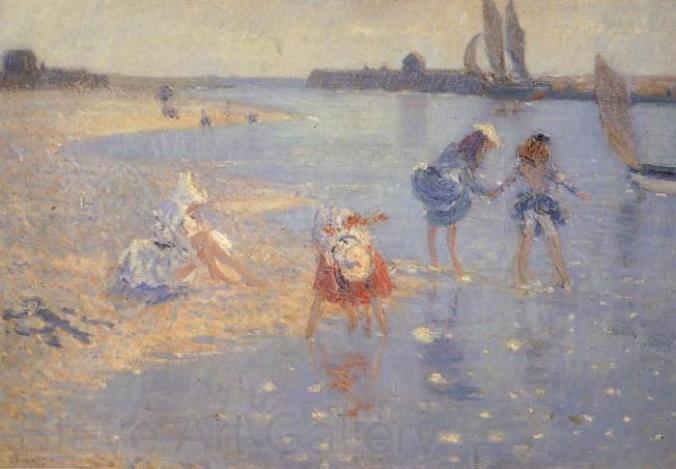
A little further up the coast the starlings gather in great clouds, thousands of them.  We had, as a family, discussed what things we would like to do over the Christmas holidays a few years back.  One of the suggestions was to visit an exhibition at the Sainsbury Centre, UEA, of East Anglian art.  We saw some paintings by Steer, of Walberswick beach, and also some botanical drawings by Mackintosh, drawn while he stayed in one of the fishermen’s huts by that same beach.

On the way back, we stopped off to look for starlings as dusk was falling.


Murmuration, Walberswick

We ran south along the ridge of dunes –
sea on the left, reedbeds on the right.
Behind dark trees the sky was red
and the sea –
purple and gentle in the evening.
The winter sun had shone bright
all day, the first sun for so long.
And you came with me, you all came
with me, when I said I wanted to look
for the starlings. So we run, laughing,
in heavy boots, towards that black
smudge in the sky over the reeds,
spreading and swirling, darkening
as the birds turn, moving together,
as we run together over the sand.

Mystery and wonder, the way they move,
a thinking cloud, and laughter
comes from the wonder,
and the running,
and the being together.

And as the mist rises from the sea, drifts
across the golden shining reedbeds,
and the birds darken as they swoop and
turn, our eyes are opened as wide
as memory – of this beach,
when you were children, when we came
here in the warm summer light,
laughing together in the bright waves.


img_0228

Epiphany – a creative writing possibility

IMG_0752.JPG

Yesterday morning, we were in Bath Abbey, taking part in a beautiful service to celebrate the coming of the Magi, and the way God moves and speaks to people using a language they understand.  The sermon, by  Rev Evelyn Lee-Barber, explored this theme very thoughtfully, and she encouraged us to  think about where we were in the story too, and how we might respond.

It reminded me of a creative writing/meditation I did some time ago, where I used the words of the wise men to explore the story deeper.  I wondered if you, dear readers, would find it helpful to do yourselves.

You can write the words out on a large piece of paper with plenty of space between the phrases.

“Where is the one


Who was born


King?


We have come


to worship


him.”


Read the story slowly, allowing your imagination to dwell with each of the characters, and places. Ask what about this story speaks to you today, might be with you this week.  After you have spent some time in open quietness before God, when you feel ready, expand the words of the wise men, filling in the spaces you have left on the page.  There is something about allowing gaps that helps slow down your reading and thinking, giving time and possibility to the work of the Spirit, allowing the meaning to unfold before you.  The spaces matter, giving you space to think and feel and respond, to allow the words to engage in dialogue with you.  The gaps can be where the light gets in, to paraphrase Leonard Cohen.   Why not give it a go?

Perhaps you could share what you have written in the comments section, if you would like to!


Epiphany Retold – Looking out for stars

Part of the Sunday Retold series, with my version of the reading Matthew 2:1-12

Please feel free to use any of my material that helps, saying where it is from.

Last time, I shared with you the story of Christmas Retold – Escape to Egypt, where we read of the terrible suffering that resulted from Herod’s fear and jealousy and love of power.  This time, I have been thinking smaller, more hopeful, something that might help today, and tomorrow, and the next.  We need to see the darkness, and the light.

IMG_0773.JPG

Epiphany – the new season we enter on 6th January – can mean  a sudden encounter with God, an intuition into the heart and meaning of things, a burst of enlightenment, an event which shows things as they really are at their deepest level.  As a season, it covers some key turning points in the story of God wooing us, seeking us, expanding our always limited understanding as much as we can bear at any time.  As such, it carries on from the Christmas narratives well.  After all, the good news here is that God has come, God is with us. The Message tells John’s words like this:
The Word became flesh and blood,
    and moved into the neighborhood.
We saw the glory with our own eyes,
    the one-of-a-kind glory,
    like Father, like Son,
Generous inside and out,
    true from start to finish.
John 1:14

So, how might we see this glory?  How might we experience this generosity and truth now?

One of the things that always strikes me about the Christmas narratives, including this one, is the great variety of ways they record people receiving a revelation, an epiphany, from God.  There are dreams, visions of angels, and here, a star.  There are other ways God seems to be at work.  Elizabeth feels the child growing in her womb, and then feels the child dance.  Simeon and Anna, too, are prompted and moved.  In each case, the way the person senses, or hears, or experiences the promptings of God seems to be appropriate for them.  The gospel writers seem to have slightly different emphases in how they record what these revelations from God are like – it is hard to talk about.

I remember once standing at the front of church and trying to give an account of what had felt a real encounter with the love of God, and been very aware that my words were so inadequate.  I remember too how, many years ago, our church hosted firemen and their families from Chernobyl, following the terrible nuclear accident, and gave them a holiday by the sea.  One of the firemen wrote a song.  I wish I could remember it all, but the meaning of it, as far as I can recall, was –

I long to tell you about the love of God, what it is like to know the love of God, but my song cannot hold the meaning.  It is like, when I go home from here, I will try to tell people about the sea, how wild and salty and cold it is, and all I have to show them is a bucket of murky water I have carried away with me.

All our words cannot carry the full meaning, but they can hint at it, stir up a hunger for such love and depth of encounter, and reassure each other that we are not alone when we think there is more than the surface, more than “getting and spending” (Wordsworth)

As we enter a new season, maybe it will help to look at the stories we encounter of epiphanies, of experiencing a revelation, a seeing clearly, noticing how varied they are.  Perhaps God is seeking to gain our attention, and maybe that happens differently for different people at different times.  It is easy to think there is a way we should do it, but it seems that God is unconstrained, generous, abundant.  We need to be open.

My own experience of encounters with God, with new insights, is varied. I sometimes have little epiphanies in prayer and worship, reading the Scriptures moves me to a place where I can go deeper, but  I also hear through nature, through poetry, through art, and – perhaps most especially – through the love and kindness of people around me, including strangers I encounter.  It’s worth looking, I think, as we go about our days, doing our normal things, expecting that maybe our lives have something to teach us, to tell us about the love of God and the love of neighbour.  Our lives can speak to us like parables, and they can contain moments of transforming beauty and clarity, that open us up to something far bigger than we can comprehend.

These Magi, probably Astrologers – we do not know how many, or what gender they all were – do not have a straightforward time of it trying to find the new king.  God is not always found the places we expect.  Who would look for a king in a small town away from centres of power and wealth?  God tends to surprise us all by being in the small, the outside, the unexpected, the unimportant places.   I chose the Witz picture (between the two extracts below) because it places the family in a fairly ordinary setting.  Traditionally, they sit in the ruins of a Greek or Roman temple, showing how the old beliefs are crumbling and dying as something new and glorious takes place.  This one is quite an early example of a more small-scale setting, but even so, it is rich in meaning and symbol.  You might like to take some time to look at it carefully.

Herod’s palace was a desolate place to look for this new king. This child would indeed be a king of a different type. We can see, too, that although Herod used the scribes and the scriptures to find out information, he used that for his own ends.  It did not lead to encounter, or worship, or knowing God. There is a lesson here, too.

IMG_0592

As we look out for our own moments of epiphany, it might be worth looking for treasure buried in the dirt (Small Seeds, from Luke 17), and for unexpected people, such as a young girl, or an old widow, or a carpenter.  Epiphanies can burst in on us whatever we do, but my experience is that small, daily steps towards seeing God work their slow transforming changes in us, and that for these, we need to be open, we need to engage in a  quiet, contemplative way of praying and seeing as we live out our lives.  And then, in that new light, we find our lives begin to change, we better learn love, and compassion, and patience, and joy.  As we begin a new year, I am turning my attention to this way of thinking and being.

The Magi were doing what they did – studying the stars.  And they noticed something.

There may be stars out there that would guide us, if we looked.

What might your stars be?

From The Bible Retold

They Followed a Star

Far away from Jerusalem, in a land to the east, wise men looked up at the clear night skies above the desert and saw a star rising.  For years they had studied the movements of the stars and planets, and they had never seen anything like this before.  They unrolled their charts and plotted its path.
“This means a new king has been born to the Jews!” they said to each other, as they gave hurried orders to their servants to prepare for a journey.
When these strangely dressed foreigners arrived in Jerusalem, they began to ask “Where is the one who has been born king of the Jews?” Troubled rumours spread through the city, for there had been no proclamation of any birth.
King Herod the Great’s advisors approached him nervously.
“Your Majesty, strangers from the east have arrived in the city. They are searching for a child who they say has been born King of the Jews.  They saw a sign in the heavens!”  Herod caught his breath, and turned white with fear. He had been given that title himself by the authority of Rome, building palaces and the great Temple to spread his fame.  What kind of king was coming to challenge him?
Then he asked his advisors “Where is the Messiah, the Anointed One, to be born?”  The scholars unrolled the scroll of the prophet Micah, and read out loud:
“Bethlehem will no longer be
the least important of the towns.
For from it will come a leader
who will rule my people Israel
like a shepherd-king.”

“Bethlehem, eh?” murmured Herod. He gave orders for the wise men to be invited to the palace.  He listened to their tale of the star with keen interest, nodding and smiling as if he were delighted at the news.  He told them all about Bethlehem.  “Go and find the child, then please send a message so I can join you in your worship.  What wonderful times these are!” Herod hid his crooked smile.
As the wise men set off from the cool marble and mosaics of the palace, they looked up at the sky once more.  And there was the star, guiding them to Bethlehem.  They followed, and found the child with his mother, Mary.  She was astonished to receive such guests – who bowed low, and spoke of her son with reverence, and unwrapped precious gifts to lay at their feet.

She unclasped the caskets one by one.  The first shone, it was full of gold.  The second opened to a rich, sweet smell.  “The smell of the Temple,” Mary murmured to herself.  It was frankincense, used in worship. The third contained an earthy, dark, resin.  It was myrrh, more valuable than gold, used in burials, and for healing.  Mary looked up at her visitors, and thanked them for these extraordinary, extravagant gifts as the smell of the incense and the myrrh hung in the air about them.

The wise men did not send word to Herod in Jerusalem, for that night, they were troubled in their dreams about him.  They paid attention to the warning, as they had to the star.  So they slipped away, avoiding the city, to cross the desert once more.

the-magi-konrad-witz

The Adoration of the Magi, by Konrad Witz

And from Prayers and Verses

Gifts

Lord Jesus,
The wise men brought you gold:
Let us use our riches to do good.

The wise men brought you frankincense:
Let our prayers rise like smoke to heaven.

The wise men brought you myrrh:
Let us seek to comfort those who are sad and grieving.

Let there be little Christmases
throughout the year,
when unexpected acts of kindness
bring heaven’s light to earth.

What can I give Him,
Poor as I am?
If I were a shepherd
I would bring a lamb;
If I were a wise man
I would do my part;
Yet what I can, I give Him –
Give my heart.
Christina Rosetti 1830-1894

Love came down at Christmas,
Love all lovely, Love Divine,
Love was born at Christmas,
Star and Angels gave the sign.

Worship we the Godhead,
Love Incarnate, Love Divine,
Worship we our Jesus,
But wherewith for sacred sign?

Love shall be our token,
Love shall be yours and love be mine,
Love to God and all men,
Love for plea and gift and sign.
Christina Rosetti 1830-1894

From Frederick Buechner:
“Listen for Him

The question is not whether the things that happen to you are chance things or God’s things because, of course, they are both at once. There is no chance thing through which God cannot speak — even the walk from the house to the garage that you have walked ten thousand times before, even the moments when you cannot believe there is a God who speaks at all anywhere. He speaks, I believe, and the words he speaks are incarnate in the flesh and blood of our selves and of our own footsore and sacred journeys. We cannot live our lives constantly looking back, listening back, lest we be turned to pillars of longing and regret, but to live without listening at all is to live deaf to the fullness of the music. Sometimes we avoid listening for fear of what we may hear, sometimes for fear that we may hear nothing at all but the empty rattle of our own feet on the pavement. But be not affeard, says Caliban, nor is he the only one to say it. “Be not afraid,” says another, “for lo, I am with you always, even unto the end of the world.” He says he is with us on our journeys. He says he has been with us since each of our journeys began. Listen for him. Listen to the sweet and bitter airs of your present and your past for the sound of him.”

~ from The Sacred Journey and Listening to Your Life

Redshanks

IMG_0157.JPG

img_0212


redshank-11-clive-timmons_lge

Photo – Clive Timmons


When I walk, I often take a notebook, and sit and watch.  Watch isn’t quite the right word – it is more of an opening yourself up, a forgetting yourself and becoming lost in what you see before you.

This poem records a moment of change, when, with a rising wind, the birds began to fly.
I wondered what it was that moved them.  Whatever it was, it moved me, too.  I got up, and walked on.


Redshanks

Light on grey mud, grey water,
clouds high and thin.
By the edge of the river
redshanks probe thick
cold with their long beaks.

The wind breathes
over the flowing tide,
ice breath that mists
the watersheen.
And the birds begin to lift,
first the northernmost, then
up like a piece of loose lace,
flashing dark and light from
opening wings.

They circle and cry, raising
long mudsplattered legs,
wingtips close now, wheeling
the air into many breezes.

And what moved them, and what
tied them?  That pull, the breath
of wind over the water. That nudge,
seeing open wings all about them.

That longing  to fly


Now, as the days of darkness come

img_0212

As many days as I can, I walk by the River Deben near my home.  Sometimes I walk with someone, but often I walk alone.  Alone, the experience is different, opened up differently.  It  becomes a quiet form of prayer – one which begins with an openness, a question
– Hello, what is there that I need to notice today?
Alone becomes companionable, the openness becomes openness to one who is always there.
I look at the birds of the air, among other things, although, this day, it was more the birds of the water.
It seemed to me as I watched the cormorants that the growing darkness of the season was maybe something I needed to dive into, under the bright surface, that there was treasure even here, even here.

If you wish, you can listen  to the poem.


Now, as the days of darkness come

Now, as the days of darkness come,
I see the slick oily surface of the water,
low light skims it like bright stones,
as the geese arrive in broken, twisted skeins.

And there is the egret
in its startling whiteness,
probing the mud,
and a pair of cormorants,
dark as pitch,
forming their strange low circles.
Then, as I watch, they slip down beneath
the bright surface, into hidden water.
And I, too, I hold my breath,
while they are hidden, in wonder
at the unexpected airiness of their bodies,
sustaining them, in that cold water, for so long.

Sunday Retold – Small Seeds, from Luke 17

Sunday Retold

sowing

seed.jpg


IMG_0592

This coming Sunday’s gospel reading – Luke 17:5-7 – talks of tiny amounts of faith, faith as small as a seed, which can accomplish so much in the world. A little context is helpful here.  The verse before talks of the necessity to forgive someone, and to keep on forgiving them.   On hearing this, the disciples ask for their faith to be increased.

It is a hard task to forgive, and maybe the disciples think they need vast amounts of faith to be able to do it. These verses are difficult to understand, to see how they hang together. Perhaps Jesus’ answer suggests that, if they have any faith at all, it is enough.  His story of the servant and the master may follow on from the same train of thought.  The work of forgiveness is an everyday necessity for the follower of Jesus.  Everyday work does not require special equipment, or a special reward.  Perhaps, if we are thinking about our life of faith in terms of reward, of payment, we have misunderstood something.

The Lord’s Prayer (11:1-4),  has already been recorded in Luke – forgive us, as we forgive. There, we begin to see how the flow of forgiveness works.  We need forgiveness, and  we need to forgive.  Our own forgiveness is not a static thing, a prize to be acquired.  Neither is forgiveness conditional, but, I believe, Jesus describes a process.   This is how it works – as a flow of forgiveness.  As we join in, seeking to pass on what we receive, we become more like Jesus.  He forgives, and so we are freed to. We find the courage and humility to ask for, and give, forgiveness. We both receive and give.  It is hard work for us, but it is the work we must do every day – like the work of the servants.

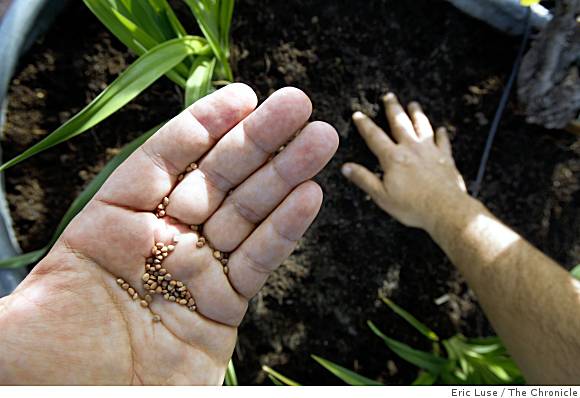
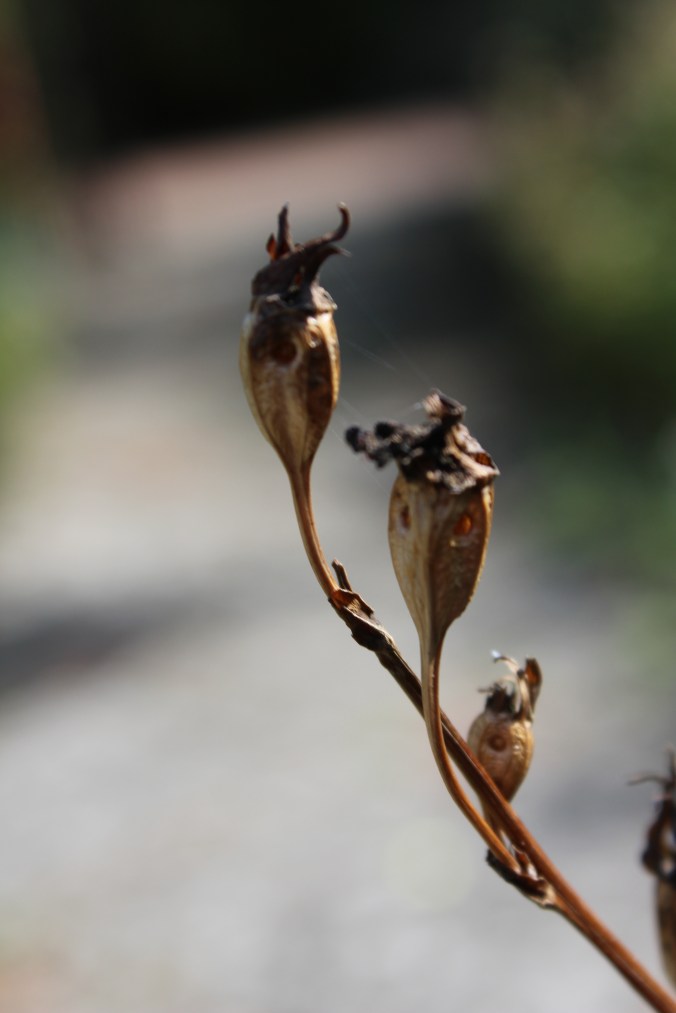
Seeds have tremendous capacity coiled within them.  Small as they are, they contain all that is needed for a new plant to grow.  It is all there, already.  Jesus often uses seeds to talk about the life of the kingdom.  They seem a perfect illustration.  So small, so unassuming, they need to fall to the ground and break.  Then we see that they are in fact  breaking open, bursting with new life, with a shoot and a root and a leaf ready to unfurl.

In The Bible Retold , I have the slightly longer version of the mustard seed from Matthew’s gospel.

“How shall I tell you about God’s kingdom?  It’s like a man who digs down in the earth and plants a tiny mustard seed – it’s so small that a puff of wind could take it out of the palm of his hand.  Yet it grows and spreads into the largest plant in the garden, with branches where the birds can come and shelter.”

And here are some extracts from Prayers and Verses  to help us pray through this gospel reading.  We think of the smallness of the seeds of kingdom life in our own lives and the life of our community, and of the patience needed to wait and tend their growth.  We remember the seeds with gratitude, aware of their potential.  We think too of our own need for forgiveness, and remember it before we condemn another.

Help me to be patient as I wait for your kingdom
and your righteousness:
as patient as a farmer who trusts that the rains
will come in their season,
and that the land will produce its harvest.
Keep my hopes high.
Help me to pray to you and to praise you.


The Lord is good to me,
And so I thank the Lord
For giving me the things I need,
The sun, the rain, the appleseed.
The Lord is good to me.
Attributed to John Chapman, planter of orchards 1774-1845

I told God everything:
I told God about all the wrong things I had done.
I gave up trying to pretend.
I gave up trying to hide.
I knew that the only thing to do was
to confess.

And God forgave me.

Based on Psalm 32:5

We remember also that there are no small things in the kingdom.  Apparently small things have tremendous power.  They are enough.  What small things can you do today?

We can do no great things,
Only small things with great love.
Saint Teresa of Calcutta 1910-1997

“Don’t judge each day by the harvest you reap but by the seeds you plant.” Robert Louis Stevenson


With thanks to my homegroup – a small group who meet and pray and read gospels and sometimes cry and always laugh together. Sowers of seeds, all.

The Spirit Comes

bible retold cover

We celebrate Pentecost this weekend, and the story continues its extraordinary movement outwards.  Last week, it was Ascension, when the disciples were still thinking in terms of their own people, and Jesus showed them an ever widening perspective (Acts 1:6-8).
Now, we see how God continues to open and include.  It seems that all those gathered together (1:14-15) were part of the great outpouring of the Spirit, and the impact on the listeners suggests God was at work beyond even those.  The barriers between us of race, gender, nationality, language, youth and age, are being broken down, moving us towards a deep unity (Col 1:17, Gal 3:28). No wonder the whole house was filled with a great sound! This is powerful and much needed work.

We notice how the barrier of language is overcome.  We notice that God’s priority is not to change the listeners so they can understand, but change the words (and the speakers) so people can hear – directly, in a way that makes sense to them as they are.
The words are an overflow of joy.

Below is my version of the story, from The Bible Story Retold

If you wish to use it this weekend, please do, saying where it is from.  I hope it helps.


From the fields it came: the first sheaf of barley cut for that year’s harvest.  It was carried high through streets crammed with visitors, and on to the Temple. And then the priest offered it to God, giving thanks for the good land, and for the gift of harvest. For that day was the celebration of the first fruits.  It was Pentecost.

Meanwhile, the disciples were all together, waiting.  Then, suddenly, it began.  It stared with sound – a sound like the wind – but this was no gentle harvest breeze.  This was a shaking and a roaring: a sound of power, whooshing and howling about the house, rattling every door and shutter.  The sound seemed to come down from heaven itself, and filled the house as the wind fills sails.  Then, the disciples watched wide-eyed as something that looked like fire came down, and tongues of flame peeled off it and rested on each of them without burning them.  All of them were filled, for the Holy Spirit had come.  And as it happened, their tongues were loosened, and they began to speak as the Spirit gave them words.  These words were not Aramaic, their own language, but in languages that were unknown to them.
A crowd had gathered by the house because of the extraordinary sound, but then they heard voices. There were pilgrims in Jerusalem from all over the known world, and they recognized the words the disciples were speaking.
“He’s talking Egyptian!” said one.
“That one’s talking my language,” said a visitor from Crete – and the same was true for all.  Each person heard God’s praises in their own tongue.
“What can it mean?” they asked each other.  But others among the crowd joked that the disciples had been drinking.
The Twelve heard what they were saying, so Simon Peter stood up to speak to the crowds.
“Listen, I’ll tell you what’s happening.  We’re not drunk! It’s too early in the day for that! This is God’s promise come true.  Do you remember what one of the prophets wrote long ago?
I’ll pour out my Spirit on everyone – young and old.
Your sons and daughters will prophesy,
young men will have visions, and old men dreams.
All who follow me – men and women – will
be given my Spirit, and there will be wonders!

Bless you this weekend, and always.

IMG_0478.JPG