Poem: The Wash, high tide, knots rising

RSPB Snettisham

Last month we took a few days to visit Norfolk, staying by the Wash. UK viewers of Winter Watch and others may have seen some awe-inspiring film of one of the UK’s greatest wildlife events – sometimes called the Snettisham Spectacular. Maybe you’ve been lucky enough to see it for yourself. We decided we’d go and try and catch this sight, when a very high tide drives the birds off the mix of saltmarsh and water, into the air in huge flocks, and down into lagoons cared for by the RSPB. Their website (linked above) will help you get a taste of what its like, as well as some information about when these high tides happen.

Of course, there are never any guarantees with nature, but we got up very early and went to Snettisham in the dark, on a cold February morning, full of anticipation. I’d decided on flasks of coffee – which turned out to be an excellent idea! It was the most moving experience, deeply awe-inspiring, to see a landscape so full of life, and the wildness behaving freely as it should. I am sure that there have been times when there were more birds, and more wild, here, but it was nonetheless a glimpse of a more beautiful world, the world closer to how it should and can be.

You may also be aware that this precious landscape is vulnerable, and a new development could have a huge impact. If you want to find out more about that, you could begin here.

I wanted to try and capture the beauty of what we saw, and also the depth of experience that aroused in us and the others perhaps who were gathered there, and so this poem recounts the journey through the dark, and into the dawn-light of this beautiful sight.

C and A Wild Images Knots

High tide, the Wash, knots rising.

Out in the Wash-marsh,
the dark-before-dawn,
we walked
uncertainly, deeper in,
listening warily for water
sounds, mud sounds,
as we heard, out on our right,
the loudness of bird and tide.
Restless, growing, imminent.

The path seemed so long
in the dark, unknowing and
unseeing as we were.
On and on until at last we came out of
hedge-shadows and reed rustles,
out on the open bank of shingle,
with a chill wind blowing,
with the dark softening into the grey of
mist and ice-fret, as out of the
greyness emerged
a gathering crowd, moving, looking,
watching that density of black birds
emerging too, out there on the
mudbanks and sandbanks,
crowding as the water was rising,
All prickling with anticipation,
all readying for flight.

Through a lens you could see the
black backs of oystercatchers,
tens of thousands, all facing one way,
bright beaks aligned like many compasses.

And further out, paler knots,
rippling over the shrinking land,
their voices sounding together
as water lapped and lapped ever deeper,
full of fish washed in on this rapid tide,
followed by the hungry seals,
heads up, and hunting.

The bird noise grows, and the waders
begin their great lift,
A few at first, tip toed,
up and down like dancers
performing the perfect jete. Then,
as waves pour over their islands
and there is no room for all these birds,

They lift and stay lifted, from the edges,
like a great cloth, swirling now
above fast running water
rilled with small waves.

And then the oystercatchers
begin to pour like dark smoke,
like sentient smoke, as one,
all to the right, pour down
into the lagoons behind us.

While the knots, catching
the rising light, rise too,
turning pale now, loud with cries
and loud too with wings,
like a great crowd running joyously,
like a shining cloud swirling in the wind
but with mind, with being, with will,
a great pale creature rustling
and winding through the air over us,
close and low, and then down
in a whispering snake’s head behind.

And again, and again, rise up more
swirls of birds, faster and wider by
the tens of thousands, of wings
all together, birds turning together,
a miracle of unity,

As wings beat like hurried feet
as more people rush to look up,
and the waves take more and more
ground from under us all.

And I cannot tell you
what joy, what exultation –
And I write from longing to tell
you what joy, what exultation,
we humans, standing, feel
in this wide and wild abundance,
this wild and wide abandon.
This deep unity, this wide-wild-eyed
seeing into the communion of things.

As a sudden sound is added even to
all this loud crescendo,
like thunder, like jets,

The rise and beating of great wings –
pink footed geese
beyond number, beyond measure,

filling the sky with clouds of
moving birds, spinning fast now into
great skeins that wind over the deep
distance, loud and louder
bright on the dawn,

Bright with the wonder of wings lifting,
Bright in this new, steady,
giddying light.
A light that washes through us all
A light that holds us all
As dawn breaks us wide open.

If you search online, you’ll find some films of the birds, like this one.

I hope this gives you a glimpse of how beautiful a sight it was, and how transformative.

Yesterday evening I had the great privilege of reading this poem to open a series of talks organised by the Woodbridge Climate Action Centre. Local friends, tickets are free, and are going fast. The series is called Regenerating Living Landscapes, Working with Nature.

It is possible that a recording of last night’s event may become available. If it does, I’ll make sure there’s a link to it here.

19th May Note:
As you can see from the list above, tonight is the last talk in the series. Once again I’m delighted to have been asked to read something, and the poem I’m going to read is A Good Place, which is also on this blog. As usual, click through to read it.

Poem: River Haiku – April 2022, Updated to include Save the Deben event.

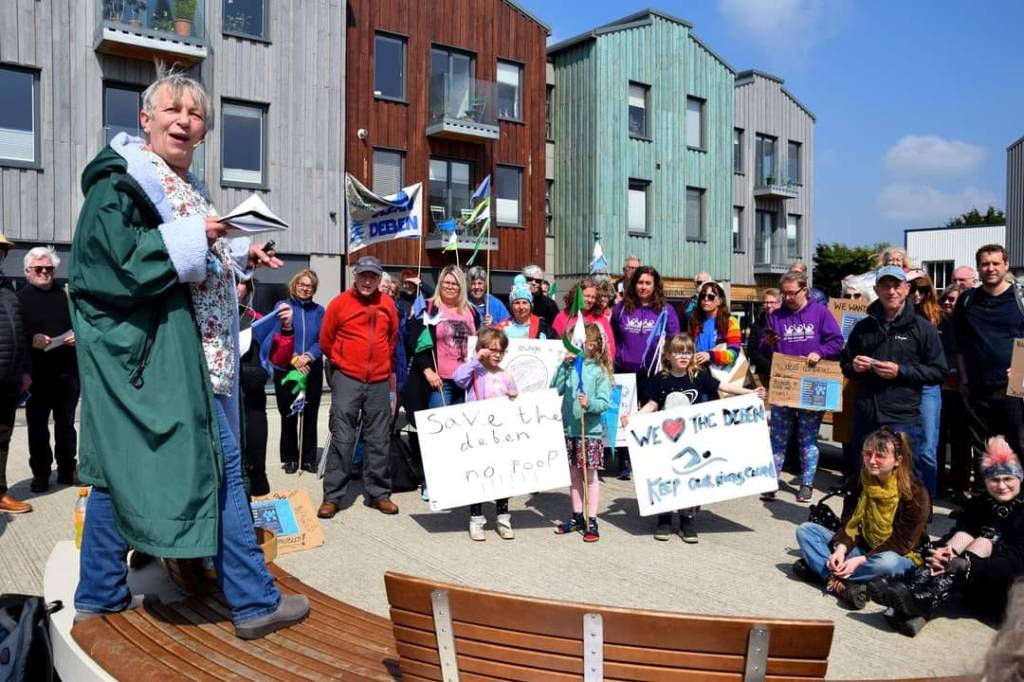
Our beautiful river, the Deben in Suffolk, is in trouble. Testing of the water has revealed that untreated sewage is being dumped. The estuary is a Site of Special Scientific Interest, rich in wildlife, and yet still this is happening. The river is the economic lifeblood of the community, with sailors and walkers, canoeists and birdwatchers all making a vital contribution to the towns and villages by its banks. Wild swimming has also become increasingly popular since the pandemic. We solved these problems long ago – having dirty, unhealthy rivers – and yet, here we are. Economics seems to be a good servant of humanity, and an exceptionally bad master. That can change. The water company – here as elsewhere – can be held to account. Reform of practice is more than possible.
You can read more about the situation and our local response here.

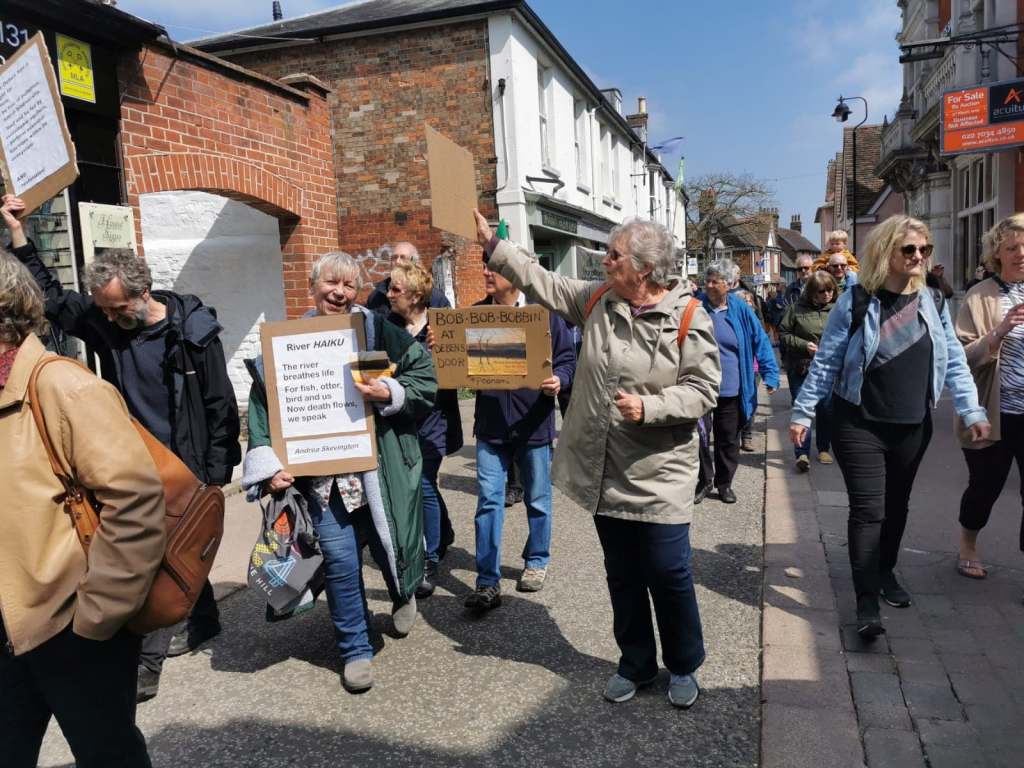
There was a rally and march on Saturday 23rd April, the National Day of Action for Water Quality.

You can see a report on Channel 4 News here.

I was very sorry not to be able to go, stuck in the garden with covid – although I couldn’t have a nicer spot to be stuck in. Counsillor Caroline Page (Lib Dems) asked if I felt up to writing a haiku that she could share on my behalf. I’m delighted to be asked and have had a go through the brain fog.

A poet herself, she read it out at the beginning of the rally.

Photo by Charmian Berry

It then joined the march…

Photo by Ruth Leach
Photo by Ruth Leach

You can see more pictures, and video clips, on twitter here

I’m very proud to be part of this fantastic community, who love their place, and seek to protect it.

Photo by Ruth Leach

River Haiku – April 2022

The river breathes life
for fish, otter, bird and us:
Now death flows, we speak.

It’s such a wondrous river. Let’s treasure our places, and care for them.

Updated 24th April 2022 to include coverage of the Day of Action.

Woodbridge Climate Action Event

I was so delighted to be asked to be involved in this local event. Our town council has a thoughtful and dedicated Climate Emergency Committee, who invited a range of speakers and exhibitors who could talk about what they are doing, and what we could do, to work more harmoniously with nature to tackle the double and linked emergencies of biodiversity loss and climate change.

If you’ve been reading this blog, you may recall that last autumn I gathered a community poem, November Leaves, and read it out at a council meeting. You can find out more about that here and here. It was following on from reading that poem at a council meeting that I was invited to begin each of the two days with a poem. As I looked through the programme, and wondered what to share, I was struck by the breadth and depth of the experience covered by the speakers.

I’d just like to briefly share with you the poems I read.

Waldringfield Saltmarshes – Seal

This thin strip of solid ground
turns away from the shore,
snaking through saltmash –
sea lavender, sea purslane,
samphire glowing
in the fading light,
the saltsmell of algae –
until we are far from
ploughed earth,
far out on this wide,
flat, dizzying
land-water-scape.

Pools of infinite grey mud,
the hiss of water receding,
we walk just as the tide
turns to ebb,
this winding path our
thin line of safety,
draped with a strand-
crust of drying weed,
studded with hundreds
of tiny white crab-shells,
oysters, mussels.
How fragile I feel myself
to be.  How quick to be lost.

After many turns further,
and further out,
we come to the place
the path stops.
On the other bank,
we can see the woods
where great white egrets nest.
At my feet, the red of a
spent cartridge hurts
my eyes
as I hear oystercatchers,
and sweet skylarks,
and water,
and wind scuffing the water.

There, at the end,
the limit of where we could go,
we saw, in the water,
the seal –
a low flat head,
intelligent eyes,
sleek and fat,
as grey and rounded
as the mudbanks –
swimming.
We crouched, concealing
our profiles from the
luminous sky,
we held our breath,
and watched its dive,
and breath, dive,
and breath.

And as it swam upstream,
we turned to go back,
retracing our steps exactly,
watching its joy,
its contentment,
as we grew closer to solid
ground, the smell of ripe
barley after rain,
and mallows,
and sweet chamomile
carried on the breeze,
welcoming us.

But the taste of the saltmash
sustained us,
sustains us,
the peace of the seal
stayed with us,
stays with us.
And the cry of the curlew
remains.


One hundred and ten years

Despite this cold
there is a shimmer
of life in the air above
the beds, where bluebells
begin their opening.

Tiny flies, and larger,
and bees, and the
occasional, beautiful,
butterfly – look, just there.

I watch them in awe,
all these tiny specks of life.
Each small thing part of
The garden’s constant dance,
each being knowing
their own irreplaceable steps.

I wonder what it was like,
over a hundred years ago now,
before the house was built,
when all this was orchard.
Did butterflies rise in dense
bright clouds as you walked
through the long grass?
Could you lie down softly
and hear the loud hum of bees
in the speckled blossom above?

Perhaps, like
Tom’s Midnight Garden,
that rich place is still here,
in the shadows.
And perhaps, I hope,
it is becoming
less ghostly, more embodied,
more visible, humming
in this shimmer of life in the air.
Growing stronger
after so many years,
as if seen with eyes
as clear and sure
as a dreaming child’s.

As the emphasis of the weekend was on action, and in particular localism, I came away feeling greatly encouraged to keep doing the apparently small things I am doing. To shop locally and seasonally, to allow the garden to grow with the aim of increasing its abundance of life, to buy less and what I buy to be as thoughtful as I can, to connect to others who are seeking to support nature and create networks where life can flourish.

The news about the climate emergency is pretty dire, but I’m trying to look at what I can do, and what we can do, and seeking to add my voice to those who are calling for change.

Local Climate March, more on Plant Hope, and a community writing project

Photo by Matthew Ling

Saturday 6th November was the mid point of COP 26, and a Day of Action where we could add their voices to the thousands gathered in Glasgow. Here in Woodbridge, a few organisations had got together to plan a march, and it soon became apparent that many were interested in joining them. So, Woodbridge Churches Together, Transition Woodbridge and the local Womens Institute did an excellent job – all working together to organise and hold a peaceful, purposeful, inspiring community action.

Photo by Charmian Berry

There were about 300 of us, which is quite a turn out for a small town. The atmosphere was energising and determined and also celebratory. There was music and speeches to inspire, and to remind us of some of the things that are already going on in the town, and the much more that could be done. We looked forward for ways to proceed, to work locally for a better and fairer place for all, as well as how to continue to let our voices be heard.

As is becoming a tradition in our town, people could leave their banners to be tied to the railings of the Shire Hall, reminding the Town Council of the strength of feeling.

Photo by Councillor Caroline Page

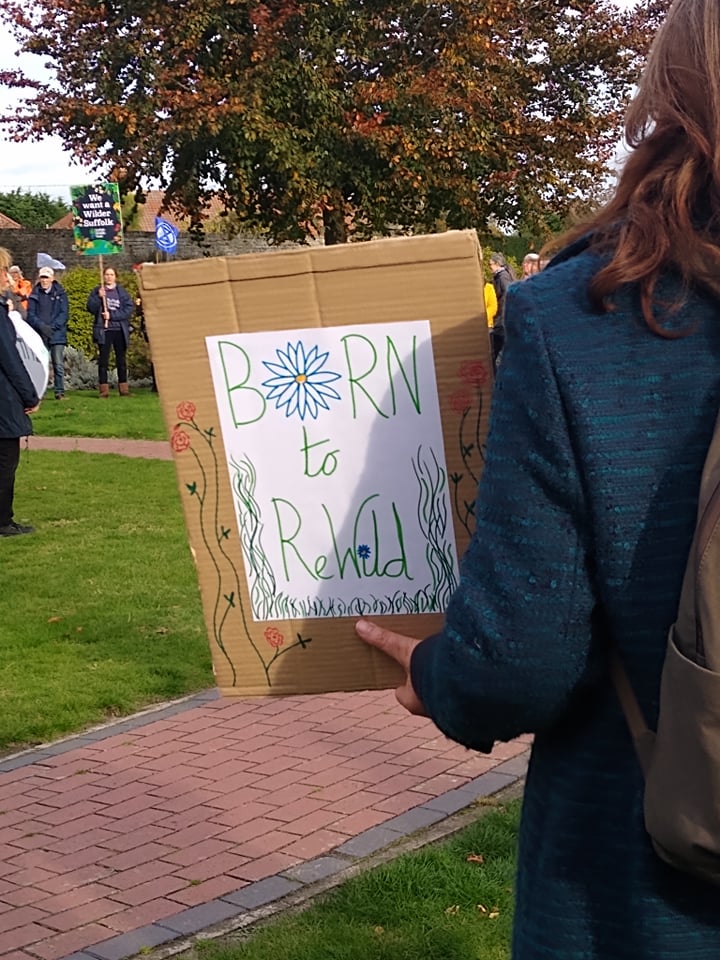
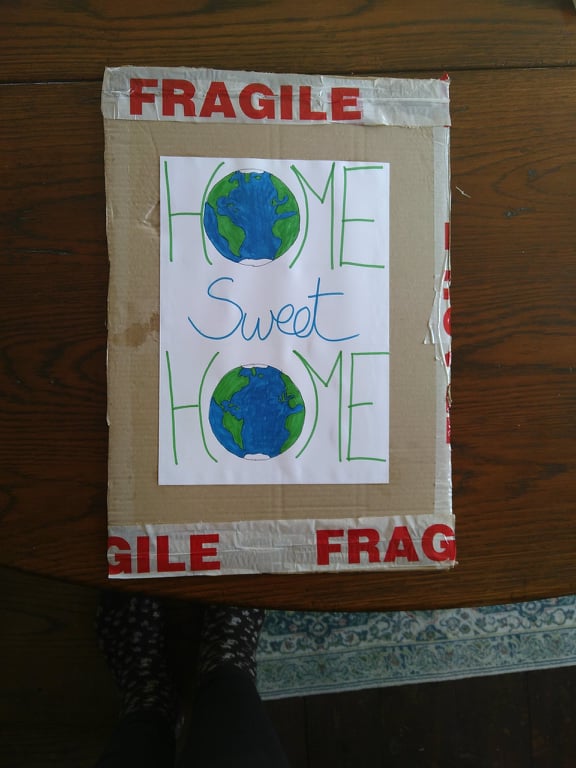
My home-made placard was double sided. Here’s the front… you might be able to see it hanging up.

One of the very positive things about a march in your local commuity is that many of us knew each other. Already, I’ve been having conversations with old friends and acquaintances who were there, and beginning to nudge forward to what we might want to do together to help green our local place even more.

All this was in the afternoon. In the morning, I, and a few friends, were in the Thoroughfare, our main shopping street, having a small happening. Some of you who have followed this blog for a while may remember that last year I had an idea of giving out bulbs and bookmarks, inviting people to Plant Hope. You can read about it following the link. It’s so good that this year, the time seemed right to do it. Having the support of a few friends made all the difference. It was so good having the chance to talk to people about hope in difficult times, about the power of plants and nature to help us in our crisis. A very moving morning.

Photo by Jacquie Tricker

As you can see, by the time we got round to taking a photo, nearly all the bulbs and bookmarks had gone!

There was another aspect to our happening though. If you look at the tree, you’ll see some cardboard leaves. We invited passers by to write down their hopes, dreams and fears for the environment and hang them on the tree. We’ve gathered them up, and are in the process of turning them into a poem to send to our politicians, both local and national, and to others. It’s very moving to see what people young and old have written. It’ll be called November Leaves, and I’ll be sharing more with you on that in due course.

It was a wonderful, hopeful, sad day, a day of coming together in community, which is a thing I’ve missed very much.

It also felt like the beginning of closer engagement for many, with many organisation coming together for the common good.

Last year, I just made this one bookmark. This year, I could have given away twice as many as I made. How things grow.

Stamp by Noolibird

Update 11th April 2022:

My friend Jacquie has published an excellent article about eco anxiety and anger, and the power of finding your tribe – people you can work with to take some action. It talks about this march and action, which we did together. You can find it by following the link here.