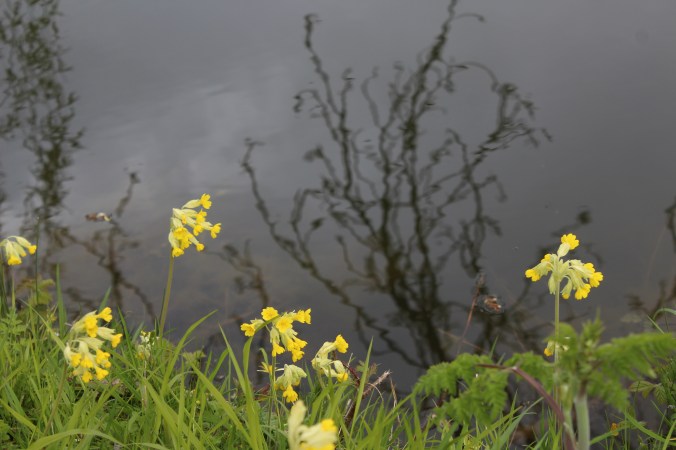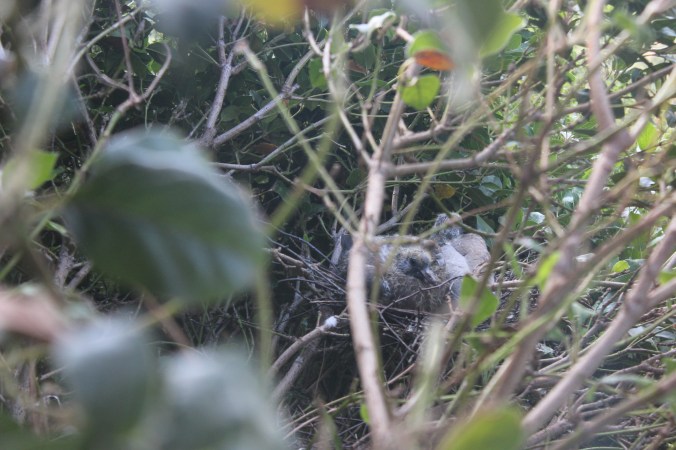
Nest

IMG_0585.JPG

Poems can tell stories – I hope this one does – stories which seem to have a meaning beyond the events.  This is a story from the past week or so in my garden –  one of the many that unfold daily.  The story of a pigeons’ nest I uncovered.

As I began writing, I thought of the dilemma we all face as humans sharing their home with other creatures – how to live lightly, how to nurture and care for all who share our little bit of land.  As a large and powerful creature in this world, I have responsibility. I wrote about feeling like a giant in my own garden in Pulling up trees. In this instance, I had not seen the parent birds going in and out of this shrub. I thought I knew where all the nests were. I thought I had left it late enough. I was mistaken..

As the days passed, I cheered the two youngsters on as they adapted to their new situation – a nest with a view.  Their mother just carried on caring for them, a little nervously at first, protecting them from rain, feeding them, sheltering them from the midday sun, even though they were now exposed to the crows, and the buzzard, that fly overhead.  Without that care, they would not have survived.  With it, they are thriving still, despite my unintentional assault on their home. No one in this family is giving up.

When I speak positively of their new, open situation, of course that is not about the birds, but about me.  The birds are better off hidden.  I was beginning to think of how we, when faced with hard change, can raise our eyes, and find courage and hope in even an unaccustomed view.
The world is full of parables.


Nest

I leave things wild.
I plant flowers the bees
and butterflies
love.
Ground cover
covers the ground,
and frogs and newts
rest in the shade.

So, this is not what should happen
when my window is crowded with leaves
and I wait till high summer
till the birds are quiet
to cut
hard and deep.
Satisfyingly
the ratcheted loppers
slice through wood.

I stop

As I see those two strange
black creatures,
yellow feathered,
shaking in their nest.
I step back, as quietly as I can,
shaking too,
a destroyer of their world.

Inside, I close the curtain,
peep around to see
the mother bird nestles them,
tends and feeds them.

They thrive and grow
in this newly open nest,
small strange dinosaurs,
now fledglings
stretching their wings,
seeing all that space
all that light
in which to rise,
and fly.



Heron

heron4

photographer unknown

The River Deben near my home – a place where I walk as many days as I can – ebbs and flows through my thoughts and my writing.  It is tidal here, edged with mud and reeds, and it is rich with life.  There is always something to see, if you look.

In this case, I did not see the heron my walking by the quiet creek disturbed, not until it took off, anyway.  I thought of how attentive I need to be, and sometimes am, as a writer.  How I need to be open to what is going on around me, to notice and to receive.  In the poem I talk of hunting for words, as the heron for fish – but it is not just the bright silver words, it is also being alert for meaning, for truth, for connection.  The words do not feel like mine, always, they do feel like something caught, overheard, given – even when they are wrestled with later, honed and rearranged until they better match what it is that I experienced.  Then, I set them free.


Heron  

The heron takes off –
ragged, heavy, a smudged
mud-grey, a shadow-grey
I had not seen it there

Its feathers, pointed reed-leaves,
its legs, thin in the wind reed-stems
its downbeats long and laboured,
straining, slow, like my August walking.

This is how it would have been, though,
before: still and silent in the reeds,
hidden, waiting for the moment
to spear one bright silver fish,
a swift stab of that powerful beak,
then back to silence, stillness.

As my path shimmers in the heat,
the soles of my feet hot through my shoes,
I think that is where I too would be,
hidden in cool reed-shadows,
in stillness, quietness, watching for
bright silver words to dart by,
catching them with my mouth.

But then I look up, and see those
long black flight-feathers finally bite
the air, and the heron, neck doubled back,
soars high, at last, over reedbed,
over river, its down-arched wings
wide over the earth.


And, a short extract from the first chapter of Prayers and Verses


Lord, purge our eyes to see
Within the seed a tree,
Within the glowing egg a bird,
Within the shroud a butterfly.
Till, taught by such we see
Beyond all creatures, thee
And harken to thy tender word
And hear its “Fear not; it is I”.
Christina Rosetti 1830-94


O God, enlarge within us the sense of fellowship with all living things, our brothers the animals to whom thou gavest the earth as their home in common with us.
Basil the Great c330-379


He prayeth best, who loveth best
All things both great and small;
For the dear God who loveth us,
He made and loveth all.
Samuel Taylor Coleridge 1772–1834

prayers and verses cover

Days

IMG_0019


overflowing flowers.jpg


Hurry.  I am ill suited to it – especially as the days grow hot.  I wrote this poem as a kind of rebellion against the feeling that my time was constrained, not my own, running away from me while I seemed to have none of it for the important things.

So I snatched time, and wrote.  As I wrote, as I paid attention to what was around me, I felt the time slow.  I felt myself breathe again. I felt the hard shells of the seconds soften, crack, and open like the seeds in the ground – become things of infinite possibility again.  I realised that, although my home is not the manor described in the poem, there are ways in which it is.  I can inhabit my days as if they were timeless, spacious, connected.  By slowing, by paying attention, by breathing, I found what I needed.  Most of all, though, for me, it is by writing.  Writing freely, writing the moment before me, is a kind of contemplation. It can become a kind of prayer.
I am reminded of Mary Oliver’s great advice –

Pay attention   Be astonished   Tell about it.

This poem was highly commended for the Crabbe Memorial Prize.
You can listen to it here


Days

There is little time –
flowers run to seed so fast under
this strong sun, this dry blue sky,
their leaves curling crisply, blanching.
Their hurry towards death unsettles me
as their stems rattle brown, poppyseeds
pouring through my fingers, tiny and dark,
pouring away like hard-shelled seconds.

I want to inhabit each day slowly, quietly,
as if it were an ancient manor among gentle lands,
with warm red brick thick with years,
that smells of fires, and of rosepetals
as they overflow cracked china bowls,
where time hangs in the spaces between
each tick of the clock, and open doors
let in the endless songs of trees.

There, I could think – uncurl fresh leaves,
as time shimmers like the deep pool, full of lilies,
where the bright dragonfly waits, and waits.

Bees

IMG_0565.JPG

IMG_0570.JPG

IMG_0572.JPG

Hot and thundery, the English summer arrives – it’s too much all at once, at least for me.
Here is a small poem written watching the bees through my window, on the powerful, vivid, lavender.
It is also a poem touching on transformation, something that is beginning to emerge as a theme, although I am not quite sure where it is taking me……. which is perhaps, the point.

Bees

I watch them on the lavender,
each purple flowerstem a pendulum of bees,
keeping time with its humming weight,
White and red tailed, bumble and carder.

A few honeybees come, too,
so few, and already yellow
with sweetness.
And butterflies – cabbage whites,
bright as paper – unfolding
in the scent of flowers.

When the summer storms come,
when storm-rain falls in drops
as big as bumblebees, and
hail clatters against the glass,
they rise, as one, and fly
between the drops, too fast
for me to know where they shelter.

They return to rainwashed flowers
one by one as I gather a few new stems
bright, fragrant, and roll them
slowly in a jar of sugar,
ready, in the time to come,
for delicate sweet biscuits,
icing for dainty cakes.

I do not have the alchemy of bees,
but I have my own, under this roof.

Consider

IMG_0495

Last week, I shared with you a poem about daily walks through   Fen Meadow  .
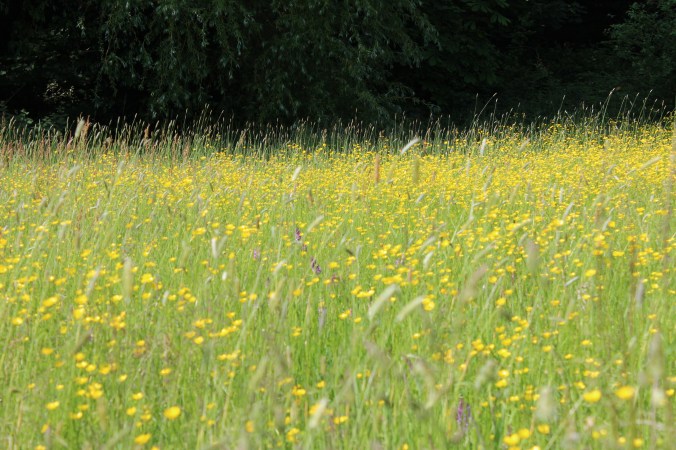
Here is another.  As it is the time for buttercups, buttercups creep into this one, too!

I often find walking the best time for praying, and thinking.  There is something about the rhythm of your body, of your feet in contact with the earth, that quiets the mind and makes prayer easier – at least for me.  As I was walking and turning over my worries/prayers before God, I felt that I was being reminded to pay attention instead to where I was.  In particular, the phrase “consider the lilies of the field” came into my mind.  Now, the lilies of this particular meadows are these beautiful buttercups that grow tall among the grasses, splashed with orchids and clover and birdsfoot trefoil. So, I spent a while considering them, and it was impossible not to feel my heart lift at the sight of so much beauty.

The next day, I approached my walk more enthusiastically – looking forward to seeing the buttercups again.  The sun was shining, they would be perfect.  When I arrived, a large sit-on mower was being driven up and down over the long grass, noisily spraying all that was left of the wild flowers behind it. It felt as if I had just begun to notice something good, when it was mown down.  The poem tells what happened next – if “happened” is the right word!


CONSIDER

I walked behind as he
mowed buttercups down –
scattering gold through
the cut grass –
I gleaned the shattered stems
to carry home.

But, as they wilted in a jar,
they darkened, and drew
to themselves the thought
of other things cut short –
of life, and joy, and hope,
of beauty crushed,
of anger that narrows to
silence –

And yet, today, I came back,
saw the ground  newly
hallowed by many
small shining flowers –
open, nodding to the blowing wind,
running over with saffron light.

Cut down, we flower again, again.
How it all murmurs constantly,
as the shuttle flies across
the loom, and bare feet
are dusted with gold.
And which of you by being anxious can add a single hour to his span of life? And why are you anxious about clothing? Consider the lilies of the field, how they grow: they neither toil nor spin,  yet I tell you, even Solomon in all his glory was not arrayed like one of these.   
Matthew 6:27-29

Fen Meadow – June. The power of memory.


IMG_0496.JPG

IMG_0495.JPG


As we draw closer to the end of an academic year, as children begin to think of doing things for the last time – the last time in this class, this school, with these people, I have been thinking of the poignancy of repeated things coming to an end.   Every day you do something, and then you don’t. In this case, it was the walk to school – now itself a memory.  We passed through a piece of common land within our market town.  It was the nearest place we could go to run, roll down hills, sledge if the snow was right.  Each day, if it is your time for walking through it,  you can see some change in the growth of the plants, hear the birdsong, notice the way the path dusts your shoes, or muddies them. Sometimes it felt as if we were part of the place, and certainly the place is part of me. Each time you walk a familiar path, you can bring the experience of the previous times with you most strongly, it seems. Memory can be vivid, and overlay your experience of the now, as if you are in two times at once.  I try to explore that strange, split-second sensation in this poem.

I have some photos of the Fen Meadow buttercups, and orchids, but none of the willow trees yet.  Dry weather is necessary for the mounds of seeds the poem describes, and that has been hard to find so far this summer!  If I can find a dry moment with my camera, I shall share the pictures with you.  For now, I hope the poem helps you “see” the beauty of the place.

I hope you enjoy.


FEN MEADOW  – JUNE

We have been here so many times
before – this very spot – where
white clouds of seeds drift down
from willow trees, and fill our path.

You smile, and gather mounds of
whiteness – heaping the downy
seeds like warm snow.  What if
it stays till winter? You ask

And suddenly green grass
vanishes in a blaze of white
ice: bare trees, a low sun.
Our screams and laughter are

muffled by scarves as the old sledge
tips – I run my fingers over the scar
we left on the bark – and we shiver
in the warm sun. The very spot.

The breeze trembles again in full
leaves, and all around us buttercups
shine, and dandelion stems shudder.
You pick the clocks and blow

till bedtime, counting the hours:
lunchtime, morning, soft evening.
Your breath floats high, and
hangs in the air. Waiting


Three Days


blackbird2

Photo from Flickr, photographer unknown

IMG_0485.JPG

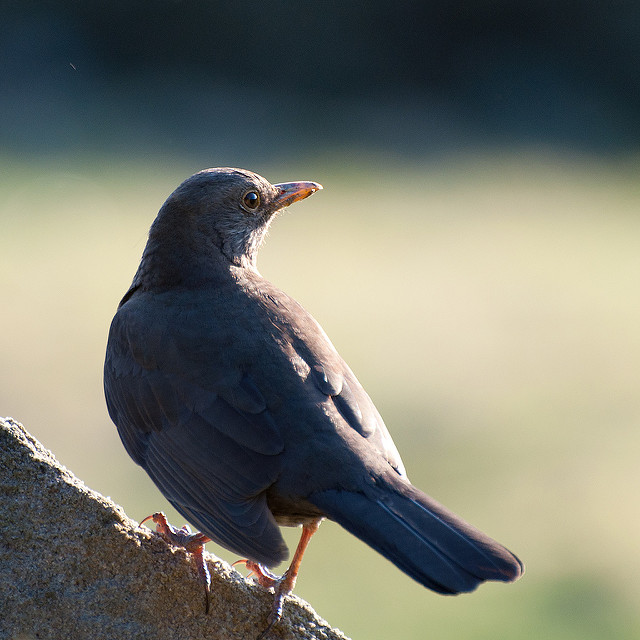
I have been transplanting buttercups into the verge at the front of our house, where there is no pavement, and have been thinking about boundaries – in particular the contrast between the rather wild garden, full of life, and the fast road outside.  This poem, written a few years ago, came about as I watched a female blackbird mourn the death of her mate.  She kept vigil for three days, and then she went.  I did not see her again.  It made me think about not only the intensity, the reality of each creature’s experience, but how often we live in our own enclosed worlds, isolated from each other, and how hard it can be to cross those boundaries.   How hard to credit and acknowledge the fullness of the lives around us. To begin to do so, to begin to see and understand another,  seems to me an important step to take.


Three Days

She stayed by the side of the road,
her brown feathers ragged,
stayed by the place where her mate lay,
black against the tar,
one wing lifted,
catching the breeze –
the passing of many cars.

Startled, sometimes,
she scuttered away into
the green growth,
then returned,
holding her head on one side,
but always she was there,
for three long days
and, for all I knew, nights.

What was the quality of her grief,
of the bond that tied her there?
We know so little of each other,
the unknown world folded
inside each being.
I walked humbly then,
knowing only to be kind.


Glad

It’s easy to see why the English  discuss the weather – on Monday, I lit a fire, and today is warm enough to throw open the doors.  A day when you can slow, and breathe, and see.

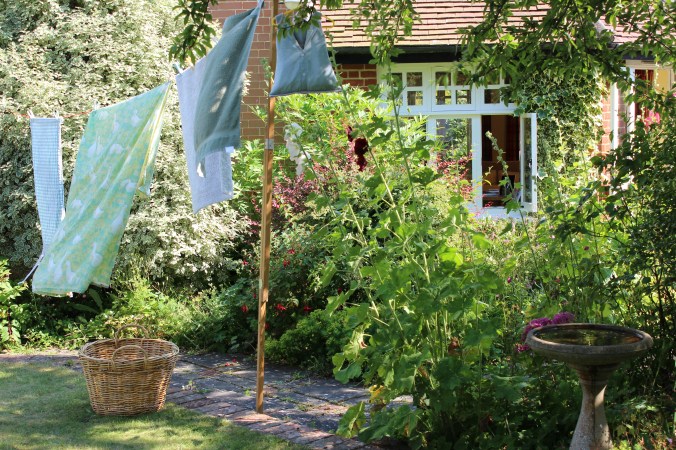
I am typing this looking out of the window you see in the picture below, looking to the place you are looking from.  The gardeners among you may notice it is a picture taken a little further into the summer, when the hollyhocks, which are babies now, grow tall.  It’s all there, waiting.

Below are a few small lines I hope will cheer your day, wherever you are.

IMG_0019


Glad

How little, some days,
it takes to make the heart glad.

A line full of dry washing,
a mother blackbird’s beak,
heavy with worms,
sweetness rising in the grass,
a breeze shot through
with the scent of flowers,

these are enough,
yes, enough.


Wind, and weather

This is my second response to the wonderful Quiet Day at Otley Hall with Malcolm Guite.
While  Trying to listen to God grew out of the day’s content, this next came from the distractions. While we were listening, and looking out at the garden full of delicate spring flowers, the weather had an agenda of its own, bringing swift and sudden bursts of snow and hail.  With the north wind came this very small verse.


IMG_0465.JPG

Wind

Who knows what the wind brings?
These clouds cross the blue sky
full of rain
and hail
and snow,
as the birds sing,
as the flowers grow.
They come if I say yes
or no –
can I say Yes to the wind?


Trying to listen to God

This week, I had the great privilege of spending a day at Otley Hall listening to some of Malcolm Guite’s most recent poems, to be published soon in Parable and Paradox  .  This collection on the sayings of Jesus is full of personal response and deep scholarship.  Those of us who were there had time to reflect on all the wisdom and beauty outside, which always helps my thinking!  It was an astonishingly good experience, and several new poems ended up among my jottings – they still feel quite tentative.

IMG_0468


IMG_0473.JPG

Here is the first.


Trying to listen to God

There is all this that speaks –
the electric green grass,
the cowslips and fritillary lilies –
I know I am to consider them,
consider it all.
The song the trees sing today –
their tender beauty
like the beauty of a child –
will not be repeated tomorrow.
Today is the day to hear it.

There is all this
and stories too –
The Kingdom is like this, like that –
slipping past the guard of ego
and reason
they work their slow growth
Seeds that crack the
dark tarmac,
the grey concrete,
soften the callouses our own
stories have worked.

For there is all that too –
the stony weights,
the things that choke.
How does good soil get to be
good?
I wonder, as I am shaken,
as my ground is cleared.


IMG_0471.JPG