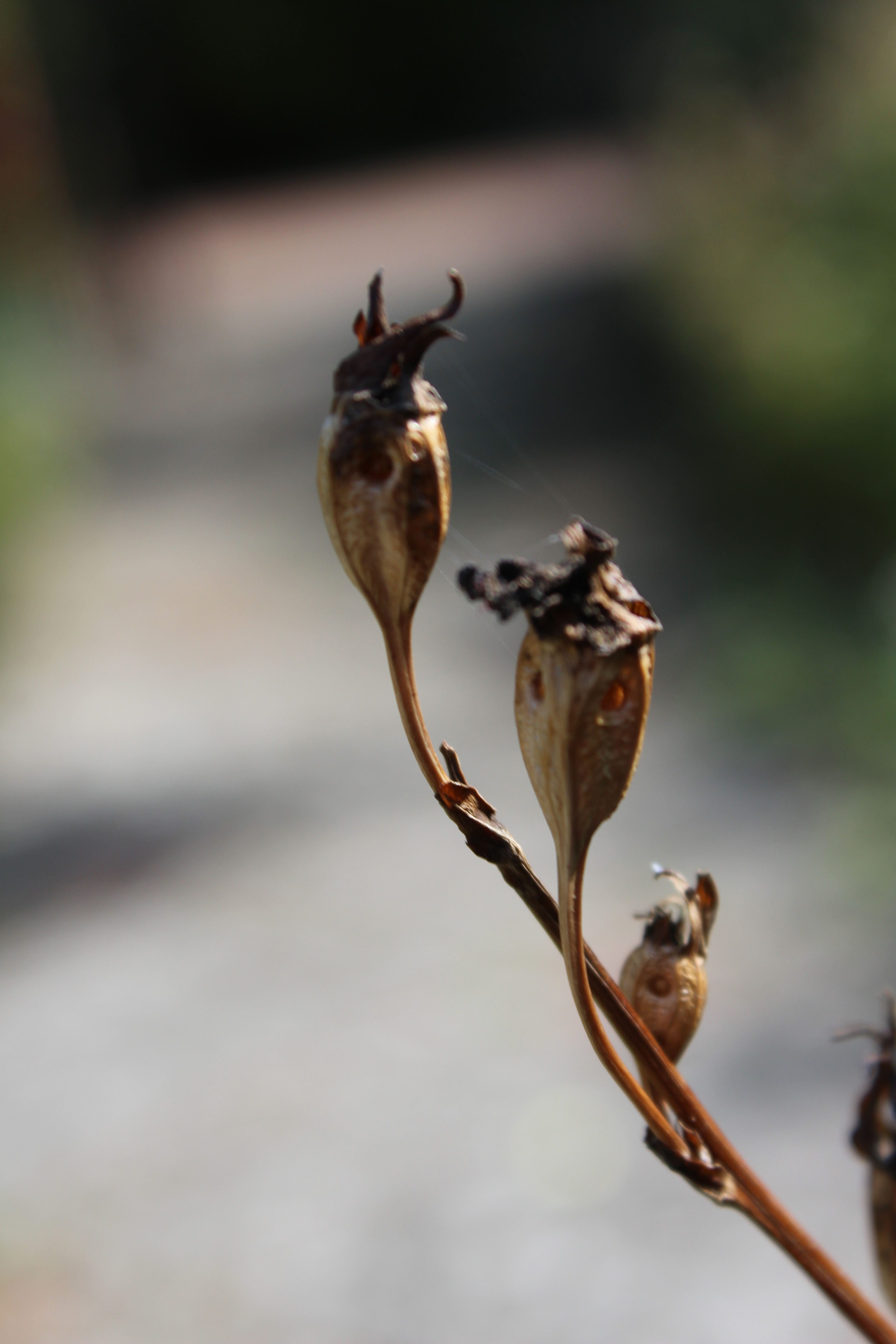
Poem: Unknown – oxeye daisy

Growing a garden which you hope will enrich and support wildlife, as well as provinding beauty for your own eye, is always full of suprises. This is no formal experiment, where we surveyed the insect and bird populations before we began to do things differently – in no small part because the process is changing and evolving and not based on a single decision point.

Last time I shared a poem with you, I hinted at the mysteries of not knowing. There are so many creatures I have no name for, yet, and I’m content to find out slowly. You can read that last poem, about the twilight creatures, here.
This new piece carries a description of an unknown insect. I’m afraid I didn’t have my camera with me, and still don’t know what it was. Maybe one day I’ll find out! (Edit 22/7/23 see end of post)

This second “Unknown” poem also holds within it a reflection on seeds, and our tendency to see things as small acts.

Unknown – Oxeye daisy

This morning, the oxeye daisy cradled
an insect I had never seen before.
Unknown, unimagined,
strange and handsome.

Long, black, elegant, with an
abdomen scriven in yellow runes.
It stroked its long, curled antennae tenderly,
as if they were locks of hair. 
Not knowing me, it knew no fear.
It did not fly as I gazed.

That small pinch of seed from last year –
tiny, dry as sand – each day brings a
new and wondrous fruitfulness,
an unanticipated beauty,
a new joy, a new abundance.
The scattering of it was
no small act, it seems.
And I am coming to think that
there are no small acts, after all.

For those of you who are interested in the readings followed by many churches, now is a time when the parable of the Sower is often called to mind – along with other seed related parables. This reflection on the scattering of seed, and the fruits that follow, draws on the insights of those stories. You could begin to explore those insights here, and here

Edit 22/7/23: In the comments below Caroline suggests it was a longhorn beetle. Here’s a picture from the Natural History Museum – a spotted longhorn beetle. It’s the one I saw! Welcome to the garden, little friend.

The Sower and the Soil, finding myself at Wild Goose unexpectedly!

Once again, I am astonished, delighted and honoured to find something I wrote has made its way in the world, and is keeping the most excellent company with Diana Butler Bass as she shares from the last day of the Wild Goose Festival in The Cottage.

Please do take the time to read her reflections, and those she has gathered. It is a rich feast, with much to refelect on. The theme of Sower and Soil seems more relevant than ever as our soils become depleted on many levels. I am very struck by Cathleen Falsani’s reflections on the parable of the Sower from Matthew’s Gospel, which really resonate with me.

You can follow the link to Diana’s post here.

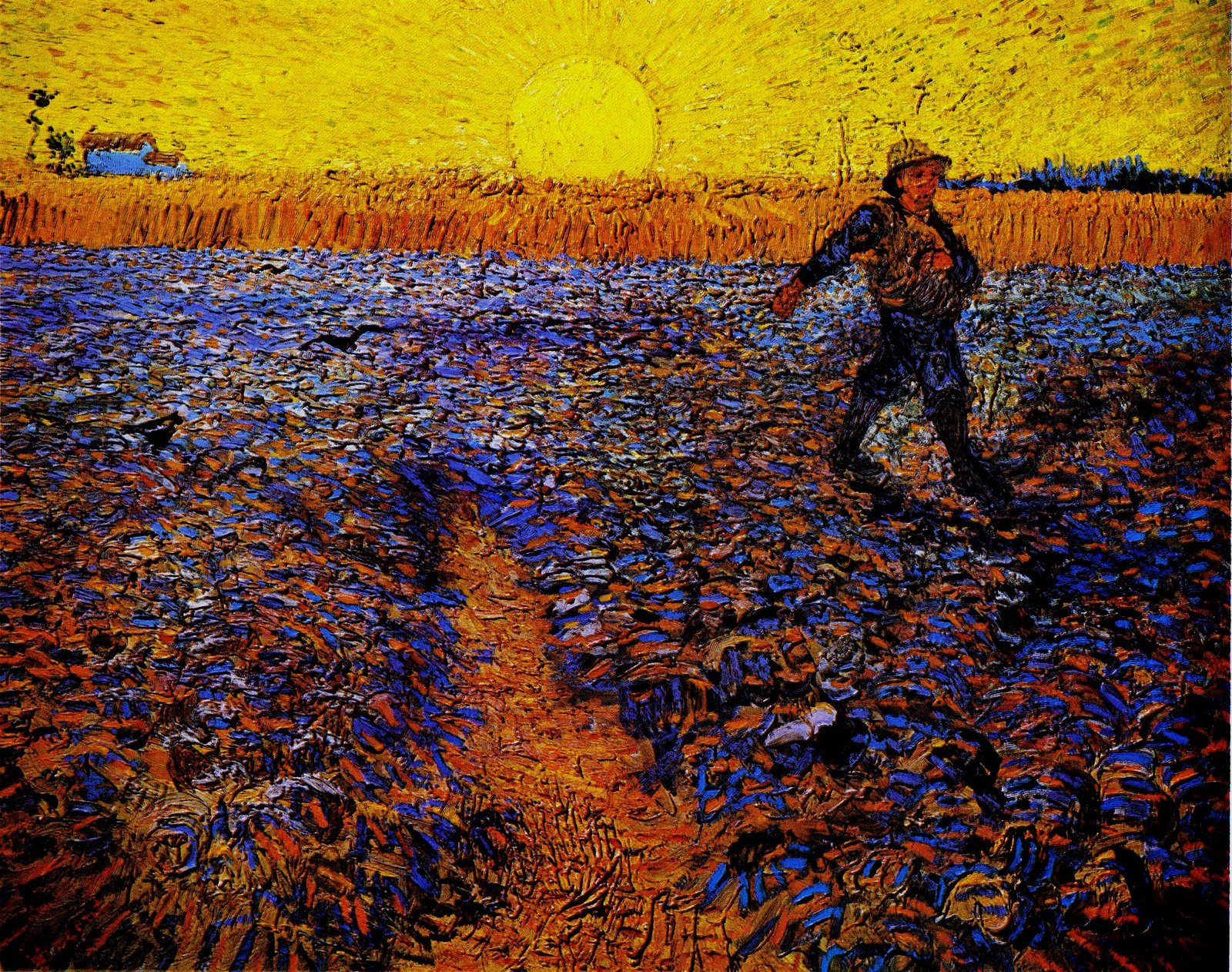
Van Gough’s The Sower

The parable is one I’ve returned to again and again, it seems to carry richer and different meanings whenever I encounter it. Here are some links to posts on the subject, in case you’d like to follow today’s readings.

My retelling of the parable is here.

More here

And the post with the blessing that Diana Butler Bass shared is here.

Thank you for joining me here on the blog. May all our soils be fertile, may we tend and care for them.

Ash Wednesday – a blessing for the soil, and some thoughts on the parable of the Sower.

I was chatting to a friend the other day – via screens, of course – and we were mulling over what Lent might look like this year. We were thinking that so many of us have given up so much, and experienced various levels of loss and renunciation over the past year, that we wondered if we could reframe our thinking about Lent. Maybe this year we need something more plainly hopeful, and nurturning of new growth. This ties in with what I have been drawn to doing this late winter season, which is contemplating the parable of the sower, with its hopeful scattering of seed, its false starts, disappointments, failures, and as the seasons roll on, hope and fruitfulness.

So I thought I’d share with you some mediations drawn from the parable as we go through Lent, and find our way through this season of preparation for Easter in our strange new pandemic world. Other nature parables may find their way in too.


Firstly, here is the parable, from my retelling.

Once, when Jesus was surrounded by a crowd of eager listeners, he told them this story.

“One dry, bright day, when the wind was still, a farmer went out to sow seed.  He took handfuls of grain from the flat basket he carried and, with a flick of the wrist, scattered seed, hopeful for its growth.  But some of the seed fell on the path, where the passing of many feet trampled it, and the birds swooped down and ate it.  Some fell on dry rock.  After the soft rains, it swelled and sprouted.  But then it withered, for its roots could find no water.  Some landed among the thorns, which grew so fast that they soon smothered the tender new shoots.  But some landed on good soil, where it grew up, and ripened. When the time was right, the farmer came back and harvested a crop from it, a hundred times more than was sown.”

After the crowds had gone, and Jesus was left with the disciples, they asked him “What does that story mean?” And Jesus answered:

“The seed is the word – God’s word.  The seed that fell on the path is like the seed that falls in some hearts – it’s snatched away by the devil before it takes root, before those people begin to believe. The seed that falls on the rocks is seed that falls where there is little depth – at first, God’s words bring joy to those people, but there are no roots, and when trouble comes their faith withers away.  The thorny places are like hearts choked up with worry, with riches and pleasures.  There’s no space for God’s word to grow. But some seed does fall on good soil – the word takes root in hearts that are ready, and they hold on to it.  In time, the word gives a rich crop in people’s lives, and they are fruitful.”

From The Bible Story Retold

As we’ve been in enforced separation, and isolation, and solitariness, I’ve felt my need for conneciton more than ever. I’ve become increasingly aware of our interdependence, interbeing even, our bonds to the whole order of things as well as to other humans. The soil is our hearts, we read, so can we find our way back to a deeper understanding of soil, and our own natures?

Last year, before the lockdowns began, when we could still travel and meet and share, I gave a talk at my old college on this parable. I’d been thinking about how Jesus invites us to consider the flowers of the field, and the birds of the air, and to learn of God from them. Aware of how much damage humanity has done to the wildflowers and the birds, I was struck by what meanings we might learn now.

Here is a small extract:

But in this story, Jesus invites us to see ourselves as soil.  Our hearts are soil. Often here we rush into wondering what kind of soil we are, whether we are good soil or  bad soil – whether we measure up to some fruitfulness criteria, or not.

I’d like to linger awhile, though, with this ancient and unattractive idea that we are simply soil. I feel it may hold a glimmer of hope.
Our language teaches us that humans are humus, made of the same stuff as earth.
And from the Hebrew Genesis story – Adam is the one formed from the earth, and the earth is Adamah: dark clay.  
Ash Wednesday reminds us of this in the context of our sin and death. Today, I want to think of how it relates to our growth, our life. We are brothers and sisters of the earth, made of the same stuff. Can we see ourselves, and the earth, like that?

If we can, we might catch at something important, an antidote to what ails us.
Perhaps the crisis we have wrought upon the life of Earth may have its root in seeing ourselves as too separate, too superior to listen to the soil, and the birds, and the weeds. 

We can learn much from soil, and we can begin with a simple truth: soil is precious, and it is being lost and degraded – possibly like the human heart.  Possibly both need a more tender and wise handling than they are getting in our culture.  Soil, whether it is under our feet, or our own hearts substance, can be improved, tended, nurtured back to health.

This Lent, I feel drawn to practices that are nurturing and hopeful, rather than austere. Even so, there is another way of looking at Lent which may be part of this hopefulness. Maybe our ancient practices of restraint, and simplicity, may have wisdom we need in our current difficulties.

In times gone by, Lent was a lean time of year, as the winter was ending.  It was a time when the world was waking up to life, when eggs were laid and young were born and cows produced milk again.  Without some restraint, this fragile new life would not have had a chance to develop.  Humanity chose to  wait until the fullness of spring, after Easter, before relieving the winter’s hunger.  This calls to mind the ancient Hebrew practice of the year of Sabbath.  As well as having a day, once a week, when people refrained from economic and agricultural activity, there were also whole years when the land was permitted to rest, and the people dependend on what the land produced. These times of rest for the land were an important practice for God’s people, nurturing their awareness of their dependence on God.  For land was less a possession to be used, more as a gift to be shared for the blessing and feeding of all.  Perhaps we can look again at this quiet, gentle living with the land.  Perhaps as we enter Lent, we can consider whether there are ways in which we can practice restraint for a season, to ensure the future flourishing of the land, and of the earth.  To see restraining our desires as a spiritual discipline is something we can turn to once again. 

As we face the degradation of ecosystems, and the loss of so much life, we can construct a form of Lenten fasting to protect and nurture the Earth, to bless the earth and all its communities of being. We are already engaged in abstaining from our pleasures and normal lives to save the lives of others, perhaps more vulnerable than us. We know how hard and necessary it is. Perhaps we can learn from this experience, and gently, kindly, nurture other Lenten practices of simplicity to promote the flourishing of all.

And so, as we reflect on the possibility of new growth as the deep snow melts, of spring and hope and lengthening days, I’d like to share with you this reflection as I put myself in the place of the sower, walking over the land. I am brought up sharp by hearing how degraded our soil has become, how future harvests are threatened by the thinning out of the complex life of the soil. I am greatful that the soil I have here is good, and that a careful spade will unearth many myriad of living things. So this reflection has meandered away from the parable, drawing on my own awareness of how dependent we are on the soil. I hope to continue to share these snatches of meditation with you as we go through Lent. I hope you will join me.

A blessing for the soil.

I bless the soil I walk on
I bless the richness of the life
I can neither see
nor understand.


I give thanks for the fruitfulness
of the earth.
I give thanks for the falling and rising of green things.
I greet the creatures, many legged, single celled,
that do the work of life-from-death.
May we protect and cherish this foundation.
May we nurture good soil.
May it be sheltered by plants,
free from rocks and thistles.

May we learn in humility what it needs.

More on Ash WednesdayRemember you are dust. This year, we have all had cause to think of our frailty. To know that we, and those we love, are fragile beings. The words of the traditional Ash Wednesday service have a new and sadder resonance this year.

If you’d like to follow my book, Jesus said I am, for Lent, you can find out more here. There’s lots of material on this blog.

Note, 25th March. This note is by way of apology. I was intending to make this a series running through Lent this year, and haven’t done so. I had a commission for New Daylight – I haven’t done anything for them before, and it took me a little while to get into the groove. That series of meditations will be published next year, also on parables. I wrote on the relationship rather than nature parables, and I couldn’t quite get my head around doing both things! I’ll tell you more about the New Daylight work nearer the time.

The Sower keeps calling to me though, there’s more to explore, and I’ll find a way of doing that with you in due course. Thank you for your patience!

Note, September 2023:

I’m delighted that this blessing for the soil has found its way to a piece Diana Butler Bass shared for this year’s Wild Goose Festival. Please do take a look at her gathering of deep and nurturing wisdom, here.

The sower, the seed, and the soil. A talk at Girton College Chapel.


IMG_0956

Last Sunday, I had the enormous privilege of speaking at Girton College Chapel. Malcolm Guite, the chaplain and poet, invited me to speak.  I’d been for the 150th anniversary celebrations last year, and Malcolm is continuing to invite Old Girtonians back this year too.

220px-Girton_College_Chapel_Window

It was so good to be back, and in the chapel which was good to me as a student.  It’s a beautiful, safe, nurturing space, and it also has a superb acoustic, which means that at evensong, you feel immersed in the roll of the music.  The choir are excellent, well worth hearing, and it was particularly good to have music by another Old Girtonian, Rhiannon Randle.  Her new work, Our Burning World, was performed on Monday.  You can read about it on her website linked above.

van-gogh-the-sower

One of Vincent van Gogh’s astonishing paintings of The Sower

Malcolm very generously gave me some flexibility to talk about what was on my mind, and I decided to follow where my thoughts, readings and prayers are taking me and talk about one of the parables.  I’ve been particularly drawn to Jesus’ parables of the natural world, curious to find out how he noticed to the flowers of the field, the birds of the air, and the work of tending soil for food.

Having driven to Cambridge through the tail end of a storm, it seemed very appropriate to be speaking from a parable of the soil. It is good to return to the gospels for wisdom, especially as humanity seems to be on the brink of a crisis in our relationship with the rest of creation.

Malcolm has kindly published the text of the talk on the College Website.  You can read it
here.

My thoughts on the parables are gradually taking shape into something, I hope it will be another book.  Sometimes, I know that there is some treasure to be dug, but I’m not sure what it will be until the digging is well underway.  So, I shall return to my digging, and see what good things I unearth along the way.


If you’d like to read more about seeds and sowing, you can look elsewhere on my blog, as below.

Sunday Retold – The Sower and the Seed 16th July 2017

November Sowing

Sunday Retold – Small Seeds, from Luke 17


Sunday Retold – The Sower and the Seed 16th July 2017

Part of the Sunday Retold series, based on the readings some churches follow, with passages from my books The Bible Story Retold and Prayers and Verses.

This week it’s

Matthew 13.1-9, 18-23,  the Parable of the Sower

Please feel free to use any of my material that helps you, saying where it is from.

The Sower (van Gogh)

The Sower  Vincent van Gogh


“Jesus spoke all these things to the crowd in parables; he did not say anything to them without using a parable.  So was fulfilled what was spoken through the prophet:


       “I will open my mouth in parables,

        I will utter things hidden since the

             creation of the world.”


Matthew 13:34-35″

I love this small commentary from Matthew’s gospel – it opens up for us all kinds of insight into Jesus’ storytelling.   Things hidden since the creation of the world are spoken out – spoken out in stories.  How extraordinary is that!

Matthew’s reference takes us right back to the beginning – perhaps we can wonder what these things hidden from the beginning are.  Perhaps Jesus is unlocking meaning, and truth, showing us a natural world which is also a mirror in which we see our own experience, and a window into the mind of God.  These parables, parables of the kingdom, reveal things about the nature of God, of the kingdom Jesus tells us is near, very near, and even within us.  Things which have been hidden, up till the moment the stories begin.

Story works, as we know, very differently on the mind and heart from rational argument.  We remember stories, they stay with us, working deep in our imaginations.  Many of us remember this one – the parable of the sower.  It draws from lived experience – or it did, before so many of us ended up so far away from the rhythms of planting, and growing, and eating.  You could even say that the story itself is, in some ways, alive.

Stories reveal their meaning slowly, over time.  The words of God can grow, unfolding within our own hearts, like the secret growth of the seeds.  Not fast food for the soul, but a banquet – it takes time.

But, why didn’t he just say what he meant? we can ask.  Not every meaning can be spoken out like that, for a start.  There are different kinds of meaning. Perhaps Jesus didn’t want people simply to agree with his point of view, or perhaps he knew they weren’t ready to hear…. not all at once.  Perhaps he wanted to hold out a possibility even  to those whose hearts had been calloused by the hardness of life – the possibility they could be transformed by a new way of seeing the world. Metanoia, the Greek word usually translated repent, means to change your thinking – change your mind in a deeper sense than we usually mean it – change the whole orientation of how you see and understand things.  Even if they could not hear the meaning when they heard the story, the story would stay with them, ready to reveal meaning when the time was right.

As we read it, it can help to set to one side what we think we know of what it means – to allow our rational thinking mind to be stilled, for a while, and to respond with the heart, with the imagination.

Stories can help us make sense of our lives, they open us up to a deeper kind of reality and truth.   When we are ready.  It takes time.  Don’t rush to an explanation.

IMG_0589


Once, when Jesus was surrounded by a crowd of eager listeners, he told them this story.

“One dry, bright day, when the wind was still, a farmer went out to sow seed.  He took handfuls of grain from the flat basket he carried and, with a flick of the wrist, scattered seed, hopeful for its growth.  But some of the seed fell on the path, where the passing of many feet trampled it, and the birds swooped down and ate it.  Some fell on dry rock.  After the soft rains, it swelled and sprouted.  But then it withered, for its roots could find no water.  Some landed among the thorns, which grew so fast that they soon smothered the tender new shoots.  But some landed on good soil, where it grew up, and ripened. When the time was right, the farmer came back and harvested a crop from it, a hundred times more than was sown.”

After the crowds had gone, and Jesus was left with the disciples, they asked him “What does that story mean?” And Jesus answered:

“The seed is the word – God’s word.  The seed that fell on the path is like the seed that falls in some hearts – it’s snatched away by the devil before it takes root, before those people begin to believe. The seed that falls on the rocks is seed that falls where there is little depth – at first, God’s words bring joy to those people, but there are no roots, and when trouble comes their faith withers away.  The thorny places are like hearts choked up with worry, with riches and pleasures.  There’s no space for God’s word to grow. But some seed does fall on good soil – the word takes root in hearts that are ready, and they hold on to it.  In time, the word gives a rich crop in people’s lives, and they are fruitful.”

From  The Bible Retold


So, I don’t want to say too much – just these few things.
I love the way the sower is generous – it is the nature of the sower to scatter the seed.  Seed is light, it lands lightly on the earth.  It speaks to me of an abundant, overflowing God, who gives, but does not impose the gift.

Secondly, I wonder about the soil.  We tend to respond to this parable individually – thinking about the state of our own hearts.  And Jesus’ interpretation points us that way. Maybe, in our communities, we can also ask what things make this soil in this place good, or poor?  Are there rocks we can remove, is there compost we can dig in, are there thistles we can pick before they set seed?  What stands in the way of  people being able to receive – for new life to thrive with them?  Is there anything we can do about it?
And, of course, we can ask the same questions of ourselves, and our lives.
We can engage in soul gardening.

Then, I have been wondering about what this word might be.

What are the seeds that Jesus is speaking of?

What did Jesus mean when he talked of the word, and of Good News?

As we read the gospels, these are good questions to hold in our minds.

Often, Jesus spoke of the good news of the kingdom of God, which is much closer than we think.  If I wonder what it is like, as well as looking at the parables, I often think – it is like the presence of Jesus – what he said, and did, how he lived, what he showed.

Transforming.

Isaiah 55:10-13English Standard Version (ESV)

10 “For as the rain and the snow come down from heaven
    and do not return there but water the earth,
making it bring forth and sprout,
    giving seed to the sower and bread to the eater,
11 so shall my word be that goes out from my mouth;
    it shall not return to me empty,
but it shall accomplish that which I purpose,
    and shall succeed in the thing for which I sent it.
12 “For you shall go out in joy
    and be led forth in peace;
the mountains and the hills before you
    shall break forth into singing,
    and all the trees of the field shall clap their hands.
13 Instead of the thorn shall come up the cypress;
    instead of the brier shall come up the myrtle;
and it shall make a name for the Lord,
    an everlasting sign that shall not be cut off.”

This is one of the other readings given, to be read alongside the Parable of the Sower.  It is worth spending some time reading it slowly,  meditating on it.

Speaking of meditating, you might like to look at the second of the Van Gogh pictures.

Notice the figure is in darkness.  Who has been a sower into your life?  Who has brought love and hope, new growth, life itself?  Can you thank them, or give thanks for them?
Are there ways you can sow good things into the lives of others – with a light generosity?
Notice the way the sun hangs over the sower’s head – does it remind you of anything? make you think anything?
How do you respond to the use of colour in the picture?
Can the light of love and goodness warm what you do today?
How do light and dark interact in the growing of a seed?

Can you nurture new life in yourself and others today?
Can you connect with living growing things?

the-sower-van-gogh

The Sower – Vincent Van Gogh

Help me to be patient as I wait for your kingdom
and your righteousness:
as patient as a farmer who trusts that the rains
will come in their season,
and that the land will produce its harvest.
Keep my hopes high.
Help me to pray to you and to praise you.

The Lord is good to me,
And so I thank the Lord
For giving me the things I need,
The sun, the rain, the appleseed.
The Lord is good to me.
Attributed to John Chapman, planter of orchards 1774-1845

We can do no great things,
Only small things with great love.
Saint Teresa of Calcutta 1910-1997

from Prayers and Verses


May the God of growth and new beginnings bless you and all you love today.


Sunday Retold – Small Seeds, from Luke 17

Sunday Retold

sowing

seed.jpg


IMG_0592

This coming Sunday’s gospel reading – Luke 17:5-7 – talks of tiny amounts of faith, faith as small as a seed, which can accomplish so much in the world. A little context is helpful here.  The verse before talks of the necessity to forgive someone, and to keep on forgiving them.   On hearing this, the disciples ask for their faith to be increased.

It is a hard task to forgive, and maybe the disciples think they need vast amounts of faith to be able to do it. These verses are difficult to understand, to see how they hang together. Perhaps Jesus’ answer suggests that, if they have any faith at all, it is enough.  His story of the servant and the master may follow on from the same train of thought.  The work of forgiveness is an everyday necessity for the follower of Jesus.  Everyday work does not require special equipment, or a special reward.  Perhaps, if we are thinking about our life of faith in terms of reward, of payment, we have misunderstood something.

The Lord’s Prayer (11:1-4),  has already been recorded in Luke – forgive us, as we forgive. There, we begin to see how the flow of forgiveness works.  We need forgiveness, and  we need to forgive.  Our own forgiveness is not a static thing, a prize to be acquired.  Neither is forgiveness conditional, but, I believe, Jesus describes a process.   This is how it works – as a flow of forgiveness.  As we join in, seeking to pass on what we receive, we become more like Jesus.  He forgives, and so we are freed to. We find the courage and humility to ask for, and give, forgiveness. We both receive and give.  It is hard work for us, but it is the work we must do every day – like the work of the servants.

Seeds have tremendous capacity coiled within them.  Small as they are, they contain all that is needed for a new plant to grow.  It is all there, already.  Jesus often uses seeds to talk about the life of the kingdom.  They seem a perfect illustration.  So small, so unassuming, they need to fall to the ground and break.  Then we see that they are in fact  breaking open, bursting with new life, with a shoot and a root and a leaf ready to unfurl.

In The Bible Retold , I have the slightly longer version of the mustard seed from Matthew’s gospel.

“How shall I tell you about God’s kingdom?  It’s like a man who digs down in the earth and plants a tiny mustard seed – it’s so small that a puff of wind could take it out of the palm of his hand.  Yet it grows and spreads into the largest plant in the garden, with branches where the birds can come and shelter.”

And here are some extracts from Prayers and Verses  to help us pray through this gospel reading.  We think of the smallness of the seeds of kingdom life in our own lives and the life of our community, and of the patience needed to wait and tend their growth.  We remember the seeds with gratitude, aware of their potential.  We think too of our own need for forgiveness, and remember it before we condemn another.

Help me to be patient as I wait for your kingdom
and your righteousness:
as patient as a farmer who trusts that the rains
will come in their season,
and that the land will produce its harvest.
Keep my hopes high.
Help me to pray to you and to praise you.


The Lord is good to me,
And so I thank the Lord
For giving me the things I need,
The sun, the rain, the appleseed.
The Lord is good to me.
Attributed to John Chapman, planter of orchards 1774-1845

I told God everything:
I told God about all the wrong things I had done.
I gave up trying to pretend.
I gave up trying to hide.
I knew that the only thing to do was
to confess.

And God forgave me.

Based on Psalm 32:5

We remember also that there are no small things in the kingdom.  Apparently small things have tremendous power.  They are enough.  What small things can you do today?

We can do no great things,
Only small things with great love.
Saint Teresa of Calcutta 1910-1997

“Don’t judge each day by the harvest you reap but by the seeds you plant.” Robert Louis Stevenson


With thanks to my homegroup – a small group who meet and pray and read gospels and sometimes cry and always laugh together. Sowers of seeds, all.