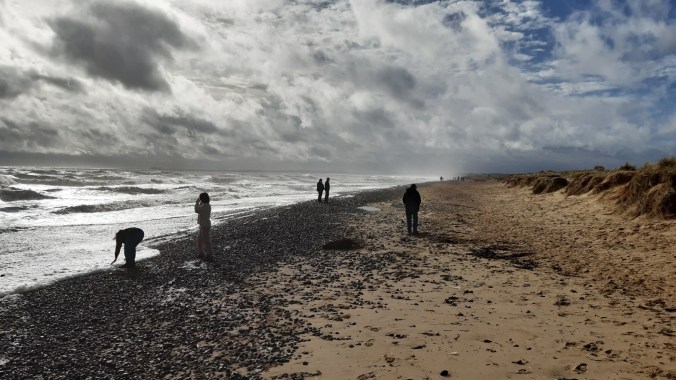
All the photos in this post were taken by my husband on a wild and stormy day at Walberswick.
This is a strange New Year’s Eve. It’s disconcerting to think how little we anticipated what this year would bring at it’s beginning. It throws our attempts at planning and new resolutions into all kinds of disarray, if we try to look ahead. So I’m attempting to leave the future where it is today. I’m trying to look deeper, at some of the lessons this year of a long pause, a long hesition. I’m noticing that there are things I can take forward…. the things I miss and therefore know their worth, the things I don’t miss as much as I expected. Knowing the value of community, connection, kindness more keenly, I’ll look for ways to nurture them in these new days. Knowing how the natural world has sustained me this year, I’ll be looking to continue to deepen my appreciating, and active care.
The poem I’m sharing with you today was written at a previous New Year. We nearly missed the foot ferry between Southwold and Walberswick while out on a long winter’s walk with our family. It ran till sunset – and sunset was upon us. It speaks of a happier time, when family could stay, when the foot ferry was open, as well as The Bell Inn at Walberswick. Today, husband and I did a long bright blue walk along the River Deben’s bank downstream from the creek, as far as you can now before the breach. It was beautiful, full of birds and ice. Little flags of ice clung on to the reeds after high tide and flashed in the sun. But I did remember this Walberswick walk, and the strange feeling of being suspended between the two shores, the two closed gates, in the hands of the ferryman whose course was sure even though it seemed to slant so across the water.
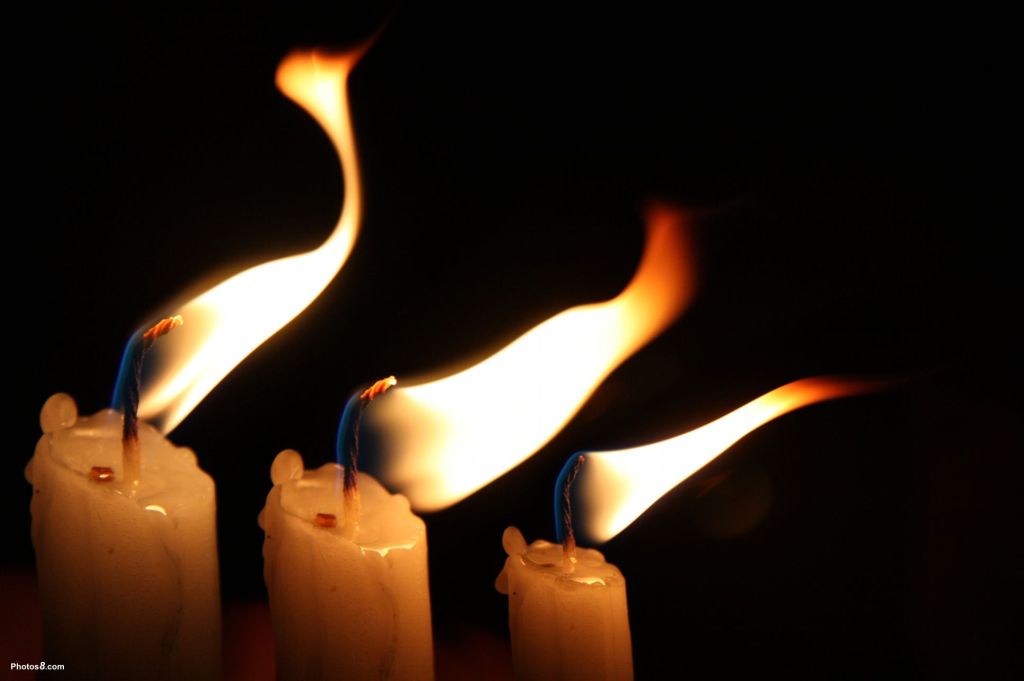
It helped me thinking about today, where I feel suspended between two shores. This year, the new shore seems further away, and harder to know. We are not used to feeling quite this adrift, and uncertain. Trust, hope, faith, love – and action drawn from these – are important now. But so is sitting with the uncertainty, with the not knowing where we are going and what we are doing. Perhaps in this space we can dream of a shore with warm, welcoming lights, with togetherness, with hope. Perhaps we may find we can be such a shore for each other, and keep lights of hope and welcome burning in the long cold nights.
I’ve shared with you another poem about winter walking along this shore, and a murmuration of starlings. You can read that here.
Crossing the Blyth at sunset, at the turn of the year.
We walked fast towards the ferry – nearly too late – and saw the ferryman on the other side, the gate closed behind him. But we waved, and he came, his blue boat a long wide curve across the river.
Behind him the setting sun, the treeshapes black against the orange sky, How beautiful it is. He helps us on board, offering me his hand with nautical courtesy, and then shuts the gate firmly behind us.
So we thank him, and our blue boat begins to churn those golden waters rippling with a fast tide, as we seem to hang for a time between those two closed gates, between those two jetties, in neither one space, nor the other. We are somewhere else instead, where all is gold, where darkness lies behind, where the lights of the houses and the wide-open pub are ahead of us, lights that warm with the hope of welcome.
We are suspended for a while in this Adnams-blue boat with the diesel and the saltsmell and the cry of the birds, bathed in light, trailing an ice hand in water the same colour as the light. Here we are. This moment. Between two moments. How beautiful it is.
It feels like disappointment after disappointment, crisis after crisis in the run up to Christmas this year in the UK. We’d carefully pieced together plans for seeing those we love, and tried to work out how to do that as safely and joyfully as we could, only for those plans to be upended when it was rather too late to make alternatives. Some of us may find that our cupboards are full, and our guests are not coming. Others, intending to be away, are finding it hard to stock up with Christmas goodies – or anything – in time.
For Suffolk folks, the Little Free Pantry at St Andrew’s Church, Melton, might offer a solution to at least the food sharing aspect of this difficulty. You can read more about the project here. It’s a very simple idea. Anyone can come and leave some food at the pantry, and anyone can come and take some food.
Leave what you can, take what you need.
So, if your cupboards are looking a bit full, and you are sad that you can’t share your food with your nearest and dearest, why not consider sharing it with your neighbours? If you find yourself in need of this and that, why not come along and have some? I find it’s helped fill a sad space to leave a few things to cheer someone else. It’s helped me to pass some Christmas cheer on. Why not complete the circle by receiving it? It’s looking quite full and festive at the moment.
Access to the pantry is via the lane to the right of the church, cutting across the end of the Rectory drive. You can see some photos of the way here.
Opening Times:
Monday to Saturday, 9 am – 4 pm Sunday, 12 noon – 4 pm Open during the Christmas holidays
You can leave items at the Rectory outside of these times. A link to the Church website can be found here.
Apologies for the blur – I still haven’t worked out how to get a clear shot while wearing a mask!
Of course, our current crisis has left people with real worries and practical difficulty in providing for themselves and their families. The Little Free Pantry is a way of neighbours showing love and support for each other at a difficult time. If you are facing hardship, there are others who can also give help. You could try the local Salvation Army, and the wonderful Teapot Project. The Teapot Project redirects food that would otherwise go to waste, passing it on. They make wonderful frozen meals, too. You can order the food at full (very reasonable) price, or pay as you feel.
With this terrible virus, our normal instincts to reach out to each other are constantly frustrated. In these very dark days, we may long to give and receive love, and support, and practical help, and not know how to do it. The pantry is in some ways such a small thing, but it is a sign of hope and of the love we long to share. And the food is not a small thing, it really does help. The fact that it’s there, that people in the neighbourhood are looking out for each other, helps too. That feeling that we are not alone is so important. Joining in with the giving and taking of the pantry connects us. Why not give it a go?
For those who are not local, there may be food sharing schemes where you live, or you could consider starting one?
We are getting close to the last Sunday in Advent, and I’m sharing again a post on it’s theme, Love. This year, I’ve been very struck by the contrast between this run up to Christmas, and what we have grown used to in previous years. There is a sadness and a weariness, an underlying anxiety, as we run our errands in masks, seeking to give each other space. It has brought up sharply the old notion of Advent as a time of darkness, waiting while hardly daring to hope, hardly knowing what we are waiting, or hoping, for.
And this year, as many of us are holding back from seeing those we love, we are experiencing in our often aching hearts how much Love means to us, how essential it is. Our very essence. So here are some readings, and thoughts, on our hope that Love still comes down at Christmas.
It’s getting close now….
It’s nearly midwinter, nearly the shortest day….
It’s nearly Christmas.
And I want to give my attention to the story, to let the wonder of it seep through me, and there is a pile of ironing, and things in the kitchen that need attention, even though I am keeping things simple, even though.
It’s easy to feel the darkness closing in, even though there are lights and music flashing and blaring out there. In here, it’s cosy, and the sun is setting already. I will hold on to the wonder of love being born among us, even though the circumstances could hardly have been less promising – for circumstances are never quite what we hoped, and there’s the lesson. To look deeper than circumstance. To make a courageous decision to hold on to hope, and peace, and joy, and love, even though. For these things are…
Here, I’m reblogging some thoughts for the third Sunday of Advent, as we draw closer to Christmas.
This week’s theme is Joy, and we consider the way joy and difficulty might be held together. We also think about how the presence of another person can help that holding. This year, that’s hard, but I’m greatly encouraged by the imaginative and determined way we’re seeking to connect with each other, even when it’s far from ideal. I have also noticed how very precious these apparently small meetings are, how amplified in their capacity to sustain us.
Small gestures, small connections, with neighbours and friends and people far away, really matter.
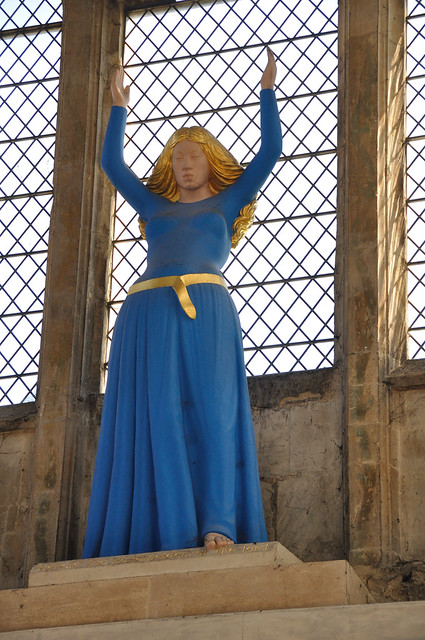
I love this contemporary statue of Mary in the ancient setting of Ely Cathedral’s Lady Chapel. I love the bright, pure colours of blue and gold, which are probably much closer to the original look than the current mellow stone. Most of all, I love her stance. It is open, powerful, ready to receive the extraordinary gift that was promised her. It is joyful – with a joy that acknowledges the reality of the difficulties to come, I feel.
Once again, this week, we have a powerful word – Joy – as our theme. Once again, we are aware that our immediate circumstances may not point to joy, but to sadness, or anxiety, or emptiness. Once again, we see examples in the stories of Christmas where people have faced great difficulty, as Mary must have done with her unexplained pregnancy. The consequences…
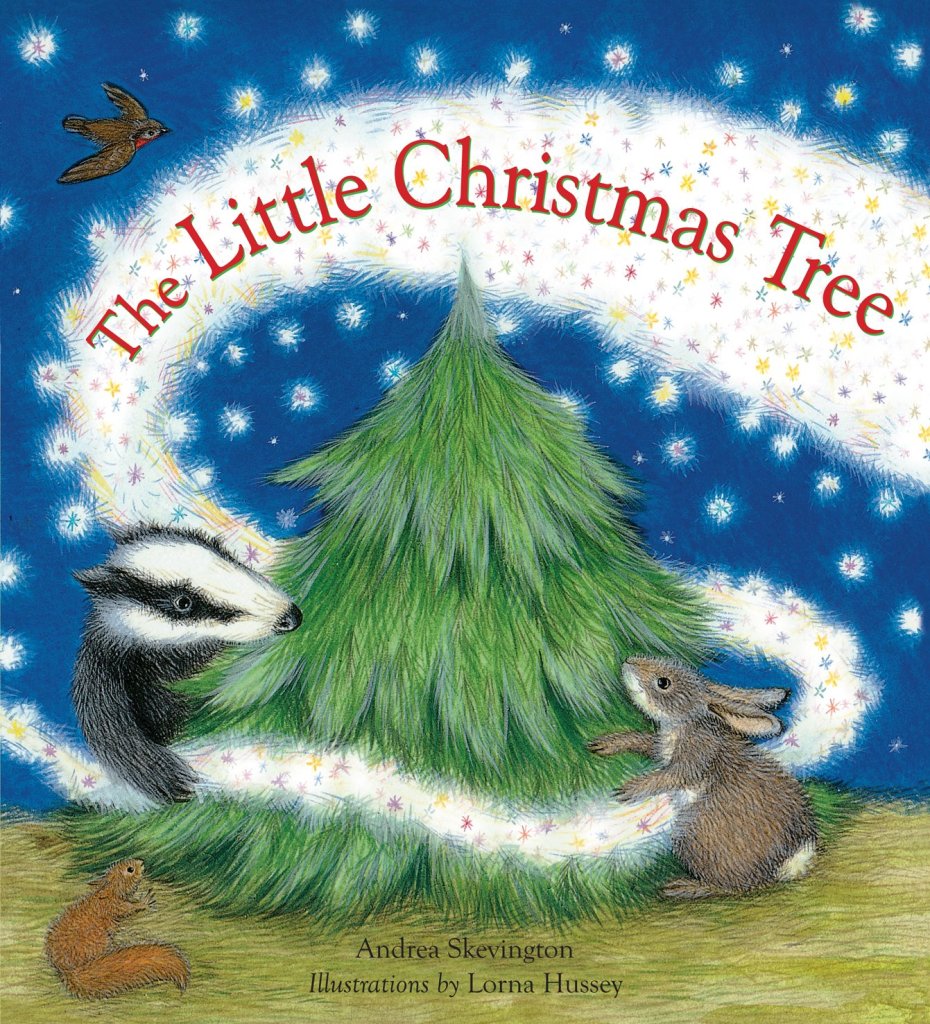
I’m really thrilled to be able to share with you that Janeene Streather has recorded a compelling and sensitive sign language telling of my children’s story, The Little Christmas Tree. It features beautiful close-ups of Lorna Hussey’s intricate illustrations of the trees and the animals.
It’s such a joy when something that emerges from your imagination finds a place in the imagination and work of another, and builds up layers of connection and resonance. And as a BSL story, it will find its way into the imaginations of others, and so continue to broaden and deepen as more people make a home for it in their Christmas storytelling.
Do take a look. It’s beautiful. If you are a teacher, parent, or member of the deaf community, this will be of especial interest, and I think everyone will find it a few minutes of gentle calm to help recentre us on the love that comes to us at Christmas.
If you would like to buy a copy, it’s very good that that bookshops are open again! It’s also available at all the usual online places, including bookshop.org which has already supported independent bookshops to the tune of £500,000 since its launch earlier this year.
Light and hope in even the darkest, coldest night. Advent blessings to you, and thank you for reading.
Here, I’m sharing again a post for the second week of Advent, when some traditions focus on the theme of Peace as we wait in the gathering darkness for the birth of Jesus.
If we look at the world around us, its sometimes a real challenge to hold peace in one hand, when there is so much trouble in the other. And yet, it’s there.
May you have peace today, this week, this Advent.
We’re drawing deeper into Advent now, the days are shortening, the cold and wet are creeping closer. Meanwhile, the shops are full of – beautiful things, and plastic tat, and carols, and cheesy music, all jumbled and clashed together as we go from one to another, and back again.
How to hold on to some kind of centre, some kind of Peace, in the midst of lists and duties and timetables and so many forgotten-to-do-in-time things? How to hold on to a centre, and to peace, in the midst of loss, and loneliness, and Christmas pasts? This Sunday, the second of Advent, sometimes takes the theme of Peace, and peace is much needed.
I wrote this when it was darkening fast – by the end I could not see the marks my pencil was making in my notebook. Darkness comes so early now, but that change into night is beautiful, and, if we can take a moment to notice it, has things to teach us too.
So I have no photo of this moment, but am offering you others from autumn, and hope that you will have a chance to look out of the window, or walk through darkening paths, and see the trees as they settle for the winter, and the birds as they settle for the night.
November trees – twilight
It grows dark. The trees are black lines against a yellow sky which shines, illuminating through a net of ink, and the last birds drift overhead to their roosts by the river, and the last birds murmur and settle in those darkening trees,
And quiet sadness creeps like frost across the grass, as the last flowers bow their rimy heads.
And suddenly, the question – What are we to do? seems a different kind of puzzle. Not one to solve, but one to lay down, in its many pieces, on the cold grass, slowly, in wonder.
All this before me knows what to do, and does it. Rooted, patient, receiving the weather like weather – whatever comes, comes.
From this place, it will act when action stirs it with the unsettling brightness of spring. When the ink stirs once more with green sap.
Until then, the cold trees will net the light, and wait, and deepen, the darkness will spread as I am learning to be grateful for this breath, to watch this red leaf spin on a thread of spiders web, to feel the cold sting me alive.
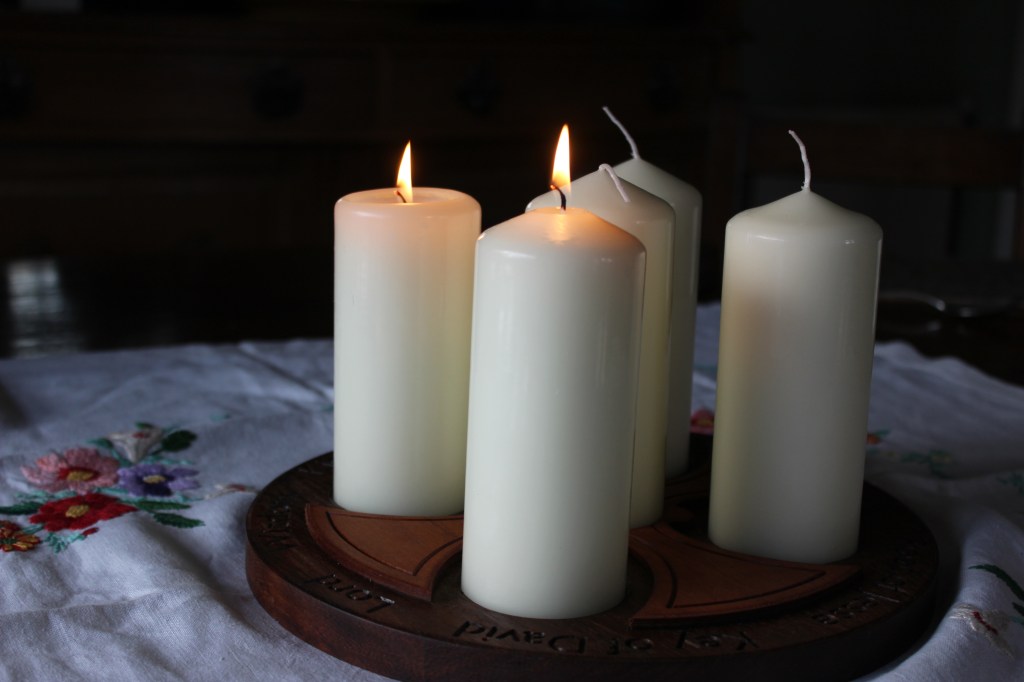
As Advent Sunday is getting closer, I’m sharing again a post on Hope. This year, we need hope more than ever, and the lighting of Advent candles can help us find enough light to live out our hopes as the days grow shorter.
Starting a little late, I thought I’d share with you some thoughts as we go through the four weeks of Advent.
This week’s theme is Hope. Ah, hope. We were talking about that in our Thursday group a few weeks ago, reflecting on how hope feels different when we hold it in difficult, uncertain times. Not as a glib avoidance strategy that it’s all fine, really, it’s all going to be fine…. but as a deliberate and courageous stance, holding on to a vision of how things could be. With politics in uproar, and the climate crisis deepening, we need courageous hope, that’s prepared to work to refashion things around us in defiance of what we see. There is real power in such acts.
During this time of darkening days, we often revisit the words of the prophets. They often spoke into desperate, unpromising circumstances with a mixture of a…
Sitting alongside my series of poems drawn from Exodus, I’m sharing retellings from my book, The Bible Story Retold. I hope this gives some shape and context to the poems, which are free meditations, drawing on what has come up as I’ve spent time in prayer with the stories. This, on the plagues, is a companion to the most recent poem, Stone Heart/Let Go.
This is a hard story. The journey to liberation for the Hebrew people passes through great difficulty. The new beginning comes after a terrible ending. It is a story of the stubborn refusal of Pharaoh to let go, to release the people. It is the story of catastrophies piling up, one on another, or of a cascade of difficulty. Some of the Hebrew scholarship I’ve looked at in researching this section of the story invites us to consider how we can usefully refect on this section as environmental disaster, where exploiting the land and labour leads to these terrible consequences. One of the traditions of Hebrew scholarship is that of midrash, where different ways and levels of reading the story are held, each one having some light to shine for us. So there are, of course, other ways of seeing things, but for me, now, this one is speaking, and illuminating a path to action..
What if we, as individuals and as a culture, let people go, released them, allowed people to do something as apparently unproductive as to journey into the wilderness, and worship? What if we acknowledged that God desires justice, and mercy, and humble walking? I wonder what that would mean for us. Perhaps there is some hope for us, as we find ourselves at a time when difficulties mount up, when things are falling apart,that this could be a turning point, part of the process necessary for things to change.
It’s a long extract, so I’ll leave it to say what it says. You can find the Exodus account from Chapter 7 to Chapter 12, if you would like to read the original. I hope to write about the last plague, but now doesn’t seem the right time. Now, I’m turning my attention to Advent, and hope. When I do write the end of the Exodus series, I’ll share it with you here, and put together a post to help find all the Exodus material together.
Ten Blows for Egypt
Moses and Aaron warned Pharaoh of the terrible things that would happen if he did not set the slaves free, but he would not listen. And so, it began.
First, they spoke to Pharaoh by the Nile as he went down to bathe. Moses and Aaron stood by the banks of the river and said, “This is what our God says: you must free our people to go to the wilderness. If you won’t listen, the river will become blood red, undrinkable, stinking. Egypt will be thirsty.”
Pharaoh turned away and carried on toward the bathing place. Then Aaron raised his staff and brought it down on the water with a mighty splash. The water swirled, thickened, and reddened, like blood, and gave off a foul smell. Fish floated gasping to the surface and died. But Pharaoh’s magicians could change water too, so he simply went back to the palace, unimpressed. He would not let the people go.
Second came the frogs. Once again Moses and Aaron warned Pharaoh, and once again he ignored them. So Aaron went around the land, stretching his staff over the Nile and all of the pools and ditches. They heaved and swarmed with frogs. The frogs came up into people’s houses, hopping on beds, clustering together on the plates.
Pharaoh was disgusted. “Yes, yes, I’ll let them go!” he said, and Moses prayed to God, and the frogs died. The Egyptians swept them into festing heaps. But then Pharaoh changed his mind.
Third came the gnats. There was the warning, and the refusal, and then gnats rose up in clouds like the dust of the destert. All people and animals were covered with bloodsucking insects. There was no relief. Pharaoh’s magicians had never seen anything like it; “This is God’s doing,” they warned him. But Pharaoh’s heart was hard and stubborn. He would not let the people go.
Fourth came the flies. “Go and confront Pharaoh on his way to his bathing place. Tell him he must let my people go. Warn him of what will happen next – the air will be thick with flies. But they will not come to Goshen, the place where my people live.” God’s words were clear, but Pharaoh did not listen. Soon the air was loud with buzzing, and every surface was crawling with flies – all the food was speckled and black. Only Goshen was free from them.
“Go on, then,” said Pharaoh. “Go to the wilderness.” But then he changed his mind.
Fifth came the animals. Moses and Aaron warned Pharaoh, but his heart was as hard as ever. All the livestock sickened and died; all the cattle, the sheep, the horses that pulled the chariots, and the traders’ camels – all dead. Only the animals in Goshen were spared.
Sixth came boils. The warning was ignored once again, and Moses threw soot up in the air right in front of Pharaoh. The soot blew onto the people, and they were covered with red, pus-filled boils. The boils spread, but Pharaoh remained as hard and cold as stone.
Seventh came hail. “This is what God says,” Moses told Pharaoh. He’s warning you: ‘You’re still building your kingdom on the backs of my people. You do not recognize my power, and so you will see more of it. I will send hail. Get everything under cover, for nothing will survive.'”
Pharaoh’s servants heard these words, and some hurried to hide their families and animals. Then the sky boiled with clouds and shuddered with angry thunder, and the hail come down. Huge white hailstones bounced on the earth, smashing everything. Nothing could survive in the open – and the crops were pummelled to a sodden pulp. But in Goshen, the sky stayed clear.
Eighth came locusts. When Pharaoh’s court heard the terrible warnings, they said, “Why don’t you listen to these men and let the slaves go? Can’t you see that the whole country is being ruined?” But Pharaoh’s stony heard would not soften, and so a terrible army of locusts marched across the ground, hungrily devouring everything that had been smashed by the hail. Not a tree, not an ear of grain, was spared.
Ninth came a heavy, suffocating darkness. The air was thick and hard to breathe. Such was the darkness that for three days and nights no one could leave their homes. All sat and talked in whispers under its weight. except in Goshen, for there was light in Goshen.
Tenth was death. Terrible, terrible were the warnings that God gave, heavy with the knowledge that Pharaoh would not listen, for his heart was set against God and the Israelites.
“This is it: get ready. After the tenth blw, Pharaoh will beg you to leave,” God said. And so Moses and Aaron went to Pharaoh and warned him of the grief that would crush Egypt if he did not let the slaves go.
“This is the final message from God, your last chance to change your mind. Listen now to God’s last warning: ‘Every firstborn son will die. From Pharaoh’s son to the son of the lowest slave woman who grinds the grain by hand, no one will be spared if you do not spare my people. When this terrible thing happens, all our people, courteirs and servants alike, will beg on their knees that you let my people go.'”
Pharaoh listened in stony silence. He would not relent
From my book, “The Bible Story retold in twelve chapters”.
This post is a follow up from yesterday’s on ideas for using my children’s picture book, The Little Christmas Tree, this year for Advent and Christmas. You can read that post here.
I’ve also been contacted by another person who’d like to use my retelling of the Bible this Christmas. My old friend Rev Jenny Tebboth of Chalfont St Giles has had a lovely idea for involving families in an alternative crib service out of doors, which should be possible even if there are restrictions. Jenny has very generously given me permission to share the outline of her idea, in case it is of any help to another community trying to plan Christmas activities…. It’s well worth thinking about if you are puzzling over what to do for a crib service, or nativity of any sort.
It’s like a treasure trail…..
“Families will work through the story in six scenes round the village, read part of the story at each scene, pray and listen to a carol – ending behind the inn for hot chocolate.”
I’m so excited to think that my retelling will form the framework for such a lovely idea. The book is in twelve chapters, and Chapter 8 is mainly the birth and early life of Jesus, so there is a good flow of narrative for the six scenes. It’s a very exciting and innovative way to do a socially distanced Christmas adventure. Being out in the cold of winter will be a powerful way of entering into the Nativity story imaginatively, and offers something new and memorable to do to feel involved in Mary and Joseph’s search for shelter, and the birth of Jesus. It’s a beautiful idea, and I look forward to hearing more about it. I’ll post an update when I know more.
If you’d like to read more of my Christmas Retold, you can do so on a previous blog post, here. There, you’ll also find some prayers from my book, Prayers and Verses, and some beautiful pictures.
Here’s some of the story, though, to give you an idea:
At last they came to Bethlehem, but it was not the end of their troubles. The city was noisy, bustling, and heaving with crowds, and Joseph searched anxiously for somewhere quiet for Mary to rest – her pains were beginning, and the baby would be born that night. The inn was already full of travellers, and the only place for them was a stable. There, among the animals, Mary gave birth to her firstborn son, and wrapped him up tightly in swaddling bands and laid him in a manger full of hay. Then, she rested next to the manger, smiling at the baby’s tiny face.
There were shepherds who lived out on the hills nearby – the same hills where King David had once watched over the flocks, long ago. The sheep were sleeping in their fold under the shining stars, while the shepherds kept watch. Their fire flickered and crackled, and the lambs would bleat for their mothers, but they were the only sounds. All was peaceful. All was well.
Suddenly, right there in the shepherd’s simple camp, appeared and angel of the Lord, shining with God’s glory and heaven’s brightness. The shepherds gripped each other in terror, their skin prickling with fright. “Don’t be afraid, I’m bringing you good news – it will bring joy to all people!” The shepherds listened, awestruck, their faces glowing with the angel’s light. “This is the day the good news begins, and this is the place. In the town of David, a saviour has been born. He is Christ, the Anointed One, the one you have been waiting for. And this is the sign that these words are true: you will find a baby wrapped tightly in swaddling bands, lying in a manger.”
From The Bible Story Retold in Twelve Chapters
If you’d like a copy of The Bible Story Retold, you may well be able to order through your local bookshop even if it’s closed. Alternatively, there are the usual online places. I’m particularly excited about this new venture, though, and commend it to you….
Bookshop.org is a new enterprise which supports local bookshops while selling online. It’s applying for B corporation status in the UK, which means it operates to high ethical standards and makes a positive contribution to communities. You can read a newspaper article about it here.
If you follow this link, you’ll find my book The Bible Story Retold on sale there. It may be they don’t have many copies, so….
You can also find it on Eden bookshops, and all the other online shops.
Once again, it’s so good to hear and share these ideas. If you’d like to use any of my material, I’d love to hear from you. If you’d like, I can share what you plan to do on this blog nearer Christmas. You are very welcome to use my material whether you get in touch or not. Please do acknowledge where it’s from, and that will be good.