An Advent “O”, and Quiet Spaces

IMG_0765.JPG


I am making some preparations for Christmas, following on from my previous post on experiencing the darkness, the waiting, of Advent.  As I’ve been doing bits about the place, I have had Malcolm Guite’s “O” sonnets in my mind, and also the ancient songs on which they are based.

I unwrapped my old twig wreath, to see that it is even less of a circle than in previous years.  But, as I turned it round, I saw it as an “O”, which seemed just right for today.  The most famous of the “O”s is O Come O come Emmanuel, which sees good for a wreath, a sign of welcome.  I thought of all the welcomes of Christmas – from Jesus in a manger,  to friends and family who come to the door.

As I was thinking this, Wendy our post person came with a little parcel containing these

IMG_0766.JPG


The latest edition of Quiet Spaces   My contribution is some meditations based on Emily Dickinson’s poetry.  I so enjoyed doing that – but I had forgotten that it hadn’t come out yet!
So, there are twelve poems, or extracts of them, by ED, followed by a meditation, a creative response, an application to take into your day.  They work as daily meditations, or combined to form a quiet day or group activity.  I’m quite excited about returning to them, with an

O


img_0767

Woodpile – a poem of fires that are to come

IMG_0760.JPG

IMG_0763.JPG

I seem to be having something of a “Dark Advent”.  This year, the early beginning of jollity and glitter have left me rather cold.  The forced expectations of everything  being right with the world are particularly jarring.  I am feeling a bit “Bah! Humbug!”,  for much of it is.

What I have discovered, waiting in the dark, is that I’m not alone here.  In fact, there is a whole rich tradition, a whole season dedicated to such waiting, and what is more, you find that there are other people here, too.

Hope, after all, is  at home in the dark, in places that really need it. Advent is the season of almost unreasonable hope. Whether we feel the sting of expectation over our material provision – the perfect presents, the perfect dinner, the perfect home – or in terms of relationships – it’s all about family, after all, sitting happily together – we seem to be missing the point.

The point, as I seem to be finding, is that we are indeed waiting in the dark.  We are waiting for God with us.  For, astonishingly, God joins us in the dark.  God does not wait for us to clean up.  God does not expect the perfect Christmas.  Jesus was, after all, born in a stable of all places, literally in the poop.  I also remember that they went to Joseph’s family town, and no one opened their doors to the disgraced Mary, except the one who lent them the stable.  Not the perfect family, either, then.   Things are dark indeed, before the light of glory blazes out.  Before we see the light that is coming, that has already come.

The first Sunday of Advent, we went to an evening service at the beautiful Ely Cathedral.  We started in near darkness, and gradually, the light of candles spread.  We sang, and heard sung, songs and readings of longing, of waiting, of expectation.  Songs sung very much in the darkness, but looking for the light. Songs of a long waiting.  It seemed to me to reflect both a great truth, and my own experience of this season.

So, this poem about my pile of wood for the winter is a poem of perhaps unpromising, dry, cold material, that will, in time, spark in our grate, and warm us.  Our local woodman brings us logs that are a mixture of off cuts from his tree surgery, and cleared wood to keep the heaths open.  It’s hard to imagine, looking at it, that it contains so much heat to be released by the lighting of one match.

So Advent, a time of waiting, and of preparation, can seem as hard as stacking wood in the freezing cold.  But once again, we find the work of hope, even unreasonable seeming hope, can bring light, and warmth, into the chill of waiting.  We’re not aiming for perfection here.  We’re certainly not aiming for pretense.  We’re aiming to lift our eyes to see that hope is coming, and we can welcome it, and be warmed by it, even in the coldest  of places.


Woodpile

I love building this woodpile,
gloved hands holding frost-rimed logs,
piecing together the structure,
small circles nestled between large –
the colours of the dry wood,
orange, deep yellow, brown bark
mottled grey by lichen,
each one speaks of the years it has known,
the weather it has withstood,
the earth where it grew.

Each tree’s wood has its own
qualities – ease of lighting,
denseness, brightness of flame,
and these I appraise as I build.

Wood bought, wood gathered,
wood cut from our place, piece by piece
the pile grows, our defence against
the cold, the long nights of winter,
the snow that has already begun.

By chill sunset my aching back,
my arms, heavy with the weight of wood,
are glowing with the heat
of fires that are to come.


The Little Christmas Tree and Mary’s Song

andreaskevington's avatarAndrea Skevington

IMG_0752.JPGIMG_0755.JPG

Today was the first really frosty day of the winter,  so I took my camera out for a walk with me, through the woods to the river.  As I walked, I was thinking about the story of The Little Christmas Tree, and how it connects with the story of Mary, mother of Jesus.  It had been on my mind since going to a talk by Rowan Williams at Grundisburgh Church (you can listen to the talk here , it is well worth listening to).

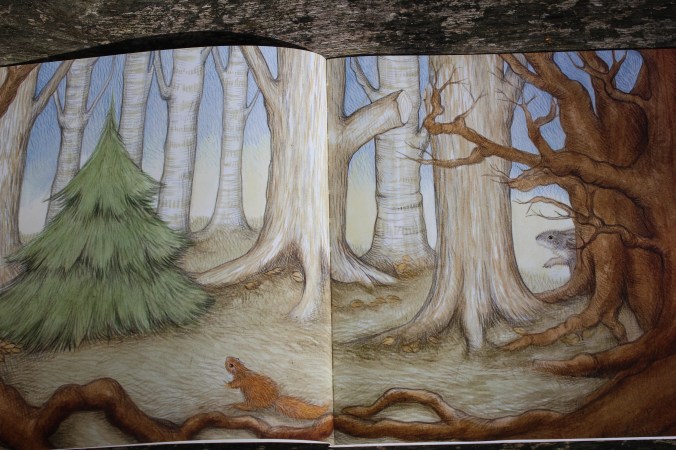
The Little Christmas tree is not strong and proud, thinking itself important.  It knows it is smaller than the other trees, and far less imposing.  What it does have to offer is shelter, hospitality, for the small animals and birds who are blown about in the storm.  It also has a song to sing, a lullaby, at which “even the wind hushed to listen”.

Early in…

View original post 427 more words

The Little Christmas Tree and Mary’s Song

IMG_0752.JPG

IMG_0755.JPG

Today was the first really frosty day of the winter,  so I took my camera out for a walk with me, through the woods to the river.  As I walked, I was thinking about the story of The Little Christmas Tree, and how it connects with the story of Mary, mother of Jesus.  It had been on my mind since going to a talk by Rowan Williams at Grundisburgh Church (you can listen to the talk here , it is well worth listening to).

The Little Christmas tree is not strong and proud, thinking itself important.  It knows it is smaller than the other trees, and far less imposing.  What it does have to offer is shelter, hospitality, for the small animals and birds who are blown about in the storm.  It also has a song to sing, a lullaby, at which “even the wind hushed to listen”.

Early in her pregnancy, Mary escapes from the storm that is brewing about her, to visit her cousin Elizabeth, who offers her refuge, caring for her as she shelters her growing child.  They, two women with unexpected pregnancies, offer the profoundest hospitality to each other, that of love and acceptance. On her arrival, Mary pours out her joy in a song traditionally called The Magnificat

Here it is from The Bible Retold

I’m so full of joy my spirit is dancing
before God, my Lord, my Saviour.
God did not turn away from me
because I am poor, and now
I will be called blessed by
all the generations yet to come
God, the great, the holy,
has done so much for me.
God brings down the powerful,
but lifts up the weak.
The well fed are empty,
and the table of the hungry
is piled high with good things.

God looks at us with kindness,
giving hope to the hopeless,
caring for those who trust him,
remembering his promises to our people.

You can read Luke’s account here

And from Prayers and Verses

O God,
be to me
like the evergreen tree
and shelter me in your shade,
and bless me again
like the warm gentle rain
that gives life to all you have made.
Based on Hosea 14:4-8

Let there be little Christmases
throughout the year,
when unexpected acts of kindness
bring heaven’s light to earth

Earlier this year we spent a few nights in Canterbury, and made evensong at the Cathedral part of of daily practice.  It was as glorious as you might imagine!  One thing that made a profound impression was hearing Mary’s song, the Magnificat, every day.  It felt a powerful reminder how God does not favour the rich, even in the richest of cathedrals, but the poor.  It helped me to see the homeless, those lacking shelter, on the streets of Canterbury, it helped to soften my heart.  I picked up a stack of gift cards from various cafes to pass on to people, after I had sat with them a little and asked them their names and their stories.  A very small gesture, I know,  but perhaps a beginning.

Cold nights make me think of those who have no shelter.Perhaps it can be part of our Advent preparations to support those who do not have a room, and have to take shelter in the most inhospitable of places.  Some suggestions are below.

Hope into Action

Ipswich Night Shelter

Porchlight in Canterbury

Salvation Army

Shelter

Habitat for Humanity

christmas tree

November Sowing


sowing


We have a couple of small veggie patches in our garden.  Maybe, when the garden was planned and the trees were smaller, they were in the perfect place.  Now, they are rather shady, and need just the right weather for things to thrive.  Leaves will grow, though, and sometimes surprisingly.

There are often some seeds left over by the end of the season, and sometimes, I feel inclined to plant anyway.  Maybe, with a mild winter, and some protection, they’ll get a head start in the spring, before the trees are in full leaf.  As I was planting, I thought about all the times when it can feel too late, hopeless.  When we can feel too old to start something, or as if we have blown our chances.  Whatever it was we dreamed of, it can seem like there isn’t enough warmth for our dreams to grow.  It can feel like planting in November with chilly fingers.

I love the defiance of November sowing.  What is wasted by taking a chance, anyway?  A few leftover seeds… and who knows? Come the spring, my veggie patch may be full of little green plants.  I may have good things to eat, and to share.


It is not too late!


 November Sowing

I planted seeds today, scraping my fingernail
into the corners of old packets:
cavolo nero, romanesco, mizuna –
such names – exotic, full leaved, sharp.

I sowed them where I sowed before,
under tall trees thick and damp with falling leaves,
remembering how spring was baked dry,
and summer was pitted with rain, lightless.

But now, today, this low slanting sun is warm.
Now, in this out of season sowing
with leftover seed, I am surprised
to find myself hopeful, joyful
even, at this extravagant gesture.

I know full well that they may never grow,
But maybe, just maybe they will.
Each day is a day for sowing,
it is not too late.


From Prayers and Verses

Help me to be patient as I wait for your kingdom
and your righteousness:
as patient as a farmer who trusts that the rains
will come in their season,
and that the land will produce its harvest.
Keep my hopes high.
Help me to pray to you and to praise you.


Pulling up trees

An autumnal version of this is happening in today’s golden sunshine. Quickly, before the seedlings lose their leaves and are just little brown sticks.!

andreaskevington's avatarAndrea Skevington

IMG_0442IMG_0444

I am sure that all of us who are have responsibility for a little bit of land know what it is to turn your back for a while, then find  it is growing with such glorious, irrepressible speed that you have no hope of getting it back to whatever plan you had.  If, like me, you have a secret preference for wildflowers and woods, it can be hard to pull things up.  I keep the runaway primroses and bluebells – but runaway trees!  Much as I love a wood, I have to remove them. The tension, wanting but not wanting order, is something I explore in this small poem.  I also touch on the more-than-reality of fairy tales, so often expressing some of the deeper workings of our spirits.

Pulling up trees

How quickly this place becomes a wood!
Last year, while I was sleeping,
seeds fell and grew, fell…

View original post 111 more words

Sunday Retold -from The Road of Tears and the Place of the Skull – 20th November


WP_20161022_14_05_46_Pro.jpg

WP_20161022_16_43_49_Pro.jpg

This week’s readings include
Colossians 1:11-20
Luke 23:33-43

The next in the occasional series Sunday Retold

Please feel free to use anything that is of help to you, saying where it is from.

For one person hanging on a Roman cross to say to another  -” remember me when you come into your kingdom” – as if this was not the end, as if the story still goes on, is astonishing.  No wonder that this man is remembered for his faith.  To be in the midst of pain and suffering of such unimaginable magnitude and yet to have hope, to try to look  to something beyond,  is too much for most of us to comprehend. Perhaps, though, it could encourage us in our own dark places to cultivate hope, and a deeper sense of deeper purposes.

The Colossians reading puts this exchange in a bigger, more cosmic, context.  Something world-changing is being accomplished in this terrible moment.  The reconciliation of all things is underway.  A new kind of life and kingdom is possible, is emerging, is beginning even here.  Signs of it are springing up in the most unpromising seeming ground.

Is there light in the darkness?  Is there hope in impossible things?  The Luke reading draws our attention to a lone voice calling out for hope when all around are voices of anger and despair.  He is just one person -but that one person is heard, and his voice echoes through the centuries.  Who knows the impact this exchange had on those who witnessed it.

One voice, speaking for the kingdom.  One voice, speaking for something bigger than the current moment.  One voice,asking for hope, believing in hope.  Never doubt the courage or the power of one voice speaking out above the chorus of anger, mockery and despair.

Could that voice be yours? Are there situations where your hope is needed?

You might like to use the pictures above to lead you into prayer.  What do they say to you?

From The Bible Retold

Two other me were led out to be crucified with Jesus at Golgotha, the Place of the Skull: one on his left, and one on his right.  So Jesus was nailed to the cross, and a sign was hung above him, saying: “This is the King of the Jews.”
From the cross, Jesus spoke slowly, painfully.”Father, forgive them, for they do not know what they are doing.”
But some among the crowd sneered, “Save yourself if you really are chosen by God.  You saved others!”
The soldiers joined in, as did one of the men being crucified with Jesus. But the other said, “Don’t you fear God, at the hour of your death?  We are guilty, but this man has done nothing wrong.”  He turned his head towards Jesus. “Jesus, remember me when you come into your kingdom!”

And from Prayers and Verses

Dear God,
May I welcome you as my king:
King of peace,
King of love,
King in death,
King of life.

Jesus, who walked to the cross,
be with us when we feel abandoned.

Jesus, who walked to the cross,
be with us when we face danger.

Jesus, who walked to the cross,
be with us when we are suffering.

When sorrow threatens to defeat us,
Jesus, who rose from the dead, be with us.

Come, O Joy:
Let heaven break into my dark night of sorrow
like the early dawn of a summer morning.


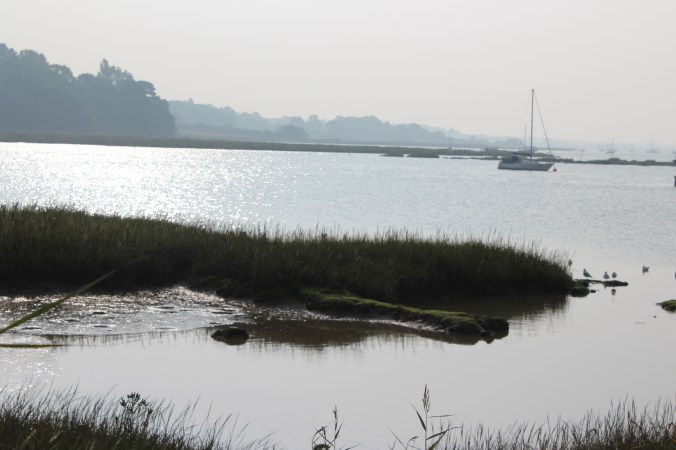
Photos by my husband Peter Skevington, with thanks.
Top – marshes by Porlock, Exmooor.
Bottom – the view from Selworthy, Exmoor.


img_0609

Mud from Coleridge’s Garden

IMG_0713.JPG

The Ancient Mariner, at Watchet harbour, where the poem unfolded in Coleridge’s mind. The rope is particularly powerful.


On our Somerset holiday, we visited Coleridge Cottage.  I was not expecting to be so overcome by the place.  Each room was full of connections to his life and work.  Each room echoed with the poems – they flowed across the walls, they came out of the earphones by easy chairs, they whispered to me out of the leaves of books.  To be in the room where he wrote Frost at Midnight  and to sit in the Lime Tree Bower  were deeply moving experiences.  I still remember my marvelous English teacher, Miss Rowlat, talking to us about the Lyrical Ballads, with its paradigm shift of a Prologue, and then to be in the place where Coleridge and Wordsworth met and talked and where these ideas came into being – was beyond words. The Ancient Mariner found voice here, too.  So much wonder in one small, simple cottage. It is not often that I am left speechless.  I was here.

Mud from Coleridge’s Garden

I picked up my muddy shoe –
an unfamiliar pale grey clay,
a leaf stuck to the instep –
and slipped my hand inside
like a glove
as I looked for a cloth

and then I stopped.
It was that leaf,
I remembered the shape –
a jasmine leaf from
the Lime Tree Bower
where I had sat speechless
as I listened to that poem
so full of leaves,

and the pale grey clay
from the damp paths,
from that grassy space
so full of ordinary beauty
it filled me, too,
despite my already full heart.

I walk with muddy shoes now,
each day,
hoping to be rooted to that same earth,
leaving a sprinkling of
Coleridge’s garden
in this lighter, sandier soil.


Grundisburgh Cribfest, and The Little Christmas Tree

img_0739

img_0741

Rev Wendy Gourlay’s beautiful collage

img_0749

from the Polish mountains

img_0748

Cardboard City Crib – some interesting characters here.

img_0745

Angel from recycled materials – Jesus is made from a book, among other things….have a look! by St Mary’s School, Woodbridge

I have just spent a beautiful morning at St Mary’s Church, Grundisburgh, Suffolk.  Rev Canon Clare Sanders and her team were putting the finishing touches to their Cribfest, which opens tomorrow November 16th.  The church is full of Christmas cribs from around the world, with such variety of figures and materials.  It glitters with precious things made from sweet papers, it is full of wood and stone in its natural state, of Russian eggs, of tiny figures and huge angels.  Each one has a story to share, something to tell us.
There is also artwork from the village art club on display in the choir, and two large pieces made of Christmas cards.  The faces and hands are cut from the inside, showing the words of love and greeting that people have sent.

The more you look, the more you see.

I was there to read The Little Christmas Tree to children from the local school which was such a joy.  One half of the class was looking at the cribs, while the other listened to the story.

Do go to visit the Cribfest if you are in the area, it is well worth it.

christmas tree

Sorrows

IMG_0658.JPG

IMG_0682.JPG

IMG_0683.JPG

Much has happened this week.  Today, Remembrance Day in the UK, I am acutely aware of the importance of keeping peace between the nations, of reconciliation and forgiveness between us, of acceptance and inclusion for all.     Reconciliation, and an acknowledgement of the sacred worth of each individual human, seem further away now than they did.
This poem is a personal one, expressing something of an attempt to keep perspective among sorrows.  I know that for many, and for all of us from time to time, any such attempt can be impossible.  I wrote to try and express  what can feel like the constant task of not being overwhelmed, and to remind myself that when I can, it is worth the attempt.

I hope it also contains a gleam of hopeful truth.  Not a truth that ignores the darker realities, but that is prepared to see the possibility of light coming in the darkness. Both are real, but I find that if I can stay with the hope of dawn, even the darkness can take on a different quality.  Actions that lead to hope seem more possible, more achievable.  It is worth living for hope, not because the things we hope for will necessarily come, but at least in part because if we set our eyes on a kind and generous future, we are more likely to live in a kind and generous way now.  At least, I find that to be the case.
To all of you who are feeling a weight of sorrow, I hope this helps. May dawn come soon.

Sorrows

I carry stones in my arms.
They are grey,
and powder me
with dry dust.
They have sharp edges
my fingers find like
a tongue with a tooth.

When I notice,
I put them down,
stand up straight

Look, the sky is full of blue,
of high white clouds,
the trees chime with
golden pennies,
and a buzzard soars,
weightless, with its thin cry.

Look, there is one last flower
growing in the cracks,
and one last bee.

Who would have thought that losses
could be so heavy?
I find them lying on my eyes
in the dark, heavy and hot,
and on my heart and stomach,
heavy and cold.

I put them down.
Seventy times seven.
The work of Sisyphus.
Again. Again.

Look, there are stars in the darkness,
a whole Milky Way of them,
there is the softness of dawn light
coming, coming.
Take courage.
Begin again.

WP_20161027_10_12_18_Pro.jpg

Photographs are from the woods above Selworthy Green, Exmoor, and the coast at Watchet.

The reference seventy times seven is to something Jesus said when asked how often we need to forgive.  I used it here for any work where painful memory or thought keeps on surfacing, and we keep laying it down. Sisyphus  refers to the Greek myth of one who repeatedly rolls a boulder up a hill, only watch it roll down again.