Day of Prayer for Creation – a Parable

In the light of the USA’s election result, and Donald Trump’s views on Climate Change and the environment, I wanted to share this story with you again.

andreaskevington's avatarAndrea Skevington

IMG_0171.JPG

IMG_0174.JPG

IMG_0178.JPG

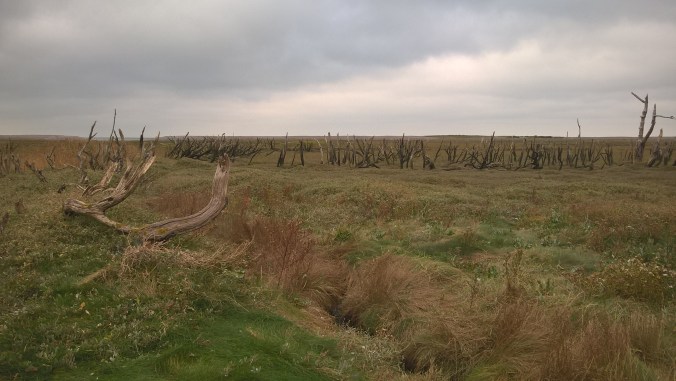
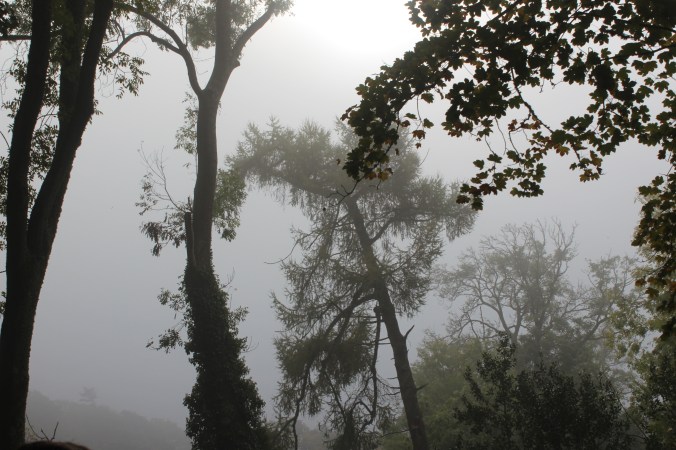
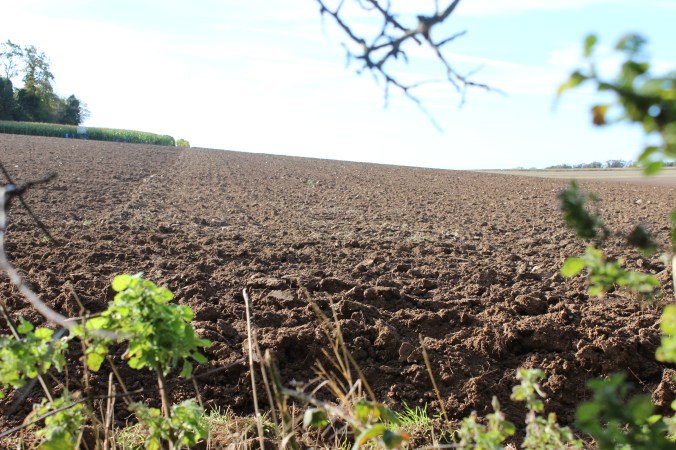
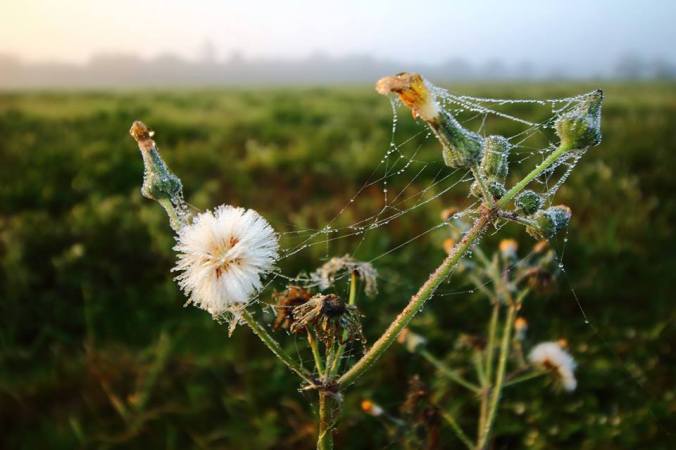
IMG_0167.JPG Photos of a walk taken near Wandlebury Ring and the old Roman Road, Cambridgeshire
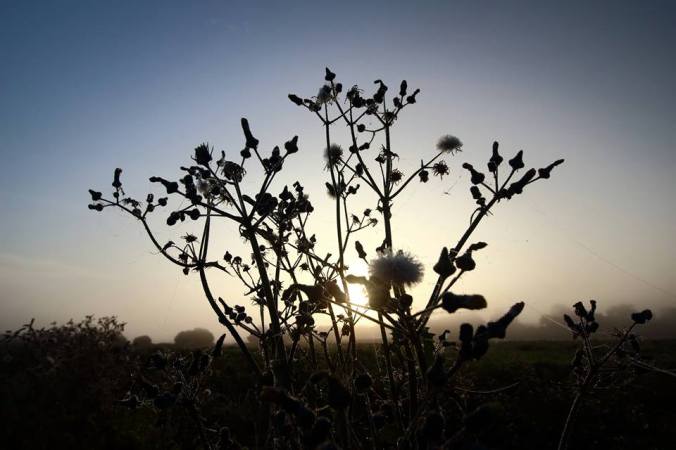
September 1st is a day when we make Creation the focus of our prayers, knowing that others around the word are doing so. It is the first day of the Season of Creation, which ends on October 4th.  As I was praying for our hurting world, the story below came into my mind. I hope it may help you, as it has helped me, focus my prayers with urgency, and consider how I can live in a way which respects the beauty and glory of Creation, and the love of God for it all.  I have found, over recent years, my eyes and my heart have been opened to both the pain and beauty of the world around me, and the many ways the natural world is honoured in Scriptures, particularly in the prophets.

Jesus invited…

View original post 766 more words

Silk


matthew-spidersilk1

c 2016 Matthew Ling

matthew-spidersilk2

c 2016 Matthew Ling


WP_20161025_18_15_59_Pro.jpg

Selworthy Green, Peter Skevington

A November poem for today –
when the days are growing darker, a poem which tells of a moment of brilliant light.

When the sun is low, and when dawn and dusk happen at times when we are more likely to be about, we can sometimes catch a moment of pure glory, like this one.
The sun hit an angle which not only illuminated the spidersilk that covered everything, but transformed it – the silk acting like a prism and splitting the light into its rainbow colours.
Everything in that plain muddy field shook with all the colours, all the light.
Even an unremarkable morning stroll can leave you breathless with wonder.
Even in dark times, we can look for the light.
Keep looking.


SILK

November – early morning –
clear sky – rising mist.
You note details, how it was
when it began,
when the spidersilk hummed with light,
the way a wire hums in the wind.

Just one or two threads at first,
then each blade of grass, each reed,
joined in strands of brilliant light.

Silver shakes and splits
into red, blue, violet.  Threads
shuddering into colours of such
brightness, such purity.

Even backs of crows
are iridescent white,
and heavy water-drops
that bend the reeds
flash indigo and orange

for a moment –
a long held breath
Then the silk turns silver again,
and then it vanishes.
Brown mud. Green grass.
A field where cows swish slow tails,
and the curlew and the heron
walk through reeds.

 
With thanks to Matthew Ling and Peter Skevington for the use of their beautiful photographs.

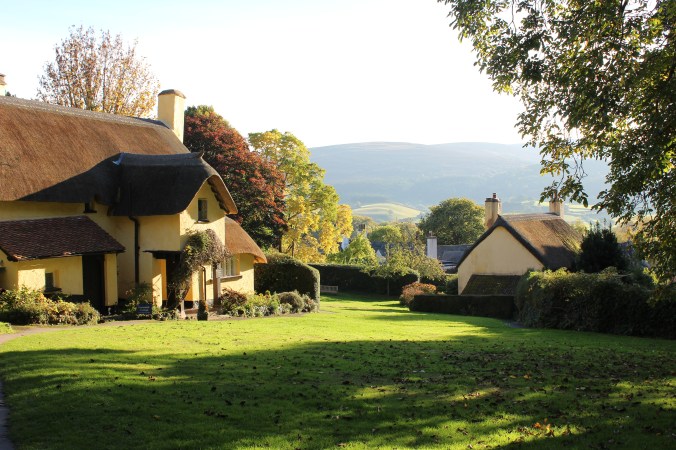
Selworthy Green

IMG_0667.JPG

WP_20161021_16_28_38_Pro.jpgIMG_0673.JPG


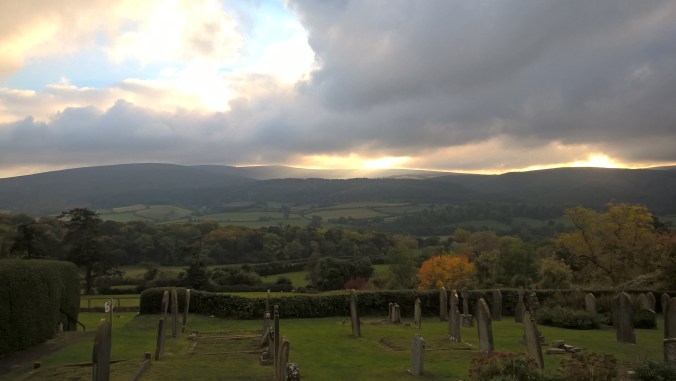
We’ve recently come back from a very tranquil holiday in Exmoor, at Selworthy Green.  Thatched cottages stand around the Green, while a little lane winds alongside towards the church.  It has views out over a valley to the moors, but itself is sheltered in beautiful, steep woodlands.  The cottages were built for pensioners, who were responsible for maintaining the woodland paths.  The tiny cottage where we stayed was home to the maid who took care of them.

Our first full day was bright and clear, and we spent all of it outside walking from our quiet base in the Green.  As the sun was beginning to go down, we sat at its highest point, and watched the light change over the hills.  My notebook came out, and I wrote this first:


Selworthy Green

Green is the colour of a stillness,
the kind of stillness
that is round and full
with a whole bellyful of life

like those apples over there,
clustered in shining handfuls
on the branch,
and the yellow green of the ash behind,
and behind that the olive of the holm oak,
and above and beyond that
the black green of the tall pines.

Breathe its sweetness,
its clearness,
as easy to a fragile body
as an oxygen mask
but with all this, all this, too.
You can’t take a breath,
can’t live,
without such gratitude
to the trees.

The Little Christmas Tree – a few pictures!

IMG_0624.JPG

img_0626

IMG_0627.JPG
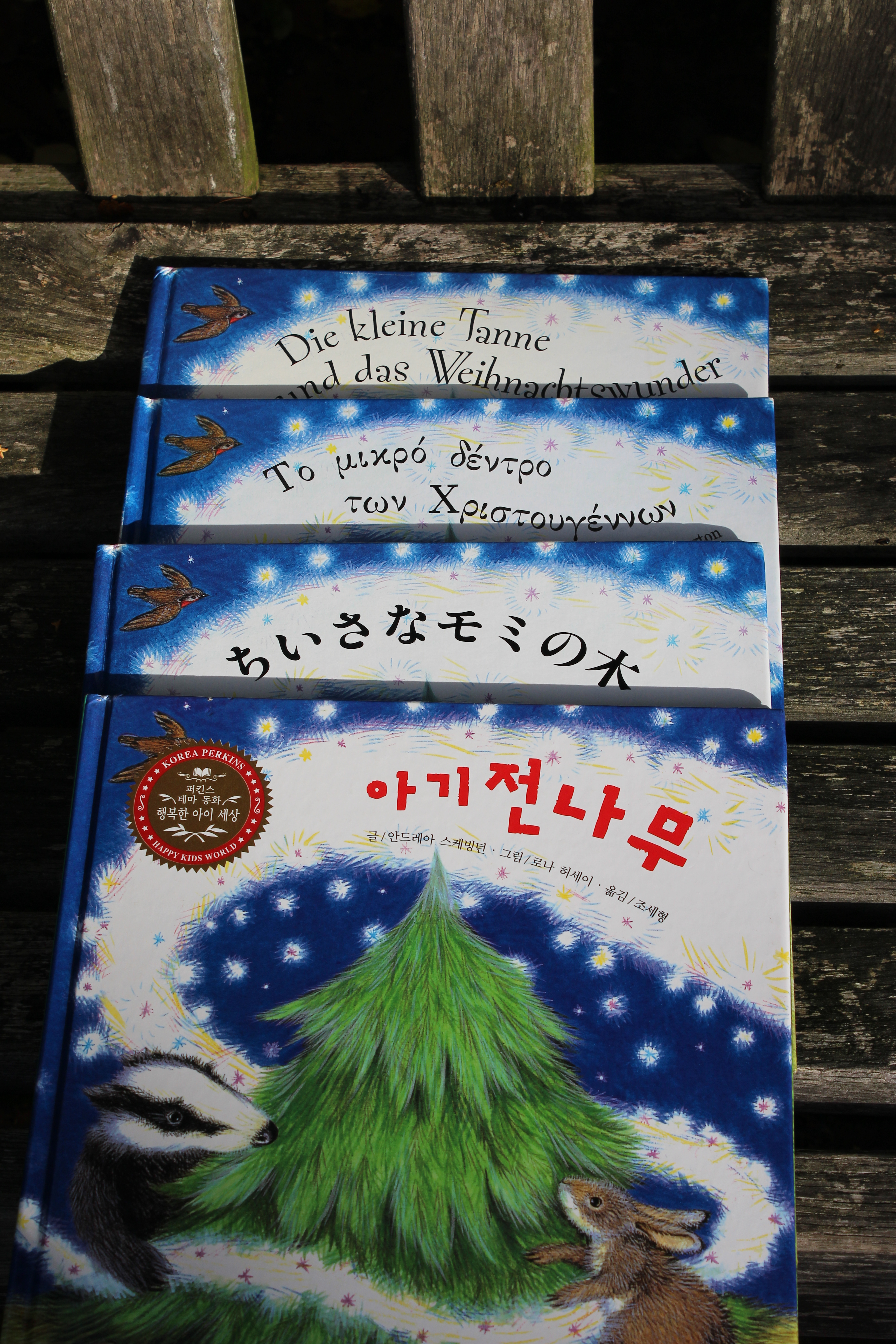
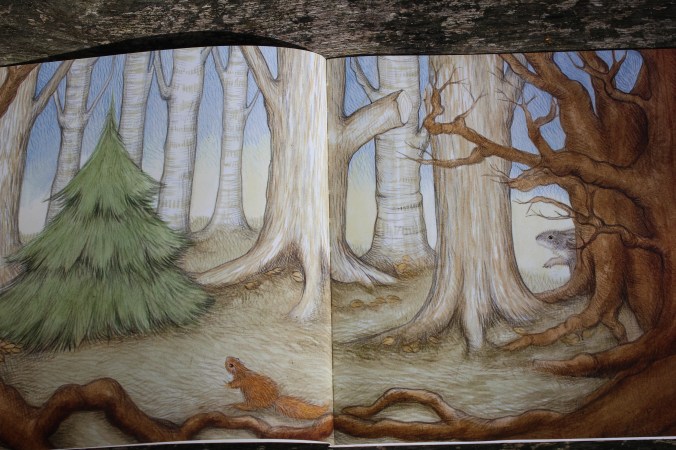
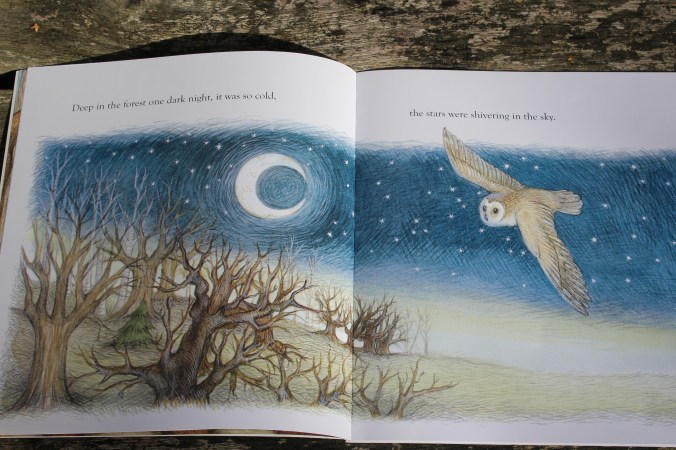
I love the illustrations for my first book by the fabulous Lorna Hussey, so I thought I would take it out on a sunny day and snap a few pictures to share with you.  She draws out the different characters of the trees so well, and the animals are delightful.  I am particularly fond of some of the minor characters, such as this beautiful owl, and the badger who appears later.

Whenever I take the book to schools, I always take the foreign editions.  The children enjoy trying to work out the different languages – and are particularly intrigued by the different scripts.  It’s a wonderful thought that the book has found  homes so far away.

I am very grateful for the way young readers have taken this book to their hearts.

The Little Christmas Tree remains a favourite of mine, too.
It is selling quite fast on Amazon at the moment, but other on-line shops and actual shops have it too if that’s your usual and it’s out of stock!  Here is a link to the publisher’s online shop

Sunday Teatime Penygroes – for All Souls Day

carmarthenshire-penygroes-emlyn-colliery

The second of November is marked as All Souls Day by many churches, following on from All Saints Day the day before.  As the nights close in, we remember those who have gone before us.  We honour their memory, and remember that we are not alone, that there is a cloud of witnesses in those who have gone before.  We treasure their wisdom and their memory.

I wrote this poem as I remembered a childhood visit to my great grandparents in South Wales.  I remember the sensation of going back in time, of encountering an entirely different age, it seemed to me.  I remembered their kindness, their gentle laughter, the way they switched between English and Welsh.

Recently I discovered something about my great grandfather that makes me immensely proud.  During the General Strike of 1926, he was arrested and imprisoned for leading out 800 miners in support of their colleages who were suffering terrible hardship.  He was a man of honour and principle, a man of deep faith.

There are many others who have gone before us, whose lives we may barely know.  Today, we remember those we do know, we remember them in the love of God.


SUNDAY TEATIME –  PEN-Y-GROES

I remember that room so clearly.
My last visit,
although I didn’t know, then.
The room was dark,
peaceful among voices.
Rich browns of paint and polish.
The black kettle over the fire.
The tick of a clock.
Two voices speaking in
two tongues of
times far back,
tunnel-dark under the earth.
The smell of coal.
The smell of baking,

The table spread.
A gold-brown velvet cloth
topped with creamy-white lace.
Best china – edged with
gold like an open Bible.  Quiet.
While through the window were
row after row of cabbages and leeks
and tomatoes, waiting in the green sun.
The henhouse was empty.
They used to scratch and cluck
they said, and smiled.
So much, so much is left behind.
This poem was first published in Poems to help you through the Week


Sunday Retold – Zacchaeus and the tree

IMG_0053.JPG

IMG_0167

This week’s Sunday Retold follows the Gospel reading set for many churches this week: Luke 19:1-10

A story about climbing trees, and looking up – among other things!

Jesus is making his way towards Jerusalem for the last time – and people still don’t understand.  They are still claiming him as theirs, and keeping out people they consider not good enough.  This man was a tax collector – a collaborator with the Roman invaders, and it would seem a cheat. We don’t know what has drawn him to Jesus, what has made him so determined to catch a glimpse of this teacher despite the hostility he faced, but we do know that Luke’s account of Jesus’ life pays attention to the way Jesus included, accepted, those who were outside – outside what was considered respectable, righteous, good.  He welcomed those others called sinners.  Perhaps the tax collector had heard this.  Perhaps there was something magnetic, attractive, full of life about Jesus.  Perhaps Zacchaeus had heard he healed people.

Here, again, we see it happening.  Jesus looks up.  He sees the unexpected – a wealthy man in a tree.  Trees contain all kinds of riches! When I read this story, I am reminded of the Genesis 3  story – where trees are important, and Adam and Eve hide in the greenery.  Perhaps there are echos here….

We see that Jesus did not berate Zacchaeus with all his cheating thieving treacherous ways, he did not confront him with his sin, he asked this man for hospitality.  He called out his goodness, he treated him as worthy, he accepted him.  If the disapproval of others had the power to make him make amends, there was disapproval enough in Jericho to do it.  He did not need to be reminded of what was wrong, but of what was right.  Jesus reminded him of his essential, elemental goodness.  He treated him as good, with kindness and respect.  He did it publicly, in the face of criticism.  He sat down with him, shared food with him.  The table is a powerful place of deep sharing.  Jesus uses the image of a banquet, a feast, again and again to show us what the Kingdom of God is like.

And see what sharing a table did for Zacchaeus – it gave him the courage to turn his life upside down, to change everything. We can imagine what it must have been like to have Jesus there, next to him, willing him on!

How good it is to know that Jesus shows us what God is like – like this.  We need not be afraid, we need not hide.  God reaches out to find, to love those people who are rejected, who perhaps reject themselves.   God’s power is at work to transform, to change lives, to make new- for all.

trees

The gospels are full of encounters between Jesus and individual people, as well as crowds and groups.  When I read the conversations Jesus has with individuals, I can’t help noticing that each one is different.  He has no formula – he deals with each person as they need. Each one is precious.

You might like to use the picture above, with the trees and the fence, as a way into prayer. What do you see?
Think about the story of Zacchaeus.  Can you remember a time when someone just accepted you as you were?  What was that like?
Have you been in a situation where you have accepted someone else like that, or seen it happen?  What was that like?
Has sharing food with someone been a memorable experience for you?  What happened?
In this story, what did God’s saving power do?  Is there more than one way of answering that?

Here is an extract from The Bible Retold
If you would like to use any of my material, you are welcome to do so, saying where it comes from.

Jesus made his way steadily towards Jerusalem. On his way he passed through Jericho, with its date palms and fragrant balsam trees.  Crowds poured out to see him, and to see the blind beggar who had been healed by the roadside.

“What’s all the commotion – come away from there and get on with your work!” Zacchaeus, the chief tax collector of the region, called out to his assistants.  They scurried back to their work, and the quiet clink of gold coins.  But Zacchaeus could not concentrate – the joy of the crowd had unsettled him.   He swept neat heaps of gold into his purse and went out.

The sounds got louder and louder.  The crowds were calling out for Jesus.  Zacchaeus tried to catch a glimpse of the Teacher, but he could not, for he was a short man, and the people would not let him through.  He ran on ahead and shinned up the stout trunk of a sycamore fig tree, sliding out along one of the branches that shaded the road.  Then he waited, watching Jesus getting closer, as he talked and laughed with the people.  Suddenly, quite close to the tree, Jesus stopped, and looked up.   Zacchaeus gasped, and tried to hide among the leaves.  Everyone was looking now.
“Zacchaeus, isn’t it?” Jesus said “You’d better hurry down from there.  I’d like to stay at your house today!”  So the chief tax collector swung down, rubbing green smears from his fine robes.  They set off together, and Zacchaeus threw open his doors to Jesus and his friends, beaming with joy.

But, the crowds were spitting with anger “Did you see that? He’s gone to be a guest of that thief, that collaborator with the Romans!”

Zacchaeus stood up before them all, and spoke to Jesus. “Look, Lord, right now I’ll give half of everything to the poor! And if I’ve cheated anyone, I’ll pay them back four times over!”
Jesus answered “God’s power is at work in this house today – the power to rescue and to change.  This man, too, is one of God’s children.  For the Son of Man came to seek, and to save, those who have lost the way to God!”

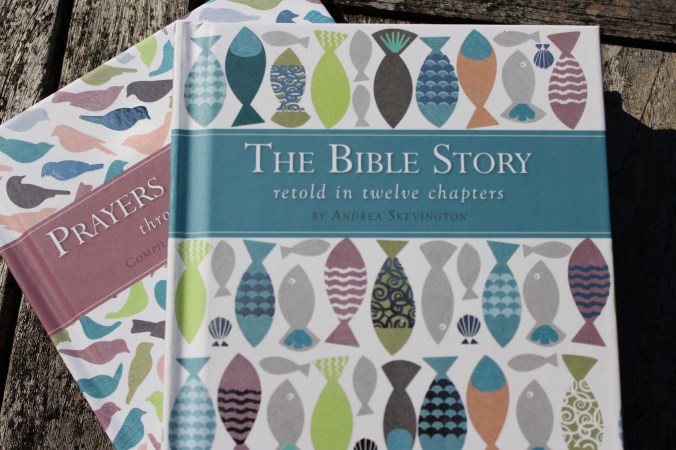
And some prayers from Prayers and Verses
to help us pray through this wonderful story

Grant me to recognise in others, Lord God,
the radiance of your own face.

Pierre Teilhard de Chardin, 1881-1955

Help me, Lord Jesus, learn who you are.
Help me learn as I try to love, and forgive,
and help others as you did.
Thank you most of all for loving me just as I am.

Jesus told us:
You are blessed when you know how poor you are inside,
for then you are open to God and his ways.
You are blessed when you are sad,
for then you will feel a loving hand on your shoulder.
You are blessed when you are gentle and humble;
you will see all of earth’s good things, there for you.
You are blessed when you hunger for what is right;
you will be satisfied.
You are blessed when you live generously and kindly,
for you will be treated with kindness, too.
You are blessed when you are wholeheartedly good;
nothing will stand between you and God.
You are blessed when you work for peace;
you will be called one of God’s children.

IMG_0609.JPG

Redshanks

IMG_0157.JPG

img_0212


redshank-11-clive-timmons_lge

Photo – Clive Timmons


When I walk, I often take a notebook, and sit and watch.  Watch isn’t quite the right word – it is more of an opening yourself up, a forgetting yourself and becoming lost in what you see before you.

This poem records a moment of change, when, with a rising wind, the birds began to fly.
I wondered what it was that moved them.  Whatever it was, it moved me, too.  I got up, and walked on.


Redshanks

Light on grey mud, grey water,
clouds high and thin.
By the edge of the river
redshanks probe thick
cold with their long beaks.

The wind breathes
over the flowing tide,
ice breath that mists
the watersheen.
And the birds begin to lift,
first the northernmost, then
up like a piece of loose lace,
flashing dark and light from
opening wings.

They circle and cry, raising
long mudsplattered legs,
wingtips close now, wheeling
the air into many breezes.

And what moved them, and what
tied them?  That pull, the breath
of wind over the water. That nudge,
seeing open wings all about them.

That longing  to fly


The Little Christmas Tree – in stock!

christmas tree


This is the very first story I wrote after leaving school – and it is still such a favourite.  It is a Christmas fable of kindness and gentleness, beautifully illustrated by the very talented Lorna Hussey.

Last year, a new edition was issued, with very festive sparkles.  These don’t show up on the photo, but they are glittering away on my shelf as I write.

You can ask your bookshop to get it for you, if it’s not in stock, or you can order it online.
Amazon UK
and
Amazon USA

Last Christmas, the book sold well in the USA, so thank you very much for your support!


October 21st

IMG_0615.JPG

IMG_0617.JPG


IMG_0618.JPG


img_0620

img_0623

This poem is a product of my not-quite daily practice – of simply writing to fill up the page.  It is a discipline learned from Julia Cameron’s invaluable The Artists Way, where she advises Morning Pages – filling up three A4 pages every day.  You are not attempting to “write” or do anything creative, you are just getting to the end of the pages.  In the process, all sorts of interesting things will happen, but that is not your concern.  You are learning to silence your inner editor, getting it to turn the other way while you are in the first tentative stages of creating.

Once you have got used to simply writing, and not reading or thinking about what we have written, after a few weeks of filling up pages, you can begin to go back and look at what you have written.  Sometimes, amidst all sorts of moaning and lists and thinking on the page, you find you have the beginnings of something.  Sometimes, it is like mining ore.  Once your inner critic learns to leave you alone, you find all sorts of things emerge, like this.

One of the things I often find myself doing is describing what I see around me.  This is what I did.  To honour the process, I have called the poem by the date, rather than giving it a subject.  It is a record of this moment, this sitting in the garden wrapped against the growing cold, writing.


October 21st

How lovely the light is, low and golden,
falling in sheets through low, golden trees.

And the birds sing now, this morning,
in a song sharpened by last night’s frost,
the first – cold, clean, white.

The red roses are scentless with ice,
petals rolled to elegant, sugared points.
And above them the tall, brown seedheads
rattle gently in a gentle breeze.

I will cut them back, but not yet.

They hold this moment, now,
in their full, dry cups, swaying
between summer’s fallen petals,
and spring’s sharp green.
And coiled inside their
tiny black seeds are
flowers without number,
scattering in the icy breeze.

Sunday Retold – Jacob wrestles

The next installment of Sunday Retold , with the readings Genesis 32:3-31  and Luke 18:1-8
An ancient, strange, and powerful story from Genesis.
My retelling , from The Bible Retold, follows:

For there it was, gnawing away at the back of Jacob’s mind: the memory of how he had cheated his twin brother, and how Esau had been angry enough to wish him dead.  He could hardly expect Esau to give him a happy homecoming after so long.  Jacob thought hard about the best thing to do.

He sent this message ahead of him: “A message to Esau from his servant Jacob.  I’ve been staying with our uncle Laban, and haven’t been able to get away until now.  I’ve prospered – with flocks and herds, and been blessed with wives and children.”  When the messengers returned they told him “Esau is on his way to meet you – with four hundred men!” Jacob blanched.   It was worse than he feared.  Quickly, he divided up his camp.  “Esau won’t get them both!” he thought to himself.  And he prayed to God, asking for help.  He also prepared presents for Esau.  They were some presents!

Two hundred female goats, and twenty male goats
Two hundred ewes, and twenty rams
Thirty camels with their young
Forty cows and ten bulls
Twenty female donkeys and ten male donkeys.

Each had a servant in charge of them.  He sent them on ahead, one after another,  to meet Esau with a rich procession of gifts – peace offerings.  Then, he took his wives and children and helped them back across the ford, to keep them safe.  That night, he wrestled with a stranger, not letting him go until he received a blessing from the man who came from God.  And the man called him Israel, which means God-wrestler.

Then, as the cool dawn began to warm, he saw Esau and the four hundred men coming towards him,  He bowed down seven times, but his brother ran to him and held him, weeping.  Esau had forgiven him, and welcomed him and his family with open-hearted love.  “Seeing your face was like seeing God smiling at me!” Jacob said.

Please feel free to use my material if it helps you, saying where it comes from.

The Genesis story is part of the ongoing family saga of Jacob and Esau, which, in itself, fits into a longer pattern of favouritism and rivalry, feuding and dysfunction.  Here, the twins are about to meet again after a long separation.  Jacob had run from Esau, whom he had wronged, and it seems he has felt the weight of that wrong ever since.  He had stolen from his brother, taken his identity and his blessing, hidden his true self in his brother’s clothes.  What would happen now they were going to meet again?

Jacob’s generosity is driven by fear, by self-interest, but nevertheless, it reveals his intent – his intent is for peace, for reconciliation if that is possible.  Perhaps, in his relations with Laban’s family, he has come to appreciate the advantages of harmony and fair dealings. After the experience of his wedding night, he now knew what it was like to be deceived with false clothing. The onslaught of gifts he sends out, each one with a servant and a message, foreshadow the relentless wresting with God that follows in the night. He does not give up trying to show his brother his good intent, he does not wait for an answer before he sends the next gift, he keeps on suing for peace.  He seems to adopt the same approach in the night vision that follows.  All night long he wrestles, he will not stop until he gets a blessing.

Maybe he thinks God is like the angry brother he has wronged.  Maybe he thinks God needs wrestling.  Perhaps, thought, this prayer is more about changing him than about changing God. He stole a blessing, and now he is fighting for one. He is still in the mindset of struggle and fight. Perhaps he still thinks there is only one blessing to be had between him and his brother, perhaps he still needs to grasp that God is generous, and has enough to go round.

He is seeking to obtain a blessing in his own right from God – and he does. Did he need to fight? Maybe he did, but I do not think God needed him to.  I think he found it hard to accept from God, after all he had done. Sometimes it takes us a long time  before we come to see the truth about our situation, our selves, before we are ready to receive the blessing.  God is not a reluctant giver, and even they give eventually.  God longs to bless, but sometimes, it is hard for us to receive.

Take some time to contemplate picture below.  What do you notice?  Might you use this picture to help your prayers?

jacob-wrestling-with-the-angel-of-god

Jacob Wrestles by Jack Baumgartner

Notice the way the hands pull back the curtain, or the night.  What do you notice about them?
There are many references to Jacob’s past. You can read the story by flicking back in Genesis – perhaps back to 25:21.  Notice, even before they are born, how the brothers wrestle.
Can you make out who Jacob is wrestling here?  Might the uncertainty be important?
The figure Jacob wrestles grips his heel – might the artist see this story as going back to the beginning of the trouble?
What do you make of the tumble of ladders behind?

Jacob's ladder

Sophy Williams, fromThe Lion Classic Bible

Jacob and Esau found reconciliation in the end, and Jacob was reminded of this night for the rest of his life by the damage to his hip.  Both brothers were blessed as a result of this determination to put things right.
Are there people we can work to be reconciled with?  Are there family disagreements we can pray for the courage and strength and wisdom to help end?
Do we dare ask for a blessing?

Some prayers for our families, and prayers of blessing, from Prayers and Verses

O Loving God,
May you bless our family,
may you keep us safe from harm,
may you protect us from anger that
leads to quarrels and unhappiness,
may you help us to forgive each other.
As we go out into the world,
may we bring with us your love and your peace.

Dear Lord,
help us to be honest and kind.
Help us to be our true selves.
Help us not to do things for our
own gain, but to work
together, and learn to put each
others’ needs before our own.

May God make safe to you each steep,
May God make open to you each pass,
May God make clear to you each road,
And may he take you in the clasp of his own two hands.
From Carmina Gadelica

Wherever you go,
May God the Father be with you.
Wherever you go,
May God the Son be with you.
Wherever you go,
May God the Spirit be with you.

May the Lord bless you,
may the Lord take care of you;
May the Lord be kind to you,
may the Lord be gracious to you;
May the Lord look on you with favour,
may the Lord give you peace.
From Numbers 6:24-26

IMG_0609.JPG