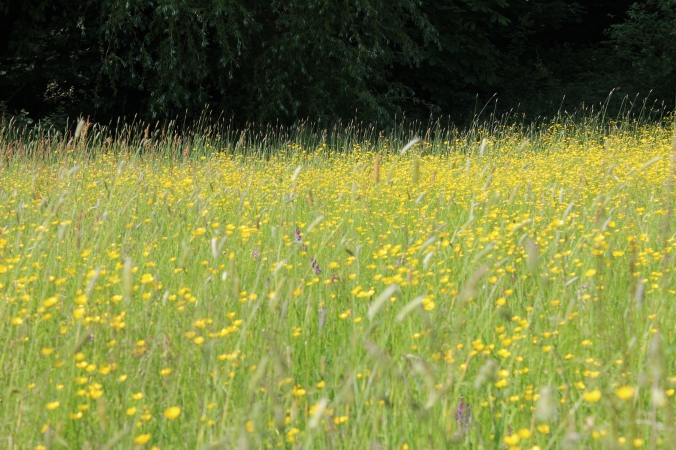
Fen Meadow – June. The power of memory.


IMG_0496.JPG

IMG_0495.JPG


As we draw closer to the end of an academic year, as children begin to think of doing things for the last time – the last time in this class, this school, with these people, I have been thinking of the poignancy of repeated things coming to an end.   Every day you do something, and then you don’t. In this case, it was the walk to school – now itself a memory.  We passed through a piece of common land within our market town.  It was the nearest place we could go to run, roll down hills, sledge if the snow was right.  Each day, if it is your time for walking through it,  you can see some change in the growth of the plants, hear the birdsong, notice the way the path dusts your shoes, or muddies them. Sometimes it felt as if we were part of the place, and certainly the place is part of me. Each time you walk a familiar path, you can bring the experience of the previous times with you most strongly, it seems. Memory can be vivid, and overlay your experience of the now, as if you are in two times at once.  I try to explore that strange, split-second sensation in this poem.

I have some photos of the Fen Meadow buttercups, and orchids, but none of the willow trees yet.  Dry weather is necessary for the mounds of seeds the poem describes, and that has been hard to find so far this summer!  If I can find a dry moment with my camera, I shall share the pictures with you.  For now, I hope the poem helps you “see” the beauty of the place.

I hope you enjoy.


FEN MEADOW  – JUNE

We have been here so many times
before – this very spot – where
white clouds of seeds drift down
from willow trees, and fill our path.

You smile, and gather mounds of
whiteness – heaping the downy
seeds like warm snow.  What if
it stays till winter? You ask

And suddenly green grass
vanishes in a blaze of white
ice: bare trees, a low sun.
Our screams and laughter are

muffled by scarves as the old sledge
tips – I run my fingers over the scar
we left on the bark – and we shiver
in the warm sun. The very spot.

The breeze trembles again in full
leaves, and all around us buttercups
shine, and dandelion stems shudder.
You pick the clocks and blow

till bedtime, counting the hours:
lunchtime, morning, soft evening.
Your breath floats high, and
hangs in the air. Waiting


Prayers and Verses – how this book can work together with The Bible Story Retold

prayers and verses cover

Today, I am sharing some more extracts from my new book, which is due for publication next Friday, 17th June (UK), and September 28th (USA and Canada).  The Bible Retold is also available on Kindle.

I thought I would show you how this book of prayers could be used alongside  The Bible Retold – the two books can be read independently, of course, but I hope you will see that they could be quite helpful, powerful even, read together.  I am drawing some examples from the second chapter.  In the retelling, this chapter covers most of the well known stories from the later part of the Bible book of Genesis

img_0225

The story opens with Abram setting out on a journey, called away from all he had known before.  The prayers focus on our new beginnings, on uncertain ways, on “Life’s journey”.

From The Bible Story Retold:

Abraham took one last look behind him at the great city of Ur, with its narrow, crowded streets, and cool buildings made of hard-baked mud.   It was his birthplace, but it would no longer be his home. His father was leaving for the distant land of Canaan, and Abraham was going with him.  So they set off, with Abraham’s wife Sarah, who was childless, and his nephew Lot, who was an orphan. When they had travelled as far as Haran, they stopped and settled: their dreams of reaching Canaan fading with the passing years.

“Get up! It’s time to go!” God said to Abraham.

From Prayers and Verses:

As Abraham set off for an unknown land, so we begin each day, and each journey, knowing you are with us. Bless us on our way, and make us a blessing to those we meet.
Dear God, Help me to find the right way to go, even though the gate to it be narrow, and the path difficult to walk.

As the retelling of Genesis continues, we encounter squabbles and rivalry, deceit and betrayal in the families whose story we are following.  The prayers turn to our own families, how we can live together with love, peacefully.

From The Bible Story Retold:

Esau boiled with anger against his brother. He fumed and stormed among the tents.  “As soon as my father is dead, Jacob will be a dead man, too!” he roared.  Rebecca heard him, and urged Jacob to flee to his uncle Laban’s lands.  Isaac blessed him again before he left, and told him to find a wife among his Laban’s family.

He went alone, travelling until it was dark.  Shivering in the chill of a desert night, he took a stone for a pillow, and lay down to sleep.  As Jacob slept, a dream came to him.  He saw a ladder, with its feet on the ground, stretching up and up to heaven.  In his dream, he watched as God’s bright angels travelled up and down it between heaven and earth.  And in his dream, God himself was there.

From Prayers and Verses

Help us, like Jacob, dream of angels.
Help us, wherever we wake,
know that you are there, too.
Help us to see with new eyes.


I give thanks for the people who are my home: we share a place to shelter; we share our food; we share our times of work and play and rest.
May we provide one another with love, encouragement, respect, and wisdom: through laughter and celebration, through tears and troubled times.
May we be to one another roof and walls, floor and hearth, windows and doors.


Dear God,
Give us the courage
to overcome anger
with love.


I hope these extracts give you a little flavour of how the stories can flow into prayers.
If it helps, please do use them, saying where they are from.

Prayers and Verses – for a new day

prayers and verses cover

UK publication date – Friday 17th June 2016                                     US Publication date – 28th September


IMG_0243

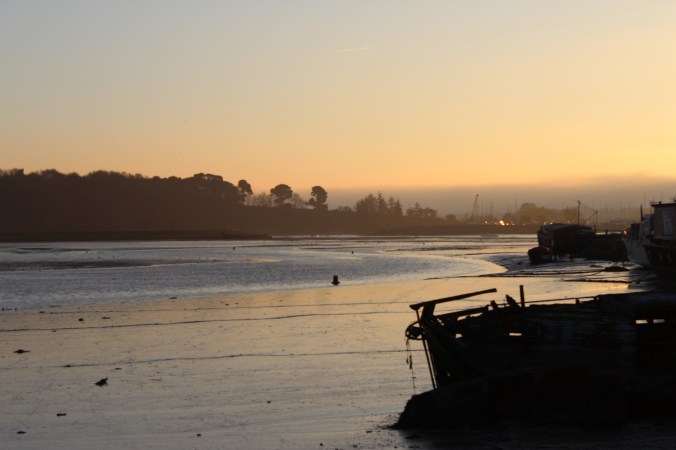
The River Deben in Suffok, one of my favourite walks.

So, it’s nearly time for this collection of prayers to be delivered into the world.  It’s very exciting!

Last summer, I spent much time reading through books  of prayers, and writing my own. It was a very precious time as I was immersed in the prayers of great souls from many centuries, and seeking to find words that would resonate this day, and in the days to come. For any book, especially a book that will be read by the the young, is an exercise in speaking into the future.

This book, Prayers and Verses through the Bible, is a companion to The Bible Retold.  Both  are in twelve chapters, and this collection of prayers picks up the themes which emerged in the retellings.  The first chapter of Prayers and Verses, called Beginnings, invites us to pray for the world around us,and express our love and care for it. As I was writing The Bible Story Retold, I felt the theme of the land as a blessing, as our source of daily food, as both a gift to be treasured and a provision for the future, emerging in a fresh way. For me, God’s love for and delight in all that was made shines through, and later on, the prophets speak of the love and delight of creation, too.  These first Chapter One prayers seek to open up these thoughts, and help us speak them. Another important part of this first chapter is morning prayers – for our own new days, new beginnings.

My hope is that the book will be accessible to the young, but also a blessing to those of any age who are looking for words to make their own.

Here are a few prayers and verses from the first chapter to bless your day.

God, source of all light and life,
help us to see your hand at work
in the beauty of creation.
Help us to know that, in you,
the whole earth is holy ground.
O Lord,
Your greatness
is seen
in all
the world!
PSALM 8:9


Day by day,
dear Lord, of thee
three things I pray:
to see thee more clearly,
love thee more dearly,
follow thee more nearly,
day by day.
RICHARD, BISHOP OF CHICHESTER  (1197–1253)
In all my thinking and speaking and doing
this day,
Help me be loving,
help me be peaceful,
help me be kind.


Three Days


blackbird2

Photo from Flickr, photographer unknown

IMG_0485.JPG

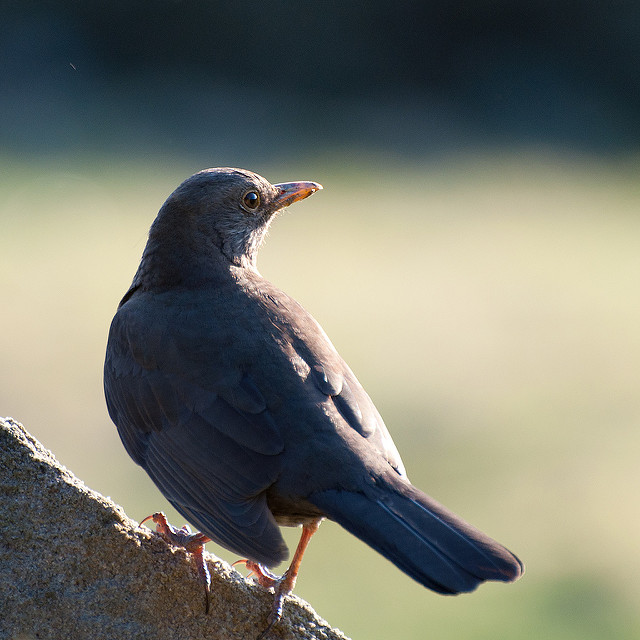
I have been transplanting buttercups into the verge at the front of our house, where there is no pavement, and have been thinking about boundaries – in particular the contrast between the rather wild garden, full of life, and the fast road outside.  This poem, written a few years ago, came about as I watched a female blackbird mourn the death of her mate.  She kept vigil for three days, and then she went.  I did not see her again.  It made me think about not only the intensity, the reality of each creature’s experience, but how often we live in our own enclosed worlds, isolated from each other, and how hard it can be to cross those boundaries.   How hard to credit and acknowledge the fullness of the lives around us. To begin to do so, to begin to see and understand another,  seems to me an important step to take.


Three Days

She stayed by the side of the road,
her brown feathers ragged,
stayed by the place where her mate lay,
black against the tar,
one wing lifted,
catching the breeze –
the passing of many cars.

Startled, sometimes,
she scuttered away into
the green growth,
then returned,
holding her head on one side,
but always she was there,
for three long days
and, for all I knew, nights.

What was the quality of her grief,
of the bond that tied her there?
We know so little of each other,
the unknown world folded
inside each being.
I walked humbly then,
knowing only to be kind.


The faith of a Roman

bible retold cover

This Sunday’s readings include a story from Luke’s gospel, of faith in an unexpected place.  The Romans were an occupying force in Israel, and a centurion was a military officer enforcing Roman rule.  It is good to see how Luke records this example of God being at work in unexpected people.  In that category we find not only the Roman centurion – but also  the Jewish elders.  They can recognise that this man, an “unclean” gentile, outside their own people and laws, is “worthy”.  Often the religious leaders seem narrow, legalistic, small-minded even, but not in this instance.  They see something good, and they speak it.  The centurion’s support of their synagogue might be genuine interest in their faith, it might be good politics, but he is honoured whichever it is.

It is good to look about, and see God at work in unexpected people.

Below you will find my telling, in an extract from The Bible Story Retold
If it is of help to you, please feel free to use it, saying where it is from.
The gospel reading is Luke 7:1-10


The centurion stood with his hands behind his back, watching his most loyal servant’s dry lips as they moved without sound.
“That’s enough!” he said to those who were trying to coax him to drink, and they slipped back, away from the couch.  For a moment the centurion leaned down, his ear close to the man’s mouth, but his breath was growing fainter.  He was near death. The centurion strode out to the courtyard and looked up at the road.  He saw Jesus in the distance, with his followers behind.  Quickly, he spoke to the Jewish elders who stood by the gate, and they turned and walked towards Jesus.

“Rabbi,” they said “we come to see you at the request of the Roman centurion stationed here.” The crowds watched Jesus carefully – what would he do?  For the Roman soldiers were an occupying force.  They were the enemy. “As you know, this Centurion has treated us kindly, paying for our synagogue.  Now his servant is very ill, and he asks for you to heal him.”  Jesus did not hesitate.  He quickened his pace into Capernaum. As he came close to the army garrison, the centurion’s friend came out with a message. “Sir, the centurion sends you this message: ‘Please don’t trouble to come into my home. Just say the word, and my servant will be well.  I’m a man of authority.  I give orders, and they are obeyed.  I know you, too, are a man of authority – at your command, the illness will leave.’”

Jesus stopped, and turned around to those following.  “Do you hear that?” he asked “I haven’t found such faith in all of Israel!”  Then, as the friend returned to the garrison, they all heard shouts of joy, and laughter.  For the servant had been healed.

The ‘Mary, at your feet’ poems – Three

mary-anoints-the-feet-of-jesus-by-frank-wesley

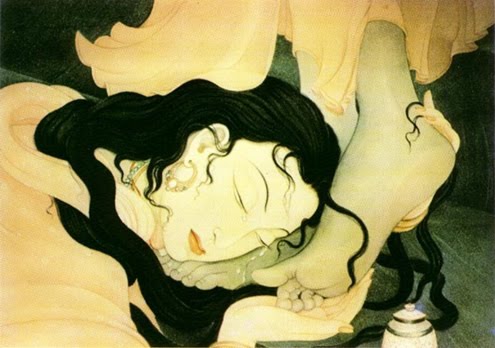
Artist – Frank Wesley

This is the third and final ‘Mary, at your feet’ poem, which tells of an evening in Bethany, at the home of Martha, Mary and Lazarus. Jesus is there, too. They are holding a feast to celebrate Lazarus coming back from the dead, and, it being near Jerusalem, they are joined by many others.

I found some spikenard on line, the closest I could find to nard, the rare perfume Mary pours over Jesus, and burnt it as I meditated on the story. It is pungent and earthy, an intense fragrance. As I meditated, I remembered all the times that Jesus had told stories of the Kingdom involving feasting, and banquets, and how he left us a shared meal to remember him. This particular banquet, celebrating a man coming back from the dead, seems like that.

I thought of Mary giving something so costly out of love, I thought of the other story of a woman anointing Jesus’ feet (Luke 7:36-50). And I remembered that Messiah means anointed one, and that the only earthly anointing Jesus receives is like this, at a feast, in an outpouring of love and gratitude.

This poem, too, was read at the Alive festival 2014, and I used it as a starting place for prayerful writing with a group of people. We burned spikenard, and imagined ourselves into the story. Some beautiful work resulted. People were able to connect with times when their life had been restored to them in some way, with times they were grateful, and wanted to pour our love and thanksgiving. For others, they felt they were outside, looking in at the feast.
In this poem I see the doors wide open, like the gates of the city in the book of Revelation (21:25).

You can read the first poem here
and the second one here

Mary, of Bethany, at your feet a third time

And so you come once more to Bethany,
and share a meal with Lazarus,
a resurrection feast,
foreshadowing, foreshining
all those kingdom feasts you told of:
wedding banquets with long tables
set wide with good things,
with room enough for all,
welcome at your table.

Now, in Bethany, the house is ablaze with light,
shutters and doors thrown open,
all wide open with joy unspeakable,
music, laughter, dancing, wild thanksgiving
for one who was dead is alive again,

And all night, while crowds pour in from Jerusalem,
the feast goes on, and on,
as Mary enters now, cheeks glistening with joy,
past her brother at your side, back from the grave.

She kneels at your feet again,
pours out extravagant nard,
scandalous anointing of your warm, living feet,
unbinds her hair and lets it flow like water
over them, wiping them in such reckless
and tender thanksgiving.
Fragrance fills the room, the house, the night,
as more people pour from Jerusalem to you,
to you, who comes to us in our weeping,
who shares our bread with us,
and brings us to such joy as this.

John 12:1-11

I am greatly honoured that this poem was read at the Good Friday Service of the Riverside Church, New York.
The whole service is recorded. The poem appears at about 21:50
You can see it here

Note, March 2024:

I am delighted this poem was shared by Diana Butler Bass on her substack.

https://open.substack.com/pub/dianabutlerbass/p/halfway-through-lent-mary-magdalene?utm_source=share&utm_medium=android&r=46vqv

The ‘Mary, at your feet’ poems – Two

Lazarus

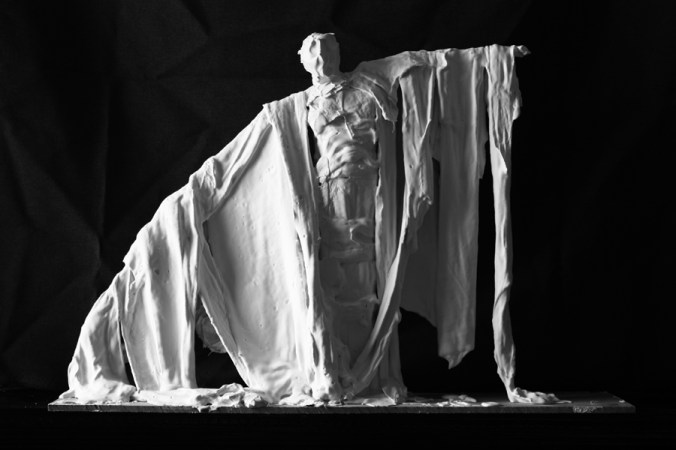
Lazarus, by Jacquie Binns, with her permission.

We come to the second in the ‘Mary, at your feet’ sequence.  This, too, was read at the Alive festival, 2014.  It contains a bigger reversal than a poem can hold – from death to life, for it draws on Mary’s response to the death and raising of her brother Lazarus.

Martha went out to meet Jesus when he finally arrived, and their exchange is sorrowful and powerful and contains words of life and hope.  Mary stays inside, and when she finally goes to Jesus, we feel the depth of their mutual grief. In John’s gospel, where we find this account, the raising of Lazarus plays a crucial role in the events that lead to the crucifixion – the themes of death and life, life from death sound like a returning motif in a piece of music. Here, standing by Lazarus’ tomb, Jesus weeps with Mary, in the company of many who also grieve there.  And then, everything changes.

I am very grateful to Jacquie Binns for permission to use this photograph of her work. She is a textile artist and sculptor of rare vision, and it was an honour to meet her a few years ago, when I saw this piece. It is haunting and breathtaking.  I was particularly struck by the whiteness of the bindings, the light and whiteness seem so cold.  The set plaster holds the fabric grave-clothes in this one moment when the viewer sees Larazus for the first time, before we begin to know the power of what it is we see.

You can read the first poem in this sequence here.


Mary, sister of Lazarus, at your feet a second time

She sits in the shuttered room,
the room where her brother had laid,
dying, dead, the messengers sent out
returning empty, with no reply,
like prayers that bounce  off ceilings
or stick to the roof of the mouth,
choking with sorrow.
When you stay by the Jordan
that shuttered room is where Mary stays.

This is her shadowed valley, the dark forest of her path,
foreshadowing yours, it is all foreshadowing you.
The room where her brother had laid,

how can she ever leave it now?

But leave she did, at last, when you called for her,
she came quickly, running, trailing darkness behind
her weeping.  Mary, once more at your feet,
and when you saw her weeping, you wept too.

You know us in our grief.  You come to us, call to us.
In our darkest, most shuttered places,
your spirit moves, breaks with ours.
Death lay heavy upon you, too, and all the sooner for
this, what you do now, standing before that tomb.

For now, you who are Life,
Word made warm and beating flesh,
and weeping,
call Lazarus out,
You, who are life, and will rise,
call out one who is dead from the cold tomb.
You watch as they run to free him from the graveclothes,
pull darkness from him, calling in strange bewildered delight,
and you see Mary’s face as she sees now,
her brother, who was dead, once more in light,
astonished, seeing your glory, part of your glory,
as she weeps again, is weeping again
breathless with joy.


John 11:1-50

You can read the third poem here


The ‘Mary, at your feet’ poems – One


Two years ago, in May, I was thinking about the three times Mary of Bethany was at Jesus’ feet.  One story is recounted in Luke, the other two in John, where they are a part of the extraordinary Lazarus narrative.  I wanted to explore them more, and I did so in what turned into a series of three poems.  I read early versions of these poems at a local Christian festival, Alive, and as the time of year comes around again, I find I am remembering them, and going back to those thoughts.  I share the first one with you today, and the others will come in their own time, over the next week or so, as I continue to turn them over in my mind.

This first one draws on the story in Luke’s gospel where Jesus visits the home of Martha and Mary, and Mary sits at his feet.  I have not referred to Martha directly, except for in the title.  I do feel her lack. I wonder, in particular, what happened next.  Maybe there are some poems to write about her, too.

There is so much to ponder in this story, but what caught my attention was how hard it is for us to be still, to be.  We are so distracted, so pulled by so many things. We can end up  feeling that those things are what define us. That it is what we do, or think, or believe, or  how people view us that makes us who we are. Just being doesn’t seem enough, but our efforts to be more or different or better than we are can be life-sapping.
Acceptance can be hard to accept!

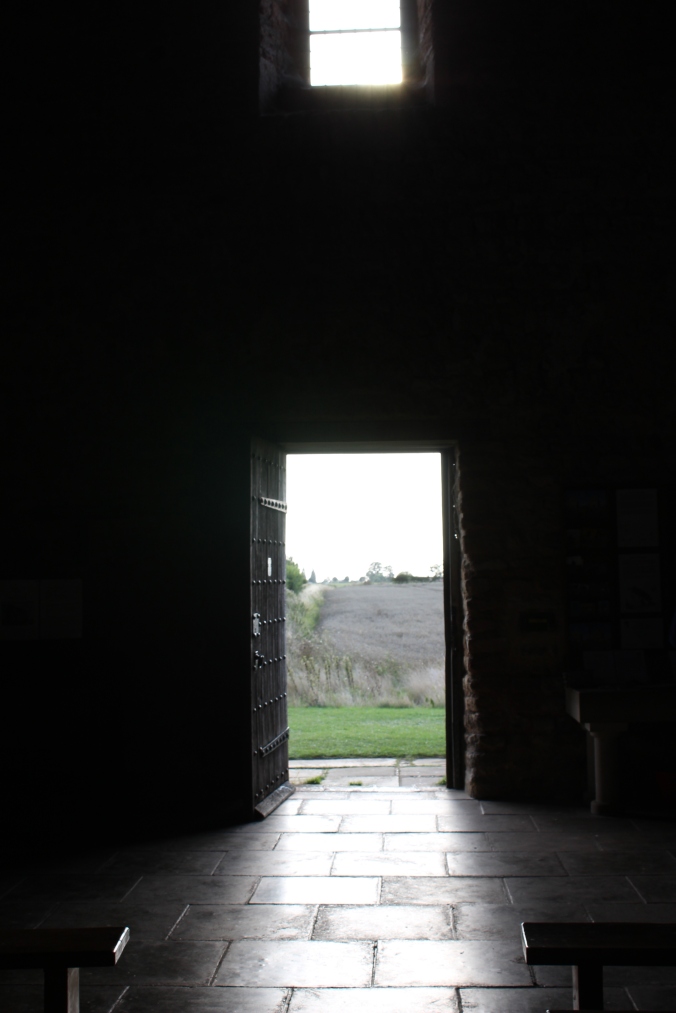
In writing this poem, I hoped to create a place of stillness. The kind of place where contemplative prayer begins.  A place where we can open up a little to love, and light. A place where we know we are welcomed.

The photograph is taken in the Chapel of St Peter on the Wall, Bradwell on Sea, Essex.

IMG_0366.JPG

Mary, sister of Martha, at your feet for the first time

You came in search of rest
away from the road,
that bright, shadeless road,
where so many came,
and you gave so much.

You came and sat down
in the cool room,
the shutters pulled
against the heat,
and Mary sat, too,
and it was enough.
Just sat, quietly, at your feet,
her face turned up to
yours as she listened.
And you saw how the light
fell across her,
as if for the first time.

And this is what you want,
what you long for.
Not the elaborate
preparations we would make,
not ourselves swept and
scrubbed to perfection,
our acts and our
thoughts impeccable
in lifeless rows,
but to be,  here in this light,
to be, here at your feet,
Luke 10:38-42


You can read the second poem here

and the third one here

When the Holy Spirit Danced With Me in My Kitchen

Anthony Wilson's avatarLifesaving Poems

IMG_20130217_102103

When the Holy Spirit Danced With Me in My Kitchen

the first thing I noticed was his arms,
thick and hairy like a bricklayer’s
with a tattoo of an anchor
as Churchill had.

‘Coming for a spin?’ he grinned,
in an accent more Geordie than Galilee,
and he whirled me
through tango, foxtrot and waltz
without missing a beat.

‘You’re good,’ I said.  ‘Thanks,’
he said, taking two glasses to the tap.
‘You’re not so bad yourself,
for someone with no sense of rhythm
and two left feet.’
He gave me a wink.

‘It’s all in the waist.
The movement has to start there
or it’s dead.’

‘You’ll find it applies to most things,’
he went on, grabbing the kettle.
‘Writing, cooking, kissing,
all the things you’re good at,
or think you are.’
He winked again.

‘You don’t mind me asking,’ I said,

‘but why are you here?’

‘I thought it…

View original post 299 more words

The Spirit Comes

andreaskevington's avatarAndrea Skevington

bible retold cover

We celebrate Pentecost this weekend, and the story continues its extraordinary movement outwards.  Last week, it was Ascension, when the disciples were still thinking in terms of their own people, and Jesus showed them an ever widening perspective (Acts 1:6-8).
Now, we see how God continues to open and include.  It seems that all those gathered together (1:14-15) were part of the great outpouring of the Spirit, and the impact on the listeners suggests God was at work beyond even those.  The barriers between us of race, gender, nationality, language, youth and age, are being broken down, moving us towards a deep unity (Col 1:17, Gal 3:28). No wonder the whole house was filled with a great sound! This is powerful and much needed work.

We notice how the barrier of language is overcome.  We notice that God’s priority is not to change the listeners so they can understand, but…

View original post 458 more words