Fig

IMG_0610.JPG

IMG_0612.JPG

IMG_0166.JPG

IMG_0171

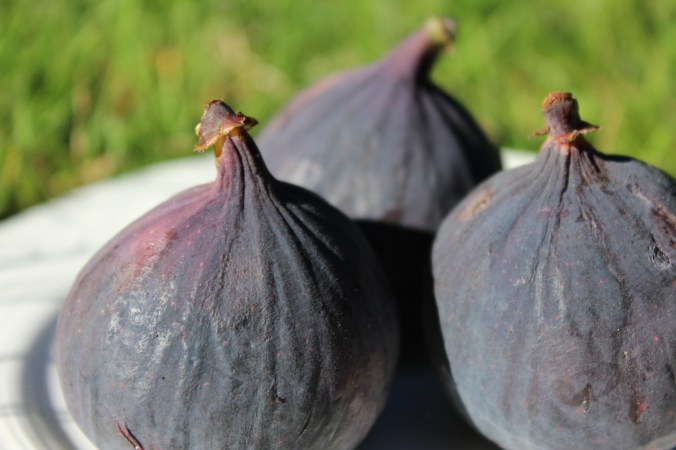
Last autumn, I went to a warm and inspiring poetry morning in Burgh parish schoolroom – a tiny but beautiful space on the edge of the ancient churchyard.  It was part of a series of such mornings, but I was only able to make this one.   The people there made me so welcome, and we shared tea and cake and some beautiful poetry on the theme of Autumn, which we had all experienced on our way.  As I left, one of the other people there kindly offered me a fig from her garden.  It was most precious.  I took it home and baked it with a little sherry and honey, and eating it was an act of thanksgiving – for her kindness, for the morning, the welcome, the poetry,  the beauty of the season, for life.
As it baked, I wrote this.

Thank you again.

Fig

The fig is heavy in my cupped hand,
warm, still, from the sun,
purple and green.
I walk slowly, for the skin
is thin, ready to burst open.
I feel the juice, the seeds,
move inside, sway with me
as I walk

from the room.

There was cake,
and bunting,
and people,
and we read together – Keats’
“Ode to Autumn”,
while the hawberries glowed
from one window,
while the brown stubblefield sloped
through the other.

How rich, how full
this life.
An unexpected gift,
fragile in my hand.

Light

IMG_0228.JPG

IMG_0231.JPG

IMG_0238.JPG

It’s nearly the equinox.

It is noticeable now, how quickly the light is drawing back from the edges of the days.  Outside jobs cannot be left. A torch is sometimes useful.  I do mourn the loss of light, but know that the darkness has its compensations – lamplight, wood fires, stars.

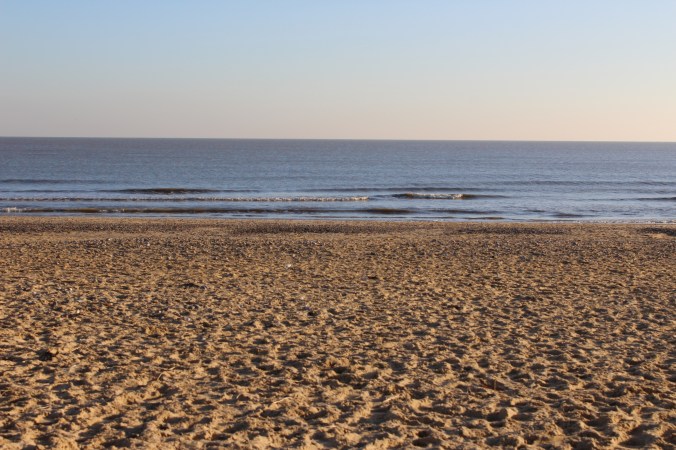
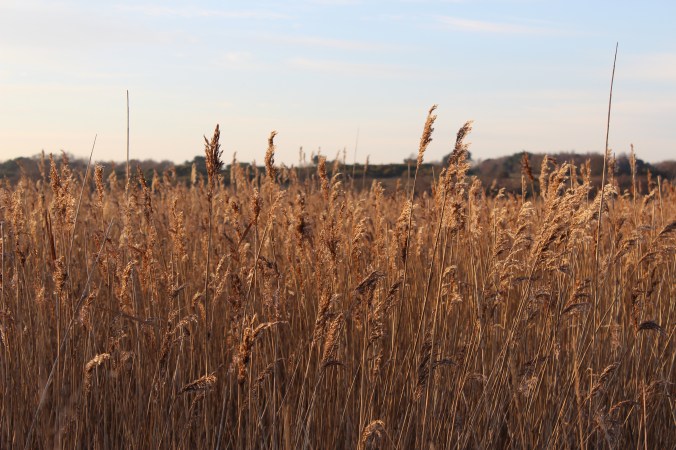
Below is a poem I wrote on Sizewell beach.  The photos above are from Walberswick, a little along the coast, where the North Sea has the same dark beauty.  I sat on the beach as the light faded, both watching and experiencing the loss of it, and the spread of the deeper blue of early night.  I saw my field of vision narrowing, and had a sensation of being, therefore, somehow at the centre, at the focus of what light there was.  An illusion, of course, based on the wonderful way the eye works – but a powerful and helpful one.  It enabled me to get off the beach when I finally turned my back on the sea.  It is like having a lamp for your feet.

While it lasted, that sense of being at the centre – one of many centres – was a place of prayer, a sacred place. I was aware of God, the source of light – and also of the light, the sea and the sky that were around me.  It was one of those times outside time, when we simply are, and are aware of that which is greater than us – aware of our own smallness, and our own participation in something vast, and beautiful.

Light, and its absence, have been on my mind as I have been writing about Jesus’ I AM sayings, particularly “I am the Light of the World”.  Perhaps that’s why this villanelle surfaced in my memory.

It is a loose interpretation of the verse form, with its three line stanzas and repeated lines, circling around, but it was the one that seemed to fit what the poem was trying to be.


LIGHT

Here, quiet on this stony shore, light
drains from the edges first. Blue deepens to blue,
leaving one pool of brightness against the night,

as the starlight, faint at first, shines bright
on the black waves that rise and fold,
here, quiet on this stony shore. Light

flecks the foam that trembles and shines white,
as the circle of darkness turns closer,
leaving one pool of brightness against the night.

Now, in the blackness, bright birds stop their flight
and shut their starfilled eyes against the dark.
Here, quiet on this stony shore, light

shines on white pebbles, shimmering and starbright
as shadows seep and spread like tar rising,
leaving one pool of brightness against the night.

The stars, the foam, and the pebbles shine with light
that washes and wells and rises
here, quiet on this stony shore. Light
leaving one pool of brightness against the night.


Day of Prayer for Creation – a Parable


IMG_0171.JPG


IMG_0174.JPG


IMG_0178.JPG

IMG_0167.JPG

Photos of a walk taken near Wandlebury Ring and the old Roman Road, Cambridgeshire

September 1st is a day when we make Creation the focus of our prayers, knowing that others around the word are doing so. It is the first day of the Season of Creation, which ends on October 4th.  As I was praying for our hurting world, the story below came into my mind. I hope it may help you, as it has helped me, focus my prayers with urgency, and consider how I can live in a way which respects the beauty and glory of Creation, and the love of God for it all.  I have found, over recent years, my eyes and my heart have been opened to both the pain and beauty of the world around me, and the many ways the natural world is honoured in Scriptures, particularly in the prophets.

Jesus invited us to consider the flowers of the field, and the birds of the air, and learn from them the heart and mind of God.

If it helps you, please feel free to use and share it, saying that you found it here.


The parable of the good craftsman

Once there was a craftsman who had two children. As you might expect, he had built a beautiful house out of seasoned wood, with wide windows that looked out over his lush green fields, his flocks and herds.  He had made fine, carved furniture for his house, and he had smiled when he made it, and said, “That’s good!”  He had made beautiful plates and cups and jugs out the red clay near his house, he had smiled when he made those, too, and said, “That’s good!”  He had made a sheepfold to keep his flocks safe, and smiled, then, too.  In fact, all that was around him was good and flourishing and abundant, and as he looked at it all, he laughed out loud and said, “That is all so good!”

The day came when he needed to go on a journey, as the people in these stories often do.  He thought, “My children are old enough to be left in charge now.  They have watched what I did, some of the time, and I have told them how good it is.”  And so he left, and the children looked around, and they, too, saw that it was good.  So good, in fact, that they started to think how much it was all worth.  So they sold the furniture, and the plates and cups and jugs, for a fortune.  They were made by a master craftsman, after all.  The plastic ones they bought to replace them were good enough. They looked at the lush green fields and thought, “We could rear more animals in pens.”  So they did: twice as many, three and four times even, the poor creatures.  They sold the pasture they no longer needed, and a factory and a car park grew there, large and grey and ugly.  The water from the well their father had dug became bitter, but they bought water in bottles with all the money that they had made.

Then, the time came for the father to return.  As he drew near the house, he noticed the trees along the road were withered and dying, and his smile left him.  He came across a bird trapped in plastic that blew across the fields, and he set it free.  Then, near the house, he found a thin child sitting by the side of the road.
“What is the matter?” he asked.
“I drank water from the stream that flows from over there, by that factory.  It tasted bad. Now I’m sick.”  The father gave the child water from his own flask, and picked up the child to take home. He had herbs for medicine there.

But when he got even nearer, he could see that the factory was on his own land, and that where his own fields should be was all noise and smoke.  He could see the plastic rubbish spilling over from his own front garden, from where the flowers and the vegetables and the herbs had been.  He saw his own children, with grey, indoor faces, and said, “what have you done?”
“Father, we are so pleased to see you!  Come inside, we will bring you the accounts and you will see what we have made!”
“That is not the kind of making I intended you for!” replied the father. “And see, see this child, poisoned! How will you enter that in these books of yours?  What have you done with all that I have made – do you not know that I love it all?”


Some prayers from the first chapter of Prayers and Verses


Lord, purge our eyes to see
Within the seed a tree,
Within the glowing egg a bird,
Within the shroud a butterfly.
Till, taught by such we see
Beyond all creatures, thee
And harken to thy tender word
And hear its “Fear not; it is I”.
Christina Rosetti 1830-94


O God, enlarge within us the sense of fellowship with all living things, our brothers the animals to whom thou gavest the earth as their home in common with us.
Basil the Great c330-379


He prayeth best, who loveth best
All things both great and small;
For the dear God who loveth us,
He made and loveth all.
Samuel Taylor Coleridge 1772–1834


IMG_0713.JPG

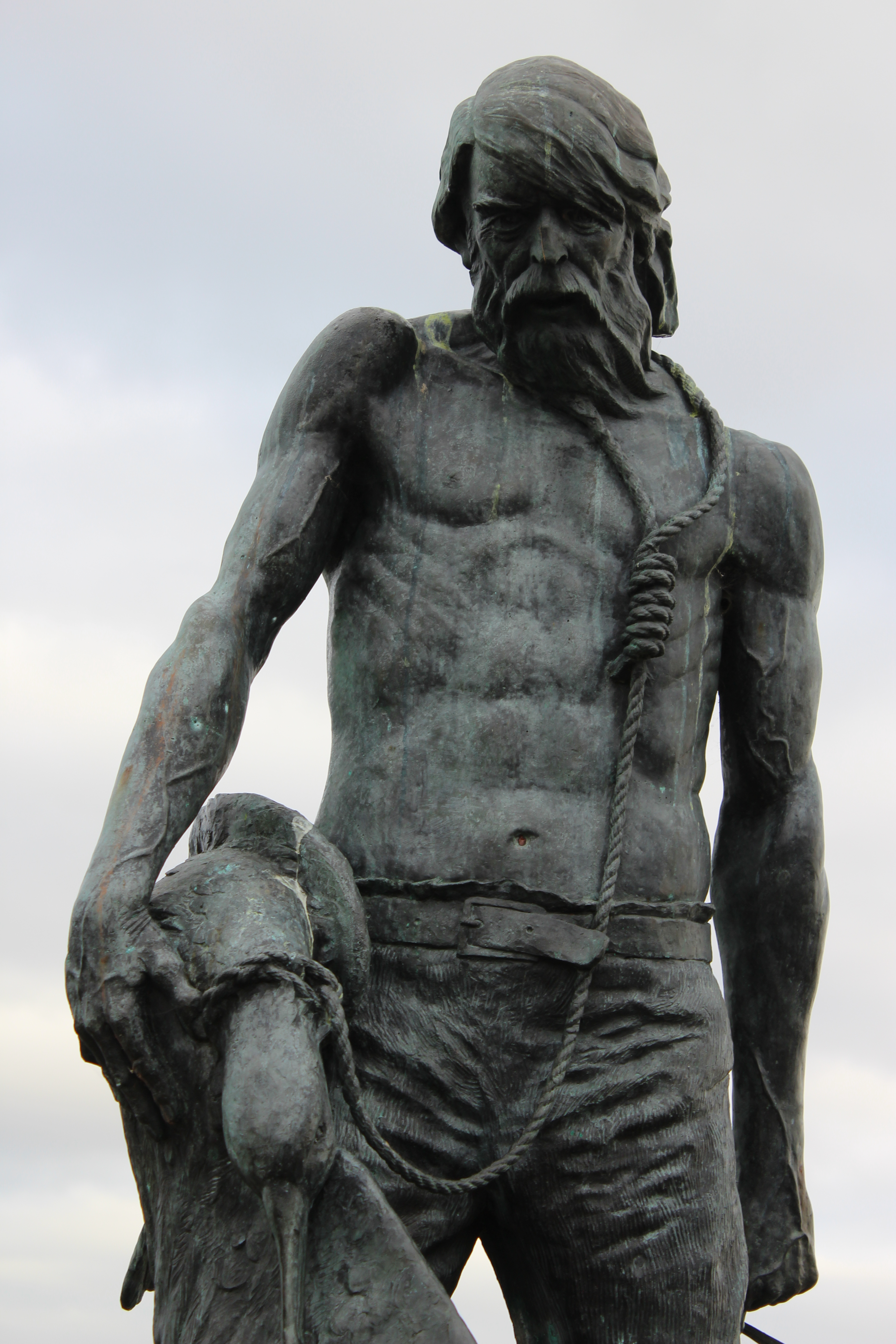
Coleridge’s Ancient Mariner – at Watchet, the place that inspired him.

prayers and verses cover


Nest

IMG_0585.JPG

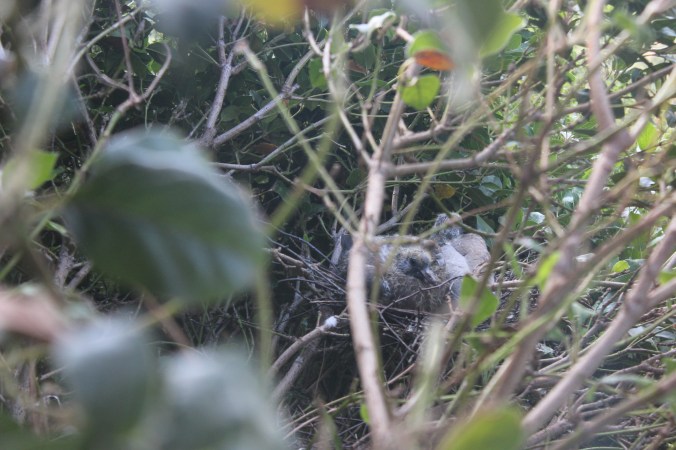
Poems can tell stories – I hope this one does – stories which seem to have a meaning beyond the events.  This is a story from the past week or so in my garden –  one of the many that unfold daily.  The story of a pigeons’ nest I uncovered.

As I began writing, I thought of the dilemma we all face as humans sharing their home with other creatures – how to live lightly, how to nurture and care for all who share our little bit of land.  As a large and powerful creature in this world, I have responsibility. I wrote about feeling like a giant in my own garden in Pulling up trees. In this instance, I had not seen the parent birds going in and out of this shrub. I thought I knew where all the nests were. I thought I had left it late enough. I was mistaken..

As the days passed, I cheered the two youngsters on as they adapted to their new situation – a nest with a view.  Their mother just carried on caring for them, a little nervously at first, protecting them from rain, feeding them, sheltering them from the midday sun, even though they were now exposed to the crows, and the buzzard, that fly overhead.  Without that care, they would not have survived.  With it, they are thriving still, despite my unintentional assault on their home. No one in this family is giving up.

When I speak positively of their new, open situation, of course that is not about the birds, but about me.  The birds are better off hidden.  I was beginning to think of how we, when faced with hard change, can raise our eyes, and find courage and hope in even an unaccustomed view.
The world is full of parables.


Nest

I leave things wild.
I plant flowers the bees
and butterflies
love.
Ground cover
covers the ground,
and frogs and newts
rest in the shade.

So, this is not what should happen
when my window is crowded with leaves
and I wait till high summer
till the birds are quiet
to cut
hard and deep.
Satisfyingly
the ratcheted loppers
slice through wood.

I stop

As I see those two strange
black creatures,
yellow feathered,
shaking in their nest.
I step back, as quietly as I can,
shaking too,
a destroyer of their world.

Inside, I close the curtain,
peep around to see
the mother bird nestles them,
tends and feeds them.

They thrive and grow
in this newly open nest,
small strange dinosaurs,
now fledglings
stretching their wings,
seeing all that space
all that light
in which to rise,
and fly.


Pulling up trees

IMG_0442

IMG_0444

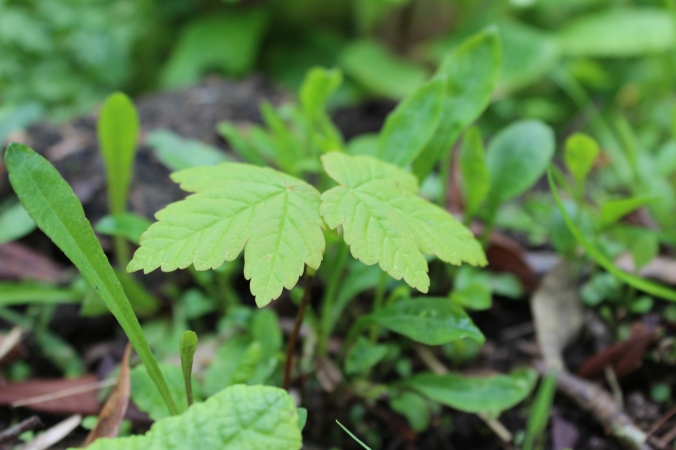
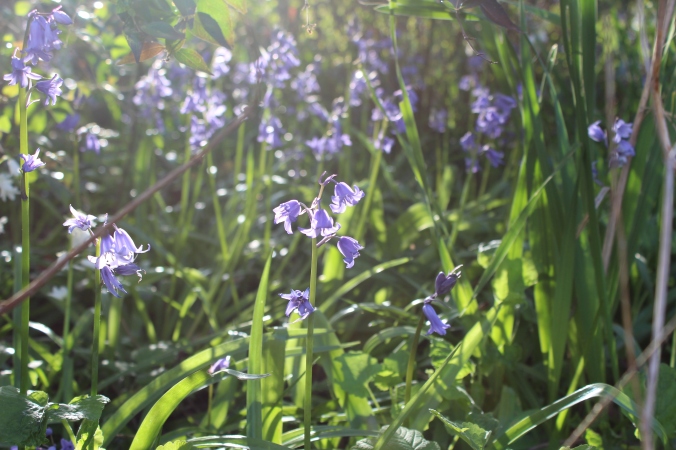
I am sure that all of us who are have responsibility for a little bit of land know what it is to turn your back for a while, then find  it is growing with such glorious, irrepressible speed that you have no hope of getting it back to whatever plan you had.  If, like me, you have a secret preference for wildflowers and woods, it can be hard to pull things up.  I keep the runaway primroses and bluebells – but runaway trees!  Much as I love a wood, I have to remove them. The tension, wanting but not wanting order, is something I explore in this small poem.  I also touch on the more-than-reality of fairy tales, so often expressing some of the deeper workings of our spirits.


Pulling up trees

How quickly this place becomes a wood!
Last year, while I was sleeping,
seeds fell and grew, fell and grew, and now
as the year wakes, these small brown sticks
are all topped with leaves –
miniature sycamore, tiny ash.

How easily they pull up from the damp earth –
one long strong root, going deep,
and side filaments that resist, then
give, satisfyingly.
Such destruction –
I am the giant of my fairy tale.

Open lawns of grass, clusters of flowers –
bluebells and primroses – would be
swallowed up in a dense picket of saplings,
so close the squirrel and the bird
would find it hard to move,
the deer’s path would
no longer be straight –
my garden a wood
that grew while
I was sleeping.

IMG_0449.JPG

IMG_0452.JPG