Poem: Aldeburgh Beach, January

wp_20170102_14_12_07_pro

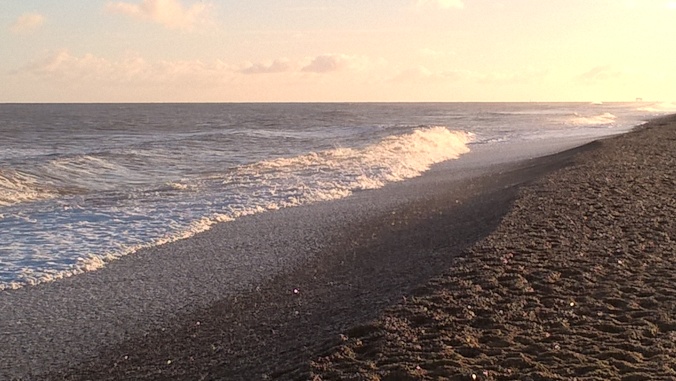
Photos taken at Dunwich Heath beach, a little along the coast, by Peter Skevington

wp_20170102_14_12_27_pro

WP_20170102_14_10_47_Pro.jpg

I love the North Sea in winter – its wild brown, its keen winds.  The coast is unstable here, lumps of WWII concrete, of building materials, and old fragments of glass  are thrown onto the shore.  The pebbles hiss in the breaking waves.  The waves in turn sound like a vast heartbeat.

The wind blows you alive, if you wrap up warm!

The photos above were taken this Christmas holiday, with my husband and son, as we stood on the beach and let the waves chase us.  We were not far, here at Dunwich, from Aldeburgh, where I went with a dear friend for a walk on a different day.

I am so grateful for my friends, and my family.  It is so good to be able to spend time with people you can be real and true with.  I feel very blessed to be able to count quite a few people as those whose company is as free as solitude, but enriched by their unique ways of seeing and being and insight.  The poem below attempts to capture something of my walk with one of these dear people, and I hope it can also say something bigger about the power of friendship.

I have been reading Bandersnatch, a Christmas gift from my son, which explores the relationships which formed the basis for the Inklings group, including Lewis and Tolkien, and it has clarified for me how much I need the encouragement and shared thinking and being a close group of friends can provide.  Our differences can give new vision and perspective, our mutual support can get us through difficulties that are too much for us alone.

Thank you to all my friends, and may you, reading this, have such sources of goodness in your life.

Aldeburgh Beach – January

We stood there, friends, on the beach,
facing into the east wind,
being blown full of cold,
icy and alive,
by a wind strong enough to lean on.

We stood on a cliff of pebbles
new thrown up by storms,
near the edge,
where stones rattled down,

while the sea, high and brown,
roared and crashed,
mist and foam flung
with the generosity of joy,
into our faces.
Our lips were salt with it.

In the sound of the wind we brought
our heads close enough to speak –
of the breath of God, alive,
breathing into us,
the glory of God in the brown shining.
The power of each small thing,
each small thing,
as the spray and the pebbles
danced wild around us.

Advent – a poem


img_0157


img_0212


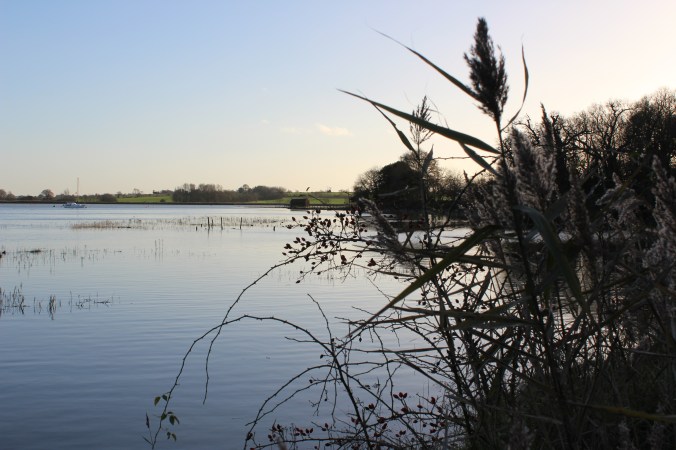
As we are close to the darkest time of year, it’s good to go and snatch what moments of light we can find.  Sometimes, I have to sit still, in the face of the cold wind, and allow my eyes to be open, just looking, before I begin to see the hope, the life, the turning of light’s tide.

We need the light now.


Advent

Now, at the turning of the tide,
when the days shrink small,
and night seeps through shadows,
the river flows with palest light.

Now, when light and life seemed frail,
and failing, the tide turns, water returns,
eddying and rippling the  slow, chilled, flow,
a river new filled with salt, with wide sea.

And the white gulls dive, and lift their heads,
and rise, quicksilver water
pouring off their opening wings,
beaks full of flailing, silver fish.

And here, on these grey banks,
flowers are open again: stems
split and burst with green leaves and
yellow petals, new touched with life.


November Sowing


sowing


We have a couple of small veggie patches in our garden.  Maybe, when the garden was planned and the trees were smaller, they were in the perfect place.  Now, they are rather shady, and need just the right weather for things to thrive.  Leaves will grow, though, and sometimes surprisingly.

There are often some seeds left over by the end of the season, and sometimes, I feel inclined to plant anyway.  Maybe, with a mild winter, and some protection, they’ll get a head start in the spring, before the trees are in full leaf.  As I was planting, I thought about all the times when it can feel too late, hopeless.  When we can feel too old to start something, or as if we have blown our chances.  Whatever it was we dreamed of, it can seem like there isn’t enough warmth for our dreams to grow.  It can feel like planting in November with chilly fingers.

I love the defiance of November sowing.  What is wasted by taking a chance, anyway?  A few leftover seeds… and who knows? Come the spring, my veggie patch may be full of little green plants.  I may have good things to eat, and to share.


It is not too late!


 November Sowing

I planted seeds today, scraping my fingernail
into the corners of old packets:
cavolo nero, romanesco, mizuna –
such names – exotic, full leaved, sharp.

I sowed them where I sowed before,
under tall trees thick and damp with falling leaves,
remembering how spring was baked dry,
and summer was pitted with rain, lightless.

But now, today, this low slanting sun is warm.
Now, in this out of season sowing
with leftover seed, I am surprised
to find myself hopeful, joyful
even, at this extravagant gesture.

I know full well that they may never grow,
But maybe, just maybe they will.
Each day is a day for sowing,
it is not too late.


From Prayers and Verses

Help me to be patient as I wait for your kingdom
and your righteousness:
as patient as a farmer who trusts that the rains
will come in their season,
and that the land will produce its harvest.
Keep my hopes high.
Help me to pray to you and to praise you.


Selworthy Green

IMG_0667.JPG

WP_20161021_16_28_38_Pro.jpgIMG_0673.JPG


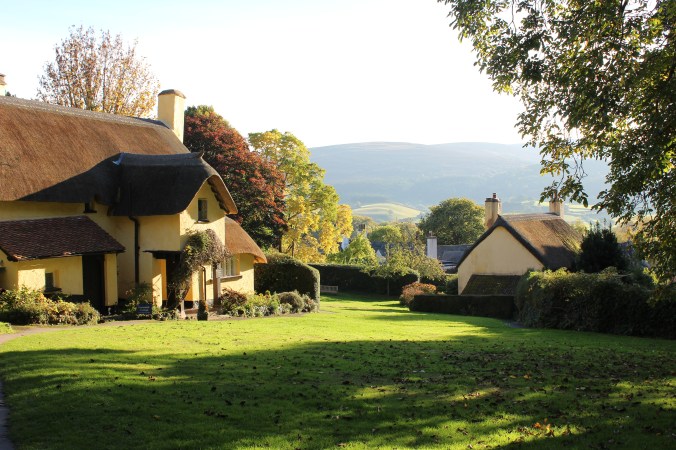
We’ve recently come back from a very tranquil holiday in Exmoor, at Selworthy Green.  Thatched cottages stand around the Green, while a little lane winds alongside towards the church.  It has views out over a valley to the moors, but itself is sheltered in beautiful, steep woodlands.  The cottages were built for pensioners, who were responsible for maintaining the woodland paths.  The tiny cottage where we stayed was home to the maid who took care of them.

Our first full day was bright and clear, and we spent all of it outside walking from our quiet base in the Green.  As the sun was beginning to go down, we sat at its highest point, and watched the light change over the hills.  My notebook came out, and I wrote this first:


Selworthy Green

Green is the colour of a stillness,
the kind of stillness
that is round and full
with a whole bellyful of life

like those apples over there,
clustered in shining handfuls
on the branch,
and the yellow green of the ash behind,
and behind that the olive of the holm oak,
and above and beyond that
the black green of the tall pines.

Breathe its sweetness,
its clearness,
as easy to a fragile body
as an oxygen mask
but with all this, all this, too.
You can’t take a breath,
can’t live,
without such gratitude
to the trees.

The Little Christmas Tree – a few pictures!

IMG_0624.JPG

img_0626

IMG_0627.JPG
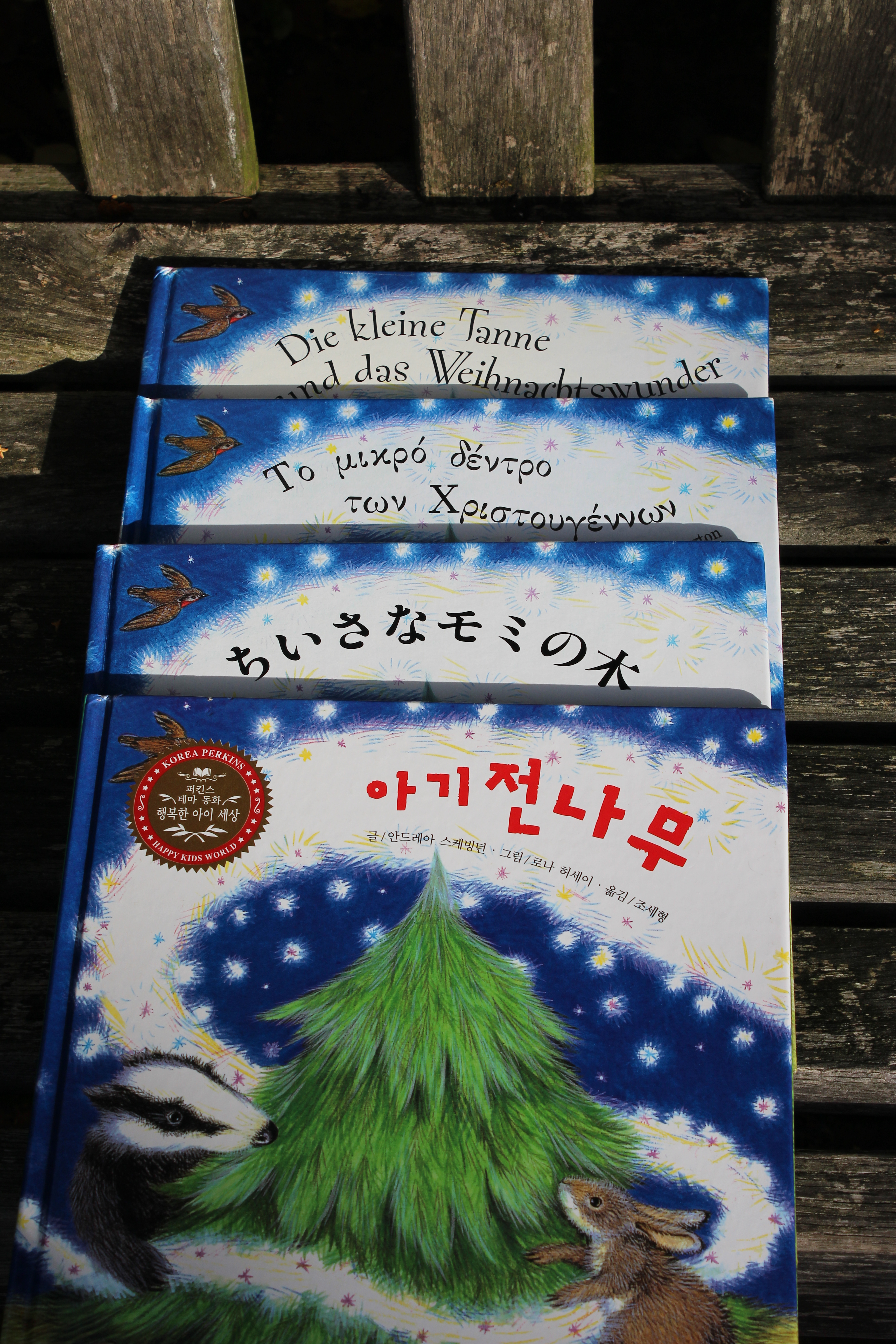
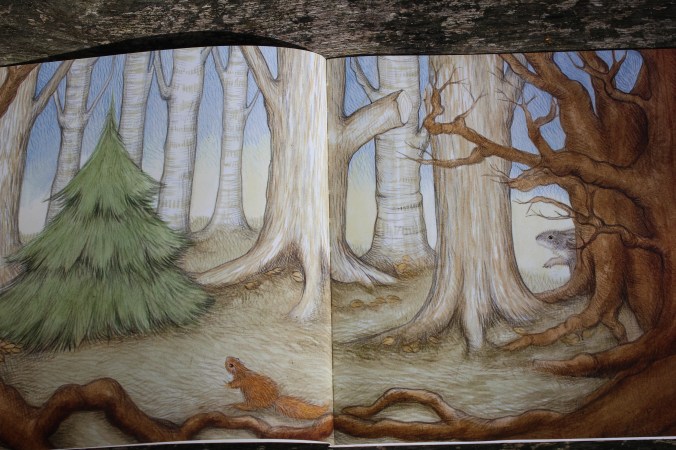
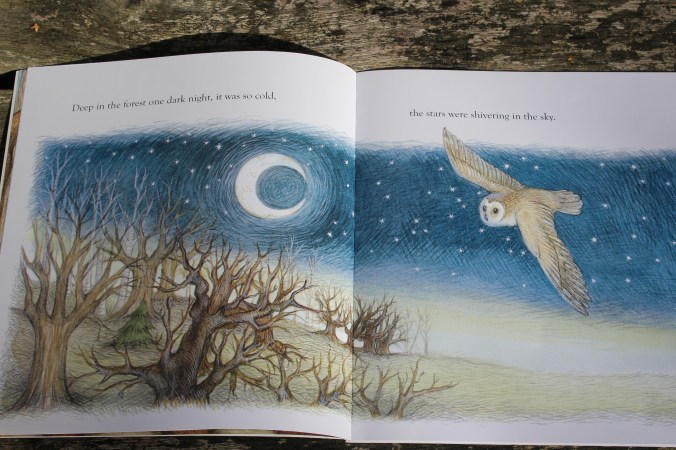
I love the illustrations for my first book by the fabulous Lorna Hussey, so I thought I would take it out on a sunny day and snap a few pictures to share with you.  She draws out the different characters of the trees so well, and the animals are delightful.  I am particularly fond of some of the minor characters, such as this beautiful owl, and the badger who appears later.

Whenever I take the book to schools, I always take the foreign editions.  The children enjoy trying to work out the different languages – and are particularly intrigued by the different scripts.  It’s a wonderful thought that the book has found  homes so far away.

I am very grateful for the way young readers have taken this book to their hearts.

The Little Christmas Tree remains a favourite of mine, too.
It is selling quite fast on Amazon at the moment, but other on-line shops and actual shops have it too if that’s your usual and it’s out of stock!  Here is a link to the publisher’s online shop

Redshanks

IMG_0157.JPG

img_0212


redshank-11-clive-timmons_lge

Photo – Clive Timmons


When I walk, I often take a notebook, and sit and watch.  Watch isn’t quite the right word – it is more of an opening yourself up, a forgetting yourself and becoming lost in what you see before you.

This poem records a moment of change, when, with a rising wind, the birds began to fly.
I wondered what it was that moved them.  Whatever it was, it moved me, too.  I got up, and walked on.


Redshanks

Light on grey mud, grey water,
clouds high and thin.
By the edge of the river
redshanks probe thick
cold with their long beaks.

The wind breathes
over the flowing tide,
ice breath that mists
the watersheen.
And the birds begin to lift,
first the northernmost, then
up like a piece of loose lace,
flashing dark and light from
opening wings.

They circle and cry, raising
long mudsplattered legs,
wingtips close now, wheeling
the air into many breezes.

And what moved them, and what
tied them?  That pull, the breath
of wind over the water. That nudge,
seeing open wings all about them.

That longing  to fly


October 21st

IMG_0615.JPG

IMG_0617.JPG


IMG_0618.JPG


img_0620

img_0623

This poem is a product of my not-quite daily practice – of simply writing to fill up the page.  It is a discipline learned from Julia Cameron’s invaluable The Artists Way, where she advises Morning Pages – filling up three A4 pages every day.  You are not attempting to “write” or do anything creative, you are just getting to the end of the pages.  In the process, all sorts of interesting things will happen, but that is not your concern.  You are learning to silence your inner editor, getting it to turn the other way while you are in the first tentative stages of creating.

Once you have got used to simply writing, and not reading or thinking about what we have written, after a few weeks of filling up pages, you can begin to go back and look at what you have written.  Sometimes, amidst all sorts of moaning and lists and thinking on the page, you find you have the beginnings of something.  Sometimes, it is like mining ore.  Once your inner critic learns to leave you alone, you find all sorts of things emerge, like this.

One of the things I often find myself doing is describing what I see around me.  This is what I did.  To honour the process, I have called the poem by the date, rather than giving it a subject.  It is a record of this moment, this sitting in the garden wrapped against the growing cold, writing.


October 21st

How lovely the light is, low and golden,
falling in sheets through low, golden trees.

And the birds sing now, this morning,
in a song sharpened by last night’s frost,
the first – cold, clean, white.

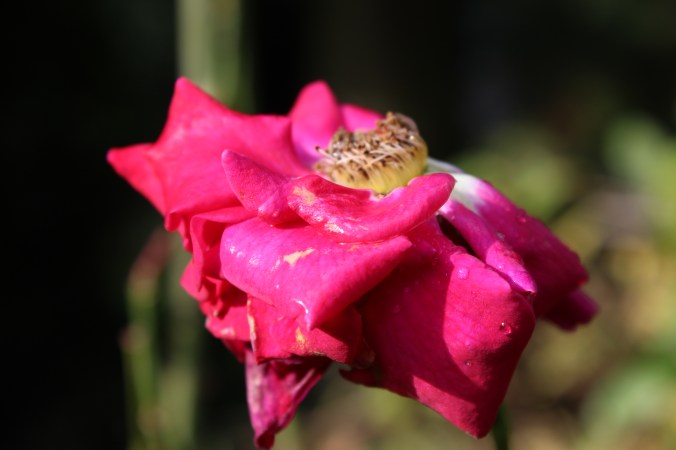
The red roses are scentless with ice,
petals rolled to elegant, sugared points.
And above them the tall, brown seedheads
rattle gently in a gentle breeze.

I will cut them back, but not yet.

They hold this moment, now,
in their full, dry cups, swaying
between summer’s fallen petals,
and spring’s sharp green.
And coiled inside their
tiny black seeds are
flowers without number,
scattering in the icy breeze.

Not only but also

img_0066

IMG_0105.JPG

IMG_0112.JPG

This poem emerged from another solitary walk.  My feet beat against a hard path, and as I walked somewhere quiet, and beautiful, these words – and this pattern of words – began to emerge.
I had been thinking about the ways we sometimes speak of God, the things we tend to see God in, the images and symbols we use, and the things we tend to overlook.  I had been wondering why we pick the things we do, and what might happen if we looked at other, less promising subjects, and wondered if they too could tell us something about God.  What would we see if we looked differently?
It was a kind of walking contemplative practice,  one that I find fruitful.
By the time I got home the words were beating their own footsteps in my head, and I picked up some scrap paper, and wrote this:

NOT ONLY

Not only in these things
is the Glory of God to be found.

Not only these, but also
in the curved world bending itself
to a newly opened eye,
and the longing that clouds its closing.

Not only in the high and echoing hills
where rocks raise themselves
beneath the shutterfast
night and day of heaven,
but also in the long grey
half-light when dawn will not break.

Not only in the hands of the potter,
but in the cracked rim of a dropped bowl,
and in the one who could not hold it.

Not only in the mystery of words
and the fullness of music and
the pull of a brush through paint,
but in the fragments of self
we leave and find daily –
folded among shirts, and papers,
and hands on a still lap.
Not only in the bright beauty of stars,
but also in the black strangeness of the
space between.

Not only in the white smoke of the waterfall,
but also in the dustsmell of first drops after drought.
Not only in the green fluidity of the forest
or light through a new leaf.
Not only light but shadow
not only sea but dry stones
not only abundance but desert.
Not only
but also.

 
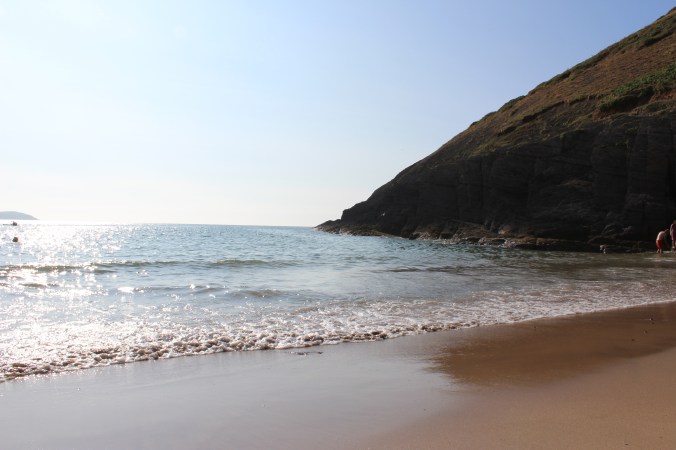
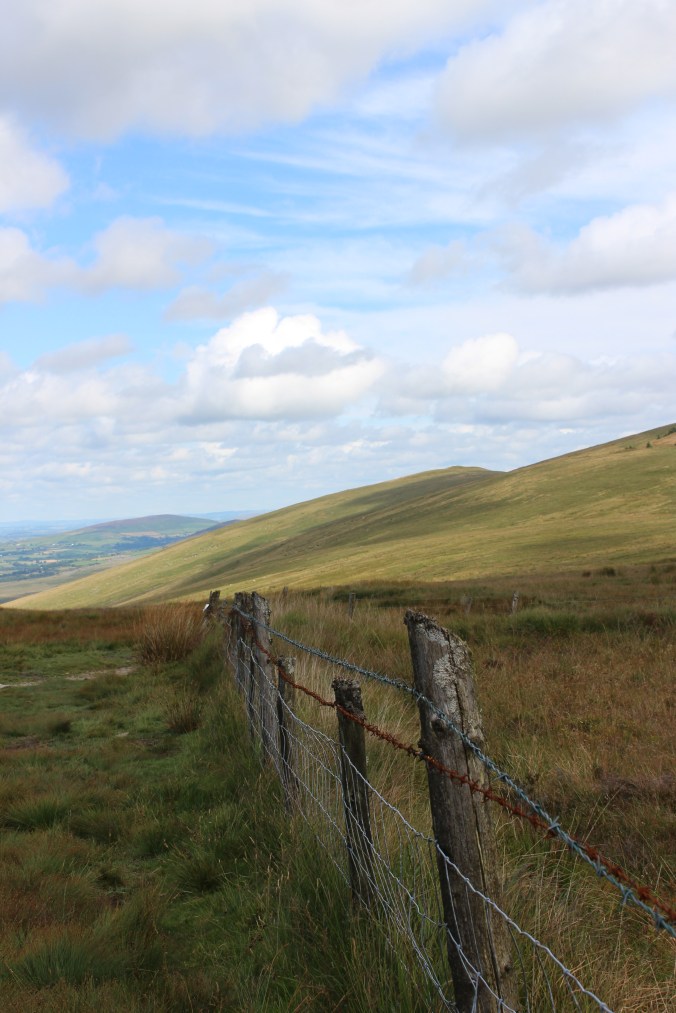
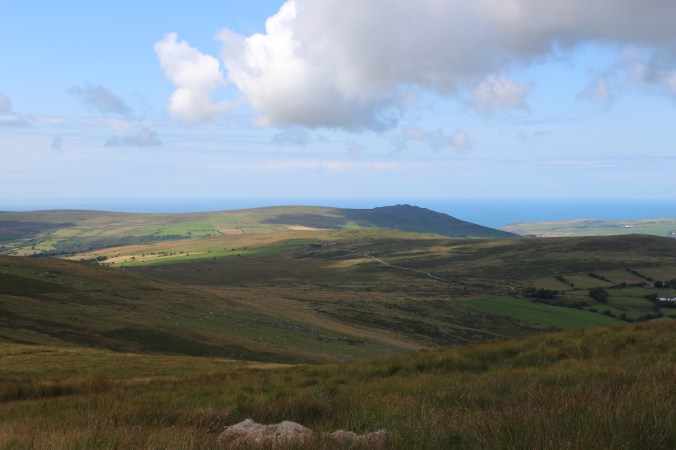
The photos above are of the Preseli Hills in West Wales, with a view of Carn Ingli – the Hill of the Angels – and also Mwnt beach, a departure point for ancient pilgrims to Ireland.

Now, as the days of darkness come

img_0212

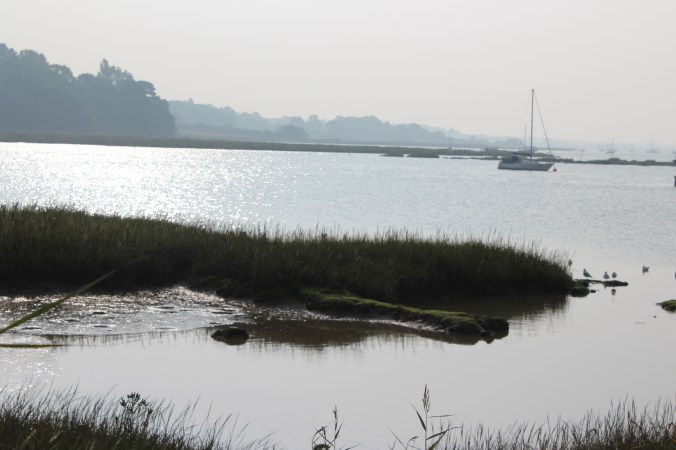
As many days as I can, I walk by the River Deben near my home.  Sometimes I walk with someone, but often I walk alone.  Alone, the experience is different, opened up differently.  It  becomes a quiet form of prayer – one which begins with an openness, a question
– Hello, what is there that I need to notice today?
Alone becomes companionable, the openness becomes openness to one who is always there.
I look at the birds of the air, among other things, although, this day, it was more the birds of the water.
It seemed to me as I watched the cormorants that the growing darkness of the season was maybe something I needed to dive into, under the bright surface, that there was treasure even here, even here.

If you wish, you can listen  to the poem.


Now, as the days of darkness come

Now, as the days of darkness come,
I see the slick oily surface of the water,
low light skims it like bright stones,
as the geese arrive in broken, twisted skeins.

And there is the egret
in its startling whiteness,
probing the mud,
and a pair of cormorants,
dark as pitch,
forming their strange low circles.
Then, as I watch, they slip down beneath
the bright surface, into hidden water.
And I, too, I hold my breath,
while they are hidden, in wonder
at the unexpected airiness of their bodies,
sustaining them, in that cold water, for so long.

Sunday Retold – Small Seeds, from Luke 17

Sunday Retold

sowing

seed.jpg


IMG_0592

This coming Sunday’s gospel reading – Luke 17:5-7 – talks of tiny amounts of faith, faith as small as a seed, which can accomplish so much in the world. A little context is helpful here.  The verse before talks of the necessity to forgive someone, and to keep on forgiving them.   On hearing this, the disciples ask for their faith to be increased.

It is a hard task to forgive, and maybe the disciples think they need vast amounts of faith to be able to do it. These verses are difficult to understand, to see how they hang together. Perhaps Jesus’ answer suggests that, if they have any faith at all, it is enough.  His story of the servant and the master may follow on from the same train of thought.  The work of forgiveness is an everyday necessity for the follower of Jesus.  Everyday work does not require special equipment, or a special reward.  Perhaps, if we are thinking about our life of faith in terms of reward, of payment, we have misunderstood something.

The Lord’s Prayer (11:1-4),  has already been recorded in Luke – forgive us, as we forgive. There, we begin to see how the flow of forgiveness works.  We need forgiveness, and  we need to forgive.  Our own forgiveness is not a static thing, a prize to be acquired.  Neither is forgiveness conditional, but, I believe, Jesus describes a process.   This is how it works – as a flow of forgiveness.  As we join in, seeking to pass on what we receive, we become more like Jesus.  He forgives, and so we are freed to. We find the courage and humility to ask for, and give, forgiveness. We both receive and give.  It is hard work for us, but it is the work we must do every day – like the work of the servants.

Seeds have tremendous capacity coiled within them.  Small as they are, they contain all that is needed for a new plant to grow.  It is all there, already.  Jesus often uses seeds to talk about the life of the kingdom.  They seem a perfect illustration.  So small, so unassuming, they need to fall to the ground and break.  Then we see that they are in fact  breaking open, bursting with new life, with a shoot and a root and a leaf ready to unfurl.

In The Bible Retold , I have the slightly longer version of the mustard seed from Matthew’s gospel.

“How shall I tell you about God’s kingdom?  It’s like a man who digs down in the earth and plants a tiny mustard seed – it’s so small that a puff of wind could take it out of the palm of his hand.  Yet it grows and spreads into the largest plant in the garden, with branches where the birds can come and shelter.”

And here are some extracts from Prayers and Verses  to help us pray through this gospel reading.  We think of the smallness of the seeds of kingdom life in our own lives and the life of our community, and of the patience needed to wait and tend their growth.  We remember the seeds with gratitude, aware of their potential.  We think too of our own need for forgiveness, and remember it before we condemn another.

Help me to be patient as I wait for your kingdom
and your righteousness:
as patient as a farmer who trusts that the rains
will come in their season,
and that the land will produce its harvest.
Keep my hopes high.
Help me to pray to you and to praise you.


The Lord is good to me,
And so I thank the Lord
For giving me the things I need,
The sun, the rain, the appleseed.
The Lord is good to me.
Attributed to John Chapman, planter of orchards 1774-1845

I told God everything:
I told God about all the wrong things I had done.
I gave up trying to pretend.
I gave up trying to hide.
I knew that the only thing to do was
to confess.

And God forgave me.

Based on Psalm 32:5

We remember also that there are no small things in the kingdom.  Apparently small things have tremendous power.  They are enough.  What small things can you do today?

We can do no great things,
Only small things with great love.
Saint Teresa of Calcutta 1910-1997

“Don’t judge each day by the harvest you reap but by the seeds you plant.” Robert Louis Stevenson


With thanks to my homegroup – a small group who meet and pray and read gospels and sometimes cry and always laugh together. Sowers of seeds, all.