Poem – The Cave and the Quarry #EverybodyNow

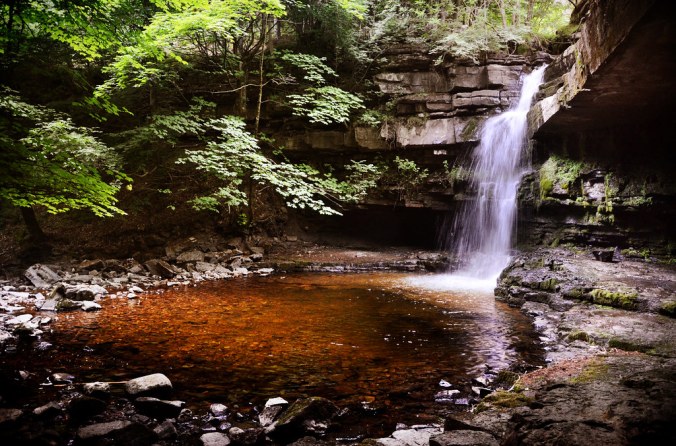
Gibsonscavedavidallen.jpg

Gibsons Cave and Summerhill Force by David Allen

Here is a poem, part of a series of posts that mark the Extinction Rebellion protests which are drawing our attention to the damage we are doing to the world around us.

It’s about a walk in Teesdale, in the North East of England, which I did with my husband.  We followed rivers upstream, past waterfalls.  This one, with its legends of runaways hiding behind the water, caught my imagination.  In the North East, you don’t go far without stumbling across remnants of past industries, and here it was a quarry.  These places can be desolate, they can remind us of the costs of changing the way we live for those whose livelihoods, whose families, depend on the way things are.  They remind us of the importance of imagining new ways of living, that promote dignity and independence, as well as creativity and sustainability.

What struck me here, though, and elsewhere, was the power of nature to return and to thrive even in places that seem wrecked and spoiled.  Whatever political and social difficulties we may face in times of transition, living things will come back to desolate places, given half a chance.

“For there is hope for a tree,
if it is cut down, that it will sprout again,
and that its shoots will not cease.
Though its root grows old in the earth,
and its stump dies in the ground,
yet at the scent of water it will bud
and put forth branches like a young plant”
Job 14:7-9

May it be so.  May the trees that we have cut down sprout again, may the scars we have cut into the earth be healed, may the land sustain us, and all living things.

And so, this poem is one of hope, of the return of life, of seeing things anew.


The Cave and the Quarry

We followed the valley down –
Down from Gibson’s cave,
where the river poured over
a high lip of rock,
undercutting a dark, hidden place.

It stayed in my mind, that place –
What would it be like to stand there,
behind the falls,
to look at the world
through that fast, cold, brown, water?
Would it wash your eyes to
see things you hadn’t seen?
Was it an enchanted place?

It seemed so, for, walking back,
we saw an old quarry
we had not seen before,
dark, and hidden –
and now we walked by
strange hillocks –
spoil-heaps sprouting trees
like ancient burial mounds,
where crowds of small birds
bounced through the air,
landing on ledges of rock
that once were sharp, fractured.
Now, moss dripped off everything,
and there was a sign
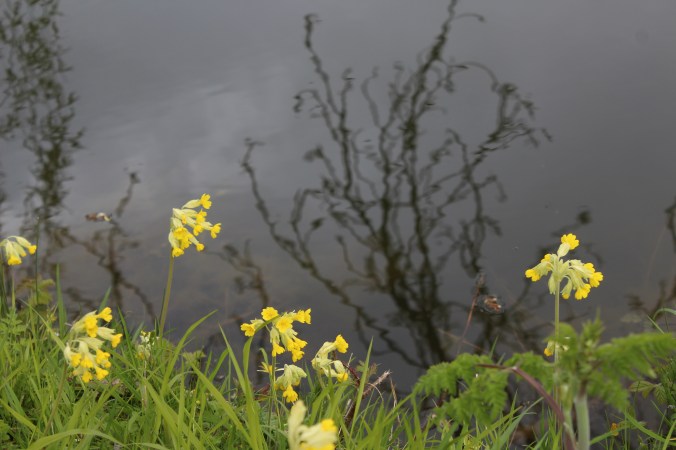
that promised flowers,
for it asked us not to pick them,
and we wondered – what flowers would come?

And I thought as we walked down the
path that carts carrying stone had made –
how long did this take?
How long before the green
and the birds and the
trees crept back into their place?

How strong, how eager, life is.
Water, and greenness,
flowers, and small birds,
moss and grass,
they soothe our scars,
they make the dead come back to life,
we need only step back,
step back and say “yes”.

Poem – Three Days #EverybodyNow

I’m reposting this poem as part of #EverybodyNow, as Extinction Rebellion are focusing our minds on our bonds with the rest of the Earth, and the life of all creatures

andreaskevington's avatarAndrea Skevington

blackbird2 Photo from Flickr, photographer unknown
IMG_0485.JPG

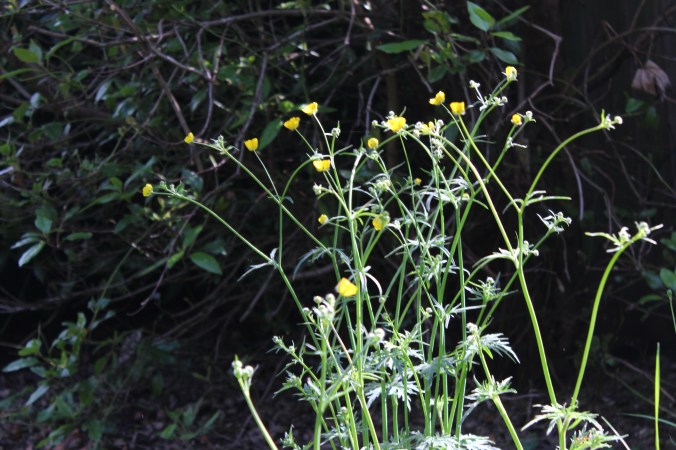
I have been transplanting buttercups into the verge at the front of our house, where there is no pavement, and have been thinking about boundaries – in particular the contrast between the rather wild garden, full of life, and the fast road outside.  This poem, written a few years ago, came about as I watched a female blackbird mourn the death of her mate.  She kept vigil for three days, and then she went.  I did not see her again.  It made me think about not only the intensity, the reality of each creature’s experience, but how often we live in our own enclosed worlds, isolated from each other, and how hard it can be to cross those boundaries.   How hard to credit and acknowledge the fullness of the lives around us. To begin to do so, to begin to see and understand another,  seems…

View original post 114 more words

Otley Hall Quiet Day – the vine, and other growing things.

Last Saturday I had the enormous privilege of leading a Quiet Day for St Mary’s Church of Woodbridge, based on I am the vine.  I’m afraid I wasn’t taking photos, just giving my attention to what was going on around me.

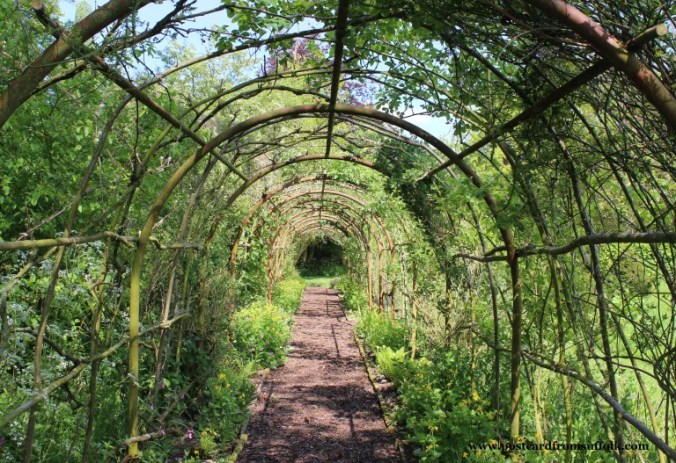
The gardens are so beautiful, as ever, and it was particularly good to see several vines growing and entwined, with small grapes forming.  They were forming a tunnel, you could walk through the vine, almost grafted in.

otley hall suffolk postcards.jpg

A photo from earlier in the year from Postcard from Suffolk

It was so good to sit by the water, and watch the fish and the dragonflies.

IMG_0471

Here is a picture from an earlier visit, in spring.

One of the things we talked about was how Jesus’ I am saying – I am the vine – gives us a way of seeing ourselves as deeply connected.  We talked of many things – how we can deepen that connection to God, and each other.   We talked about everything holding together, ourselves and everything else, in Christ.  We read about that in Colossians.

We used poetry to help us towards prayer, and contemplation, including Malcolm Guite’s sonnet, set to music here by St Brides.

I can’t help thinking today, about our connection to this good green earth.  It is precious and beautiful, and we are only just beginning to learn how it does hold together, interconnected, and mutually dependent, as we are watching with horror as the Amazon burns, and Siberia too.  We know how ancient woodland in our own land has been cut down, or is under threat.

May we find our way home to tending for this beautiful world.

May we take inspiration from the song of the vine.

You can read some more about the vine, from my book on the I am sayings, here.

God, source of all light and life,
help us to see your hand at work
in the beauty of creation.
Help us to know that, in you,
the whole earth is holy ground.

O Lord,
Your greatness
is seen
in all
the world!
Psalm 8:9

From  my collection of prayers, Prayers and Verses


You might like to read A parable for Earth day.


Poem: Weaving – Unweaving

IMG_0921.JPG


This is another poem from the  “They toil not” workshop -poems of spinning and weaving.  The first, you can read here.

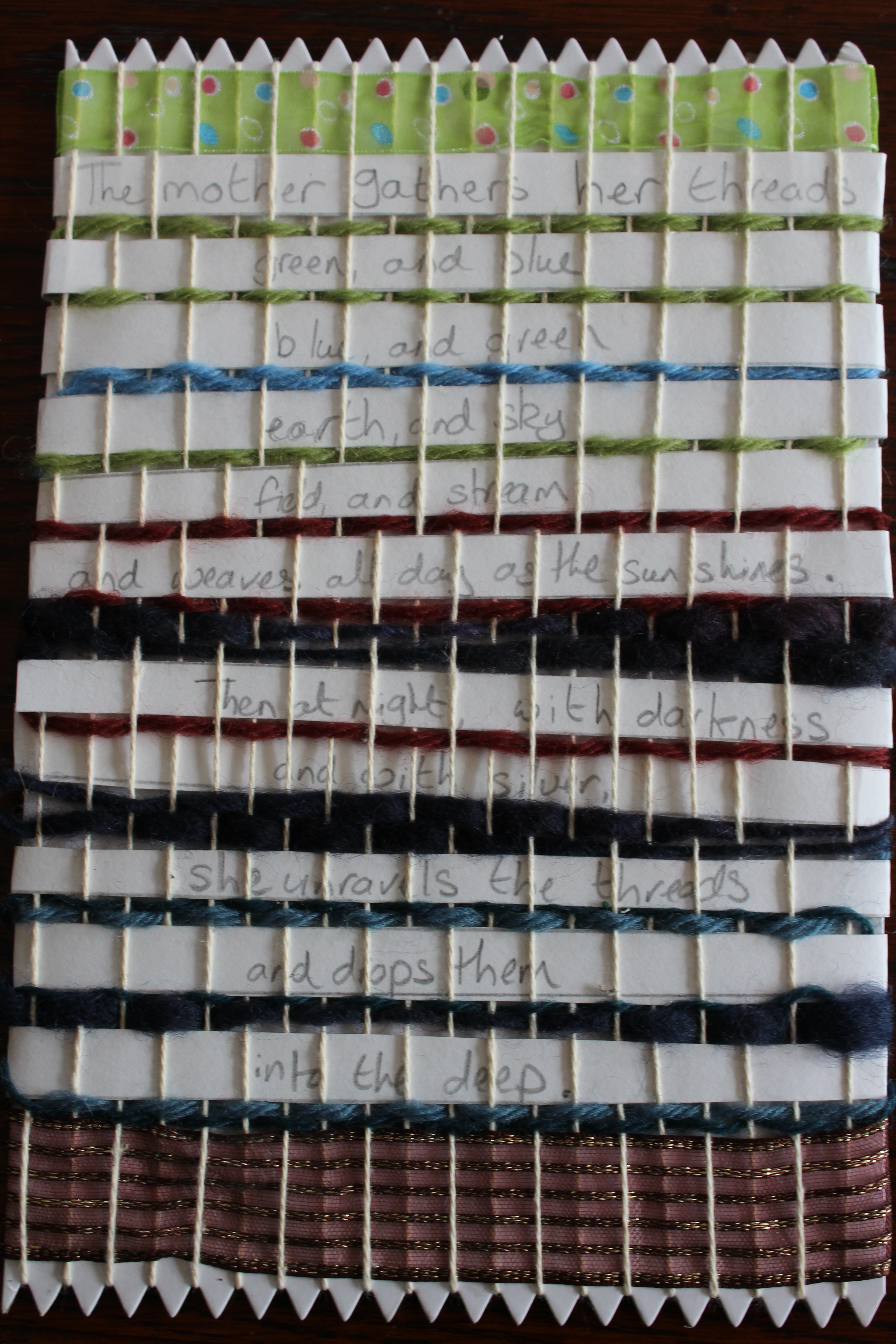
At the end of the afternoon, Beth Soule gave us some ideas for doing and making, including this little loom and baskets of threads.

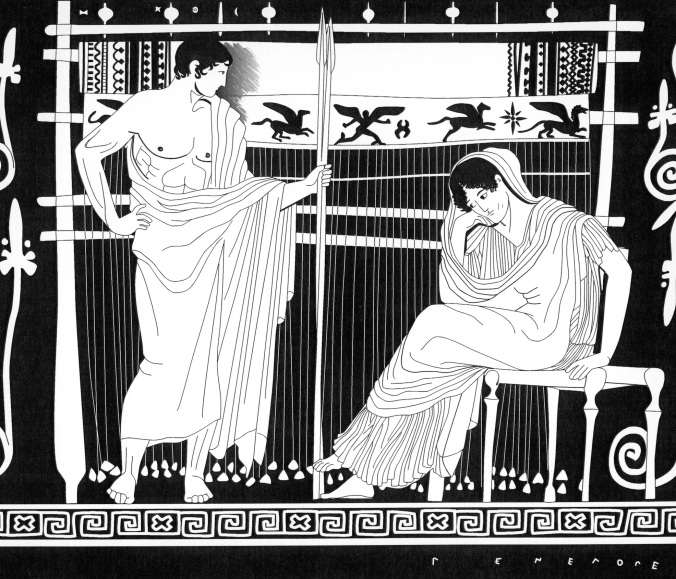
For several days, I’d had some words of Coleridge’s going round in my mind – I’m trying to find them.  I read them in Adam Nicolson’s wonderful “The Making of Poetry”, and they refer to Nature, like Penelope in the Odyssey, making and unmaking, weaving and unweaving.  So, there was an image in my mind of Nature, and Penelope, at her loom, weaving the shroud which she would then unweave at night, as nature makes and unmakes and makes again.

It’s a big theme for a small, playful piece, and maybe I shall return to it, especially if I can find the source.

For now, the woven poem is above, in the picture, hard to read, so here it is set out on a page.


penelope_loom_Chiusi_crop.jpg

Attic red-figure skyphos: Side A, Penelope seated before her loom, and Telemachus standing (both named). Attributed to the Penelope Painter, ca. 450–400 BCE. Chiusi, Museo Archeologico Nazionale, 63.564. Drawing by Valerie Woelfel.

Woven unwoven

The mother gathers her threads,
green, and blue,
blue, and green,
earth, and sky,
field, and stream,
and weaves all day as the sun shines.

Then, at night, with darkness,
and with silver,
she unravels the threads
and drops them
into the deep.


I went to the workshop with my friend, Tracy Watson-Brown.  You can read her poems
Spinning Song

and

Bugs and blossom

on her blog.


Poem- Spider

matthew-spidersilk2

Photo – Matthew Ling

img_0672

Yesterday, I took part in a Poetry Workshop led by Beth Soule of the Suffolk Poetry Society

It was held in the Bank Arts Centre, Eye, which really used to be a bank.  I loved the solid mahogany, looking prosperous and dependable, hung with colourful pictures and full of new life.  The food we had was delicious, and the company stimulating as ever.  There is something very special about writing companionably with others, supporting each other.  It was good to be reminded of that!

The theme of the day was “They toil not” – spinning and weaving – and Beth gave us such a rich feast of material that, as we read our work to each other, we saw what ideas had been stimulated and encouraged.
My mind was turning over a poem by Walt Whitman as I came to write this:


Spider

Growing in a hidden place,
until the day those long, many jointed
legs begin to flex, and stretch,
and take you out
into the autumn light,
where gnats wail,
and flies buzz slowly

Until, balancing on the end
of the brown buttons of hollyhocks
you throw out your lines.
Where will they land?
You throw again across cool air,
beyond sight of your many eyes,
throw again until something

catches, some connection
holds fast, at last,
and you go into your unknown
along a trail
you have already laid for
yourself to follow,
familiar under your delicate feet.


It’s not the first time spiders have caught my attention.

Spiders – September

Silk

Another poem from the workshop can be found here

I went to the workshop with my friend Tracy Watson-Brown, and her poem is here: Spider

Poem – Today, July 19th

IMG_0920.JPG

IMG_0918.JPG
IMG_0917.JPG


It’s been a busy few weeks.  I’ve had the enormous privilege of speaking at the 150th Anniversary Festival Service for my old college, Girton.  It was such a special service, and the choir filled the red brick chapel with marvelous sound.  How good to celebrate 150 years since the college’s small beginnings – the small beginnings of women’s higher education in this country.  It was so good to be able to contribute to a diverse and joyful weekend. A huge thank you to Malcolm Guite for inviting me to speak.

What with that, and this – this, and that, I have rather lost my daily rhythm of writing, and today I thought I would try again.  Just to sit with a notebook and begin, and see where my pencil took me.

It didn’t take me very far at all.  It kept me right where I am.


Today, July 17th

Today is a day of butterflies –
white against the deep greens,
the purples,
tumbling over the lavender –
intoxicated.

Today the hard nubs of
apples wait for their
slow ripening,
and the last of the buttercups
shimmer faintly.
Tomorrow, and yesterday,
yesterday, and tomorrow,
but now,

Today, is a day for hollyhocks,
frilled and pastel,
full of large fat bees,
while the young newts
hide there, under the red
watering can,
and the sky turns white,
and the swifts fly high,
and my eyes fill with
limpid light.
It is enough.


IMG_0919.JPG

Poem: Jacob’s Ladder


IMG_0914.JPG

One of the loveliest spots in my home is the window seat.  In the winter, the radiator does its work through the wood, and it is warm and snug.  At this time of year, as you sit you are surrounded by flowers, and every day you see something new opening.

IMG_0913

This poem is a poem of waking up. To begin with, the life of the world seems far away, on the other side of glass.  Gradually, though, I begin to see.


Jacob’s Ladder

Sitting on the window seat, in this box of light,
I drink warm, bitter coffee, my mind waking slowly from  sleep.

There is a fly buzzing against the glass, black and slow,
not getting through.  On the other side is the cool sun,
the flowerheads and flowerbuds swaying in the breeze,
their stems crossing and crisscrossing  in straight green lines,
Making rhomboids, diamonds of the brightness.
And so I sit here, as if among the flowers,
not feeling the breeze, not catching the scent.

There are the bright, tissue paper flames of poppies,
and the soft deep pinks of the columbine,
dove among flowers,
And the euphorbia – black with bees –
their green flowers full of sweetness.

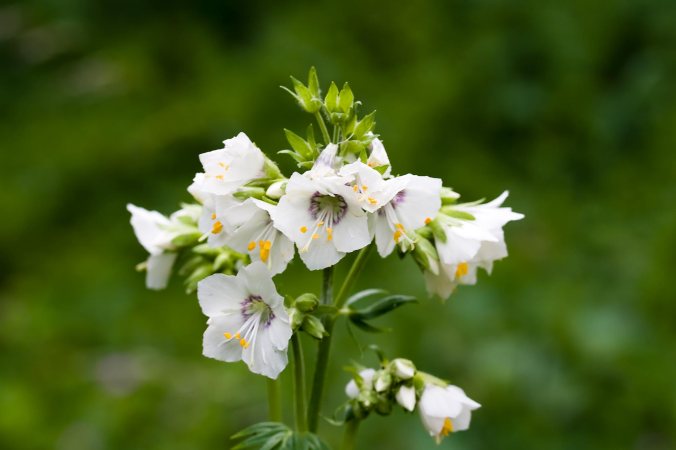
But there, suddenly, are the tall spikes of Jacob’s ladder,
new dazzling white, startling, perfect.
They must have opened early while I slept.
Those flowers – small, spread out skirts
of pure white, anthers gold with pollen,
the delicate deep ring of purple veins –
drawing you deep to the green-dark heart of the flower,
curled, mysterious, where the heavy bee probes
for nectar as sweet as the honey yet to come.

Angels ascending and descending,
ascending and descending
as the stiff green stems are swaying,
are still swaying in the cool breeze.  The day begins.

white-jacobs-ladder

The name of this plant calls to mind the story of Jacob in Genesis, which is also a story of coming to see, of waking up.
Here is my retelling from The Bible Retold, the text shared by The Lion Classic Bible

Jacob went alone, travelling unitl it was dark.  Shivering in the chill of the desert night, he took a stone for a pillow, and lay down to sleep.  As Jacob slept, a dream came to him.  He saw a ladder, with its feet on the ground, stretching up and up to heaven.  In his dream, he watched as God’s bright angels travelled up and down in between heaven and earth.  And in his dream, God himself was there.
…….
Jacob woke with a jolt and looked around.  He was alone.
“God was here and I didn’t know it!  This place is the gate of heaven!” he said  Then he took the stone he had slept upon and set it up as an altar to God. He poured oil on it as an offering, and worshipped there.

You can read the Genesis story here

Jacob's ladder

Sophy Williams’ beautiful illustration from The Lion Classic Bible


Help us, like Jacob, dream of angels.
Help us, wherever we wake,
to know that you are there, too.
Help us to see with new eyes.

Poem for Pentecost, and some readings

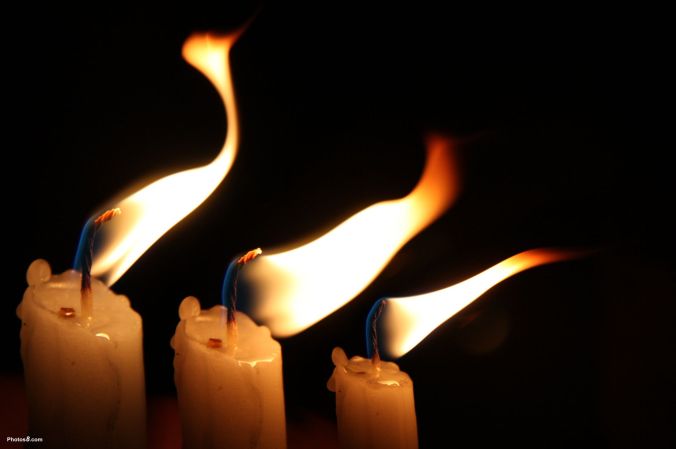
candles_flame_in_the_wind-other

Wind and fire – two of the ways people have tried to describe the Spirit.

As we approach Pentecost Sunday, I am sharing with you some readings and a poem.  Please feel free to use them if they help you, saying where they are from.

Firstly, a reading from my book The Bible Retold


From the fields it came: the first sheaf of barley cut for that year’s harvest.  It was carried high through streets crammed with visitors, and on to the Temple. And then the priest offered it to God, giving thanks for the good land, and for the gift of harvest. For that day was the celebration of the first fruits.  It was Pentecost.

Meanwhile, the disciples were all together, waiting.  Then, suddenly, it began.  It stared with sound – a sound like the wind – but this was no gentle harvest breeze.  This was a shaking and a roaring: a sound of power, whooshing and howling about the house, rattling every door and shutter.  The sound seemed to come down from heaven itself, and filled the house as the wind fills sails.  Then, the disciples watched wide-eyed as something that looked like fire came down, and tongues of flame peeled off it and rested on each of them without burning them.  All of them were filled, for the Holy Spirit had come.  And as it happened, their tongues were loosened, and they began to speak as the Spirit gave them words.  These words were not Aramaic, their own language, but in languages that were unknown to them.
A crowd had gathered by the house because of the extraordinary sound, but then they heard voices. There were pilgrims in Jerusalem from all over the known world, and they recognized the words the disciples were speaking.
“He’s talking Egyptian!” said one.
“That one’s talking my language,” said a visitor from Crete – and the same was true for all.  Each person heard God’s praises in their own tongue.
“What can it mean?” they asked each other.  But others among the crowd joked that the disciples had been drinking.
The Twelve heard what they were saying, so Simon Peter stood up to speak to the crowds.
“Listen, I’ll tell you what’s happening.  We’re not drunk! It’s too early in the day for that! This is God’s promise come true.  Do you remember what one of the prophets wrote long ago?
I’ll pour out my Spirit on everyone – young and old.
Your sons and daughters will prophesy,
young men will have visions, and old men dreams.
All who follow me – men and women – will
be given my Spirit, and there will be wonders!


4epenb-jyoti-sahi-pentecost

And in response, some prayers from Prayers and Verses

Christ has no body now on earth but yours,
no hands but yours, no feet but yours…
Yours are the feet with which he is to go
about doing good,
and yours are the hands with which he is to
bless us now.
St Theresa of Avila 1515-82


Pentecost

Spirit of God
put love in my life.
Spirit of God
put joy in my life.
Spirit of God
put peace in my life.
Spirit of God
make me patient.
Spirit of God
make me kind.
Spirit of God
make me good.
Spirit of God
give me faithfulness.
Spirit of God
give me humility.
Spirit of God
give me self-control.

From Galatians 5:22–23

When I’m retelling stories from the Bible, I often spend time before them quietly, sinking into the story, wondering what it would have been like to have been there, to have seen and heard and felt…..  As well as the retelling, this poem emerged from that process of contemplation.

SPIRIT

How would it feel, then, to live
in that God-shaken house?
To feel the wind,
like the very breath of life,
like the stirring of the
deep before time,
gusting through these small
daily rooms, clattering and pressing
against doors and shutters,
not to be contained?

How would it feel to look up, eyes
dried by wind-force,
and see fire falling, flames bright
and crackling, and resting with
heat that does not burn on each
wondrous head?

To be blown open
lock-sprung
lifted
with wild reckless joy
as words tumble out into
the clear singing light?

It would feel like this,
it feels like this,
and it is still only morning.


Acts 2 1-4
This post draws on the series Sunday Retold


IMG_0557


Poem: Sheringham Park Pigeons


WP_20180508_10_33_20_Pro - Copy.jpg

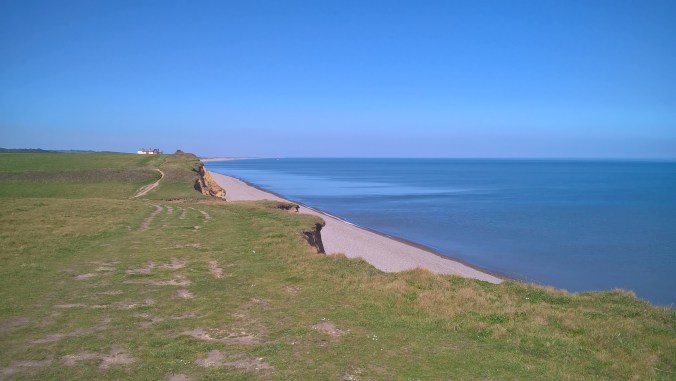
The Norfolk coast is such a beautiful and fragile place.  We walked there again,  close to cliffs that seemed to be sheering away into heaps of sand.  I tried to keep the recommended five meters from the edge.  I am not afraid of heights, but I was afraid of these cliffs.

Living in East Anglia we are very aware how precarious we are, with the power of the North Sea beside us, with the ground under our feet seeming sandy, and uncertain.  I feel the threat of that sea driven by north winds, rising as the ice melts.  These places, and the creatures that live there, like the sand martins, like us, are in uncertain times.  And although it may be tempting to despair of what is happening to our world, what our systems of greed have done and are doing to the world, I feel our sense of beauty and fragility offers us a note of hope, too.  The sorrow for what we have lost, and what we are losing – all those precious creatures, plants, places – can bring us to our senses, can help us wake up, and treasure what is close, what greets us every day with a soft, green welcome.

Sheringham Park is full of bright colour in spring – first the azaleas, then the rhododendrons.  There is a tower you can climb to look over the tops of these extraordinary banks of pink, and purple, and red.

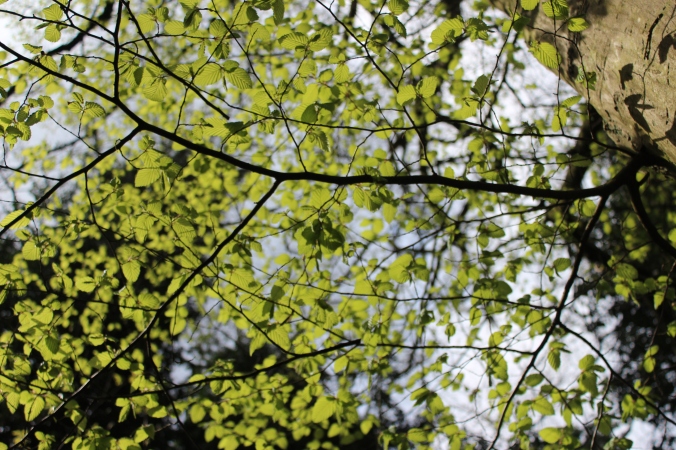
What caught me, though, what filled me with wonder, what made me feel a part of this place, was a beech tree, and some pigeons.  The startle as they all flew away made me feel that moment, and that place – a sense of awe, of connection, of being one with a place.
It seems such a small thing in the face of potential global catastrophe – to love a place, to be awed by such ordinary things as a beech tree in new leaf, as a crowd of pigeons.  I wonder if it is such a small thing, though.  I wonder if that sense of love and connection can open us to another way of being in the Earth – humbled by its hospitality, aware we have gifts to offer in return, walking softly.

IMG_0887


Sheringham Park Pigeons

 At the top of the ridge –
from here the land slopes to the sea –
from the top of the tallest beech tree
singing with new green,
shining with life,
the pigeons fly
away in clattering waves,
circle after circle of them.

My steps disturbed them,
although my shoes are soft.
How could there be so many,
crashing through the blue air
in tens, in hundreds it seems,
in circles that grow wider and wider
their flights the spokes of a wheel.
And here, this smooth old grey trunk
its very centre.
Where I stand,
the very centre.