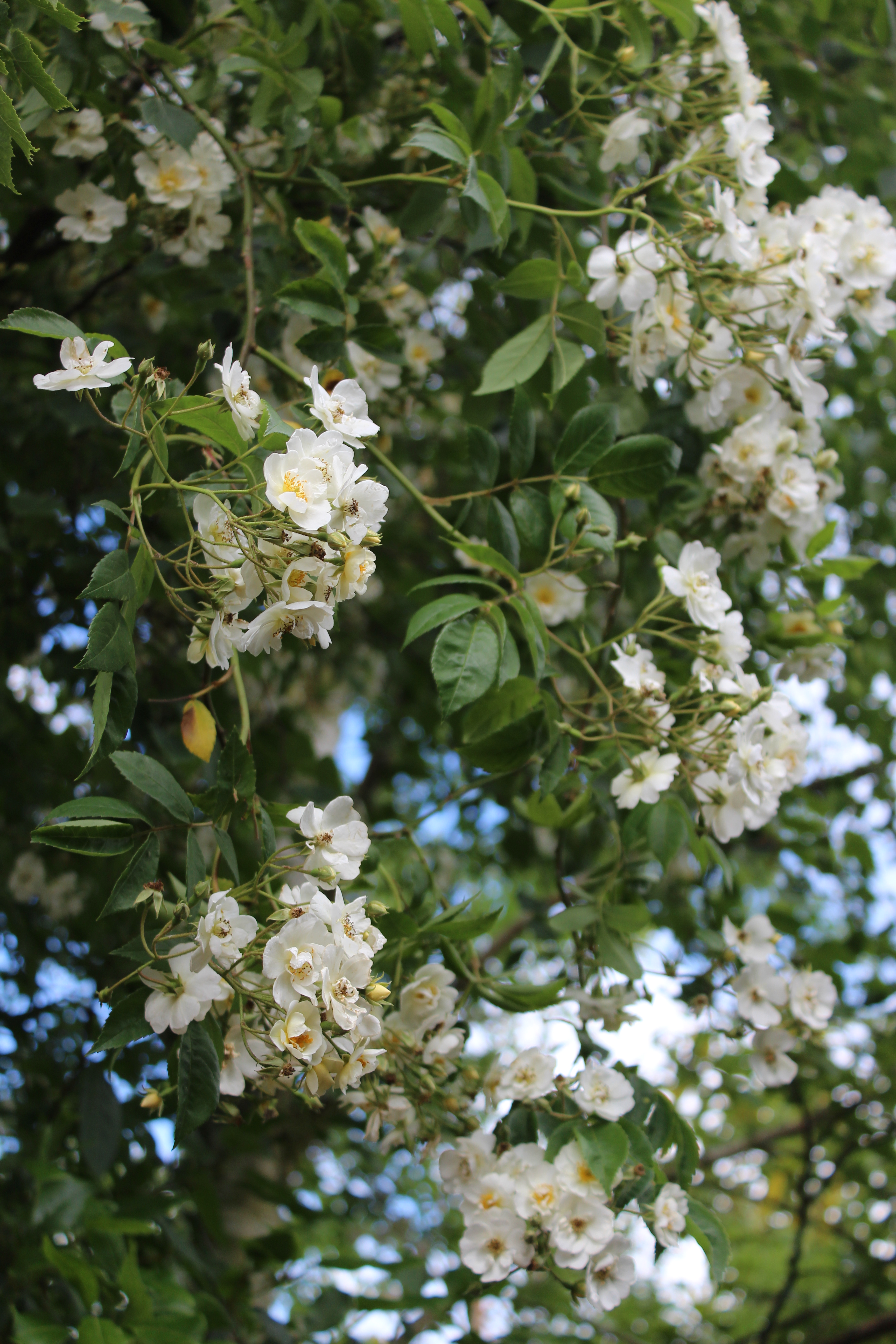
Walking after Edward Fitzgerald.

So, we’ve been been on our feet quite a lot as part of my husband’s walking project.  We thought we would stay local last weekend, and as we’d been talking about the poet Edward Fitzgerald recently, we thought we’d explore some of the places where he lived and worked and saw his friends.  My husband has just finished reading a book he gave me some time ago, The Artist’s daughter written by the late Sally Kibble.

s-l1600

It’s a lovely book, a fictionalised memoir of Ellen Churchyard, daughter of Thomas.  It shows the group of friends, The Woodbridge Wits, who took great pleasure in, and inspiration from, each other’s company and cast of mind.  EFG was part of this group. There are accounts of their meals and walks and conversations.  The book is full of the lovely soft pictures of Churchyard, and some of these were of locations that you can still trace, and recognise, today.  Personally, I would have liked a bit more of the poetry of EFG and Bernard Barton, but I’m trying to fill those gaps with my own reading.

churchyard view of the river deben.jpg

View of the River Deben, Thomas Churchyard.  Painted near the railway bridge – you can see the steam train bending away towards the station.

We  planned a walk which was just shy of ten miles in the end, quite ambitious for me, but it took in many of the places where EFG lived in and around Woodbridge, Suffolk.  The first place on the itinerary is also, probably, my favourite.

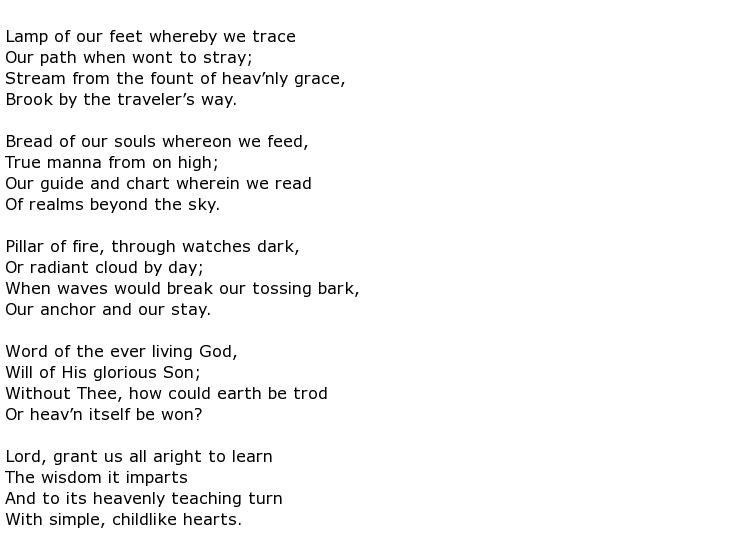
The Quaker poet Bernard Barton’s tiny crooked cottage was the place where they often met – these Woodbridge Wits – to eat cheese on toast.  For that was all they could cook over the fire, the only means of cooking.  It seems to have been one of their favourite places, too.  Bernard and his daughter Lucy were clearly good company and warm hearted hosts.  Their simplicity and equality of life appealed to EFG.   The artist and lawyer Thomas Churchyard lived up the road, and it’s lovely to think of them together, talking in the firelight with the smell of toasted cheese.  These two poets were also friends with other writers – Tennyson, Charles Lamb, Robert Southey and Anne Knight among them.   I am trying to track down some more of Barton’s poems, and you do occasionally find his lyrics in an old hymn book, such as these, which seems apporpriate for a walk.
Despite Edward Fitzgerald’s privileged background – his family lived nearby in Boulge Hall – he preferred simpler settings. He had rooms above a shop on the Market Hill, and you can see a stone plaque marking the spot – very like the one on his rooms in King’s Parade, Cambridge – just up the hill from Barton’s cottage, and even nearer the Bull Inn where Tennyson stayed when visiting him. From here, after buying eccles cakes from The Cake Shop to sustain us, we meandered around past other places where he had associations, on the way to Boulge Hall, with the church next to it.

Boulge Church, the main focus of our walk, has been snagging at my mind.  It is where he is buried.  I had been before, on another walk, with a friend, but my husband had not.
I remembered it was hard to find, that there was no lane to it, and that the paths did not seem to follow the OS map – not even when we used the one on the phone rather than our battered paper one that was giving way on the creases.  And so it proved to be this time.  We saw one sign from the road – at the site of the lodge cottage where EFG had lived in preference to the Hall – which said “No access to church” but there was no sign telling us which way to go.  After much meandering,  a walk along what looked like a long-gone drive between trees, and a short dash along the private-no-right-of-way lane, we found the church.

Perhaps it had been the private church of the estate at some point,  it didn’t feel like a public space.  But it was open, and clearly used, with hymn books and information and welcome. The congregation must be adventurous, and dedicated. There were instructions as to how to turn on the lights – it was an old church with small windows,very dark despite the sunshine. So we turned the lights on, and sat and rested in the peace.  Sitting there, I saw in a side chapel some plaques up with the Fitzgerald name on them, but they were not for Edward.  There wasn’t any of his poetry about.  I was wondering if there might be some kind of memorial, or stone with verse, or a card, but I couldn’t see one.  It was almost as if the long-ago family tension was still exerting an influence.

Outside, in the graveyard, is an elaborate family vault, with a simple granite slab next door for Edward.  There is a rose planted at the head. The rose is a descendant of that on the tomb of Omar Khayyam, whose great poem EFG translated.  There is another rose at the foot.  It seems that it was his request not to be buried in the family tomb.  As he had lived at the gatehouse on the edge of the grounds of the hall, reading and writing and having his friends for simple meals, so he was buried outside the vault.

He loved simplicity, friendship of the mind,  and left behind an astonishing piece of work, in his translation of the Rubaiyat of Omar Khayyam.  Maybe some in the family disapproved of this work, from a Persian mathematician and astronomer.  It only came to be generally respected after his death.

As we sat on the bench in the churchyard, eating our snack, I wished I had brought the book with me.  My copy is hardbacked, and quite heavy, but a quick look on my phone brought up the following lines.  They seemed appropriate for reading under the tree where we were.  They celebrated something very profound, a kind of communion.
A simple meal of bread and wine, and companionship, these are riches indeed.

Here with a Loaf of Bread beneath the Bough,
A Flask of Wine, a Book of Verse—and Thou
Beside me singing in the Wilderness—
And Wilderness is Paradise enow.
I thought these words were in keeping with the spot.

We carried on walking, taking in some more places where EFG had lived. The pattern of roads and lanes and paths has been the same for so many generations.  So many other people, remarkable in their way and in their time, have walked here.  It felt good to remember and honour them, the ones who thought of themselves as ordinary, the ones who have been forgotten, and know that our steps succeed theirs, and in turn will be succeeded by those who come after us.

churchyard windy day near melton.jpg

Churchyard – a windy day near Melton
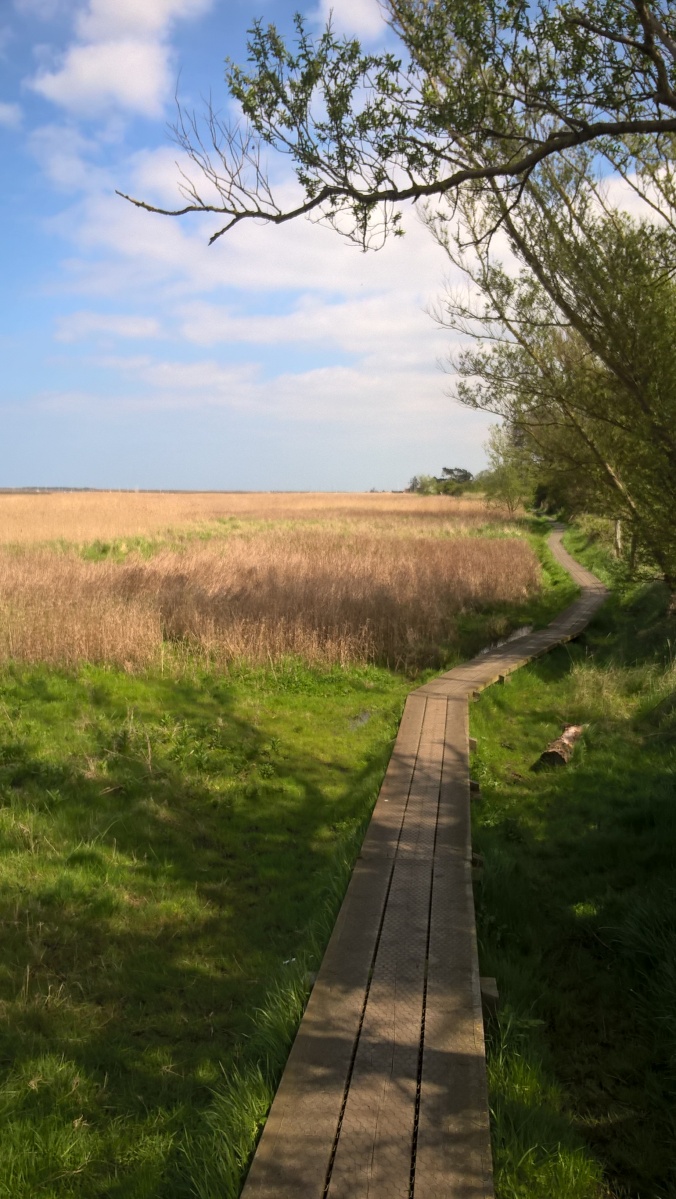
Norfolk coast path – a poem about the bus.

WP_20180503_15_07_04_Pro

This year is a year of walking.

WP_20180504_13_18_15_Pro

WP_20180507_12_31_38_Pro

Peter, my husband, is doing the Country Walking 1000 miles  challenge. He’s well ahead of schedule, and it’s a brilliant project, doing him much good. I don’t tend to sign up for things that have quite such a big commitment to exertion, but I seem to be covering a great many miles, even so!  I just reserve the right not to, for instance now, when evening walking leaves me too hot to sleep….

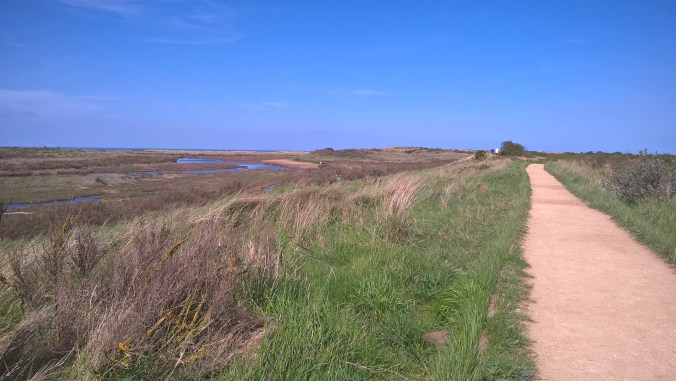
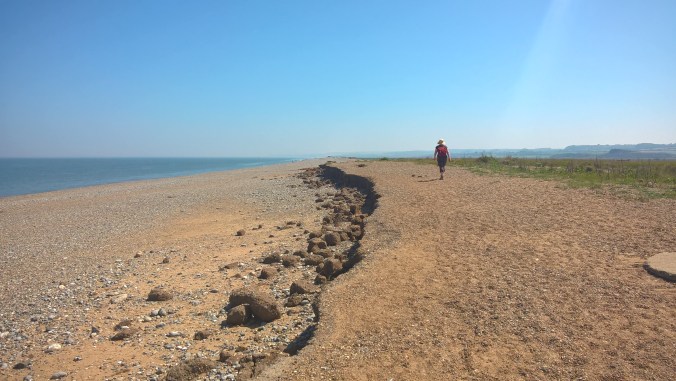
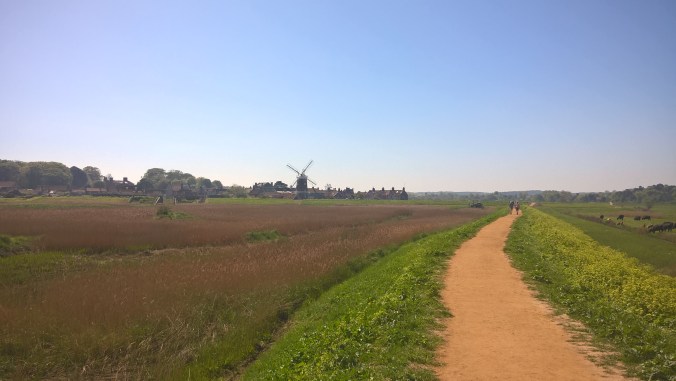
We thought we might give the Norfolk Coast Path a go – Hunstanton to Cromer, as it’s not too far away, and flat, and beautiful, and dotted with lovely B and Bs and tea shops and pubs for rest stops….

And we did!  Before the weather got to be quite as hot as it is now, we walked the distance, with breezes and the cool brown North Sea to keep us going.  Taking on such a, for me, long walk was made all the sweeter by the memory of illness recovered from, health restored.  How good to feel the strength of your body, to rejoice in its ability to just keep on going.  How good to let your feet take you over sand, and marsh, and boardwalk, and lane. It felt good to rejoice in being upright, and in seeing such beauty.

WP_20180507_11_17_46_Pro.jpg

I’m hoping to write up some more of what filled my notebooks as we went, but, for now, I’m just dipping my toes back in with a poem about a key part of the walk, the coast bus, which made it possible.  You can walk one way and get the bus back, or to wherever you need to be that night.  It’s a bus well used by the locals, who are happy to tell you about good shops, and places to see marsh harriers, and other useful things.  It’s cheerful and kindly as community services often are.

One day, we were done as the schools closed, and it was so good to share a few miles with kids who were clearly happy to be on their way home again.  It prompted another small poem, which I share with you now.


Norfolk coast bus

Sitting on the coast bus after
the wild open walking,
the huge sky,
the oyster-catchers,
The saltmarsh, and the reeds,
my legs stick to plastic seats,
the sun strikes hot through glass,

But as I breathe and cool, I hear the
young voices all around me,
laughing, wrestling with
musical instruments,
sports kit,
bags of files,
the weight of
home-from-school.

And when anyone reaches their stop,
one boy, near the front,
says goodbye to them,
each in turn,
and the partings ripple
back down the bus –
he, young as he is,
sets the tone.

You see the web
woven between them,
hot in nylon blazers,
and feel the life of them,
the kindness of them,
despite their loads.

For these few miles
I feel I am in community,
connected,
as I take off my straw hat,
and loosen the damp hair
from my head,
as the sound of voices
surrounds me
as the bonds of friendship
surround me,
I am restored.

WP_20180507_20_33_10_Pro.jpg

Poem – The courtesie of pigeons

Each morning at the moment, I go outside to see what’s happening.  I don’t get up with the dawn, so by the time I go outside, life has been bursting out for a couple of hours – there’s always something beautiful that makes me catch my breath.

I spend time sitting, meditating, or in contemplative prayer, and then I get out my notebook and try to write what I see, what is happening right now.

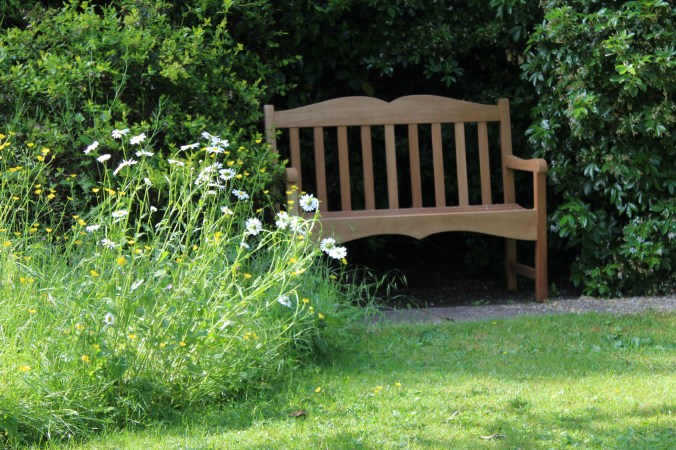
Our old bench was beginning to rock and sway, especially if more than one person sat on it, so we have a beautiful new one from Genesis, Orwell Mencap  I particularly like the way that someone involved in making the furniture comes to help deliver it, and see where it will be enjoyed.

IMG_0843.JPG

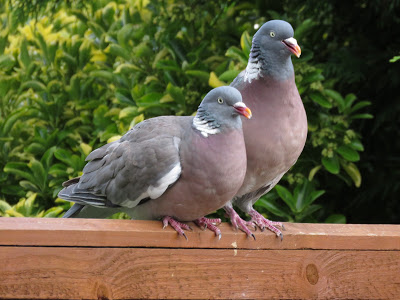
Sometimes, sitting on the bench, life’s dramas play out before you. This one, with the pair of pigeons who nest in our garden, felt like part of an old chivalric romance, hence the rather archaic spelling….

The courtesie of pigeons

The pigeons, on the roof-ridge,
or on the black line of the
telephone wire,
begin this dance the same
each day.

She, head bowed slightly away,
He, with a deep murmur,
bows low, his beak sinks
to meet the wire, or the tile.
With a tail elevated to the sky,
he puffs up, more than
his full size,
his wings droop slightly.
He rises and bows,
Rises and bows.

His gracefulness seems
to speak: My strength,
lady, is yours to command,
is at your disposal
should you wish, lady.

But she steps sideways,
and again, demurs
and flies, nonetheless,
but, nonetheless,
she cannot always do so,

for each year, come summer,
their plump grey squabs sidle
across the lawn,
feasting on its richness.

pigeon

Photograph by Africa Gomez

It calls to mind another pigeon saga…..Nest

Poem: Lent 1 – Scream


sourdoughtyraloafdec16

Hunger.

The first of Jesus’ temptations, Luke tells us, was to turn stones into bread.  Our hungers are real, even those of us who live in places where food is abundant, where we eat too much for our own good, and the good of others. Deep hungers drive us without our even knowing.

The lent discipline of fasting has never been one I have observed much.  I have, from time to time, tried giving up some kind of treat, but so far it has always been a form of self-indulgence all the same.  For my own good, for selfish reasons, for reasons of vanity, even.  This year I have been trying to open my eyes to the impact of my appetite on others.  I have been attempting to do so with gratitude for all the things that sustain my life, but I have dared to try to consider those things that were hidden – the hidden impact of my buying and eating in all its various forms.  Too much all at once would be too much for me, overwhelming, but……
but, today, this happened.  It pulled me up short.


Lent 1 – Scream

The sound unsettled me
before I knew I heard it –
Standing up straight, skin prickling,
I turned – what was it?
so like a scream,
like many, many screams.

Not the cry of waders on the river –
louder, larger, full of terror,
one to the other
passing the fear, rippling
back and forth.

And then I saw, stopped
at the traffic lights,
a galvanised lorry
dark slits along the side,
the occasional flash
of pink flesh.

Pigs. To market,
to slaughter.
I had been on my way
to the butchers to buy
gammon –
not now, not tonight.

Mushrooms, peppers,
herbs, garlic, roasted, yes.
We do not know what we do.
 

Dorset Poems – St Gabriel’s Chapel, 1


We’ve come back from such a tranquil, peaceful break at a National Trust Holiday Cottage – this one was down a long lane which said “No Cars”, and then we turned off to an even smaller lane where the grass swished against our exhaust pipe.  It felt so safe and undisturbed. I felt myself calming as we slipped further away down these winding lanes. While we were there, we did a lot of walking.  Taking the car out was less attractive than just putting on boots and setting off. And while we were there, the remains of Hurricane Ophelia made her presence felt.

She did great damage in Ireland, but where we were, we felt the effects of a dramatic weather event, without the destructive force.  My notebook went with me as we walked, and I tried to record something of the landscape’s response to the storm.


St Gabriel’s Chapel

WP_20171016_12_58_38_Pro.jpg

WP_20171014_16_59_17_Pro.jpg

Walks from the door.

WP_20171015_12_08_42_Pro.jpg

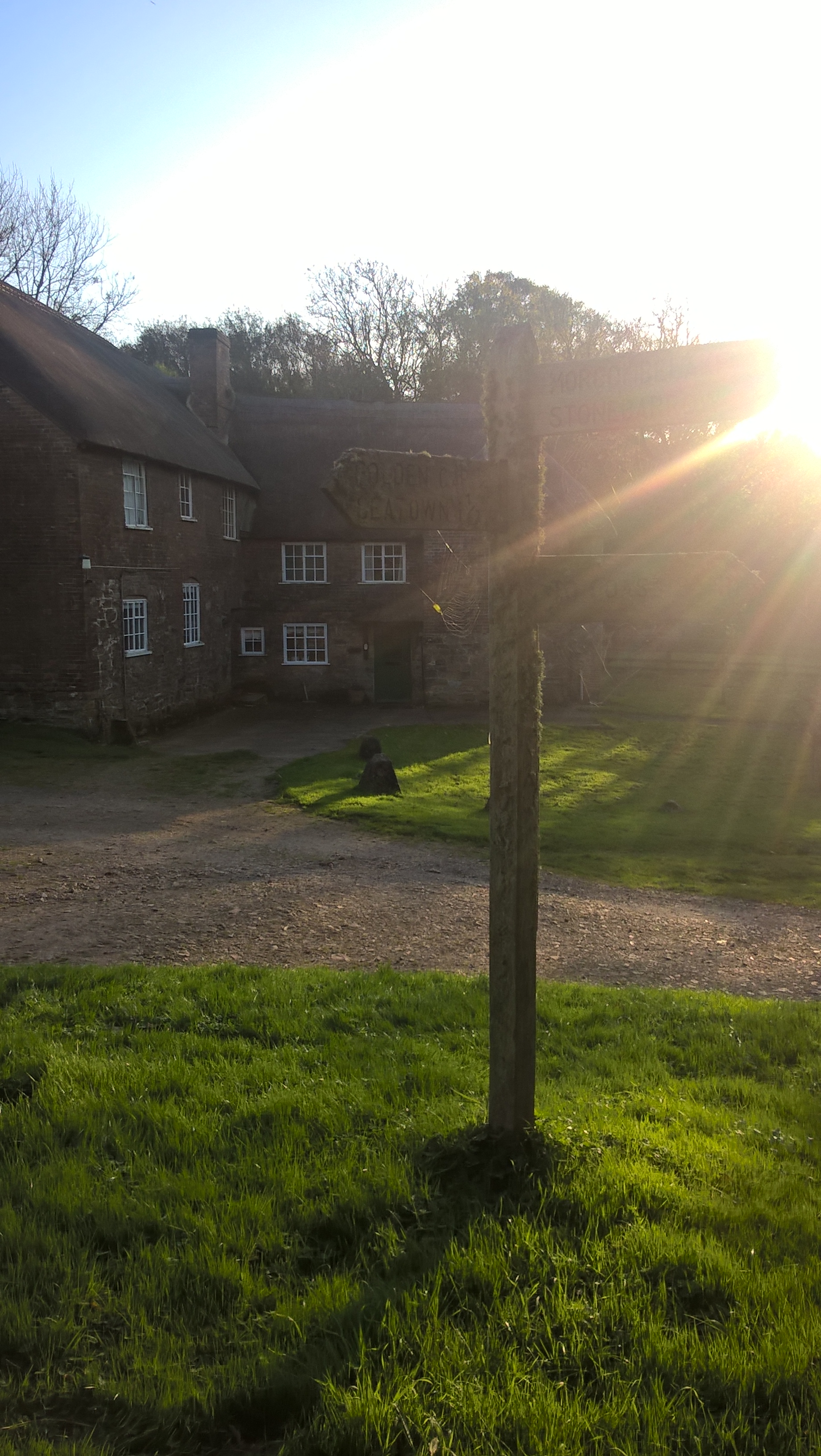
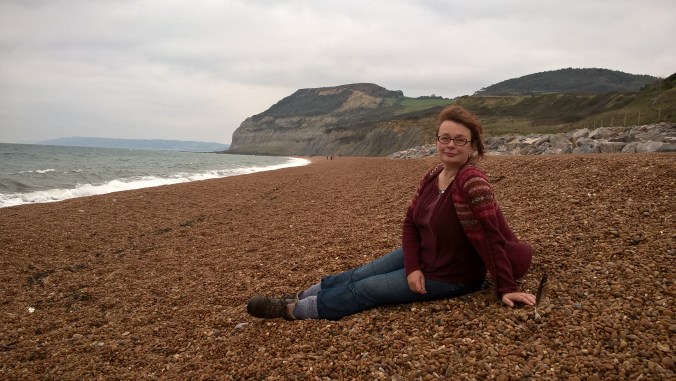
Seatown beach, with Golden Cap behind.  There is an excellent pub, The Anchor to refresh the weary walker! Portugese man of war jellyfish washed up on the beach.

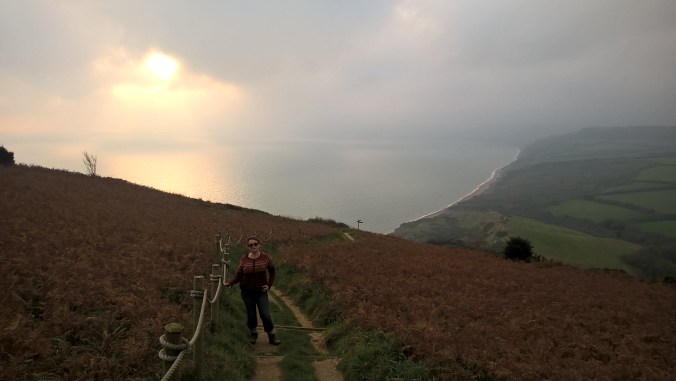
We stayed near the ruined chapel of St Gabriel.  As I sat to write, my thoughts diverged down two paths.  As an experiment, I’m trying to explore both paths in poems, each path taking as it’s starting point the experience of sitting in the chapel as the wind blew.  This first poem follows a more direct path, the one we took over the cliffs back to another cottage where we had stayed as a family years ago, a place full of memory.  It was so good to retrace such freedom and laughter.  Next door Downhouse Farm runs a garden cafe with delicious food, and we enjoyed resting and recovering there, before turning back.  It was a long walk, taking in Golden Cap, the highest point on the south coast, and as we climbed and descended, the sky began to turn a strange red, as the dust that came before the storm filled the air.


St Gabriel’s Chapel, Dorset,
Storm Ophelia
1

From inside this small, stone chapel,
over broken walls
I can see the sea –
the wild white water crashing
into the cob at Lyme,
the many clouds moving fast,
as one, the sky sliding
against the earth
as leaves
scratch in corners,
tangle in hair.
Yesterday the trees held
more, far more,
when we walked seven
hard miles of cliffs
and troughs,
back to the place
we were
years ago, when
we were
all so much younger,
and we walked, and ran,
with Bessie the dog,
down, down to the sea.
We retraced those steps
more slowly, yesterday,
but look how far
we walked,
look how far
we have come.


WP_20171015_17_29_36_Pro.jpg

WP_20171015_17_21_19_Pro.jpg

Thank you to Peter Skevington for the photographs.

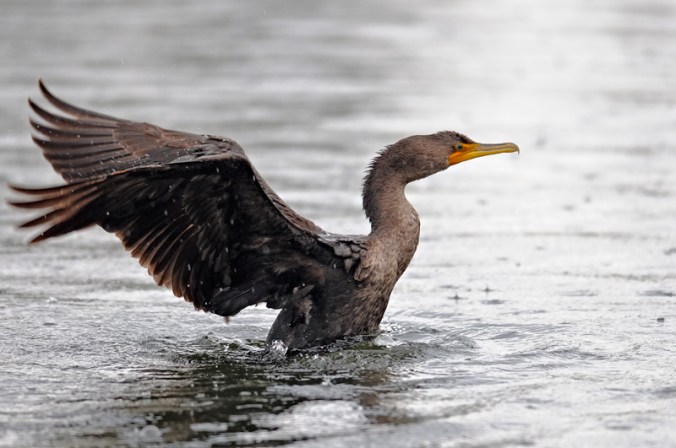
Poem – Cormorant

cormorant Graham Owen

Photo by Graham Owen

img_0212

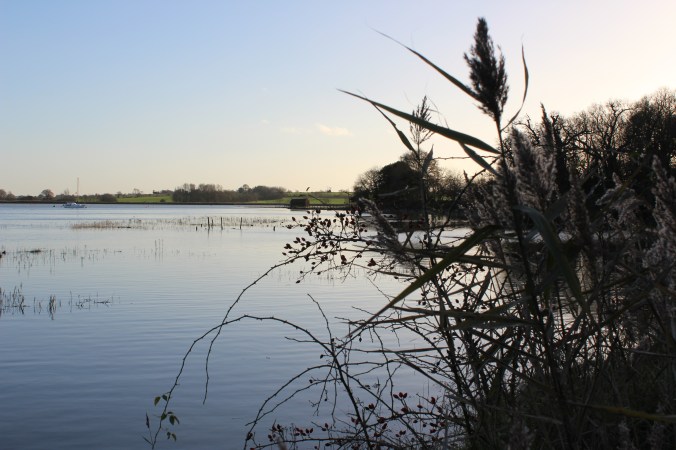
The River Deben


I used to walk by our river most days, with a notebook. I don’t know why I fell out of the habit, as it was a good one, but this week, I knew I needed to begin again.
So I walked along the lane, along the quiet creek, towards the bench where I used to sit and write,  when, just behind me, my attention was caught by an ungainly black shape moving fast.
Startled, I felt the emotions I had been seeking to keep under the surface.
The experience reminded me of the last line of Seamus Heaney’s wonderful Postscript

“And catch the heart off guard and blow it open ”

Like the white swans in their wild landscape in Heaney’s sonnet,  this dark bird on my river was some kind of liberation, revelation.

So I sat down on the bench where I used to sit, and wrote this:


Cormorant

Why is it, this bright morning,
that the sudden sight
of the cormorant
coming to land on the water
takes me unawares,
startles me open?
The tattered black wings,
stretching back,
the rangy sticks of feet,
the head, sharp as a
stabbing sword.

It lands in a single
fluid act, graceful upon
the slippery shining water,
but for a moment
only,
and then the bird
pierces the brightness
with that fine head
and dives
down into
its darkness.


Spiders


IMG_0837.JPG

IMG_0608.JPG

IMG_0832.JPG


September – such a rich month.  You can feel the year turning. I love the golden light, and the fruit and berries everywhere.  I love the mornings when spider webs are strung with dew, and there is a nip in the air, waking you up.

Spiders – where are they, the rest of the year?
They seem to be everywhere now, including in the house.  I keep reminding myself of the sterling work they are doing eating the flies, which were bothering me last month….

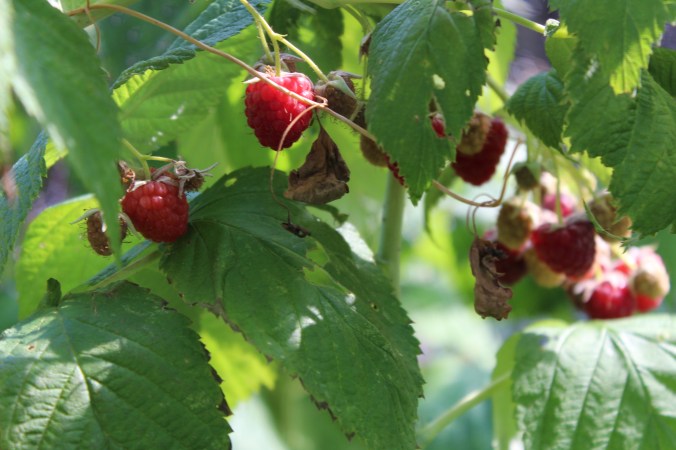
This is a small poem about the ways of spiders, and the power of waiting.  At this time of year, so much slow ripening is coming to fruition.  I find I have forgotten I watched the bees on the raspberries and the apple trees, wondering what the harvest would be.  I have moved on, thinking of something else.

I forget that much I have wondered about, worried about, prayed about, has turned out all right, after all – not everything, but enough.  I am learning the patience of spiders.


Spiders – September

Now is the time of spiders –
their silver webs spun between
leaves, and twigs, and blades of grass.
Each one has its weaver,
resting its legs
on fine threads,
its many eyes watching.

For now, warm fat insects
drift dreamily on
the September breeze.

The hedges hang
with berries, I cannot
pick the plums fast enough,
first apples bend branches,
and beans lengthen on their vines.

I am learning the patience
of spiders.
It comes.  What you need
comes to you.  Gently,
when you have almost
forgotten that you ever asked,
or wanted, or longed for it –
here, and here, and here..


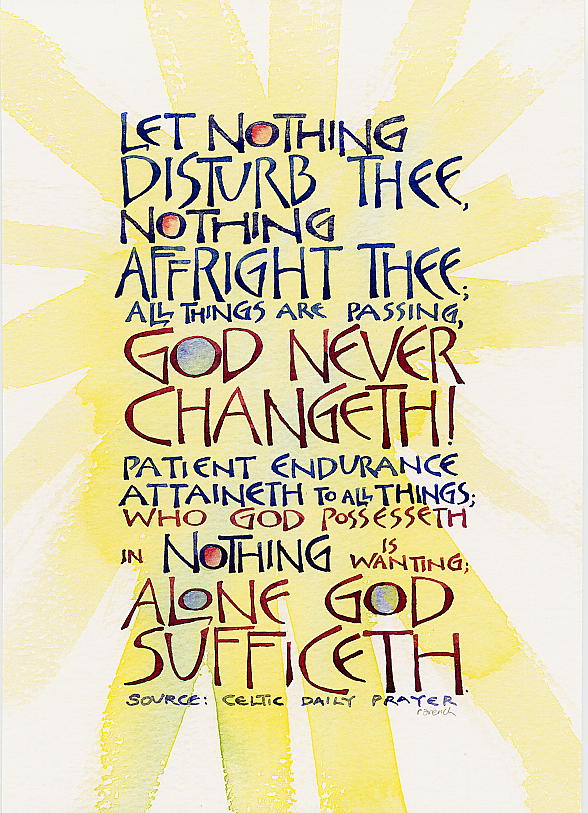
let nothing disturb.jpg

I have this on my computer desktop. It helps me remember the power of patience endurance, of not giving up.


How to read a Poem


img_0367

Earlier this week, a friend asked me how to read a poem.  It was a question I have been asked before, and so I felt I should know how to give a better answer than I did.  Of course, it may depend on the poem, and the mind and the training of the mind of the reader.  A good response to the question will take these things into account.

The exchange stayed with me, so I took some of the phrases of my answer, and wrote them in my notebook sitting on the garden bench later in the day.  I found they formed a a small poem themselves, inviting other words to join them – it’s what they seemed to want to do.

I begin with the mind – at school, so many of us ended up approaching poetry as if it were a form of cryptography, as if the pesky poet had deliberately concealed a meaning and we had to puzzle it out. Poetry rarely holds that kind of meaning.  In this, it is similar to story, as I was thinking in my previous post about parables.   The mind is a great resource in reading, and writing, and good academic rigour can seriously deepen our joy in a poem, but, for the nervous reader, it is not a good place to start.

Try starting like this, and see if that helps.

If you like to listen, you can listen here.


How to read a poem

Let your mind rest.
Do not pursue it anxiously,
grasping for meaning.

There is no riddle here
that must be solved
or else doom will fall.
No puzzle to puzzle
for a prize.

Let the sounds of the words
soak you,
water you.
Let the colours of the words
fill your eyes.
Receive it all, then,
with a yes,
hold the words
cool and dripping
in your cupped mind.

Come back,
come back again, for
something that snagged
your dreams
like the dark brambles
over an autumn path.

Come back.
In time, the words may
open to you.
You may taste
their sweet sharpness.
They may grow in you,
nourishing you again
and again.


wp_20170102_14_12_07_pro

Poem – Treasure, Hidden. Of perseverance and hope.


Treasure, Buried

Each morning I find
small divots in the lawn,
dug neatly, completely.

Sometimes, the squirrel
comes while I am there –
both of us, quiet –
and with an arched back
and a bright eye
she digs.

Does she ever find her
hazelnut?
I don’t know.
I haven’t seen.

I do know I find
a seedling growing
unexpectedly somewhere,
sometimes,
and wonder –
was it her?

I push the divots
back into the lawn.
Each day there are more,
and more.

We value persistence,
the squirrel and I,
we value hope.

Poem – Morning Yoga Practice June 2017

IMG_0815.JPG


IMG_0816.JPG

IMG_0817.JPG

IMG_0818.JPG


There has been much grief in the UK this week, met with an outpouring of love, and courage, and kindness.  These sudden losses shock us, remind us of our fragility, and the fragility of those we love.  The moments of national grief catch up our own more private losses, bring to mind what has gone before, and can take us deeper into questions – and the capacity to endure the space between the question and anything like an answer.

After reading Malcolm Guite’s reflections on being so close to the terrible events at London Bridge on Saturday night, I too have had these words of Shakespeare on my mind.

How with this rage shall beauty hold a plea
Whose action is no stronger than a flower?
O! how shall summer’s honey breath hold out,
Against the wrackful siege of batt’ring days?

Asking questions seems a good response to the depths,

I am returning to my practice of writing freely, recording what draws my attention.  This morning it was this.


Morning yoga practice  June 2017

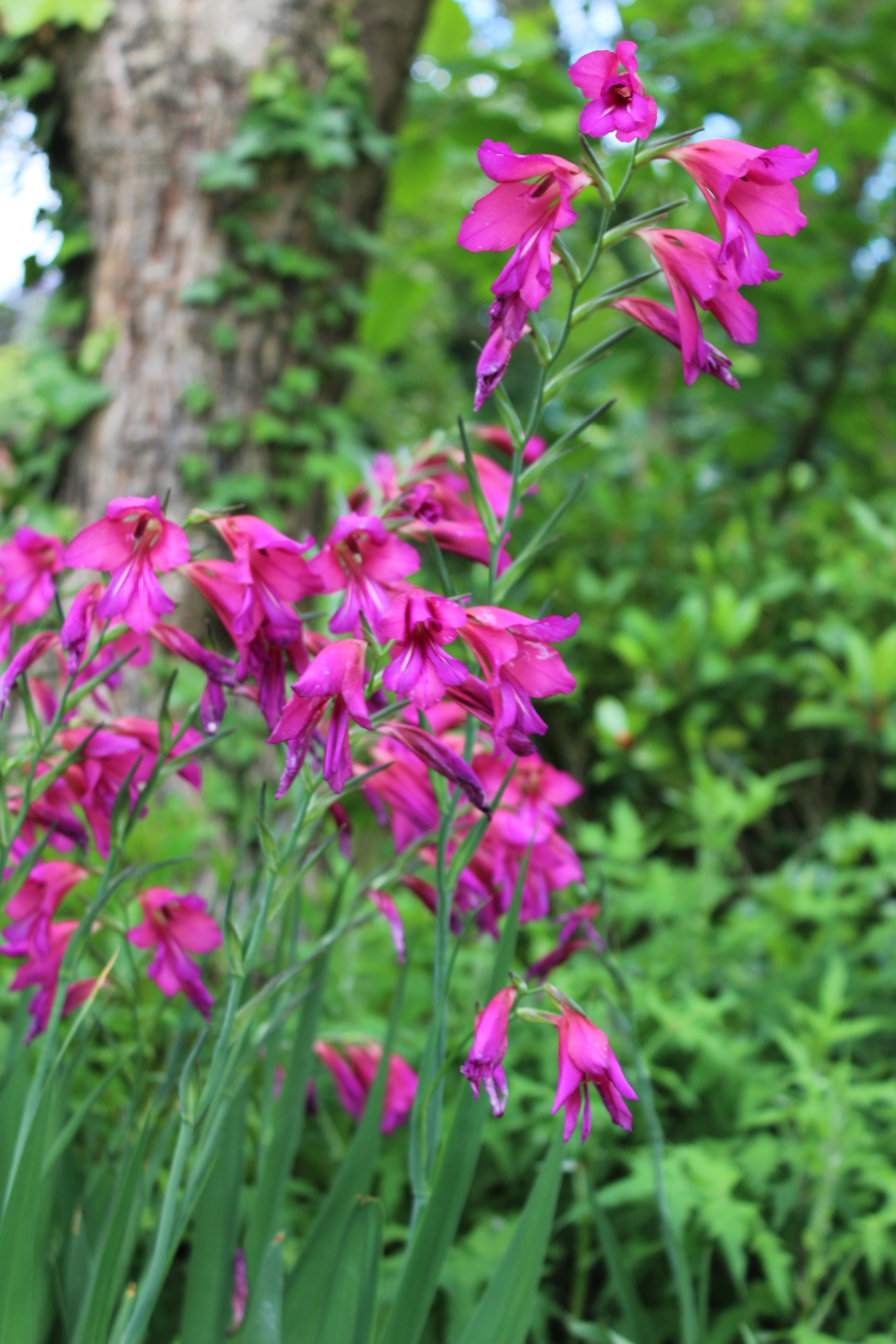
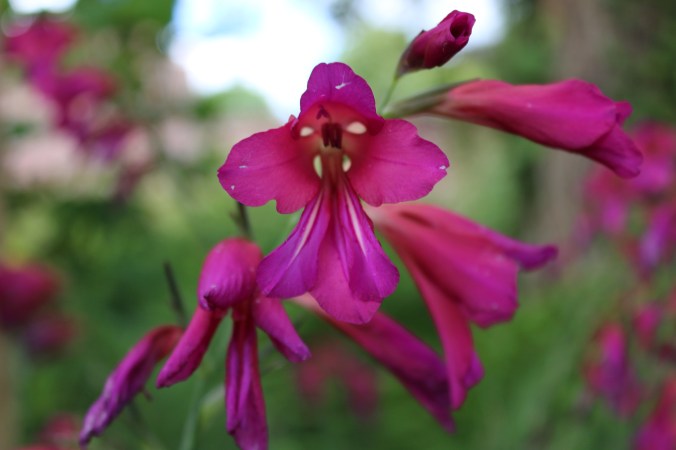
I bend on the grass,
look up at the bending gladioli
dancing cerise with their
graceful arches

as June’s north wind
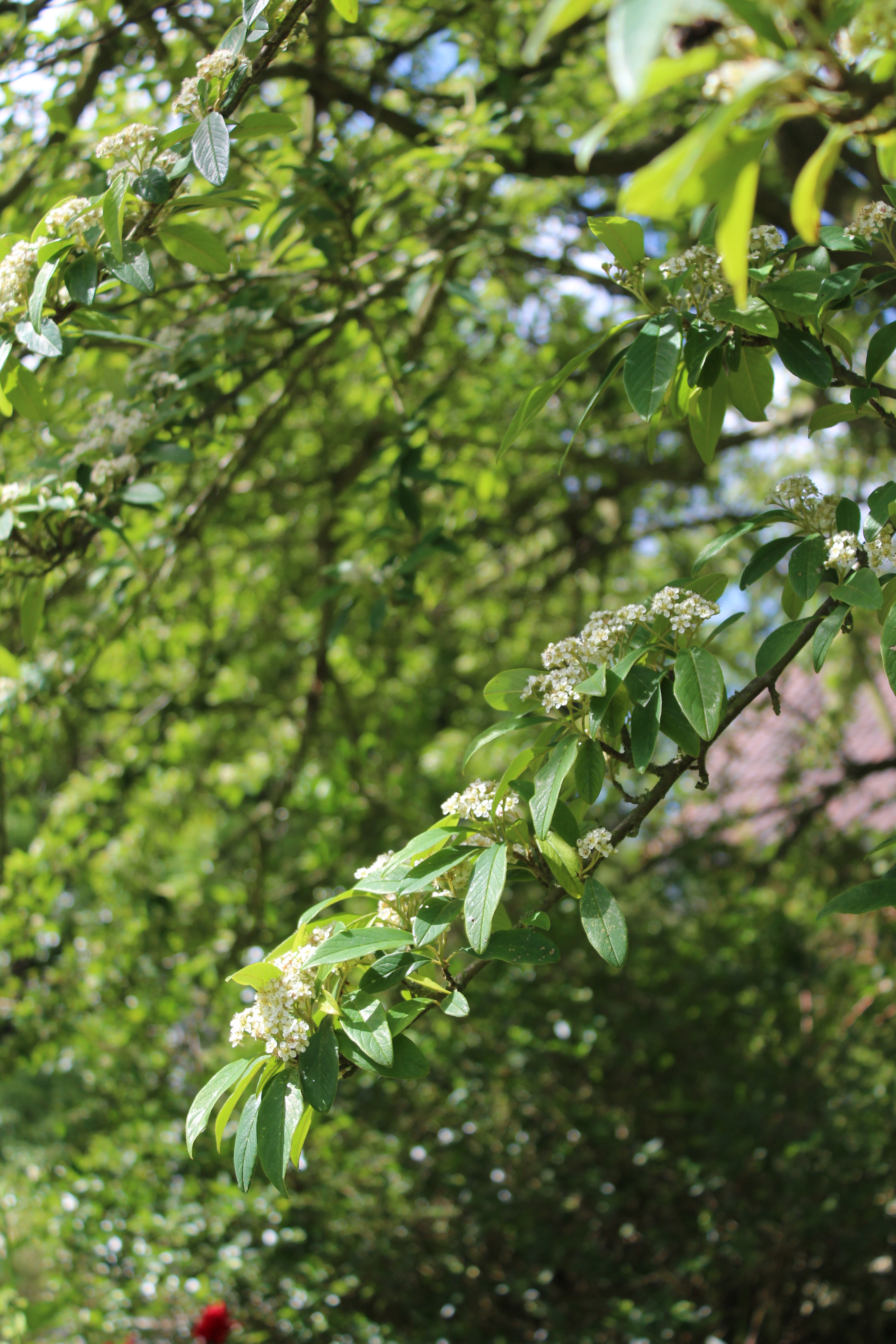
rocks the branches,
as the air fills with
white petals –
blossom, roses –
that fall.

Why is it all so fragile,
this beauty?
why does it all slip
through my fingers?
I stretch, stretch out my
heart, and my love,
sending it both near,
both near and far away.

 
Restore them dear Lord,
Make them whole,
may they see
this life this beauty,
as the petals fall about me
in a cold blaze,
life and beauty ripped away,
yet carried on this June wind,
yet landing softly on this
green earth.