Not only but also

img_0066

IMG_0105.JPG

IMG_0112.JPG

This poem emerged from another solitary walk.  My feet beat against a hard path, and as I walked somewhere quiet, and beautiful, these words – and this pattern of words – began to emerge.
I had been thinking about the ways we sometimes speak of God, the things we tend to see God in, the images and symbols we use, and the things we tend to overlook.  I had been wondering why we pick the things we do, and what might happen if we looked at other, less promising subjects, and wondered if they too could tell us something about God.  What would we see if we looked differently?
It was a kind of walking contemplative practice,  one that I find fruitful.
By the time I got home the words were beating their own footsteps in my head, and I picked up some scrap paper, and wrote this:

NOT ONLY

Not only in these things
is the Glory of God to be found.

Not only these, but also
in the curved world bending itself
to a newly opened eye,
and the longing that clouds its closing.

Not only in the high and echoing hills
where rocks raise themselves
beneath the shutterfast
night and day of heaven,
but also in the long grey
half-light when dawn will not break.

Not only in the hands of the potter,
but in the cracked rim of a dropped bowl,
and in the one who could not hold it.

Not only in the mystery of words
and the fullness of music and
the pull of a brush through paint,
but in the fragments of self
we leave and find daily –
folded among shirts, and papers,
and hands on a still lap.
Not only in the bright beauty of stars,
but also in the black strangeness of the
space between.

Not only in the white smoke of the waterfall,
but also in the dustsmell of first drops after drought.
Not only in the green fluidity of the forest
or light through a new leaf.
Not only light but shadow
not only sea but dry stones
not only abundance but desert.
Not only
but also.

 
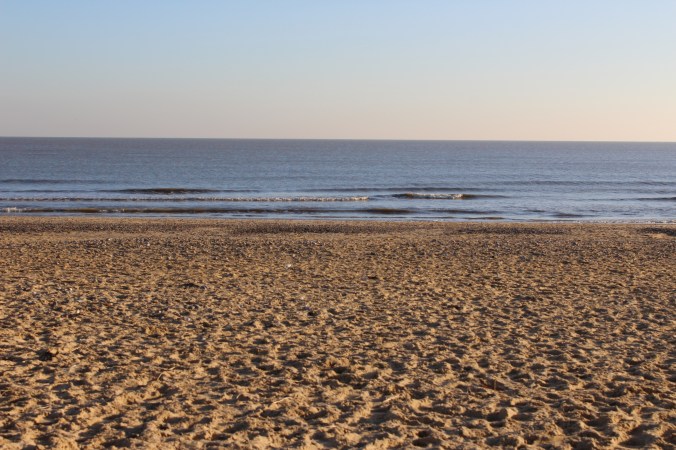
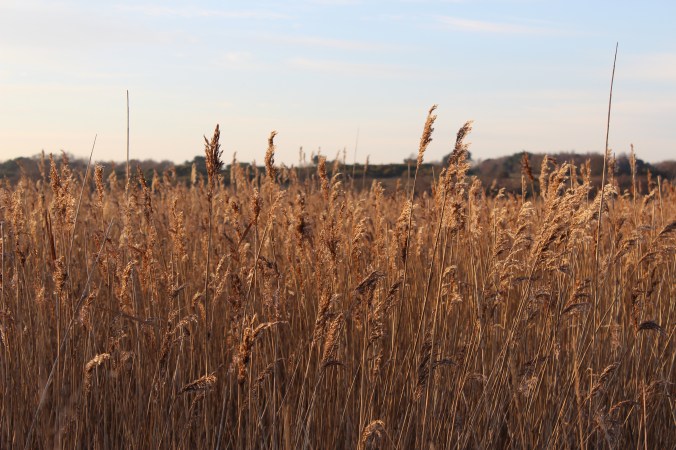
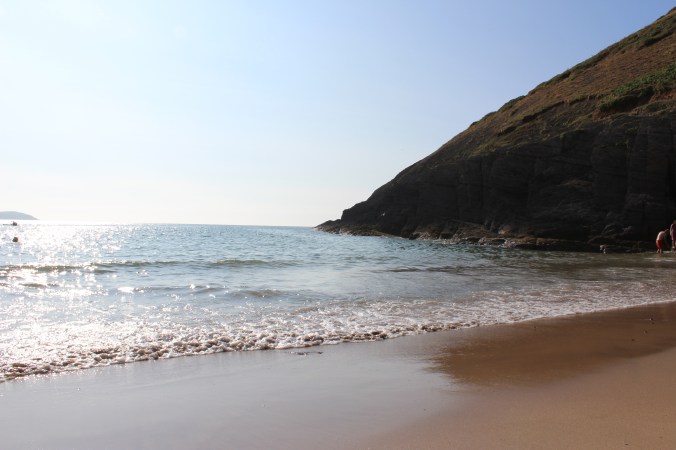
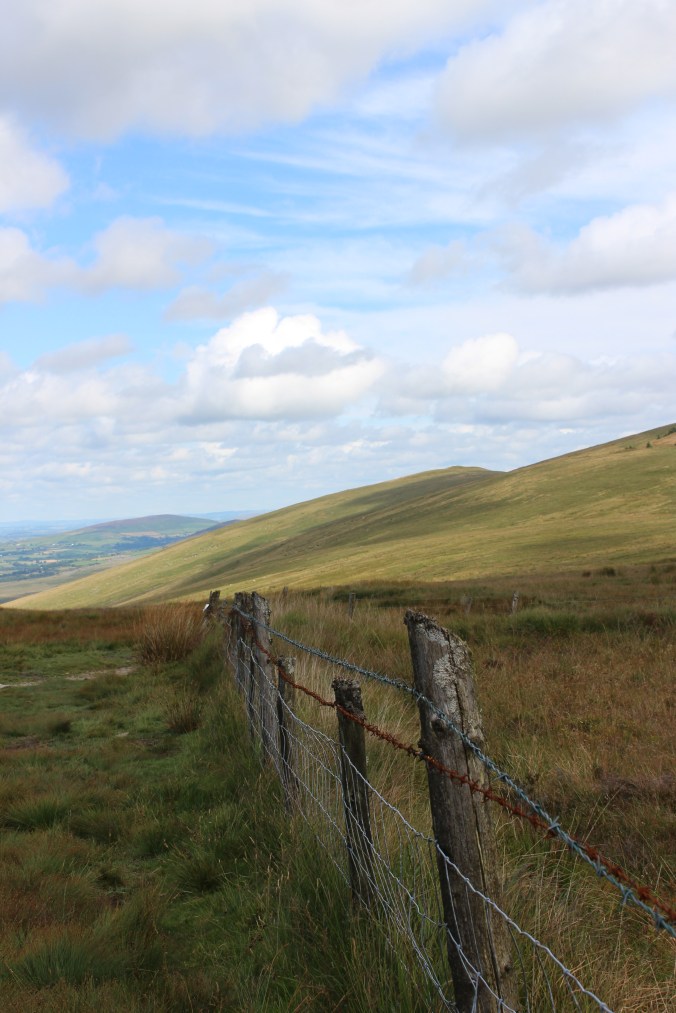
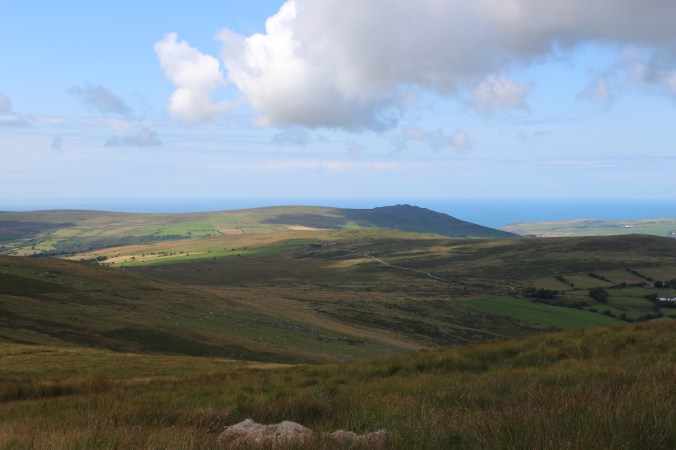
The photos above are of the Preseli Hills in West Wales, with a view of Carn Ingli – the Hill of the Angels – and also Mwnt beach, a departure point for ancient pilgrims to Ireland.
Now, as the days of darkness come

img_0212

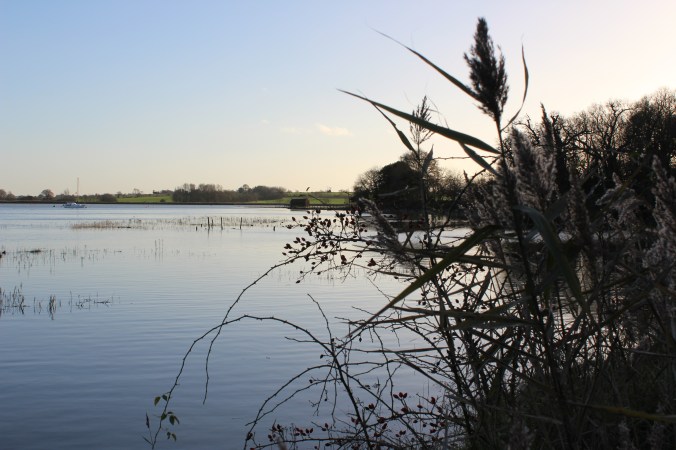
As many days as I can, I walk by the River Deben near my home.  Sometimes I walk with someone, but often I walk alone.  Alone, the experience is different, opened up differently.  It  becomes a quiet form of prayer – one which begins with an openness, a question
– Hello, what is there that I need to notice today?
Alone becomes companionable, the openness becomes openness to one who is always there.
I look at the birds of the air, among other things, although, this day, it was more the birds of the water.
It seemed to me as I watched the cormorants that the growing darkness of the season was maybe something I needed to dive into, under the bright surface, that there was treasure even here, even here.

If you wish, you can listen  to the poem.


Now, as the days of darkness come

Now, as the days of darkness come,
I see the slick oily surface of the water,
low light skims it like bright stones,
as the geese arrive in broken, twisted skeins.

And there is the egret
in its startling whiteness,
probing the mud,
and a pair of cormorants,
dark as pitch,
forming their strange low circles.
Then, as I watch, they slip down beneath
the bright surface, into hidden water.
And I, too, I hold my breath,
while they are hidden, in wonder
at the unexpected airiness of their bodies,
sustaining them, in that cold water, for so long.

Fig

IMG_0610.JPG

IMG_0612.JPG

IMG_0166.JPG

IMG_0171

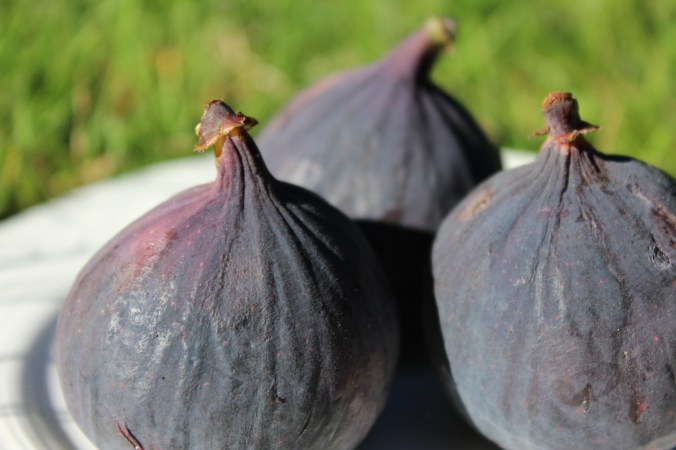
Last autumn, I went to a warm and inspiring poetry morning in Burgh parish schoolroom – a tiny but beautiful space on the edge of the ancient churchyard.  It was part of a series of such mornings, but I was only able to make this one.   The people there made me so welcome, and we shared tea and cake and some beautiful poetry on the theme of Autumn, which we had all experienced on our way.  As I left, one of the other people there kindly offered me a fig from her garden.  It was most precious.  I took it home and baked it with a little sherry and honey, and eating it was an act of thanksgiving – for her kindness, for the morning, the welcome, the poetry,  the beauty of the season, for life.
As it baked, I wrote this.

Thank you again.

Fig

The fig is heavy in my cupped hand,
warm, still, from the sun,
purple and green.
I walk slowly, for the skin
is thin, ready to burst open.
I feel the juice, the seeds,
move inside, sway with me
as I walk

from the room.

There was cake,
and bunting,
and people,
and we read together – Keats’
“Ode to Autumn”,
while the hawberries glowed
from one window,
while the brown stubblefield sloped
through the other.

How rich, how full
this life.
An unexpected gift,
fragile in my hand.

Light

IMG_0228.JPG

IMG_0231.JPG

IMG_0238.JPG

It’s nearly the equinox.

It is noticeable now, how quickly the light is drawing back from the edges of the days.  Outside jobs cannot be left. A torch is sometimes useful.  I do mourn the loss of light, but know that the darkness has its compensations – lamplight, wood fires, stars.

Below is a poem I wrote on Sizewell beach.  The photos above are from Walberswick, a little along the coast, where the North Sea has the same dark beauty.  I sat on the beach as the light faded, both watching and experiencing the loss of it, and the spread of the deeper blue of early night.  I saw my field of vision narrowing, and had a sensation of being, therefore, somehow at the centre, at the focus of what light there was.  An illusion, of course, based on the wonderful way the eye works – but a powerful and helpful one.  It enabled me to get off the beach when I finally turned my back on the sea.  It is like having a lamp for your feet.

While it lasted, that sense of being at the centre – one of many centres – was a place of prayer, a sacred place. I was aware of God, the source of light – and also of the light, the sea and the sky that were around me.  It was one of those times outside time, when we simply are, and are aware of that which is greater than us – aware of our own smallness, and our own participation in something vast, and beautiful.

Light, and its absence, have been on my mind as I have been writing about Jesus’ I AM sayings, particularly “I am the Light of the World”.  Perhaps that’s why this villanelle surfaced in my memory.

It is a loose interpretation of the verse form, with its three line stanzas and repeated lines, circling around, but it was the one that seemed to fit what the poem was trying to be.


LIGHT

Here, quiet on this stony shore, light
drains from the edges first. Blue deepens to blue,
leaving one pool of brightness against the night,

as the starlight, faint at first, shines bright
on the black waves that rise and fold,
here, quiet on this stony shore. Light

flecks the foam that trembles and shines white,
as the circle of darkness turns closer,
leaving one pool of brightness against the night.

Now, in the blackness, bright birds stop their flight
and shut their starfilled eyes against the dark.
Here, quiet on this stony shore, light

shines on white pebbles, shimmering and starbright
as shadows seep and spread like tar rising,
leaving one pool of brightness against the night.

The stars, the foam, and the pebbles shine with light
that washes and wells and rises
here, quiet on this stony shore. Light
leaving one pool of brightness against the night.


Honesty

honesty-seed-pods

Image from higgledeygarden.com

Where do ideas come from?

You may have decided you would like to write, or paint, or undertake any creative practice, but  white space stares back at you from the paper, or the canvas, or the screen, and your mind feels as blank as the page.

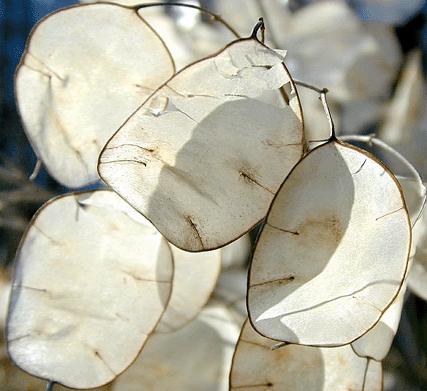
What helps me is to begin.  That means deciding to fill up a page – not trying to accomplish anything grand, or anything specific – showing up at the page and filling it.  Often I do this outside, and often I end up writing about the things I see around me.  Sometimes, as I do sisomething catches my attention.

This time, it was the seed-heads of the honesty.


Honesty

The seedheads are drying.
They were purple green, fleshy,
lit up dancing by the summer sun,
and now they are thin, and dark,
like the cratered moon seen
through thick smoke,
or burnt paper with
smudged, forgotten words.

And now, as they dry,
the seedheads rattle and split,
shucked by the north wind,
shedding one half of themselves,
the darker half, those thin circles
rolling over the green lawn.

What is left is shining like
an open shell, glowing
in low light like
so many clear moons
caught in a white net.
Now, they are showing
their heart-colours,
pale and lovely at last.

Rain


IMG_0608.JPG

IMG_0606.JPG


IMG_0607

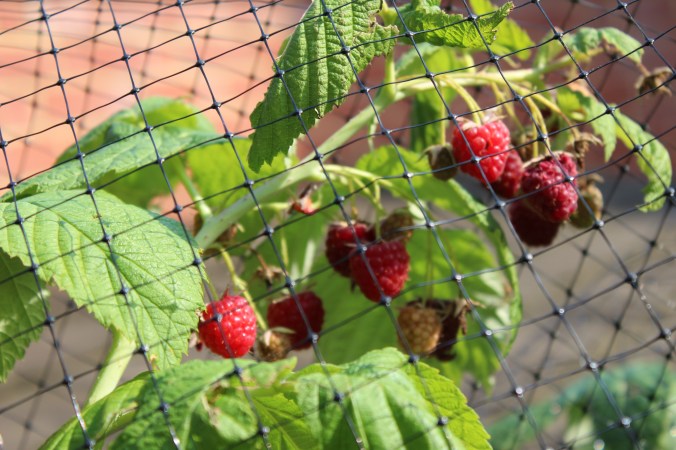
So, today, it rains.  I am loving listening to the sound of it fall o the dry ground, the coolness, freshness, even the greyness of the sky and the newly soft light.

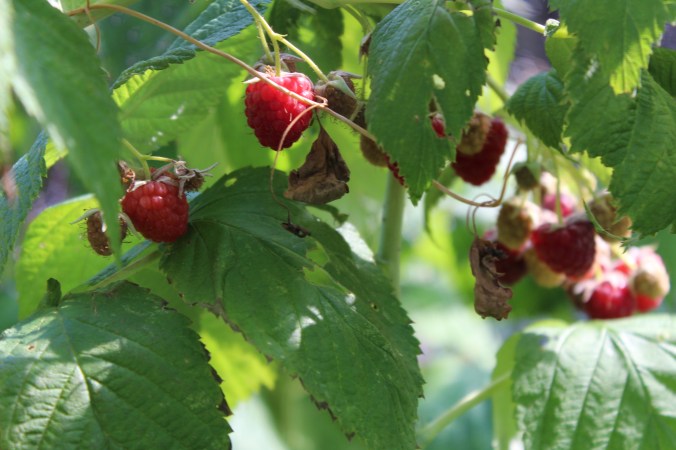
While waiting for the rain, my mind turned back to this poem.  I wrote it a couple of years ago, and so the raspberries in the pictures, this year’s crop, are healthier than the ones described below.  Water has been on my mind as I’ve been working on my  new book   on John’s gospel – water poured out as an offering, water to wash the eyes of the one born blind, water the bubbles up within you, so you are never thirsty again.  That gets closer to the other kinds of thirst here, in this poem.  There are many things we can be thirsty for.

Rain

The breeze stirs the raspberry patch,
the leaves with crisp yellow edges
rustle under their net,
and under them
are deep red fruits, dusted grey,
The colour of blood spilled
not today, or yesterday,
but months ago.

They are strong,
an intense sharpness.
They have lost their sweetness.
Yet, even so, the blackbird balances
on the net,  reaching down
with a hard yellow beak.

The ground beneath is grey, too, and
fissured like the fruit.
The heat rises, stillness falls on the ground
like thin shadows.
This thirst, this longing for rain,
grows stronger.
Desperate.
Joy, and gentleness,
love and lovingkindness.
Presence and peace.
These I long for.
I need them like flowing water.
Come like the rain.
Come to us like rain.

Flags

IMG_0592

IMG_0588.JPG

IMG_0589

Seeds – such extraordinary, tiny, dots of potential, each one full of flowers.  I tend to let the plants I love run to seed, and then I have handfuls of treasure to bury in the ground, for the seed must fall to the ground to grow.  In this case, the ground is the small and unpromising strip of land beyond my boundary, by the road.  It does no harm, that I can see, to sow here, and it carries the possibility of  something beautiful happening where there was little beauty before.

The difficulty with planting wild seeds in wild places is that they are unlikely to grow.  As such, they can seem more like signs of disillusion and futility than of hope.  I was wondering whether we can engage in acts of hope, of planting, of goodness and joy, for their own sake, and then, simply be delighted when something beautiful comes of it.  I sow and I forget that I sow, but, nonetheless,  I now have a few small flowers of campion, scabious and harebell growing where none grew before.

The sun and the rain are beyond my power, but the sowing is entirely within it..


Flags

The seeds are ripening now –
bluebells and red campion,
scabious and harebells –
in this space, this enclosed
garden space

So I offer them to friends,
and I cut the ripe stalks down
and gather them in my hands,
carrying them like so many
ceremonial flags –
my colours.

I take them to the thin strip
of ground beyond my flint wall,
making cars slow for me
as I scatter in this hot,
unpromising soil.
Yet, nonetheless,
I am filling it up with seeds,
slowly, year on year,
colours blazing in my mind.

Most will not take,
but the seeds are there,
and the ground is there,
and so what is there to do
but to sow, freely,
not expecting return,
amazed and laughing
when they grow.


Nest

Pigeon update: and today, just a few moments ago, they fledged!

IMG_0603.JPG

IMG_0604

IMG_0605

andreaskevington's avatarAndrea Skevington

IMG_0585.JPG

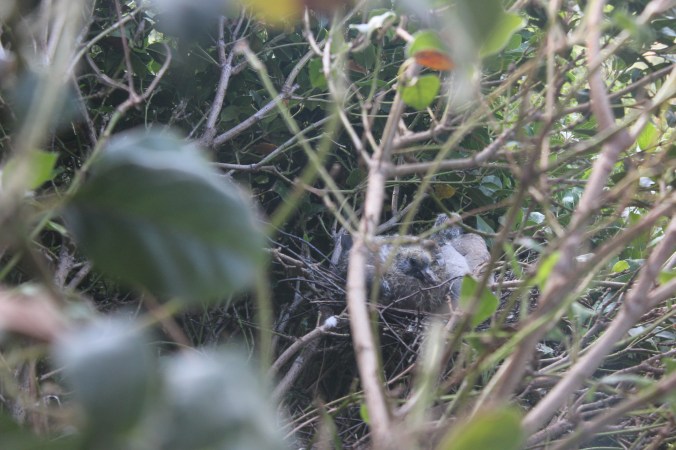
Poems can tell stories – I hope this one does – stories which seem to have a meaning beyond the events.  This is a story from the past week or so in my garden –  one of the many that unfold daily.  The story of a pigeons’ nest I uncovered.

As I began writing, I thought of the dilemma we all face as humans sharing their home with other creatures – how to live lightly, how to nurture and care for all who share our little bit of land.  As a large and powerful creature in this world, I have responsibility. I wrote about feeling like a giant in my own garden in Pulling up trees. In this instance, I had not seen the parent birds going in and out of this shrub. I thought I knew where all the nests were. I thought I had left it late enough…

View original post 296 more words

Nest

IMG_0585.JPG

Poems can tell stories – I hope this one does – stories which seem to have a meaning beyond the events.  This is a story from the past week or so in my garden –  one of the many that unfold daily.  The story of a pigeons’ nest I uncovered.

As I began writing, I thought of the dilemma we all face as humans sharing their home with other creatures – how to live lightly, how to nurture and care for all who share our little bit of land.  As a large and powerful creature in this world, I have responsibility. I wrote about feeling like a giant in my own garden in Pulling up trees. In this instance, I had not seen the parent birds going in and out of this shrub. I thought I knew where all the nests were. I thought I had left it late enough. I was mistaken..

As the days passed, I cheered the two youngsters on as they adapted to their new situation – a nest with a view.  Their mother just carried on caring for them, a little nervously at first, protecting them from rain, feeding them, sheltering them from the midday sun, even though they were now exposed to the crows, and the buzzard, that fly overhead.  Without that care, they would not have survived.  With it, they are thriving still, despite my unintentional assault on their home. No one in this family is giving up.

When I speak positively of their new, open situation, of course that is not about the birds, but about me.  The birds are better off hidden.  I was beginning to think of how we, when faced with hard change, can raise our eyes, and find courage and hope in even an unaccustomed view.
The world is full of parables.


Nest

I leave things wild.
I plant flowers the bees
and butterflies
love.
Ground cover
covers the ground,
and frogs and newts
rest in the shade.

So, this is not what should happen
when my window is crowded with leaves
and I wait till high summer
till the birds are quiet
to cut
hard and deep.
Satisfyingly
the ratcheted loppers
slice through wood.

I stop

As I see those two strange
black creatures,
yellow feathered,
shaking in their nest.
I step back, as quietly as I can,
shaking too,
a destroyer of their world.

Inside, I close the curtain,
peep around to see
the mother bird nestles them,
tends and feeds them.

They thrive and grow
in this newly open nest,
small strange dinosaurs,
now fledglings
stretching their wings,
seeing all that space
all that light
in which to rise,
and fly.


Heron

heron4

photographer unknown

The River Deben near my home – a place where I walk as many days as I can – ebbs and flows through my thoughts and my writing.  It is tidal here, edged with mud and reeds, and it is rich with life.  There is always something to see, if you look.

In this case, I did not see the heron my walking by the quiet creek disturbed, not until it took off, anyway.  I thought of how attentive I need to be, and sometimes am, as a writer.  How I need to be open to what is going on around me, to notice and to receive.  In the poem I talk of hunting for words, as the heron for fish – but it is not just the bright silver words, it is also being alert for meaning, for truth, for connection.  The words do not feel like mine, always, they do feel like something caught, overheard, given – even when they are wrestled with later, honed and rearranged until they better match what it is that I experienced.  Then, I set them free.


Heron  

The heron takes off –
ragged, heavy, a smudged
mud-grey, a shadow-grey
I had not seen it there

Its feathers, pointed reed-leaves,
its legs, thin in the wind reed-stems
its downbeats long and laboured,
straining, slow, like my August walking.

This is how it would have been, though,
before: still and silent in the reeds,
hidden, waiting for the moment
to spear one bright silver fish,
a swift stab of that powerful beak,
then back to silence, stillness.

As my path shimmers in the heat,
the soles of my feet hot through my shoes,
I think that is where I too would be,
hidden in cool reed-shadows,
in stillness, quietness, watching for
bright silver words to dart by,
catching them with my mouth.

But then I look up, and see those
long black flight-feathers finally bite
the air, and the heron, neck doubled back,
soars high, at last, over reedbed,
over river, its down-arched wings
wide over the earth.


And, a short extract from the first chapter of Prayers and Verses


Lord, purge our eyes to see
Within the seed a tree,
Within the glowing egg a bird,
Within the shroud a butterfly.
Till, taught by such we see
Beyond all creatures, thee
And harken to thy tender word
And hear its “Fear not; it is I”.
Christina Rosetti 1830-94


O God, enlarge within us the sense of fellowship with all living things, our brothers the animals to whom thou gavest the earth as their home in common with us.
Basil the Great c330-379


He prayeth best, who loveth best
All things both great and small;
For the dear God who loveth us,
He made and loveth all.
Samuel Taylor Coleridge 1772–1834

prayers and verses cover