Day of Prayer for Creation – a Parable


IMG_0171.JPG


IMG_0174.JPG


IMG_0178.JPG

IMG_0167.JPG

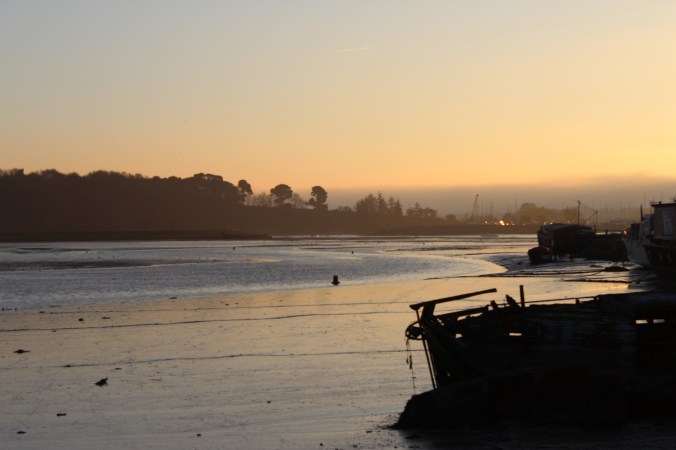
Photos of a walk taken near Wandlebury Ring and the old Roman Road, Cambridgeshire

September 1st is a day when we make Creation the focus of our prayers, knowing that others around the word are doing so. It is the first day of the Season of Creation, which ends on October 4th.  As I was praying for our hurting world, the story below came into my mind. I hope it may help you, as it has helped me, focus my prayers with urgency, and consider how I can live in a way which respects the beauty and glory of Creation, and the love of God for it all.  I have found, over recent years, my eyes and my heart have been opened to both the pain and beauty of the world around me, and the many ways the natural world is honoured in Scriptures, particularly in the prophets.

Jesus invited us to consider the flowers of the field, and the birds of the air, and learn from them the heart and mind of God.

If it helps you, please feel free to use and share it, saying that you found it here.


The parable of the good craftsman

Once there was a craftsman who had two children. As you might expect, he had built a beautiful house out of seasoned wood, with wide windows that looked out over his lush green fields, his flocks and herds.  He had made fine, carved furniture for his house, and he had smiled when he made it, and said, “That’s good!”  He had made beautiful plates and cups and jugs out the red clay near his house, he had smiled when he made those, too, and said, “That’s good!”  He had made a sheepfold to keep his flocks safe, and smiled, then, too.  In fact, all that was around him was good and flourishing and abundant, and as he looked at it all, he laughed out loud and said, “That is all so good!”

The day came when he needed to go on a journey, as the people in these stories often do.  He thought, “My children are old enough to be left in charge now.  They have watched what I did, some of the time, and I have told them how good it is.”  And so he left, and the children looked around, and they, too, saw that it was good.  So good, in fact, that they started to think how much it was all worth.  So they sold the furniture, and the plates and cups and jugs, for a fortune.  They were made by a master craftsman, after all.  The plastic ones they bought to replace them were good enough. They looked at the lush green fields and thought, “We could rear more animals in pens.”  So they did: twice as many, three and four times even, the poor creatures.  They sold the pasture they no longer needed, and a factory and a car park grew there, large and grey and ugly.  The water from the well their father had dug became bitter, but they bought water in bottles with all the money that they had made.

Then, the time came for the father to return.  As he drew near the house, he noticed the trees along the road were withered and dying, and his smile left him.  He came across a bird trapped in plastic that blew across the fields, and he set it free.  Then, near the house, he found a thin child sitting by the side of the road.
“What is the matter?” he asked.
“I drank water from the stream that flows from over there, by that factory.  It tasted bad. Now I’m sick.”  The father gave the child water from his own flask, and picked up the child to take home. He had herbs for medicine there.

But when he got even nearer, he could see that the factory was on his own land, and that where his own fields should be was all noise and smoke.  He could see the plastic rubbish spilling over from his own front garden, from where the flowers and the vegetables and the herbs had been.  He saw his own children, with grey, indoor faces, and said, “what have you done?”
“Father, we are so pleased to see you!  Come inside, we will bring you the accounts and you will see what we have made!”
“That is not the kind of making I intended you for!” replied the father. “And see, see this child, poisoned! How will you enter that in these books of yours?  What have you done with all that I have made – do you not know that I love it all?”


Some prayers from the first chapter of Prayers and Verses


Lord, purge our eyes to see
Within the seed a tree,
Within the glowing egg a bird,
Within the shroud a butterfly.
Till, taught by such we see
Beyond all creatures, thee
And harken to thy tender word
And hear its “Fear not; it is I”.
Christina Rosetti 1830-94


O God, enlarge within us the sense of fellowship with all living things, our brothers the animals to whom thou gavest the earth as their home in common with us.
Basil the Great c330-379


He prayeth best, who loveth best
All things both great and small;
For the dear God who loveth us,
He made and loveth all.
Samuel Taylor Coleridge 1772–1834
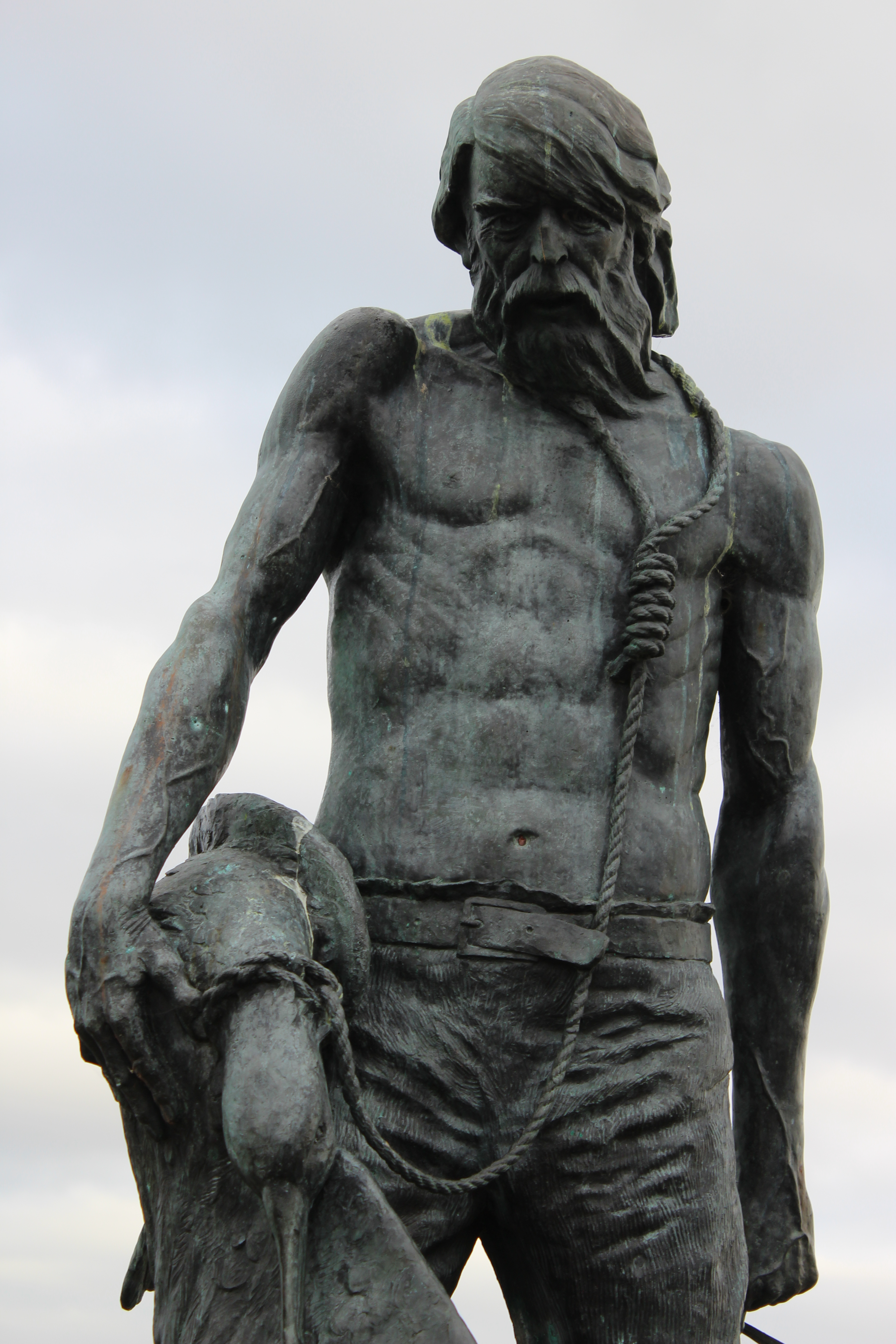
 

IMG_0713.JPG

Coleridge’s Ancient Mariner – at Watchet, the place that inspired him.
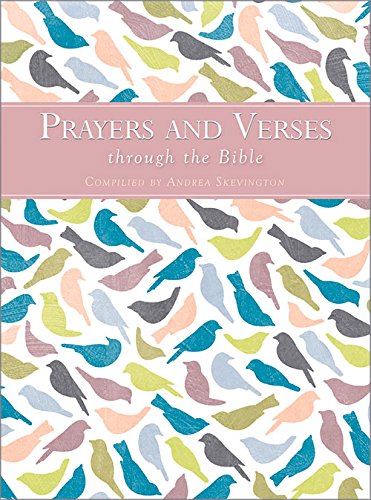
prayers and verses cover


Barns

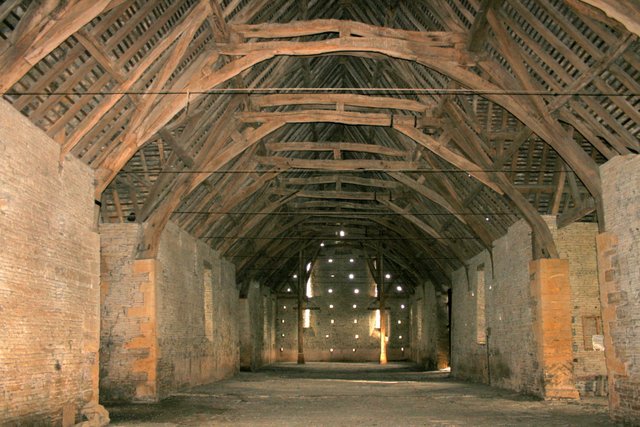
Middle Littleton Tithe Barn

Middle Littleton Tithe Barn, National Trust

barleyfield

Lectionary reading for Sunday, 31st July – Luke 12:13-21

The fields are golden now, and the recent heat has ripened the grain.  The barley is being harvested, the wheat waits a little longer.  It is good to see food grown and treated with care. Full barns help through the winter, as they have for generations.

So, now, as harvest is happening, as barns are being filled, as heavy machines trundle through the Suffolk lanes, the Church calendar gives us this story to consider – a warning against greed.
This story is a profound challenge to those of us now with full cupboards, stuffed wardrobes, too many shoes.  It is unique to Luke, where it is followed by “do not worry….”, reminding us that the ravens have no barns, and yet are fed.  The two together form a call to a simplicity of life, and a reliance on God, that is at odds not only with our society, but with our instinct.

Let’s go back to the beginning of the story.  Jesus is asked to intervene in a quarrel between two brothers – and, characteristically, does not. It is interesting to note how many times Jesus is invited to act as judge, and declines.  Instead, he often shines a light on the motives of the one asking him to do so, the one who is sure he is right.  In this case, the motive seems to be greed.  Greed needs to be guarded against, to be actively resisted.  Jesus seeks to turn on its head our notion that life is measured in the abundance of possessions, that life consists of stuff.  We often talk as if this were a new, modern phenomena, this way of looking at life.  Clearly, it is not.

Clearly, though, it is a danger we are facing this day, now, as we are besieged from the outside by the call of so many things, and experience within ourselves the desire for them, as well as the tendency to judge and measure and compare our things with the things of others. I am not sure we have a contemporary word which quite  expresses the old idea of”covet” – the last of the ten commandments prohibits it, even so.

From The Bible Story Retold

One day, when Jesus was speaking to the crowds, someone stood up and said “Teacher, tell my brother to share our inheritance – to divide up the family land fairly!”  Jesus said “Who made me an umpire in your squabbling match?”  Then, he said to the crowd, “Watch out for greed – it can sneak up on you.  Your life is about much more than what you own.

“Once there was a rich man, whose fields were full of ripe, golden grain, ready to harvest.  When it was gathered in, there was so much grain that his barns were creaking and straining with the weight of it.  He couldn’t store any more.  This troubled the farmer – for he wanted to keep it all. ‘I know!’ he said to himself with a smile. ‘I’ll tear down these barns and build big new ones, then I’ll live the high life! I’ll fill my belly and drink my wine and have a good time!’

But God didn’t see it like that. ‘You fool!  You are going to die tonight – then what will happen to all your fine things? They won’t be any use to you then!’” Jesus looked at the people gathered around him. “That’s how it is for anyone who stores up things for themselves, leaving no room for God!”


The distribution of the harvest is an essential matter of social justice.  We remember the story of Ruth, the provision of gleaning rights for the poor and the foreigner. We remember the bias towards the hungry we encounter in the Hebrew Scriptures.  Full barns can be a blessing for the whole community.

Jesus reminds his listeners of the purposes of plenty, and of the life-corroding effects of greed.  It is not easy – but wherever we are, we can begin.  We can begin to hold things lightly, to remember that all belongs to God, that where we have, we can give, and bless, and meet the needs of those who have less.  We can begin to pass on something, one thing.  We can come to know the lightness and freedom of this generous, open way of living.

To give is an act of resistance against our own capacity for greed. Giving, sharing, and working for justice, are powerful.  They can transform all involved. Perhaps, as we enact this different way of living, we can begin to see how it can make room for God – God who is love – generous, gift-giving, open-handed love.

I wrote the following prayer in response to the feeding of the five thousand, where the crowds were fed far from shops and barns.  It seems to follow on from this story, too.

From Prayers and Verses

Lord Jesus, who broke bread beside the lake and all were fed,
thank you for feeding us.
Lord Jesus, who asked his disciples to pass food to the crowds,
may we do the same.
Lord Jesus, who saw to it that all the spare food was gathered,
may we let no good thing go to waste.
Lord Jesus, who gave thanks,
we thank you now.

If you would like to use the reading and the prayer, please do so, mentioning the source.

The Good Samaritan

The good samaritan

The Good Samaritan  Vincent van Gogh

So, this week, we are surrounded by political and economic uncertainty after the  UK’s Brexit vote.  In a national climate of increasing distrust, and anger, and division, many churches will be given this reading to consider on Sunday – the parable of the good Samaritan.  It is strong medicine – at least, I find it so.  It challenges me deeply, differently each time.  Reading it again, now, its force comes home anew.

From The Bible Story Retold

WHO IS MY NEIGHBOUR?  (Luke 10:25-37)

The teacher of the Law stood up, narrowing his eyes in the bright sun.  He had heard people talk about Jesus, now he wanted to test him out.

He pitched his opening question: “Teacher, what must I do to inherit eternal life?”

But Jesus offered the question back to him, giving him the chance to show his knowledge. “What is written in the Law?  How do you interpret it?” The teacher’s answer was to quote the scriptures word-for-word: “’Love the Lord your God with all your soul, strength and mind’, and ‘Love your neighbour as you love yourself’.”

Jesus smiled.  “It’s a good answer.  If you do all that, then you’ll have eternal life!”  “But….” the teacher of the Law added in a loud voice,  “but who is my neighbour?”  Jesus answered him with a story.

“Once, a man was travelling from Jerusalem to Jericho.” The crowd could imagine this journey – the road’s steep rocky sides, its twists and turns, its dust and heat. “As he made his way along,  a band of robbers crashed down the rocky slope onto the road – they had him surrounded.  The man gasped, horrified, but there was nowhere for him to run. They stripped off his clothes and beat him to the ground.  They left him lying in the dust, half-dead, while they went to gloat over their takings.

“So there he was, lying helpless in the heat of the sun, when a priest came by.  The priest did not stop, he gave the man a wide berth, crossing quickly to the other side.  A priest can not touch blood, or a body – that would make him “unclean” by Law, unable to work in the Temple, wouldn’t it?” Jesus nodded towards the teacher of the Law, then carried on. “Next came another religious man: a Levite.  He, too, saw the man lying bleeding, and still.  He, too, walked by on the other side, lifting his robes a little to avoid touching the blood on the road, and peering anxiously into the rocky shadows.

“Then, in the distance, came the steady clop of a donkey’s hooves.  The donkey carried a third man, but this time, he had nothing to do with the Temple.  He was a Samaritan.” Again he turned to the teacher, who was looking smug now.  Samaritans didn’t keep to the law – so he wouldn’t know the right thing to do. “The Samaritan saw the broken figure lying bleeding on the road, and his heart was filled with pity. He leaped down, cleaned and soothed his wounds with wine and oil, and tore strips of cloth to make bandages.  He slipped his arms under the man and heaved him onto his donkey, leading him gently to an inn.  He sat with him all night, giving him sips of water and wine.  The next day, he spoke to the innkeeper. ‘Here are some silver coins.  Look after him, and if you spend more, I’ll pay you on my return.’

For a third time Jesus looked at the teacher of the Law and asked him  “Now, you answer my question.  Which one was a neighbour to the injured man?”

The teacher of the Law shifted uncomfortably. “The one who was kind to him.” He answered quietly.  Jesus replied, “So go, and do likewise!”

It seems that the teacher of the law was opening a theoretical debate about what constitutes rightness in God’s eyes.  It doesn’t seem to have that much to do with God, or people, even though he correctly identified the commands to love as the highest ones.  Perhaps his question, “who is my neighbour”,  was an attempt to place a limit on the breadth of the command to love.  Perhaps this person is one I should love, but I can overlook another.

As was his custom, Jesus does not respond in kind, in debate, which can often stimulate the mind and bypass the heart.  Instead, he tells a powerful story.  Stories can change us.  They can reframe the way we see things, they can stir up powerful responses – outrage, pity, compassion, love.

And love is the aim, the way, the goal.   The teacher of the law was right about that.  Here, it trumps other laws – those who seek to maintain their personal holiness and safety while leaving a bleeding man in the road  are seen in sharp focus.

It is a foreigner who loves, and is commended.  So often, groups praise the good deeds of those who are the same as them, in nationality, or creed, or other ways, and overlook goodness where it is found elsewhere.  Jesus does not do that. Jesus, in word and deed, shows us what love looks like, and it is resourceful, and strong, and relentless even in the face of death. It overrides boundaries and borders.  Jesus commends the goodness of one outside the Jewish tradition, and asks the expert in Jewish law to learn from him, to be more like him. The teacher of the law seems to be open to the lesson, too.

If some in our national debate are speaking words that divide people from their neighbours, we can remember that each of us can seek to live differently, demanding as that is. It is a humbling thing.  There is no room for pride in the face of such a call to love – it is so often beyond our own resources.   But, what seems quite astonishing to me is how little it can take to make a difference. I am sure we can all remember people, known or unknown to us, whose gestures of love and solidarity, whose practical kindness, whose simple acknowledgement helped us when we were in trouble.  We can pray for open-hearted courage, we can pray for eyes to see the needs of those we walk past as we go about day by day. If we dare, we can ask God to move us to pity. But if that seem too much for us today,  we can remember that the smallest gift of lovingkindness bears the hallmark of God.

How good it is when we remember that each human being has dignity, infinite worth, and so offer to all our respect and compassion.  We can look for good in others, wherever they are from and whatever our differences. We can seek to overstep boundaries, and reach out a hand, remembering that love is from God.
Another way is possible.

Beloved, let us love one another, for love is from God, and whoever loves has been born of God and knows God.  1 John 4:7

From Prayers and Verses

Lord Jesus,
Make me as kind to others as I would want to be to you.
Make me as generous to others as I would want to be to you.
May I take time to help them as I would want to take time to help you.
May I take trouble to help them as I would want to take trouble to help you.
May I look into the faces of those I meet and see your face.

BASED ON MATTHEW 25:37–40

New Book News!


IMG_0561.JPG

We arrived back from a few days away to find that, as usual, some post had built up behind the door.  One of the envelopes was quite fat, and it contained a contract for a new book with BRF!  Good news!  It’s a book on the I Am sayings of Jesus,  with an emphasis on how we can respond, and embed these deep truths in our lives.

This book idea began when I was writing a series of meditations for BRF’s Quiet Spaces and found there were too  many ideas, too much to say, to compress into that concentrated format.  I am so grateful they were open to the idea of reading more.   I have till next May to write it, so it will be a while before it is available, but I shall keep you posted on this blog, and hopefully post a few snippets for you to try for yourselves.

I would also like to say thank you to the dear friends who have encouraged me, and especially the St John’s Church Advent Retreat, who patiently listened and tried out various ideas I had been developing, and helped no end with their thoughtful and generous response.

That was not the only post, though.  There was also a parcel containing this:


IMG_0554.JPG

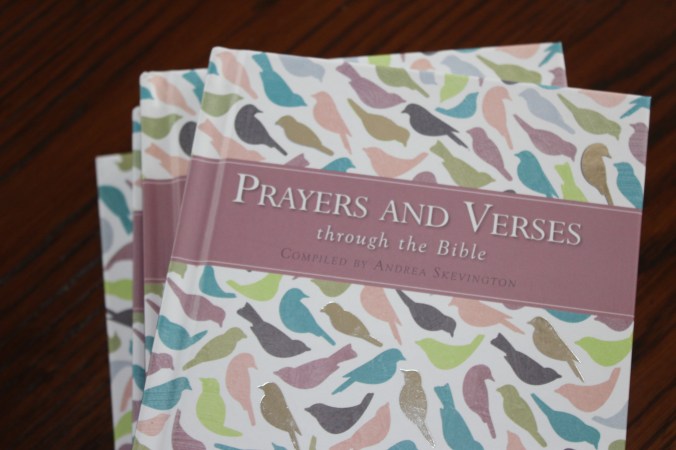
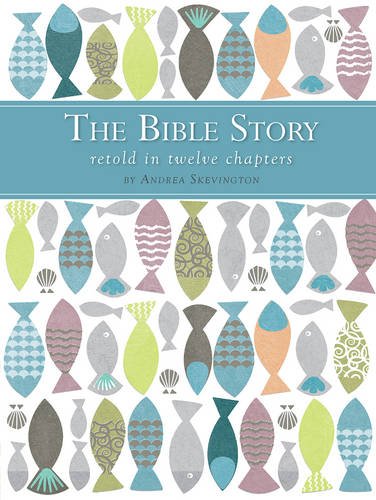
Recently published, it’s the first time I have held Prayers and Verses in my hands, and it is a beautiful piece of work from Lion. It’s always a strange thing, to see your words printed on a white page, to see the way what you hoped for – something where the different verses and prayers seem to  interact with each other and enrich each other – might be happening on the page.  Below you will see it with its companion volume, The Bible Story Retold.


IMG_0557.JPG

And here is a spread from the book – I hope you will excuse the slightly variable focus!
In the UK we are facing a time of huge uncertainty, and I thought I would share with you these few prayers and verses. They are reflecting on the time of Exile in the Jewish story, which seems to be a relevant theme for many, whatever their nationality.

IMG_0555.JPG

Thank you for taking the time to read this little bit of good news.  May there be more good to come for you, too.

Prayers and Verses – 3 The burning bush

prayers and verses cover

UK publication date – Friday 17th June 2016

bible retold cover

It’s nearly here!  the official publication date for Prayers and Verses!
I thought I would share something from Chapter Three of both books – Prayers and Verses and The Bible Retold.
The story of Moses, and how people escaped from slavery, is absolutely central to our understanding of the story of the Bible as a whole. It is truly remarkable.  Written records usually tell the story of the victor, of the rich and powerful.  This ancient narrative tells the story of the slaves, the powerless, the people pushed to the edges.  It says that God is listening to them, and is sending someone to bring them out of slavery, into freedom.

Prayers for those who labour under heavy loads, who bear much sorrow, are included at the opening of the chapter in the prayer book.  The Hebrew scriptures are full of reminders to be compassionate, to remember the hardship, and to let it soften your heart towards others that suffer – strangers in a strange land.  That is why the story is recalled again and again, because it has the capacity to centre us once more on love, on justice, on humility.  It builds our faith that God does listen, and then respond. The faithfulness of God is spoken of again and again. And the turning point of the story is when Moses is stopped in his tracks by the burning bush, and the experience of God he has there.  At a time when he must have felt he had blown all his chances, and had let down his people, this prince of Egypt encountered God when he was simply living out his own life on the edges, as a humble shepherd.  This encounter changed everything, as encounters with God tend to do.

To go alongside this snippet of story, I have chosen an extract from Prayers and Verses which will, I hope, encourage us to open our eyes to the possibility of God being present with us as we go about our daily lives.

Then, one day, as the sheep grazed on the slopes of Mount Sinai, Moses saw something: it was bright flames leaping up from within a bush.  He began walking towards the burning bush, curious, because he saw that although it was crackling with flames, the bush was not being burned up. And then a voice called from within the flames.
“Moses, Moses!”
“Yes?”
“Don’t come any closer.  Take off your shoes, for you are on holy ground!”  Moses obeyed the voice.
“I am the God of your forefathers: the God of Abraham and Isaac and Jacob…”

Moses hid his face, afraid to look on God.

“… and I have heard the cries of my people.  I have seen their suffering, and felt their pain.  I want to pull them out from under their slave masters’ whips and bring them to a good, gentle land: a land of plenty.  You are the man I have chosen to send to Pharaoh.  You will rescue my people form Egypt.”


Grant us a heart wide open to all this beauty; and save our souls from being so blind that we pass unseeing when even the common thornbush is aflame with your glory, O God our creator, who lives and reigns for ever and ever.
WALTER RAUSCHENBUSCH (1861–1918)


Dear Lord, Help us to see you today in all the ordinary things when we walk, and talk, and play; help us to know that the whole earth is full of your glory, and that the ground is holy. Amen
The world is charged with the grandeur of God. It will flame out, like shining from shook foil.
GERARD MANLEY HOPKINS (1844–89)


Prayers and Verses – how this book can work together with The Bible Story Retold

prayers and verses cover

Today, I am sharing some more extracts from my new book, which is due for publication next Friday, 17th June (UK), and September 28th (USA and Canada).  The Bible Retold is also available on Kindle.

I thought I would show you how this book of prayers could be used alongside  The Bible Retold – the two books can be read independently, of course, but I hope you will see that they could be quite helpful, powerful even, read together.  I am drawing some examples from the second chapter.  In the retelling, this chapter covers most of the well known stories from the later part of the Bible book of Genesis

img_0225

The story opens with Abram setting out on a journey, called away from all he had known before.  The prayers focus on our new beginnings, on uncertain ways, on “Life’s journey”.

From The Bible Story Retold:

Abraham took one last look behind him at the great city of Ur, with its narrow, crowded streets, and cool buildings made of hard-baked mud.   It was his birthplace, but it would no longer be his home. His father was leaving for the distant land of Canaan, and Abraham was going with him.  So they set off, with Abraham’s wife Sarah, who was childless, and his nephew Lot, who was an orphan. When they had travelled as far as Haran, they stopped and settled: their dreams of reaching Canaan fading with the passing years.

“Get up! It’s time to go!” God said to Abraham.

From Prayers and Verses:

As Abraham set off for an unknown land, so we begin each day, and each journey, knowing you are with us. Bless us on our way, and make us a blessing to those we meet.
Dear God, Help me to find the right way to go, even though the gate to it be narrow, and the path difficult to walk.

As the retelling of Genesis continues, we encounter squabbles and rivalry, deceit and betrayal in the families whose story we are following.  The prayers turn to our own families, how we can live together with love, peacefully.

From The Bible Story Retold:

Esau boiled with anger against his brother. He fumed and stormed among the tents.  “As soon as my father is dead, Jacob will be a dead man, too!” he roared.  Rebecca heard him, and urged Jacob to flee to his uncle Laban’s lands.  Isaac blessed him again before he left, and told him to find a wife among his Laban’s family.

He went alone, travelling until it was dark.  Shivering in the chill of a desert night, he took a stone for a pillow, and lay down to sleep.  As Jacob slept, a dream came to him.  He saw a ladder, with its feet on the ground, stretching up and up to heaven.  In his dream, he watched as God’s bright angels travelled up and down it between heaven and earth.  And in his dream, God himself was there.

From Prayers and Verses

Help us, like Jacob, dream of angels.
Help us, wherever we wake,
know that you are there, too.
Help us to see with new eyes.


I give thanks for the people who are my home: we share a place to shelter; we share our food; we share our times of work and play and rest.
May we provide one another with love, encouragement, respect, and wisdom: through laughter and celebration, through tears and troubled times.
May we be to one another roof and walls, floor and hearth, windows and doors.


Dear God,
Give us the courage
to overcome anger
with love.


I hope these extracts give you a little flavour of how the stories can flow into prayers.
If it helps, please do use them, saying where they are from.

Prayers and Verses – for a new day

prayers and verses cover

UK publication date – Friday 17th June 2016                                     US Publication date – 28th September


IMG_0243

The River Deben in Suffok, one of my favourite walks.

So, it’s nearly time for this collection of prayers to be delivered into the world.  It’s very exciting!

Last summer, I spent much time reading through books  of prayers, and writing my own. It was a very precious time as I was immersed in the prayers of great souls from many centuries, and seeking to find words that would resonate this day, and in the days to come. For any book, especially a book that will be read by the the young, is an exercise in speaking into the future.

This book, Prayers and Verses through the Bible, is a companion to The Bible Retold.  Both  are in twelve chapters, and this collection of prayers picks up the themes which emerged in the retellings.  The first chapter of Prayers and Verses, called Beginnings, invites us to pray for the world around us,and express our love and care for it. As I was writing The Bible Story Retold, I felt the theme of the land as a blessing, as our source of daily food, as both a gift to be treasured and a provision for the future, emerging in a fresh way. For me, God’s love for and delight in all that was made shines through, and later on, the prophets speak of the love and delight of creation, too.  These first Chapter One prayers seek to open up these thoughts, and help us speak them. Another important part of this first chapter is morning prayers – for our own new days, new beginnings.

My hope is that the book will be accessible to the young, but also a blessing to those of any age who are looking for words to make their own.

Here are a few prayers and verses from the first chapter to bless your day.

God, source of all light and life,
help us to see your hand at work
in the beauty of creation.
Help us to know that, in you,
the whole earth is holy ground.
O Lord,
Your greatness
is seen
in all
the world!
PSALM 8:9


Day by day,
dear Lord, of thee
three things I pray:
to see thee more clearly,
love thee more dearly,
follow thee more nearly,
day by day.
RICHARD, BISHOP OF CHICHESTER  (1197–1253)
In all my thinking and speaking and doing
this day,
Help me be loving,
help me be peaceful,
help me be kind.