A new book on the doorstep!

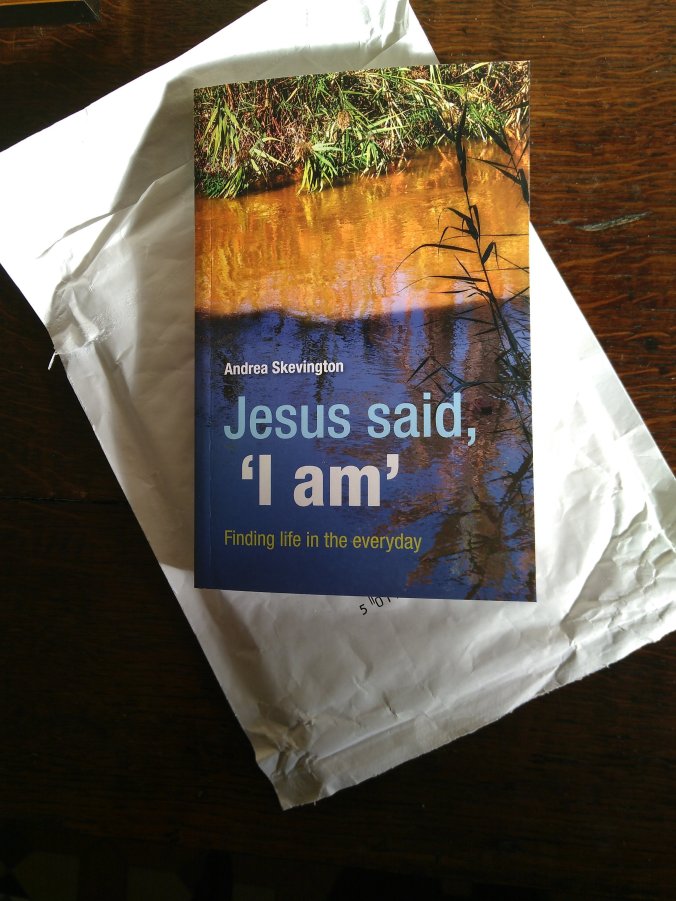
This morning, I was nursing a head cold in my own style – sitting on a bench in the sunny bit of the garden, wrapped up in a large blanket, and reading poetry. I thought I heard our postie so I pottered round to the front of the house, and saw this white envelope on the doorstep.

It’s always exciting opening something with the publisher’s frank on it, and this was very exciting! It’s the first copy of my new book, and BRF have done a lovely job of it. It’s a good size and weight in the hand, and the type and paper are crisp and clear. It’s a lovely thing. It’s particularly strange when something that began as a rather nebulous set of thoughts and hunches and feelings progresses through various birthing stages until it is an actual physical object you can hold in your hand. Wonderful! The joy of it seems to have lifted my coldy symptoms remarkably effectively – I hope it lasts!

The very physical bookness of the book has now been realised. I hope that those thoughts and feelings which have crystalised into the content may be equally real and tangible and helpful to those who read it. I’ve had a quick flick through and read a few snippets, too, and all seems well. The late amendments have gone in very efficiently, including an extract from one of the The ‘Mary, at your feet’ poems I had a yen to include.

You can pre-order it on most internet bookshops, and it should be available to order in high street bookshops in the New Year – but it might be worth asking before that just in case some distributors are ahead of the game. The publication date is 18th January 2019.

Here are a few online suggestions, in case you would like your postie to deliver one for you, too:

BRF – the publisher

Waterstones

Amazon UK

Thank you for your support and encouragement.

Poem – Like Noah’s raven, and the dove


Amyrosemoore

Artwork by Amy Rose Moore

This poem emerged slowly, over weeks, as they sometimes do.  I let it sit for a while in the cold and the dark of our late winter. Looking at it again, I haven’t been quite sure whether it’s come to a place of rest, but I feel that now’s the time to let it fly and see if it finds a place to settle.

I’ve always found the story of Noah quite disturbing and unsettling, and although I feel I have made some peace with it now, it’s often these troubling places that drive you to engage with the original story in a different way.  This one in particular feels that there are depths to be plumbed, sunk into, with an imaginative and almost intuitive reading, which is what I sought when I did my retelling for Lion


The rains swamped valleys and plains, and crept up the sides of the mountains, until all was swallowed up in black, endless water.  As they drifted helplessly over it, Noah and his family knew that all living things left behind on the land had been drowned.  They were alone on the ark. When, after 40 days, the rain finally stopped, the silence was as cold as the waters.

Noah’s family loved their precious cargo of animals: the only other living, breathing creatures left on the earth.  They fed them, and cared for them.  As they did so, a wind blew, and the waters began to sink slowly down.  Then, one day, they heard the keel of the ark beneath them scraping and shuddering.  The ark juddered to a halt, for it had struck the top of a mountain.

Every day they scanned the horizon, longing for land, and after many weeks they saw distant purple mountains breaking free of the water.  Noah waited 40 more days, then set a raven free.  It criss-crossed over the waves, looking for somewhere to perch.  But there was nowhere.

A week later Noah tried again, sending out a dove.  It came back with an olive twig.  Noah held the bird tenderly in his hand, hope rising within him.

A week later he sent the dove out again.  This time, it did not come back.  It must have found somewhere to perch.  At last, the flood was drying up!  Noah’s face broke into a wide smile as glistening land slowly emerged and dried.

From The Bible Story Retold

The image of releasing the birds from this narrow, confined space stayed with me, drawing on my memory of Emily Dickinson’s wonderful poem Hope, which is well worth having by heart for difficult times.

I thought of the raven, how it is a carrion bird, associated with death.  Although reading the symbolism of such a long-ago story is best done humbly, I do wonder if Noah’s releasing of this bird first suggests he was expecting there to be carrion around, that it was a bird released into a imaginative landscape of death, not life.  And yet we find, later, there was now something green and growing, something to sustain and anoint and bless – the olive – and that the world that was emerging from all that destruction was peaceable, and hospitable, a place of the dove and the olive. It is a new beginning.

We are not there yet, though, at the moment of this poem.  We are at that point of wondering if we dare hope.  Wondering if it is worth the costs of hope.  Sometimes we have to remind ourselves it’s good to look for signs of hope, even when all seems lost.  It takes courage, and discipline, and persistence.  But learning to read the signs in our own landscapes, shifting our focus up and out, can begin to lift us.  And we can find that, astonishingly, green growing things are appearing.

You can listen to the poem here: https://andreaskevington.podbean.com/e/poem-like-noah-with-the-raven-and-the-dove/


Like Noah’s raven, and the dove

Can I let hope fly, send out birds
to brood and hover
over the chaos,
like Noah, with the raven,
and the dove?

For too long, there
has been nothing
on the horizon,
no fixed point
on the Earth’s
endless circle.
How would you ever know
if the water was falling,
or rising?

So can I now find courage to
cup birds in unsteady hands –
raven-black,
dove-white –
and throw them upwards
one by one?

To let fly a dark hope
even though there is
nowhere for it to rest,
even though it returns
like a gift
that comes back unopened.

Can I try again
and again,
in case something
living and growing has
pierced this water,
until finally a gentle bird
does not return.
Until, at last,
there is somewhere
other than this poor boat
for it to land.

May I have such birds to release.
May I let them fly, like Noah,
with the raven, and the dove.


Lord, purge our eyes to see
Within the seed a tree,
Within the shroud a butterfly.
Till, taught by such we see
Beyond all creatures, thee
And harken to thy tender word
And its “Fear not; it is I”
Christina Rosetti

O God, enlarge within us the sense of fellowship with all living things, our brothers the animals to whom thou gavest the earth as their home in common with us.
Basil the Great

From Prayers and Verses

Checking final proofs – Jesus said “I am”.

So, it’s arrived!

An envelope containing the “final proofs” is here in Suffolk, and I have two weeks to go through them and answer a reassuringly short list of queries…. as well as  making any final amendments I may wish to make.  I shall try to resist doing too much of that at this stage….

I asked for a paper copy as well as a pdf, as there is something about the black type on white paper which helps me read it as a book, and hopefully read it more attentively as a result.

It is laid out on proper pages, and does feel quite real.

So, here goes!


IMG_0848.JPG


The publication date has been put back to January.  I’ll let you know when I know more!

Quiet Spaces – one on The Four Loves, by C S Lewis, and a bit about the Wedding.

d1b02bda728369e9744a15039260d942

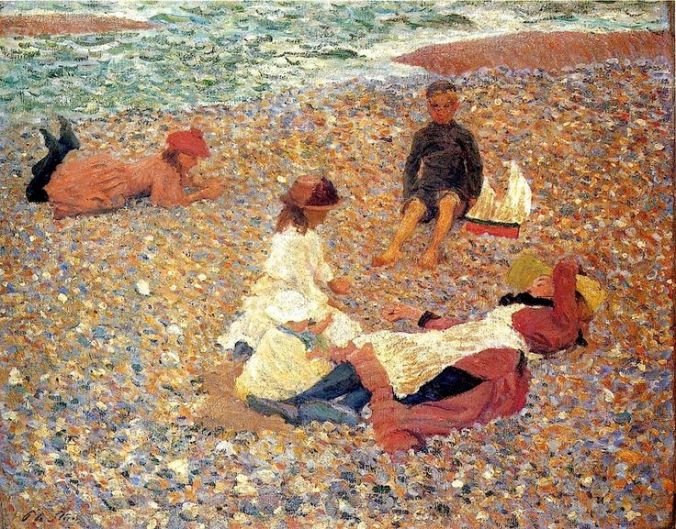
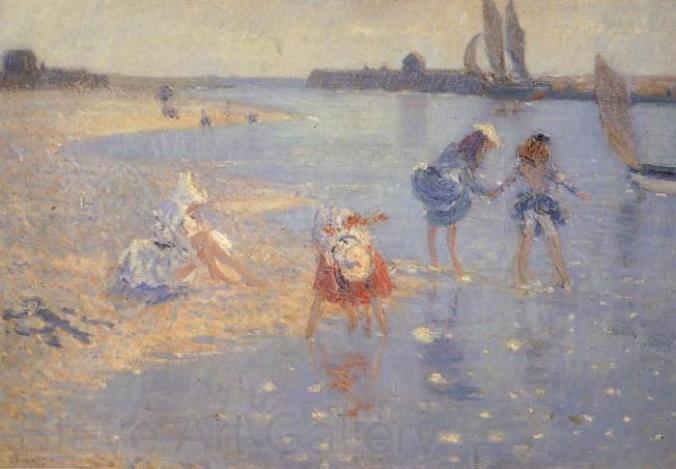
Philip Wilson Steer – Walberswick,       a beach on the Suffolk Coast

I’ve just finished writing a series of meditations drawing on C S Lewis’ short book, The Four Loves.   It’s for a BRF publication, Quiet Spaces , a series I love to read, and to write for.  I always feel I go deeper as I try out my ideas for meditations and exercises, and as I work on them with Sally Smith, the editor.

The publication isn’t coming out till next summer, but I thought I might just share a few snippets with you, especially in the light of Harry and Meghan’s wedding on Saturday, and the joy of love, and the sometimes pain of love, that occasion embodied.  The palpable absence of the groom’s mother, the solitary presence of the bride’s mother, remind us that nothing is unmixed, that sorrow and difficulty are found in every place, in every heart.

Bishop Curry’s moving and powerful sermon captivated so many of us watching.  I will listen to it again and again. I hope I can take it to heart, to seek to live more in the light of its truth. The power of love to transform, the way of love shown us by Jesus, were shown us in the words, and heart behind the words, that flowed out to those present, and to those far away.  It was deep and authentic.

He was drawing on the Song of Solomon, one of the readings I had chosen to dwell on for this work.  The reading at the wedding was from chapter 2 and also chapter 8, and can be found here.

You might like to use this combined passage for the exercise below.

philip-wilson-steer-926266

Philip Wilson Steer


So, here are some snippets from the meditations.  I hope they enrich your day.


From my introduction:

“”God is love,” says St John”  – this is Lewis’s opening sentence. It is the spring from which all the rest flows. The essence of Jesus’ teaching is that we love – love God, our neighbours, even our enemies.

Love like this is received as a gift, but also needs to be learned, to be worked out.  The way of the Cross shows us a love which is far from easy.  The natural loves can help us take steps, to steady our walk, as we seek to follow the path of Jesus, who loved us, and gave himself for us…

Meditation with drawing

“And we were put on Earth a little space,
That we might learn to bear the beams of love.”
Wm Blake (Songs of Innocence and Experience)

Find a quiet space
Rest in the knowledge that God loves you, and delights in you.
Breathe in and out slowly
Know God is with you, looking at you tenderly and compassionately. You can imagine God enfolding you if you prefer.
You are God’s beloved child.
Breathe in love.  Breathe out love.
If you can, call to mind some action or thought of yours which is good, and loving.
Thank God for the love that flows through you.
Breathe in love.  Breathe out love.

Take some pencils or other art equipment.  Draw and write the words of Blake above, or a Bible verse about God’s love.  Return your attention to God’s love for you again and again.

And, in honour of the royal wedding, and all who are committing their lives to loving each other this summer, from the sections on Eros ….

Romantic love – Eros

Lewis describes Eros as “the kind of love which lovers are in”.
……
Eros transforms a ‘need pleasure’ into an ‘appreciate pleasure’.  We see the miracle of the beloved – they are wondrous.  We see in them something of the “imago dei”, the image of God.    This love can wipe out the distinction between giving and receiving.  It can take us to a point beyond ourselves:  “love you, I am you!” (89).
This kind of love… is close to the kind of love God has for us.  The total commitment, the adoration and sacrifice of God’s love for us has its echo here.

……..

Drawing meditation
Read a passage from the Song of Solomon, suggest Ch 2.
Reread it slowly, and draw or paint a response, freely and spontaneously.  Doodle if that suits you.  Feel the abundant life and energy of the passage.
Dwell with the love of the couple.
Then, when you are ready, turn your mind to considering how God delights in you, and celebrates you in love and song.  Can you receive that?
How might it change your relationships to be so “rooted and grounded in love” (Eph 3:17-19)?

BRF are publishing my book, Jesus said “I am” in October this year.  It started life as a similar series of meditations, but it was wonderful to have more space to explore and develop ideas, and to include a wide range of possible responses to take into our everyday lives.  Soon, I’ll have the text to go through one last time……..


Good Friday Retold

Some simple readings for today.

andreaskevington's avatarAndrea Skevington

A simple reading and prayers for this Holy Friday

From The Bible Retold and Prayers and Verses

Please feel free to use any of my material that helps you, saying where it is from

cano_alonso-zzz-crucifixion Cano Alonso

THE ROAD OF TEARS, AND THE PLACE OF THE SKULL (Luke 23:26-49)

Jesus stumbled under the heavy wooden cross, weak from his beating, and so the soldiers seized Simon, a visitor from Cyrene in north Africa, and gave him the cross to carry.  Jesus followed slowly over the rough, hard road.

A large crowd followed, and among them were many women, sobbing.  He turned to them and said, “Daughters of Jerusalem, do not weep for me. You and your children will know enough pain.”

Two other men were led out to be crucified with Jesus at Golgotha, the Place of the Skull: one on his left, and one on his right.  So Jesus was…

View original post 473 more words

We have a publication date!

Some of you kind readers may remember that I’ve been working on a book over the past year or so – exploring the I Am sayings of Jesus.

I am delighted to be able to share with you that it will be published on 19th October, 2018.  The publisher, BRF, has kindly put an early page up on its shop, although I do not think you can order it yet – I’ll let you know when that is possible.

The title is, “Jesus said, “I am” – finding life in the everyday”

As we get nearer to October, I’ll tell you more about it, and hopefully share some of my work with you.  But, to give you some idea – in each chapter I spend some time exploring and reflecting on a part of John’s gospel, trying to immerse us in what was going on for Jesus at the time, and how that might connect to us and our lives now.  Then, I go on to offer suggestions for our response.  There are some questions to prompt thought or discussion, but also creative exercises, social engagement, things to do as you go about your day, prayers for personal or community use…  It’s about how we live, and how we have life.
I hope to give you some examples soon.

It has been taking me a while to do this, so thank you for your patience, and I look forward to sharing more with you soon.

Sunday Retold – The Sower and the Seed 16th July 2017

Part of the Sunday Retold series, based on the readings some churches follow, with passages from my books The Bible Story Retold and Prayers and Verses.

This week it’s

Matthew 13.1-9, 18-23,  the Parable of the Sower

Please feel free to use any of my material that helps you, saying where it is from.

The Sower (van Gogh)

The Sower  Vincent van Gogh


“Jesus spoke all these things to the crowd in parables; he did not say anything to them without using a parable.  So was fulfilled what was spoken through the prophet:


       “I will open my mouth in parables,

        I will utter things hidden since the

             creation of the world.”


Matthew 13:34-35″

I love this small commentary from Matthew’s gospel – it opens up for us all kinds of insight into Jesus’ storytelling.   Things hidden since the creation of the world are spoken out – spoken out in stories.  How extraordinary is that!

Matthew’s reference takes us right back to the beginning – perhaps we can wonder what these things hidden from the beginning are.  Perhaps Jesus is unlocking meaning, and truth, showing us a natural world which is also a mirror in which we see our own experience, and a window into the mind of God.  These parables, parables of the kingdom, reveal things about the nature of God, of the kingdom Jesus tells us is near, very near, and even within us.  Things which have been hidden, up till the moment the stories begin.

Story works, as we know, very differently on the mind and heart from rational argument.  We remember stories, they stay with us, working deep in our imaginations.  Many of us remember this one – the parable of the sower.  It draws from lived experience – or it did, before so many of us ended up so far away from the rhythms of planting, and growing, and eating.  You could even say that the story itself is, in some ways, alive.

Stories reveal their meaning slowly, over time.  The words of God can grow, unfolding within our own hearts, like the secret growth of the seeds.  Not fast food for the soul, but a banquet – it takes time.

But, why didn’t he just say what he meant? we can ask.  Not every meaning can be spoken out like that, for a start.  There are different kinds of meaning. Perhaps Jesus didn’t want people simply to agree with his point of view, or perhaps he knew they weren’t ready to hear…. not all at once.  Perhaps he wanted to hold out a possibility even  to those whose hearts had been calloused by the hardness of life – the possibility they could be transformed by a new way of seeing the world. Metanoia, the Greek word usually translated repent, means to change your thinking – change your mind in a deeper sense than we usually mean it – change the whole orientation of how you see and understand things.  Even if they could not hear the meaning when they heard the story, the story would stay with them, ready to reveal meaning when the time was right.

As we read it, it can help to set to one side what we think we know of what it means – to allow our rational thinking mind to be stilled, for a while, and to respond with the heart, with the imagination.

Stories can help us make sense of our lives, they open us up to a deeper kind of reality and truth.   When we are ready.  It takes time.  Don’t rush to an explanation.

IMG_0589


Once, when Jesus was surrounded by a crowd of eager listeners, he told them this story.

“One dry, bright day, when the wind was still, a farmer went out to sow seed.  He took handfuls of grain from the flat basket he carried and, with a flick of the wrist, scattered seed, hopeful for its growth.  But some of the seed fell on the path, where the passing of many feet trampled it, and the birds swooped down and ate it.  Some fell on dry rock.  After the soft rains, it swelled and sprouted.  But then it withered, for its roots could find no water.  Some landed among the thorns, which grew so fast that they soon smothered the tender new shoots.  But some landed on good soil, where it grew up, and ripened. When the time was right, the farmer came back and harvested a crop from it, a hundred times more than was sown.”

After the crowds had gone, and Jesus was left with the disciples, they asked him “What does that story mean?” And Jesus answered:

“The seed is the word – God’s word.  The seed that fell on the path is like the seed that falls in some hearts – it’s snatched away by the devil before it takes root, before those people begin to believe. The seed that falls on the rocks is seed that falls where there is little depth – at first, God’s words bring joy to those people, but there are no roots, and when trouble comes their faith withers away.  The thorny places are like hearts choked up with worry, with riches and pleasures.  There’s no space for God’s word to grow. But some seed does fall on good soil – the word takes root in hearts that are ready, and they hold on to it.  In time, the word gives a rich crop in people’s lives, and they are fruitful.”

From  The Bible Retold


So, I don’t want to say too much – just these few things.
I love the way the sower is generous – it is the nature of the sower to scatter the seed.  Seed is light, it lands lightly on the earth.  It speaks to me of an abundant, overflowing God, who gives, but does not impose the gift.

Secondly, I wonder about the soil.  We tend to respond to this parable individually – thinking about the state of our own hearts.  And Jesus’ interpretation points us that way. Maybe, in our communities, we can also ask what things make this soil in this place good, or poor?  Are there rocks we can remove, is there compost we can dig in, are there thistles we can pick before they set seed?  What stands in the way of  people being able to receive – for new life to thrive with them?  Is there anything we can do about it?
And, of course, we can ask the same questions of ourselves, and our lives.
We can engage in soul gardening.

Then, I have been wondering about what this word might be.

What are the seeds that Jesus is speaking of?

What did Jesus mean when he talked of the word, and of Good News?

As we read the gospels, these are good questions to hold in our minds.

Often, Jesus spoke of the good news of the kingdom of God, which is much closer than we think.  If I wonder what it is like, as well as looking at the parables, I often think – it is like the presence of Jesus – what he said, and did, how he lived, what he showed.

Transforming.

Isaiah 55:10-13English Standard Version (ESV)

10 “For as the rain and the snow come down from heaven
    and do not return there but water the earth,
making it bring forth and sprout,
    giving seed to the sower and bread to the eater,
11 so shall my word be that goes out from my mouth;
    it shall not return to me empty,
but it shall accomplish that which I purpose,
    and shall succeed in the thing for which I sent it.
12 “For you shall go out in joy
    and be led forth in peace;
the mountains and the hills before you
    shall break forth into singing,
    and all the trees of the field shall clap their hands.
13 Instead of the thorn shall come up the cypress;
    instead of the brier shall come up the myrtle;
and it shall make a name for the Lord,
    an everlasting sign that shall not be cut off.”

This is one of the other readings given, to be read alongside the Parable of the Sower.  It is worth spending some time reading it slowly,  meditating on it.

Speaking of meditating, you might like to look at the second of the Van Gogh pictures.

Notice the figure is in darkness.  Who has been a sower into your life?  Who has brought love and hope, new growth, life itself?  Can you thank them, or give thanks for them?
Are there ways you can sow good things into the lives of others – with a light generosity?
Notice the way the sun hangs over the sower’s head – does it remind you of anything? make you think anything?
How do you respond to the use of colour in the picture?
Can the light of love and goodness warm what you do today?
How do light and dark interact in the growing of a seed?

Can you nurture new life in yourself and others today?
Can you connect with living growing things?

the-sower-van-gogh

The Sower – Vincent Van Gogh

Help me to be patient as I wait for your kingdom
and your righteousness:
as patient as a farmer who trusts that the rains
will come in their season,
and that the land will produce its harvest.
Keep my hopes high.
Help me to pray to you and to praise you.

The Lord is good to me,
And so I thank the Lord
For giving me the things I need,
The sun, the rain, the appleseed.
The Lord is good to me.
Attributed to John Chapman, planter of orchards 1774-1845

We can do no great things,
Only small things with great love.
Saint Teresa of Calcutta 1910-1997

from Prayers and Verses


May the God of growth and new beginnings bless you and all you love today.
 

The Deadline Approaches – I AM book

IMG_0807.JPG

I have been working on a book for BRF for nearly a year now, and my deadline is approaching!

This means I’ll have less time to share things with you good people over the next month,  but I hope to be able to post a little something from time to time when I can.

Instead, I shall be sitting at my writing table – it’s a lovely ’60s pine one that was my family kitchen table before being passed on to me.  Many meals have been eaten off it, and veggies chopped and pastry rolled.  It also bears the marks of art projects and homework frustrations which I could sand down, but really don’t want to.

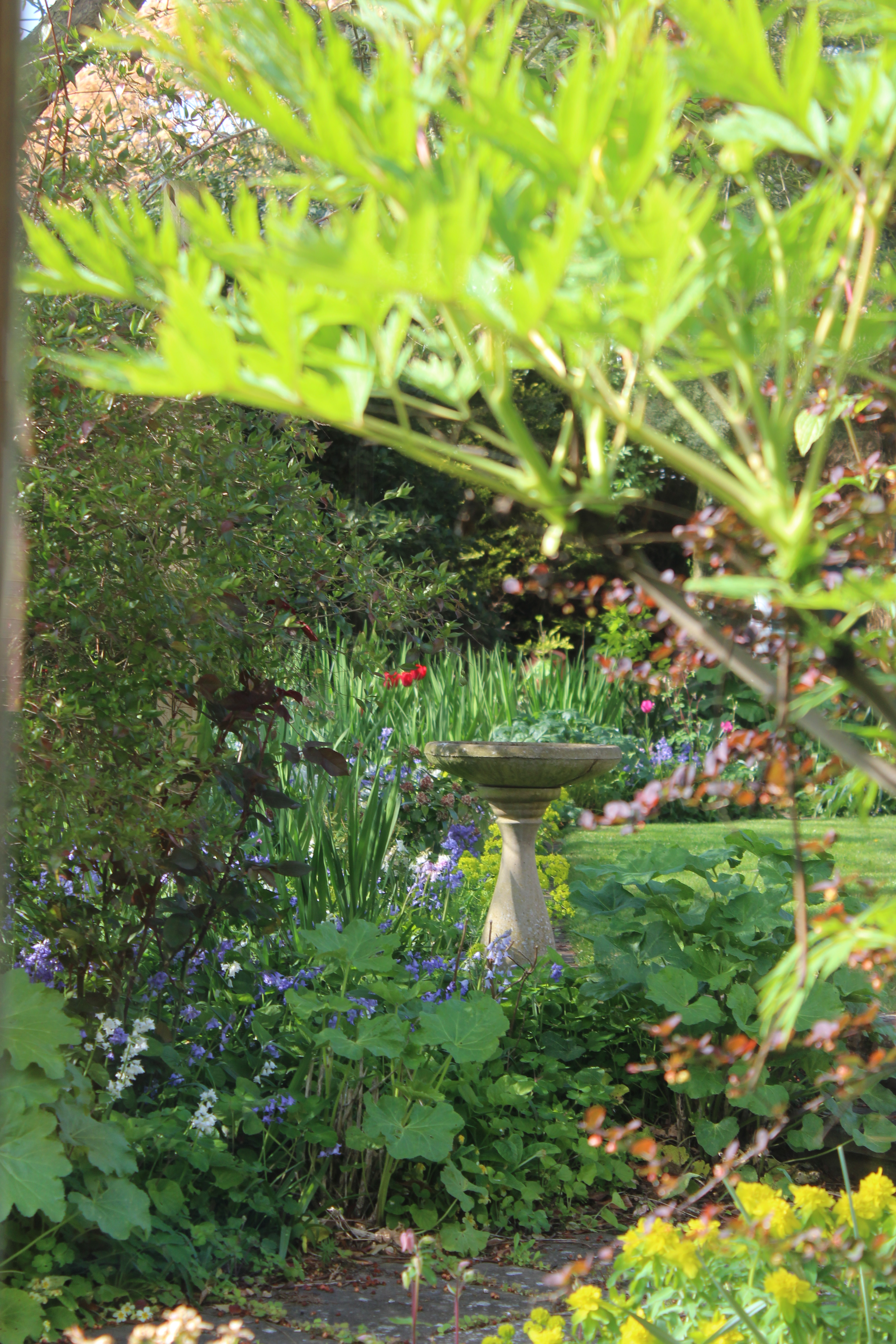
The view from the table is the picture you see here – it’s a little distracting.  Although I haven’t had my camera ready to take pictures, so far today I have seen blackbirds, a robin, and even, briefly, a kestrel at the birdbath. I think the kestrel is watching for smaller birds…..

Today, I am revising a chapter on Jesus’ saying “I AM the bread of life”, thinking about the crowds that were fed by the side of the lake, and what it might mean to be nourished by God.  It is a wonderful thing to be able to do, and it is also wonderful to be able to stretch my legs and think outside, with all that beauty and life around.

Thank you for your patience, and I’ll try to post something soon!

Good Friday Retold

A simple reading and prayers for this Holy Friday

From The Bible Retold and Prayers and Verses

Please feel free to use any of my material that helps you, saying where it is from

cano_alonso-zzz-crucifixion

Cano Alonso

THE ROAD OF TEARS, AND THE PLACE OF THE SKULL (Luke 23:26-49)

Jesus stumbled under the heavy wooden cross, weak from his beating, and so the soldiers seized Simon, a visitor from Cyrene in north Africa, and gave him the cross to carry.  Jesus followed slowly over the rough, hard road.

A large crowd followed, and among them were many women, sobbing.  He turned to them and said, “Daughters of Jerusalem, do not weep for me. You and your children will know enough pain.”

Two other men were led out to be crucified with Jesus at Golgotha, the Place of the Skull: one on his left, and one on his right.  So Jesus was nailed to the cross, and a sign was hung above him, saying: “This is the King of the Jews.”
From the cross, Jesus spoke slowly, painfully. “Father, forgive them, for they do not know what they are doing.”

But some among the crowd sneered “Save yourself if you are God’s Chosen One. You saved others!”

The soldiers joined in, as did one of the men being crucified. But the other said, “Don’t you fear God, at the hour of your death?  We are guilty, but this man has done nothing wrong.”  He turned his head towards Jesus.  “Jesus, remember me when you come into your kingdom!”

And Jesus answered “Today, you will be with me in paradise.”

Then, a deep darkness came over the land, and the shadows spread and joined together.  In the Temple, the curtain that hid the holiest place was torn in two.  “Father, take my spirit!” Jesus called in a loud voice, and then his head fell forward, and his breath stopped.

The Roman centurion at the foot of the cross said, “Surely this was a good man.”  And many of the crowd were overcome by sadness, and turned away.  But those who knew him, men and women, stayed, and kept watch.

THE TOMB  (John 19:38-42, Matthew 27:57-61)

Joseph of Arimathea, a secret follower of Jesus, went to see Pilate. “I request permission to bury Jesus,” he said, and Pilate gave him the body.  So Joseph and Nicodemus, the man who had visited Jesus at night, took Jesus away.  Nicodemus had brought a great weight of spices – myrrh and aloes – and together the two men prepared Jesus’ body with the spices and wrapped it in linen.  Then they carried him to Joseph’s garden tomb, cut into the rock, and there they laid him. They rolled the stone over the entrance, shutting out the last red rays of light. Then they turned, and walked away. But Mary Magdalene, who had been healed by Jesus, and the other Mary, stayed and kept watch in the chill of the deepening shadows.


Lord Jesus, who died upon the cross:
You know this world’s suffering,
You know this world’s sorrowing,
You know this world’s dying.

In your name, Lord Jesus, who rose again:
I will work for this world’s healing,
I will work for this world’s rejoicing,
I will work for this world’s living.

Jesus, who walked to the cross,
be with us when we feel abandoned.

Jesus, who walked to the cross,
be with us when we face danger.

Jesus, who walked to the cross,
be with us when we are suffering.

When sorrow threatens to defeat us,
Jesus, who rose from the dead, be with us.

Come, O Joy:
Let heaven break into my dark night of sorrow
like the early dawn of a summer morning.


Bless you this Easter

Maundy Thursday Retold

As we approach Easter, I’ll share with you retellings and prayers that might help you in your preparation, and might be useful for faith communities to share.  Today, we’ll look at the time when Jesus knelt before his followers to wash their feet, and gave them a new commandment – to love each other.
The word Maundy derives from the word commandment.

Love and serve one another

jesus-washing-his-disciples-feet1

THE SERVANT KING (John 13: 1- 17)

Evening came, and Jesus and his disciples were together in the upper room they had been given.  Jesus knew the time had come to leave the world – and those he loved, and would love to the end.  Jesus knew that God had given him power over all things, and so he took a towel, and tied it around his waist. He knelt down before his followers, and began washing their feet.
“No, Lord!” burst out Simon Peter when Jesus came to him. “I can’t let you do that!”
“You don’t understand yet – to be part of me, you must let me serve you.”
“Then wash my hands and my head, too” Peter replied.

Jesus came to Judas.  He knew that Judas had already agreed to betray him to the high priests and the Temple guard, but still, he carried on washing his feet.
“Do you understand?” he said when he had finished. “I’m your Teacher, your Lord, and yet I take the place of the humblest slave.  So you must serve each other, and you will be blessed in doing so.”

BREAD AND WINE  (Matthew 26:20-29, from John13:31-17:26)

Then, they began the Passover meal.  They ate flat bread with bitter leaves, and dipped greens in salt water, to remember the bitterness and the tears of slavery in Egypt.  Once more, they told each other the story of how God saved the people of Israel.  But then, Jesus’ face clouded with sadness.
“One of you is going to betray me!” he said.
“No!” they all answered, pale with shock.
“One who shares my bread,” Jesus said, giving a piece to Judas.

While they were eating, Jesus took the bread, gave thanks, and broke it, giving it to all of them saying, “Take and eat, for it is my body.”  Then, after supper, he raised the cup, and gave thanks.  “Drink, all of you. For this is my blood, poured out for forgiveness.  It is the blood of the new covenant – the binding promise of God.”

During the meal, Judas slipped out unnoticed into the dark, dark night.

“Now the glory begins, and I give you a new command.  You must love one another.  Your lives will be marked by love, and all will know you are mine because of it. For I will leave you, and you cannot follow yet,” Jesus said.
“I’ll follow you anywhere!” said Simon Peter.
“Will you?  Before the cock crows, you will deny you even knew me three times.”

They were all silent, stricken with sadness.
“You are troubled – don’t be.  Think of it like this.  I’m going ahead to my Father’s house, to get rooms ready for you.  Then I’ll come back for you. You know the way!”

Thomas said “We don’t know where you’re going, and we don’t know the way!”
“I am the way,” said Jesus. And his disciples remembered the many long, dusty roads they had followed him along.   Now, where would they go, what would they do? He saw their sadness, and spoke gently to them for a long time, planting hope.
“I am a vine, and from me grow branches – you. The vine gives the branches life, and they bud and blossom and fruit.  So draw your life from me, and you will too.

“When I go, the Spirit will come, to guide you into all truth. In this world, you will face trouble.  But take courage: I have overcome the world!”

From The Bible Retold

This reading, too, contains one of the great I AM sayings of Jesus.  I have been mulling it over in my mind as I write my next book.  I hope to share more on this with you another time!

Dear God,
Help me to love you with all my heart,
with all my soul and with all my mind.
Help me to love those around me as I love myself.

O God,
Let me learn how to love.
May I grow more patient.
May I speak more kindly.
May I act more humbly.
May I never give up learning to love.

Lord Jesus,
May our lives bear the mark of love.
As we are kind, as we share, as
we are gentle, may your love be seen in us.
Help us, for this is hard for us.

From Prayers and Verses

Please feel free to use my material if it helps you, saying where it is from

And finally, a poem, imagining what it was like for Jesus to wash the feet of Judas.  I used this poem on a Holy Week retreat at  Otley Hall  last year.

Jesus washes Judas’ feet.

That moment, when you knelt before him,
took off his sandals, readied the water,
did you look up?  Search his eyes?
Find in them some love, some trace
of all that had passed between you?

As you washed his feet, holding them in your hand,
watching the cool water soak away the dirt,
feeling bones through hard skin,
you knew he would leave the lit room,
and slip out into the dark night.

And yet, with these small daily things –
with washing, with breaking and sharing bread,
you reached out your hand, touched, fed.
Look, the kingdom is like this:
as small as a mustard seed, as yeast,
a box of treasure hidden away beneath the dirt.
See how such things become charged,
mighty, when so full of love. This is the way.

In that moment, when silence ebbed between you,
and you wrapped a towel around your waist;
when you knew, and he knew,  what would be,
you knelt before him, even so, and took off
his sandals, and gently washed his feet.