Sunday Retold – Jacob wrestles

The next installment of Sunday Retold , with the readings Genesis 32:3-31  and Luke 18:1-8
An ancient, strange, and powerful story from Genesis.
My retelling , from The Bible Retold, follows:

For there it was, gnawing away at the back of Jacob’s mind: the memory of how he had cheated his twin brother, and how Esau had been angry enough to wish him dead.  He could hardly expect Esau to give him a happy homecoming after so long.  Jacob thought hard about the best thing to do.

He sent this message ahead of him: “A message to Esau from his servant Jacob.  I’ve been staying with our uncle Laban, and haven’t been able to get away until now.  I’ve prospered – with flocks and herds, and been blessed with wives and children.”  When the messengers returned they told him “Esau is on his way to meet you – with four hundred men!” Jacob blanched.   It was worse than he feared.  Quickly, he divided up his camp.  “Esau won’t get them both!” he thought to himself.  And he prayed to God, asking for help.  He also prepared presents for Esau.  They were some presents!

Two hundred female goats, and twenty male goats
Two hundred ewes, and twenty rams
Thirty camels with their young
Forty cows and ten bulls
Twenty female donkeys and ten male donkeys.

Each had a servant in charge of them.  He sent them on ahead, one after another,  to meet Esau with a rich procession of gifts – peace offerings.  Then, he took his wives and children and helped them back across the ford, to keep them safe.  That night, he wrestled with a stranger, not letting him go until he received a blessing from the man who came from God.  And the man called him Israel, which means God-wrestler.

Then, as the cool dawn began to warm, he saw Esau and the four hundred men coming towards him,  He bowed down seven times, but his brother ran to him and held him, weeping.  Esau had forgiven him, and welcomed him and his family with open-hearted love.  “Seeing your face was like seeing God smiling at me!” Jacob said.

Please feel free to use my material if it helps you, saying where it comes from.

The Genesis story is part of the ongoing family saga of Jacob and Esau, which, in itself, fits into a longer pattern of favouritism and rivalry, feuding and dysfunction.  Here, the twins are about to meet again after a long separation.  Jacob had run from Esau, whom he had wronged, and it seems he has felt the weight of that wrong ever since.  He had stolen from his brother, taken his identity and his blessing, hidden his true self in his brother’s clothes.  What would happen now they were going to meet again?

Jacob’s generosity is driven by fear, by self-interest, but nevertheless, it reveals his intent – his intent is for peace, for reconciliation if that is possible.  Perhaps, in his relations with Laban’s family, he has come to appreciate the advantages of harmony and fair dealings. After the experience of his wedding night, he now knew what it was like to be deceived with false clothing. The onslaught of gifts he sends out, each one with a servant and a message, foreshadow the relentless wresting with God that follows in the night. He does not give up trying to show his brother his good intent, he does not wait for an answer before he sends the next gift, he keeps on suing for peace.  He seems to adopt the same approach in the night vision that follows.  All night long he wrestles, he will not stop until he gets a blessing.

Maybe he thinks God is like the angry brother he has wronged.  Maybe he thinks God needs wrestling.  Perhaps, thought, this prayer is more about changing him than about changing God. He stole a blessing, and now he is fighting for one. He is still in the mindset of struggle and fight. Perhaps he still thinks there is only one blessing to be had between him and his brother, perhaps he still needs to grasp that God is generous, and has enough to go round.

He is seeking to obtain a blessing in his own right from God – and he does. Did he need to fight? Maybe he did, but I do not think God needed him to.  I think he found it hard to accept from God, after all he had done. Sometimes it takes us a long time  before we come to see the truth about our situation, our selves, before we are ready to receive the blessing.  God is not a reluctant giver, and even they give eventually.  God longs to bless, but sometimes, it is hard for us to receive.

Take some time to contemplate picture below.  What do you notice?  Might you use this picture to help your prayers?

jacob-wrestling-with-the-angel-of-god

Jacob Wrestles by Jack Baumgartner

Notice the way the hands pull back the curtain, or the night.  What do you notice about them?
There are many references to Jacob’s past. You can read the story by flicking back in Genesis – perhaps back to 25:21.  Notice, even before they are born, how the brothers wrestle.
Can you make out who Jacob is wrestling here?  Might the uncertainty be important?
The figure Jacob wrestles grips his heel – might the artist see this story as going back to the beginning of the trouble?
What do you make of the tumble of ladders behind?

Jacob's ladder

Sophy Williams, fromThe Lion Classic Bible

Jacob and Esau found reconciliation in the end, and Jacob was reminded of this night for the rest of his life by the damage to his hip.  Both brothers were blessed as a result of this determination to put things right.
Are there people we can work to be reconciled with?  Are there family disagreements we can pray for the courage and strength and wisdom to help end?
Do we dare ask for a blessing?

Some prayers for our families, and prayers of blessing, from Prayers and Verses

O Loving God,
May you bless our family,
may you keep us safe from harm,
may you protect us from anger that
leads to quarrels and unhappiness,
may you help us to forgive each other.
As we go out into the world,
may we bring with us your love and your peace.

Dear Lord,
help us to be honest and kind.
Help us to be our true selves.
Help us not to do things for our
own gain, but to work
together, and learn to put each
others’ needs before our own.

May God make safe to you each steep,
May God make open to you each pass,
May God make clear to you each road,
And may he take you in the clasp of his own two hands.
From Carmina Gadelica

Wherever you go,
May God the Father be with you.
Wherever you go,
May God the Son be with you.
Wherever you go,
May God the Spirit be with you.

May the Lord bless you,
may the Lord take care of you;
May the Lord be kind to you,
may the Lord be gracious to you;
May the Lord look on you with favour,
may the Lord give you peace.
From Numbers 6:24-26

IMG_0609.JPG

Sunday Retold – Small Seeds, from Luke 17

Sunday Retold

sowing

seed.jpg


IMG_0592

This coming Sunday’s gospel reading – Luke 17:5-7 – talks of tiny amounts of faith, faith as small as a seed, which can accomplish so much in the world. A little context is helpful here.  The verse before talks of the necessity to forgive someone, and to keep on forgiving them.   On hearing this, the disciples ask for their faith to be increased.

It is a hard task to forgive, and maybe the disciples think they need vast amounts of faith to be able to do it. These verses are difficult to understand, to see how they hang together. Perhaps Jesus’ answer suggests that, if they have any faith at all, it is enough.  His story of the servant and the master may follow on from the same train of thought.  The work of forgiveness is an everyday necessity for the follower of Jesus.  Everyday work does not require special equipment, or a special reward.  Perhaps, if we are thinking about our life of faith in terms of reward, of payment, we have misunderstood something.

The Lord’s Prayer (11:1-4),  has already been recorded in Luke – forgive us, as we forgive. There, we begin to see how the flow of forgiveness works.  We need forgiveness, and  we need to forgive.  Our own forgiveness is not a static thing, a prize to be acquired.  Neither is forgiveness conditional, but, I believe, Jesus describes a process.   This is how it works – as a flow of forgiveness.  As we join in, seeking to pass on what we receive, we become more like Jesus.  He forgives, and so we are freed to. We find the courage and humility to ask for, and give, forgiveness. We both receive and give.  It is hard work for us, but it is the work we must do every day – like the work of the servants.

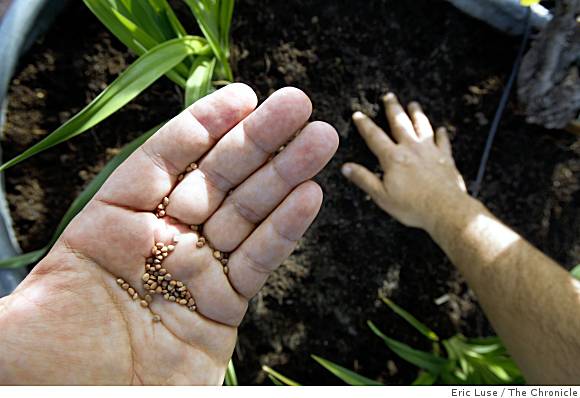
Seeds have tremendous capacity coiled within them.  Small as they are, they contain all that is needed for a new plant to grow.  It is all there, already.  Jesus often uses seeds to talk about the life of the kingdom.  They seem a perfect illustration.  So small, so unassuming, they need to fall to the ground and break.  Then we see that they are in fact  breaking open, bursting with new life, with a shoot and a root and a leaf ready to unfurl.

In The Bible Retold , I have the slightly longer version of the mustard seed from Matthew’s gospel.

“How shall I tell you about God’s kingdom?  It’s like a man who digs down in the earth and plants a tiny mustard seed – it’s so small that a puff of wind could take it out of the palm of his hand.  Yet it grows and spreads into the largest plant in the garden, with branches where the birds can come and shelter.”

And here are some extracts from Prayers and Verses  to help us pray through this gospel reading.  We think of the smallness of the seeds of kingdom life in our own lives and the life of our community, and of the patience needed to wait and tend their growth.  We remember the seeds with gratitude, aware of their potential.  We think too of our own need for forgiveness, and remember it before we condemn another.

Help me to be patient as I wait for your kingdom
and your righteousness:
as patient as a farmer who trusts that the rains
will come in their season,
and that the land will produce its harvest.
Keep my hopes high.
Help me to pray to you and to praise you.


The Lord is good to me,
And so I thank the Lord
For giving me the things I need,
The sun, the rain, the appleseed.
The Lord is good to me.
Attributed to John Chapman, planter of orchards 1774-1845

I told God everything:
I told God about all the wrong things I had done.
I gave up trying to pretend.
I gave up trying to hide.
I knew that the only thing to do was
to confess.

And God forgave me.

Based on Psalm 32:5

We remember also that there are no small things in the kingdom.  Apparently small things have tremendous power.  They are enough.  What small things can you do today?

We can do no great things,
Only small things with great love.
Saint Teresa of Calcutta 1910-1997

“Don’t judge each day by the harvest you reap but by the seeds you plant.” Robert Louis Stevenson


With thanks to my homegroup – a small group who meet and pray and read gospels and sometimes cry and always laugh together. Sowers of seeds, all.

Publication Day – USA and Canada

IMG_0609.JPG

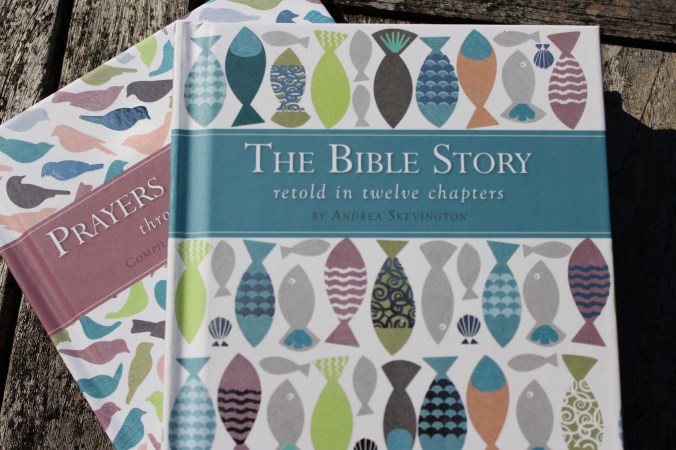
Publication day – it’s officially here!  Today’s the day these two books, The Bible Story Retold, and Prayers and Verses, are launched in the USA and Canada.

I would like to thank the many wise and kind friends who have helped me complete both of these books – they grew out of the life of a community, and I hope they will nourish communities in their turn.Thank you to all who have talked through ideas, lent me books, answered historical questions, entered into discussion on many subjects, and shared tea and prayer with me.  I appreciate it so much – as I also appreciate the long-distance, virtual community we are developing online.

I hope these books will be of use, both as individual texts and together .

I hope they will help youngsters, families, and churches share the wonderful stories of a people discovering the love of God. I hope they will be a blessing to many.

Here is a little snippet from Prayers and Verses

In all my thinking and speaking and doing
this day,
Help me be loving,
help me be peaceful,
help me be kind.

Sunday Retold – the Lost Sheep and the Lost Coin

I am trying something new – Sunday Retold. I hope it blesses your weekend.

andreaskevington's avatarAndrea Skevington

Welcome to Sunday Retold – stories and prayers based on the set readings for the week.  I hope it may be of help to you.

Many churches around the world listen to the same readings together, following the patterns in the Lectionary.   Quite often, there is something in The Bible Retold, or Prayers and Verses, that fits.  Sunday Retold is an occasional series where  I shall try to share those things with you.
If you are part of a community which follows these readings, they may be of use to you in your preparation for Sunday.  You may find something for All-Age Worship, or work with youngsters or not so youngsters, or in some other way. If you are not, I hope you will find something to think about, something to help, just the same.

Please feel free to use these extracts, and please say where you got them from!

View original post 624 more words

Sunday Retold – the Lost Sheep and the Lost Coin

Welcome to Sunday Retold – stories and prayers based on the set readings for the week.  I hope it may be of help to you.

Many churches around the world listen to the same readings together, following the patterns in the Lectionary.   Quite often, there is something in The Bible Retold, or Prayers and Verses, that fits.  Sunday Retold is an occasional series where  I shall try to share those things with you.
If you are part of a community which follows these readings, they may be of use to you in your preparation for Sunday.  You may find something for All-Age Worship, or work with youngsters or not so youngsters, or in some other way. If you are not, I hope you will find something to think about, something to help, just the same.

Please feel free to use these extracts, and please say where you got them from!


hunt sheep

Our English Coasts – Holman Hunt

lamb of god

Angus Dei – Francisco de Zurbaran

This Sunday, 11th September, the Gospel reading is Luke 15:1-10, The Lost Sheep and the Lost Coin.
In The Bible Retold  I tell Matthew’s version of the Lost Sheep, which is here:

 “A farmer owns a hundred sheep, and one of them wanders away.  She gets lost.  What will the farmer do?  He’ll leave the 99 grazing peacefully on the hillside, and go off to search for the missing one.  He’ll look for her in bushes and behind rocks, and he’ll keep on looking until he finds his lost sheep.  Then he’ll pick her up, put her over his shoulders, and carry her safely home.  He’ll be very happy to have found the one lost sheep.”

And here is the retelling of the Lost Coin from Luke.  Both the Lost Sheep and the Lost Coin are part of the crescendo towards the great story of the Lost Son in Luke.  All three of these stories have a double audience – those who are seen as Lost, and those who are seen as Righteous.

The Pharisees and the teachers of the Law were not the only ones to be listening to Jesus.  He smiled when he saw groups of tax collectors, and others who were considered bad, coming forward.
The Pharisees drew their prayer shawls closer around them.
“You see how he welcomes these people – he even eats with them!” They shuddered in disgust.  So Jesus wove stores for them, stories that would fill their minds and hearts.
“Suppose a woman has ten silver coins, then loses one.  What will she do?  She’ll light a lamp and sweep the house, turning everything upside down until she finds it.  Then she’ll call out to her friends, ‘I’ve found it – come and celebrate with me!’ That’s how it is with God.  Every time someone turns away from wrong, and comes to God, the angels celebrate!”

Stores have the capacity to reach us in a way that argument does not.  They can engage our sympathies and our imagination, our hearts, and help us to respond differently.  Here, you can imagine the “outsiders”, those who were “lost”, listening with delight as they are described as valuable, precious, worthy of celebration.  You can also imagine those who thought of themselves as safe perhaps beginning to see what Jesus was about, seeking out those they rejected -if they were not too offended to see!
How good to know that we are precious, and sought out by God, and rejoiced over. Perhaps knowing this might help us to see people we might normally overlook differently, as equally precious, and sought out, and rejoiced over.

And something to reflect on from Prayers and Verses

This is what God says:

“I myself will look for my people and take care of them
in the same way as shepherds take care of their sheep.

“I will bring them back from all the places where they were
scattered on that dark, disastrous day.

“I will lead them to the mountains and the streams
of their own land, so they may make their home
amid the green pastures.

“I shall be their God, their Good Shepherd;
they will be my people, my flock.”

From Ezekiel 34


Some more to think about:

You might like to look at the pictures above.  What do you see in them?
You could ask God to help you see, and respond, to the stories and images.
Are you part of the flock, or do you feel a little lost?
Is this flock safe?
Where would you like to be?
How do you respond to the bound lamb?


You can find the story of  The Good Shepherd   here.


IMG_0609.JPG


It’s coming! Publication day – USA and Canada – Bible Retold, Prayers and Verses

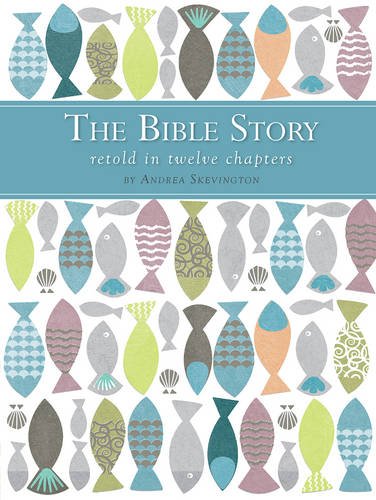
bible retold cover

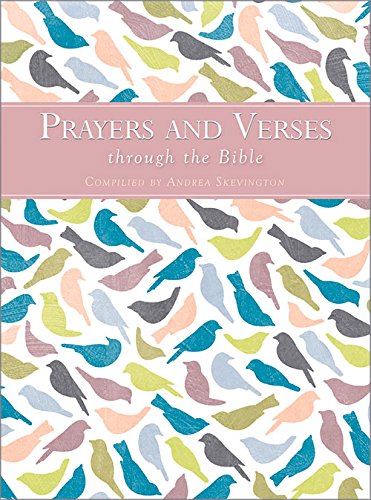
prayers and verses cover

For our friends in the USA and Canada, these two titles are out on September 28th, and are available for pre-order now!

Over the next few days and weeks I’ll share some extracts from both books, but here is a little snippet to begin with.

From The Bible Story Retold:

THE SMALL, AND THE HIDDEN

“God’s kingdom is like the yeast a woman used in baking.  She took a little pinch, and mixed it into a great mound of flour.  And the yeast worked its way right through the flour, making well-risen dough, and making all the bread good.”  The crowds smiled at the thought of the warm smell of baking.

“Imagine buried treasure – just under the ground in a field.  That’s what the kingdom of heaven is like.  One day, someone was working in the field when they spotted something glinting in the sun.  They dug away until they uncovered it all – gold, silver, precious stones.  Then, they and sat back on their heels and laughed with joy.  It was a fortune!  Quickly, they buried it again and went away.  They sold everything they had and bought that one field.
“Or think of a trader looking out for fine pearls.  At last, he found the one he had been searching for.  It was large, and smooth, and glowed with all the colours of the rainbow.  It was the best pearl he had ever seen. He went and sold everything he had, and came back with a heavy purse of gold to buy it.”

From Prayers and Verses:

Help me to be patient as I wait for your kingdom
and your righteousness:
as patient as a farmer who trusts that the rains
will come in their season
and that the land will produce its harvest.
Keep my hopes high.
Help me to pray to you and to praise you.


I wait eagerly for the Lord’s help
and in his word I trust.
I wait for the Lord
more eagerly than watchmen wait for the dawn.

Psalm 130:5–6

The Kingdom of God is very near.
from Luke 10:9


Some links to Amazon are below – of course, if you have local bookshops, they will order it in for you if it’s not in stock.

Canada Bible Retold here

Canada Prayers and Verses here

USA Bible Retold here

USA Prayers and Verses here


The Good Samaritan

The good samaritan

The Good Samaritan  Vincent van Gogh

So, this week, we are surrounded by political and economic uncertainty after the  UK’s Brexit vote.  In a national climate of increasing distrust, and anger, and division, many churches will be given this reading to consider on Sunday – the parable of the good Samaritan.  It is strong medicine – at least, I find it so.  It challenges me deeply, differently each time.  Reading it again, now, its force comes home anew.

From The Bible Story Retold

WHO IS MY NEIGHBOUR?  (Luke 10:25-37)

The teacher of the Law stood up, narrowing his eyes in the bright sun.  He had heard people talk about Jesus, now he wanted to test him out.

He pitched his opening question: “Teacher, what must I do to inherit eternal life?”

But Jesus offered the question back to him, giving him the chance to show his knowledge. “What is written in the Law?  How do you interpret it?” The teacher’s answer was to quote the scriptures word-for-word: “’Love the Lord your God with all your soul, strength and mind’, and ‘Love your neighbour as you love yourself’.”

Jesus smiled.  “It’s a good answer.  If you do all that, then you’ll have eternal life!”  “But….” the teacher of the Law added in a loud voice,  “but who is my neighbour?”  Jesus answered him with a story.

“Once, a man was travelling from Jerusalem to Jericho.” The crowd could imagine this journey – the road’s steep rocky sides, its twists and turns, its dust and heat. “As he made his way along,  a band of robbers crashed down the rocky slope onto the road – they had him surrounded.  The man gasped, horrified, but there was nowhere for him to run. They stripped off his clothes and beat him to the ground.  They left him lying in the dust, half-dead, while they went to gloat over their takings.

“So there he was, lying helpless in the heat of the sun, when a priest came by.  The priest did not stop, he gave the man a wide berth, crossing quickly to the other side.  A priest can not touch blood, or a body – that would make him “unclean” by Law, unable to work in the Temple, wouldn’t it?” Jesus nodded towards the teacher of the Law, then carried on. “Next came another religious man: a Levite.  He, too, saw the man lying bleeding, and still.  He, too, walked by on the other side, lifting his robes a little to avoid touching the blood on the road, and peering anxiously into the rocky shadows.

“Then, in the distance, came the steady clop of a donkey’s hooves.  The donkey carried a third man, but this time, he had nothing to do with the Temple.  He was a Samaritan.” Again he turned to the teacher, who was looking smug now.  Samaritans didn’t keep to the law – so he wouldn’t know the right thing to do. “The Samaritan saw the broken figure lying bleeding on the road, and his heart was filled with pity. He leaped down, cleaned and soothed his wounds with wine and oil, and tore strips of cloth to make bandages.  He slipped his arms under the man and heaved him onto his donkey, leading him gently to an inn.  He sat with him all night, giving him sips of water and wine.  The next day, he spoke to the innkeeper. ‘Here are some silver coins.  Look after him, and if you spend more, I’ll pay you on my return.’

For a third time Jesus looked at the teacher of the Law and asked him  “Now, you answer my question.  Which one was a neighbour to the injured man?”

The teacher of the Law shifted uncomfortably. “The one who was kind to him.” He answered quietly.  Jesus replied, “So go, and do likewise!”

It seems that the teacher of the law was opening a theoretical debate about what constitutes rightness in God’s eyes.  It doesn’t seem to have that much to do with God, or people, even though he correctly identified the commands to love as the highest ones.  Perhaps his question, “who is my neighbour”,  was an attempt to place a limit on the breadth of the command to love.  Perhaps this person is one I should love, but I can overlook another.

As was his custom, Jesus does not respond in kind, in debate, which can often stimulate the mind and bypass the heart.  Instead, he tells a powerful story.  Stories can change us.  They can reframe the way we see things, they can stir up powerful responses – outrage, pity, compassion, love.

And love is the aim, the way, the goal.   The teacher of the law was right about that.  Here, it trumps other laws – those who seek to maintain their personal holiness and safety while leaving a bleeding man in the road  are seen in sharp focus.

It is a foreigner who loves, and is commended.  So often, groups praise the good deeds of those who are the same as them, in nationality, or creed, or other ways, and overlook goodness where it is found elsewhere.  Jesus does not do that. Jesus, in word and deed, shows us what love looks like, and it is resourceful, and strong, and relentless even in the face of death. It overrides boundaries and borders.  Jesus commends the goodness of one outside the Jewish tradition, and asks the expert in Jewish law to learn from him, to be more like him. The teacher of the law seems to be open to the lesson, too.

If some in our national debate are speaking words that divide people from their neighbours, we can remember that each of us can seek to live differently, demanding as that is. It is a humbling thing.  There is no room for pride in the face of such a call to love – it is so often beyond our own resources.   But, what seems quite astonishing to me is how little it can take to make a difference. I am sure we can all remember people, known or unknown to us, whose gestures of love and solidarity, whose practical kindness, whose simple acknowledgement helped us when we were in trouble.  We can pray for open-hearted courage, we can pray for eyes to see the needs of those we walk past as we go about day by day. If we dare, we can ask God to move us to pity. But if that seem too much for us today,  we can remember that the smallest gift of lovingkindness bears the hallmark of God.

How good it is when we remember that each human being has dignity, infinite worth, and so offer to all our respect and compassion.  We can look for good in others, wherever they are from and whatever our differences. We can seek to overstep boundaries, and reach out a hand, remembering that love is from God.
Another way is possible.

Beloved, let us love one another, for love is from God, and whoever loves has been born of God and knows God.  1 John 4:7

From Prayers and Verses

Lord Jesus,
Make me as kind to others as I would want to be to you.
Make me as generous to others as I would want to be to you.
May I take time to help them as I would want to take time to help you.
May I take trouble to help them as I would want to take trouble to help you.
May I look into the faces of those I meet and see your face.

BASED ON MATTHEW 25:37–40

Prayers and Verses – 3 The burning bush

prayers and verses cover

UK publication date – Friday 17th June 2016

bible retold cover

It’s nearly here!  the official publication date for Prayers and Verses!
I thought I would share something from Chapter Three of both books – Prayers and Verses and The Bible Retold.
The story of Moses, and how people escaped from slavery, is absolutely central to our understanding of the story of the Bible as a whole. It is truly remarkable.  Written records usually tell the story of the victor, of the rich and powerful.  This ancient narrative tells the story of the slaves, the powerless, the people pushed to the edges.  It says that God is listening to them, and is sending someone to bring them out of slavery, into freedom.

Prayers for those who labour under heavy loads, who bear much sorrow, are included at the opening of the chapter in the prayer book.  The Hebrew scriptures are full of reminders to be compassionate, to remember the hardship, and to let it soften your heart towards others that suffer – strangers in a strange land.  That is why the story is recalled again and again, because it has the capacity to centre us once more on love, on justice, on humility.  It builds our faith that God does listen, and then respond. The faithfulness of God is spoken of again and again. And the turning point of the story is when Moses is stopped in his tracks by the burning bush, and the experience of God he has there.  At a time when he must have felt he had blown all his chances, and had let down his people, this prince of Egypt encountered God when he was simply living out his own life on the edges, as a humble shepherd.  This encounter changed everything, as encounters with God tend to do.

To go alongside this snippet of story, I have chosen an extract from Prayers and Verses which will, I hope, encourage us to open our eyes to the possibility of God being present with us as we go about our daily lives.

Then, one day, as the sheep grazed on the slopes of Mount Sinai, Moses saw something: it was bright flames leaping up from within a bush.  He began walking towards the burning bush, curious, because he saw that although it was crackling with flames, the bush was not being burned up. And then a voice called from within the flames.
“Moses, Moses!”
“Yes?”
“Don’t come any closer.  Take off your shoes, for you are on holy ground!”  Moses obeyed the voice.
“I am the God of your forefathers: the God of Abraham and Isaac and Jacob…”

Moses hid his face, afraid to look on God.

“… and I have heard the cries of my people.  I have seen their suffering, and felt their pain.  I want to pull them out from under their slave masters’ whips and bring them to a good, gentle land: a land of plenty.  You are the man I have chosen to send to Pharaoh.  You will rescue my people form Egypt.”


Grant us a heart wide open to all this beauty; and save our souls from being so blind that we pass unseeing when even the common thornbush is aflame with your glory, O God our creator, who lives and reigns for ever and ever.
WALTER RAUSCHENBUSCH (1861–1918)


Dear Lord, Help us to see you today in all the ordinary things when we walk, and talk, and play; help us to know that the whole earth is full of your glory, and that the ground is holy. Amen
The world is charged with the grandeur of God. It will flame out, like shining from shook foil.
GERARD MANLEY HOPKINS (1844–89)


Prayers and Verses – how this book can work together with The Bible Story Retold

prayers and verses cover

Today, I am sharing some more extracts from my new book, which is due for publication next Friday, 17th June (UK), and September 28th (USA and Canada).  The Bible Retold is also available on Kindle.

I thought I would show you how this book of prayers could be used alongside  The Bible Retold – the two books can be read independently, of course, but I hope you will see that they could be quite helpful, powerful even, read together.  I am drawing some examples from the second chapter.  In the retelling, this chapter covers most of the well known stories from the later part of the Bible book of Genesis

img_0225

The story opens with Abram setting out on a journey, called away from all he had known before.  The prayers focus on our new beginnings, on uncertain ways, on “Life’s journey”.

From The Bible Story Retold:

Abraham took one last look behind him at the great city of Ur, with its narrow, crowded streets, and cool buildings made of hard-baked mud.   It was his birthplace, but it would no longer be his home. His father was leaving for the distant land of Canaan, and Abraham was going with him.  So they set off, with Abraham’s wife Sarah, who was childless, and his nephew Lot, who was an orphan. When they had travelled as far as Haran, they stopped and settled: their dreams of reaching Canaan fading with the passing years.

“Get up! It’s time to go!” God said to Abraham.

From Prayers and Verses:

As Abraham set off for an unknown land, so we begin each day, and each journey, knowing you are with us. Bless us on our way, and make us a blessing to those we meet.
Dear God, Help me to find the right way to go, even though the gate to it be narrow, and the path difficult to walk.

As the retelling of Genesis continues, we encounter squabbles and rivalry, deceit and betrayal in the families whose story we are following.  The prayers turn to our own families, how we can live together with love, peacefully.

From The Bible Story Retold:

Esau boiled with anger against his brother. He fumed and stormed among the tents.  “As soon as my father is dead, Jacob will be a dead man, too!” he roared.  Rebecca heard him, and urged Jacob to flee to his uncle Laban’s lands.  Isaac blessed him again before he left, and told him to find a wife among his Laban’s family.

He went alone, travelling until it was dark.  Shivering in the chill of a desert night, he took a stone for a pillow, and lay down to sleep.  As Jacob slept, a dream came to him.  He saw a ladder, with its feet on the ground, stretching up and up to heaven.  In his dream, he watched as God’s bright angels travelled up and down it between heaven and earth.  And in his dream, God himself was there.

From Prayers and Verses

Help us, like Jacob, dream of angels.
Help us, wherever we wake,
know that you are there, too.
Help us to see with new eyes.


I give thanks for the people who are my home: we share a place to shelter; we share our food; we share our times of work and play and rest.
May we provide one another with love, encouragement, respect, and wisdom: through laughter and celebration, through tears and troubled times.
May we be to one another roof and walls, floor and hearth, windows and doors.


Dear God,
Give us the courage
to overcome anger
with love.


I hope these extracts give you a little flavour of how the stories can flow into prayers.
If it helps, please do use them, saying where they are from.

The faith of a Roman

bible retold cover

This Sunday’s readings include a story from Luke’s gospel, of faith in an unexpected place.  The Romans were an occupying force in Israel, and a centurion was a military officer enforcing Roman rule.  It is good to see how Luke records this example of God being at work in unexpected people.  In that category we find not only the Roman centurion – but also  the Jewish elders.  They can recognise that this man, an “unclean” gentile, outside their own people and laws, is “worthy”.  Often the religious leaders seem narrow, legalistic, small-minded even, but not in this instance.  They see something good, and they speak it.  The centurion’s support of their synagogue might be genuine interest in their faith, it might be good politics, but he is honoured whichever it is.

It is good to look about, and see God at work in unexpected people.

Below you will find my telling, in an extract from The Bible Story Retold
If it is of help to you, please feel free to use it, saying where it is from.
The gospel reading is Luke 7:1-10


The centurion stood with his hands behind his back, watching his most loyal servant’s dry lips as they moved without sound.
“That’s enough!” he said to those who were trying to coax him to drink, and they slipped back, away from the couch.  For a moment the centurion leaned down, his ear close to the man’s mouth, but his breath was growing fainter.  He was near death. The centurion strode out to the courtyard and looked up at the road.  He saw Jesus in the distance, with his followers behind.  Quickly, he spoke to the Jewish elders who stood by the gate, and they turned and walked towards Jesus.

“Rabbi,” they said “we come to see you at the request of the Roman centurion stationed here.” The crowds watched Jesus carefully – what would he do?  For the Roman soldiers were an occupying force.  They were the enemy. “As you know, this Centurion has treated us kindly, paying for our synagogue.  Now his servant is very ill, and he asks for you to heal him.”  Jesus did not hesitate.  He quickened his pace into Capernaum. As he came close to the army garrison, the centurion’s friend came out with a message. “Sir, the centurion sends you this message: ‘Please don’t trouble to come into my home. Just say the word, and my servant will be well.  I’m a man of authority.  I give orders, and they are obeyed.  I know you, too, are a man of authority – at your command, the illness will leave.’”

Jesus stopped, and turned around to those following.  “Do you hear that?” he asked “I haven’t found such faith in all of Israel!”  Then, as the friend returned to the garrison, they all heard shouts of joy, and laughter.  For the servant had been healed.