Poem – Murmuration

geograph.org.jpg

Murmuration of starlings – geography.org
d1b02bda728369e9744a15039260d942.jpg

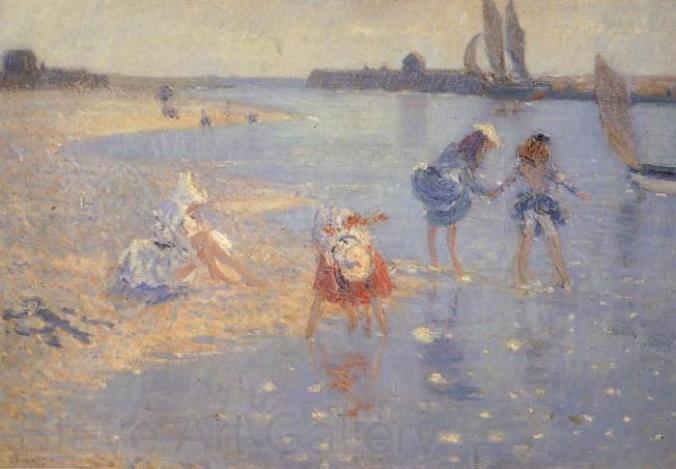
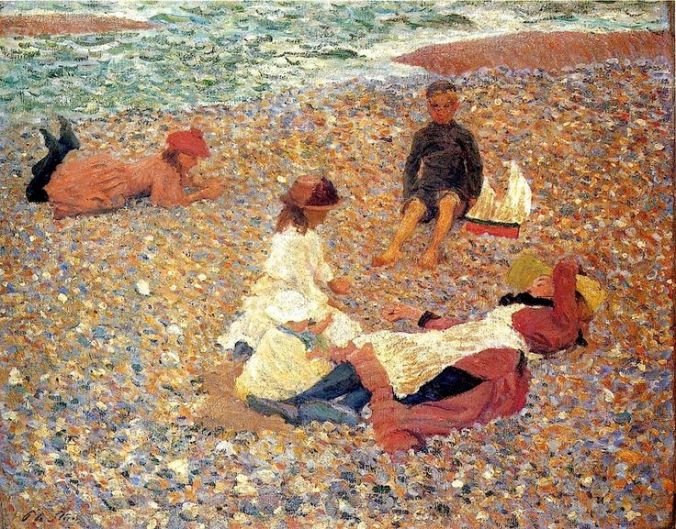
Steer – Walberswick

philip-wilson-steer-926266

Steer – Walberswick


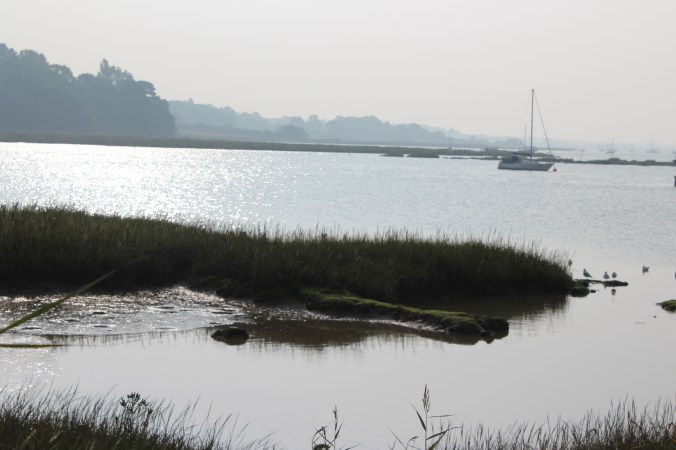
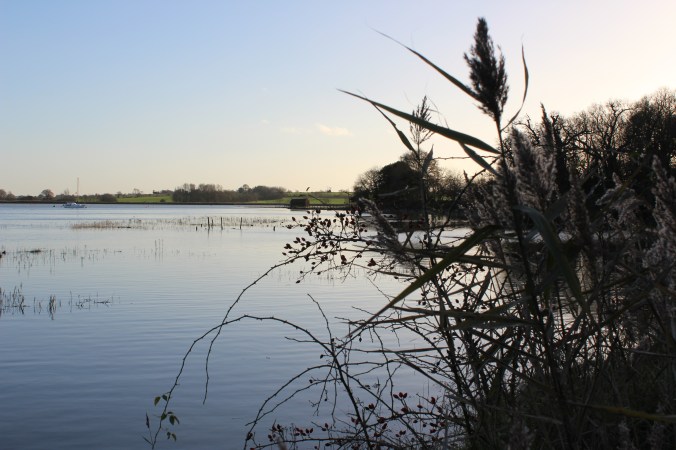
One of the glories of winter is watching the birds – where we live, the hungry waders and migrants come to feast on what hides in the mud.  There is even, sometimes, a small murmuration of starlings over the reed-bed by our little railway station.  Collecting my daughter from there, last year, I arrived at the moment when they began.  Quite a welcome home!

A little further up the coast the starlings gather in great clouds, thousands of them.  We had, as a family, discussed what things we would like to do over the Christmas holidays a few years back.  One of the suggestions was to visit an exhibition at the Sainsbury Centre, UEA, of East Anglian art.  We saw some paintings by Steer, of Walberswick beach, and also some botanical drawings by Mackintosh, drawn while he stayed in one of the fishermen’s huts by that same beach.

On the way back, we stopped off to look for starlings as dusk was falling.


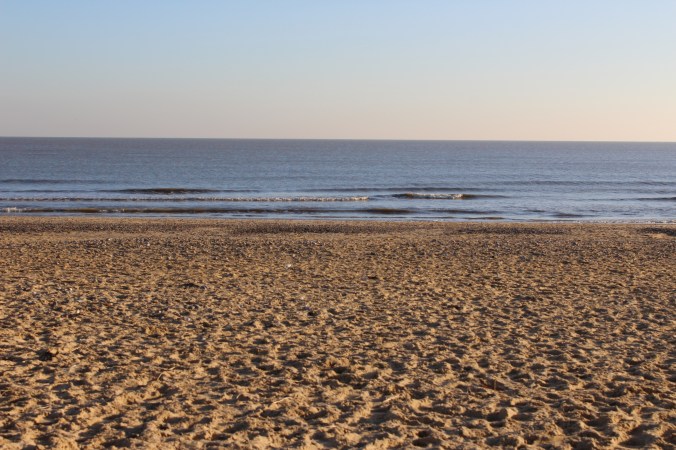
Murmuration, Walberswick

We ran south along the ridge of dunes –
sea on the left, reedbeds on the right.
Behind dark trees the sky was red
and the sea –
purple and gentle in the evening.
The winter sun had shone bright
all day, the first sun for so long.
And you came with me, you all came
with me, when I said I wanted to look
for the starlings. So we run, laughing,
in heavy boots, towards that black
smudge in the sky over the reeds,
spreading and swirling, darkening
as the birds turn, moving together,
as we run together over the sand.

Mystery and wonder, the way they move,
a thinking cloud, and laughter
comes from the wonder,
and the running,
and the being together.

And as the mist rises from the sea, drifts
across the golden shining reedbeds,
and the birds darken as they swoop and
turn, our eyes are opened as wide
as memory – of this beach,
when you were children, when we came
here in the warm summer light,
laughing together in the bright waves.

 

img_0228

Poem – Candle

candles_flame_in_the_wind-other

Today is Candlemas

It is a time when we notice a turning in winter.    There are shoots beginning to appear, catkins are lengthening, and the buds of the blackthorn and the quince are swelling – the quince with a dark pink blush.  There is movement, at last, despite the cold and the damp.  The days are growing longer.  It is a time when, despite the cold to come, we can see that light and life are stirring again.

This poem, small and simple as it is, draws on these themes in my own spirit. Part of the process of getting ready for writing, for me, is lighting a candle.  At the moment I have a particularly lovely one given to me by my daughter for Christmas,  it has flecks of cinnamon bark in it and it smells rich and warm.  However, the words do not always flare up with the flame.  So, a thing I sometimes do, is write about what is before me, and in this case, it was the experience of not being able to write, and fiddling with the candle as I often do.  It became an illustration of the writing process, and a reminder to flow, to do, to begin, to not give up.

CANDLE

Sitting here, with a notebook open
at a blank, cold page, I light a candle,
hoping the fragrance, the bright flame, will help.

I watch it burn, but its wick is short and soon
its own heat has melted a pool of wax,
enough to drown it.  The thin red flame gutters,
splutters, as the heat drills down a narrow,
deep well with softening, curving walls.

So I take my pen, and press it down on the
wall, turning it in my fingers, pressing a
way through so the hot wax can flow.

And now the flame burns bright and steady,
the is air fragrant, and this page no longer blank.

 
img_0773

Poem: Aldeburgh Beach, January

wp_20170102_14_12_07_pro

Photos taken at Dunwich Heath beach, a little along the coast, by Peter Skevington

wp_20170102_14_12_27_pro

WP_20170102_14_10_47_Pro.jpg

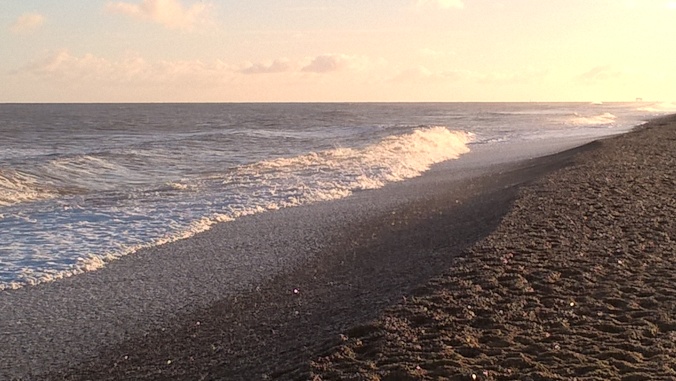
I love the North Sea in winter – its wild brown, its keen winds.  The coast is unstable here, lumps of WWII concrete, of building materials, and old fragments of glass  are thrown onto the shore.  The pebbles hiss in the breaking waves.  The waves in turn sound like a vast heartbeat.

The wind blows you alive, if you wrap up warm!

The photos above were taken this Christmas holiday, with my husband and son, as we stood on the beach and let the waves chase us.  We were not far, here at Dunwich, from Aldeburgh, where I went with a dear friend for a walk on a different day.

I am so grateful for my friends, and my family.  It is so good to be able to spend time with people you can be real and true with.  I feel very blessed to be able to count quite a few people as those whose company is as free as solitude, but enriched by their unique ways of seeing and being and insight.  The poem below attempts to capture something of my walk with one of these dear people, and I hope it can also say something bigger about the power of friendship.

I have been reading Bandersnatch, a Christmas gift from my son, which explores the relationships which formed the basis for the Inklings group, including Lewis and Tolkien, and it has clarified for me how much I need the encouragement and shared thinking and being a close group of friends can provide.  Our differences can give new vision and perspective, our mutual support can get us through difficulties that are too much for us alone.

Thank you to all my friends, and may you, reading this, have such sources of goodness in your life.

Aldeburgh Beach – January

We stood there, friends, on the beach,
facing into the east wind,
being blown full of cold,
icy and alive,
by a wind strong enough to lean on.

We stood on a cliff of pebbles
new thrown up by storms,
near the edge,
where stones rattled down,

while the sea, high and brown,
roared and crashed,
mist and foam flung
with the generosity of joy,
into our faces.
Our lips were salt with it.

In the sound of the wind we brought
our heads close enough to speak –
of the breath of God, alive,
breathing into us,
the glory of God in the brown shining.
The power of each small thing,
each small thing,
as the spray and the pebbles
danced wild around us.

Epiphany – a creative writing possibility

IMG_0752.JPG

Yesterday morning, we were in Bath Abbey, taking part in a beautiful service to celebrate the coming of the Magi, and the way God moves and speaks to people using a language they understand.  The sermon, by  Rev Evelyn Lee-Barber, explored this theme very thoughtfully, and she encouraged us to  think about where we were in the story too, and how we might respond.

It reminded me of a creative writing/meditation I did some time ago, where I used the words of the wise men to explore the story deeper.  I wondered if you, dear readers, would find it helpful to do yourselves.

You can write the words out on a large piece of paper with plenty of space between the phrases.

“Where is the one


Who was born


King?


We have come


to worship


him.”


Read the story slowly, allowing your imagination to dwell with each of the characters, and places. Ask what about this story speaks to you today, might be with you this week.  After you have spent some time in open quietness before God, when you feel ready, expand the words of the wise men, filling in the spaces you have left on the page.  There is something about allowing gaps that helps slow down your reading and thinking, giving time and possibility to the work of the Spirit, allowing the meaning to unfold before you.  The spaces matter, giving you space to think and feel and respond, to allow the words to engage in dialogue with you.  The gaps can be where the light gets in, to paraphrase Leonard Cohen.   Why not give it a go?

Perhaps you could share what you have written in the comments section, if you would like to!


November Sowing


sowing


We have a couple of small veggie patches in our garden.  Maybe, when the garden was planned and the trees were smaller, they were in the perfect place.  Now, they are rather shady, and need just the right weather for things to thrive.  Leaves will grow, though, and sometimes surprisingly.

There are often some seeds left over by the end of the season, and sometimes, I feel inclined to plant anyway.  Maybe, with a mild winter, and some protection, they’ll get a head start in the spring, before the trees are in full leaf.  As I was planting, I thought about all the times when it can feel too late, hopeless.  When we can feel too old to start something, or as if we have blown our chances.  Whatever it was we dreamed of, it can seem like there isn’t enough warmth for our dreams to grow.  It can feel like planting in November with chilly fingers.

I love the defiance of November sowing.  What is wasted by taking a chance, anyway?  A few leftover seeds… and who knows? Come the spring, my veggie patch may be full of little green plants.  I may have good things to eat, and to share.


It is not too late!


 November Sowing

I planted seeds today, scraping my fingernail
into the corners of old packets:
cavolo nero, romanesco, mizuna –
such names – exotic, full leaved, sharp.

I sowed them where I sowed before,
under tall trees thick and damp with falling leaves,
remembering how spring was baked dry,
and summer was pitted with rain, lightless.

But now, today, this low slanting sun is warm.
Now, in this out of season sowing
with leftover seed, I am surprised
to find myself hopeful, joyful
even, at this extravagant gesture.

I know full well that they may never grow,
But maybe, just maybe they will.
Each day is a day for sowing,
it is not too late.


From Prayers and Verses

Help me to be patient as I wait for your kingdom
and your righteousness:
as patient as a farmer who trusts that the rains
will come in their season,
and that the land will produce its harvest.
Keep my hopes high.
Help me to pray to you and to praise you.


Mud from Coleridge’s Garden

IMG_0713.JPG

The Ancient Mariner, at Watchet harbour, where the poem unfolded in Coleridge’s mind. The rope is particularly powerful.


On our Somerset holiday, we visited Coleridge Cottage.  I was not expecting to be so overcome by the place.  Each room was full of connections to his life and work.  Each room echoed with the poems – they flowed across the walls, they came out of the earphones by easy chairs, they whispered to me out of the leaves of books.  To be in the room where he wrote Frost at Midnight  and to sit in the Lime Tree Bower  were deeply moving experiences.  I still remember my marvelous English teacher, Miss Rowlat, talking to us about the Lyrical Ballads, with its paradigm shift of a Prologue, and then to be in the place where Coleridge and Wordsworth met and talked and where these ideas came into being – was beyond words. The Ancient Mariner found voice here, too.  So much wonder in one small, simple cottage. It is not often that I am left speechless.  I was here.

Mud from Coleridge’s Garden

I picked up my muddy shoe –
an unfamiliar pale grey clay,
a leaf stuck to the instep –
and slipped my hand inside
like a glove
as I looked for a cloth

and then I stopped.
It was that leaf,
I remembered the shape –
a jasmine leaf from
the Lime Tree Bower
where I had sat speechless
as I listened to that poem
so full of leaves,

and the pale grey clay
from the damp paths,
from that grassy space
so full of ordinary beauty
it filled me, too,
despite my already full heart.

I walk with muddy shoes now,
each day,
hoping to be rooted to that same earth,
leaving a sprinkling of
Coleridge’s garden
in this lighter, sandier soil.


Sorrows

IMG_0658.JPG

IMG_0682.JPG

IMG_0683.JPG

Much has happened this week.  Today, Remembrance Day in the UK, I am acutely aware of the importance of keeping peace between the nations, of reconciliation and forgiveness between us, of acceptance and inclusion for all.     Reconciliation, and an acknowledgement of the sacred worth of each individual human, seem further away now than they did.
This poem is a personal one, expressing something of an attempt to keep perspective among sorrows.  I know that for many, and for all of us from time to time, any such attempt can be impossible.  I wrote to try and express  what can feel like the constant task of not being overwhelmed, and to remind myself that when I can, it is worth the attempt.

I hope it also contains a gleam of hopeful truth.  Not a truth that ignores the darker realities, but that is prepared to see the possibility of light coming in the darkness. Both are real, but I find that if I can stay with the hope of dawn, even the darkness can take on a different quality.  Actions that lead to hope seem more possible, more achievable.  It is worth living for hope, not because the things we hope for will necessarily come, but at least in part because if we set our eyes on a kind and generous future, we are more likely to live in a kind and generous way now.  At least, I find that to be the case.
To all of you who are feeling a weight of sorrow, I hope this helps. May dawn come soon.

Sorrows

I carry stones in my arms.
They are grey,
and powder me
with dry dust.
They have sharp edges
my fingers find like
a tongue with a tooth.

When I notice,
I put them down,
stand up straight

Look, the sky is full of blue,
of high white clouds,
the trees chime with
golden pennies,
and a buzzard soars,
weightless, with its thin cry.

Look, there is one last flower
growing in the cracks,
and one last bee.

Who would have thought that losses
could be so heavy?
I find them lying on my eyes
in the dark, heavy and hot,
and on my heart and stomach,
heavy and cold.

I put them down.
Seventy times seven.
The work of Sisyphus.
Again. Again.

Look, there are stars in the darkness,
a whole Milky Way of them,
there is the softness of dawn light
coming, coming.
Take courage.
Begin again.

WP_20161027_10_12_18_Pro.jpg

Photographs are from the woods above Selworthy Green, Exmoor, and the coast at Watchet.

The reference seventy times seven is to something Jesus said when asked how often we need to forgive.  I used it here for any work where painful memory or thought keeps on surfacing, and we keep laying it down. Sisyphus  refers to the Greek myth of one who repeatedly rolls a boulder up a hill, only watch it roll down again.

Silk


matthew-spidersilk1

c 2016 Matthew Ling

matthew-spidersilk2

c 2016 Matthew Ling


WP_20161025_18_15_59_Pro.jpg

Selworthy Green, Peter Skevington

A November poem for today –
when the days are growing darker, a poem which tells of a moment of brilliant light.

When the sun is low, and when dawn and dusk happen at times when we are more likely to be about, we can sometimes catch a moment of pure glory, like this one.
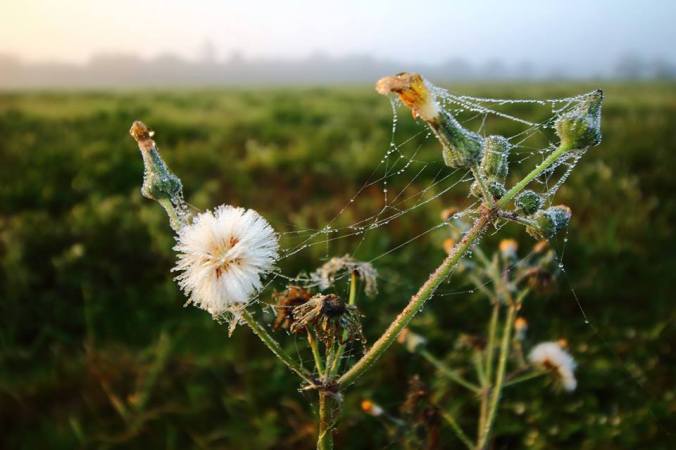
The sun hit an angle which not only illuminated the spidersilk that covered everything, but transformed it – the silk acting like a prism and splitting the light into its rainbow colours.
Everything in that plain muddy field shook with all the colours, all the light.
Even an unremarkable morning stroll can leave you breathless with wonder.
Even in dark times, we can look for the light.
Keep looking.


SILK

November – early morning –
clear sky – rising mist.
You note details, how it was
when it began,
when the spidersilk hummed with light,
the way a wire hums in the wind.

Just one or two threads at first,
then each blade of grass, each reed,
joined in strands of brilliant light.

Silver shakes and splits
into red, blue, violet.  Threads
shuddering into colours of such
brightness, such purity.

Even backs of crows
are iridescent white,
and heavy water-drops
that bend the reeds
flash indigo and orange

for a moment –
a long held breath
Then the silk turns silver again,
and then it vanishes.
Brown mud. Green grass.
A field where cows swish slow tails,
and the curlew and the heron
walk through reeds.

 
With thanks to Matthew Ling and Peter Skevington for the use of their beautiful photographs.

Redshanks

IMG_0157.JPG

img_0212


redshank-11-clive-timmons_lge

Photo – Clive Timmons


When I walk, I often take a notebook, and sit and watch.  Watch isn’t quite the right word – it is more of an opening yourself up, a forgetting yourself and becoming lost in what you see before you.

This poem records a moment of change, when, with a rising wind, the birds began to fly.
I wondered what it was that moved them.  Whatever it was, it moved me, too.  I got up, and walked on.


Redshanks

Light on grey mud, grey water,
clouds high and thin.
By the edge of the river
redshanks probe thick
cold with their long beaks.

The wind breathes
over the flowing tide,
ice breath that mists
the watersheen.
And the birds begin to lift,
first the northernmost, then
up like a piece of loose lace,
flashing dark and light from
opening wings.

They circle and cry, raising
long mudsplattered legs,
wingtips close now, wheeling
the air into many breezes.

And what moved them, and what
tied them?  That pull, the breath
of wind over the water. That nudge,
seeing open wings all about them.

That longing  to fly


October 21st

IMG_0615.JPG

IMG_0617.JPG


IMG_0618.JPG


img_0620

img_0623

This poem is a product of my not-quite daily practice – of simply writing to fill up the page.  It is a discipline learned from Julia Cameron’s invaluable The Artists Way, where she advises Morning Pages – filling up three A4 pages every day.  You are not attempting to “write” or do anything creative, you are just getting to the end of the pages.  In the process, all sorts of interesting things will happen, but that is not your concern.  You are learning to silence your inner editor, getting it to turn the other way while you are in the first tentative stages of creating.

Once you have got used to simply writing, and not reading or thinking about what we have written, after a few weeks of filling up pages, you can begin to go back and look at what you have written.  Sometimes, amidst all sorts of moaning and lists and thinking on the page, you find you have the beginnings of something.  Sometimes, it is like mining ore.  Once your inner critic learns to leave you alone, you find all sorts of things emerge, like this.

One of the things I often find myself doing is describing what I see around me.  This is what I did.  To honour the process, I have called the poem by the date, rather than giving it a subject.  It is a record of this moment, this sitting in the garden wrapped against the growing cold, writing.


October 21st

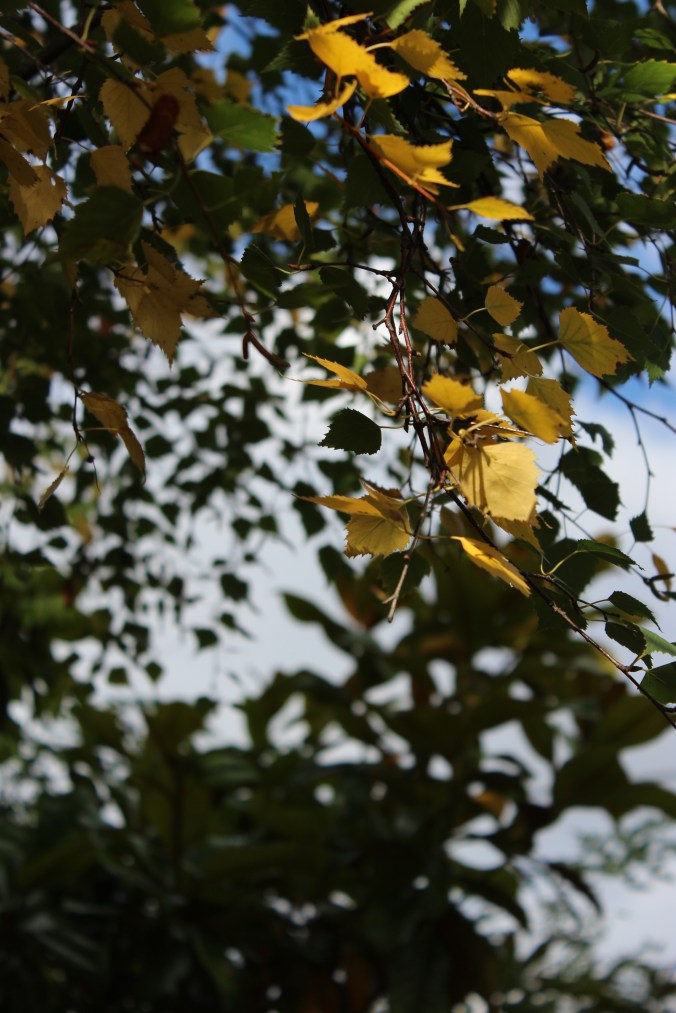
How lovely the light is, low and golden,
falling in sheets through low, golden trees.

And the birds sing now, this morning,
in a song sharpened by last night’s frost,
the first – cold, clean, white.

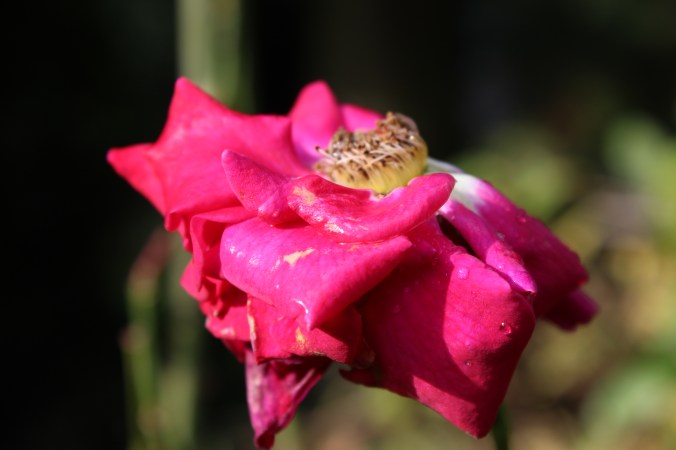
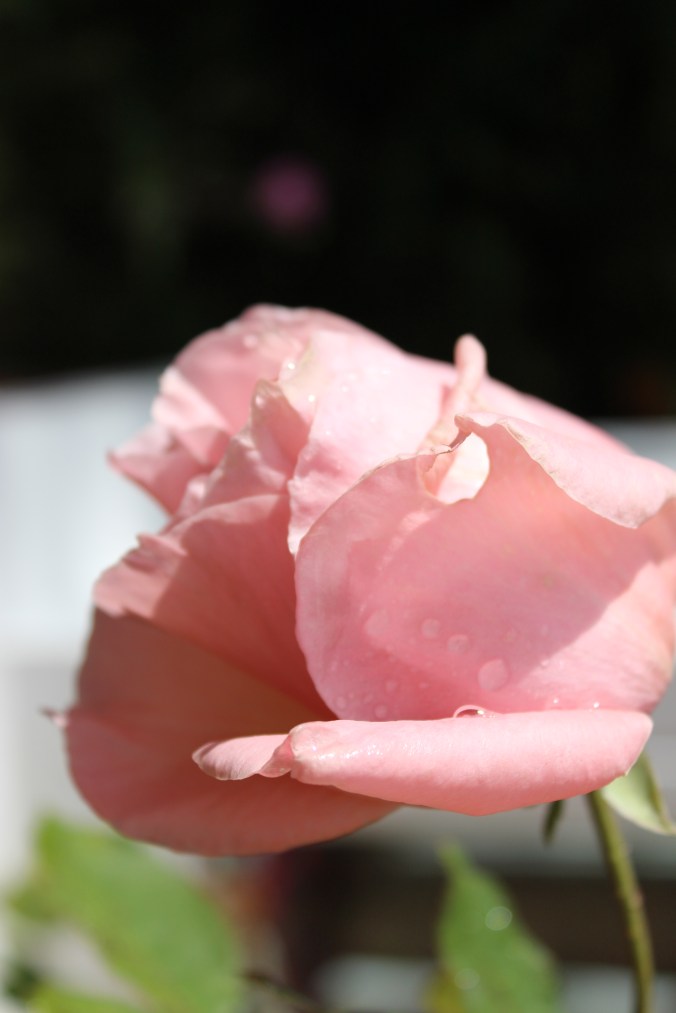
The red roses are scentless with ice,
petals rolled to elegant, sugared points.
And above them the tall, brown seedheads
rattle gently in a gentle breeze.

I will cut them back, but not yet.

They hold this moment, now,
in their full, dry cups, swaying
between summer’s fallen petals,
and spring’s sharp green.
And coiled inside their
tiny black seeds are
flowers without number,
scattering in the icy breeze.