Poem: It’s not hope, exactly. For the Season of Creation

My garden has been a desolation for months – drying under the blistering heat. This past week, there have been a few signs of life returning. There is a faint blush of green. I can step outside without feeling grief.

Today is the start of Autumn, and September 1st marks the beginning of the Season of Creation for some churches and groups. There is much here on the blog that you might like to follow if you’re interested, under the tags Green, Creation, Everybody Now. You might like to start with Gaia.

Over the past week, I’ve been thinking about hope. I’ve been thinking about how, now this summer has brought the reality of climate change home to so many of us, there is a feeling of despair – people saying it’s too late, there’s no hope. While there is much that has been lost, there is so much truth in the old adage, where there’s life, there’s hope.

There is deep wisdom in the natural world, and I’ve been wondering what biomimicry can teach us about hope. And so I have been paying attention. I see, everywhere, life seizing every sliver of opportunity to live, to grown, to flourish. Even while Dunwich Heath still holds massive heat in its soils, those who work there are noticing signs of life returning, and birds beginning to fly. Life does not hope, it lives, often recklessly and in what we think of as inappropriate places. So I’m thinking I might try to Be More Weed, to rest when I need to and to keep flowering whenever the rain falls.

I’ve tried to express some of this plant hope – learning the hope of plants, in this poem. I think it’s appropriate for the day. I think it may also chime with other times when we feel that hope has dried up. If so, I hope it offers a drop of rain on dry ground.

It’s not hope, exactly

Last night, rain fell.
The sky was luminous,
flashing with white lightning,
and the thunder rolled into my dreams

With the smell of earth softening.
Life knows what to do with a gift

morning sees green begin
to swirl through the lawn,
rejoicing the hawkbit
bowing under the weight
of glorious pantaloon bees.

This is not hope, exactly –
a tiny wildflower
pushing through the cracks,
the way ferns now rise again
as a small brook sings
over dead twigs,
how pigeons rebuild their nest

Not what we so often mean by hope –
it does not ask, is it worth it,
what if we fail,
what if the heat comes back?
Life does not hope
Life does not choose life

It uncoils greenly today
grows today, lives,
for today the rain falls.
If all this softness knows only to
begin again and again and again,
then why not you, why not me, why not us?
Is not this good green earth worth living for?
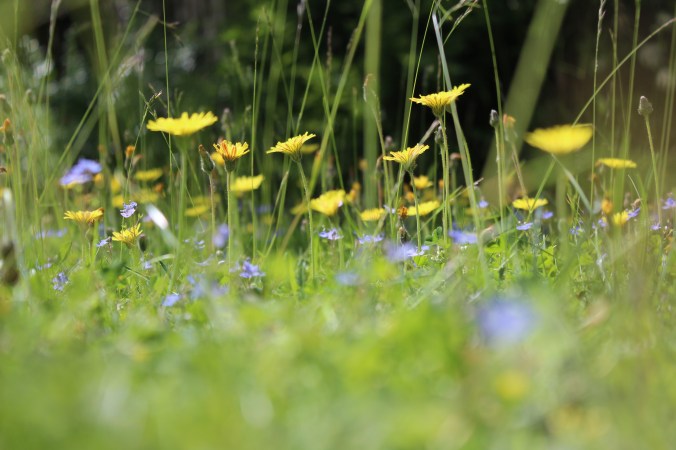
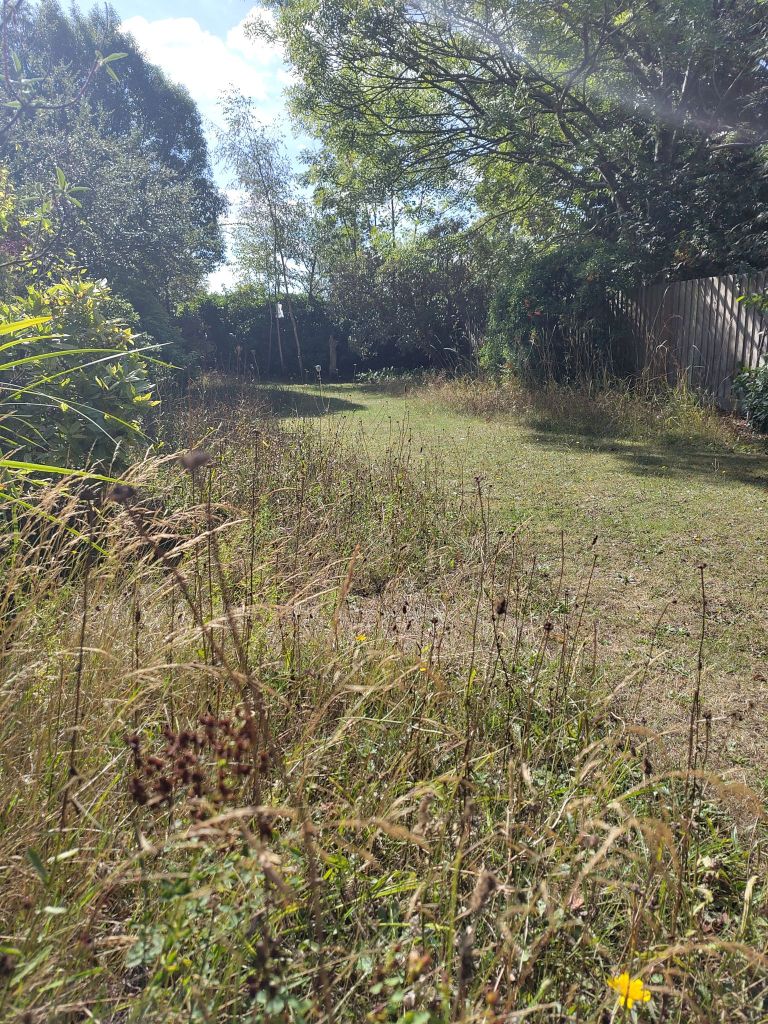
The lawn in greener days. The yellow flowers are from the hawkbit family, mentioned in the poem. Pantaloon bees love them, and only appear in the garden when the flowers are open.
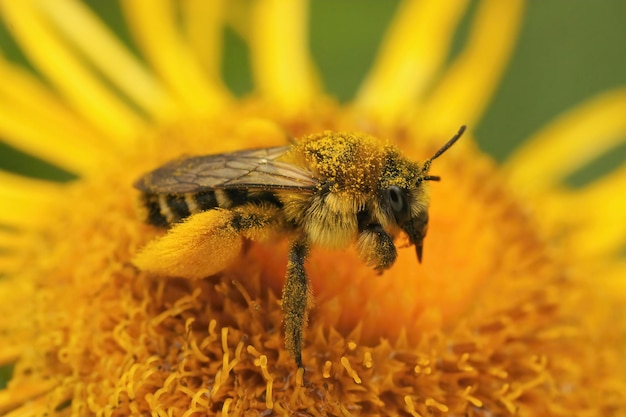
Female pantaloon bee, showing her yellow, pollen-coated legs. From Freepic.com
Poem: Blossom

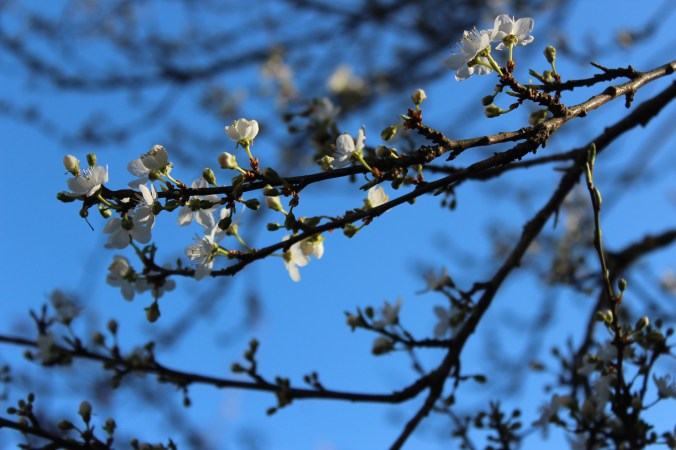
The earliest blossom in our garden – mirabelle, or wild cherry plum

After I sent in the manuscript for my first book of poetry – The Year’s Circle – a couple of months ago, I felt I needed a little creative winter – of rest and quiet and recovering energy. Lately, I’ve been finding things catch my attention again, and my pen and notebook have been coming out into the garden with me.

What follows is the closest to a finished poem that has emerged so far, and I thought I’d share it with you.

Last year, in the long hot, dry summer, we had an abundance of fruit. I thought this year the trees would be exhausted, and take a bit of a sabbatical too – it’s a healthy pattern….. but this spring, hot and dry as it has been, has been awash with blossom, and now, in the few days of rain we’ve had, the fruit is beginning to swell. It’s looking promising!

Blossom

The blossom opens –
first mirabelle, then pear,
apple, cherry, Iranian quince,

A white tide frothing and foaming
over the garden, dazzling,
loud with birdsong, petals opening
like hungry beaks in nests,

All opening in turn, and all,
in turn, shaken by the sudden
shifts of wind – how hot it gusts now.
So the petals fall, they tumble
over faded daffodils, spent tulips.

And so it seems that all is lost,
all that blossom, all that promise,
all that beauty scattered on the wind.
How the spring days scutter away.
 
And yet, I have come to know that
all is not lost, even as the petals fall. 
They had their purpose.
And that purpose – invisible at first,
then the tiniest roundness
of stem, of not yet – a held breath
of green before summer’s ripening. 
And it will come, it will come, in its time.

img_20260603_1504267444875134932787339

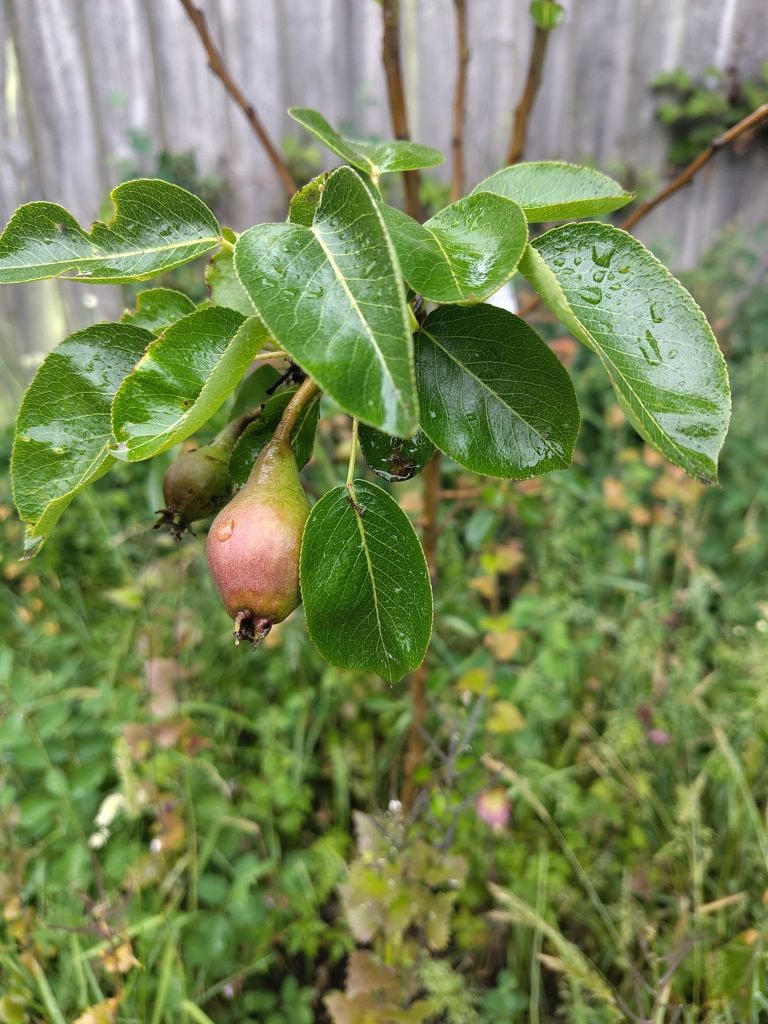
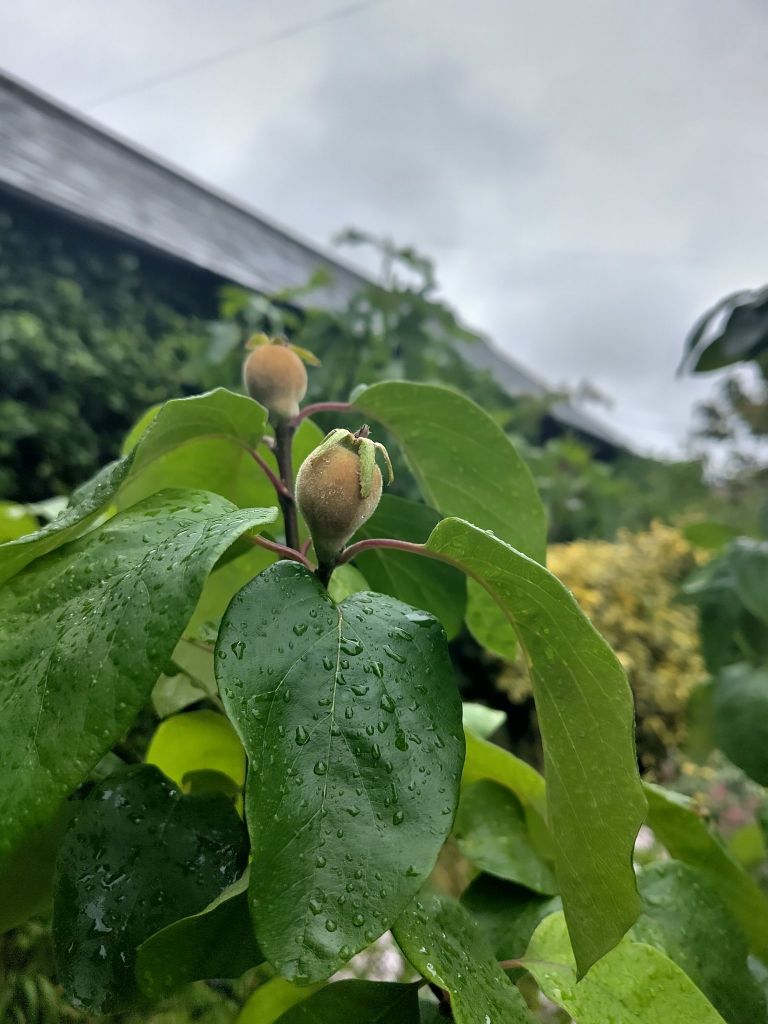
I’m particularly pleased with these two small trees. They’re both a few years old now, and this is the first time they’ve started developing tiny fruit. The top picture is a pear, the bottom the Iranian quince – fragrant and delicious. When I see these small, new fruits, I’m reminded of that rich and ancient civilisation that has suffered and is suffering so much.

May the people there know peace once more.

img_20260603_1457065962190784352319144

Poem: September. Bees. Ivy.

This poem has arrived on the blog a little late. It became marooned in my notebook for a while, until I flicked through the pages and found it again. And although crowds of bees are no longer buzzing among the ivy, there are still a few, here and there.

I hope, though, that although this poem arose out of a particular time, it has something to say in other times, too. About stillness. About the restorative power of simply being, and paying attention. About finding our breath again. We all need that. We all need to feel that connection to the rest of the natural world (oh, how I wish we had better language for these things – bear with, it will emerge) which grounds us, and from which we can rise. For those reading this blog who need a little peace right now, I hope it helps. I’m thinking particularly of dear readers in America, where the election atmosphere seems turbulent. I wish you well over the next days and weeks.

The old hedgeline in front of our house has, in places, been overcome by ivy, which has formed its own structures and patterns of flowering and fruiting. Cutting some of it back to make space for other plants to grow, I was careful to leave the ivy flowers for the bees – which will become fruit for the birds in time. Accidentally, I created a little bower, where I put a chair and sat for a while. As I sat I gradually heard the road less and less, as my attention was taken up with the many bees who were enjoying the feast. And so, this poem emerged.

thebiologist.rsb.org

September. Bees. Ivy.

It is taking a while,
this sitting
in a carved out cave
in the ivy.
Just sitting,
stilling, breathing.
A bower of green leaves
above, and above that
blue sky, white clouds.

In time, the hum of bees,
and their intricate woven
patterns of flight,
come to replace thoughts,
become another form
of thought.
So too the birds –
that wren shaking
the leaves, and
the pipping robin.

And this grey and green lacework
of wild is all that separates
me from the roar of the road –
those black lines we make,
always going
somewhere….

And yet, here is a marvel.
More bees than I have
seen all year.  A hum that soothes
the soul. The darkness of butterflies.

These strands of green woven
through the world – not enough,
by no means enough –

But they shelter the bees,
and me. A space for
the soft and alive,
breathing, green in spirit.
We can be here, the bees and me.
We can be, in this hollowed out
hedge, in a cloud of lightfilled wings.