Poem: It’s not hope, exactly. For the Season of Creation

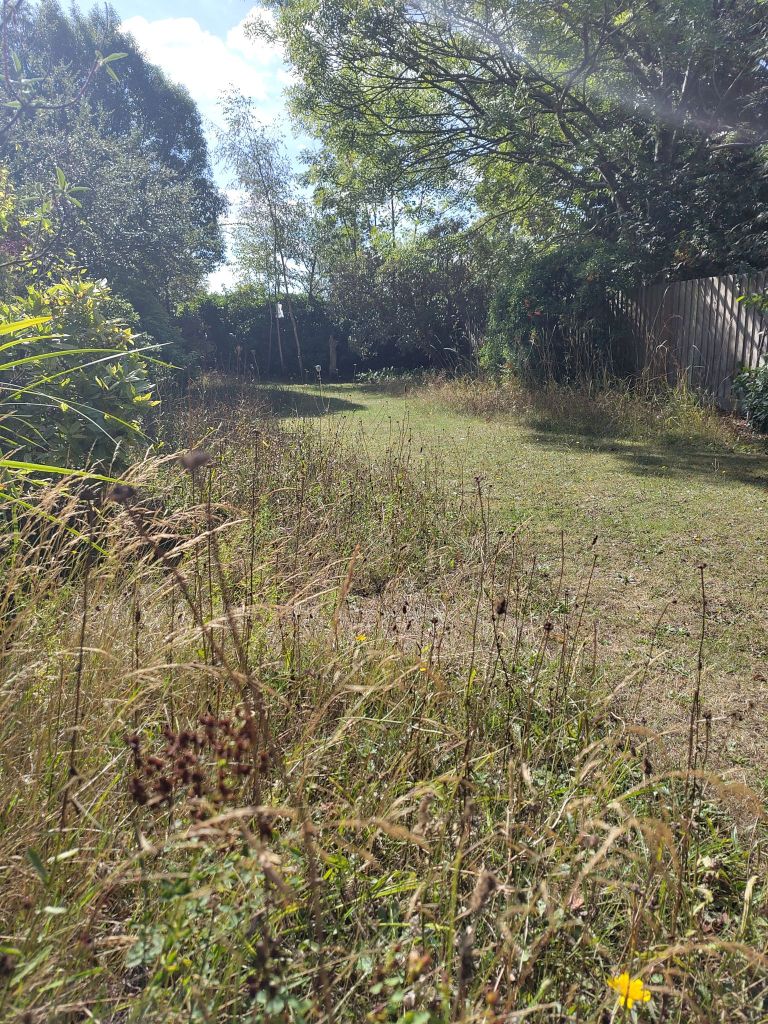
My garden has been a desolation for months – drying under the blistering heat. This past week, there have been a few signs of life returning. There is a faint blush of green. I can step outside without feeling grief.

Today is the start of Autumn, and September 1st marks the beginning of the Season of Creation for some churches and groups. There is much here on the blog that you might like to follow if you’re interested, under the tags Green, Creation, Everybody Now. You might like to start with Gaia.

Over the past week, I’ve been thinking about hope. I’ve been thinking about how, now this summer has brought the reality of climate change home to so many of us, there is a feeling of despair – people saying it’s too late, there’s no hope. While there is much that has been lost, there is so much truth in the old adage, where there’s life, there’s hope.

There is deep wisdom in the natural world, and I’ve been wondering what biomimicry can teach us about hope. And so I have been paying attention. I see, everywhere, life seizing every sliver of opportunity to live, to grown, to flourish. Even while Dunwich Heath still holds massive heat in its soils, those who work there are noticing signs of life returning, and birds beginning to fly. Life does not hope, it lives, often recklessly and in what we think of as inappropriate places. So I’m thinking I might try to Be More Weed, to rest when I need to and to keep flowering whenever the rain falls.

I’ve tried to express some of this plant hope – learning the hope of plants, in this poem. I think it’s appropriate for the day. I think it may also chime with other times when we feel that hope has dried up. If so, I hope it offers a drop of rain on dry ground.

It’s not hope, exactly

Last night, rain fell.
The sky was luminous,
flashing with white lightning,
and the thunder rolled into my dreams

With the smell of earth softening.
Life knows what to do with a gift

morning sees green begin
to swirl through the lawn,
rejoicing the hawkbit
bowing under the weight
of glorious pantaloon bees.

This is not hope, exactly –
a tiny wildflower
pushing through the cracks,
the way ferns now rise again
as a small brook sings
over dead twigs,
how pigeons rebuild their nest

Not what we so often mean by hope –
it does not ask, is it worth it,
what if we fail,
what if the heat comes back?
Life does not hope
Life does not choose life

It uncoils greenly today
grows today, lives,
for today the rain falls.
If all this softness knows only to
begin again and again and again,
then why not you, why not me, why not us?
Is not this good green earth worth living for?
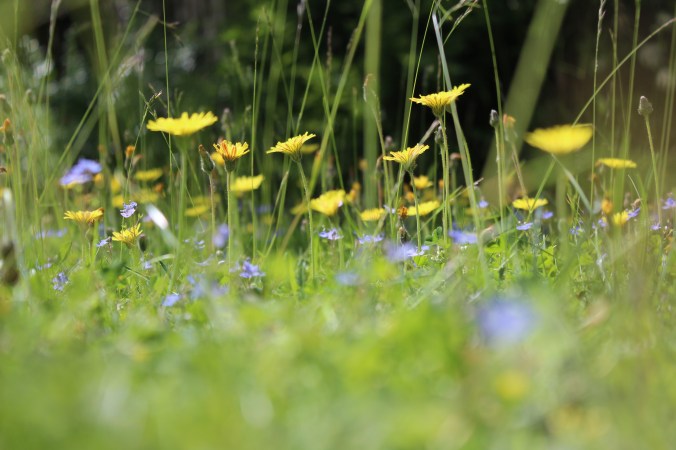
The lawn in greener days. The yellow flowers are from the hawkbit family, mentioned in the poem. Pantaloon bees love them, and only appear in the garden when the flowers are open.
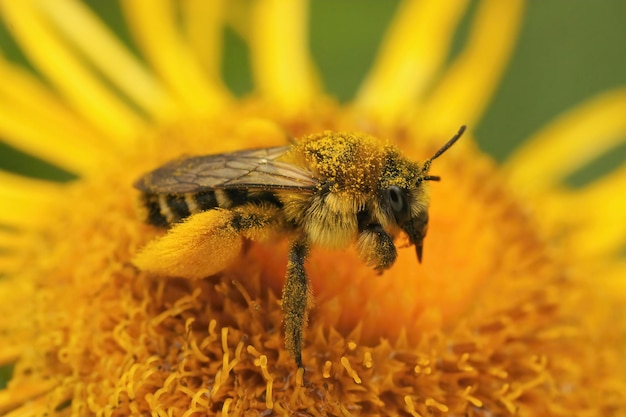
Female pantaloon bee, showing her yellow, pollen-coated legs. From Freepic.com

Poem: Wych elm

At the end of my last post, the poem Heat, I mentioned that I was working on some pieces that grew out of our recent walking holiday in Northumberland – on the way to Lindisfarne. I’m still working on the poems – one of the later ones by the logic of the walk has come first, and I’m wondering how best to order them….. However, a month or so back I wrote this piece – a quick garden poem – which I thought I’d share with you while I’m working on that sequence.

British readers may have heard about, or remember, the terrible loss of elm trees in our landscape in the 1970’s. Here and there, some elms are returning as low growing hedge-trees, or elm variants such as the wych elm. When I saw this little beauty growing in a wild spot in my garden, I thought at first it was a hazel – but it’s an elm, I believe a wych elm. I’m so delighted that this quite rare tree has found refuge with me. Nature has a deep capacity to find a way, and that continues at least for now. Life wants to live. Sometimes, it needs our help, as with the red kite, and at others, it needs space to seed itself – although I don’t know what love and care may have gone into tending this tree’s ancestors. We keep working, keep making space, keep seeking to give life room. For some, it is too late, but each part of the web of life we cherish matters more than we can imagine.

wych elm


Wych Elm

I remember the great trees dying,
as a child, I remember watching the
leaves wither and crisp.
I remember the whine of the chainsaws,
watching them felled and falling

Limb by limb. Felled and fallen
and carried away to be burned
in great smoking bonfires.
I remember the consternation,
the grief that prickled across the land –
my own, too.  I did love those trees,
the feel of the bark under my
soft climbing hands and feet.

And now, leaving – as I do –
things to grow much as they will,
I have found a wych elm
flourishing low in my garden –
surrounded by other, more
exotic and fragrant shrubs.
There, it has remained hidden.
It is wondrous.  It is a miracle.

Once more, I have felt an elm leaf’s
sandpaper roughness
in my hand,
have marvelled at its points,
like a precious diadem,
a green man’s crown,
priceless.

I imagine future vastness, looking up
into its great sheltering boughs.
But I will keep it low, away from
the beetle that flies by night.
And there, it will grow,
and I will offer it shelter,
this place a refuge for us both.

Poem: Blossom

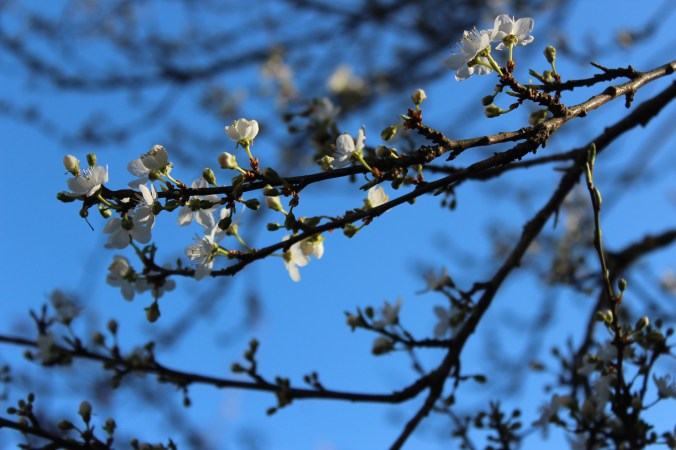
The earliest blossom in our garden – mirabelle, or wild cherry plum

After I sent in the manuscript for my first book of poetry – The Year’s Circle – a couple of months ago, I felt I needed a little creative winter – of rest and quiet and recovering energy. Lately, I’ve been finding things catch my attention again, and my pen and notebook have been coming out into the garden with me.

What follows is the closest to a finished poem that has emerged so far, and I thought I’d share it with you.

Last year, in the long hot, dry summer, we had an abundance of fruit. I thought this year the trees would be exhausted, and take a bit of a sabbatical too – it’s a healthy pattern….. but this spring, hot and dry as it has been, has been awash with blossom, and now, in the few days of rain we’ve had, the fruit is beginning to swell. It’s looking promising!

Blossom

The blossom opens –
first mirabelle, then pear,
apple, cherry, Iranian quince,

A white tide frothing and foaming
over the garden, dazzling,
loud with birdsong, petals opening
like hungry beaks in nests,

All opening in turn, and all,
in turn, shaken by the sudden
shifts of wind – how hot it gusts now.
So the petals fall, they tumble
over faded daffodils, spent tulips.

And so it seems that all is lost,
all that blossom, all that promise,
all that beauty scattered on the wind.
How the spring days scutter away.
 
And yet, I have come to know that
all is not lost, even as the petals fall. 
They had their purpose.
And that purpose – invisible at first,
then the tiniest roundness
of stem, of not yet – a held breath
of green before summer’s ripening. 
And it will come, it will come, in its time.

img_20260603_1504267444875134932787339

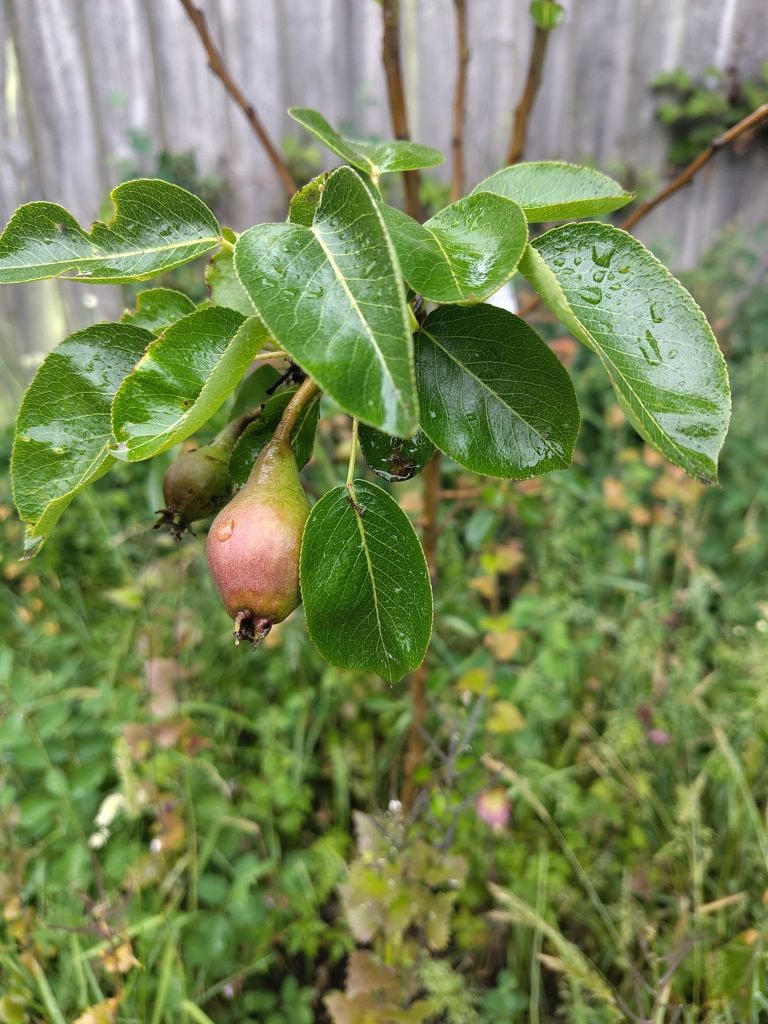
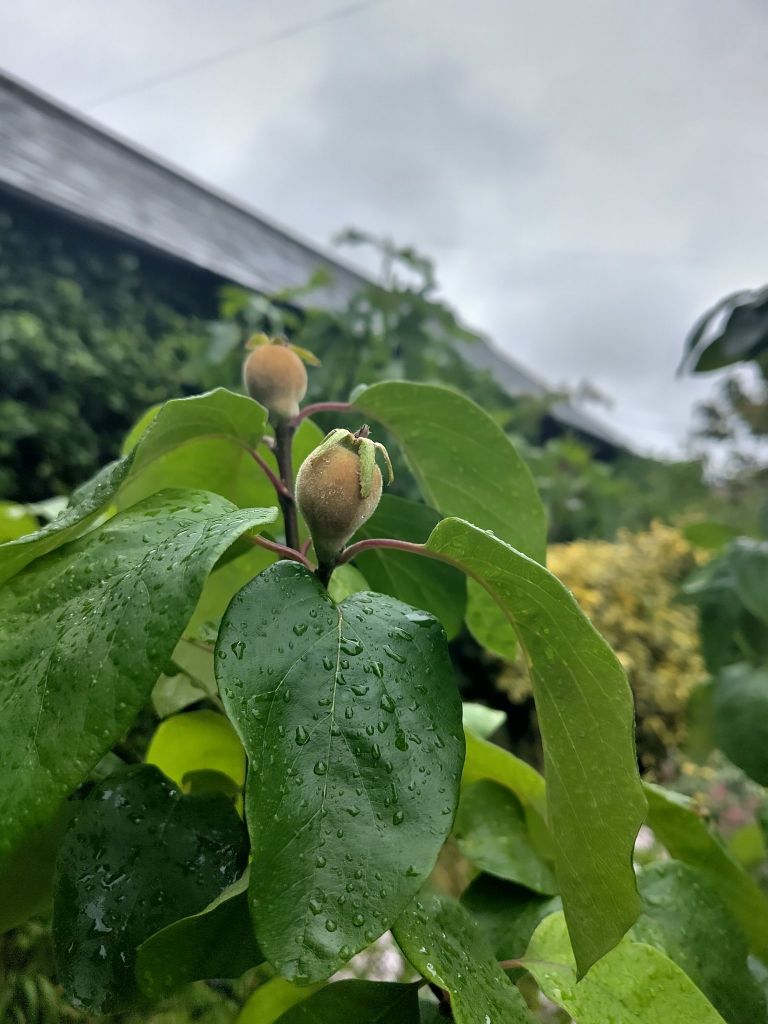
I’m particularly pleased with these two small trees. They’re both a few years old now, and this is the first time they’ve started developing tiny fruit. The top picture is a pear, the bottom the Iranian quince – fragrant and delicious. When I see these small, new fruits, I’m reminded of that rich and ancient civilisation that has suffered and is suffering so much.

May the people there know peace once more.

img_20260603_1457065962190784352319144