Sunday Retold – The Sower and the Seed 16th July 2017

Part of the Sunday Retold series, based on the readings some churches follow, with passages from my books The Bible Story Retold and Prayers and Verses.

This week it’s

Matthew 13.1-9, 18-23,  the Parable of the Sower

Please feel free to use any of my material that helps you, saying where it is from.

The Sower (van Gogh)

The Sower  Vincent van Gogh


“Jesus spoke all these things to the crowd in parables; he did not say anything to them without using a parable.  So was fulfilled what was spoken through the prophet:


       “I will open my mouth in parables,

        I will utter things hidden since the

             creation of the world.”


Matthew 13:34-35″

I love this small commentary from Matthew’s gospel – it opens up for us all kinds of insight into Jesus’ storytelling.   Things hidden since the creation of the world are spoken out – spoken out in stories.  How extraordinary is that!

Matthew’s reference takes us right back to the beginning – perhaps we can wonder what these things hidden from the beginning are.  Perhaps Jesus is unlocking meaning, and truth, showing us a natural world which is also a mirror in which we see our own experience, and a window into the mind of God.  These parables, parables of the kingdom, reveal things about the nature of God, of the kingdom Jesus tells us is near, very near, and even within us.  Things which have been hidden, up till the moment the stories begin.

Story works, as we know, very differently on the mind and heart from rational argument.  We remember stories, they stay with us, working deep in our imaginations.  Many of us remember this one – the parable of the sower.  It draws from lived experience – or it did, before so many of us ended up so far away from the rhythms of planting, and growing, and eating.  You could even say that the story itself is, in some ways, alive.

Stories reveal their meaning slowly, over time.  The words of God can grow, unfolding within our own hearts, like the secret growth of the seeds.  Not fast food for the soul, but a banquet – it takes time.

But, why didn’t he just say what he meant? we can ask.  Not every meaning can be spoken out like that, for a start.  There are different kinds of meaning. Perhaps Jesus didn’t want people simply to agree with his point of view, or perhaps he knew they weren’t ready to hear…. not all at once.  Perhaps he wanted to hold out a possibility even  to those whose hearts had been calloused by the hardness of life – the possibility they could be transformed by a new way of seeing the world. Metanoia, the Greek word usually translated repent, means to change your thinking – change your mind in a deeper sense than we usually mean it – change the whole orientation of how you see and understand things.  Even if they could not hear the meaning when they heard the story, the story would stay with them, ready to reveal meaning when the time was right.

As we read it, it can help to set to one side what we think we know of what it means – to allow our rational thinking mind to be stilled, for a while, and to respond with the heart, with the imagination.

Stories can help us make sense of our lives, they open us up to a deeper kind of reality and truth.   When we are ready.  It takes time.  Don’t rush to an explanation.

IMG_0589


Once, when Jesus was surrounded by a crowd of eager listeners, he told them this story.

“One dry, bright day, when the wind was still, a farmer went out to sow seed.  He took handfuls of grain from the flat basket he carried and, with a flick of the wrist, scattered seed, hopeful for its growth.  But some of the seed fell on the path, where the passing of many feet trampled it, and the birds swooped down and ate it.  Some fell on dry rock.  After the soft rains, it swelled and sprouted.  But then it withered, for its roots could find no water.  Some landed among the thorns, which grew so fast that they soon smothered the tender new shoots.  But some landed on good soil, where it grew up, and ripened. When the time was right, the farmer came back and harvested a crop from it, a hundred times more than was sown.”

After the crowds had gone, and Jesus was left with the disciples, they asked him “What does that story mean?” And Jesus answered:

“The seed is the word – God’s word.  The seed that fell on the path is like the seed that falls in some hearts – it’s snatched away by the devil before it takes root, before those people begin to believe. The seed that falls on the rocks is seed that falls where there is little depth – at first, God’s words bring joy to those people, but there are no roots, and when trouble comes their faith withers away.  The thorny places are like hearts choked up with worry, with riches and pleasures.  There’s no space for God’s word to grow. But some seed does fall on good soil – the word takes root in hearts that are ready, and they hold on to it.  In time, the word gives a rich crop in people’s lives, and they are fruitful.”

From  The Bible Retold


So, I don’t want to say too much – just these few things.
I love the way the sower is generous – it is the nature of the sower to scatter the seed.  Seed is light, it lands lightly on the earth.  It speaks to me of an abundant, overflowing God, who gives, but does not impose the gift.

Secondly, I wonder about the soil.  We tend to respond to this parable individually – thinking about the state of our own hearts.  And Jesus’ interpretation points us that way. Maybe, in our communities, we can also ask what things make this soil in this place good, or poor?  Are there rocks we can remove, is there compost we can dig in, are there thistles we can pick before they set seed?  What stands in the way of  people being able to receive – for new life to thrive with them?  Is there anything we can do about it?
And, of course, we can ask the same questions of ourselves, and our lives.
We can engage in soul gardening.

Then, I have been wondering about what this word might be.

What are the seeds that Jesus is speaking of?

What did Jesus mean when he talked of the word, and of Good News?

As we read the gospels, these are good questions to hold in our minds.

Often, Jesus spoke of the good news of the kingdom of God, which is much closer than we think.  If I wonder what it is like, as well as looking at the parables, I often think – it is like the presence of Jesus – what he said, and did, how he lived, what he showed.

Transforming.

Isaiah 55:10-13English Standard Version (ESV)

10 “For as the rain and the snow come down from heaven
    and do not return there but water the earth,
making it bring forth and sprout,
    giving seed to the sower and bread to the eater,
11 so shall my word be that goes out from my mouth;
    it shall not return to me empty,
but it shall accomplish that which I purpose,
    and shall succeed in the thing for which I sent it.
12 “For you shall go out in joy
    and be led forth in peace;
the mountains and the hills before you
    shall break forth into singing,
    and all the trees of the field shall clap their hands.
13 Instead of the thorn shall come up the cypress;
    instead of the brier shall come up the myrtle;
and it shall make a name for the Lord,
    an everlasting sign that shall not be cut off.”

This is one of the other readings given, to be read alongside the Parable of the Sower.  It is worth spending some time reading it slowly,  meditating on it.

Speaking of meditating, you might like to look at the second of the Van Gogh pictures.

Notice the figure is in darkness.  Who has been a sower into your life?  Who has brought love and hope, new growth, life itself?  Can you thank them, or give thanks for them?
Are there ways you can sow good things into the lives of others – with a light generosity?
Notice the way the sun hangs over the sower’s head – does it remind you of anything? make you think anything?
How do you respond to the use of colour in the picture?
Can the light of love and goodness warm what you do today?
How do light and dark interact in the growing of a seed?

Can you nurture new life in yourself and others today?
Can you connect with living growing things?

the-sower-van-gogh

The Sower – Vincent Van Gogh

Help me to be patient as I wait for your kingdom
and your righteousness:
as patient as a farmer who trusts that the rains
will come in their season,
and that the land will produce its harvest.
Keep my hopes high.
Help me to pray to you and to praise you.

The Lord is good to me,
And so I thank the Lord
For giving me the things I need,
The sun, the rain, the appleseed.
The Lord is good to me.
Attributed to John Chapman, planter of orchards 1774-1845

We can do no great things,
Only small things with great love.
Saint Teresa of Calcutta 1910-1997

from Prayers and Verses


May the God of growth and new beginnings bless you and all you love today.


Poem – Treasure, Hidden. Of perseverance and hope.


Treasure, Buried

Each morning I find
small divots in the lawn,
dug neatly, completely.

Sometimes, the squirrel
comes while I am there –
both of us, quiet –
and with an arched back
and a bright eye
she digs.

Does she ever find her
hazelnut?
I don’t know.
I haven’t seen.

I do know I find
a seedling growing
unexpectedly somewhere,
sometimes,
and wonder –
was it her?

I push the divots
back into the lawn.
Each day there are more,
and more.

We value persistence,
the squirrel and I,
we value hope.

Poem – Morning Yoga Practice June 2017

IMG_0815.JPG


IMG_0816.JPG

IMG_0817.JPG

IMG_0818.JPG


There has been much grief in the UK this week, met with an outpouring of love, and courage, and kindness.  These sudden losses shock us, remind us of our fragility, and the fragility of those we love.  The moments of national grief catch up our own more private losses, bring to mind what has gone before, and can take us deeper into questions – and the capacity to endure the space between the question and anything like an answer.

After reading Malcolm Guite’s reflections on being so close to the terrible events at London Bridge on Saturday night, I too have had these words of Shakespeare on my mind.

How with this rage shall beauty hold a plea
Whose action is no stronger than a flower?
O! how shall summer’s honey breath hold out,
Against the wrackful siege of batt’ring days?

Asking questions seems a good response to the depths,

I am returning to my practice of writing freely, recording what draws my attention.  This morning it was this.


Morning yoga practice  June 2017

I bend on the grass,
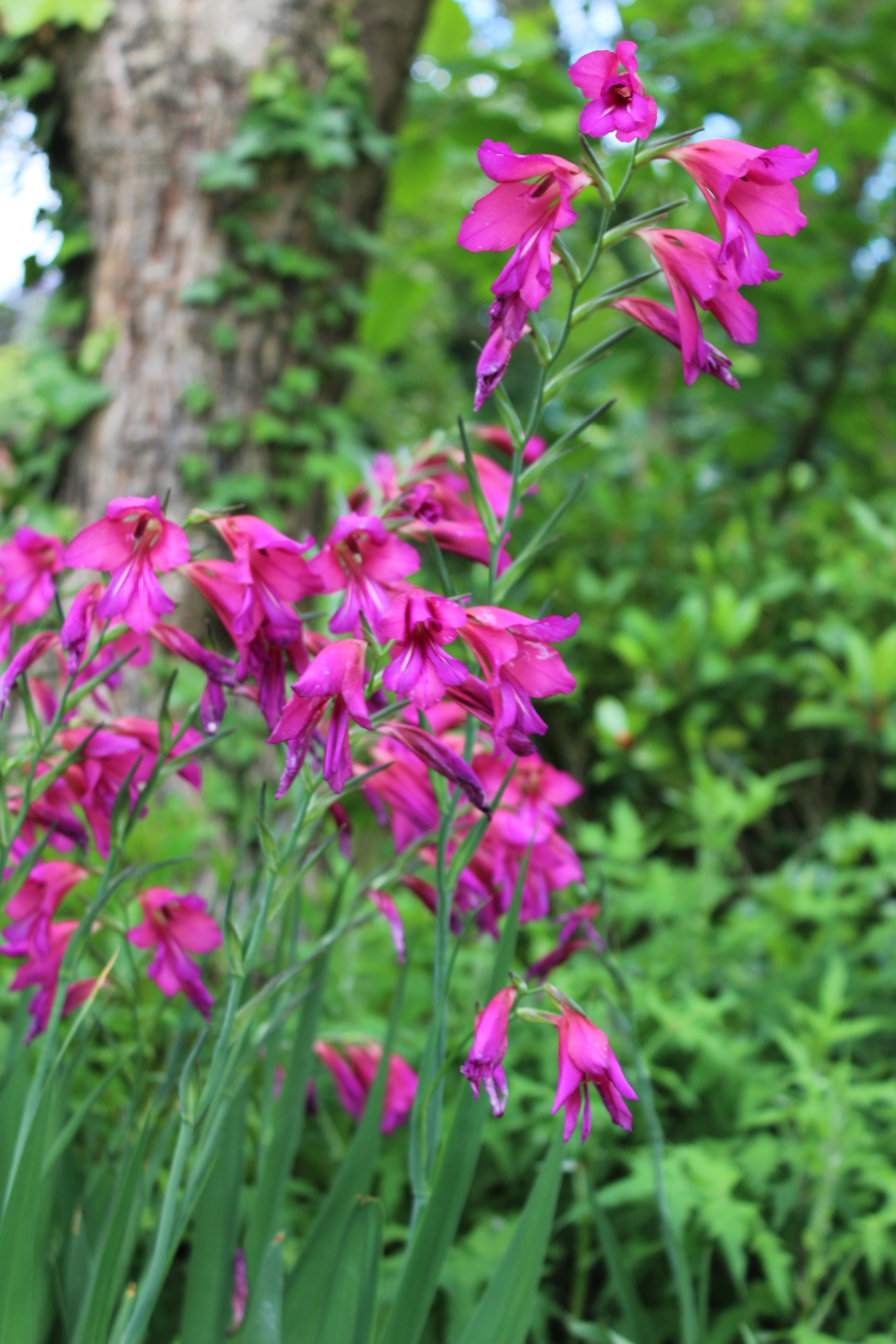
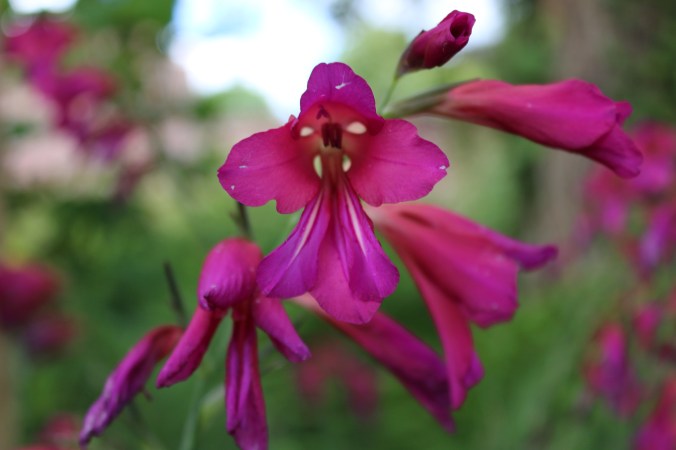
look up at the bending gladioli
dancing cerise with their
graceful arches

as June’s north wind
rocks the branches,
as the air fills with
white petals –
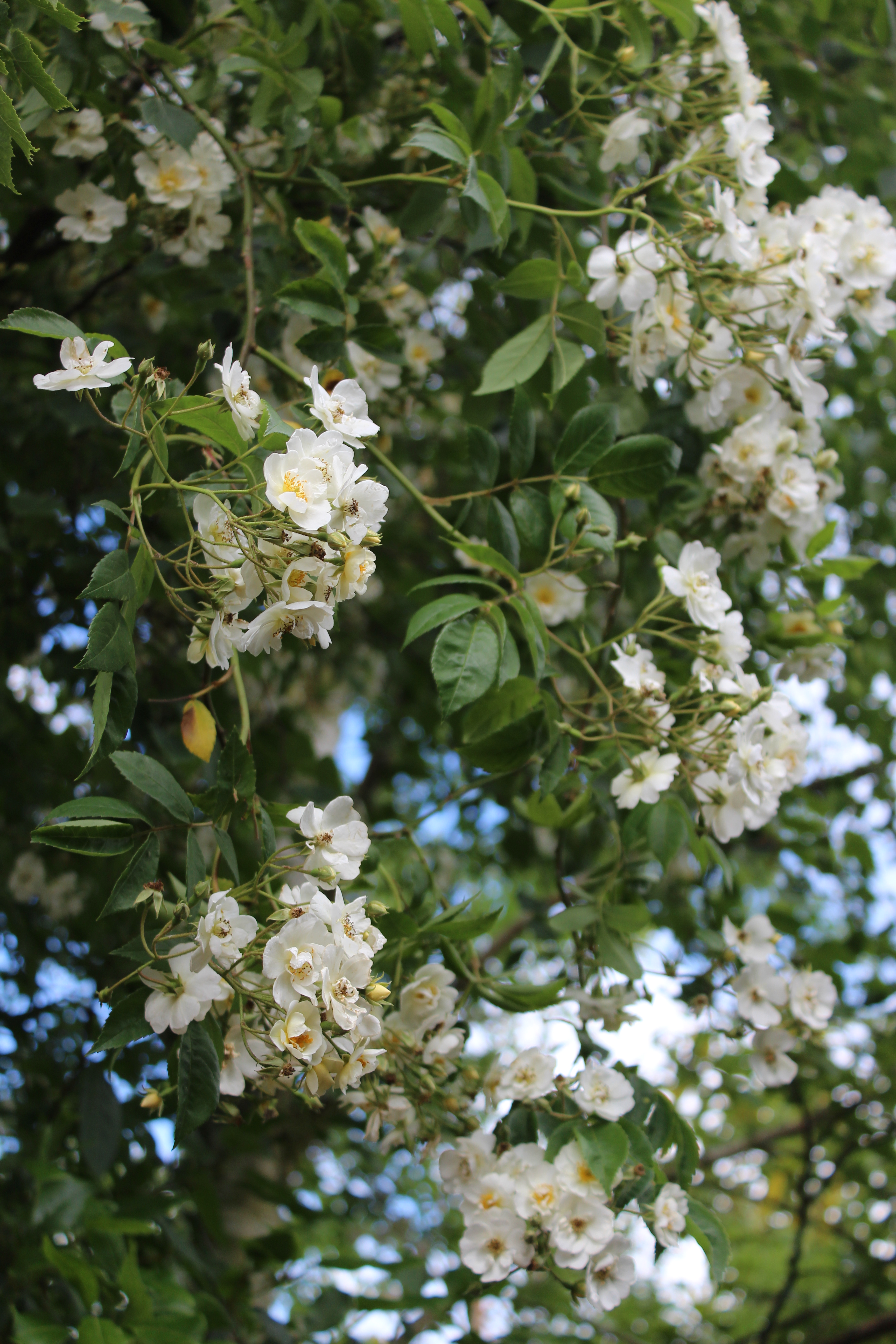
blossom, roses –
that fall.

Why is it all so fragile,
this beauty?
why does it all slip
through my fingers?
I stretch, stretch out my
heart, and my love,
sending it both near,
both near and far away.

 
Restore them dear Lord,
Make them whole,
may they see
this life this beauty,
as the petals fall about me
in a cold blaze,
life and beauty ripped away,
yet carried on this June wind,
yet landing softly on this
green earth.

Sunday Retold – The Woman at the Well

Part of the  Sunday Retold  series, based on the readings some churches follow week by week.:

This week we’re looking at

John 4:1-42

Please feel free to use any of my material if it helps you, saying where it is from.

This is a powerful and extraordinary story early on in John’s Gospel, one of the important conversations he has with just one person that are recorded for us.  It is a story I have turned over in my mind for a few years, and at present it forms the basis for a chapter I am writing in my next book on the I AM sayings  – not one of the classic seven I know, but I have been exploring a little beyond those, and find this story too interesting and too significant to overlook.  What follows are some of my reflections as I prepare this chapter, a very early share before I have gone through my editing process.  I hope you find it helpful.  I hope it gives you living water.


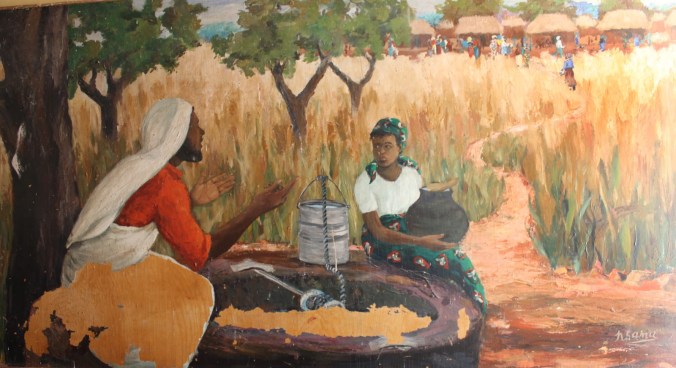
The bible scene with Jesus at the well with the Samaritan woman shows signs of damage and peeling of paint.jpg

Mural by  Emmanuel Nsama


At a time when our politics is increasingly divided and divisive, where people divide each other into categories, and make some lesser than others, this is a particularly relevant conversation.

John the Evangelist is preparing us for this story very carefully, for it is profoundly counter-cultural. Jesus stops to rest near the plot of ground that Jacob gave his son Joseph.   Jacob’s other name was Israel – one who wrestles with God.  We are going back to Israel’s common spring, common source, at Jacob’s well.  We are being reminded of a time long ago, before the time when and the Jews and Samaritans became peoples who saw themselves as separate.    It is a place that holds meaning and memory for Jews and Samaritans – of their common father, and their common salvation story.  John is placing us on common ground……


I think it is no coincidence that John begins this story by setting it against an atmosphere of potential conflict – between cousins, between related nations.  We see Jesus acting out his mission to be a peacemaker, a reconciler.  “For he is our peace; in his flesh he has made both groups into one and has broken down the dividing wall, that is, the hostility between us” Eph 2:14.  Jesus himself is common ground,  and his presence changes things.  If we look carefully at how we are prepared for this encounter, we can see that we are being led away from conflict, towards reconciliation, to inclusion, and to hope…….

And so, as Jesus waits for the disciples to find food, as he waits by the well in the heat of the day, a woman approaches.  We can only imagine what it must have been like for her, in a culture where a woman could be divorced “for any and every reason”.  We often think of her as one utterly disgraced in her community, having to visit the well at such a time.  That may well be so.  It is a highly plausible explanation.  Her multiple husbands are hardly a marital model, but, we must remember that at this time divorces were easy for a man to come by, and early death not uncommon.  However her situation came about, she had most certainly known her share of tragedy and disappointment.  She may have known deep shame and disgrace.  If we are thinking in terms of barriers and divides, she has many to cross.

And yet she, like everyone else, gets thirsty, and needs water to drink, and water to wash with.  She is as human as everyone else.  So often, we do not see people like this.  So often, we make quick judgements, build fences, wonder about people’s worthiness, and in our own pride and insecurity, seek to feel superior, safe, chosen, righteous in some way.  Not so Jesus.

His question bursts through all our categories and barriers in its gentleness, its humanity.  It is a question that changes everything for this woman, and for her community.
“Will you give me a drink?”

It is not just that he recognises her thirst, but that he humbly admits his own.  He speaks, not to rebuke a sinful woman, not to point out what she needs to do to straighten out her life, but to make himself vulnerable before her, and to call out her goodness.  For this is what the question does. It recognises her goodness.  It recognises and awakens this truth about her – that she is made in the image of God, she is a God-bearer in the world.  That image can be buried beneath layers of hiding, of shame, buried under words of condemnation that have been spoken over a person, it can be twisted by hatred and fear and darkness, but it is always there, and Jesus sees it.
If we have  come across the parable of the sheep and the goats in Matthew 25 this question opens up others – the thirsty person before us, asking us for water, for help, is Jesus.  How do we respond?  Do we give?


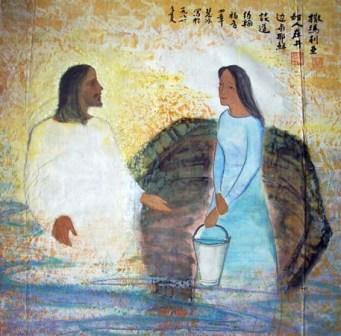
samaritan-woman

She does not know who is speaking to her. Of course not!  Neither does she know the gift of God.  But Jesus is revealing both of these things to her.  Jesus is the greatest gift. And he has living water.  We are diving deeper now.  We know that in John, there is often an association between water and Spirit.  Jesus’ previous encounter with Nicodemus (Ch 3) touches on that…. and it is such a beautiful counterpoint to this one.  Here we have a woman, an outcast, a Samaritan, in the heat of noon – there we had a man, a Pharisee, member of the ruling council, at night.
This water that Jesus gives, it can become a spring in us, as indeed the Spirit in us is a spring, bubbling and welling up to life.


From The Bible Retold

LIVING WATER 

It was hot when the woman went to get water from the well, near her home town of Sychar in Samaria.  As she drew near, she saw a Jewish man sitting there, in the shade.  She hesitated a moment, nervous of this stranger.  For the Jews and Samaritans had been enemies for centuries, since the time of the exile.  “But,” she thought, “I must have water,” and she carried on walking to the well.

The man was Jesus.  He had left Jerusalem and was making his way back to Galilee.  His disciples were buying food, leaving him to rest from the burning sun. He looked up at the woman.
“Will you give me a drink?” he asked, with a thirsty smile.   Jews and Samaritans never ate or drank together: it was against all the laws and customs.
You, a Jew, are asking me, a Samaritan for a drink?” She was so startled she nearly dropped her water jug.
“If you knew who I was, you’d ask me, and I would give you real, life-giving water!”
“How can you get water?  You have nothing to hold it in!”
“If you drink from the well, you’ll be thirsty again.  If you drink the water I offer, it will become like a clear spring within you, bubbling over with eternal life!”
“Sir, I would like that water!”  she replied.  But Jesus questioned her about how she lived, and amazed her by revealing her secrets: things she had kept hidden, for shame.  Could this man be a prophet?
She ran back to town, telling everyone.  They invited Jesus and the disciples to stay, and he taught them for two days.

The people of the town said to the woman, “Now, we don’t just believe in Jesus because of what you said.  We’ve heard the truth for ourselves!”


“The well is deep”  What does that mean for you?

Meditation suggestion:

Pour out a large jug of water, and set it before you, together with a glass or glasses.
Consider the water, and ask yourself what you thirst for right now?  Try to allow honest answers to rise in your mind, and note them.  Are there places in your life that feel dry and unproductive? What would bring them life?


Take a look at the photographs drawn from different cultures.  How do you respond to them?
You might like to place a picture reminding of of this story above a place where you wash, or your kitchen tap.


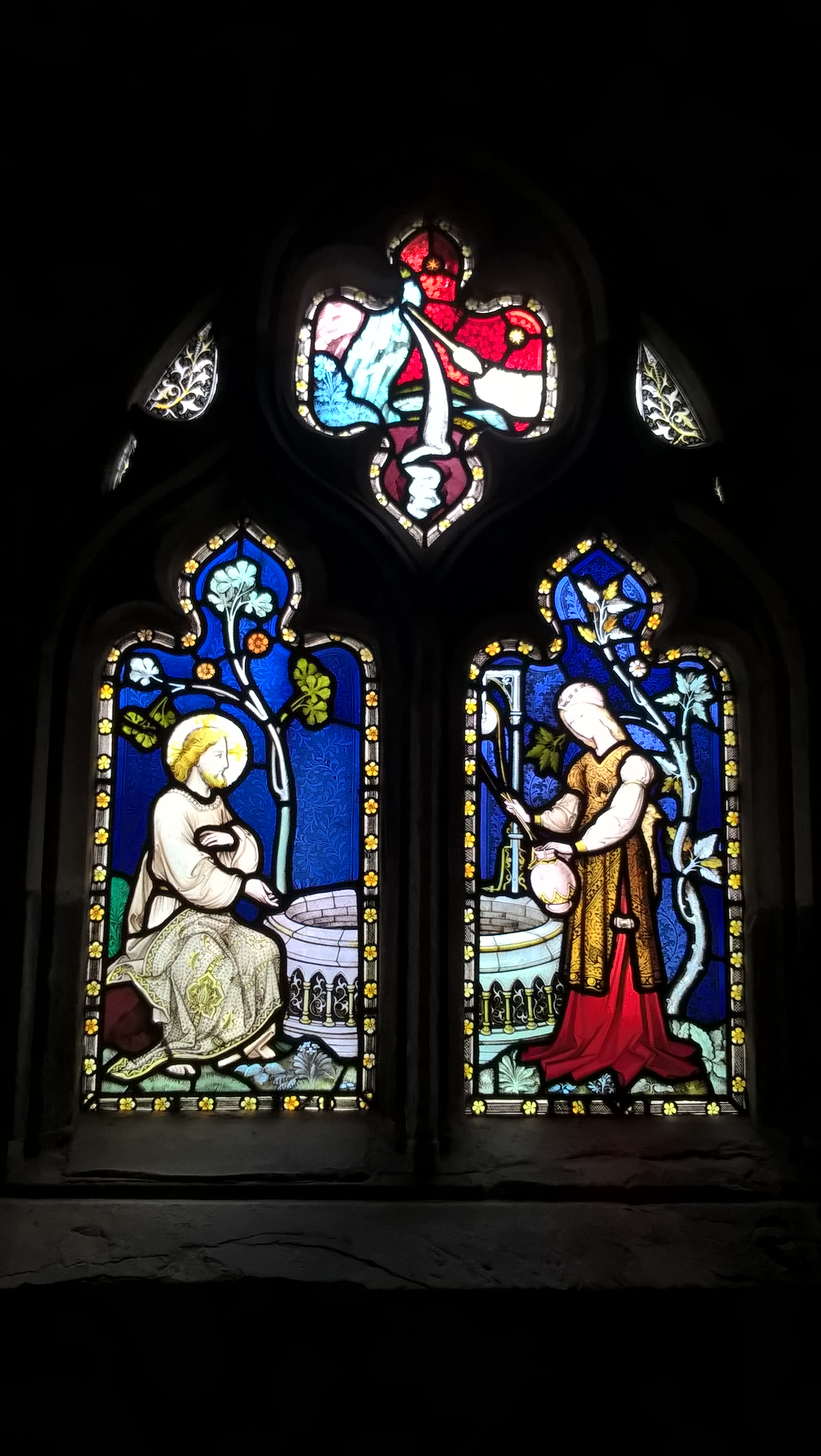
WP_20170317_15_18_38_Pro.jpg

Detail of stained glass at Gloucester Cathedral, above the place in the cloisters where the monks washed.


This is what God says

“I myself will look for my people and take care of them in the same way as shepherds take care of their sheep.

“I will bring them back from all the places where they were scattered on that dark, disastrous day.

“I will lead them to the mountains and the streams of their own land, so they may make their home amid the green pastures.

I shall be their God, their Good Shepherd; they will be my people,  my flock.”

From Ezekiel 34

From Prayers and Verses


May your week be bubbling up with life-giving water

A Poem for the road – Returning

WP_20161106_12_24_49_Pro.jpgWP_20161113_16_45_08_Pro.jpgWP_20170114_10_57_06_Pro.jpg

As we enter into Lent, I have been thinking about pilgrimage, journeys, wandering in a wilderness, being unsure of the way and the destination.  I have been reading Malcolm Guite’s wonderful Word in the Wilderness anthology of poetry, and I turned back to this poem of mine, and looked at it through the eyes of the wanderer in the desert.

The poem was written a few years ago for the Alive Festival, which used to run here in Suffolk, UK.  We were looking for something for our Sunday morning gathering, something which spoke of our sense of longing for home. Something that would help with the journey.  As I was searching, these words began to circle in my mind  They would not leave me alone.  I had to walk them out, pacing restlessly until the poem below took its form.

It draws from many of the stories in the Bible which help us make sense of our life’s journey.  They filled my mind as I paced.  Imagery from Genesis 3 which many churches read together as we prepare for Easter, seemed the starting point.  I moved on to homesickness and exile, which are threads that run through much of the Hebrew scriptures, and also of the discomfort of wilderness, which seems very good to remember now, as we think of Jesus in the wilderness.   But I did not stay there.  My imagination circled round to images drawn from the very end of the book of Revelation  All these images flowed together, as part of a larger, arching story.

I read this poem that morning at the Alive festival, set to  astonishingly beautiful music – Arvo Paart’s Spiegel im Spiegel , played then by Andrew Lord and Jonathan Evans.  The music still moves me to tears.

I hope this poem helps you today, as you walk, whether the way seems hard, or gentle.  May you come to a place of home.


Returning

We left the garden long ago,
Do you remember, though,
still, the trees heavy with fruit,
and how sweet it was?
To stretch out your hand was to be blessed.
Do you remember the cool waters of that deep river
silver with fish, alive and shining in the splashing sun?
And the flowers, bending and bending with the
weight of bees, the low hum of the land
that flowed with milk and honey?
He walked with us then, in the garden.

We have been wanderers for so long
in strange lands, wanderers looking
for a place of shelter, a place to lay down
the heavy loads we gathered at the gate,
when we left the garden. The pain we bear
so hard to bear for it is borne alone.

Our songs dried on our lips, the echoes of the
garden growing distant, and small:
the rhymes of the children playing in the apple tree,
the laughter and the ease of love,
hope’s courage    failing as the long dry road
wound through high and rocky passes
where nothing grows.

The path home is long, but that it what it is,
the path home to the garden,
to return to that place so distant
it has become the place of dreams.
And the gate stands before us,
terrible and splashed with blood,
the gate love made to bring us home.
And the gate is always open,
and beyond, beyond the Tree grows strong,
its green leaves fresh and full of light,
And the river flows deep and wide,
Deep, and wide, and always.
And you know the voice,
you have heard the voice say
Come, all you who have been thirsty for so long,
Come and lay your burdens down,
rest, and drink from these bright waters.
I am your home, your refuge, your song.

You can listen to the poem here.

IMG_0790.JPG

Poem – First Taste

img_0786


The first day of Spring, the first day of Lent –  this year, the first of March marks many beginnings.  I was struck today, as I pulled weeds out of the cool, damp earth, and listened to the birds singing, how strange it was to be entering a season of giving things up, setting things aside, going into the wilderness, when all around is bursting, expansive, beginning.  This is a strange time for dust and ashes, when my hands are covered in the richness of earth, my nose full of the smell of new green.  It feels like holding onto winter.  I am abandoning the patience winter requires, racing ahead in my imagination to new life.

While turning Ash Wednesday over in my mind, I think I shall try to see how this deliberate setting aside may be of some use in understanding the three temptations that Jesus faced at the end of this time  and the role it all plays in preparing for Easter. Self-examination, sharing in some measure of deprivation or self-denial, at a time when hope is bursting out a around us, may help us understand the way of Jesus better.  If we are to love God and love all people, then might this deliberate self-giving, setting aside power, plenty, self interest, really help us do that better?  I am holding questions in my mind, seeing if living things out might help with the answer.

So, this poem hasn’t quite let go of the darkness of winter, but marks the first taste of something new.  The woods near my home are beginning to overflow with ransoms –  to young to fill the place with the smell of garlic, still fresh and very vibrant.  I love foraging, and seek to do it sustainably as a good guest in this beautiful wood.  So, I pick some leaves, and taste.  It is good to feel so connected with the spring, with living growing things.  It feels like a kind of thanksgiving for the winter past, a form of prayer.
I dress my wintery beetroot soup with the leaves, and hold both seasons in my mouth together.  They taste full and sweet and sharp.  A good taste for Ash Wednesday

IMG_0788.JPG


FIRST TASTE

This winter has been long,
so long.  The grey sky,
the darkness, have
pressed down on us
like a grindstone,
leaving these woods dusted
with dull ice.

But now, today, the trees
are black and slick
buds shining with water,
snowdrops and aconites
bright against the dead leaves.
And there, there, the ransoms,
so vividly green, are uncurling.
I stop and pick one soft new
leaf, and bite,
sharper than lemons,
stronger than garlic,
fresh and new.
The first taste of spring
rolling round my mouth for hours


Poem – Murmuration

geograph.org.jpg

Murmuration of starlings – geography.org

d1b02bda728369e9744a15039260d942.jpg

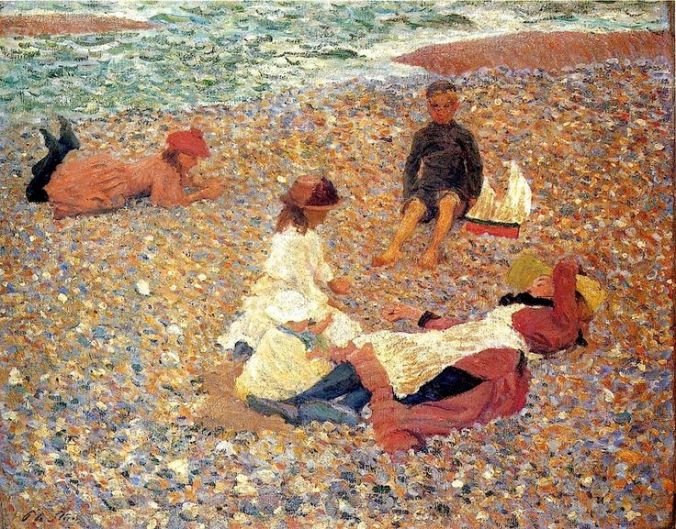
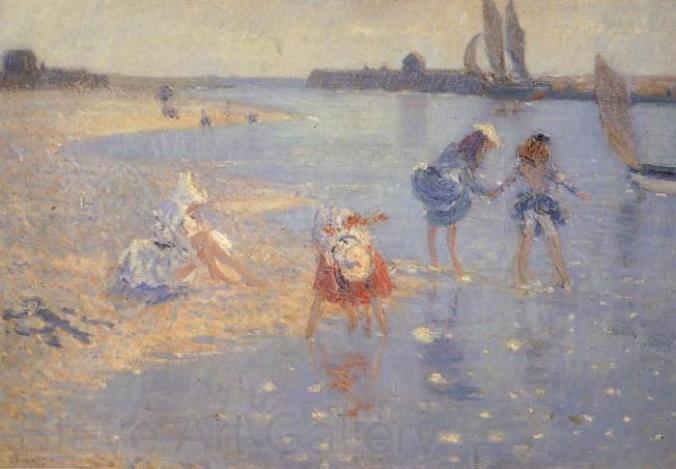
Steer – Walberswick

philip-wilson-steer-926266

Steer – Walberswick


One of the glories of winter is watching the birds – where we live, the hungry waders and migrants come to feast on what hides in the mud.  There is even, sometimes, a small murmuration of starlings over the reed-bed by our little railway station.  Collecting my daughter from there, last year, I arrived at the moment when they began.  Quite a welcome home!

A little further up the coast the starlings gather in great clouds, thousands of them.  We had, as a family, discussed what things we would like to do over the Christmas holidays a few years back.  One of the suggestions was to visit an exhibition at the Sainsbury Centre, UEA, of East Anglian art.  We saw some paintings by Steer, of Walberswick beach, and also some botanical drawings by Mackintosh, drawn while he stayed in one of the fishermen’s huts by that same beach.

On the way back, we stopped off to look for starlings as dusk was falling.


Murmuration, Walberswick

We ran south along the ridge of dunes –
sea on the left, reedbeds on the right.
Behind dark trees the sky was red
and the sea –
purple and gentle in the evening.
The winter sun had shone bright
all day, the first sun for so long.
And you came with me, you all came
with me, when I said I wanted to look
for the starlings. So we run, laughing,
in heavy boots, towards that black
smudge in the sky over the reeds,
spreading and swirling, darkening
as the birds turn, moving together,
as we run together over the sand.

Mystery and wonder, the way they move,
a thinking cloud, and laughter
comes from the wonder,
and the running,
and the being together.

And as the mist rises from the sea, drifts
across the golden shining reedbeds,
and the birds darken as they swoop and
turn, our eyes are opened as wide
as memory – of this beach,
when you were children, when we came
here in the warm summer light,
laughing together in the bright waves.


img_0228

Poem – Candle

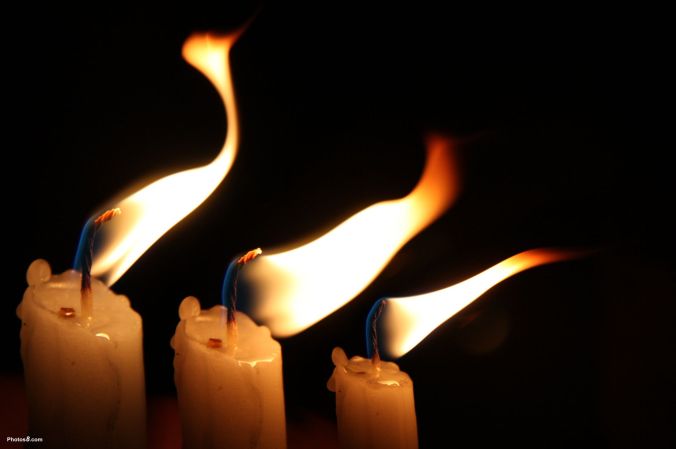
candles_flame_in_the_wind-other

Today is Candlemas

It is a time when we notice a turning in winter.    There are shoots beginning to appear, catkins are lengthening, and the buds of the blackthorn and the quince are swelling – the quince with a dark pink blush.  There is movement, at last, despite the cold and the damp.  The days are growing longer.  It is a time when, despite the cold to come, we can see that light and life are stirring again.

This poem, small and simple as it is, draws on these themes in my own spirit. Part of the process of getting ready for writing, for me, is lighting a candle.  At the moment I have a particularly lovely one given to me by my daughter for Christmas,  it has flecks of cinnamon bark in it and it smells rich and warm.  However, the words do not always flare up with the flame.  So, a thing I sometimes do, is write about what is before me, and in this case, it was the experience of not being able to write, and fiddling with the candle as I often do.  It became an illustration of the writing process, and a reminder to flow, to do, to begin, to not give up.

CANDLE

Sitting here, with a notebook open
at a blank, cold page, I light a candle,
hoping the fragrance, the bright flame, will help.

I watch it burn, but its wick is short and soon
its own heat has melted a pool of wax,
enough to drown it.  The thin red flame gutters,
splutters, as the heat drills down a narrow,
deep well with softening, curving walls.

So I take my pen, and press it down on the
wall, turning it in my fingers, pressing a
way through so the hot wax can flow.

And now the flame burns bright and steady,
the is air fragrant, and this page no longer blank.

 
img_0773

Poem: Aldeburgh Beach, January

wp_20170102_14_12_07_pro

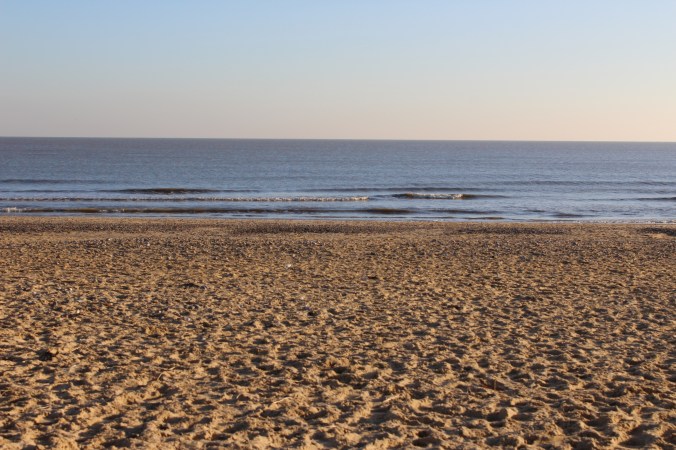
Photos taken at Dunwich Heath beach, a little along the coast, by Peter Skevington

wp_20170102_14_12_27_pro

WP_20170102_14_10_47_Pro.jpg

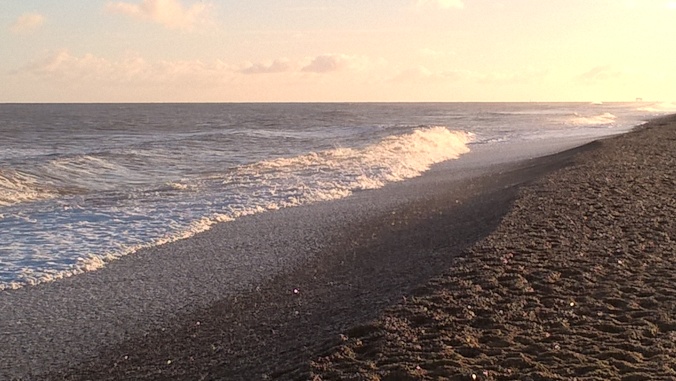
I love the North Sea in winter – its wild brown, its keen winds.  The coast is unstable here, lumps of WWII concrete, of building materials, and old fragments of glass  are thrown onto the shore.  The pebbles hiss in the breaking waves.  The waves in turn sound like a vast heartbeat.

The wind blows you alive, if you wrap up warm!

The photos above were taken this Christmas holiday, with my husband and son, as we stood on the beach and let the waves chase us.  We were not far, here at Dunwich, from Aldeburgh, where I went with a dear friend for a walk on a different day.

I am so grateful for my friends, and my family.  It is so good to be able to spend time with people you can be real and true with.  I feel very blessed to be able to count quite a few people as those whose company is as free as solitude, but enriched by their unique ways of seeing and being and insight.  The poem below attempts to capture something of my walk with one of these dear people, and I hope it can also say something bigger about the power of friendship.

I have been reading Bandersnatch, a Christmas gift from my son, which explores the relationships which formed the basis for the Inklings group, including Lewis and Tolkien, and it has clarified for me how much I need the encouragement and shared thinking and being a close group of friends can provide.  Our differences can give new vision and perspective, our mutual support can get us through difficulties that are too much for us alone.

Thank you to all my friends, and may you, reading this, have such sources of goodness in your life.

Aldeburgh Beach – January

We stood there, friends, on the beach,
facing into the east wind,
being blown full of cold,
icy and alive,
by a wind strong enough to lean on.

We stood on a cliff of pebbles
new thrown up by storms,
near the edge,
where stones rattled down,

while the sea, high and brown,
roared and crashed,
mist and foam flung
with the generosity of joy,
into our faces.
Our lips were salt with it.

In the sound of the wind we brought
our heads close enough to speak –
of the breath of God, alive,
breathing into us,
the glory of God in the brown shining.
The power of each small thing,
each small thing,
as the spray and the pebbles
danced wild around us.

Epiphany Retold – Looking out for stars

Part of the Sunday Retold series, with my version of the reading Matthew 2:1-12

Please feel free to use any of my material that helps, saying where it is from.

Last time, I shared with you the story of Christmas Retold – Escape to Egypt, where we read of the terrible suffering that resulted from Herod’s fear and jealousy and love of power.  This time, I have been thinking smaller, more hopeful, something that might help today, and tomorrow, and the next.  We need to see the darkness, and the light.

IMG_0773.JPG

Epiphany – the new season we enter on 6th January – can mean  a sudden encounter with God, an intuition into the heart and meaning of things, a burst of enlightenment, an event which shows things as they really are at their deepest level.  As a season, it covers some key turning points in the story of God wooing us, seeking us, expanding our always limited understanding as much as we can bear at any time.  As such, it carries on from the Christmas narratives well.  After all, the good news here is that God has come, God is with us. The Message tells John’s words like this:
The Word became flesh and blood,
    and moved into the neighborhood.
We saw the glory with our own eyes,
    the one-of-a-kind glory,
    like Father, like Son,
Generous inside and out,
    true from start to finish.
John 1:14

So, how might we see this glory?  How might we experience this generosity and truth now?

One of the things that always strikes me about the Christmas narratives, including this one, is the great variety of ways they record people receiving a revelation, an epiphany, from God.  There are dreams, visions of angels, and here, a star.  There are other ways God seems to be at work.  Elizabeth feels the child growing in her womb, and then feels the child dance.  Simeon and Anna, too, are prompted and moved.  In each case, the way the person senses, or hears, or experiences the promptings of God seems to be appropriate for them.  The gospel writers seem to have slightly different emphases in how they record what these revelations from God are like – it is hard to talk about.

I remember once standing at the front of church and trying to give an account of what had felt a real encounter with the love of God, and been very aware that my words were so inadequate.  I remember too how, many years ago, our church hosted firemen and their families from Chernobyl, following the terrible nuclear accident, and gave them a holiday by the sea.  One of the firemen wrote a song.  I wish I could remember it all, but the meaning of it, as far as I can recall, was –

I long to tell you about the love of God, what it is like to know the love of God, but my song cannot hold the meaning.  It is like, when I go home from here, I will try to tell people about the sea, how wild and salty and cold it is, and all I have to show them is a bucket of murky water I have carried away with me.

All our words cannot carry the full meaning, but they can hint at it, stir up a hunger for such love and depth of encounter, and reassure each other that we are not alone when we think there is more than the surface, more than “getting and spending” (Wordsworth)

As we enter a new season, maybe it will help to look at the stories we encounter of epiphanies, of experiencing a revelation, a seeing clearly, noticing how varied they are.  Perhaps God is seeking to gain our attention, and maybe that happens differently for different people at different times.  It is easy to think there is a way we should do it, but it seems that God is unconstrained, generous, abundant.  We need to be open.

My own experience of encounters with God, with new insights, is varied. I sometimes have little epiphanies in prayer and worship, reading the Scriptures moves me to a place where I can go deeper, but  I also hear through nature, through poetry, through art, and – perhaps most especially – through the love and kindness of people around me, including strangers I encounter.  It’s worth looking, I think, as we go about our days, doing our normal things, expecting that maybe our lives have something to teach us, to tell us about the love of God and the love of neighbour.  Our lives can speak to us like parables, and they can contain moments of transforming beauty and clarity, that open us up to something far bigger than we can comprehend.

These Magi, probably Astrologers – we do not know how many, or what gender they all were – do not have a straightforward time of it trying to find the new king.  God is not always found the places we expect.  Who would look for a king in a small town away from centres of power and wealth?  God tends to surprise us all by being in the small, the outside, the unexpected, the unimportant places.   I chose the Witz picture (between the two extracts below) because it places the family in a fairly ordinary setting.  Traditionally, they sit in the ruins of a Greek or Roman temple, showing how the old beliefs are crumbling and dying as something new and glorious takes place.  This one is quite an early example of a more small-scale setting, but even so, it is rich in meaning and symbol.  You might like to take some time to look at it carefully.

Herod’s palace was a desolate place to look for this new king. This child would indeed be a king of a different type. We can see, too, that although Herod used the scribes and the scriptures to find out information, he used that for his own ends.  It did not lead to encounter, or worship, or knowing God. There is a lesson here, too.

IMG_0592

As we look out for our own moments of epiphany, it might be worth looking for treasure buried in the dirt (Small Seeds, from Luke 17), and for unexpected people, such as a young girl, or an old widow, or a carpenter.  Epiphanies can burst in on us whatever we do, but my experience is that small, daily steps towards seeing God work their slow transforming changes in us, and that for these, we need to be open, we need to engage in a  quiet, contemplative way of praying and seeing as we live out our lives.  And then, in that new light, we find our lives begin to change, we better learn love, and compassion, and patience, and joy.  As we begin a new year, I am turning my attention to this way of thinking and being.

The Magi were doing what they did – studying the stars.  And they noticed something.

There may be stars out there that would guide us, if we looked.

What might your stars be?

From The Bible Retold

They Followed a Star

Far away from Jerusalem, in a land to the east, wise men looked up at the clear night skies above the desert and saw a star rising.  For years they had studied the movements of the stars and planets, and they had never seen anything like this before.  They unrolled their charts and plotted its path.
“This means a new king has been born to the Jews!” they said to each other, as they gave hurried orders to their servants to prepare for a journey.
When these strangely dressed foreigners arrived in Jerusalem, they began to ask “Where is the one who has been born king of the Jews?” Troubled rumours spread through the city, for there had been no proclamation of any birth.
King Herod the Great’s advisors approached him nervously.
“Your Majesty, strangers from the east have arrived in the city. They are searching for a child who they say has been born King of the Jews.  They saw a sign in the heavens!”  Herod caught his breath, and turned white with fear. He had been given that title himself by the authority of Rome, building palaces and the great Temple to spread his fame.  What kind of king was coming to challenge him?
Then he asked his advisors “Where is the Messiah, the Anointed One, to be born?”  The scholars unrolled the scroll of the prophet Micah, and read out loud:
“Bethlehem will no longer be
the least important of the towns.
For from it will come a leader
who will rule my people Israel
like a shepherd-king.”

“Bethlehem, eh?” murmured Herod. He gave orders for the wise men to be invited to the palace.  He listened to their tale of the star with keen interest, nodding and smiling as if he were delighted at the news.  He told them all about Bethlehem.  “Go and find the child, then please send a message so I can join you in your worship.  What wonderful times these are!” Herod hid his crooked smile.
As the wise men set off from the cool marble and mosaics of the palace, they looked up at the sky once more.  And there was the star, guiding them to Bethlehem.  They followed, and found the child with his mother, Mary.  She was astonished to receive such guests – who bowed low, and spoke of her son with reverence, and unwrapped precious gifts to lay at their feet.

She unclasped the caskets one by one.  The first shone, it was full of gold.  The second opened to a rich, sweet smell.  “The smell of the Temple,” Mary murmured to herself.  It was frankincense, used in worship. The third contained an earthy, dark, resin.  It was myrrh, more valuable than gold, used in burials, and for healing.  Mary looked up at her visitors, and thanked them for these extraordinary, extravagant gifts as the smell of the incense and the myrrh hung in the air about them.

The wise men did not send word to Herod in Jerusalem, for that night, they were troubled in their dreams about him.  They paid attention to the warning, as they had to the star.  So they slipped away, avoiding the city, to cross the desert once more.

the-magi-konrad-witz

The Adoration of the Magi, by Konrad Witz

And from Prayers and Verses

Gifts

Lord Jesus,
The wise men brought you gold:
Let us use our riches to do good.

The wise men brought you frankincense:
Let our prayers rise like smoke to heaven.

The wise men brought you myrrh:
Let us seek to comfort those who are sad and grieving.

Let there be little Christmases
throughout the year,
when unexpected acts of kindness
bring heaven’s light to earth.

What can I give Him,
Poor as I am?
If I were a shepherd
I would bring a lamb;
If I were a wise man
I would do my part;
Yet what I can, I give Him –
Give my heart.
Christina Rosetti 1830-1894

Love came down at Christmas,
Love all lovely, Love Divine,
Love was born at Christmas,
Star and Angels gave the sign.

Worship we the Godhead,
Love Incarnate, Love Divine,
Worship we our Jesus,
But wherewith for sacred sign?

Love shall be our token,
Love shall be yours and love be mine,
Love to God and all men,
Love for plea and gift and sign.
Christina Rosetti 1830-1894

From Frederick Buechner:
“Listen for Him

The question is not whether the things that happen to you are chance things or God’s things because, of course, they are both at once. There is no chance thing through which God cannot speak — even the walk from the house to the garage that you have walked ten thousand times before, even the moments when you cannot believe there is a God who speaks at all anywhere. He speaks, I believe, and the words he speaks are incarnate in the flesh and blood of our selves and of our own footsore and sacred journeys. We cannot live our lives constantly looking back, listening back, lest we be turned to pillars of longing and regret, but to live without listening at all is to live deaf to the fullness of the music. Sometimes we avoid listening for fear of what we may hear, sometimes for fear that we may hear nothing at all but the empty rattle of our own feet on the pavement. But be not affeard, says Caliban, nor is he the only one to say it. “Be not afraid,” says another, “for lo, I am with you always, even unto the end of the world.” He says he is with us on our journeys. He says he has been with us since each of our journeys began. Listen for him. Listen to the sweet and bitter airs of your present and your past for the sound of him.”

~ from The Sacred Journey and Listening to Your Life