Hello again! Thank you so much for joining me here. I’ve been taking a break from blogging, if not from writing, for a few winter months. But as the days are lengthening and the sap is rising I’m emerging from winter hibernation by the fire.
Yesterday, for #International Women’s Day, I joined some of the wonderful women and men who make our small town such a special place. We’d been invited by Counsellor Caroline Page, who organised the very special gathering despite seriously failing health. There was cake and poetry, an old wind-up gramaphone, and Suffragette colours – a celebration of women who had lived in the town in years gone by as well as those we know and love today. It was full of life and joy and friendship. Many people shared, and I hope to be able to put a link up in time to more details about the poems and stories that we read and heard together.
That morning, I’d been watching the pigeons in the trees in front of our house – a remnant of an ancient hedgerow we’re gradually restoring – and took inspiration from their eagerness and their clatter. So although this is not a poem about women, it’s a poem about life, for all of us I hope, and the awaking of spring. It was my contribution to the feast.
I’m sharing it as part of my inclination to awaken and to clatter, to be hungry for spring and for life. I hope you enjoy it.
Pigeons in the blossom – Early March
Now that the cherry plum is blossoming – hedgerows white and frothy, flowers pale, bark dark –
pigeons come through the grey sky, clattering as they land opposite my window, their collars brighter than the blossom where they perch and peck.
Sometimes one, often more – armfuls – they balance across the scrubby tree like vintage decorations, nodding their blushed heads hungrily, pecking so many buds.
The top of the tree is almost stripped bare – no fruit high up then, no precarious balancing on shaky ladders in the summer to come.
Lower, thinner, branches are tested again and again by fat feasting pigeons, hungry for rich bitterness.
I feel inclined to join them, to taste that blossom too. I know the hunger for spring, bone-cold and weary as I am. And I am coming to see their wisdom as I too feel the urge to awaken and to clatter, to feast on life with its bright blossom, its green buds, again and again.
Pigeons seem to be a bit of a theme. Not the most popular bird, I know, but I do enjoy watching them. I do hope to be an equal opportunities appreciator of nature, and to celebrate all the creatures who share this patch of garden wild.
Here’s a few more poems, if you’d like to read on.
I’m really pleased to be part of Transition Woodbridge’s Wildlife Corridors project. You can read more about Transition Woodbrige here, and Wildlife Corridors here.
We’re a group of all sorts of people from about the town who are seeking to make it a bit more wildlife friendly, and learning and sharing as we go. So below, you’ll find a little story about one of our hedges which I wrote for the group’s newsletter. We’re beginning to do more of this – passing on our often falterning steps towards a different way of thinking about our gardens. Here, our hedge had a beetle problem, and we tried a gentler and more natural approach to the plague of viburnum beetles than we might have done in the past. We’re delighted that the hedgeline is gradually becoming much more beautiful, diverse, and better for a wider range of creatures than simply the dreaded viburnum beetle!
After the account, you will find a poem drawing on this same hedge, and its story of renewal.
A hedge story – from pest control to native beauty.
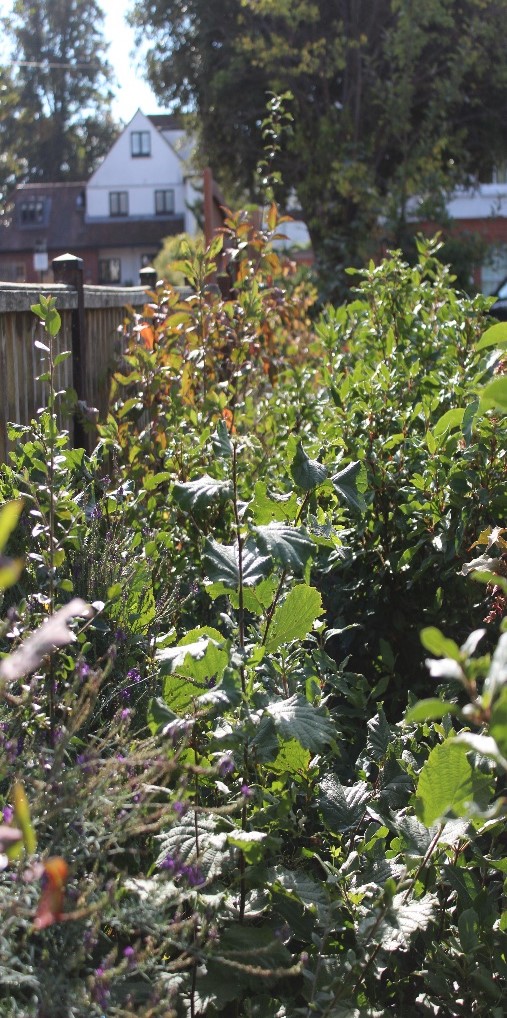
It was a thin strip of dark green, between drives and walls. Our viburnum hedge joins what’s left of the original roadside hedgerow with holm oak and wild cherry plums to the network of gardens and trees behind. A narrow corridor of life, but with precious winter flowers for the bees, and just occasionally, a wren or a bluetit nested there. It was part of the planting we inherited.
A few years ago, it began to sicken dramatically. Viburnum beetle. It looked devastated, and I had my doubts if it would recover. We consulted the RHS website, cut away the worst of it, and scraped out some of the soil underneath where the grubs overwinter. As I did so, I felt the poverty of the soil – it was grey, had no structure, with no visible worms or other minibeasts. So we piled on the homemade compost and autumn leaves. We also decided to enrich it more permanently with native plants – for as it was, it could not renew itself, and the long strip of monoculture was an easy target for the dreaded beetle.
I bought some bare rooted spindle from Botanica and interspersed these with hazel that the squirrels had kindly planted around the garden. In the autumns to come, I’m hoping for a blaze of butter yellow hazel, with bright red leaves and pink/orange berries from the spindle. All to fall to the ground and feed it.
It’s limped through this year’s drought, but we’re getting there. It’s drawn in so many more creatures already. The insects are returning. The soil has worms, and frogs and mice make their way along it. At night bats hunt over it, and by day, the dragonflies. Many plants are finding their way there, each making their own contribution. At first, it was mustard garlic. Now, there’s purple toadflax, birdsfoot trefoil, various bedstraws and all manner of other plants. Butterflies and caterpillars, bees and hoverflies, and a healthy range of beetles are making a home here.
There’s a trellis separating our neighbour’s drive from this hedge and, in consultation with them, we’ve planted garden seeds and cuttings – vetch and perpetual sweet peas to improve the soil, honeysuckle, roses and jasmine. Again, I hope that next year it will be truly beautiful.
And as for the beetle attack… there have been a few nibbled leaves in the last two years, but nothing more than that. And, if some of the original plants die, there is plenty of life to take advantage of the light and air they leave. We have moved from a dark monoculture to a diverse and increasingly native abundance, with so much more food for all life. The viburnum still gives flower at a time of year when the natives are quiet, and deep cover too for plants and animals and birds. But the natives are making their presence felt now, and bringing so much beauty, diversity and abundance. It’s becoming a joy, and an example of how gentle care can slowly move a garden to something far more alive. I’m watching what it’s doing with real delight. What will be next?
And now the poem…..
Green ink 1 Hedge
And the garden now is my poem. So this hedge, this long line of joy and work, rhymes its meanings back and forth, carries them through seasons, through drought and cold by bird and frog and bee. Carries deep memory of the land, of wood and hedgerow, orchard and field, and deep hope too, for what may be, and what is becoming. And growing.
For joy and work wrought it, and renewed it, planted these saplings of spindle and hazel that will be red and gold as leaves fade in late sun, fade to such an illuminated brightness.
And I see what may be, what are, sweet rose cuttings unfolding, and growing, as honeysuckle twines, and jasmine – tiny, with tiny leaves – grows now in warmth, and sweet peas begin their work of rising up from hard coiled seeds.
All this abundance given freely by the garden and gathered, and tended, and shared, as she freely gives more – wind-blown seeds and bird- carried berries filling the earth to overflowing, as together we make a line of such richness and beauty, thought and imagining, sibilant as the wind whips through it, sounding like words spilling on the page. These words. This page.
I would write in green, I have written in green, working with all this life. Patient, resting in its waiting, and growing, and fading, ending, and beginning again. And again. This long line of green.
This is a poem, in two parts, drawing on my morning practice of yoga in the garden. It’s patchy at this time of year, depending on rain, and sometimes cold, but there are some mornings where you catch a break in the changing weather, and know why this is a good way to begin.
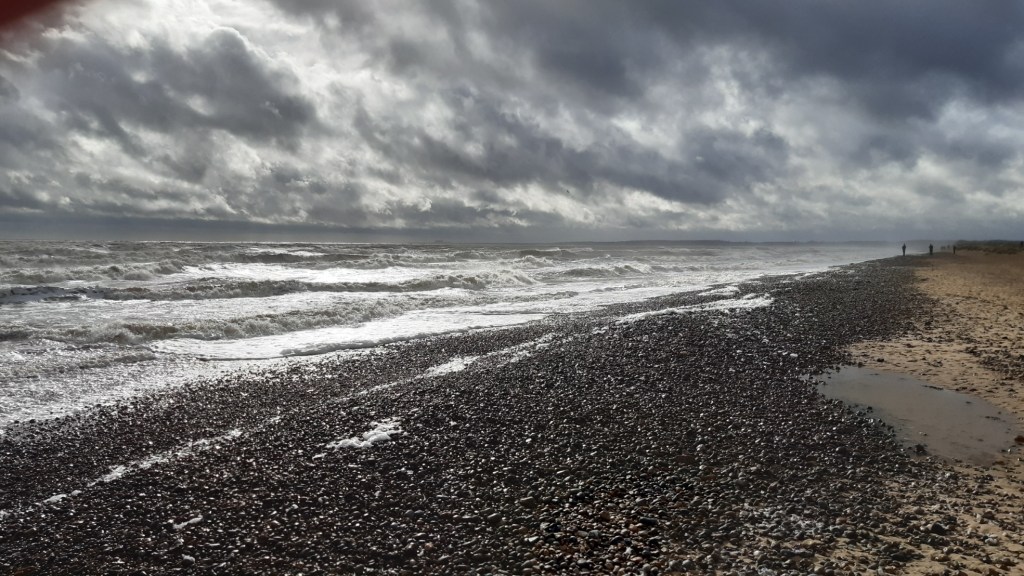
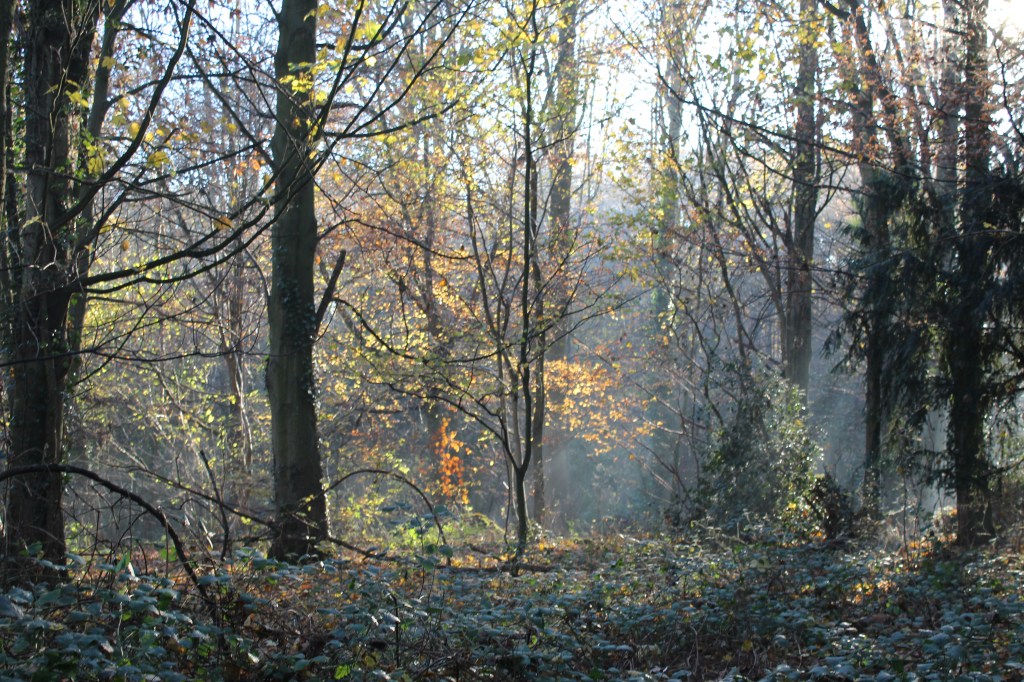
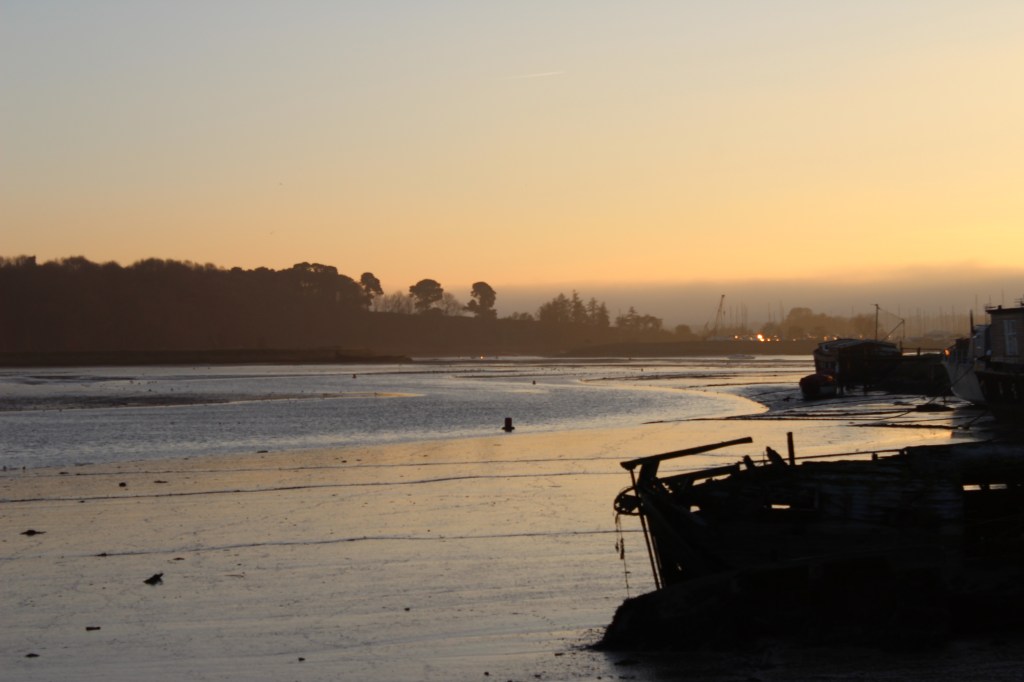
I took no photos at the time, being lost – or found – in the moment, and so I include for you here some other pictures filled with light, and dark, hoping they will fill your eyes with something good. This morning, as I breathed in the light and the air, I was aware of gratitude rising within me, gifted to me. I know that American friends are turning their attention to Thanksgiving at this time of year, and so, even as winter begins its approach, I am reminded to hold on to the practice of gratitude in darkening days.
I wasn’t sure quite where to go with this poem. There were two things – the experience of suddenly becoming aware of the beauty of the sky – and that beauty itself. So I’ve noodled around with it until it sits in two parts. So, this is where it is at the moment.
On looking up
So this is how it was, this morning: Early, feet bare on cold grass, I raised my head, stretched my arms, and as I did so, I remembered to look up – to open my eyes wide. I remembered to took up and breathe in deep and full, breathe in that cool morning air, early, before the smell of road runs through it.
Or maybe, it was more like this: Raising my head, stretching my arms, breathing deep of the cold clear air, my mind beginning to steady and settle, my eyes opened – all at once – to the strange dazzling luminosity of the sky. And that sight filled me as surely as the cold air. For a moment, hands high, my smile broke open as wide as my gaze, open as it was to this sky.
Sky as dizzying, vertiginous depth, and falling. Sky, too, as ever-present wonder, and catching. I do not know which it was, but I know that the beauty of it fills me, nourishes me, changes me. And I am thankful.
******
For in looking up, I saw the sky’s unknowable dizzying depths, its many layers, its films of light moving across each other, and for a moment I held a cool breath in wonder, and in looking, and what felt like falling.
Highest, or deepest, the moon, partial and pale, and floating beyond the crumpled white-blue linen of high clouds and new sky. And below, moving fast across them, hurried and bright, the rapid soft pink and orange of clouds blowing in from the north.
And holding up my gaze with each deepening breath I see, below the clouds, how the dark lines of birds begin their overflight. Gulls, risen from their night-roost on the river, coming inland to forage in harrowed field, overflowing bins, wherever they find what they need. And below them, the crowd of starlings, chattering, still holding a loose shape of past murmurations, trailing after from their hushing reedbeds.
Each layer of sky lower, closer, faster, sliding against each other in wild reckless beauty as my body fills with north wind, lungs as cool as fresh water on a summers day. The morning beginning at one with these things, with joy in these things, with yes to these things, with thankfulness for all these daily wondrous things.
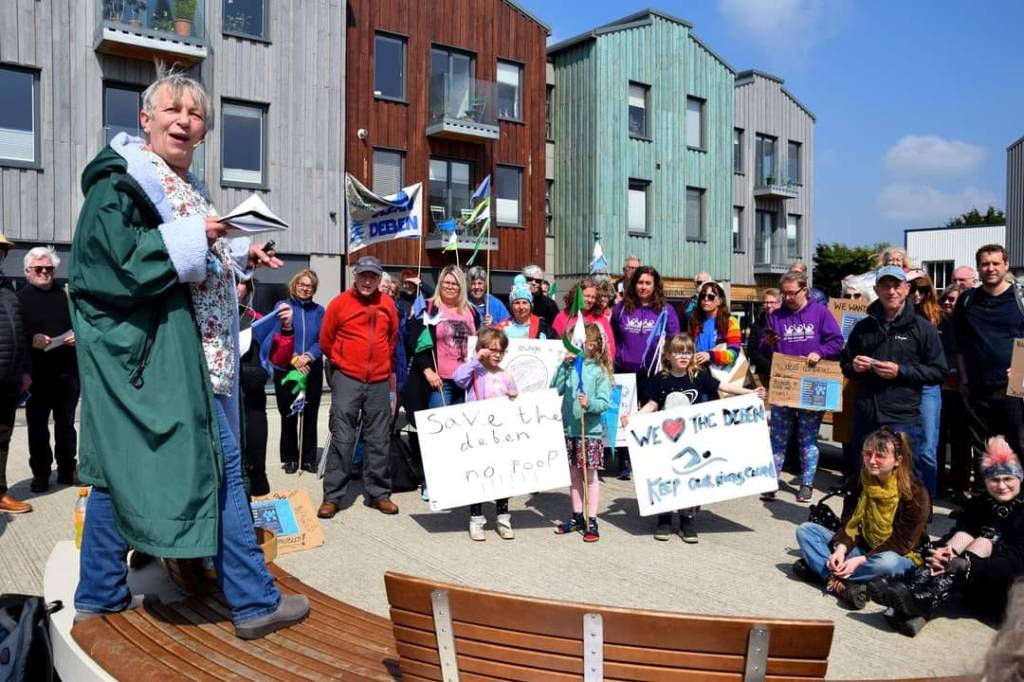
The river is quieter in the summer – at least, it’s quieter for birds. It is busy with us humans loving and enjoying sailing and swimming and rowing and all the other things which bring us onto and into the river. There’s been much going on too about protecting the river, and I was part of an event a little while ago where we celebrated and spoke up for our river, which is the lifeblood of the town and its people, as well as all the other communities of creatures within and around it. You can read a little more about all this here if you would wish.
Photo by Lorraine Ruth Leach, Save the Deben
But, this is a poem about those birds, mainly the waders, who are far away to the north all summer. It’s so good when begin to return, as they do now and all through the shortening days. The lowlands of the east are a haven for so many migrating birds, and many are working to protect and enhance the wild places that shelter them. Just this week, the Suffolk Wildlife Trust have announced very exciting plans for rewilding part of the Deben’s watershed – Martlesham Wilds. You can read about that here.
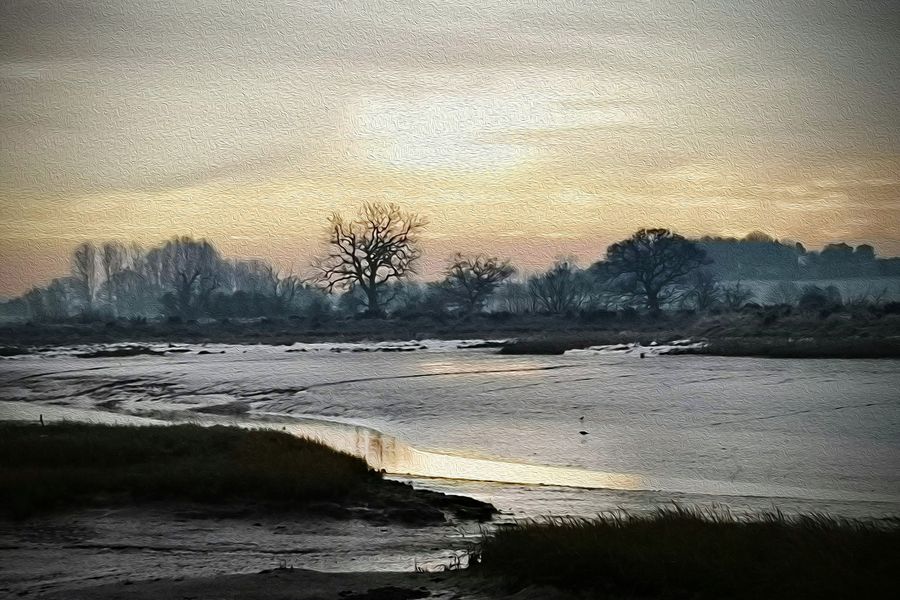
Over the long and beautiful days of summer, I miss the winter birds – the godwits and the lapwings and the curlews and the redshanks, and so many others. I feel so honoured to live in a place blessed by their presence, by their return year after year. It’s so precious, and precarious. So here is a poem that rose up as I leaned on the flood defences, and watched the sky and the mud, and greeted the homecoming birds.
Homecoming
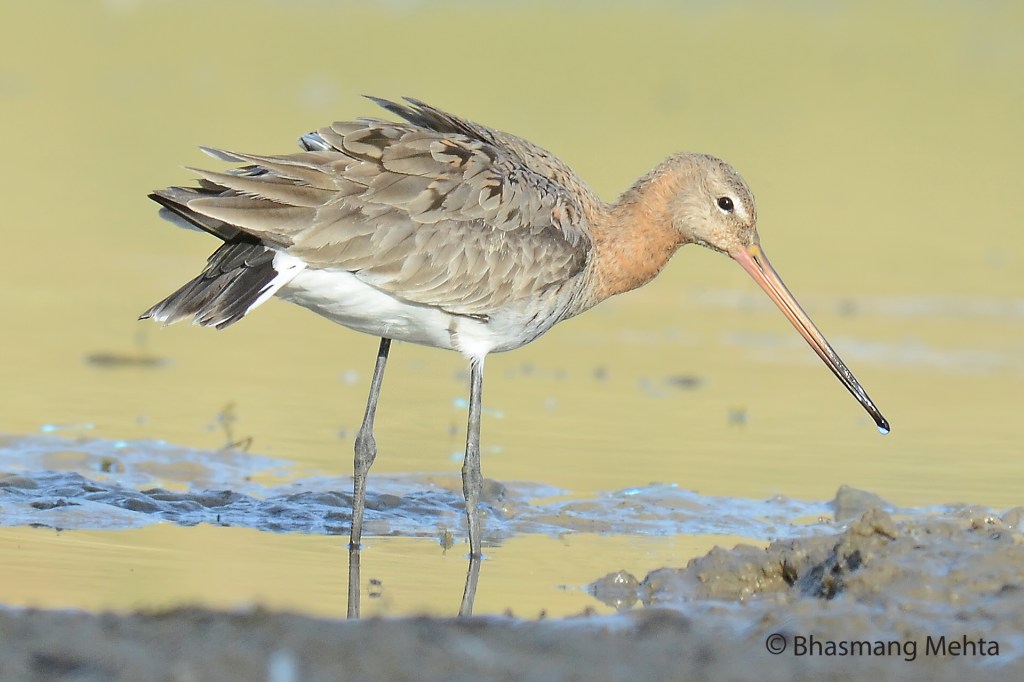
Oh, the waders are returning – swooping now over the water, their wings and tails flashed with white against the slow dark shimmer of river and mud.
How good to see them again, to hear them again, their plaintive calls rising like long echoes of winter, of the far north where they have been all summer long.
The godwits have their heads down now, probing river-mud for worms – again and again, hungry, windblown, wings aching with effort of flight across open, chilling seas, exhausted and home at last, jabbing and jabbing with their strong beaks for worms that have been quiet all summer, deep down, low with heat and drought.
How I have missed them, with their cries and angled flight, and as the days darken, it feels now as it does when old friends return, and we share a table together, feasting and talking long into the gathering night, together, and content.
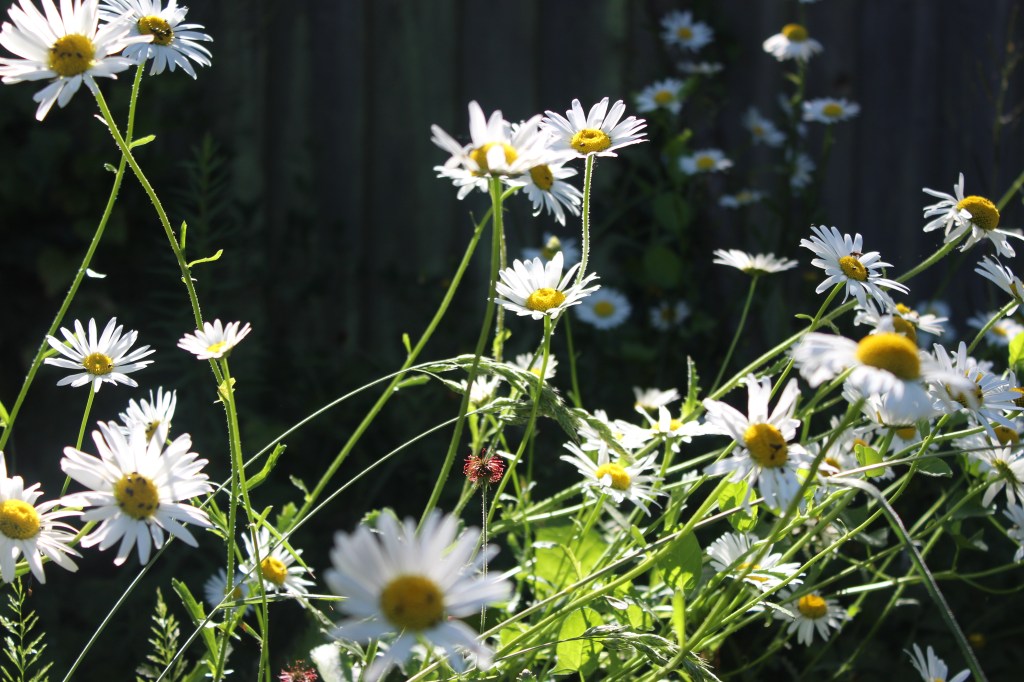
Sitting in the garden in the late afternoon today – the Summer Solstice – I watched the daisies in the sun and the breeze. Here they are.
Midsummer daisies
Midsummer – and the tall daisies are full of light, nodding and glowing, glowing and nodding, saying yes, it seems, to all that is.
Simplicity – to receive the light and shine out in turn. To have roots in the dark earth, in the damp earth and to shine like this – with a purity of brightness, and such depth of yellow, while swaying, like this, in the breeze.
Perhaps it is so – simply to be is holy, to receive and to give is enough, this longest of days.
Alchemy – for surely it is a glory, and a wonder, to turn earth and damp and light into this brightness, this daily beauty, shining like the distant sun here, in this shady place, beneath my apple tree.
I’m with Mary Oliver – each morning I get up and hurry over the damp grass to see what has begun to open in the morning light. I love her poem Peonies, and this poem of mine pays tribute to it.
My peony did not open with the morning. This beauty waited, waited until the sun was high and warm before unwrapping itself.
And I had waited for two years since planting. And waited while the bud was closed. And then, in the space of a few hours, everything changed.
Peony
Today, I watched as a new peony opened – I had planted a row of them, and now, after two years, this – the wondrous first flower unwraps itself. Slowly.
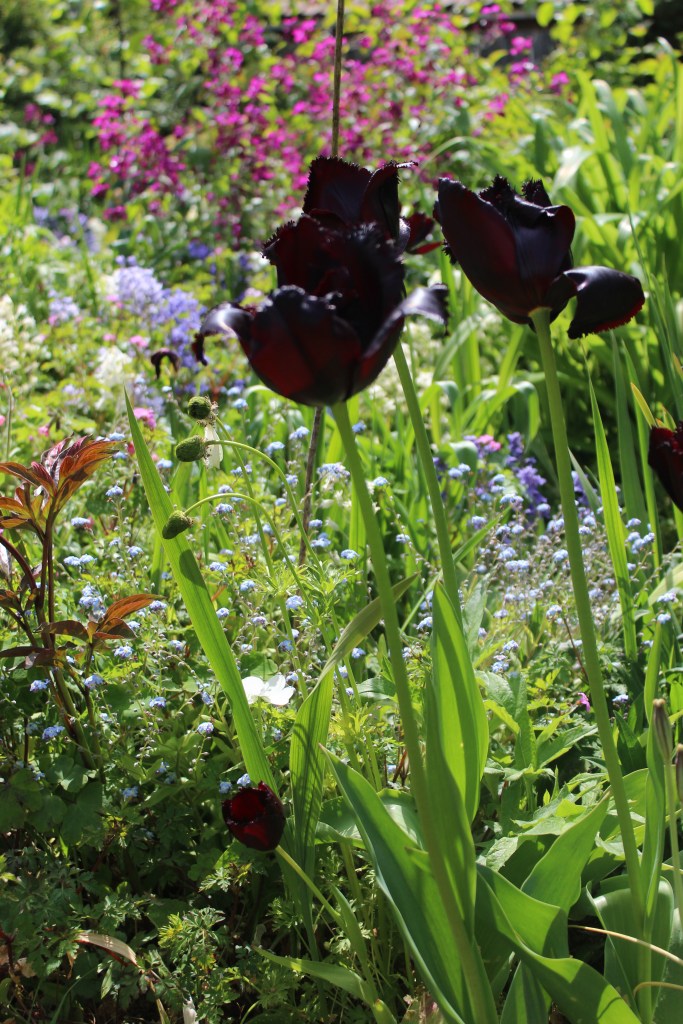
And oh, how dark, how perfect. Red velvet cake, chocolate, a rich eggy heart of soft anthers waiting for the already waiting bees.
Three hours ago it was bud, and now, this heart is open, warming in the golden sun. And still, others wait to put out their own flowers for there is more, still more, to come.
And each day, then, the question – What astonishing thing will unfold for you today, and unfold in you today?
What gift can be given, and received? For all the world, and you within the world, is full of such wonders – sweetness for ants, clover in the unmown grass thick with the darkness of bees.
And this flower, now, with its beauty both before you and within you – for they are the same, know they are the same – glowing deep in the ripening light.
Experimental mowing/unmowing pattern, beloved of bees.
I have no picture of the particular crows who caught my attention, and prompted this poem, but I thought I’d share this lino cut with you – I did it a few years ago now, and its good to remember the pleasure I took from carving away at the surface.
But this poem, a little later than I’d intended due to a bout of covid, came about only a few weeks ago, on a wild and unpredictable day. The way the crows stayed together as they flew was remarkable – they held a bond, they held their distance, tumbling together, despite the unpredictable blustering of the wind. It brought to mind all the things that we find hard to measure in our systems of measuring – the bonds between us, the gifts of attention and intent, the power of belonging. In this poem, the question of hope came to mind. I have not resolved it. I was thinking about hope in the face of all the pains of the living earth, including ourselves – the disruption and destruction of networks of life that have been in place for aeons.
Perhaps the question is one I can let go, learn to live with. And another, perhaps more useful question is can I continue to turn my attention to these strange, immesurable qualities of love, belonging, gratitude, which can shift our attention, and therefore our action.
In any case, here are some pictures from the garden, and a poem for you.
Two crows in an April gale
And as the wind blows slant across the patched and mottled sky, I watch two crows tumbling and twisting sideways through the cold air, keeping together
As if each is the other’s fixed point, their north star, dark as they are against the darkening clouds, in this sudden, unfamiliar cold, as the wind veers north, then south, then north while the day’s unease lengthens.
And these two birds floating through so much turmoil, an upended sky, remain, strangely, together – paired, equidistant, invisibly tangled, gyring like lost kites with sinuous strings.
Is there any hope? I know not. Facts singe and darken with fire. Even Spring seems provisional as the wind shifts strangely.
Do I hope? I know not. And yet this bond between the birds speaks of much that is not counted in our counting of facts. Our reckoning speaks not of the loves between us, the urgency of our turning, the efforts we bear to remain close, all things holding together in strange union.
Now, a lull, the crows are gone, and the blackbird sings still, and yet, and
Oh I cannot bear that he should sing in vain. So sing into being a new, ancient world, brother bird, dear one, sing on, calling to another, calling to life, and who knows where this bleak wind will carry our songs.
Who knows the power of these loves, of that sweet melody, of the tumbling together of crows.
The lino cuts at the top of this post were done to go with some poems which I posted before. If you would like to read them, you can begin here.
As I was thinking about all that binds us together, these words from the New Testament came to mind. They help me. Colossians 1:15-17
Our beautiful river, the Deben in Suffolk, is in trouble. Testing of the water has revealed that untreated sewage is being dumped. The estuary is a Site of Special Scientific Interest, rich in wildlife, and yet still this is happening. The river is the economic lifeblood of the community, with sailors and walkers, canoeists and birdwatchers all making a vital contribution to the towns and villages by its banks. Wild swimming has also become increasingly popular since the pandemic. We solved these problems long ago – having dirty, unhealthy rivers – and yet, here we are. Economics seems to be a good servant of humanity, and an exceptionally bad master. That can change. The water company – here as elsewhere – can be held to account. Reform of practice is more than possible. You can read more about the situation and our local response here.
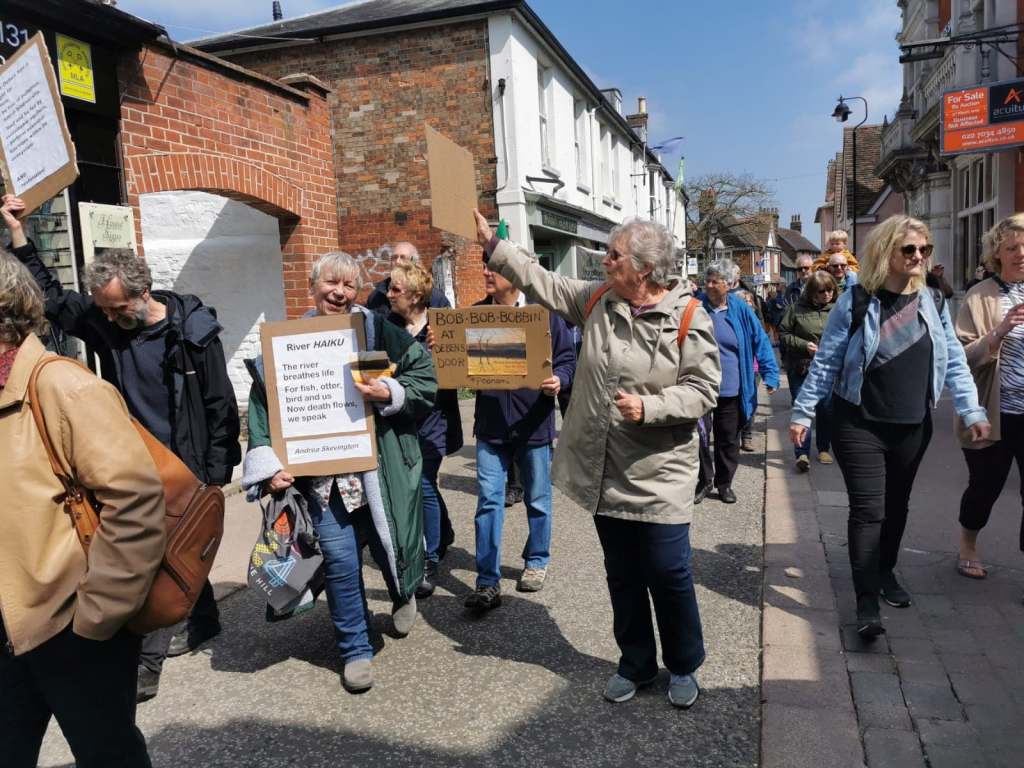
There was a rally and march on Saturday 23rd April, the National Day of Action for Water Quality.
I was very sorry not to be able to go, stuck in the garden with covid – although I couldn’t have a nicer spot to be stuck in. Counsillor Caroline Page (Lib Dems) asked if I felt up to writing a haiku that she could share on my behalf. I’m delighted to be asked and have had a go through the brain fog.
A poet herself, she read it out at the beginning of the rally.
Photo by Charmian Berry
It then joined the march…
Photo by Ruth LeachPhoto by Ruth Leach
You can see more pictures, and video clips, on twitter here
I’m very proud to be part of this fantastic community, who love their place, and seek to protect it.
Photo by Ruth Leach
River Haiku – April 2022
The river breathes life for fish, otter, bird and us: Now death flows, we speak.
It’s such a wondrous river. Let’s treasure our places, and care for them.
Updated 24th April 2022 to include coverage of the Day of Action.
I was so delighted to be asked to be involved in this local event. Our town council has a thoughtful and dedicated Climate Emergency Committee, who invited a range of speakers and exhibitors who could talk about what they are doing, and what we could do, to work more harmoniously with nature to tackle the double and linked emergencies of biodiversity loss and climate change.
If you’ve been reading this blog, you may recall that last autumn I gathered a community poem, November Leaves, and read it out at a council meeting. You can find out more about that here and here. It was following on from reading that poem at a council meeting that I was invited to begin each of the two days with a poem. As I looked through the programme, and wondered what to share, I was struck by the breadth and depth of the experience covered by the speakers.
I’d just like to briefly share with you the poems I read.
Waldringfield Saltmarshes – Seal
This thin strip of solid ground turns away from the shore, snaking through saltmash – sea lavender, sea purslane, samphire glowing in the fading light, the saltsmell of algae – until we are far from ploughed earth, far out on this wide, flat, dizzying land-water-scape.
Pools of infinite grey mud, the hiss of water receding, we walk just as the tide turns to ebb, this winding path our thin line of safety, draped with a strand- crust of drying weed, studded with hundreds of tiny white crab-shells, oysters, mussels. How fragile I feel myself to be. How quick to be lost.
After many turns further, and further out, we come to the place the path stops. On the other bank, we can see the woods where great white egrets nest. At my feet, the red of a spent cartridge hurts my eyes as I hear oystercatchers, and sweet skylarks, and water, and wind scuffing the water.
There, at the end, the limit of where we could go, we saw, in the water, the seal – a low flat head, intelligent eyes, sleek and fat, as grey and rounded as the mudbanks – swimming. We crouched, concealing our profiles from the luminous sky, we held our breath, and watched its dive, and breath, dive, and breath.
And as it swam upstream, we turned to go back, retracing our steps exactly, watching its joy, its contentment, as we grew closer to solid ground, the smell of ripe barley after rain, and mallows, and sweet chamomile carried on the breeze, welcoming us.
But the taste of the saltmash sustained us, sustains us, the peace of the seal stayed with us, stays with us. And the cry of the curlew remains.
One hundred and ten years
Despite this cold there is a shimmer of life in the air above the beds, where bluebells begin their opening.
Tiny flies, and larger, and bees, and the occasional, beautiful, butterfly – look, just there.
I watch them in awe, all these tiny specks of life. Each small thing part of The garden’s constant dance, each being knowing their own irreplaceable steps.
I wonder what it was like, over a hundred years ago now, before the house was built, when all this was orchard. Did butterflies rise in dense bright clouds as you walked through the long grass? Could you lie down softly and hear the loud hum of bees in the speckled blossom above?
Perhaps, like Tom’s Midnight Garden, that rich place is still here, in the shadows. And perhaps, I hope, it is becoming less ghostly, more embodied, more visible, humming in this shimmer of life in the air. Growing stronger after so many years, as if seen with eyes as clear and sure as a dreaming child’s.
As the emphasis of the weekend was on action, and in particular localism, I came away feeling greatly encouraged to keep doing the apparently small things I am doing. To shop locally and seasonally, to allow the garden to grow with the aim of increasing its abundance of life, to buy less and what I buy to be as thoughtful as I can, to connect to others who are seeking to support nature and create networks where life can flourish.
The news about the climate emergency is pretty dire, but I’m trying to look at what I can do, and what we can do, and seeking to add my voice to those who are calling for change.
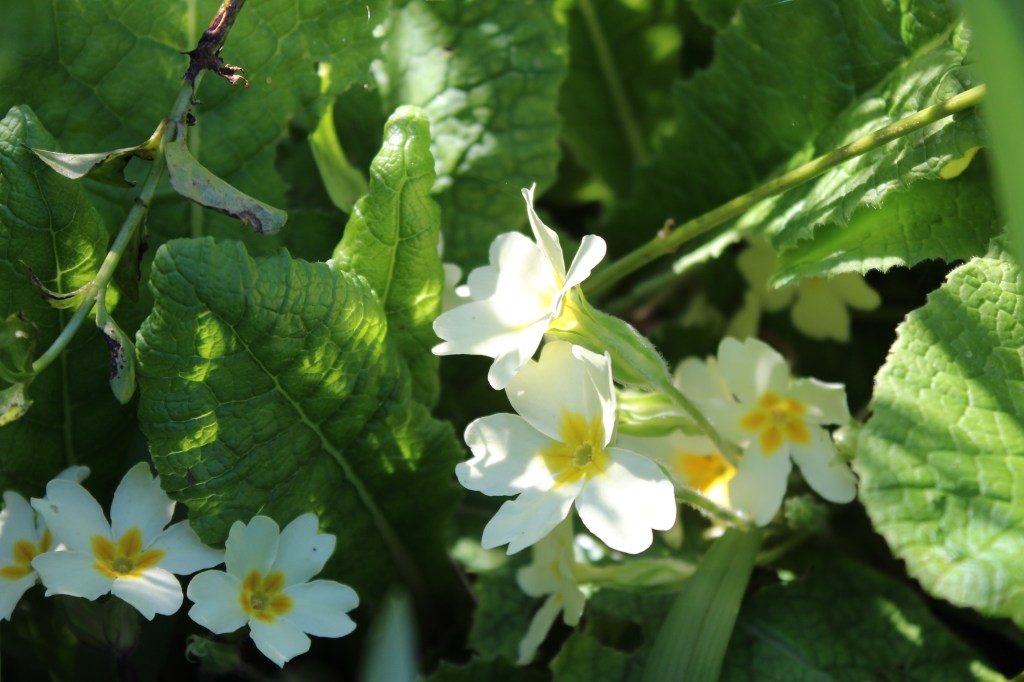
Out in the cold, damp garden, I have been holding my nerve and not cutting things back. Just this week, I’ve snipped a few old stems above the primroses getting ready to flower – and indeed flowering already. I am seeing how long I can sit on my hands and wait as things flop under frost and rain, thinking of the life held in piles of leaves, and the hollow stems of perennials.
Where I have cut back, I have left things in piles near where they grew, giving time for the things that live there to move before I compost them.
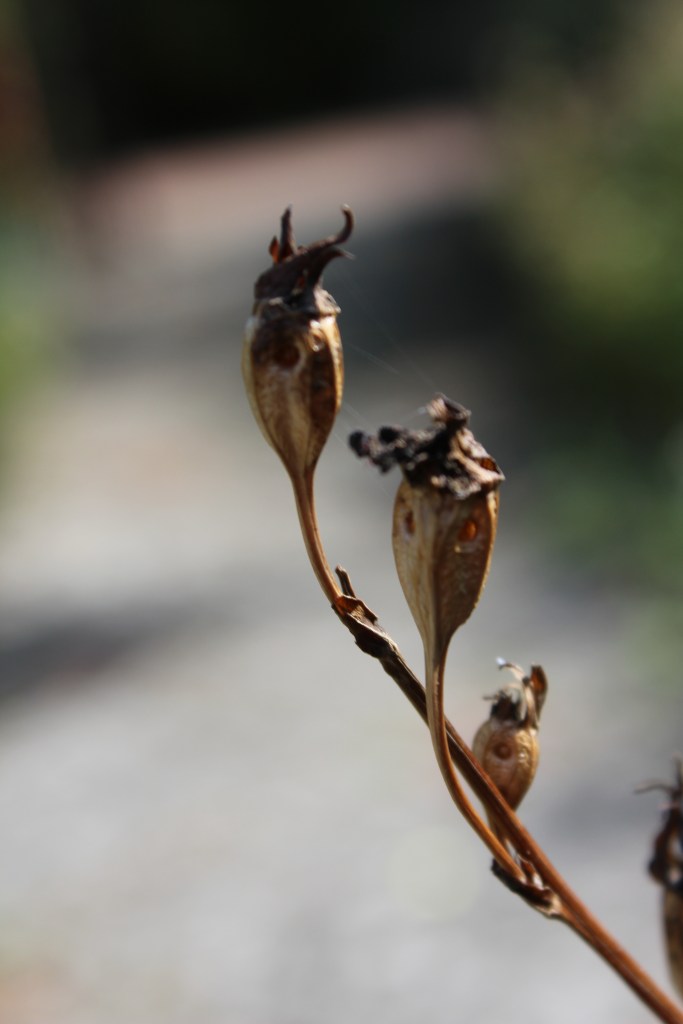
As I have left this old growth, and quietened the voice in my head reproving me for untidiness, I’ve noticed real beauty in these seedheads, and fading leaves and flowers, and an increase in the hum of aliveness I’m noticing in the garden.
Even moving a few leaves to clear space for primroses has revealed fat caterpillars, and many tiny creatures unknown to me. There is beauty here, too. All this decay from last year is full of life, full of what will be needed by the bluetits investigating the nest box, the blackbirds turning over leaves.
Winter seedheads
I’ve left it wild – left seedheads and leaves – and the leaves lie piled up in heaps in borders, against fences, swept from paths.
And I find I love the colours of the fading aster leaves, colours I have not seen before, new to my eyes, uncut as they are. And the pale seedheads – like stars – of the alliums, and the dark eyes of rudbeckia, how they sway together as the wind whips round, mingling, full, and darkly shimmering.
I watch the birds as they eat red berries – dark holly, the vivid bright cotoneaster, as the squirrels lope inquiringly over the lawn, looking for what they buried.
There is so much life in the few brief hours of daylight, while the night lingers in the sharp musk of fox, the delicate deer paths deepening in the soft earth. And I feel how precious this space is,
How, now it is cold, the garden is sanctuary to many more than me. And I love to be host to such guests. There is much joy in noticing their need, and in opening my hand to offer what they lack, quietly, invisibly.
Even now, in the darkest days life stirs, life comes through the slick dripping trees, through frost and fog, and finds shelter here, and makes a home.












 Andrea Skevington