Epiphany Retold – Looking out for stars

Part of the Sunday Retold series, with my version of the reading Matthew 2:1-12

Please feel free to use any of my material that helps, saying where it is from.

Last time, I shared with you the story of Christmas Retold – Escape to Egypt, where we read of the terrible suffering that resulted from Herod’s fear and jealousy and love of power.  This time, I have been thinking smaller, more hopeful, something that might help today, and tomorrow, and the next.  We need to see the darkness, and the light.

IMG_0773.JPG

Epiphany – the new season we enter on 6th January – can mean  a sudden encounter with God, an intuition into the heart and meaning of things, a burst of enlightenment, an event which shows things as they really are at their deepest level.  As a season, it covers some key turning points in the story of God wooing us, seeking us, expanding our always limited understanding as much as we can bear at any time.  As such, it carries on from the Christmas narratives well.  After all, the good news here is that God has come, God is with us. The Message tells John’s words like this:
The Word became flesh and blood,
    and moved into the neighborhood.
We saw the glory with our own eyes,
    the one-of-a-kind glory,
    like Father, like Son,
Generous inside and out,
    true from start to finish.
John 1:14

So, how might we see this glory?  How might we experience this generosity and truth now?

One of the things that always strikes me about the Christmas narratives, including this one, is the great variety of ways they record people receiving a revelation, an epiphany, from God.  There are dreams, visions of angels, and here, a star.  There are other ways God seems to be at work.  Elizabeth feels the child growing in her womb, and then feels the child dance.  Simeon and Anna, too, are prompted and moved.  In each case, the way the person senses, or hears, or experiences the promptings of God seems to be appropriate for them.  The gospel writers seem to have slightly different emphases in how they record what these revelations from God are like – it is hard to talk about.

I remember once standing at the front of church and trying to give an account of what had felt a real encounter with the love of God, and been very aware that my words were so inadequate.  I remember too how, many years ago, our church hosted firemen and their families from Chernobyl, following the terrible nuclear accident, and gave them a holiday by the sea.  One of the firemen wrote a song.  I wish I could remember it all, but the meaning of it, as far as I can recall, was –

I long to tell you about the love of God, what it is like to know the love of God, but my song cannot hold the meaning.  It is like, when I go home from here, I will try to tell people about the sea, how wild and salty and cold it is, and all I have to show them is a bucket of murky water I have carried away with me.

All our words cannot carry the full meaning, but they can hint at it, stir up a hunger for such love and depth of encounter, and reassure each other that we are not alone when we think there is more than the surface, more than “getting and spending” (Wordsworth)

As we enter a new season, maybe it will help to look at the stories we encounter of epiphanies, of experiencing a revelation, a seeing clearly, noticing how varied they are.  Perhaps God is seeking to gain our attention, and maybe that happens differently for different people at different times.  It is easy to think there is a way we should do it, but it seems that God is unconstrained, generous, abundant.  We need to be open.

My own experience of encounters with God, with new insights, is varied. I sometimes have little epiphanies in prayer and worship, reading the Scriptures moves me to a place where I can go deeper, but  I also hear through nature, through poetry, through art, and – perhaps most especially – through the love and kindness of people around me, including strangers I encounter.  It’s worth looking, I think, as we go about our days, doing our normal things, expecting that maybe our lives have something to teach us, to tell us about the love of God and the love of neighbour.  Our lives can speak to us like parables, and they can contain moments of transforming beauty and clarity, that open us up to something far bigger than we can comprehend.

These Magi, probably Astrologers – we do not know how many, or what gender they all were – do not have a straightforward time of it trying to find the new king.  God is not always found the places we expect.  Who would look for a king in a small town away from centres of power and wealth?  God tends to surprise us all by being in the small, the outside, the unexpected, the unimportant places.   I chose the Witz picture (between the two extracts below) because it places the family in a fairly ordinary setting.  Traditionally, they sit in the ruins of a Greek or Roman temple, showing how the old beliefs are crumbling and dying as something new and glorious takes place.  This one is quite an early example of a more small-scale setting, but even so, it is rich in meaning and symbol.  You might like to take some time to look at it carefully.

Herod’s palace was a desolate place to look for this new king. This child would indeed be a king of a different type. We can see, too, that although Herod used the scribes and the scriptures to find out information, he used that for his own ends.  It did not lead to encounter, or worship, or knowing God. There is a lesson here, too.
IMG_0592

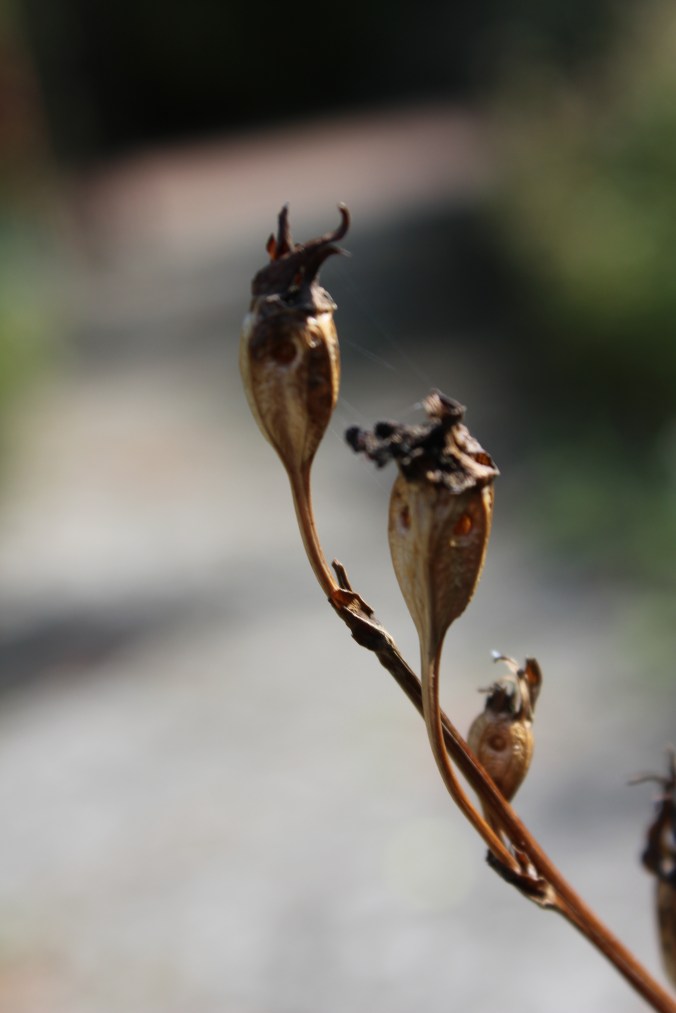
As we look out for our own moments of epiphany, it might be worth looking for treasure buried in the dirt (Small Seeds, from Luke 17), and for unexpected people, such as a young girl, or an old widow, or a carpenter.  Epiphanies can burst in on us whatever we do, but my experience is that small, daily steps towards seeing God work their slow transforming changes in us, and that for these, we need to be open, we need to engage in a  quiet, contemplative way of praying and seeing as we live out our lives.  And then, in that new light, we find our lives begin to change, we better learn love, and compassion, and patience, and joy.  As we begin a new year, I am turning my attention to this way of thinking and being.

The Magi were doing what they did – studying the stars.  And they noticed something.

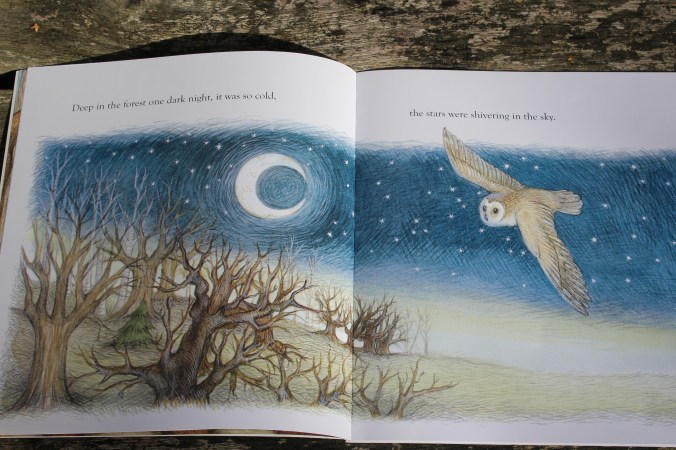
There may be stars out there that would guide us, if we looked.

What might your stars be?

From The Bible Retold

They Followed a Star

Far away from Jerusalem, in a land to the east, wise men looked up at the clear night skies above the desert and saw a star rising.  For years they had studied the movements of the stars and planets, and they had never seen anything like this before.  They unrolled their charts and plotted its path.
“This means a new king has been born to the Jews!” they said to each other, as they gave hurried orders to their servants to prepare for a journey.
When these strangely dressed foreigners arrived in Jerusalem, they began to ask “Where is the one who has been born king of the Jews?” Troubled rumours spread through the city, for there had been no proclamation of any birth.
King Herod the Great’s advisors approached him nervously.
“Your Majesty, strangers from the east have arrived in the city. They are searching for a child who they say has been born King of the Jews.  They saw a sign in the heavens!”  Herod caught his breath, and turned white with fear. He had been given that title himself by the authority of Rome, building palaces and the great Temple to spread his fame.  What kind of king was coming to challenge him?
Then he asked his advisors “Where is the Messiah, the Anointed One, to be born?”  The scholars unrolled the scroll of the prophet Micah, and read out loud:
“Bethlehem will no longer be
the least important of the towns.
For from it will come a leader
who will rule my people Israel
like a shepherd-king.”

“Bethlehem, eh?” murmured Herod. He gave orders for the wise men to be invited to the palace.  He listened to their tale of the star with keen interest, nodding and smiling as if he were delighted at the news.  He told them all about Bethlehem.  “Go and find the child, then please send a message so I can join you in your worship.  What wonderful times these are!” Herod hid his crooked smile.
As the wise men set off from the cool marble and mosaics of the palace, they looked up at the sky once more.  And there was the star, guiding them to Bethlehem.  They followed, and found the child with his mother, Mary.  She was astonished to receive such guests – who bowed low, and spoke of her son with reverence, and unwrapped precious gifts to lay at their feet.

She unclasped the caskets one by one.  The first shone, it was full of gold.  The second opened to a rich, sweet smell.  “The smell of the Temple,” Mary murmured to herself.  It was frankincense, used in worship. The third contained an earthy, dark, resin.  It was myrrh, more valuable than gold, used in burials, and for healing.  Mary looked up at her visitors, and thanked them for these extraordinary, extravagant gifts as the smell of the incense and the myrrh hung in the air about them.

The wise men did not send word to Herod in Jerusalem, for that night, they were troubled in their dreams about him.  They paid attention to the warning, as they had to the star.  So they slipped away, avoiding the city, to cross the desert once more.

the-magi-konrad-witz

The Adoration of the Magi, by Konrad Witz

And from Prayers and Verses

Gifts

Lord Jesus,
The wise men brought you gold:
Let us use our riches to do good.

The wise men brought you frankincense:
Let our prayers rise like smoke to heaven.

The wise men brought you myrrh:
Let us seek to comfort those who are sad and grieving.

Let there be little Christmases
throughout the year,
when unexpected acts of kindness
bring heaven’s light to earth.

What can I give Him,
Poor as I am?
If I were a shepherd
I would bring a lamb;
If I were a wise man
I would do my part;
Yet what I can, I give Him –
Give my heart.
Christina Rosetti 1830-1894

Love came down at Christmas,
Love all lovely, Love Divine,
Love was born at Christmas,
Star and Angels gave the sign.

Worship we the Godhead,
Love Incarnate, Love Divine,
Worship we our Jesus,
But wherewith for sacred sign?

Love shall be our token,
Love shall be yours and love be mine,
Love to God and all men,
Love for plea and gift and sign.
Christina Rosetti 1830-1894

From Frederick Buechner:
“Listen for Him

The question is not whether the things that happen to you are chance things or God’s things because, of course, they are both at once. There is no chance thing through which God cannot speak — even the walk from the house to the garage that you have walked ten thousand times before, even the moments when you cannot believe there is a God who speaks at all anywhere. He speaks, I believe, and the words he speaks are incarnate in the flesh and blood of our selves and of our own footsore and sacred journeys. We cannot live our lives constantly looking back, listening back, lest we be turned to pillars of longing and regret, but to live without listening at all is to live deaf to the fullness of the music. Sometimes we avoid listening for fear of what we may hear, sometimes for fear that we may hear nothing at all but the empty rattle of our own feet on the pavement. But be not affeard, says Caliban, nor is he the only one to say it. “Be not afraid,” says another, “for lo, I am with you always, even unto the end of the world.” He says he is with us on our journeys. He says he has been with us since each of our journeys began. Listen for him. Listen to the sweet and bitter airs of your present and your past for the sound of him.”

~ from The Sacred Journey and Listening to Your Life
The Little Christmas Tree and Mary’s Song

IMG_0752.JPG

IMG_0755.JPG

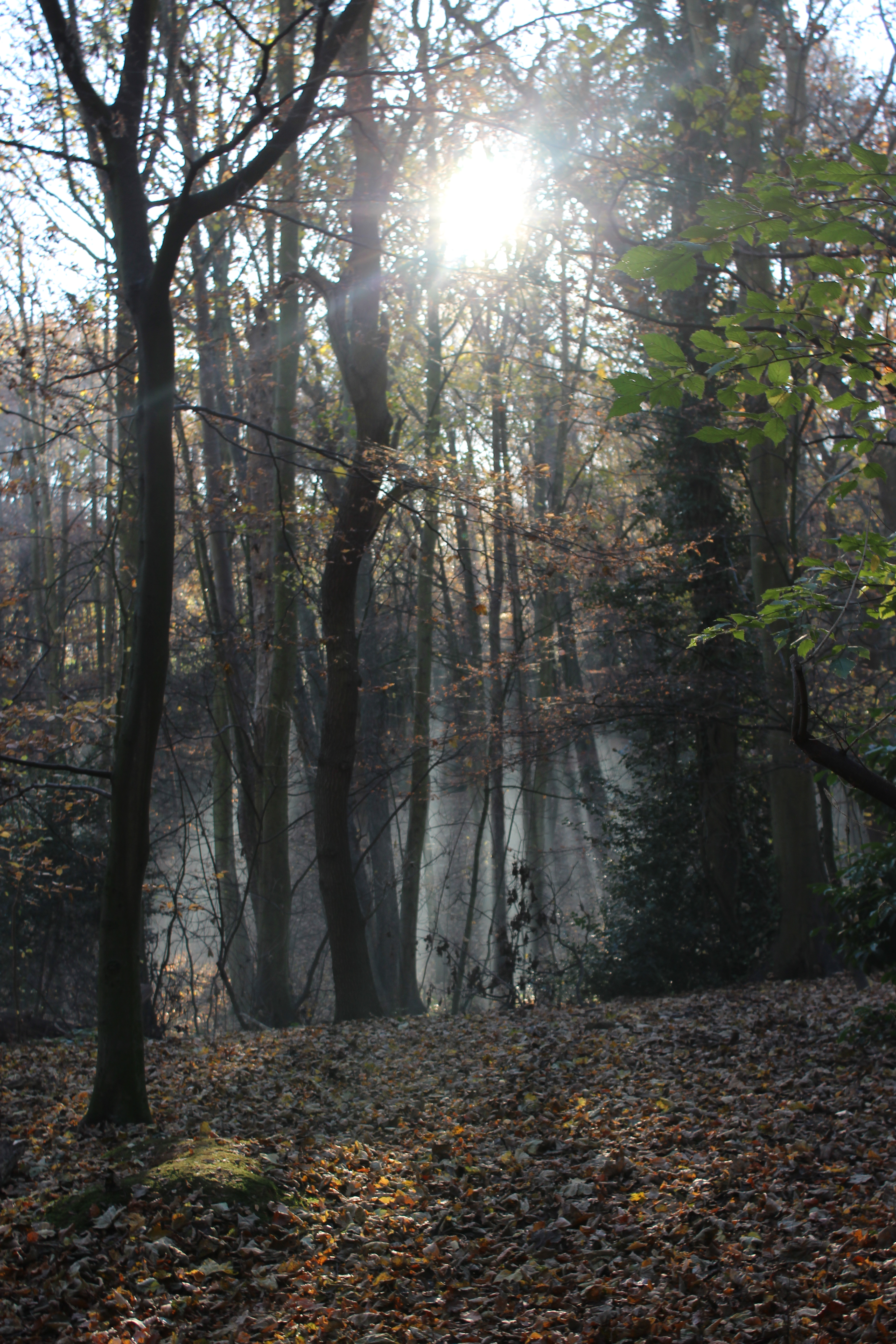
Today was the first really frosty day of the winter,  so I took my camera out for a walk with me, through the woods to the river.  As I walked, I was thinking about the story of The Little Christmas Tree, and how it connects with the story of Mary, mother of Jesus.  It had been on my mind since going to a talk by Rowan Williams at Grundisburgh Church (you can listen to the talk here , it is well worth listening to).

The Little Christmas tree is not strong and proud, thinking itself important.  It knows it is smaller than the other trees, and far less imposing.  What it does have to offer is shelter, hospitality, for the small animals and birds who are blown about in the storm.  It also has a song to sing, a lullaby, at which “even the wind hushed to listen”.

Early in her pregnancy, Mary escapes from the storm that is brewing about her, to visit her cousin Elizabeth, who offers her refuge, caring for her as she shelters her growing child.  They, two women with unexpected pregnancies, offer the profoundest hospitality to each other, that of love and acceptance. On her arrival, Mary pours out her joy in a song traditionally called The Magnificat

Here it is from The Bible Retold

I’m so full of joy my spirit is dancing
before God, my Lord, my Saviour.
God did not turn away from me
because I am poor, and now
I will be called blessed by
all the generations yet to come
God, the great, the holy,
has done so much for me.
God brings down the powerful,
but lifts up the weak.
The well fed are empty,
and the table of the hungry
is piled high with good things.

God looks at us with kindness,
giving hope to the hopeless,
caring for those who trust him,
remembering his promises to our people.

You can read Luke’s account here

And from Prayers and Verses

O God,
be to me
like the evergreen tree
and shelter me in your shade,
and bless me again
like the warm gentle rain
that gives life to all you have made.
Based on Hosea 14:4-8

Let there be little Christmases
throughout the year,
when unexpected acts of kindness
bring heaven’s light to earth

Earlier this year we spent a few nights in Canterbury, and made evensong at the Cathedral part of of daily practice.  It was as glorious as you might imagine!  One thing that made a profound impression was hearing Mary’s song, the Magnificat, every day.  It felt a powerful reminder how God does not favour the rich, even in the richest of cathedrals, but the poor.  It helped me to see the homeless, those lacking shelter, on the streets of Canterbury, it helped to soften my heart.  I picked up a stack of gift cards from various cafes to pass on to people, after I had sat with them a little and asked them their names and their stories.  A very small gesture, I know,  but perhaps a beginning.

Cold nights make me think of those who have no shelter.Perhaps it can be part of our Advent preparations to support those who do not have a room, and have to take shelter in the most inhospitable of places.  Some suggestions are below.

Hope into Action

Ipswich Night Shelter

Porchlight in Canterbury

Salvation Army

Shelter

Habitat for Humanity

christmas tree

The Little Christmas Tree – in stock!

christmas tree


This is the very first story I wrote after leaving school – and it is still such a favourite.  It is a Christmas fable of kindness and gentleness, beautifully illustrated by the very talented Lorna Hussey.

Last year, a new edition was issued, with very festive sparkles.  These don’t show up on the photo, but they are glittering away on my shelf as I write.

You can ask your bookshop to get it for you, if it’s not in stock, or you can order it online.
Amazon UK
and
Amazon USA

Last Christmas, the book sold well in the USA, so thank you very much for your support!


Sunday Retold – Small Seeds, from Luke 17

Sunday Retold

sowing

seed.jpg


IMG_0592

This coming Sunday’s gospel reading – Luke 17:5-7 – talks of tiny amounts of faith, faith as small as a seed, which can accomplish so much in the world. A little context is helpful here.  The verse before talks of the necessity to forgive someone, and to keep on forgiving them.   On hearing this, the disciples ask for their faith to be increased.

It is a hard task to forgive, and maybe the disciples think they need vast amounts of faith to be able to do it. These verses are difficult to understand, to see how they hang together. Perhaps Jesus’ answer suggests that, if they have any faith at all, it is enough.  His story of the servant and the master may follow on from the same train of thought.  The work of forgiveness is an everyday necessity for the follower of Jesus.  Everyday work does not require special equipment, or a special reward.  Perhaps, if we are thinking about our life of faith in terms of reward, of payment, we have misunderstood something.

The Lord’s Prayer (11:1-4),  has already been recorded in Luke – forgive us, as we forgive. There, we begin to see how the flow of forgiveness works.  We need forgiveness, and  we need to forgive.  Our own forgiveness is not a static thing, a prize to be acquired.  Neither is forgiveness conditional, but, I believe, Jesus describes a process.   This is how it works – as a flow of forgiveness.  As we join in, seeking to pass on what we receive, we become more like Jesus.  He forgives, and so we are freed to. We find the courage and humility to ask for, and give, forgiveness. We both receive and give.  It is hard work for us, but it is the work we must do every day – like the work of the servants.

Seeds have tremendous capacity coiled within them.  Small as they are, they contain all that is needed for a new plant to grow.  It is all there, already.  Jesus often uses seeds to talk about the life of the kingdom.  They seem a perfect illustration.  So small, so unassuming, they need to fall to the ground and break.  Then we see that they are in fact  breaking open, bursting with new life, with a shoot and a root and a leaf ready to unfurl.

In The Bible Retold , I have the slightly longer version of the mustard seed from Matthew’s gospel.

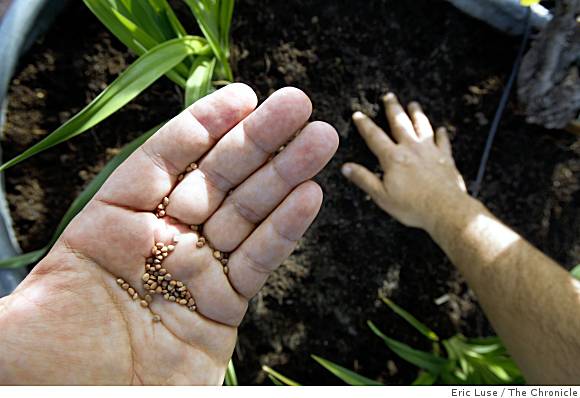
“How shall I tell you about God’s kingdom?  It’s like a man who digs down in the earth and plants a tiny mustard seed – it’s so small that a puff of wind could take it out of the palm of his hand.  Yet it grows and spreads into the largest plant in the garden, with branches where the birds can come and shelter.”

And here are some extracts from Prayers and Verses  to help us pray through this gospel reading.  We think of the smallness of the seeds of kingdom life in our own lives and the life of our community, and of the patience needed to wait and tend their growth.  We remember the seeds with gratitude, aware of their potential.  We think too of our own need for forgiveness, and remember it before we condemn another.

Help me to be patient as I wait for your kingdom
and your righteousness:
as patient as a farmer who trusts that the rains
will come in their season,
and that the land will produce its harvest.
Keep my hopes high.
Help me to pray to you and to praise you.


The Lord is good to me,
And so I thank the Lord
For giving me the things I need,
The sun, the rain, the appleseed.
The Lord is good to me.
Attributed to John Chapman, planter of orchards 1774-1845

I told God everything:
I told God about all the wrong things I had done.
I gave up trying to pretend.
I gave up trying to hide.
I knew that the only thing to do was
to confess.

And God forgave me.

Based on Psalm 32:5

We remember also that there are no small things in the kingdom.  Apparently small things have tremendous power.  They are enough.  What small things can you do today?

We can do no great things,
Only small things with great love.
Saint Teresa of Calcutta 1910-1997

“Don’t judge each day by the harvest you reap but by the seeds you plant.” Robert Louis Stevenson


With thanks to my homegroup – a small group who meet and pray and read gospels and sometimes cry and always laugh together. Sowers of seeds, all.

Publication Day – USA and Canada

IMG_0609.JPG

Publication day – it’s officially here!  Today’s the day these two books, The Bible Story Retold, and Prayers and Verses, are launched in the USA and Canada.

I would like to thank the many wise and kind friends who have helped me complete both of these books – they grew out of the life of a community, and I hope they will nourish communities in their turn.Thank you to all who have talked through ideas, lent me books, answered historical questions, entered into discussion on many subjects, and shared tea and prayer with me.  I appreciate it so much – as I also appreciate the long-distance, virtual community we are developing online.

I hope these books will be of use, both as individual texts and together .

I hope they will help youngsters, families, and churches share the wonderful stories of a people discovering the love of God. I hope they will be a blessing to many.

Here is a little snippet from Prayers and Verses

In all my thinking and speaking and doing
this day,
Help me be loving,
help me be peaceful,
help me be kind.

Sunday Retold – the Lost Sheep and the Lost Coin

I am trying something new – Sunday Retold. I hope it blesses your weekend.

andreaskevington's avatarAndrea Skevington

Welcome to Sunday Retold – stories and prayers based on the set readings for the week.  I hope it may be of help to you.

Many churches around the world listen to the same readings together, following the patterns in the Lectionary.   Quite often, there is something in The Bible Retold, or Prayers and Verses, that fits.  Sunday Retold is an occasional series where  I shall try to share those things with you.
If you are part of a community which follows these readings, they may be of use to you in your preparation for Sunday.  You may find something for All-Age Worship, or work with youngsters or not so youngsters, or in some other way. If you are not, I hope you will find something to think about, something to help, just the same.

Please feel free to use these extracts, and please say where you got them from!

View original post 624 more words

Day of Prayer for Creation – a Parable


IMG_0171.JPG


IMG_0174.JPG


IMG_0178.JPG

IMG_0167.JPG

Photos of a walk taken near Wandlebury Ring and the old Roman Road, Cambridgeshire

September 1st is a day when we make Creation the focus of our prayers, knowing that others around the word are doing so. It is the first day of the Season of Creation, which ends on October 4th.  As I was praying for our hurting world, the story below came into my mind. I hope it may help you, as it has helped me, focus my prayers with urgency, and consider how I can live in a way which respects the beauty and glory of Creation, and the love of God for it all.  I have found, over recent years, my eyes and my heart have been opened to both the pain and beauty of the world around me, and the many ways the natural world is honoured in Scriptures, particularly in the prophets.

Jesus invited us to consider the flowers of the field, and the birds of the air, and learn from them the heart and mind of God.

If it helps you, please feel free to use and share it, saying that you found it here.


The parable of the good craftsman

Once there was a craftsman who had two children. As you might expect, he had built a beautiful house out of seasoned wood, with wide windows that looked out over his lush green fields, his flocks and herds.  He had made fine, carved furniture for his house, and he had smiled when he made it, and said, “That’s good!”  He had made beautiful plates and cups and jugs out the red clay near his house, he had smiled when he made those, too, and said, “That’s good!”  He had made a sheepfold to keep his flocks safe, and smiled, then, too.  In fact, all that was around him was good and flourishing and abundant, and as he looked at it all, he laughed out loud and said, “That is all so good!”

The day came when he needed to go on a journey, as the people in these stories often do.  He thought, “My children are old enough to be left in charge now.  They have watched what I did, some of the time, and I have told them how good it is.”  And so he left, and the children looked around, and they, too, saw that it was good.  So good, in fact, that they started to think how much it was all worth.  So they sold the furniture, and the plates and cups and jugs, for a fortune.  They were made by a master craftsman, after all.  The plastic ones they bought to replace them were good enough. They looked at the lush green fields and thought, “We could rear more animals in pens.”  So they did: twice as many, three and four times even, the poor creatures.  They sold the pasture they no longer needed, and a factory and a car park grew there, large and grey and ugly.  The water from the well their father had dug became bitter, but they bought water in bottles with all the money that they had made.

Then, the time came for the father to return.  As he drew near the house, he noticed the trees along the road were withered and dying, and his smile left him.  He came across a bird trapped in plastic that blew across the fields, and he set it free.  Then, near the house, he found a thin child sitting by the side of the road.
“What is the matter?” he asked.
“I drank water from the stream that flows from over there, by that factory.  It tasted bad. Now I’m sick.”  The father gave the child water from his own flask, and picked up the child to take home. He had herbs for medicine there.

But when he got even nearer, he could see that the factory was on his own land, and that where his own fields should be was all noise and smoke.  He could see the plastic rubbish spilling over from his own front garden, from where the flowers and the vegetables and the herbs had been.  He saw his own children, with grey, indoor faces, and said, “what have you done?”
“Father, we are so pleased to see you!  Come inside, we will bring you the accounts and you will see what we have made!”
“That is not the kind of making I intended you for!” replied the father. “And see, see this child, poisoned! How will you enter that in these books of yours?  What have you done with all that I have made – do you not know that I love it all?”


Some prayers from the first chapter of Prayers and Verses


Lord, purge our eyes to see
Within the seed a tree,
Within the glowing egg a bird,
Within the shroud a butterfly.
Till, taught by such we see
Beyond all creatures, thee
And harken to thy tender word
And hear its “Fear not; it is I”.
Christina Rosetti 1830-94


O God, enlarge within us the sense of fellowship with all living things, our brothers the animals to whom thou gavest the earth as their home in common with us.
Basil the Great c330-379


He prayeth best, who loveth best
All things both great and small;
For the dear God who loveth us,
He made and loveth all.
Samuel Taylor Coleridge 1772–1834


IMG_0713.JPG

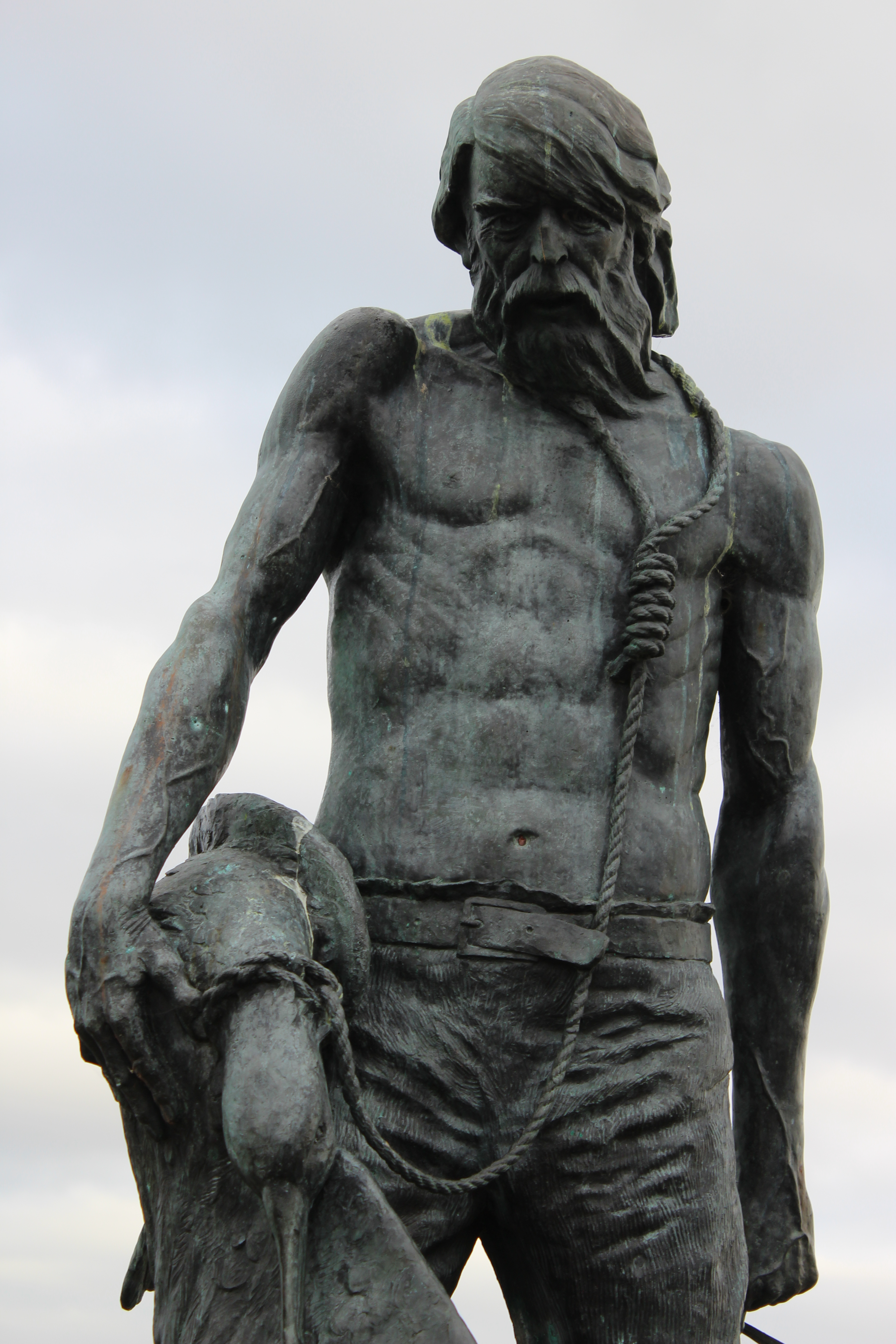
Coleridge’s Ancient Mariner – at Watchet, the place that inspired him.

prayers and verses cover