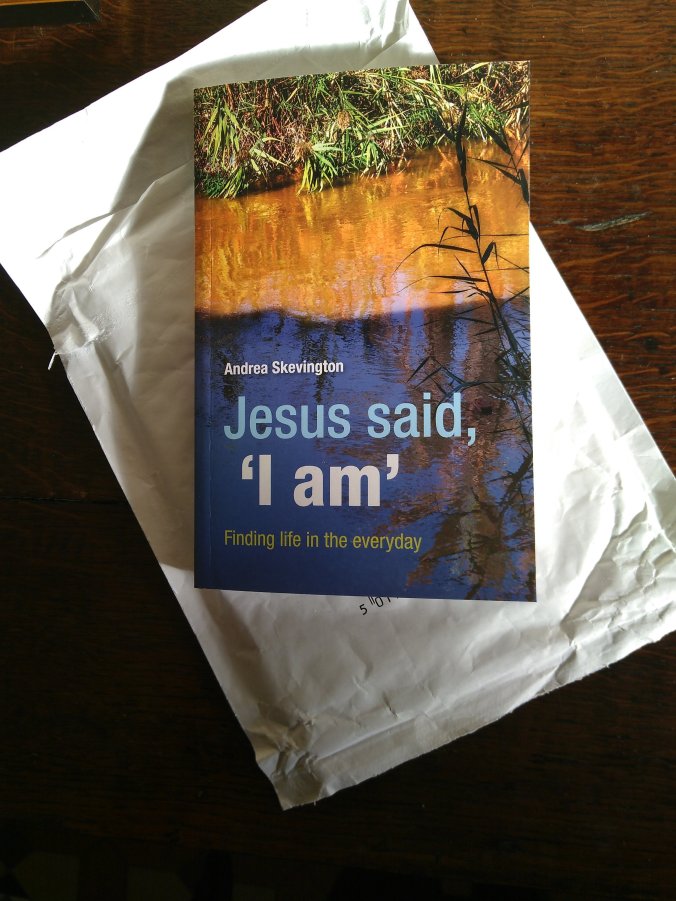
A book for Lent – Jesus said I Am …. getting started.

IMG_0452

Here in the UK, our late winter weather seems brutal.  This is not what we expect for February, and many people are beginning this season with the heartbreak of seeing their homes flooded.  This Lent, the Archbishop is encouraging us to take seriously the call to tend and care for the living earth.
WP_20171016_16_18_46_Pro
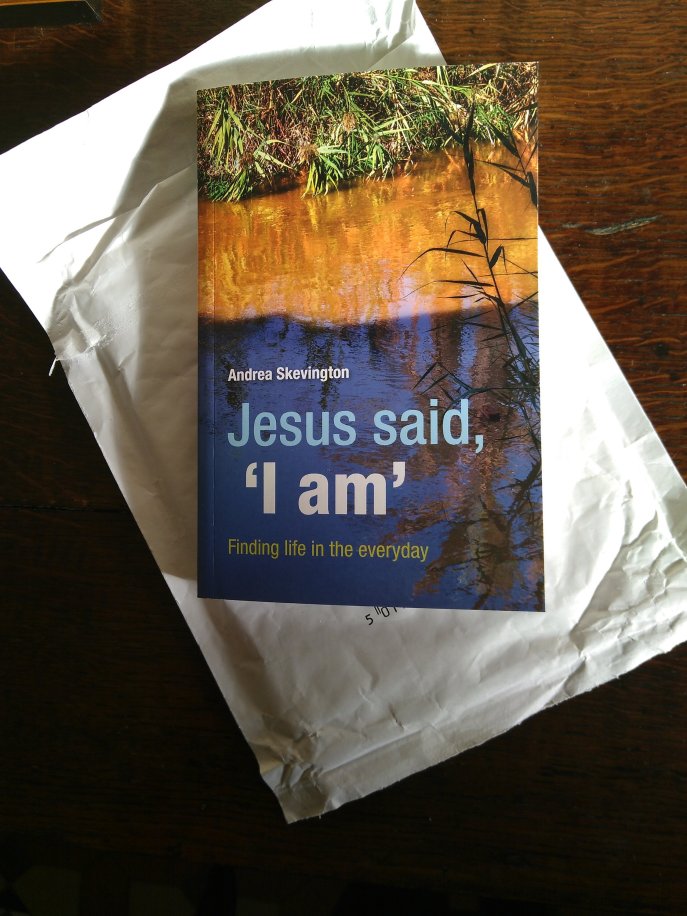
I am very pleased that various groups, churches, and groups of churches are going to use my book as guide through Lent, and, if you would like to follow, you can find a suggested programme here.
IMG_0790

Getting Started: Chapter 1, Moses and Abraham.  This is a shortish introductory chapter – you could fit it in the week before Lent, or as an extra piece of reading as Lent begins.


IMG_0871.JPG
That means that this week is a good time for me to share with you a little of the first chapter – I am: Moses and Abraham.  It’s short, so I hope you’ll be able to include it in your readings.
Exodus 3:1-14


John’s gospel looks back to Moses’ ancient story, recording for us how Jesus called himself by this name – “I am”.  This name, which emerged from a burning bush so long ago, is one of the most identifiable features of John’s account. It resonated with his early readers and listeners in Greek Ephesus, and it stirs our imagination even today, millennia later.  Before we go deep into John’s account, and explore why that may be, we will look back to Moses’ story and see what we understand of this earliest “I am”.

…….

Nothing is wasted in God’s economy.  God used the rubbish – and the good – in Moses’ upbringing and his life as a shepherd.  He became ideally suited to his task.  As well as his circumstances and experience, God used his character; in this case, a sense of justice and an indignation at bullies.  What must have felt like failure and a downwards path was the place where Moses encountered God.

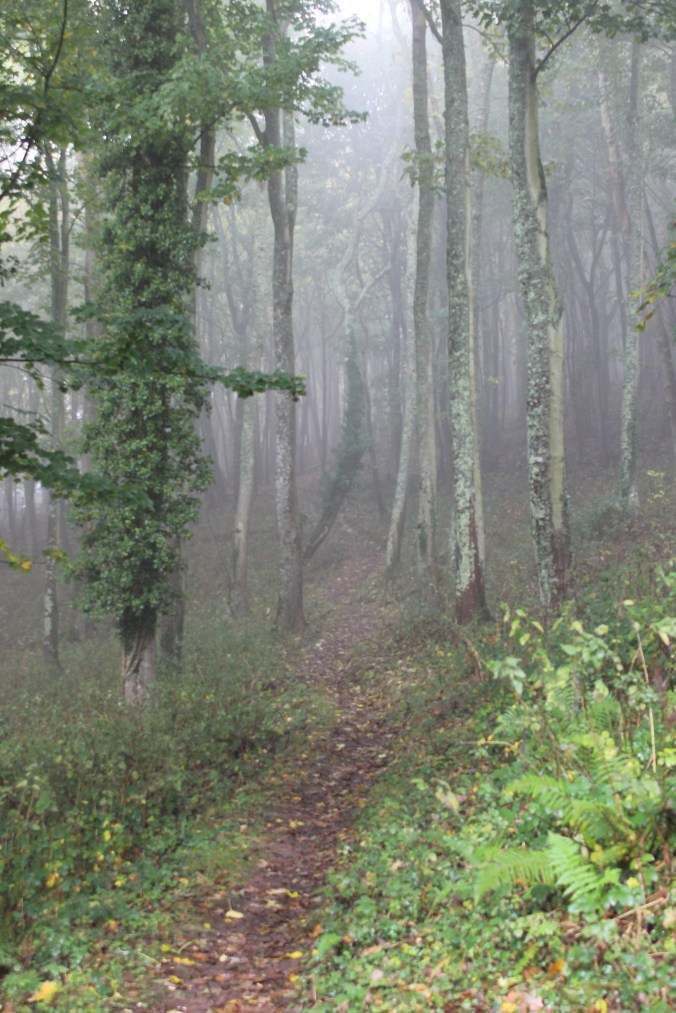
We do not know if he was seeking God when God appeared.  We do know that he was in the middle of his everyday, working life, and that God did something strange to arrest his attention, awaken his curiosity, draw him nearer.  Attention and curiosity can guide you, can awaken you to God in the burning bushes we pass every day.

Moses certainly didn’t seem to looking for a job, let alone a great mission.  It is easy to read his rather thin excuses and wonder why he spent so long arguing.  His unwillingness to respond seems to come from uncertainty.

Moses is uncertain about himself, and he is uncertain about God.

“Nothing is wasted in God’s economy” – can we live from this realisation?  Can we acknowledge that even very difficult things can be fuel for something better?
Can we work to eliminate wasteful ways of living?

And from the Reflection and Response section

Earth’s crammed with heaven,
And every common bush afire with God.
But only he who sees, takes off his shoes.
Elizabeth Barrett Browning

As you start your day, pray for open eyes to see where God may be at work, or may be seeking to catch your attention today.  Set off with open eyes, a camera and a notepad.  Record anything that draws your attention.  At the end of the day, mull over what you have recorded in prayer.  What did you see?

IMG_0866.JPG

If you’d like a copy, you can ask your local bookshop, or order online.

Here are a few suggestions:
The publishers, BRF

Amazon


img_20181130_114736372319885.jpg

Thank you for joining me in your reading.  There is more to come…..

Lent book – Jesus said, I Am

IMG_0452

IMG_0468

I’ve just come in from sitting on my bench in a sunny spot in the garden, reading in a warm coat, and listening to the rising birdsong, and looking at the first primroses, and the snowdrops.  The days are stretching out now, and it feels good to be outside, for a little while at least!

So, outside, I was thinking that Lent is on the way, and some of you may be looking for some reading, or a spiritual practice, for this time.  Many people seek to deepen their prayer, and commit to some physical discipline, and would like some company and support along the way. My new book might be what you are looking for.

Each chapter begins with a short reading from John’s account of the life of Jesus, which is followed by some reflections, and then proceeds to offer suggestions for further study, and prayer, and creative response, as well as possible practical and community actions. You may be part of a small group or spiritual community, who might like to read it together.  If you might follow it on your own, I intend to publish a little something every week on this blog so that we can take this walk together, and keep each other company here.

IMG_0790

It might help you to see how it would work, so, below you’ll find a suggested calendar of how we could proceed – although of course it’s entirely up to you.

Getting Started: Chapter 1, Moses and Abraham.  This is a shortish introductory chapter – you could fit it in the week before Lent, or as an extra piece of reading as Lent begins.

The woman at the well: week beginning Sunday 3rd March 2019.  Ash Wednesday is 6th March this year.

I am the bread of life: week beginning 10th March.

I am the light of the world:  week beginning 17th March.

I am the good shepherd, I am the gate for the sheep: week beginning 24th March.

I am the resurrection and the life: week beginning 31st March.

I am the way, the truth and the life: week beginning 7th April.

I am the true vine: week beginning 14th April, Holy Week.

I am he: Maundy Thursday, 18th April, or another day this week.

It seems to fit well, I hope you agree.
If you want to find out a bit more about the book, there are extracts elsewhere on the blog, for instance here and here.

You can order the book from any bookshop, or follow the links above for online ordering.

This could be good!

img_20181130_114736372319885.jpg

Poem – Pulling down trees

IMG_0855.JPG

IMG_0857.JPG

IMG_0861.JPG

Last year was hard on a beautiful tree in our garden – the late snow, followed by drought, killed a cotoneaster that gave us shade in the summer.  The bees loved its blossom, and the birds came in late winter for the berries. We had fieldfares and redwings hungrily stripping it when the fields froze.  And another tree too, a cedar, that was rather cramped in, died in the drought.  It had lovely grey green leaves, and was a favourite perch of the pigeons who watch for food.

So this poem is a tribute, a thank you, to the trees.  I was intending to write about both, and gave it the title I did because I pulled on the rope that brought down the cedar, but it was one tree that ended up filling the space.  I’ve kept the title, in a kind of echo of another poem, Pulling up trees , as it seemed to work for this one too.

The garden looks so different without them, and I couldn’t bear to have the cotoneaster taken out completely right away.  I wanted something to remember it, and some time to adjust to the loss of it.  I’ve been thinking of replacing it with an apple tree or two, to echo the shape, and the bark, and the blossom and fruit.  I still may plant an apple, but, on clearing around the base, we found there was already something new growing, ready to take advantage of the light and the open space.  So, we’ll see.  The garden has its own plans.


Pulling down trees

Dark now, the chainsaws growl on
under lights, taking down
the spreading tree I loved,
with its blossom and berries,
its deep shade in summer.
Full of birds it was,
its arched branches
chattering with life.

They leave the dead trunk behind,
for now, for remembrance,
for that wild rose to climb.

Tomorrow, when the sun rises,
I will see how bare the sky looks
without it,
how wide, how open the space.
How light.
And I will see, too,
at the base, sheltering, a
bending sapling,
holm oak,
already growing.
Such a gift,
always,
there is a gift.


img_0863

American Rumi

Thank you Poem Elf for this tribute to a poet whose poems are “fires for the cold, ropes let down to the lost, something as necessary as bread in the pockets of the hungry”

poemelf's avatarpoem elf

To the mountain of tributes to the great Mary Oliver, I add this little pebble.

In a world with so many hysterical people running loose, shouting and fighting and festering outrage, I miss her. Or I miss the idea of her, the poet walking along the shore in her barn jacket, quiet and alone, observing. This wise chronicler of grief and joy, confusion and discovery, this plain-dressing, plain-spoken witness to the extravagant beauty of the natural world, this translator of the unvoiced spiritual impulse, this New England gal, our very own American Rumi—is gone, alas. Fortunately her poems are here to stay. She’ll be read for ages.

The poem below is not one of her greatest hits, but I’ve been thinking about it since I came across it. Like so many of her poems, it’s planted a seed in my soul that has taken root.

This Morning

by Mary Oliver

View original post 161 more words

Poem – Throwing sticks for the Black Dog

Today is the day some call Blue Monday – the most depressing day of the year.
Here in Suffolk, though, we have had some sunshine, and the frost has sparkled, so it’s less gloomy here – at least meteorologically – than it has been for weeks.

I thought I’d share this poem with you.  Churchill called his depression his Black Dog, and it seems a good name for it.  I have tried to express the care and nurture we wish we could give ourselves, and those we walk with, when we notice the Black Dog is beginning to sniff around.  Those gentle nudges towards the things that used to bring life and joy, in the hope that they will again. I hope that has quite a different feel to injunctions to pull up your socks, or whatever.  It’s more a hope of holding on to the capacity to notice what does you good, and to keep on doing that, even when you don’t feel the good being done.

I hope it is a simple and gentle hand to hold.

The Blurt Foundation offers compassionate support resources online, as do many other organisations.

wp_20170114_10_57_06_pro

Throwing Sticks for the Black Dog

When I’m walking, I pick up sticks,
they feel rough and dry in my hand.
I have been collecting them for a while,
just in case.

And that black dog, well, can you see him?
Is he walking with us –
sloping through the undergrowth?
Or there, breathing at our heels?

I will throw some sticks.
Maybe he will turn playful,
maybe he’ll run after them
and not come back.  Maybe.
Maybe he’ll leave us alone for a while.
I can try.
Here are a few I have gathered:

Beauty, any sort of beauty
that takes you unawares
so the mind halts in its circling tracks.
Green beauty of growing things,
beauty that comes from the human
heart and mind –
words that build castles in the air.
Look, there they are!

Light, and the patterns it makes
through these leaves,
and darkness, when it is soft,
when, awake at night,
sitting by an open window,
I hear the owl – can you hear it?

Movement and prayer, together,
if movement and prayer remain possible.
Good food, that grows in the earth,
its colours and smells as I chop, chop.
Friendship, and kindness –
either given, received, or witnessed.
Love.
The memory of good things past,
the faintest trace of hope for
good things to come.
For good things may come.

And so, I carry this armful of sticks,
ready to throw – ready to give away –
like this,
and this,
and this.


img_0682

img_0773

Here is a link to my poem Sorrows

Publication Day! Jesus said, I Am

img_20181130_114736372319885.jpg

The day has arrived!  If you have ordered a copy, it should be on its way to you – online retailers dispatched it yesterday.

Thank you for your kindness and support.

Another little snippet, this time from Reflection and Response:

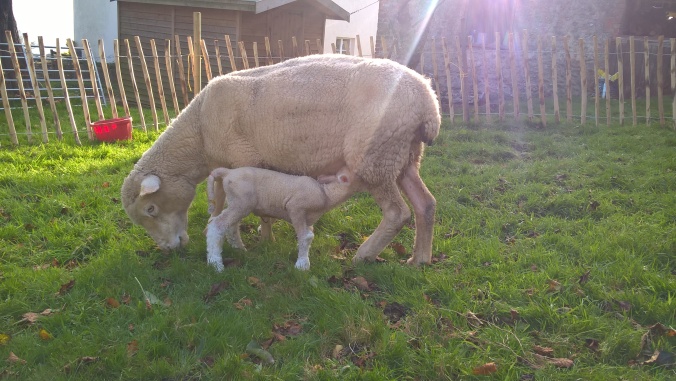
Good Shepherd, you know what lies before me today.
Help me to hear your voice, and remain close to you.
Guide me beside still waters, keep me at peace.
Nourish me with your presence, let me have enough to give.
Let me follow you this day, and always.


If you’d like a copy, you can ask your local bookshop, or order online.

Here are a few suggestions:

The publishers, BRF

Amazon


WP_20171016_16_17_36_Pro

Jesus said I Am – finding life in the everyday….. Light

Just a few days to go now until the launch on Friday!

So, here is another snippet.  This one draws on a talk I gave a few years ago, the Sunday after Easter, when this memory seemed to speak of resurrection, of new life for things that were broken.  Beauty can be made out of even the most unpromising materials.

It tells of how we went to Wells Cathedral, and how the stained glass in the Lady Chapel was made of thousands of broken fragments, gloriously put together, after the windows had been destroyed centuries before.


They were a vibrant kaleidoscope of shape and colour, exuberant and abstract, scattered with recognisable pieces of face and clothing.  But this was nothing to the beauty of the light that poured through them, for they turned the morning light to wild splashes of colour, transforming all it touched – all that old stone and wood and metal – to vibrant life.

…….

All those broken pieces, all those jagged edges, all those lost pictures were put together in a new way, transformed into something glorious.  Something new was made out of the discarded, useless pieces.  And the light of the morning sun poured through them, making everything within shine, lit up with glorious colour.

I saw a parable in this glass, a kingdom story of the new creation.  We, broken and discarded and small as we may be, can be held up to the light…….
Christ, in whom all things hold together, can indeed hold us together.


Wells-Cathedral-5492.jpg


If you’d like a copy, you can ask your local bookshop, or order online.

Here are a few suggestions:

The publishers, BRF

Amazon

img_20181130_114736372319885.jpg

Jesus said I Am – finding life in the everyday -The woman at the well

It’s only a week till publication day – 18th January.  It is a strange that these thoughts that have been circling round my head for quite a few years now, will soon be released, to make their own way in the world, launched. They will have different work to do then, and will be enriched by the responses of those who read them.

I’ve already shared with you some of my thinking on this chapter in the Sunday Retold series – a while ago now.  You can read that here.  If you do, you  will find some suggestions which have become items in the Reflection and Response section of the chapter, and get a flavour of that, too.

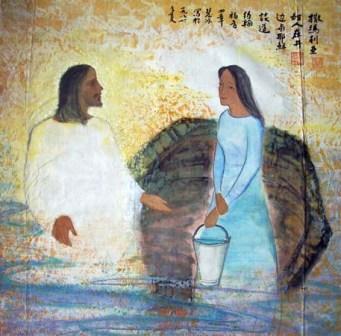
Although we tend not to notice in our translations, it seems to me very significant that the first time John records Jesus saying I Am is here, in Samaria, to someone outside our usual narrative of God’s favour.

So, here is a small snippet from the story of the unnamed woman who met Jesus in the heat of the day.

overflowing_glass_5


Perhaps she will come to see that Jesus is the gift, and he has living water. We are going deeper now.  Living, life-giving, flowing water in a hot land, to a parched and weary soul, is life itself.  It is a daily necessity and a joy.  We know that in John, there is often an association between water and Spirit.  Jesus’ previous encounter, with Nicodemus, reveals that.  The Spirit can be to us as water on a parched land, softening, enlivening, refreshing and freeing the seeds locked in dry husks, so they grow and flourish and flower.

……..

This encounter, which stared with a request for water, has become the source, the spring, of transformation that changed a whole community.  Jesus gives value to a person, and to a whole people, who were despised.  Here, in the heat of the day, they were offered fresh, life-giving water.  And they drank from this new well


samaritan-woman


If you’d like a copy, you can ask your local bookshop, or order online.

Here are a few suggestions:

The publishers, BRF

Amazon


Jesus said I AM – finding life in the everyday ……… Bread

Publication date is nearly here!
Friday 18th January is the day.

Thanks so much for your support and encouragement.

I thought I’d share with you a few snippets from the book, starting with something on Bread.

bread


And, so, the people all ate.  There was enough.  One of the many things this sign does is take our natural fear of ‘not enough’ and offer God’s ‘enough’ instead.  We find it hard to be generous when there are only a few small loaves and fish, and so many hungry people. With Jesus we see a picture of what it means to shift our perspective, to reframe our notions.

…….

What if we began seeing what we had – not in terms of what it was not, but in terms of what it was? Of seeing things not as our resource, but as a kingdom resource? This is food, these people need food, that’s what we’ll do – give.  Of course, the rational counting and measuring parts of our minds are not satisfied with that, and we are grateful for the stock control systems and emergency relief manages who count well enough to make sure all can be fed, but perhaps this is a different kind of lesson: one that turns our minds from what we see to a God of abundance.  Perhaps even this small act of generosity is magnified, amplified by a God who loves and longs to be generous.  What if each small act in the direction of goodness has consequences beyond our imagining?

….

And so, we see what Jesus does with the little he has been given by a child: he takes it in his hands, gives thanks, and then gives it away.


img_20181130_114736372319885.jpg

If you’d like a copy, you can ask your local bookshop, or order online.

Here are a few suggestions:

The publishers, BRF

Amazon


I’ll share a few more snippets as we go along!

barleyfield