Retold: Moses, the rescuer


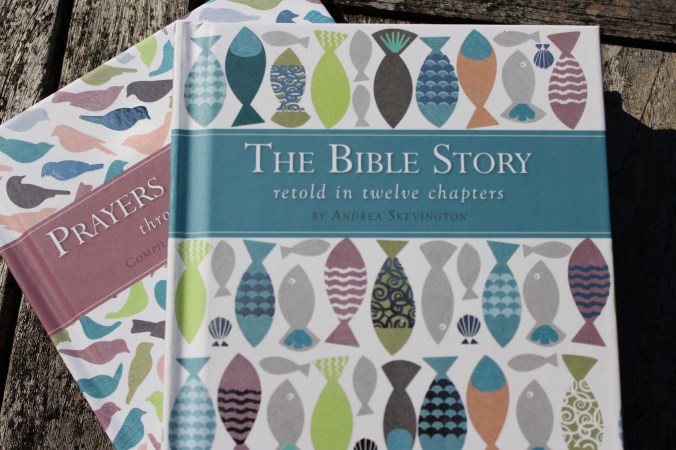
candles_flame_in_the_wind-otherI’ve been sharing with you an emerging series of poems drawn from the first chapters of Exodus, in the Hebrew Scriptures.  I am finding they help give me a way of thinking about our own difficult time.  Sitting alongside those, I’m writing some posts which tell the story in prose, drawing on my book, The Bible Story Retold.

This next fragment falls in between two more well-known stories – On the banks of the Nile, and The Burning Bush. You can read these by clicking on the titles.

It’s a powerfully revealing fragment.  It shows Moses, perhaps becoming aware of the injustice his people were facing, taking violent – indeed fatal – action to defend them. This character trait of rescuing, or establishing justice, is further revealed in his actions defending the young women at the well – but this time, the incident ends with being received into Jethro’s family, and marrying one of those young women.  There seems to have been some progress in how Moses uses his impulse to defend and rescue.  It’s so easy, in rising up to oppose injustice, to become a mirror – demostrating the same behaviour as that which we might oppose.  Part of this narrative’s purpose is to show us different ways good ends can be accomplished.  And they begin with a change in us, a change in how we see, and understand the world.  This one will begin with a powerful encounter with the mysterious I Am of the burning bush.

WP_20171016_16_18_46_Pro

I explore this a little more in the poem, Moses, and the Burning Bush, which you can read here.

Now, back to the prose narrative……

IMG_0609.JPG

From Exodus 2-4

Moses never forgot his own people.  He could not walk among the carved colonnades of the royal palace without shuddering, for they had been built by the slave laour of his brothers and sisters.  Then, one day, at one of the great building sites, he saw an Egyptian beating an Israelite, and anger rose in him.  He came to the defence of the slave, but killed the Egyptian, and gave him a hurried burial in the sand.

“So this is how he repays our kindness to him!” roared Pharaoh when he heard the news. “We brought him up as one of our own, and now he’s fighting against us, on the side of those lazy slaves!”  When Moses saw Pharaoh’s anger, he ran to the desert, the land of Midian, fearing for his life.

He came to a well and sat down, gasping and exhausted.  Soon, seven young women arrived to water their sheep.  But some shepherds tried to drive them away and take the water for themselves.  Moses came to the girls’ rescue, and helped them water their flocks.  The young women returned to their father Jethro, a wealthy herdsman, and told him what had happened.  Jethro welcomed his daughers’ protector into his family.  Moses married one of the girls and cared for Jethro’s flocks.  He learned the ways of the wilderness: where to shelter from a sandstorm, the best paths through the high places.

Then, one day, as the sheep grazed on the slopes of Mount Sinai…….

This is where the story moves to the moment of the Burning Bush.

And from Prayers and Verses

O God,
How long must I call for help before you listen?
How can you let this wrongdoing go on…
all the fighting and the quarrelling?
Wicked people are getting the better of good people;
it is not right, it is not fair!

I will wait quietly for God to bring justice.
Even in the middle of disaster I will be joyful,
because God is my saviour.

based on the book of Habakkuk


This post draws on the Sunday Retoldseries.

Poem: Moses and the Burning Bush – Exodus Poems 4

I have continued to turn the Exodus story over in my mind, as one that may help us as we think about the multiple, colliding crises we face. I am finding it illuminating, as we consider how we might move out from the situation we find ourselves in, to the possibility of a more hopeful future. These meditations are forming the basis of a series of poems. If you would like to read the stories, you can do here.

You might like to read the other poems so far, and you can find the links here.

Poem: Pharaoh’s daughter, and the child. Exodus poems 1

Poem: God saw – and God knew. Exodus poems 2

Poem: Holy Ground, barefoot. Exodus poems

In this latest poem, I wonder what it must have been like for Moses, who started out so full of hope and promise, who so wanted to defend his people, to right wrongs, that he responded force against force, and killed a slavemaster. In fear, he ran, ran away from all he had known, he built a new life away from Egypt. Did he remember his brothers and sisters, did he despair of this system of oppression that he had been unable to change? It must have seemed so powerful, so resistant, too cruel to those he loved to even hope for freedom.

I wrote about Moses, and this encounter with God, in my book, Jesus said, I am – finding life in the everyday. You can read a little more about that, and some extracts, here, if it interests you.

WP_20171015_17_37_36_Pro

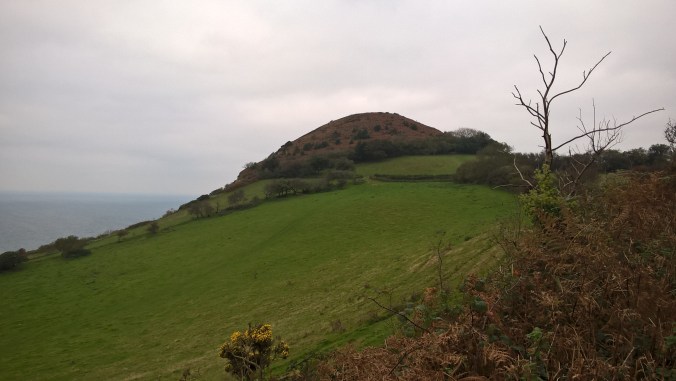
Walking down from Golden Cap, in the sunset dust of Storm Ophelia

What do we do, when it seems we’ve lost our chance to work for a more beautiful world? What do we do, when it all seems too fixed, too permanent ant, too big and powerful for us to make a difference?

Maybe we can see things differently, maybe our eyes can be opened to deeper truths, as the old ones crumble before us, and something new – something that was always there – begins to emerge.

WP_20171015_11_32_06_Pro

Moses and the Burning Bush

You stood on that dry mountain,
eyes narrowed against wind
and sand, scanning
the bright horizon,
looking for threat, or grazing
for those sheep.

Were you content to be a shepherd
now, Prince of Egypt?
Were you reconciled to this life
smaller than your dreams?
Did you think it was all too late,
too late to do anything
to help your brothers,
to help your sisters,
the slaves,
to reclaim your people?

Shepherd, with the bleating
of the flock about you,
did you dream still,
under the strong sun,
of what-could-or-should-have-been?
Did a new world seem impossible?
Or were you breathing
in this moment,
with the dust smell,
and the sheep smell,
and the plants thick with resin?

It was no dream,
what happened next,
no could-or-should-have-been,
that burning bush –
crackling, smoke smell,
burning, but not consumed.

In that moment you took
off your shoes, and learned a
name for God that is no name,
I am what I am.
I will be what I will be.

In a moment,
your reality peeled open,
revealing fire within,
the truth within,
giving you back
the discomfort of hope,
giving you back
your people,
and your way.

Poem: God saw – and God knew. Exodus poems 2

img_0212

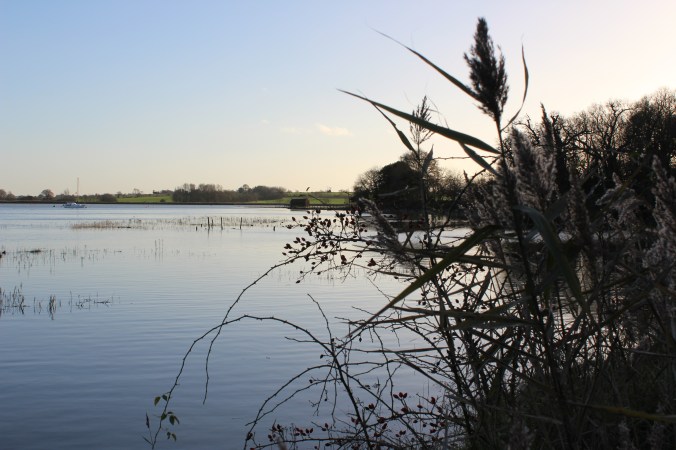
River Deben

This is the second poem I’ve written on these themes, drawing from the Exodus account of the life of Moses.  It carries with it many of the things that struck me as I was writing the first, Pharaoh’s daughter, and the child.  I have been thinking about how one group of people can be pitted against another, in fear, in believed superiority, and how, in this story, small acts of love and compassion begin the unravelling of this separation, and injustice. In particular, I have been turning over in my mind the idea that the unjust law of the Egyptians – all the Hebrew baby boys should be thrown into the River Nile – is so evil that it carries within it the necessity and means of its own overturn.  That this ark of rushes holding the baby Moses is one of the seemingly small means that begin the overthrow of an unjust system is fitting.

Once again, there are echos of the Gospel stories that tell of the beginning of Jesus’ life.  Tbe improbability, the vulnerability of a baby, cradled in less than ideal circumstances – a basket in a river, a manger in a stable – being so vital to the outworking of God’s love, challenges us in to how we think change for good might be accomplished.  Here, the urgency and reckless hope of a mother’s love, meets the compassion of a princess, and undermines an economic and political system which was cruel, and seemingly all-powerful. May we remember this, as we work for a more beautiful world.

My last post retells the story, and gives you links to the Bible passages.

But for this poem, what struck me was a few small verses at the end of Chapter 2.

During those many days the king of Egypt died, and the people of Israel groaned because of their slavery and cried out for help…. God saw the people of Israel – and God knew.

Once again, this story of emnity between groups of people, of inequality and injustice, carries warning and hope for our current situation.

What happens to any of us happens to all of us.
What might shift if we thought that was so?

wp_20161113_16_45_08_pro

Moon over the marshes at Walberswick.


God saw – and God knew   Exodus poems 2
During these many days,
the king of Egypt died –
that man who thought
himself a god, having
a god’s power of life
and death –
and God saw, and God knew.

Those living between walls
of cool marble,
dressed in linen,
making offerings to the gods,
those who floated down the Nile
while others laboured –
They thought, being rich,
being mighty, they had
the ear of God.
And God saw, and God knew.

During these many days,
those oppressed cried out –
those forced to labour,
those whose race was
feared, then despised.
They cried out,
and did they dare hope
that God saw, and God knew?

God saw and listened long.
Endlessly.  Through
many days, through
incessant lamenting,
God saw, and God knew.

So, I stand and ask, why?
why so long, those many days?
And will not soothe
myself with “perfect timing”,
or “plan”.  Under the
slavemasters’ whip,
such words sting.
And yet, God saw,
and God knew.

I lower my gaze.
Caught in the reeds,
there is a dark basket,
black as pitch,
that desperate hopeless hope,
that boychild cast by his mother
into the Nile, a loving reversal
of a cruel law –

and within that law’s dark heart –
an ark of reeds and pitch
woven tight of love –
with fists curled,
was one who would
overturn that cruelty.
A tiny child.
crying, hungry,
and alone.
And God saw,
and God knew.

Retold: On the banks of the Nile

img_0211

River Deben in Suffolk

Having shared with you a poem earlier, Pharaoh’s daughter and the child, I thought I might give you the story to read too.  This is from my book, The Bible Story Retold, and draws on the Sunday Retold series on the blog.

The retelling is in twelve chapters, and, at the beginning of each chapter, I allowed myself a bit more freedom to imagine what it must have been like for those living out the story, and to give some interpretation and inference to engage us with the big themes of each chapter.

One of the really powerful things about this Exodus narrative is how it tells the story of slaves, which is obvious, but we can overlook its significance.  Our history is famously told by the victors, the conquerors, the empires.  This one gives us an insight into long-ago lives whose story was not otherwise told.  Now, we can more easily listen to those on the edges, on the underside of current history, but the Bible is revelatory for this ancient insight.  It is a powerful narrative, which leans towards the powerless and those on the fringes, and hears their voices.


On the Banks of the Nile.

Jochebed and her daughter Miriam slipped out just before dawn.  They walked silently, shapes blending into the darkness. At every sound they stopped, afraid the slave mastrs might hear them.  They crept down to the green banks of the Nile, the great river that was the lifeblood of all Egypt.  There, by the trembling papyrus, they stopped and set down their load.  It was a tightly woven basket, a tiny boat, contaiing Jochebed’s three-month-old baby son.  She lifted the lid and leaned down to kiss him, splashing him with her tears.
Miriam said, “I’ll stay nearby and try to keep him safe….”
Jocobed slid the little boat into the reeds, and ran back to her cramped mud-walled slave house.  “May God protect and keep him!” she prayed.
She knew Pharaoh wished her son dead, along with all the other Israelite baby boys.  For the Egyptians hated the Israelites now.  The Egyptians had forgotten how Joseph had saved them from starvation many generations ago.  In Egypt, the Israelites had grown in number and strength, and the Egyptians looked at them with fear in their eyes.  So they made them slaves, but they could not crush them.
In his anger Pharaoh summoned the two midwives who delivered the Israelite babies, and gave them a terrible order:
“When the babies are born, let the girls live, but kill the boys.” The midwives bowed as they left, but they would not do such a terrible thing!  The baby boys continued to live, and grow strong.
Then Pharaoh commaned everyone.  Throw all the baby boys into the Nile!”

Miriam stayed by the Nile, hidden among the reeds near her tiny brother’s basket, and waited.  Then she heard the sound of singing, and saw the princess, Pharaoh’s daughter, coming towards the river with her maids.  Miriam hardly dared to breathe.  Would the Egyptians find her brother?  The princess and her attendants were so close now.  Miriam watched the princess take off her jewels and glide into the water.  It shimmered like gold in the early morning light.  Then the princess stopped.  She had seen the basket in the reeds, and sent one of the slave girls to fetch it.
Peering inside, the princess saw the baby crying. Her heart melted.  “This is one of the Israelite babies!” she said.  Miriam seized her chance.  She scrambled out of the reeds, and bowed down before the princess.  Swallowing her fear, she spoke.
“Your Highness, shall I find one of the Israelite women to nurse this baby for you?”
“Why yes, go as quick as you can!” For the baby was crying very hungrily indeed.  Miriam ran back home to get her mother.
“Care for this child, and bring him back to me when he is weaned.  I’ll pay you for your trouble!” said the princess, gently placing the baby in Jochebed’s arms.
Jochebed’s heart nearly burst with joy.  She had her son back! So she sang him Hebrew songs, the songs of the Israelites, and told him of thier God, and his promises, while he was a young child.  She prayed for him, and cared for him tenderly until it was time to give him up to Pharaoh’s daughter.  The princess called him Moses, and adopted him as her own son.  He grew up as an Egyptian prince, educated by the best tutors and trained to rule.

And from Prayers and Verses

Hope is a thing with feathers
That perches in the soul
And sings the tune without the words
And never stops at all

Emily Dickinson (1830-86)

IMG_0609.JPG

Both books can be ordered using the links above, or another internet bookshop.  If you have a local bookshop, they can order them for you.

Poem: Pharaoh’s daughter, and the child. Exodus poems 1

img_0212

The banks of the Deben, high tide

As I was coming to the end of writing the Lockdown Poems, a couple of things were tugging at my attention.  One was the thought of doing a series of poems on the I Am sayings, revisiting some of the prose and prayer from my book.  The other was the huge sweep of the cry for justice that is circling the world – the cry for racial, environmental, and economic justice.  One of the things the coronavirus crisis has done has been, as we’ve said before, to reveal painful things – to draw back the veil and show aspects of society that many of us have been fortunate enough to be able to overlook.

As I was looking at the origins of the I Am sayings – Moses’ experience with the burning bush – I was deeply struck by the relevance of the Exodus story  to our current world situation.  I would encourage you to read Exodus Chapters 1-3 to start with, if you can, and see what strikes you.  Many things opened up for me, and I intend to explore them imaginatively and prayerfully, inhabiting the story, and asking for wisdom. I hope I’ll return to the I Ams again, but for now, these matters seem too pressing to ignore.

We can see how the story of Exodus progresses.  It begins with forgetfulness.  Forgetfulness of the way Joseph, ex-slave, ex-prisoner, had saved the country from famine with his vision and good management, forgetfulness of how we are all interconnected, and bring gifts to our situation.  The Egyptians forgot, and were afraid.  Their enslavement of the Hebrew people is told as an act of weakness, not strength.  How that fear led to justifying the terrible law for the slaughter of baby boys – a story echoed in the Gospel here, where the baby boys of Bethlehem were killed, and Jesus’ family escaped to Egypt.  At the time of Exodus this was the known world’s richest and most powerful empire, and the process of unravelling that power and wealth seems to be begun within that unjust law. So contrary to all that is good and right in human relations was it, that it carried the seeds of its own undoing. And maybe that sheltering of the infant Jesus was, knowingly or unknowingly done, a kind of restitution.

In this story of Exodus, I’m powerfully struck how the action of one young woman changed nations. Her compassion was the point of turning. That is not to say that we measure our small acts of kindness by their global impact, or only do them if we feel there will be some kind of payback, but that this story reveals the hidden power of compassion, and can offer encouragement to us to not think better of our moments of better feeling, but to act on them – to reach out and help, offer what we can.  What those feelings and acts accomplish is, in many ways, not our business. We can offer them, release them, and what happens happens.  If we praying people, we can simply offer them to God, with no thought of future benefipayback. They can cease to be our own. Of course, we can try to be mindful of unintened negative consequences, but we seek to act from love and goodness independent of outcome for ourselves. For Pharoah’s daughter, if she survived to the time of the plagues and freedom for the slaves, this mercy to Moses may not have seemed such a good act after all.

The other thing which struck me forcibly was the fact that she acted from a place of safety, and privilege.   She did something that would have brought swift punishment if someone else had done it.  She seems to have used her safety almost without thought of the consequences, to help this one child.  We don’t know any surrounding information – what her attitude to her father’s law was before, or after.  All we know is this one thing about her. This one act.  Maybe it can encourage us to listen to one another, in different circumstances, to speak of our difficulties when we experience them, and to speak and act for others when they cannot do so for themselves.
And here is another thing our current crisis has revealed – deep wells of compassion and community, the capacity of people to act to help and support people they know, and don’t know.  The veil drawn back has shown us good, too. There is hope in this deeper reality.

The ending of this poem carries an echo of William Blake’s The Divine Image, which is incredibly apt for our current situation. It was published in 1789, and carries its message of equality in language of the time.  It’s a powerful read.

Songs_of_Innocence_copy_G_object_12_The_Divine_Image

There are major shifts happening in the world right now, and I am attempting to listen, to keep my mind open, to pray, and to understand, and to act.

AA037808

Taken from Exodus Chapter 2

Pharaoh’s Daughter, and the child.  Exodus poems 1

You named him Moses,
drew him out of
that small ark,
a precious cargo.
Out of the Nile-reeds,
where crocodiles wait,
out of the flood and the snakes
and the hum of mosquitoes,
out of the sentence of death
your father had passed.
In that moment, your heart responded,
the moment when you heard him cry
hungry, closed in the dark
and the silence
of his pitch-black basket,
in a moment, you reached out your hand,
and touched – not a slave-child,
but simply a hungry one, alone.

From your place, at your father’s side,
standing in his love for you,
you saved one small life
from his fearful stony heart’s rage,
from the might of law and empire.

Marvellous princess, you did more.
You paid a slavewoman wages,
you acted with justice and mercy,
you saw a child, and not an enemy.

And so you are remembered,
you are thanked by generations
yet unborn
For an act of kinship with one
from a feared race,
as golden Nile-waters
swirled and eddied and
rippled outwards, outwards
from the place where you stood,
shining in the light of dawn.
Mercy bore, in you,
the beauty of a human face.

Retold: Mary visits Elizabeth

For those who have joined this blog following the Lockdown Poems, here’s a small taste of something else.  Another occasional series here is Sunday Retold, drawing on my retelling of the Bible.  This – although not on a Sunday – is part of that series.

The-Visitation-56a1094e3df78cafdaa84c7b

Pascale Deloche

We often hear this story – of how, in the early part of her pregnancy, Mary visits her older, also unexpectedly pregnant relation – as part of the cycle of stories in the run up to Christmas. It is part of the preparation for the birth of Jesus.  But traditionally, now is the time it is remembered and celebrated, in keeping with the months.

It seems very appropriate that we should read of these two women supporting each other, and being moved by the power of the Spirit to speak, just at the time of Pentecost.  The Spirit is indeed being poured out on all, young and old, men and women.  These two are obscure, unimportant to those in power, on the edges of things, and we see, yet again, that is where God is at work.  Mary sees that too.  Her words are a real challenge, upending power, pride and privilege.  Regrettably, we need those words of challenge now just as much as we ever did.  Inequalities of race, gender and wealth are still a potent source of injustice.  Mary sees justice coming, though.  The Kingdom promised is one of justice, and hope.  We can work for that, as we pray for it in the Lord’s Prayer.

We pick up the story just as the angel Gabriel has told Mary what is to be, and how Elizabeth, from her own family, is with child despite her age….

Then Mary thought of Elizabeth. “The angel knew all about her – I must go to her.”  She got ready, and set off quickly for Elizabeth’s home in Judea to the south, near Jerusalem.

As soon as she arrived at the house, she hurried to Elizabeth and took her hands.  At the sound of Mary’s voice, the baby leaped inside Elizabeth, and the Holy Spirit filled her.  She understood at once what had happened to Mary.
“You are blessed among all women, and blessed is your unborn child!” she said.  “Why have I been so honoured? Why should the mother of my Lord God come to visit me?” Elizabeh laughed, and put Mary’s hand on her belly. “You see how my child leaps for joy at the sound of your voice?”

At last, Mary could say all that was on her heart.

“I’m so full of joy my spirit is dancing
before God, my Lord, my Saviour.
God did not turn away from me
becase I am poor, and now
I will be called blessed by
all the generations yet to come.
God, the great, the holy,
has done so much for me.
God brings down the powerful,
but lifts up the weak.
The well fed are empty,
and the table of the hungry
is piled high with good things.

“God looks at us with kindness,
giving hope to the hopeless,
caring for those who trust him,
remembering his promises to our people.”

From The Bible Retold

You can read the story in context in the first chapter of Luke’s gospel.

Mary’s song, the Magnificat, makes a powerful basis for prayer. Going through each part, holding it before God, allowing it to search you and being open to the possibility of being moved to change and to act, is a worthwhile and humbling way to pray.

It is widely said and sung in Christian worship.  There are many versions you can find online.  This one is Arvo Part’s setting.

As we think of those two women supporting each other, it’s good for us to think of ways we can continue to be present for one another, and listen and share lives, even when separated at this time. It’s good, too, to remember the slow growth of a child, how much patience is needed, as we wait and work and pray for the coming of the Kingdom.

img_0609


Poem for Pentecost, and some readings

Sharing again some readings, prayers and a poem, for Pentecost.

I gave a variation of this reading for  St Edmundsbury’s service, Catching the Fire.  You can watch the whole thing here.

andreaskevington's avatarAndrea Skevington

candles_flame_in_the_wind-other

Wind and fire – two of the ways people have tried to describe the Spirit.

As we approach Pentecost Sunday, I am sharing with you some readings and a poem.  Please feel free to use them if they help you, saying where they are from.

Firstly, a reading from my book The Bible Retold

From the fields it came: the first sheaf of barley cut for that year’s harvest.  It was carried high through streets crammed with visitors, and on to the Temple. And then the priest offered it to God, giving thanks for the good land, and for the gift of harvest. For that day was the celebration of the first fruits.  It was Pentecost.

Meanwhile, the disciples were all together, waiting.  Then, suddenly, it began.  It stared with sound – a sound like the wind – but this was no gentle harvest breeze.  This was a shaking and…

View original post 588 more words

Poem: Two Trees – Lockdown poems 5

IMG_0982

The next poem that came from this Lockdown is a little different from the others at first glance.  Once again, it was emerged on the page, and has had minimal tweeks.  I was intrigued to find it there.  Its subject is the trees in the Garden of Eden, and it asks tentative questions about human nature, and the human experience, which they raise for me.  I have wondered before why the fruit of the tree of knowledge of good and evil was prohibited, when so many religious systems seem very preoccupied with such knowlege.  I have wondered too how Jesus’ warnings against judging help us understand that, and balanced those warnings with the image of knowing a tree by its fruit, as he advises us to do.

I find it helps to allow the images – of trees, and fruit – to grow in our minds, and see what kind of shoots emerge. This is not a theological exploration, but a poetic instinct. Here,  I have been asking questions of myself, in a kind of uncertain echo of a chatechism, and allowed the questions to be there, partially or inadequately answered.  What if there is a choice, moment by moment – the fruit of the knowlege of good and evil, the fruit of life?  Might that have something to say to us as we seek to choose life, again and again?  Can we say yes to life, moment by moment, even in these moments?

IMG_0970

I don’t have two trees growing in the centre of my garden, but I do have this tree, whose early morning shadow delights me.  I hope you can make it out. The early light was tricky.  I thought I’d offer it to you to see if it might help give another image to add to the trees in this poem – a growing tree and its shadow.


Two trees – lockdown 5

Two trees grow in the midst of the garden; the tree of life and the tree of the knowledge of good and evil.   paraphrase from Genesis 2:9

What if we stand
in the middle of the garden,
choosing the wrong tree,
moment by moment,
again and again?
There they both grow –
tall, beautiful,
pleasing to the eye,
laden with fruit.

And we are drawn to one,
not the other, at least at first.
Wanting power to say things are
this, or that, the illusion of
control, wanting to judge,
wanting to be right.

Do we need to lay all that
hollow fruit aside in order
to eat from the tree of life?
I think so, yes,
Maybe empty-handed is better.

And what if we had made
a different choice
from the beginning?
Chosen that other tree,
unprohibited,
free.
What indeed!
And yet we did not,
and ever since, we have
hungered for its fruit.

And can we choose differently
now, each day, each moment?
I think so, yes, I think that we can
set down the fruit that
sours and spoils,
and choose life
again, and again,
and again.

Sunday Retold: The road to Emmaus

I thought I’d share with you a reading from my book, The Bible Story Retold, and something from Prayers and Verses, as we continue thinking and praying through Easter this year.  As with all the Sunday Retold series, I hope it will be of help for all ages, wherever you find yourself.

the-road-to-emmaus-daniel-bonnell

The road to Emmaus by Daniel Bonnell

Things often emerge while walking.  Conversations can be deeper.  These two disciples, possibly husband and wife – Mary, wife of Clopas was at the foot of the cross – were leaving Jerusalem, their world fallen apart, talking over all that had happened.

Maybe, when we are out walking, we can be open to noticing the ways we need to talk through our fears and sadnesses, and then, be open to the possibility of a new perspective, a new vision, a new life.  It’s worth noticing how Jesus gave them time and space to tell them their story from their own perspective, and then, how he invited them into a new way of looking.

On the road

Two of Jesus’ followers left Jerusalem that day, walking to the village of Emmaus.  While they walked, they began to talk about all that had happened.  And as they shared their grief and bewilderment, Jesus joined them and walked with them. But they did not know who he was.
“What are you talking about?” he asked.

They stopped, and stood still on the white, dusty road. “Are you the only one from Jerusalem who doesn’t know what’s been going on?” said Cleopas.
“Tell me!” said Jesus.
“There was a prophet called Jesus of Nazareth, a true man of God. But the chief priests handed him over to be killed, and he was crucified.” Clopas paused. “We had hoped he was the one God had promised from long ago.  But then…. today, some of the women went to the tomb and came back saying it was empty, and that Jesus was alive!” For a moment, hope glimmered in Cleopas’s eyes, but then he shook his head.

“But don’t you see?” Jesus said.  “Haven’t you read the teachings of the prophets?  Don’t you know that these things had to happen?” And so he began to explain.  It was as if he were unrolling scroll after scroll along the road before them – all the Law, and all the teachings of the prophets – letting them see that the Messiah had to suffer and die and rise again.
“Stay with us, it’s getting dark!” the pair said as they came to Emmaus.  So Jesus stayed at their home.  Then, at the table, he took bread, and blessed it, and broke it to share with them.  In that breaking and sharing of bread, their eyes were suddenly opened and, with a gasp, they recognized it was Jesus who sat before them. But then he slipped from their sight.

“Did you feel it too, as we walked along? That buning – that deep, rising joy – that sudden understanding?” they asked each other as they grabbed their cloaks.  And they set off back to their friends in Jerusalem through the thickening darkness, laughing with joy, and leaving their supper on the table.

You can read the story in Luke’s gospel


From Prayers and Verses

When we are sad, help us to speak of our sorrow, and hear words of hope.  Help us know you walk with us, as you walked with the two on the Emmaus road.  Help us to recognise you in the breaking and sharing of bread, as you warm our hearts with your joy.


Please feel free to share my work, saying where it is from.

A Good Friday Meditation – including 7 new poems

Welcome to this Good Friday Meditation.  This year, I had been invited to lead a meditation for a group of local churches, and was hoping to be able to put together something a little like what we have below.  Instead, we will be following this meditation online, on Good Friday afternoon, and I believe others will be joining in.

I am posting it early in case you might like to join in too.  As we cannot meet together this year, you might want to find a time when you can go through the meditation, perhaps with others.  I have  put together a very simple structure: a reading from the gospel story, one of my poems based on Jesus’ words from the cross, and a response from Psalm 22.

To that I have added music suggestions, with links to YouTube.  The music reflects a variety of styles, so please feel free to go with what you like.  If you find YouTube sends you a lot of ads, do remember the “skip Ad” box, bottom right, and the mute button!  If YouTube is distracting, you can go through without music, or find something else from another source.  The music is to help lead us into prayer, contemplation, worship, so whatever helps you do those things.  I anticipate the whole thing taking about an hour, depending how we go with the music.  Of course, you can always leave music playing in a tab while reading the next section of words.

I intend to try to put something very simple, without music, on YouTube.  If it all works, it’ll be available on YouTube on Good Friday, and I’ll post the link here.  It will be 20 minutes long.  You can pause it between each section, after the Psalm 22 response, and use the music and pictures here to help you.

Here is the YouTube link

If you’d like to see the poems all in one place, without the framework, you can find those here.

If you would like to use, or share, any of my material, please feel free to do so, saying where it is from.

I hope that’s explained things!


Now, as we prepare for our Good Friday meditation, let us focus our minds on Jesus, who loves us, and suffered for us.  May we have a deeper appreciation of that love and suffering this year.  May we, despite being apart, become more aware how deeply we are loved, and connected together.

elizabeth frink

Elizabeth Frink, Chapel of the Transfiguration, St Edmundsbury Cathedral.


First sentence
Reading (from Matthew 27 27-37 and Luke 23 33-34) 
Then the governor’s soldiers took Jesus into the Praetorium and gathered the whole company of soldiers around him.  They stripped him and put a scarlet robe on him, and then twisted together a crown of thorns and set it on his head. They put a staff in his right hand and knelt in front of him and mocked him. “Hail, king of the Jews!” they said. They spat on him, and took the staff and struck him on the head again and again. After they had mocked him, they took off the robe and put his own clothes on him. Then they led him away to crucify him. As they were going out, they met a man from Cyrene, named Simon, and they forced him to carry the cross. They came to a place called Golgotha (which means The Place of the Skull). There they offered Jesus wine to drink, mixed with gall; but after tasting it, he refused to drink it. When they had crucified him, they divided up his clothes by casting lots. Above his head they placed the written charge against him: THIS IS JESUS, THE KING OF THE JEWS. Two criminals were crucified with him, one on his right and one on his left. Jesus said, “Father, forgive them, for they do not know what they are doing.”

Father forgive them, for they know not what they do

We don’t know what we do,
from the careless word that
starts a fire of anger,
to the careless killing
of a butterfly  –
who knows what
wide effects,
what winds and rains,
begin and end with just one death?

We walk in darkness, so often,
and so often, we close our eyes,
we do not wish to know.
And Jesus, seeing this,
that his life would end
with angry shouts,
with fearful washing of hands,
with indifferent playing of dice,
Knowing all this, even so, he bore
our lawful unthinking violence,
our blundering disregard for consequences.
Another would pay for our actions.

Yet as the ripple of our acts flows out,
through the world, who knows where,
so too, now, flows forgiveness,
following on, spreading and transforming,
watering dry ground, lifting burdens
and carrying them away.


Response from Psalm 22: v3-5

Yet you are holy,
dwelling in the praises of Israel.
In you our fathers trusted;
they trusted, and you delivered them.
To you they cried, and were rescued;
in you they trusted and were not put to shame
.

Music:  Salt of the Sound  Lamb of God (and Your Ways) both – 6 mins 28
https://www.youtube.com/watch?v=p_5fsX8TEp4

Francisco_de_Zurbarán_Angus Dei

Angus Dei  Francisco de Zurbaran

Second sentence
Reading (from Luke 23 39-43)
One of the criminals who hung there hurled insults at him: “Aren’t you the Christ? Save yourself and us!” But the other criminal rebuked him. “Don’t you fear God,” he said, “since you are under the same sentence? We are punished justly, for we are getting what our deeds deserve. But this man has done nothing wrong.” Then he said, “Jesus, remember me when you come into your kingdom”.  Jesus answered him, “I tell you the truth, today you will be with me in paradise.


Truly I say to you today you will be with me in paradise

Even as he hung upon the cross,
even with blood from that false crown
running down, not wiped away,
he saw the two men at his side,

One joined in mocking with the
priests and soldiers,
speaking from his pain,
and one did not, this second kept
his eyes on something else – a hope.

A hope the one he looked on was a king,
and of a kingdom where such things
as crosses are not lifted up,
a hope, even, of an end to death and pain –
this pain, this death.

And, ah, his king begins to speak,
of paradise.
What a world to gift him dying there.
A word of such sweetness, freedom, peace.
See  – clear water flowing, and flowers,
hear the sound of birds, the lazy
buzz of insects, the flutter of their wings.

What a word, at your end, to hold to,
to capture our beginning, once again.
But even more than this,
to be with him, beside the king,
seen and known,
held in the loving gaze of one who
hung up on the cross.
Might this, even this, be paradise?


Response from Psalm 22:v 27-28

All the ends of the earth shall remember
and turn to the Lord,
and all the families of the nations
shall worship before you.
For kingship belongs to the Lord.


Music: Gabriel Faure  in Paradisum from Requiem 3 mins 50 https://www.youtube.com/watch?v=rvYt-QA9vT0
IMG_0495

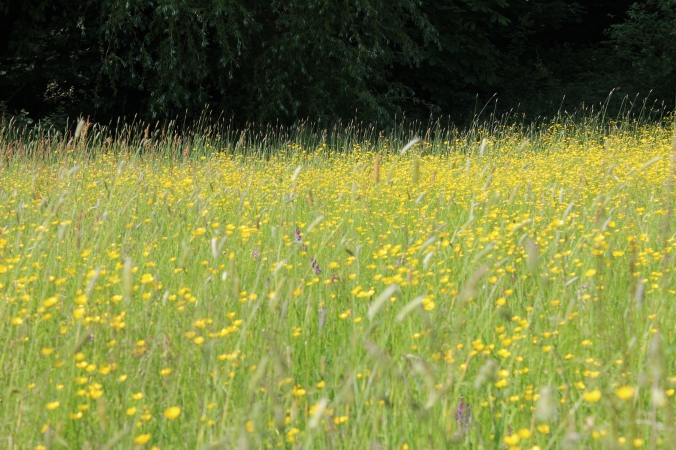
What do you think of, when you think of paradise?

Third sentence
Reading (from John 19 25-27)
Near the cross of Jesus stood his mother, his mother’s sister, Mary the wife of Clopas, and Mary Magdalene. When Jesus saw his mother there, and the disciple whom he loved standing nearby, he said to his mother, “Dear woman, here is your son,” and to the disciple, “Son, here is your mother.” From that time on, this disciple took her into his home.


Woman, behold your son. Son, behold your mother

And still he sees, looks down
towards the one who bore him, bearing this,
the pain – not her own pain – worse,
the pain of watching one you love
twisting on those wooden beams,
the nails piercing her own flesh too.

The time has come when all the
treasure of her heart is broken open,
scattered, lying in the dirt.
What use to hold in mind
the words of angels,
the wealthy gifts brought by the wise,
what preparation Simeon’s warning,
when now she sees his agony with her eyes.
But she is not alone, his friend sees too.
John, who writes it down,
bears witness, even here, even so.
They turn their gaze upon each other
and see each other with new eyes –
a mother, and a son.
Gifting them each other –
his one last act of love,
this giving, from an empty cup.
This task of care can be ours too,
to behold each other in our pain,
and in our sorrow, walk each other home


Response from Psalm 22: v 9-11

Yet you are he who took me from the womb;
you made me trust you at my mother’s breasts.
On you was I cast from my birth,
and from my mother’s womb you have been my God.
Be not far from me,
for trouble is near,
and there is none to help.


Music:  Salt of the Sound – I’ll meet you where you are/Home to you  3 mins 31  https://www.youtube.com/watch?v=kFlXL3cgI6Q

600px-Michelangelo's_Pieta_5450_cut_out_black

Pieta Michelangelo


Fourth sentence
Reading (from Matthew 27 45-46)
From the sixth hour until the ninth hour darkness came over all the land. About the ninth hour Jesus cried out in a loud voice, “Eloi, Eloi, lama sabachthani?”–which means, “My God, my God, why have you forsaken me?

My God, My God, why have you forsaken me?

You felt your generous heart forsaken,
you felt the absence of the one who helps,
who was beside you, in the beginning,
who knew you from before first light.

We know too well the sparseness
of your isolation, without light,
and companionless,
in the darkness of our own long night.
And yet, within our dark, we find you there,
Find you have waited for us long days, and years,
while our poor eyes have
grown accustomed to the dark,
have learned at last to see you through our tears.
So as you know our pain and feel it,
you break our separation with your own.
Help us see the forsaken all around us,
invisible and in darkness, but seen by you.
May we seek each other in the dark,
May we have courage to cry out,
like you, and so be found.


Response from Psalm 22: v11, 14

Be not far from me,
for trouble is near,
and there is none to help.

I am poured out like water,
and all my bones are out of joint,
my heart is like wax
it is melted within my breast

Music: Casting Crowns  Praise you in this storm 5 mins 3
https://www.youtube.com/watch?v=0YUGwUgBvTU
down_the_well_by_trilogy20-d3azhyz-701x336

Fifth sentence
Reading (from John 19 28)
Knowing that all was now completed, and so that the Scripture would be fulfilled, Jesus said, “I thirst.”

I thirst

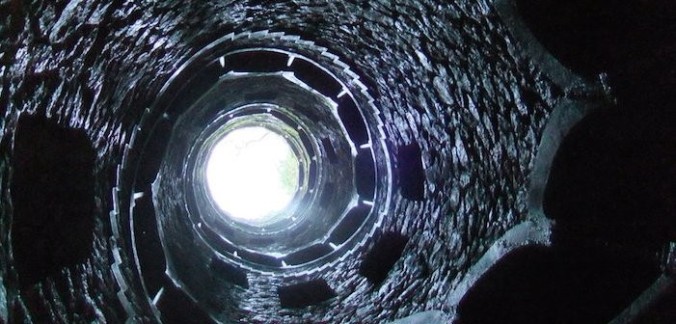
The well is deep, and you have nothing to draw with.
Where now that living water?
Where is that spring within you, gushing up
to fullness of life?
Do you remember, now,
the woman by the well?
Your deepening talk of thirst and water,
as now, again, you humbly ask another for a drink –
this time,
a sponge of sour wine?

Do you remember too, as the taste dries on your lips,
that wedding feast, where water changed to finest wine?
The richness and fullness of that beginning
soured to this cold bitterness.

You are our source, the spring of all our rivers
and still you thirst like us, need help to drink.
And so give us this grace,
that as we do for the least of these,
we may know we do for you.

May we see you
in each thirsty face.

Response from Psalm 22: v 15

My strength is dried up like a potsherd
and my tongue sticks to my jaws
you lay me in the dust of death


Music: Taise  O Lord hear my Prayer  7 mins 43
https://www.youtube.com/watch?v=LKyU5BIlxc0
IMG_0592

Sixth sentence
Reading (John 19 29-30)
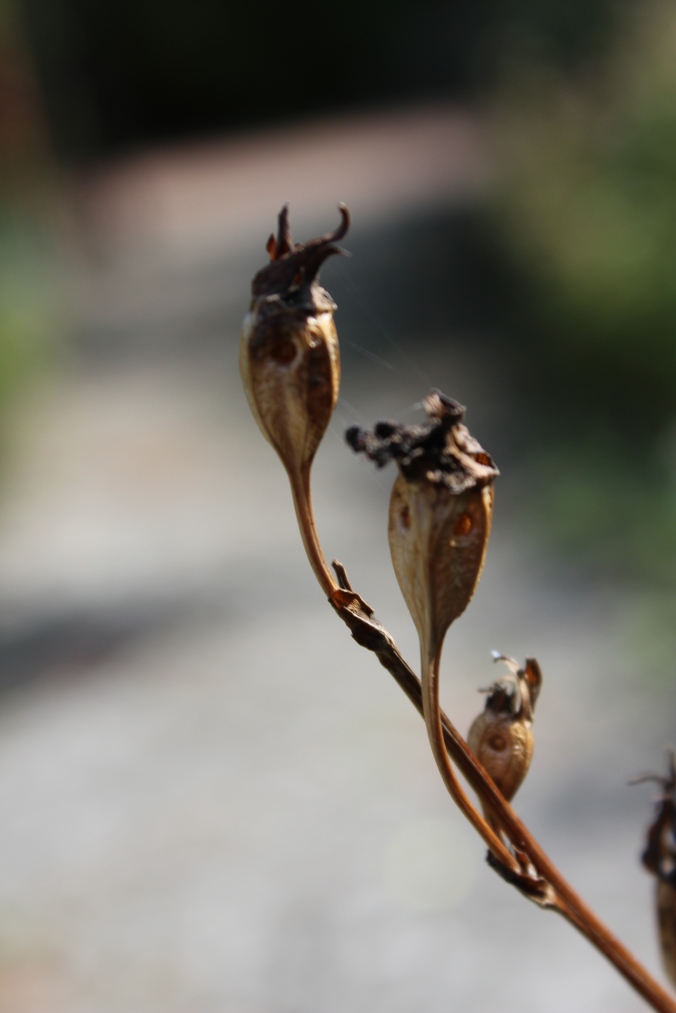
A  jar of wine vinegar was there, so they soaked a sponge in it, put the sponge on a stalk of the hyssop plant, and lifted it to Jesus’ lips.  When he had received the drink, Jesus said, “It is finished.”

It is finished.

All things come to an end.
Even pain like this,
Even the anger and the cruelty of a crowd,
of us all,
even the certainty of those so certain
of God they hang a man upon a tree.
Even the punishment and scapegoating
even violence,
even death.

The work is done.
It has all been borne.
You have poured out your love, your life.
You have carried our sorrows, suffered
under our iniquities.

Your head bowed now, you sink
into the final pain of nails,
your body bears no more,
having borne all.
The work is done.

Response from Psalm 22: v 24

For he has not despised or abhorred
the affliction of the afflicted.
and he has not hidden his face from him
but has heard, when he cried to him.

Music:  Ola Gjeilo  Ubi Caritas 3 mins 30
https://www.youtube.com/watch?v=Xp3IHBSyZKY

stars in the wood


Seventh sentence
Reading (from Luke 23 44-49)
It was now about noon, and darkness came over the whole land until three in the afternoon, while the sun’s light failed; and  the curtain of the temple was torn in two. Jesus called out with a loud voice, “Father, into your hands I commit my spirit.”


Father, into thy hands I commit my spirit

There is darkness now, deep darkness,
over the face of the deep,
and no hovering like a brooding bird,
instead, the temple curtain torn in two,
from top to bottom,
and the Holy of Holies empty.

God is not found there,
but here, with this dying man
on a tree,
He calls out father, and talks of hands,
and we remember what his own hands have done,
how many were healed by their touch,
raised up and restored from cruelty and death,
and now, he too will be held in loving hands,
a reconciliation beyond our grasp,
a trust even at this moment of last breath.

Dying, he taught us to die,
dying he brought us life.
May we be reconciled, may we know
at our end, the comfort of those hands.

Response from Psalm 22: v 26

The afflicted shall eat and be satisfied
those who seek him shall praise the Lord
May your hearts live for ever.

Music:  John Tavener Svyati (trans O Holy One)  12 minutes 35
https://www.youtube.com/watch?v=yssF24v5iBs

Or a traditional hymn, such as When I survey the wondrous cross.
 

salvador dali crucifixion

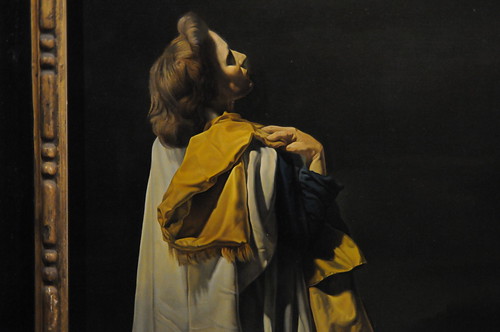
Detail from – Crucifixion (Corpus Hypercubus) Salvador Dalí 1954
The Metropolitan Museum of Art
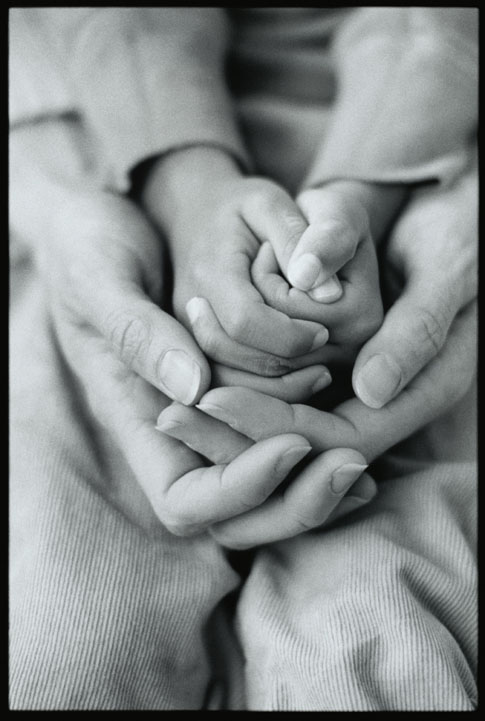
AA037808

Held