Retold: Moses, the rescuer


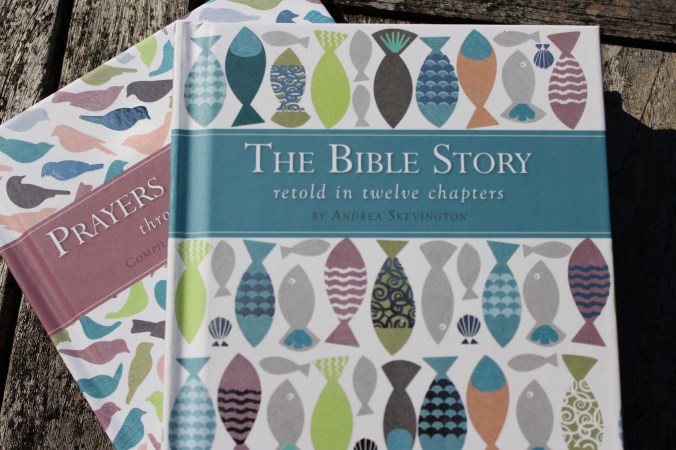
candles_flame_in_the_wind-otherI’ve been sharing with you an emerging series of poems drawn from the first chapters of Exodus, in the Hebrew Scriptures.  I am finding they help give me a way of thinking about our own difficult time.  Sitting alongside those, I’m writing some posts which tell the story in prose, drawing on my book, The Bible Story Retold.

This next fragment falls in between two more well-known stories – On the banks of the Nile, and The Burning Bush. You can read these by clicking on the titles.

It’s a powerfully revealing fragment.  It shows Moses, perhaps becoming aware of the injustice his people were facing, taking violent – indeed fatal – action to defend them. This character trait of rescuing, or establishing justice, is further revealed in his actions defending the young women at the well – but this time, the incident ends with being received into Jethro’s family, and marrying one of those young women.  There seems to have been some progress in how Moses uses his impulse to defend and rescue.  It’s so easy, in rising up to oppose injustice, to become a mirror – demostrating the same behaviour as that which we might oppose.  Part of this narrative’s purpose is to show us different ways good ends can be accomplished.  And they begin with a change in us, a change in how we see, and understand the world.  This one will begin with a powerful encounter with the mysterious I Am of the burning bush.
WP_20171016_16_18_46_Pro

I explore this a little more in the poem, Moses, and the Burning Bush, which you can read here.

Now, back to the prose narrative……

IMG_0609.JPG

From Exodus 2-4

Moses never forgot his own people.  He could not walk among the carved colonnades of the royal palace without shuddering, for they had been built by the slave laour of his brothers and sisters.  Then, one day, at one of the great building sites, he saw an Egyptian beating an Israelite, and anger rose in him.  He came to the defence of the slave, but killed the Egyptian, and gave him a hurried burial in the sand.

“So this is how he repays our kindness to him!” roared Pharaoh when he heard the news. “We brought him up as one of our own, and now he’s fighting against us, on the side of those lazy slaves!”  When Moses saw Pharaoh’s anger, he ran to the desert, the land of Midian, fearing for his life.

He came to a well and sat down, gasping and exhausted.  Soon, seven young women arrived to water their sheep.  But some shepherds tried to drive them away and take the water for themselves.  Moses came to the girls’ rescue, and helped them water their flocks.  The young women returned to their father Jethro, a wealthy herdsman, and told him what had happened.  Jethro welcomed his daughers’ protector into his family.  Moses married one of the girls and cared for Jethro’s flocks.  He learned the ways of the wilderness: where to shelter from a sandstorm, the best paths through the high places.

Then, one day, as the sheep grazed on the slopes of Mount Sinai…….

This is where the story moves to the moment of the Burning Bush.

And from Prayers and Verses

O God,
How long must I call for help before you listen?
How can you let this wrongdoing go on…
all the fighting and the quarrelling?
Wicked people are getting the better of good people;
it is not right, it is not fair!

I will wait quietly for God to bring justice.
Even in the middle of disaster I will be joyful,
because God is my saviour.

based on the book of Habakkuk


This post draws on the Sunday Retoldseries.

Poem: Moses and the Burning Bush – Exodus Poems 4

I have continued to turn the Exodus story over in my mind, as one that may help us as we think about the multiple, colliding crises we face. I am finding it illuminating, as we consider how we might move out from the situation we find ourselves in, to the possibility of a more hopeful future. These meditations are forming the basis of a series of poems. If you would like to read the stories, you can do here.

You might like to read the other poems so far, and you can find the links here.

Poem: Pharaoh’s daughter, and the child. Exodus poems 1

Poem: God saw – and God knew. Exodus poems 2

Poem: Holy Ground, barefoot. Exodus poems

In this latest poem, I wonder what it must have been like for Moses, who started out so full of hope and promise, who so wanted to defend his people, to right wrongs, that he responded force against force, and killed a slavemaster. In fear, he ran, ran away from all he had known, he built a new life away from Egypt. Did he remember his brothers and sisters, did he despair of this system of oppression that he had been unable to change? It must have seemed so powerful, so resistant, too cruel to those he loved to even hope for freedom.

I wrote about Moses, and this encounter with God, in my book, Jesus said, I am – finding life in the everyday. You can read a little more about that, and some extracts, here, if it interests you.

WP_20171015_17_37_36_Pro

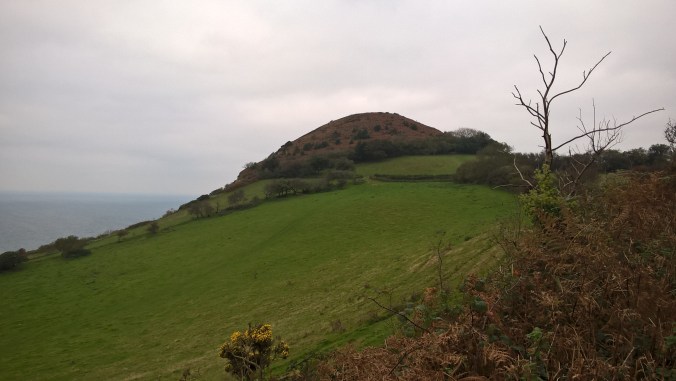
Walking down from Golden Cap, in the sunset dust of Storm Ophelia

What do we do, when it seems we’ve lost our chance to work for a more beautiful world? What do we do, when it all seems too fixed, too permanent ant, too big and powerful for us to make a difference?

Maybe we can see things differently, maybe our eyes can be opened to deeper truths, as the old ones crumble before us, and something new – something that was always there – begins to emerge.

WP_20171015_11_32_06_Pro

Moses and the Burning Bush

You stood on that dry mountain,
eyes narrowed against wind
and sand, scanning
the bright horizon,
looking for threat, or grazing
for those sheep.

Were you content to be a shepherd
now, Prince of Egypt?
Were you reconciled to this life
smaller than your dreams?
Did you think it was all too late,
too late to do anything
to help your brothers,
to help your sisters,
the slaves,
to reclaim your people?

Shepherd, with the bleating
of the flock about you,
did you dream still,
under the strong sun,
of what-could-or-should-have-been?
Did a new world seem impossible?
Or were you breathing
in this moment,
with the dust smell,
and the sheep smell,
and the plants thick with resin?

It was no dream,
what happened next,
no could-or-should-have-been,
that burning bush –
crackling, smoke smell,
burning, but not consumed.

In that moment you took
off your shoes, and learned a
name for God that is no name,
I am what I am.
I will be what I will be.

In a moment,
your reality peeled open,
revealing fire within,
the truth within,
giving you back
the discomfort of hope,
giving you back
your people,
and your way.

Poem: Stamps

eadt woodbridge

Photo from the EADT, from some time before the coronavirus crisis

I had to go to the post office today, walking through the shopping street of the market town where I live.  It was much busier than it has been, which is good for trade, but means you have to engage in a complex dance of awareness and courtesy to give people enough room, especially near those who seem to be moving to music all of their own and not noticing the paths of others.  There is some anxiety even seeing your neighbours and friends, trying to remember to keep your distance, and suppress the desire to be close, to hug perhaps.

I remembered this poem as I was at the counter, which I shared with you some time ago.  I remembered it as I felt the absence of the connection I associate with running errands in the town, a lack of touch, and often of looks and smiles, as we seek to navigate a world where we look different in our masks, and sometimes don’t yet recognise each other in these new guises.

It’s a poem about contact and connection through a perspex barrier, how we long for such connection, and seek to make it.  It is also a poem about the gentleness we can adopt with strangers, not knowing the sadness, the burdens, they may be carrying.  It seems an appropriate poem for today.


Stamps

Two of the blinds were down,
Position Closed, but yours
hovered, unreadable, just
above your head.

There was   no queue,
and I approached you
cautiously,
clutching thick manila
envelopes.

Are you open? I asked.
As you raised your head,
I saw trails of tears down
your smudged cheeks,
such large heavy drops.

First class, two –
I’m so sorry.
You smiled, and
I stretched out my
hand and touched
fingertips to the glass,

Passed warm coins
through, which you
held a moment,
then gave me stamps,
straightening your back.


Little Free Pantry Update


lfp3

Thank you Elaine for the pictures.

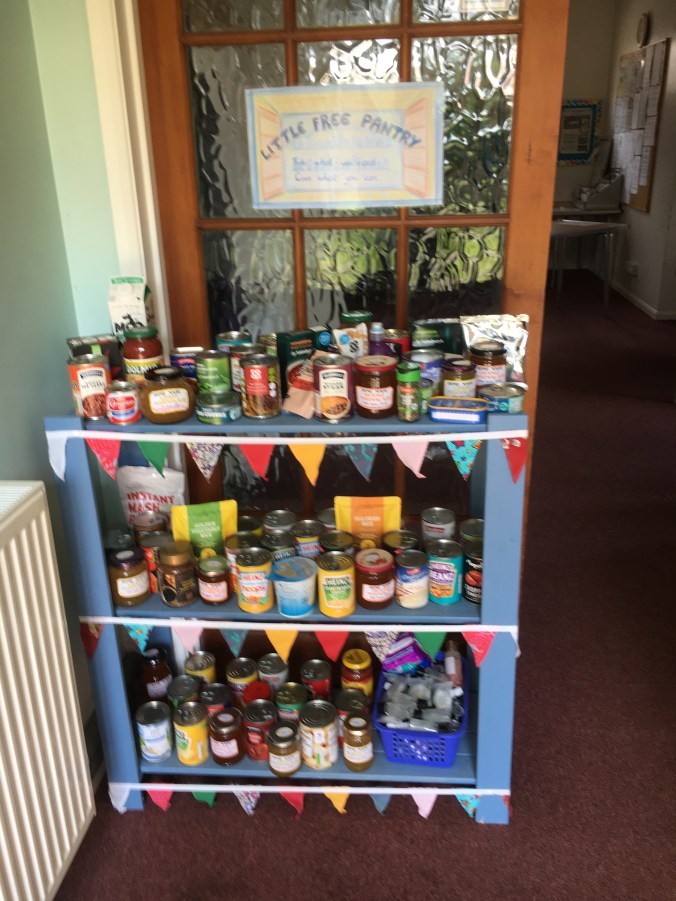
Some local friends will know about the wonderful Little Free Pantry at St Andrew’s Church, Melton, Suffolk, UK.  You can read more about it here.  This year, during the coronavirus crisis, it has been a valuable way for neighbours to show neighbours some love and care, but it’s had a bit of a bumpy ride.  For a while, we had to close it down while the church building was shut, and then, when it had been running again for a while, the church tower was struck by lightning making the porch unsafe.

I’m delighted to tell you, if you hadn’t heard on the grapevine, that the pantry is operating again – but this time, from the foyer of the church room at the other end of the building.  You can access it via the little lane and the rectory garden.  We’ve been blown away by the generosity of people leaving food for one another. Word of the new location is getting out, and people have been amazingly generous. We’re so glad that people are able to use it to both give and take food, for themselves or on behalf of someone else.

The principle of the pantry is so simple:

Give what you can, take what you need.

Just come, no questions asked.  You don’t have to meet anyone, or explain yourself.  It is open
Monday to Wednesday, 10 am to 5 pm.

Church room foyer, access via the lane and Rectory garden.

If you are standing in front of the Church, facing it on the pavement, go to the right of the building, past the end of the wall.  There’s a little lane.  Turn into the Rectory drive and immediately turn left – you only have to skirt through, you won’t be disturbing anyone or anything – and you’ll soon be passing the church bins and by the door to the Church room. Do come.
It’s such a good way for the community showing love and solidarity at a difficult time.  We’re aware people’s financial situations may be quite precarious at present, and want you to know that the pantry is there to help you and your family, as a sign of the love of the community, and God’s love unfolding in this place.

To all who use the pantry,  to give or receive or both, thank you and bless you.

lfp2

Some of the additional supplies.


Poem: Holy Ground, barefoot. Exodus poems 3

img_0356

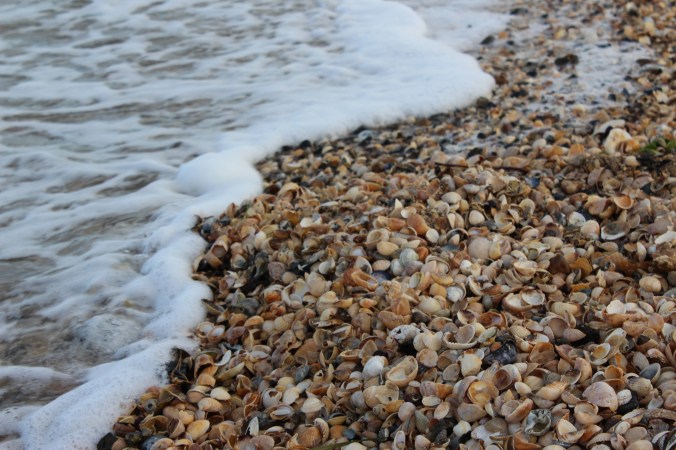
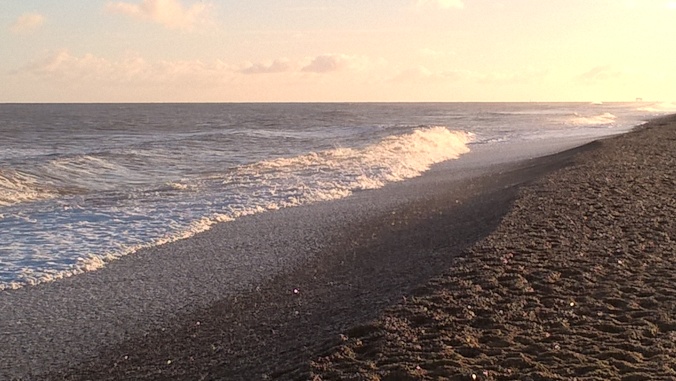
Cockle spit near the Chapel of St Peter-on-the-Wall, Essex

We come to the third poem I’ve written drawing on the early chapters of Exodus, the Bible’s second book.

I was drawn to write from this foundational story as it begins at a mighty civilisation’s turning point – a time of divided peoples, of injustice, inequality, and exploitation.  The world we are in right now seems to be at a turning poin, where things cannot go on as they are.  I’ve been seeing echoes, and warnings, and hope, in this story from long ago.

For this poem, I have continued the theme of God saw, and God knew from the previous poem which you can read here.  I have progressed the story to when Moses stood before the burning bush, and took off his sandals, for the ground is holy.

You can read more from the Exodus text here.

Some things struck me in addition to the themes I’ve explored before.  The first is, the matter of holy places and temples.  For those of us who have a practice of corporate worship, most gather in a set-aside space.  Not all – there are many gatherings in homes and coffee shops and dance studios and woods where people, together, are open to the divine.  Now, we cannot gather, and our relationship with these places is changed, as well as our relationship with our worshiping communities.  Although I know, as the poem explores, that God has no need of temples, I find that maybe I do.  I include two photos here from the ancient chapel of St Peter-on-the-wall, founded in the seventh century.  And the wall of its name, the wall it is on, is Roman, so its history is very long. There is real peace in that space.  I find my spirit soothed by such places.  And I am also finding, as the poems on this blog show, that I connect deeply with the divine in nature, too.  I am increasingly barefoot, on holy ground.  This seems a very deep and helpful truth, especially now.  It gives me hope.

A little tentatively, I have been thinking about gods and idols as I’ve been reading Exodus, and wondering what our equivalents might be. As I’ve been mulling over our economy, the systems that drive our lives that seem bigger and more powerful than any of us, I have reached for the ancient language of idol.  I have found the word Mammon comes to mind, and it says something significant for our times.  I’ve mentioned it briefly before, in my blog post on The company of bees. As a modern person, I’m aware I’m dipping my toes into something that may stir up ideas of superstition, and that I don’t really understand what these concepts of idol and god meant to those whose culture they belong to.  But I do know that now, as ever, there are forces bigger than us, which we don’t seem to control, in our daily lives.  We call them economics, or big corporations, or debt, or……. The ancient stories suggest they have feet of clay, and can fall.  They are human constructs, agreements and stories we hold in common about how the world works and what matters, they may feel immutable …. but they are not laws of physics, and we can, through collective effort, change them.

I wonder what that might look like in our current world, where these systems, or machines, or idols, seem to be demanding the sacrifice of life to their ends.  We can see this in some places with the response to coronavirus.  We can definitely see it in how we contine to destroy ecosystems and drive creatures to extinction.  Are these things really more important than life? Can we decide to do better?

Here, in this poem, I look at how the enslaved Hebrew people were forced to build temples to gods who didn’t hear them, or help them.  I wonder how many people, in today’s economies, might feel they are doing something similar, as they are made to serve the demands for more, and faster, and cheaper.

This poem, though, only touches on these things.  It turns to something more hopeful, a promise of the deep reality of the glory of God in all things,  and carries echoes Isaiah 11, and our deep hope – of the dream of God, of the kingdom we pray will come. It circles back to the beginning, to considering a holy place, where we are safe, and heard. Even when there are no places of worship available to us, these things are true.

We can be grounded in the earth, in the depth of our connection to God, and to all. God is not confined by our structures. God is encountered where we take off our shoes, and see.

img_0367

Inside the chapel (660-662 AD), looking out.

Holy Ground, barefoot.   Exodus poems 3

This people had no temple,
no worship-place.
This people built temples
for others,
for gods they dreaded,
rising in terrible power
over them, having
no regard for
their misery.

They prayed under
the weight of their burdens.
They cried out in
the unprayer of pain,
and God, having no need
of temples, heard,
as God always hears.
And God, leaning to the
brokenhearted, saw,
as God always sees.

For the very earth is holy.
The ground under our feet.
Take off your shoes and feel it,
feel the dry-ground-powder
and the sharp stones,
the infinite tiny beings
that call the earth home.
Take off your shoes.
Know you are part of
all this, part of the
the glory that fills
all things, as the waters
fill the seas.
You will be heard,
wherever you are.
You can listen,
wherever you are.
You are home.

Poem: Grandiflora – Lockdown 35

When I wrote this next poem, as the volume of traffic increases, as the number of people we encounter while out walking near our home increases, I felt that it was the last one.  The last one named and numbered for lockdown.  This series had come to a resting place, I felt.  The lockdown was ending, possibly disintegrating.

And there are all the mixed emotions that go with everything to do with the covid crisis.  Of course, it is such good news that fewer people are afflicted with this terrible disease.  I am glad my little local shops are beginning to trade again, and people in my community are able to support their families.  I worry that this is a lull, and not an end.  I worry that we are missing an opportunity to make things better in our scramble to make things normal.

But also, I have really enjoyed this method of writing, and then sharing with you.  Thank you for your company.  I hope these poems have given moments of peace, or thoughtfulness, or connection, or beauty – as they are, and as you need.  I will continue writing like this, and also seeing what else calls to be written.  I think there are new things.  So, there are 35 of these, in this series.  I also wrote seven poems for Good Friday.
That’s quite productive for me, and some recharging of my creative batteries, some reading and thinking and seeing, is required.  Having said that, I may miss doing this so much there’ll be something tomorrow!

This last poem seems to say some things that had been rising up in me for a while.  I am finding, in my response to the multiple crises that are unfolding, that I am trying to understand what is going on, rather than value my own opinion so much.  There is a letting go for me here, which is the first step of learning.  It’s seeking to adopt a beginners mind, or seeking to become like a little child.  There is a reference to the wonderful piece of Medieval mysticism, The Cloud of Unkowing, in the poem, and you can read a bit more about that here.

Thank you again for your time, for sharing your time and virtual comany with me, and for your attention, and bless you.

IMG_1883

IMG_0818


Grandiflora  Lockdown 35

I am tired of argument,
although curious,
and seeking understanding.
I am done with the
certainty of knowing.

There is so much more
to be explored in unknowing,
so much awaits
in that soft mist
that rests on the skin.

These magnolia leaves,
rattling in the breeze,
some yellow, and falling,
some green, and shining,
do they know the flowers
will begin to open soon?

The flowers will open,
known or not,
releasing their
creamysweet
scent above me –
joining with
the honeysuckle,
with the rose –
revealing their strange
strong hearts.

Each day,
a new flower
will open.
Each day,
I will receive
their beauty,
and, in turn,
pour out tea leaves
for their dark roots.
I am finding
it is enough.
It is enough.


IMG_1051

Poem: Longing for Rain – Lockdown 32

IMG_1059

We had an intensely hot, dry stretch of weather, in May, which was a time when the few miles to the sea was an impossible journey.  Even as the lockdown eased, and journeys became more possible, we’ve been tentative in our outings, and sought out remote and deserted stretches of coast.  I have been recalling the longing for rain, and the longing for the sea, even as the garden revives, and we’ve heard and smelled the sea.  I’ve been turning those two things over in my mind.

This poem expresses some of the longings of lockdown, and is part of the series of poems that are emerging at this time.  I feel we may be getting closer to the end of that series, and then, it may be time for something new to emerge.

wp_20170102_14_12_07_pro


Longing for Rain  Lockdown 32

The sea has felt so far away,
here, in this sheltered space.
The sound of water lapping,
lapping, seems miles of
dry ground from here,
while the little strawberries
are hard and intense,
like jelly sweets,
and the grass begins to yellow,
and leaves curl,
under a white sky

There is a symmetry
to this longing.
The journey I long to make –
to the sea, to the
spume and the sea mist,
the grey stones and the brown waters,
and the journey I long for
those waters to make –
to visit us here
on this drying land,
blown by the wind
on rivers of cloud,
then falling softly –
hissing, hot-earth-smelling
rain.

May our paths cross,
our journeys
be completed,
may the life-giving waters
soak and soothe us.
May it be so.

Little Free Pantry update

This is just a quick post to thank the wonderful people of Melton and Woodbridge for keeping the Little Free Pantry well stocked during the coronavirus crisis.

It’s in the porch of St Andrew’s church, and is opened by volunteers every day.  We aim to have it available from 10 am to 5 pm seven days a week.

IMG_0812

IMG_0813


Thank you to Elaine for the photos, and keeping an eye on things.  Thank you to everyone who has participated, either by giving or by taking food.


It’s very simple.

Give what you can, take what you need.

The porch is open, and unstaffed, so you are free to come and visit the pantry if there is no one else there, without coming in to contact with anyone else. You are free to bring food, or take food, or both. It’s free, and freely available.  It’s a sign of neighbours loving each other, and of the love of God which holds us all.


It’s so good that our community is working together in this way, taking care of each other.  A hopeful sign.


Poem: Beetle – Lockdown 30

Like yesterday’s poem, this next is an observation of an insect.  There are so many insects in the garden.  Most days, I see one I don’t recognise, and this beetle is one of those.  I did not have my camera to hand to take a photo, but I hope you can imagine it.

IMG_1871

I really value the way writing these snatches of life in the garden has encouraged me to be on the look out for all the huge diversity of plants and creatures that I share my home with.
The frame through which we see anything is shaped and coloured by the thoughts we bring with us, of course. And this poem, like many of the others, carries something of that knowledge of the loss and sadness of our communities around its edges, and in its ending.

Perhaps these snatches of writing are an encouragement to acknowledge those feelings, gently and compassionately, accepting them as we are able, at that moment.

IMG_0987

This pencil case was made an appearance in an earlier poem.


Beetle  Lockdown 30

Here, a long black beetle
rearranges its wings,

Black as funeral veils
that cannot be worn,
opening
and closing its
hard shell.

So fragile, the wings –
impossibly so,
folded precisely
as it moves along the
edge of my blanket,
then, with the breeze,
it flies, is gone,
lost to the shadows.
Out of sight, not out of mind.

Retold: Mary visits Elizabeth

For those who have joined this blog following the Lockdown Poems, here’s a small taste of something else.  Another occasional series here is Sunday Retold, drawing on my retelling of the Bible.  This – although not on a Sunday – is part of that series.

The-Visitation-56a1094e3df78cafdaa84c7b

Pascale Deloche

We often hear this story – of how, in the early part of her pregnancy, Mary visits her older, also unexpectedly pregnant relation – as part of the cycle of stories in the run up to Christmas. It is part of the preparation for the birth of Jesus.  But traditionally, now is the time it is remembered and celebrated, in keeping with the months.

It seems very appropriate that we should read of these two women supporting each other, and being moved by the power of the Spirit to speak, just at the time of Pentecost.  The Spirit is indeed being poured out on all, young and old, men and women.  These two are obscure, unimportant to those in power, on the edges of things, and we see, yet again, that is where God is at work.  Mary sees that too.  Her words are a real challenge, upending power, pride and privilege.  Regrettably, we need those words of challenge now just as much as we ever did.  Inequalities of race, gender and wealth are still a potent source of injustice.  Mary sees justice coming, though.  The Kingdom promised is one of justice, and hope.  We can work for that, as we pray for it in the Lord’s Prayer.

We pick up the story just as the angel Gabriel has told Mary what is to be, and how Elizabeth, from her own family, is with child despite her age….

Then Mary thought of Elizabeth. “The angel knew all about her – I must go to her.”  She got ready, and set off quickly for Elizabeth’s home in Judea to the south, near Jerusalem.

As soon as she arrived at the house, she hurried to Elizabeth and took her hands.  At the sound of Mary’s voice, the baby leaped inside Elizabeth, and the Holy Spirit filled her.  She understood at once what had happened to Mary.
“You are blessed among all women, and blessed is your unborn child!” she said.  “Why have I been so honoured? Why should the mother of my Lord God come to visit me?” Elizabeh laughed, and put Mary’s hand on her belly. “You see how my child leaps for joy at the sound of your voice?”

At last, Mary could say all that was on her heart.

“I’m so full of joy my spirit is dancing
before God, my Lord, my Saviour.
God did not turn away from me
becase I am poor, and now
I will be called blessed by
all the generations yet to come.
God, the great, the holy,
has done so much for me.
God brings down the powerful,
but lifts up the weak.
The well fed are empty,
and the table of the hungry
is piled high with good things.

“God looks at us with kindness,
giving hope to the hopeless,
caring for those who trust him,
remembering his promises to our people.”

From The Bible Retold

You can read the story in context in the first chapter of Luke’s gospel.

Mary’s song, the Magnificat, makes a powerful basis for prayer. Going through each part, holding it before God, allowing it to search you and being open to the possibility of being moved to change and to act, is a worthwhile and humbling way to pray.

It is widely said and sung in Christian worship.  There are many versions you can find online.  This one is Arvo Part’s setting.

As we think of those two women supporting each other, it’s good for us to think of ways we can continue to be present for one another, and listen and share lives, even when separated at this time. It’s good, too, to remember the slow growth of a child, how much patience is needed, as we wait and work and pray for the coming of the Kingdom.

img_0609