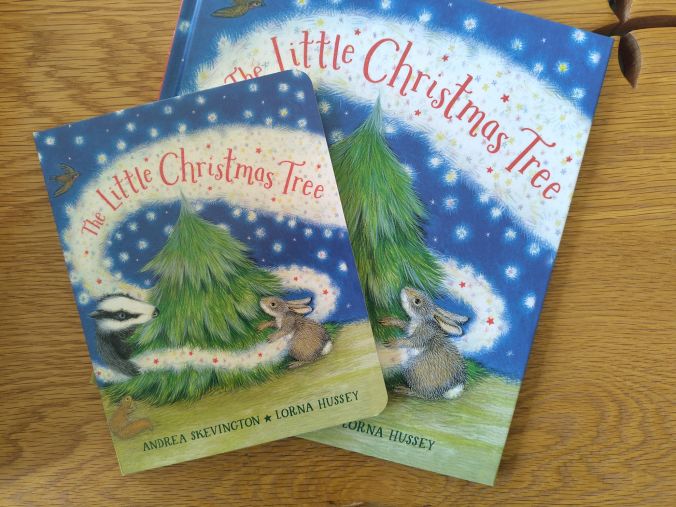
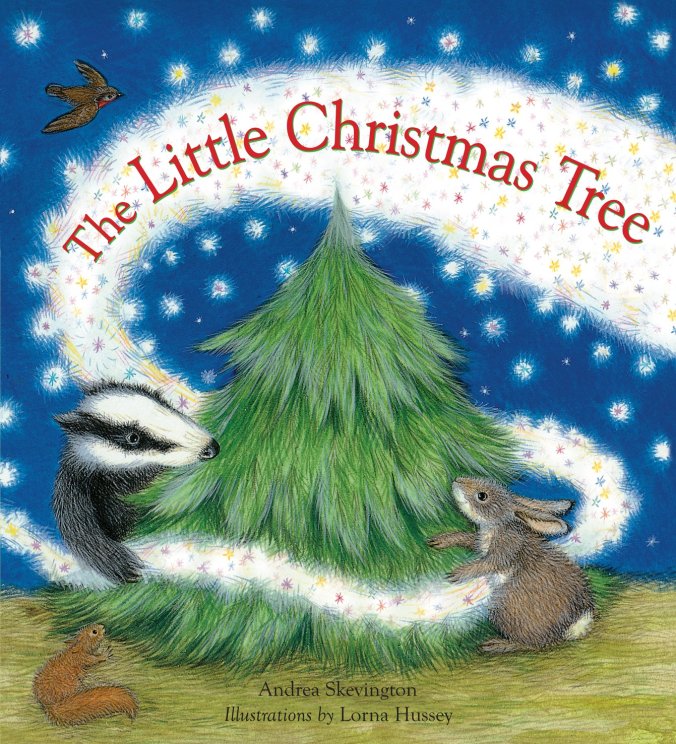
The new editions of my first story are making their way into bookshops ready for Christmas, and I know that some of you are coming across them. That’s so good, and a little bit exciting!
It’s given me the opportunity to take another read of the story, and think about it in the context of the world we’re living in now, and I’ve noticed something else.
Previously, I’ve thought about it telling a story into our shifting and stormy climate – and you can read more about that here. Today is the first day COP 30, so it seems particularly appropriate to be thinking of the importance of woods to regenerate our land, how important it is to treasure the natural world and give it space and time to return to strength and function. (If you’re not familiar with Prince William’s Earthshot Prize, I would commend that to you as a hopeful, active antidote to political wranglings – necessary as these may be.)
I’ve also thought about it as a version of Mary’s radical, prophetic message in the passage we refer to as the Magnificat, and you can read more on that here. And once again, the contrast she draws between the mighty and powerful, and the hungry, speaks directly into our unequal world.
What’s been on my mind this year is the matter of welcome – how we welcome, or not, those who have to flee their homes.
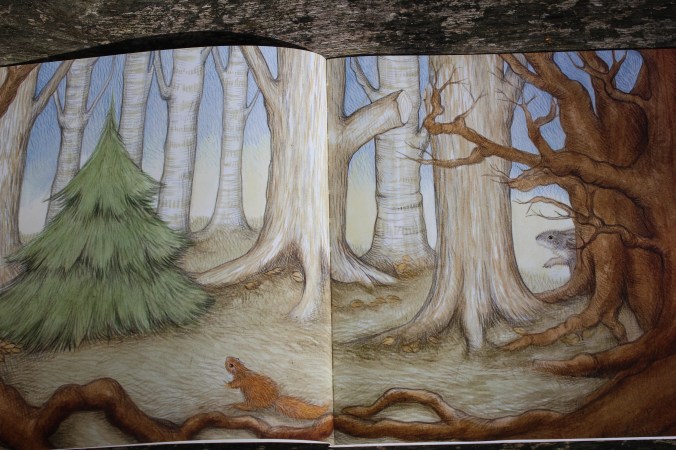
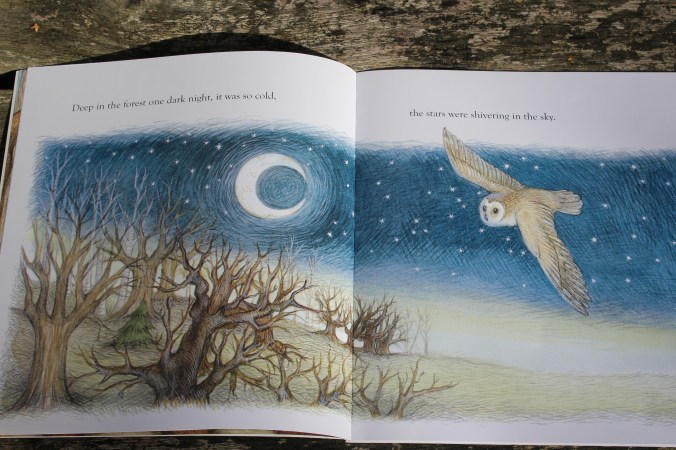
I love Lorna Hussey’s warm and intricate illustrations. Thank you Lorna!
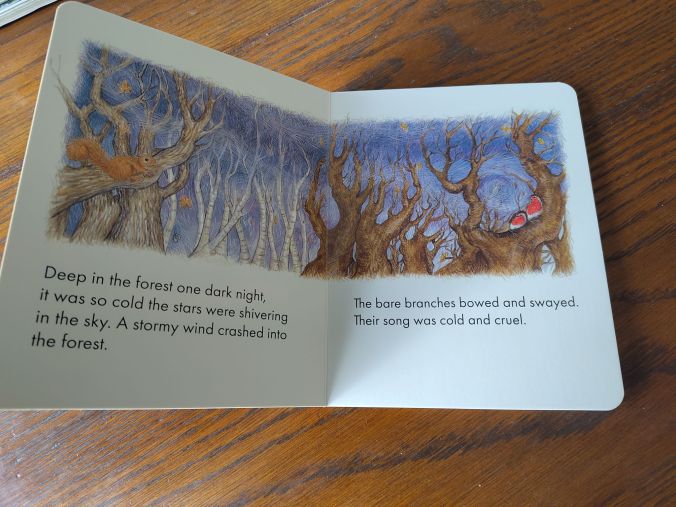
In the story, a storm rips into the wood, and the animals are looking for a place to shelter. They find one in the branches of a little fir tree, who welcomes them in. When I first told the story to my own children years ago, I never thought such an action might be controversial, or political. It was simply a practice of kindness, empathy, hospitality. These have always been regarded as Christian virtues, and those who read the scriptures will be well aware that welcoming strangers, and treating the poor and the vulnerable with compassion, is commended again and again. These qualities are upheld by ethical systems in all cultures across the world. And yet, here we are.
Of course, the global situation is complex, and it’s vital we have good, fair systems which work for all people. Of course, those who profit from exploiting those who are seeking sanctuary should be prevented and brought to justice. Those things are part of the empathy, and the welcome. It is the shift of heart which troubles me, towards hostility and violence towards those who have in all probability already experienced a great deal of it.
Can we reconnect with our deep, inbuilt response to the troubles of others – to seek to help how and where we can? Just up the coast here in Suffolk houses are being bulldozed as the sea bites ever bigger chunks out of the coast. Of course, there’s no comparison with those in the Caribbean and Asia who are suffering the most appaling tragedies from our changing climate, but it’s enough to awaken some fellow feeling, and to imagine how little it would take to find ourselves displaced and relying on kindness – both the kindness of individuals and the kindness of efficient, just and compassionate systems.
In the story, it is the Little Christmas Tree who welcomes the animals, and we share the warmth and compassion and richness that comes from that simple act. There is real joy in it. The book ends with a kind of party.
We can think too of the first Christmas, where a displaced mother was offered somewhere to have her child, and soon after the family became refugees in Egypt running from a tyrannical and jealous Herod. I’ve written about in the link above.
There is much need of kindness, and it is as precious and profound as ever. Perhaps we can remember times when we have both given and received when in need, how good that was – difficult, sometimes, but good.
As we approach Advent, let’s see if we can cultivate kindness, and welcome, and look for local ways to help people who may need it most.
The book is available in two editions, a hardback and a board book. You can order them from your local bookshop, or the usual online places.
Just in case some of you are very organised people who like to plan ahead for Christmas, you might like to know that a new hardback edition of this beautifully illustrated book is coming out on August 22nd.
It was my first book and I love it, and I’m thrilled it’s coming out again for a new audience. And if you have little ones in your life who are of an age for a board book, it’s coming out as one of those too – publication date for that is 26th September. That edition is slightly abridged, but with all the delightful pictures of woodland animals by the very talented Lorna https://www.instagram.com/lornahusseyillustrator/.
To those who follow this blog from the USA, the publishers were keen to say that the book will be available over the Atlantic, too.
Both can be pre-ordered now. Pre-orders do help with publicity and planning, so if you feel inclined, it would be a great encouragement. Meanwhile, the paperback version is still available.
If you are lucky enough to have a local bookshop, they can get them for you. Here’s a link to the publisher’s website for online orders. Of course, it’s also available in all the ususal places for ordering books.
Here’s how it begins…
And you can read more about it elsewhere on my blog, for example…
Thank you all for your support and encouragement. My mind has been full of the poems I’m weaving together for my poetry collection lately, and I’m aware I haven’t been posting on here quite as often as sometimes – I’ll try to keep remembering to do that! And next year, there’ll be lots to share!
I’m continuing to share with you some poems I’m working on for a new book, The Year’s Circle, which will be out next year – with Wild Goose of Iona Publishing. You can read more about that here.
As I’m settling into the work, I’m finding it so rewarding. I love looking for threads and connections between things, and so I’m weaving together poems which follow the pattern of the church year and poems drawn from nature. I’ve always found the natural world rich with image and meaning, and that is particularly true of the wild beauty of late spring.
This poem has been a bit of a knotty one to unravel, but now I think it’s settled and working. I’m giving it to you a little early, in case anyone is looking for a poem for Ascension (this year, Thursday 29th May) . At the beginning of the book of Acts we find this account of Jesus being taken up, and I have been wondering about what it might mean for us.
I thought first of what it must have been like for his friends, a kind of second losing. They are still caught up in their concerns – they are still thinking of a kingdom with power and borders. And every day, now, we are seeing the pain of kingdoms and borders, the terrible suffering of the people of Gaza and the long history of cause and effect that leads to children, the frail, the displaced and the wounded – starving. It’s shocking and distressing. I find those images fill my inner vision as I read the words of the disciples. And I notice that their nationalistic hopes do not align with the task set them by Jesus.
I have wondered about the complete change in perspective that Jesus seeks to share. I think it might help us, and give us a way of seeing that opens us up to a better way.
He is not speaking of kingdoms with borders. He is sending them out – over borders, without consideration of the divisions between peoples we might make – to the whole earth. A shift in thinking, a higher, more inclusive view. So, in this poem, I try to explore that shift. The poem has two strands. The experience of Jesus’ friends as he slips away from them, and this wider way of seeing he invites them to share.
Hidden/All things – Ascension
Perhaps it had seemed a partial parting, a gradual letting go.
In life, they had lived with him, travelled dusty roads, slept under stars, ate bread and shared a cup.
Then, after that dark Friday, that bright Sunday, there came these strange, sudden meetings, brief comings and goings, words they found hard to understand – such puzzling reassurance.
And still they ate together, and he spoke of another presence who would come to them, be with them. And despite their questions of nations and times, his was always a wider vision.
Always wider and other Out to the old enemy and the ends of the earth Everywhere and everyone
And then at last they came to this last parting, and he was taken up in rolling clouds and hidden from their sight, a long perspective they could not yet share
that saw the whole blue green turning Earth and all things – things in heaven and things on earth – holding together reconciled all very good and all beloved. Above all, beloved.
Acts1:1-11 Colossians 1:15-20
This image is of Gaia by Luke Jerram, when it was at Ely Cathedral. As I’m playing with the arrangement of poems in The Year’s Circle, I’ve placed my poem inspired by this artwork in a group that follows this one on the Ascension – a group that begins to explore our perception of the Earth as an interconnected whole. You can read the Gaia poem here.
And, in the spirit of the original Sunday Retold, here are some passages which might be of interest.
‘The disciples never knew when Jesus would appear among them – but appear he did, telling them more about the kingdom of God, and kindling hope in their hearts. “Wait in Jerusalem and you will receive God’s gift. You remember how John baptized with water? In a few days, you will be baptized with the Holy Spirit of God.” Another time they asked him, “Lord, will Israel be a great kingdom again now?” “That’s not for you to know. The Holy Spirit will come and fill you with power, and then you will tell everyone what you have seen and heard. Start in Jerusalem, and Judea, but then go out beyond Israel to Samaria, and even further – to the whole earth!” Then Jesus was lifted up, above and beyond the earth, and a cloud hid him…….’
Ascension Day ‘Christ has no body now on earth but yours, no hands but yours, no feet but yours…. Yours are the feet with which is to go about doing good, and yours are the hands with which he is to bless us now.’ St Teresa of Avila
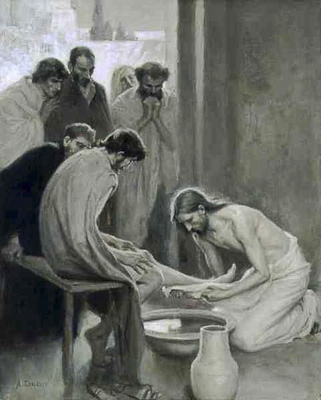
Jesus Washing the Feet of his Disciples, by Albert Gustaf Aristides Edelfelt, (1854-1905)
This week, I thought I’d share with you my retelling of the reading many churches will be following this Sunday, in the spirit of Sunday Retold.
It explores themes of power, and so follows on from last week’s poem, Stones. This week’s reading is that electrifying encounter between Jesus and Pontius Pilate – a trial of sorts. For the flow of the storytelling, I’ve taken a longer sweep than the set reading.
At the same time, as dawn was breaking, the council gathered – elders, chief priests, teachers of the Law – and faced Jesus. “If you are the Christ, the promised one, then tell us!” one said, rolling the words around his mouth as if they were bitter to his taste. “If I told you, you would not believe me,” Jesus replied, holding him in his steady gaze. “Are you the Son of God?” they asked. “You are right to say so.” At this they rose to their feet with an angry roar, and carried Jesus off to the palace of Pilate, the Roman governor, who had power to sentence people to death. “This man is a threat to the peace – he claims to be Christ, a king, and opposes Roman taxes,” the accusers called out as Pilate circled around Jesus. “Are you the King of the Jews?” he asked. Jesus felt the cold edges of the mosaic under his bare feet. “Yes,” he replied. “But my kingdom is not like the kingdoms of this world.” “So, you are a king!” Pilate responded. “Yes! That is why I came, to speak the truth. Everyone who is on the side of truth will listen to me.” “But what is truth?” Pilate asked. Then he went out to see the leaders and the people together. “I see no reason to charge him,” Pilate said. “This man has done nothing to deserve death. I will set him free.” “No, set Barabbas free instead!” they cired. Now, Barabbas was a rebel who had killed a man. They shouted louder, drowning out Pilate’s words: “He’s done nothing wrong! I will release him!” But, with rising rage, the mob shouted, “Crucify crucify!” In the end, Pilate gave in: he set Barabbas free and handed Jesus over to the guards. The guards tormented Jesus, the one called king. They draped a fine, purple robe around him, and twisted him a crown of sharp thorns to wear. They called out, “Hail, King of the Jews!” and fell on their kneeds before him, laughing. They spat on him, and struck his head with a staff. They, they took back the robe, and led him out to be crucified in his own simple clothes
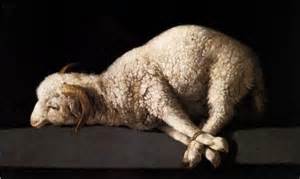
Francisco De Zurbaran
We see how those who held religious power allied themselves with the Imperial power of Rome. I expect they were sure they were being faithful, upholding the law and their traditions, defending their faith as they saw it. Being certain you are right can lead you very astray. And we see too how Pilate saw Jesus very differently, one who had done nothing wrong, and yet seemed to have little power in the face of an angry crowd.
The biggest difference of all, to my mind, is in the understanding of what power is, what a kingdom is, who a king is. Those who are embedded in the power structures of this world, and, to be honest, the rest of us too, find it hard to imagine a different kind of power. One that follows a path downwards, even to death. One that washes the feet of the followers, that does not insist on its own place, but instead works through love, in humility, in radical engagement with the world as it is. We will soon be in Advent, preparing for the coming of Jesus. At that time we think of his unity and solidarity with frail humanity, born in such a humble way, amongst the extraordinary, ordinary, beloved people of Bethlehem.
Lord Jesus, May our lives bear the mark of love. As we are kind, as we share, as we are gentle, may your love be seen in us. Help us, for this is hard for us.
Dear God, May I welcome you as my king: King of peace, King of love, King in death, King of life.
From my book of prayers to accompany The Bible Story Retold, Prayers and Verses
This poem has arrived on the blog a little late. It became marooned in my notebook for a while, until I flicked through the pages and found it again. And although crowds of bees are no longer buzzing among the ivy, there are still a few, here and there.
I hope, though, that although this poem arose out of a particular time, it has something to say in other times, too. About stillness. About the restorative power of simply being, and paying attention. About finding our breath again. We all need that. We all need to feel that connection to the rest of the natural world (oh, how I wish we had better language for these things – bear with, it will emerge) which grounds us, and from which we can rise. For those reading this blog who need a little peace right now, I hope it helps. I’m thinking particularly of dear readers in America, where the election atmosphere seems turbulent. I wish you well over the next days and weeks.
The old hedgeline in front of our house has, in places, been overcome by ivy, which has formed its own structures and patterns of flowering and fruiting. Cutting some of it back to make space for other plants to grow, I was careful to leave the ivy flowers for the bees – which will become fruit for the birds in time. Accidentally, I created a little bower, where I put a chair and sat for a while. As I sat I gradually heard the road less and less, as my attention was taken up with the many bees who were enjoying the feast. And so, this poem emerged.
thebiologist.rsb.org
September. Bees. Ivy.
It is taking a while, this sitting in a carved out cave in the ivy. Just sitting, stilling, breathing. A bower of green leaves above, and above that blue sky, white clouds.
In time, the hum of bees, and their intricate woven patterns of flight, come to replace thoughts, become another form of thought. So too the birds – that wren shaking the leaves, and the pipping robin.
And this grey and green lacework of wild is all that separates me from the roar of the road – those black lines we make, always going somewhere….
And yet, here is a marvel. More bees than I have seen all year. A hum that soothes the soul. The darkness of butterflies.
These strands of green woven through the world – not enough, by no means enough –
But they shelter the bees, and me. A space for the soft and alive, breathing, green in spirit. We can be here, the bees and me. We can be, in this hollowed out hedge, in a cloud of lightfilled wings.
The solstice has come, the longest night, and we are now in those few days when light and darkness are poised together, equal. Here, the clouds have blown away, and the wind is mild, if wild. In the garden I see new shoots beginning, green and bright, and tiny catkins, and there is light, at least for a few hours, and a promise of lengthening days. For now, though, it’s a time for fires and gathering. It’s a hard time of year, where we need shelter and warmth and companionship – powerful and beautiful in its own right, and also full of the promise of light to come. I hope that what follows can offer you a moment of reflection and mystery as we think of Jesus, entering the world so precariously, helplessly vulnerable. The Prince of Peace born into dark times, with the strangest of fanfares, the most unpromising of resting places.
I’m not quite in a place of tinsel and jollity, though. I’ve been haunted by an image from Bethlehem this year - Christ in the Rubble – where the Lutheran church there has replaced its more traditional nativity scene with one that vividly demonstrates the reality for babies being born in Gaza now. We need the message of Christmas, with its offer of healing, love, forgiveness, presence, as much now as we ever did. The wonder of One laying aside power, and emptying himself for the sake of all.
The Roman Emperor, Caesar Augustus, had ordered a census throughout the whole empire, when all the people would be counted, and taxed. The orders spread along straight Roman roads, and were proclaimed first in the white marble cities and ports, and then in the towns and villages of the countryside.
Even quiet Nazareth heard the news, and Mary and Joseph began to gather together their belongings, ready to travel to Bethlehem. That was Joseph’s family home: he was descended from King David, of Bethlehem. They set off south on the crowded road, for the whole empire was travelling. But, for Mary, the journey was especially hard, and the road seemed never ending. It was nearly time for her baby to be born.
At last they came to Bethlehem, but it was not the end of their troubles. The city was noisy, bustling, and heaving with crowds, and Joseph searched anxiously for somewhere quiet for Mary to rest – her pains were beginning, and the baby would be born that night. The inn was already full of travellers, and the only place for them was a stable. There, among the animals, Mary gave birth to her firstborn son, and wrapped him up tightly in swaddling bands and laid him in a manger full of hay. Then, she rested next to the manger, smiling at the baby’s tiny face.
There were shepherds who lived out on the hills nearby – the same hills where King David had once watched over the flocks, long ago. The sheep were sleeping in their fold under the shining stars, while the shepherds kept watch. Their fire flickered and crackled, and the lambs would bleat for their mothers, but they were the only sounds. All was peaceful. All was well.
Suddenly, right there in the shepherd’s simple camp, appeared and angel of the Lord, shining with God’s glory and heaven’s brightness. The shepherds gripped each other in terror, their skin prickling with fright. “Don’t be afraid, I’m bringing you good news – it will bring joy to all people!” The shepherds listened, awestruck, their faces glowing with the angel’s light. “This is the day the good news begins, and this is the place. In the town of David, a saviour has been born. He is Christ, the Anointed One, the one you have been waiting for. And this is the sign that these words are true: you will find a baby wrapped tightly in swaddling bands, lying in a manger.”
The shepherds watched as light was added to light, voice to voice, until they were surrounded by a dazzling, heavenly host of angels, all praising God and saying “Glory! Glory to God in the highest, And on the earth be peace!”
And then, in an instant, the angels were gone, and the shepherds were left in dark night shadows, listening to the sound of a distant wind. But their eyes still shone with heaven’s light. “Let’s go and see for ourselves!” they called to one another as they raced over the dark, rocky fields to Bethlehem. There, they found Mary and Joseph, and, just as the angel had said, they found the baby wrapped tightly in swaddling bands and lying in a manger. They saw him with their own eyes, and spread the angel’s message to all they met. “The Promised One has come! The Christ, the Anointed One, has been born!” The angel’s words were on everyone’s lips that night in Bethlehem. And, as the shepherds made their way back to their sheep, bursting with good news, Mary kept their words safe, like treasures, in her heart.
What can I give Him, Poor as I am? If I were a shepherd I would bring a lamb; If I were a wise man I would do my part; Yet what I can, I give Him – Give my heart. Christina Rosetti 1830-1894
Also from Prayers and Verses, a poem I wrote as a child.
The dawn is breaking, the snow is making everything shimmer and glimmer and white.
The trees are towering, the mist is devouring all that is in the reaches of sight.
A bell is ringing, the town is beginning, slowly, gradually, to come to life.
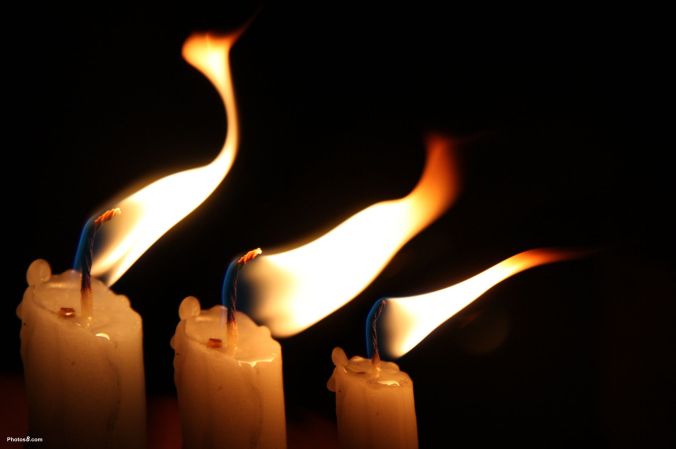
A candle is lighted, and all are excited, for today is the ending of all man’s strife.
The light is coming into the world.
Please feel free to use the extracts, saying where they are from.
It’s so hard to hold on to the theme of Peace as we prepare for Advent’s second Sunday. I can hardly bear to watch the news with the terrible conflict going on in the Middle East, in particular the stream of men running with injured children in their arms, seeking help, and the doctors doing the best they can with so little. We see the pain and waste of war, the agony of the faces of those who are bewildered and overwhelmed by what has come to them. The radio seems a better way for me to hear what’s going on, to try to keep informed and to understand. And I get to make that choice. For thousands, millons, of people, that choice is an unthinkable luxury – war is their ever present reality.
And yet, I hope and pray that there are those both compassionate and wise enough to look at the destruction and pain and see where there is a chink of light, the possibility of something coming after all this, that might grow towards peace. Peace is such a precious, precarious thing. And it sits alongside other things – justice, truth, hope. Those who work for these, the peacemakers, may they indeed by blessed.
Once again, we are engaged in a radical practice of seeing what could be alongside what is. As with the thoughts on Hope, we’re not trusting to wishful thinking, or pretending real obstacles to peace don’t block our way.
They dress the wound of my people as though it were not serious. “Peace, peace,” they say, when there is no peace.
Says Jeremiah . And I’m sure we all know the distress of having some deep issue dismissed, and peace proclaimed when what that means is people keeping silent about weighty matters. That is no peace. We are in search of something much more radical.
How to hold on to some kind of centre, some kind of Peace, in the midst of all that surrounds us? How to hold on to a centre, and to peace, in the midst of loss, and loneliness, and Christmas pasts too? This Sunday, the second of Advent, the theme of peace is much needed.
Once again, readings for this week turn to the prophets. A longer meander through the section of Isaiah we read from below will reveal much that preceeds the talk of peace. There are words which seek to uncover injustice and untruth, addressing past conflicts and wrongdoings. This isn’t peace which seeks to bandage over matters that need deeper healing, this is peace as a result of a long process of radical transformation. It’s a vision of the dream of God for the world. Of the growth and new life possible in things which seem beyond hope of greening.
A shoot shall come out from the stump of Jesse, and a branch shall grow out of his roots. The spirit of the Lord shall rest on him, the spirit of wisdom and understanding, the spirit of counsel and might, the spirit of knowledge and the fear of the Lord.
The wolf will live with the lamb, the leopard will lie down with the goat, the calf and the lion and the yearling together; and a little child will lead them. The cow will feed with the bear, their young will lie down together, and the lion will eat straw like the ox. The infant will play near the cobra’s den, and the young child will put its hand into the viper’s nest. They will neither harm nor destroy on all my holy mountain, for the earth will be filled with the knowledge of the Lord as the waters cover the sea.
Isaiah 11: 1-2, 6-9
I am very struck by the image of the tree stump – cut down, presumed dead, or unproductive – springing back into life. We see again the hope in even the most hopeless situations, the determination of life. Many have looked back at these words of Isaiah and seen the coming of Jesus in them. In the shoot springing up, and in the little child who will gently lead. Born into most unpromising circumstances – homeless (at least temporarily), under enemy occupation and the cruel rule of a local puppet tyrant – there is a deep promise of peace and hope in the coming of Jesus. This new growth will take a suprising form. This dream of a new world will grow under the surface, in hearts and lives. Appearences are deceptive.
Even my beautiful dead cotoneaster, picture at the top of this post, harbours life. Although the plant itself hasn’t sprung up from dead roots, other things have. Birds perched in the branches, dropping seeds, and now the light has reached the ground, things are growing. And the dead wood is a haven for so many small creatures. I wrote about the tree here.
And deeper, and further into the prophecy, we have the harmony of all creatures, including humans, living at peace. We have an ecology of plenty and playfulness, of trust and abundance. As we meditate on the possibilities of peace, and the world as it may be, can we catch a vision of what that might be like? We see destruction visited on the land, on on life, by war, and by destructive ways of being in the world. As we think about the stump of the tree of Jesse, I’m reminded of the number of trees, the whole landscapes and ecosystems, that have been lost, how might these words speak into that situation with hope, justice and peace?
You might consider writing down your own vision for how such a just, peaceful, restorative, abundant world might appear. You might wish to pray “Your kingdom come, your will be done, on earth as it is in heaven.” from the Lord’s Prayer. What comes to mind as you pray that bold and transformative prayer? And as we pray, so we seek to live. How might we live this week in response to this vision, this dream, this prayer? It may seem too hard in current circumstances. It might be too hard. Yet there is this promise of the coming of the Prince of Peace. Maybe we can hold on to that.
And as we do so, we could turn to this week’s gospel reading. Trees come up here, too….. John the Baptist, preparing the way for the ministry of his cousin Jesus, speaks of knowing trees by their fruit. What their lives produce.
Under the white heat of the sun, far from shade, the murmuring crowds gathered. Some had walked through city streets, others through fields and vineyards, but all had come out into the stony, dusty Desert of Judea to see one person. It was John, son of Zechariah, who stood by the river Jordan.
John was no polished performer – he looked wild, dressed in rough clothes of camel hair held together by a leather belt. He was thin, eating only the locusts and wild honey he could find in the desert. But his words were full of power, full of life and holiness. He called out in a loud voice “Repent! Turn your lives around and come back to God! His kingdom is near. Come and be washed clean!” And many came forward, full of sorrow for the wrongs they had done, and John baptized them in the River Jordan.
There some among the religious leaders who came and joined the crowds to look holy in front of everyone else – they thought they were good enough already, and had no real need to change. “You snakes!” the Baptist spat: “We can tell what you are like by what you do – just as you can tell a tree by its fruit. Don’t think you can fool anyone with show-religion!”
But most who came were hungry for a new beginning. For John taught them to hope. In his words, they caught a glimpse of something beyond their everyday lives. They understood that John the Baptist was preparing the way for something, or someone, astonishing. “I baptize you with water, for repentance. But you wait. There is one coming after me who is so much greater. I am not even fit to carry his sandals for him. He will baptize you with the Holy Spirit and fire – a baptism that will wash you inside out.”
In Luke’s Gospel, we get an insight into what this preparation for the one who is to come might look like in practice
“Even now the ax is lying at the root of the trees; every tree therefore that does not bear good fruit is cut down and thrown into the fire.” And the crowds asked him, “What then shall we do?” In reply he said to them, “Whoever has two coats must share with anyone who has none; and whoever has food must do likewise.” …..
Luke 2:9-11
We remember the Advent traditions of giving – not just to friends and relations, but to others as they have need. What John the Baptist is calling people to, to prepare for the coming of the Kingdom of God, looks a lot like sharing, like generosity of spirit, as we are able. Perhaps this is a way towards Peace. As our readings take us closer to Christmas, to the birth of the one who we have been waiting for – springing up like a new shoot – we will find a clearer focus on the Prince of Peace who is to come, and the way of peace he walked.
Hope, and Peace
Perhaps we can make time to keep our eyes open for signs of new growth in the winter gloom, when all seems cold. Are there shoots appearing? Are there signs of new life? Can we pursue peace by looking for justice, and by sharing as far as we are able? We can share kindness, and patience, and perhaps a smile to cheer someone’s day. Perhaps we can do more than that. If we have the choice to simplify things for ourselves, we may find we have a little room to share with others. Might that be a path to a more peaceful Christmas?
Wherever you are in your Christmas preparations today, may you know Peace.
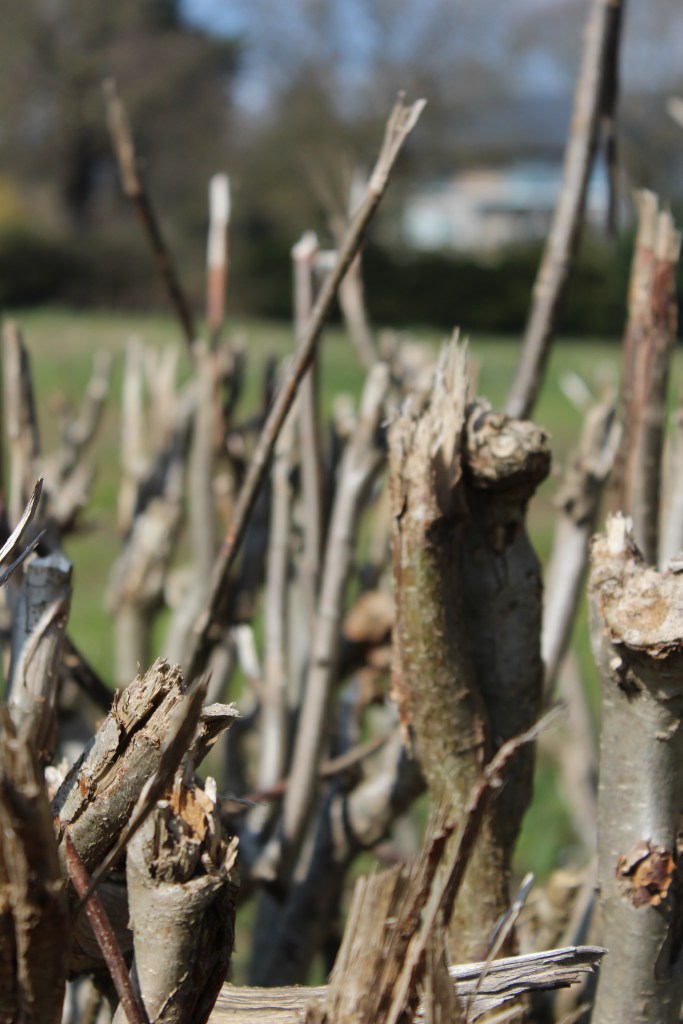
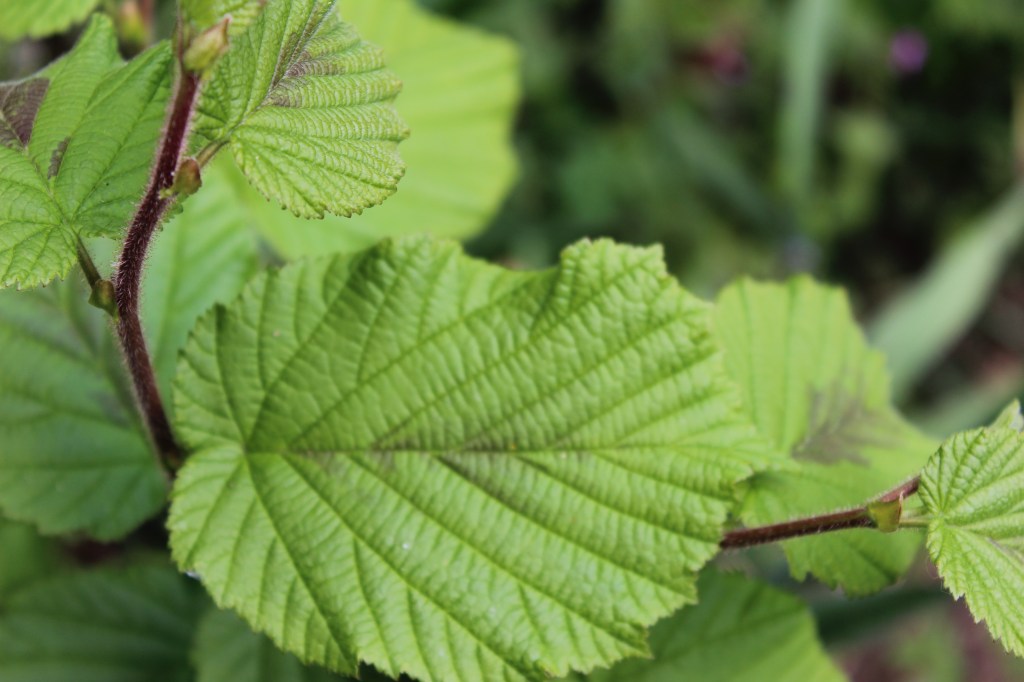
This photo is of an apparently dead, flailed hazel hedge near where I live. Despite this treatment, it has put out some new growth. How many years it’ll withstand such an onslaught, I don’t know. But I am heartened to see the new shoot growing up from a very unpeaceful process. You can read more about the hedge here.
As a small stone, dropped in a pool, sends ripples to its furthers edges, help us know our small actions of love and kindness can do great good. … Help us do the good things we can, trusting you will use them.From Prayers and Verses
On the subject of trees, Eden online bookshop has a few copies of my children’s picture book available….
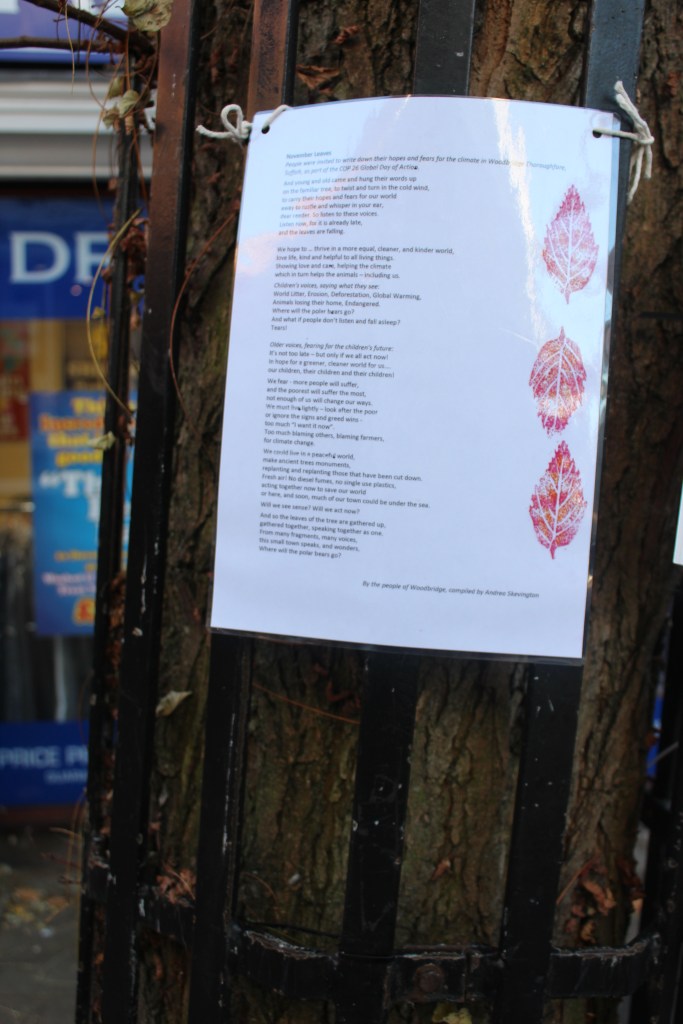
Last time, I shared a wonderful piece of work with you. It emerged from the people of our town during the Global Day of Action for the Environment, at the mid-point of COP 26 earlier this month.
You may remember that we invited people to write down their hopes and fears for the environment on cardboard leaves, which we tied to a tree in the main shopping street, The Thoroughfare. I then wove those words together into a poem. You can read it, and more about it, here.
Now, the finished poem is itself tied to the tree where it began. It felt like a homecoming, tying the people’s words to the tree.
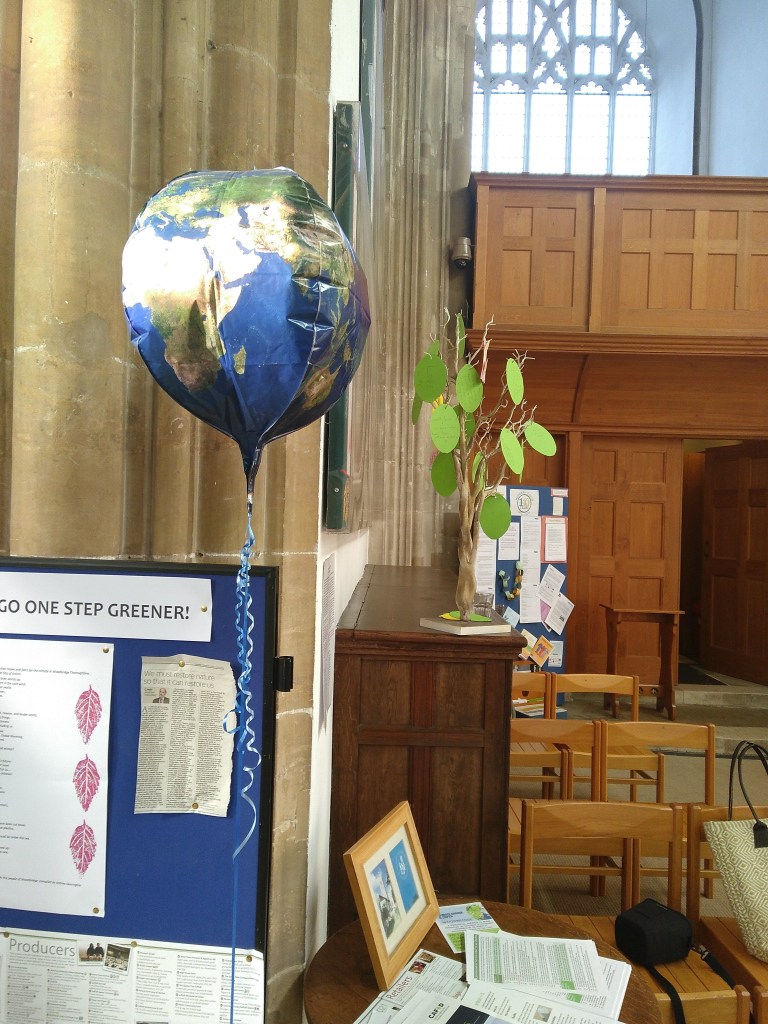
The leaves themselves seemed to precious to discard, carrying as they did such heartfelt words. St Mary’s Church in the town is taking care of them. They are hanging up near the back, as part of their display on caring for the world. It’s full of helpful, thoughtful suggestions and reflections.
There are some extra leaves so you can add your own contribution to the tree, too, as well as encouragement to “Go one step Greener”. The church is open for prayer and contemplation between 10 and 4 Monday to Saturday, unless there is a special event. Local people, it’s well worth a visit.
St Mary’s Church Woodbridge. You can see the poem on the noticeboard, and the leaves on the tree in the background.
I’ve sent a copy to our MP, Dr Therese Coffey, too. Edit note 13th December: I’ve received a letter from Dr Coffey, with thanks for the poem and some information on what the government has done and hopes to do for the environment.
Last night, I was able to share the poem with the Town Council – reading it out and giving a physical copy. It seemed a very good, hopeful way for the meeting to start. They listened attentively and appreciatively, and responded with applause and real enthusiasm. So, if you were one of the local people who contributed their hopes and fears to the poem, do know that our local representatives have heard you, and will keep a record of your words in their minutes too.
It was so good to be able to do that. Our council are doing a great deal to take care of the beautiful place where we live, and are keen to do more. It’s good to be able to give voice to the hopes and dreams of people in the town, to share them in places where they will be heard, and will, in turn, do their work in other minds and hearts.
Each small thing matters. You never know what will grow from even these leaves.
Things change, yet leave their mark. I was thinking about this as I looked at one of our apple trees, grown curved in its search for light. You can see the shape of the trunk most clearly in the shadow it leaves on the fence. It grew like this to adapt to the dense shade of a neighbouring shrub which grew faster than it, and cast it in shadow. That shrub died, it is gone now. Yet even as light returns, the curve remains. Grown like this, the tree has given us apples in autumn, and beauty all year. I thought about how the tree found a way of flourishing despite the shade, and admired its resilience. So, the poem is mainly about the tree, but also, murmuring away underneath, was an awareness of the tree as teacher, making visible something that is often hidden within us.
The tree adapted to its setting, and as the setting changed, the adaptation remains even though there is more light. We all do this, whether it’s growing accustomed to living quietly and distantly during a pandemic, or learning from a young age how to live in difficult emotional or physical circumstances. Even when things are better, lighter, more friendly, we can find ourselves living as if they are not. Patterns of mind can be changed, new growth can happen, but it takes noticing, with compassion, and stretching ourselves a little into the new, more open space.
As lockdown eases, we can go gently with ourselves as we try to asses what is safe, and what has become a habit that is no longer needed – and those assesments are far from easy. We can be gentle with each other, too, as we all navigate our way into more open living. The changes in how we respond may be, in part, due to patterns of being which were laid down long ago. These, too, can be nurtured into more helpful shapes that keep us safe and help us flourish, both. I believe we can become free from patterns that no longer serve us, and grow with full vigour.
All these things I thought about, as I looked at the apple tree. But mainly, I though how beautiful it was, and how much blossom it bore this year.
The apple tree, having grown in shadow
I follow the curve with my eyes, the way the thin trunk arches back, seeking light. On that side, the branches grow thicker, surer.
It bends away from the dense shade that was there, only weeks ago, a dark shrub that outgrew it, then died. Now, the blossomy branches lean back, away, from open light-filled space.
Cast in shadow, it grew thus, leafing and flowering, supple, adapting to shade, and seeking light.
I wonder, what will happen now? Now we have cut down that dense, dry growth? The thin branches on this side will fill out, strengthen, divide, reaching into the place that was once too dark, heavy, in time, with fruit.
But what of the trunk? Will it bear, one hundred years from now, that curve, lessened, perhaps, by years of thickening growth? The adaptation no longer serves it, yet the tree may still bear it, And the tree’s beauty is held in the grace of this curve.
Such shapes of growth and thought persist, gently, strangely, known or unknown. We make allowance for the ghost of a shadow no longer seen.
This is the second poem I’ve written on these themes, drawing from the Exodus account of the life of Moses. It carries with it many of the things that struck me as I was writing the first, Pharaoh’s daughter, and the child. I have been thinking about how one group of people can be pitted against another, in fear, in believed superiority, and how, in this story, small acts of love and compassion begin the unravelling of this separation, and injustice. In particular, I have been turning over in my mind the idea that the unjust law of the Egyptians – all the Hebrew baby boys should be thrown into the River Nile – is so evil that it carries within it the necessity and means of its own overturn. That this ark of rushes holding the baby Moses is one of the seemingly small means that begin the overthrow of an unjust system is fitting.
Once again, there are echos of the Gospel stories that tell of the beginning of Jesus’ life. Tbe improbability, the vulnerability of a baby, cradled in less than ideal circumstances – a basket in a river, a manger in a stable – being so vital to the outworking of God’s love, challenges us in to how we think change for good might be accomplished. Here, the urgency and reckless hope of a mother’s love, meets the compassion of a princess, and undermines an economic and political system which was cruel, and seemingly all-powerful. May we remember this, as we work for a more beautiful world.
My last post retells the story, and gives you links to the Bible passages.
But for this poem, what struck me was a few small verses at the end of Chapter 2.
During those many days the king of Egypt died, and the people of Israel groaned because of their slavery and cried out for help…. God saw the people of Israel – and God knew.
Once again, this story of emnity between groups of people, of inequality and injustice, carries warning and hope for our current situation.
What happens to any of us happens to all of us.
What might shift if we thought that was so?
Moon over the marshes at Walberswick.
God saw – and God knew Exodus poems 2
During these many days,
the king of Egypt died –
that man who thought
himself a god, having
a god’s power of life
and death –
and God saw, and God knew.
Those living between walls
of cool marble,
dressed in linen,
making offerings to the gods,
those who floated down the Nile
while others laboured –
They thought, being rich,
being mighty, they had
the ear of God.
And God saw, and God knew.
During these many days,
those oppressed cried out –
those forced to labour,
those whose race was
feared, then despised.
They cried out,
and did they dare hope
that God saw, and God knew?
God saw and listened long.
Endlessly. Through
many days, through
incessant lamenting,
God saw, and God knew.
So, I stand and ask, why?
why so long, those many days?
And will not soothe
myself with “perfect timing”,
or “plan”. Under the
slavemasters’ whip,
such words sting.
And yet, God saw,
and God knew.
I lower my gaze.
Caught in the reeds,
there is a dark basket,
black as pitch,
that desperate hopeless hope,
that boychild cast by his mother
into the Nile, a loving reversal
of a cruel law –
and within that law’s dark heart –
an ark of reeds and pitch
woven tight of love –
with fists curled,
was one who would
overturn that cruelty.
A tiny child.
crying, hungry,
and alone.
And God saw,
and God knew.










 Andrea Skevington