Otley Hall Quiet Day – the vine, and other growing things.

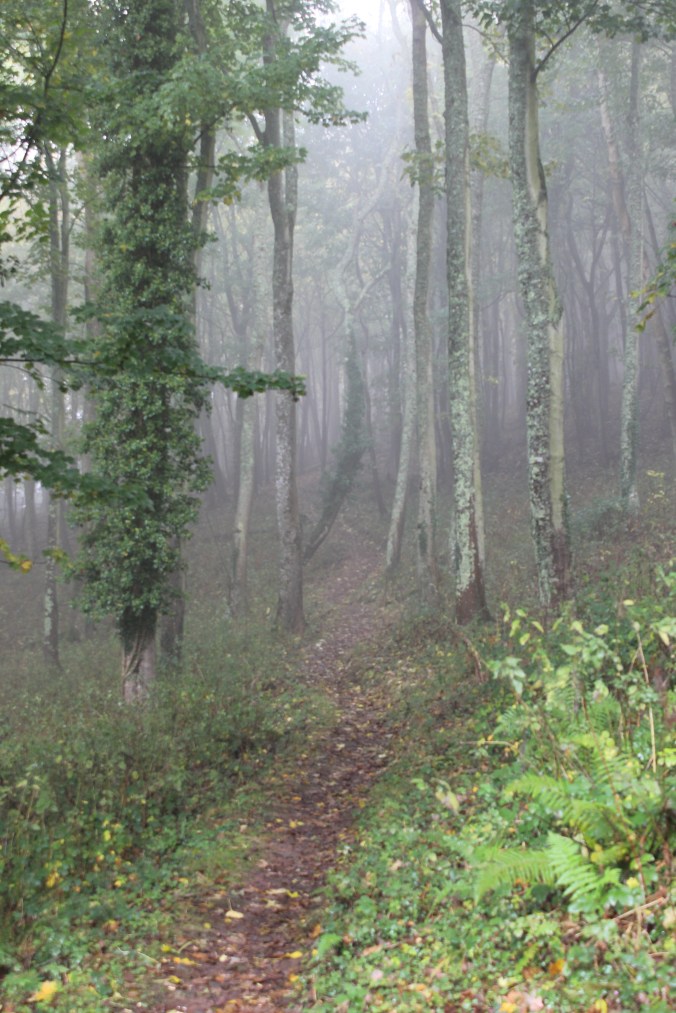
Last Saturday I had the enormous privilege of leading a Quiet Day for St Mary’s Church of Woodbridge, based on I am the vine.  I’m afraid I wasn’t taking photos, just giving my attention to what was going on around me.

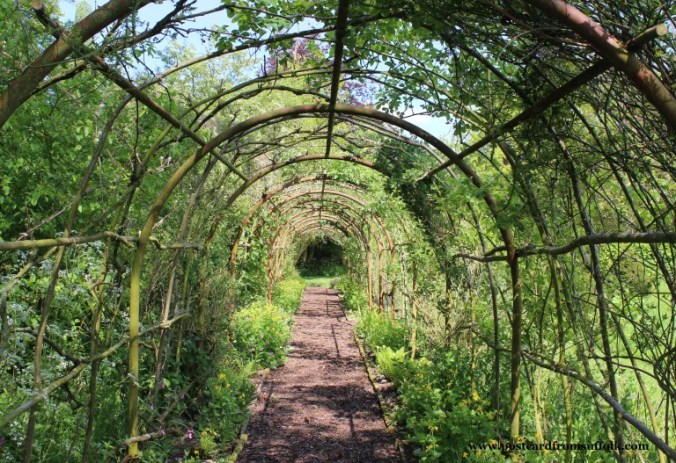
The gardens are so beautiful, as ever, and it was particularly good to see several vines growing and entwined, with small grapes forming.  They were forming a tunnel, you could walk through the vine, almost grafted in.

otley hall suffolk postcards.jpg

A photo from earlier in the year from Postcard from Suffolk

It was so good to sit by the water, and watch the fish and the dragonflies.

IMG_0471

Here is a picture from an earlier visit, in spring.

One of the things we talked about was how Jesus’ I am saying – I am the vine – gives us a way of seeing ourselves as deeply connected.  We talked of many things – how we can deepen that connection to God, and each other.   We talked about everything holding together, ourselves and everything else, in Christ.  We read about that in Colossians.

We used poetry to help us towards prayer, and contemplation, including Malcolm Guite’s sonnet, set to music here by St Brides.

I can’t help thinking today, about our connection to this good green earth.  It is precious and beautiful, and we are only just beginning to learn how it does hold together, interconnected, and mutually dependent, as we are watching with horror as the Amazon burns, and Siberia too.  We know how ancient woodland in our own land has been cut down, or is under threat.

May we find our way home to tending for this beautiful world.

May we take inspiration from the song of the vine.

You can read some more about the vine, from my book on the I am sayings, here.

God, source of all light and life,
help us to see your hand at work
in the beauty of creation.
Help us to know that, in you,
the whole earth is holy ground.

O Lord,
Your greatness
is seen
in all
the world!
Psalm 8:9

From  my collection of prayers, Prayers and Verses


You might like to read A parable for Earth day.


Poem: Weaving – Unweaving

IMG_0921.JPG


This is another poem from the  “They toil not” workshop -poems of spinning and weaving.  The first, you can read here.

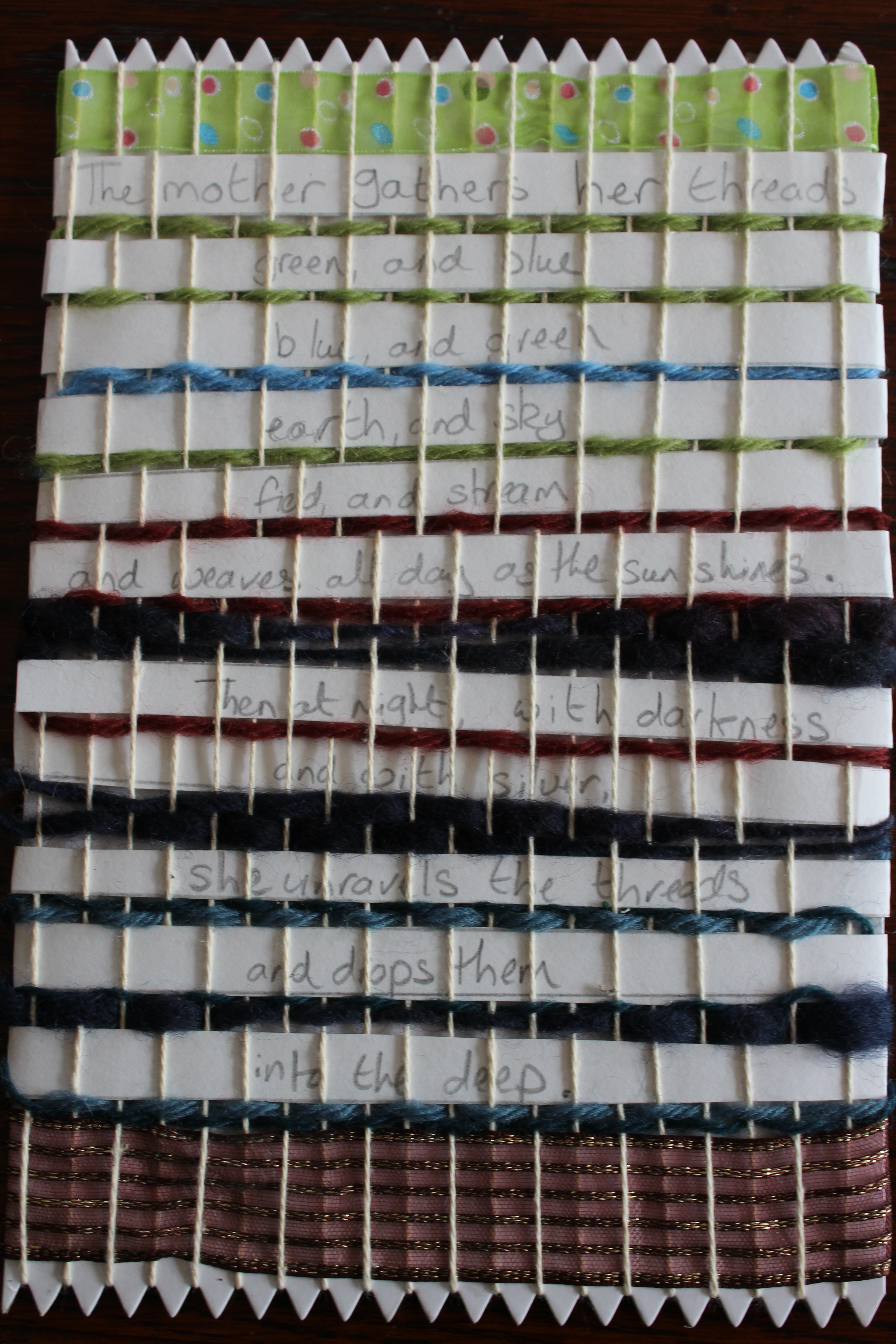
At the end of the afternoon, Beth Soule gave us some ideas for doing and making, including this little loom and baskets of threads.

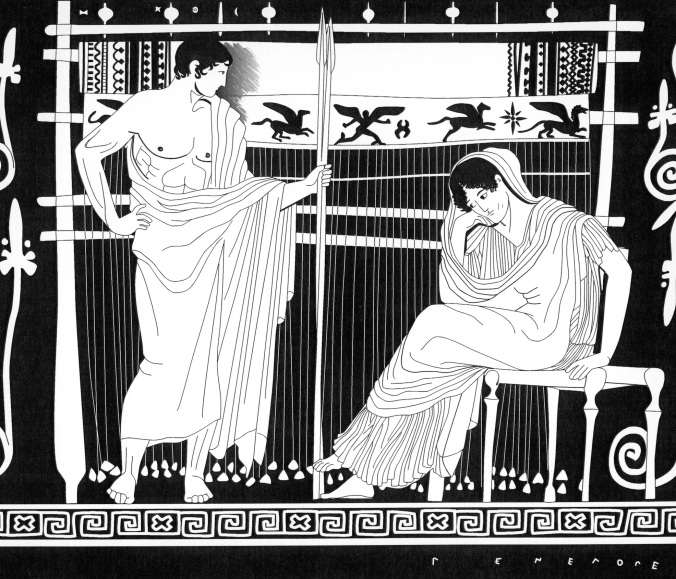
For several days, I’d had some words of Coleridge’s going round in my mind – I’m trying to find them.  I read them in Adam Nicolson’s wonderful “The Making of Poetry”, and they refer to Nature, like Penelope in the Odyssey, making and unmaking, weaving and unweaving.  So, there was an image in my mind of Nature, and Penelope, at her loom, weaving the shroud which she would then unweave at night, as nature makes and unmakes and makes again.

It’s a big theme for a small, playful piece, and maybe I shall return to it, especially if I can find the source.

For now, the woven poem is above, in the picture, hard to read, so here it is set out on a page.


penelope_loom_Chiusi_crop.jpg

Attic red-figure skyphos: Side A, Penelope seated before her loom, and Telemachus standing (both named). Attributed to the Penelope Painter, ca. 450–400 BCE. Chiusi, Museo Archeologico Nazionale, 63.564. Drawing by Valerie Woelfel.

Woven unwoven

The mother gathers her threads,
green, and blue,
blue, and green,
earth, and sky,
field, and stream,
and weaves all day as the sun shines.

Then, at night, with darkness,
and with silver,
she unravels the threads
and drops them
into the deep.


I went to the workshop with my friend, Tracy Watson-Brown.  You can read her poems
Spinning Song

and

Bugs and blossom

on her blog.


Poem- Spider

matthew-spidersilk2

Photo – Matthew Ling

img_0672

Yesterday, I took part in a Poetry Workshop led by Beth Soule of the Suffolk Poetry Society

It was held in the Bank Arts Centre, Eye, which really used to be a bank.  I loved the solid mahogany, looking prosperous and dependable, hung with colourful pictures and full of new life.  The food we had was delicious, and the company stimulating as ever.  There is something very special about writing companionably with others, supporting each other.  It was good to be reminded of that!

The theme of the day was “They toil not” – spinning and weaving – and Beth gave us such a rich feast of material that, as we read our work to each other, we saw what ideas had been stimulated and encouraged.
My mind was turning over a poem by Walt Whitman as I came to write this:


Spider

Growing in a hidden place,
until the day those long, many jointed
legs begin to flex, and stretch,
and take you out
into the autumn light,
where gnats wail,
and flies buzz slowly

Until, balancing on the end
of the brown buttons of hollyhocks
you throw out your lines.
Where will they land?
You throw again across cool air,
beyond sight of your many eyes,
throw again until something

catches, some connection
holds fast, at last,
and you go into your unknown
along a trail
you have already laid for
yourself to follow,
familiar under your delicate feet.


It’s not the first time spiders have caught my attention.

Spiders – September

Silk

Another poem from the workshop can be found here

I went to the workshop with my friend Tracy Watson-Brown, and her poem is here: Spider

Poem – Today, July 19th

IMG_0920.JPG

IMG_0918.JPG
IMG_0917.JPG


It’s been a busy few weeks.  I’ve had the enormous privilege of speaking at the 150th Anniversary Festival Service for my old college, Girton.  It was such a special service, and the choir filled the red brick chapel with marvelous sound.  How good to celebrate 150 years since the college’s small beginnings – the small beginnings of women’s higher education in this country.  It was so good to be able to contribute to a diverse and joyful weekend. A huge thank you to Malcolm Guite for inviting me to speak.

What with that, and this – this, and that, I have rather lost my daily rhythm of writing, and today I thought I would try again.  Just to sit with a notebook and begin, and see where my pencil took me.

It didn’t take me very far at all.  It kept me right where I am.


Today, July 17th

Today is a day of butterflies –
white against the deep greens,
the purples,
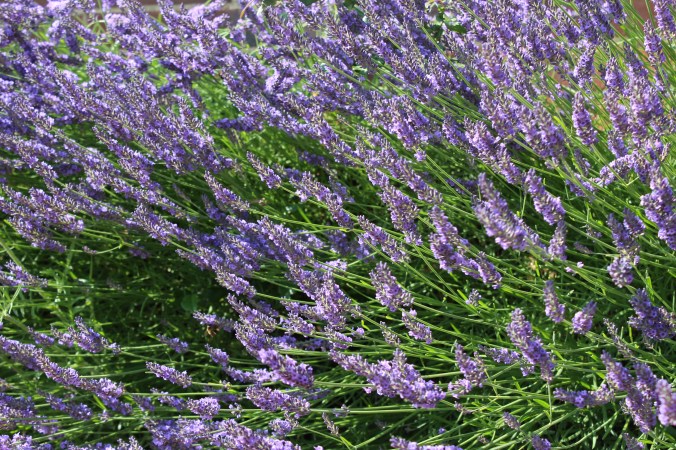
tumbling over the lavender –
intoxicated.

Today the hard nubs of
apples wait for their
slow ripening,
and the last of the buttercups
shimmer faintly.
Tomorrow, and yesterday,
yesterday, and tomorrow,
but now,

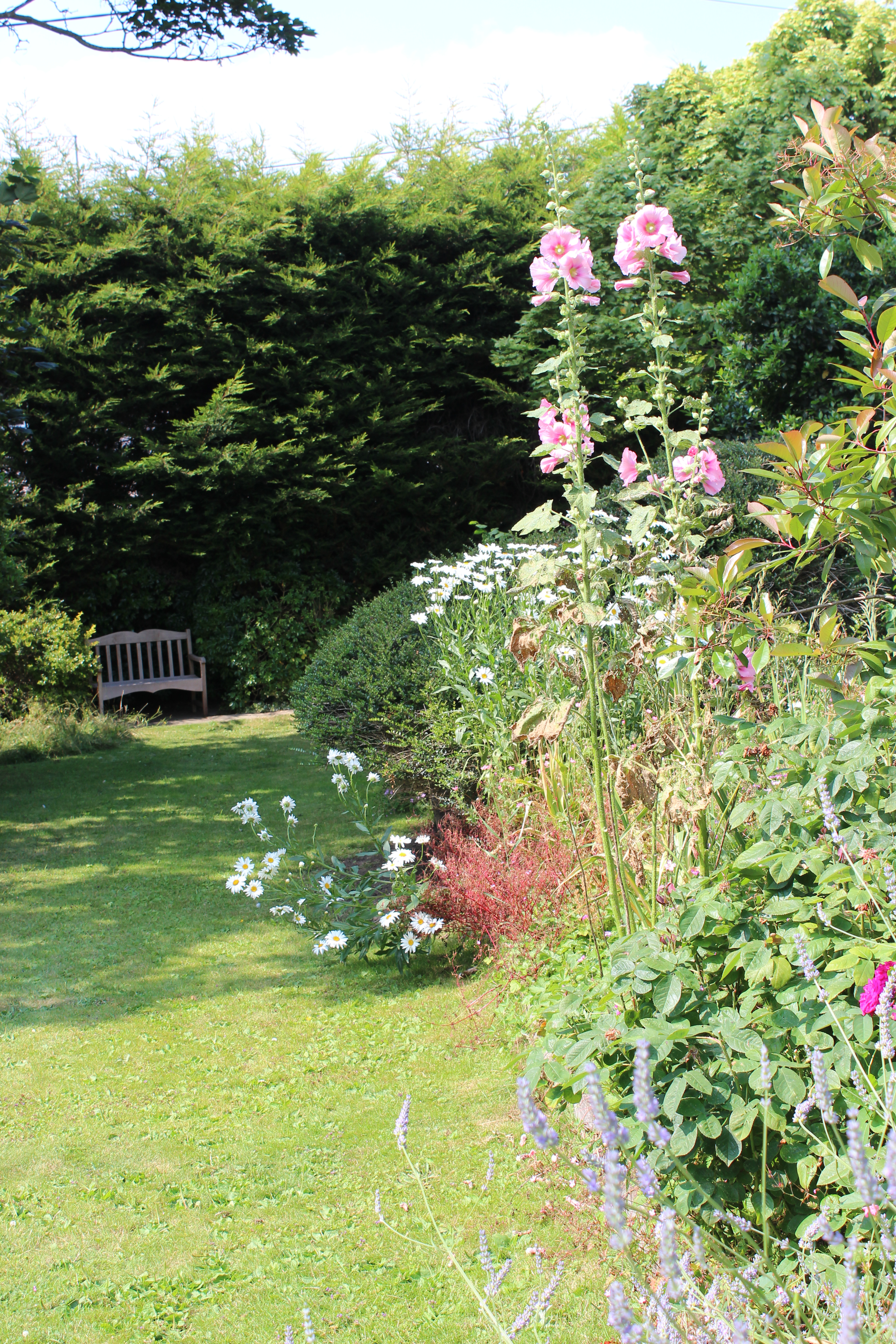
Today, is a day for hollyhocks,
frilled and pastel,
full of large fat bees,
while the young newts
hide there, under the red
watering can,
and the sky turns white,
and the swifts fly high,
and my eyes fill with
limpid light.
It is enough.


IMG_0919.JPG

The Alde Valley Festival – a glimpse of a more beautiful world.

I don’t know how I have managed to miss this astonishing festival in previous years – it’s not far from where I live, but tucked away in the network of lanes between routes to other places.

Perhaps that’s one reason why, going down the drive laced with cowparsley and buttercups, it felt like we were slipping into another world – a world we are losing and a new one we are finding.  There are ribbons tied in trees, and sculptures, and everyday objects that look like they have been placed with transforming love and care.  You feel yourself relaxing, and being lifted, and filling with wonder, even as you arrive.

Jason Gathorne-Hardy writes in the programme

The farm sits within a landscape that has been planted and cultivated for hundreds, possibly thousands of years. Small areas of farm parkland and pastures [known locally as pightles] are enclosed by hedges of hawthorn, crab apple, blackthorn, field maple, hazel and elm.  This grassy landscape is punctuated by free-standing trees: oak, ash and poplars tower above the hedgerows……

White House Farm is a truly remarkable place.  They have been running this festival since 2011, using their working farm buildings as workshop space, studio space, and exhibition space.  This year’s theme is Florabundance.

As you meander through the farmyards, directed by handwritten signs on wood, you find open doors to peer behind, revealing breathtaking beauty.  There is so much, but I’ll just pick out a few details among a true abundance.


In the lamb nursery room – which is used as such earlier in the season – laid out on white tops, were the most exquisite bronze vegetables, fruit and seeds. Alice-Andrea Ewing had cast them from produce during her residency at the farm.  The beauty of the natural forms coupled with the weight and seriousness of bronze gave them an extraordinary presence, as if we could see and feel everyday things as truly wonderful.

aliceandreaewing1


The combination of old farm buildings and small cubes of art gallery white really charged ordinary food with a sense of the artist’s reverence, such as with these pears, and medlars.


aliceandreaewing2


I loved the way the whole place was so hospitable.  There were were toys and picnic tables and clues to adventures outside – and inside the lovely Suffolk chairs, old and new, were often beside piles of books that, if you felt inclined, would send you on the trail of other adventures – of friendships and connections between the artists and those who had gone before, and the places they love, and their mutual “cross pollination”.   The Benton End trail was a joy to follow – especially the connection with the iris paintings we would come to later.

I loved the transformation of the everyday, the desire to honour simple planting and growing, that was evident everywhere.  In particular, Tessa Newcomb with works “The onions continued to be elegant”, “The last moment of the Year, 2018”, and a whole barnful more….. and Ruth Stage’s limpid winter light, again in pictures of the farm and nearby walled garden.

It was the corrugated old threshing barn that held the largest and most breathtaking works though.  Jane Wormwell’s large canvasses of detailed corners of her garden, and tangles of hedgerow brambles, were remarkably powerful and moving.  These huge flowers put me in a better perspective.  The main exhibition space was given over to Jelly Green’s iris paintings.  This is why we had come – the publicity material had small snatches of them, and I really wanted to see them in real life with all the thickness of the paint and vividness and aliveness of the colours.

jelly green.jpg


Some of these were flowers cultivated at Benton End by Cedric Morris, who taught Maggi Hambling, who taught Jelly Green.

The vivacity, the joyfulness of the paintings was breathtaking.  I could have spent much longer there.

There is a tiny chapel in one of the barns, with a cross on the table before an animal feeding trough, a manger.  The walls have small pictures of refugees, and brick-sized scriptures alongside.  It was a good place to stop, to breathe, to pray.  The whole place is full of a deep sense of presence, of connection, of goodness, of life.

We walked through the bluebell wood, following the winding path, slowly, breathing deeply, letting the colour and the scent fill us.


More from Jason Gathorne-Hardy

It is easy to believe that we, as humans, can control our environment: that we dictate the terms on which we live on this planet. But that notion of power over of all that we survey is probably a mistake.  Plants give us oxygen to breathe, clean water to drink and the raw materials for shelter, food, medicines, comfort and rest.  To borrow a phrase, ‘we live in their world’. We have lost a lot of biodiversity in the past two hundred years.  Locally, this is made abundantly clear by referring to George Crabbe’s plant list for Framlingham and District in the early C19th…….
The Exhibition also seeks to honour their presence in our gardens and landscapes and celebrate the importance of plants in our lives – alongside natural pollinators and seed carriers – through the work of selected guest artists.  Implicit in this is a positive and hopeful story: that the diversity of flora and fauna that we once lived with…. in whose world we lived…. may once again become abundant and resurgent…. which is something to celebrate!


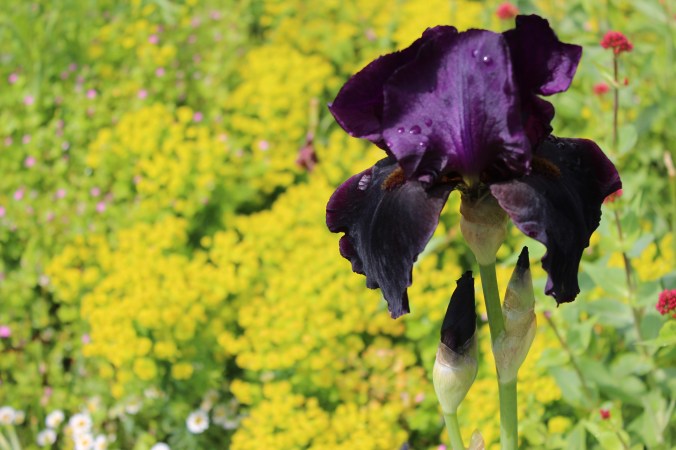
What a joy it was to come home, and to see that the irises in our own garden were beginning to open.
IMG_0913
If you live in Suffolk, the exhibition is open for one more weekend – the Late May Bank Holiday.  The tea in the farmhouse is very good too!


Poem: Sheringham Park Pigeons


WP_20180508_10_33_20_Pro - Copy.jpg

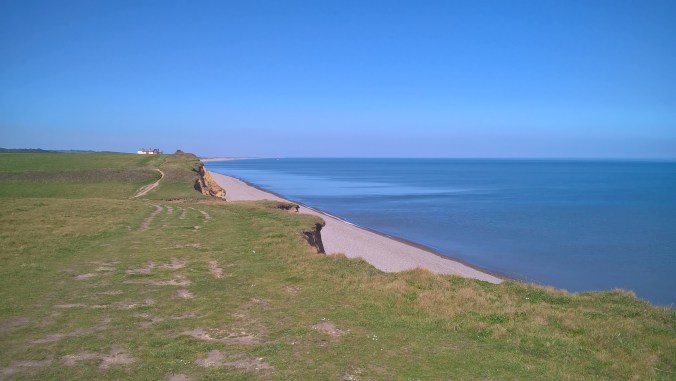
The Norfolk coast is such a beautiful and fragile place.  We walked there again,  close to cliffs that seemed to be sheering away into heaps of sand.  I tried to keep the recommended five meters from the edge.  I am not afraid of heights, but I was afraid of these cliffs.

Living in East Anglia we are very aware how precarious we are, with the power of the North Sea beside us, with the ground under our feet seeming sandy, and uncertain.  I feel the threat of that sea driven by north winds, rising as the ice melts.  These places, and the creatures that live there, like the sand martins, like us, are in uncertain times.  And although it may be tempting to despair of what is happening to our world, what our systems of greed have done and are doing to the world, I feel our sense of beauty and fragility offers us a note of hope, too.  The sorrow for what we have lost, and what we are losing – all those precious creatures, plants, places – can bring us to our senses, can help us wake up, and treasure what is close, what greets us every day with a soft, green welcome.

Sheringham Park is full of bright colour in spring – first the azaleas, then the rhododendrons.  There is a tower you can climb to look over the tops of these extraordinary banks of pink, and purple, and red.

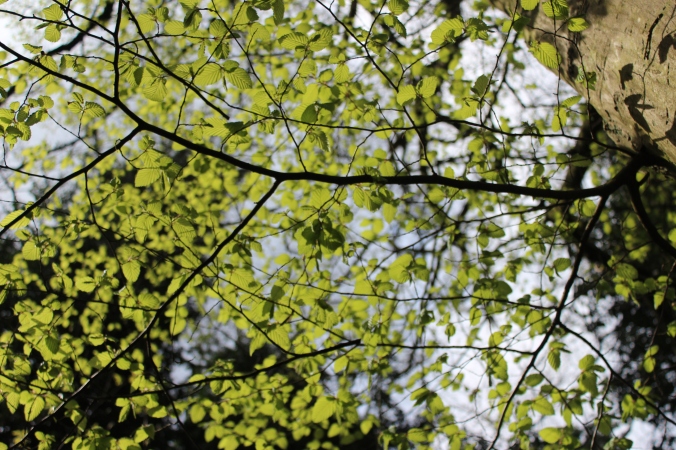
What caught me, though, what filled me with wonder, what made me feel a part of this place, was a beech tree, and some pigeons.  The startle as they all flew away made me feel that moment, and that place – a sense of awe, of connection, of being one with a place.
It seems such a small thing in the face of potential global catastrophe – to love a place, to be awed by such ordinary things as a beech tree in new leaf, as a crowd of pigeons.  I wonder if it is such a small thing, though.  I wonder if that sense of love and connection can open us to another way of being in the Earth – humbled by its hospitality, aware we have gifts to offer in return, walking softly.

IMG_0887


Sheringham Park Pigeons

 At the top of the ridge –
from here the land slopes to the sea –
from the top of the tallest beech tree
singing with new green,
shining with life,
the pigeons fly
away in clattering waves,
circle after circle of them.

My steps disturbed them,
although my shoes are soft.
How could there be so many,
crashing through the blue air
in tens, in hundreds it seems,
in circles that grow wider and wider
their flights the spokes of a wheel.
And here, this smooth old grey trunk
its very centre.
Where I stand,
the very centre.

Poem: The green of rose leaves

IMG_0872.JPG

IMG_0874.JPG

IMG_0840.JPG

IMG_0818.JPG


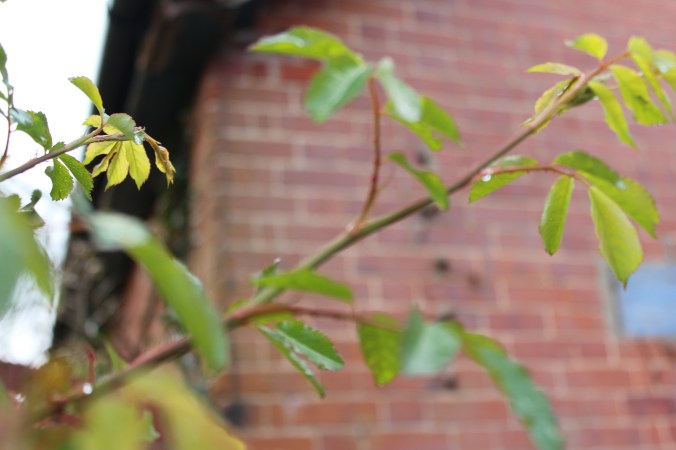
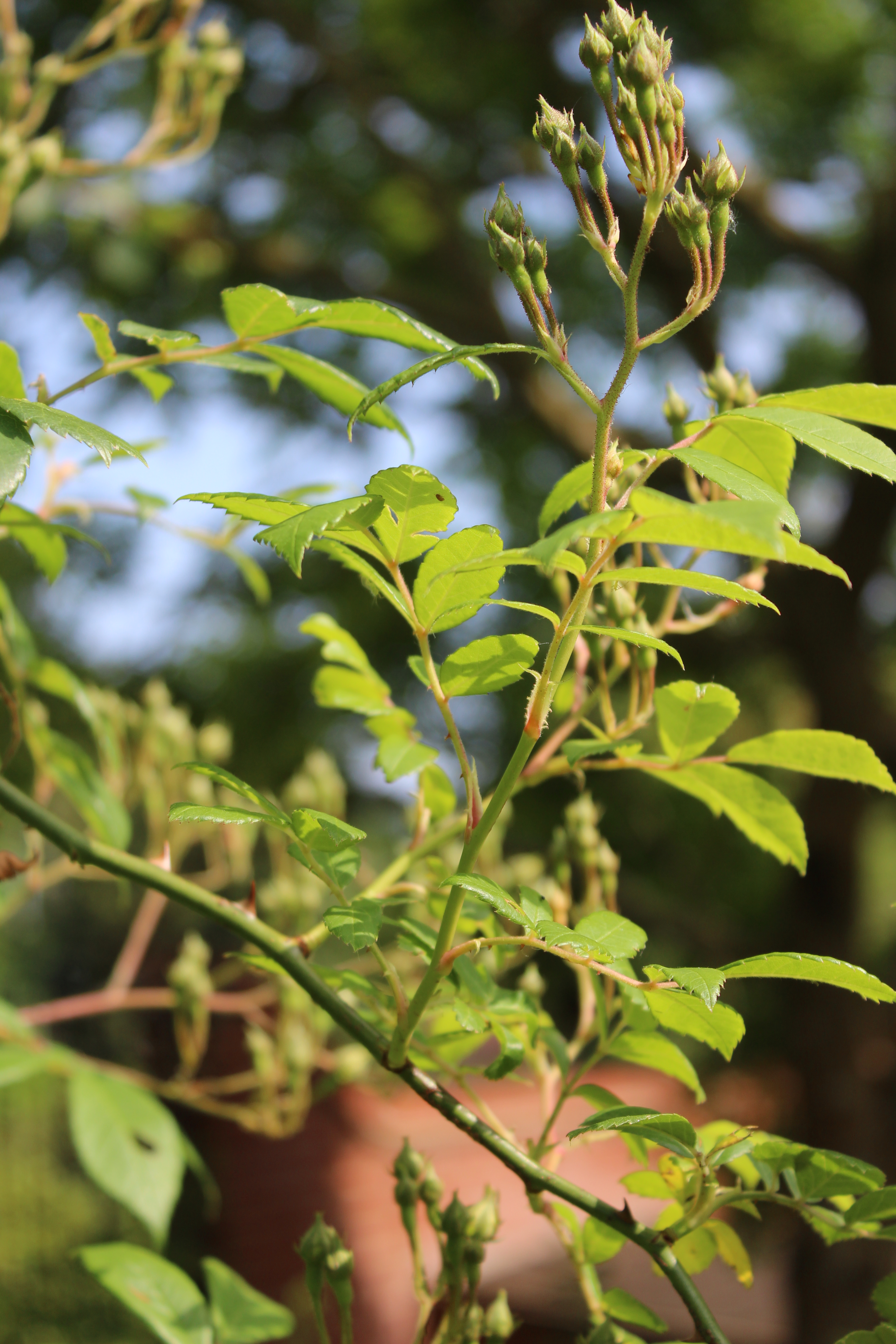
The progress of the rose – some, taken last year.

The roses that ramble through the silver birch give me great joy – I love to watch them as they grow and get ready to flower, and then fill the trees with startling beauty. I’m waiting for them, I can almost anticipate their scent …..

but not so much as I don’t love the spring as it is now, today.

Sometimes, we just need to look long enough to see it.

The invitation remains.

How do we respond?


The green of rose leaves

I watch the long arching branches
of the rambling rose bend in the breeze,
noticing how the leaves lighten,
like a colourchart of
pea green,
like a Deco lithograph.

So dark by the stem,
and look, how vibrant
by the tight bud –
with its white flower
to come.

Today, I can sit here,
and do this.
Today, I give my attention
to the spring,
which warrants it.

It has been here all along,
calling with the blackcap’s
fluid, full-throated voice,
it was here,
all this green,
saying
“Look, look……”
and asking me now,
“So, are you going
to join in?”

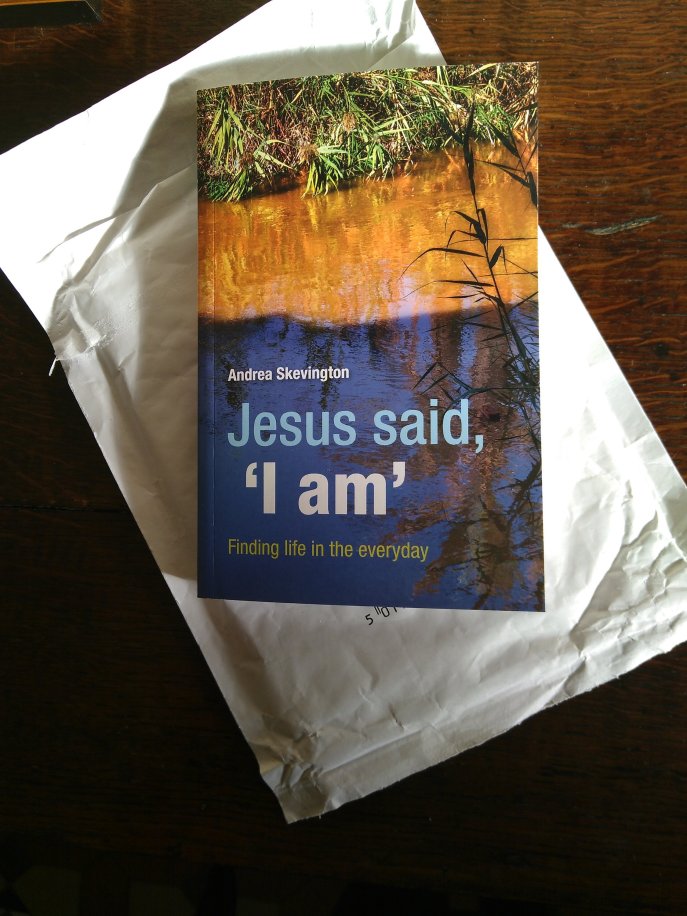
A book for Lent – Jesus said I Am …. getting started.

IMG_0452

Here in the UK, our late winter weather seems brutal.  This is not what we expect for February, and many people are beginning this season with the heartbreak of seeing their homes flooded.  This Lent, the Archbishop is encouraging us to take seriously the call to tend and care for the living earth.

WP_20171016_16_18_46_Pro
I am very pleased that various groups, churches, and groups of churches are going to use my book as guide through Lent, and, if you would like to follow, you can find a suggested programme here.

IMG_0790

Getting Started: Chapter 1, Moses and Abraham.  This is a shortish introductory chapter – you could fit it in the week before Lent, or as an extra piece of reading as Lent begins.


IMG_0871.JPG
That means that this week is a good time for me to share with you a little of the first chapter – I am: Moses and Abraham.  It’s short, so I hope you’ll be able to include it in your readings.
Exodus 3:1-14


John’s gospel looks back to Moses’ ancient story, recording for us how Jesus called himself by this name – “I am”.  This name, which emerged from a burning bush so long ago, is one of the most identifiable features of John’s account. It resonated with his early readers and listeners in Greek Ephesus, and it stirs our imagination even today, millennia later.  Before we go deep into John’s account, and explore why that may be, we will look back to Moses’ story and see what we understand of this earliest “I am”.

…….

Nothing is wasted in God’s economy.  God used the rubbish – and the good – in Moses’ upbringing and his life as a shepherd.  He became ideally suited to his task.  As well as his circumstances and experience, God used his character; in this case, a sense of justice and an indignation at bullies.  What must have felt like failure and a downwards path was the place where Moses encountered God.

We do not know if he was seeking God when God appeared.  We do know that he was in the middle of his everyday, working life, and that God did something strange to arrest his attention, awaken his curiosity, draw him nearer.  Attention and curiosity can guide you, can awaken you to God in the burning bushes we pass every day.

Moses certainly didn’t seem to looking for a job, let alone a great mission.  It is easy to read his rather thin excuses and wonder why he spent so long arguing.  His unwillingness to respond seems to come from uncertainty.

Moses is uncertain about himself, and he is uncertain about God.

“Nothing is wasted in God’s economy” – can we live from this realisation?  Can we acknowledge that even very difficult things can be fuel for something better?
Can we work to eliminate wasteful ways of living?

And from the Reflection and Response section

Earth’s crammed with heaven,
And every common bush afire with God.
But only he who sees, takes off his shoes.
Elizabeth Barrett Browning

As you start your day, pray for open eyes to see where God may be at work, or may be seeking to catch your attention today.  Set off with open eyes, a camera and a notepad.  Record anything that draws your attention.  At the end of the day, mull over what you have recorded in prayer.  What did you see?

IMG_0866.JPG

If you’d like a copy, you can ask your local bookshop, or order online.

Here are a few suggestions:

The publishers, BRF

Amazon


img_20181130_114736372319885.jpg

Thank you for joining me in your reading.  There is more to come…..

Poem – Throwing sticks for the Black Dog

Today is the day some call Blue Monday – the most depressing day of the year.
Here in Suffolk, though, we have had some sunshine, and the frost has sparkled, so it’s less gloomy here – at least meteorologically – than it has been for weeks.

I thought I’d share this poem with you.  Churchill called his depression his Black Dog, and it seems a good name for it.  I have tried to express the care and nurture we wish we could give ourselves, and those we walk with, when we notice the Black Dog is beginning to sniff around.  Those gentle nudges towards the things that used to bring life and joy, in the hope that they will again. I hope that has quite a different feel to injunctions to pull up your socks, or whatever.  It’s more a hope of holding on to the capacity to notice what does you good, and to keep on doing that, even when you don’t feel the good being done.

I hope it is a simple and gentle hand to hold.

The Blurt Foundation offers compassionate support resources online, as do many other organisations.

wp_20170114_10_57_06_pro

Throwing Sticks for the Black Dog

When I’m walking, I pick up sticks,
they feel rough and dry in my hand.
I have been collecting them for a while,
just in case.

And that black dog, well, can you see him?
Is he walking with us –
sloping through the undergrowth?
Or there, breathing at our heels?

I will throw some sticks.
Maybe he will turn playful,
maybe he’ll run after them
and not come back.  Maybe.
Maybe he’ll leave us alone for a while.
I can try.
Here are a few I have gathered:

Beauty, any sort of beauty
that takes you unawares
so the mind halts in its circling tracks.
Green beauty of growing things,
beauty that comes from the human
heart and mind –
words that build castles in the air.
Look, there they are!

Light, and the patterns it makes
through these leaves,
and darkness, when it is soft,
when, awake at night,
sitting by an open window,
I hear the owl – can you hear it?

Movement and prayer, together,
if movement and prayer remain possible.
Good food, that grows in the earth,
its colours and smells as I chop, chop.
Friendship, and kindness –
either given, received, or witnessed.
Love.
The memory of good things past,
the faintest trace of hope for
good things to come.
For good things may come.

And so, I carry this armful of sticks,
ready to throw – ready to give away –
like this,
and this,
and this.


img_0682

img_0773

Here is a link to my poem Sorrows

Poem – Crow, on the lawn

IMG_0851

My first home-attempt at lino cut


Here is the second poem I have written about the crows who have increasingly appeared in my garden.  You can read the first, and something of the background, here.

It’s a small story, but not small for the crows.  It intrigues me to think that, as I go about my daily life, noticing or not noticing the lives around me, so many creatures are living fully, experiencing – well, we can’t know what, but what we see leads me to suppose that there may be some more commonality of experience than we tend to assume. I am trying to notice more, to see more of that commonality we share, creatures of earth that we are.

I still remember the blackbird who stood guard, in what looked like a vigil of grieving.  You can read that poem here.

I have seen various birds of pray above the garden – kestrels, a buzzard, and, greatly to my delight, a red kite.  I have seen the kestrel in pursuit of a pigeon through the trees here, and the pigeon got away.  It gives me great pleasure to see these magnificent birds, and to know that the land is healthy enough to sustain them.  But I have also seen feathers on the lawn, and blamed the neighbourhood cats.  I know now it isn’t always the cats.  And on this occasion, I saw the aftermath of the grim event.  I hope this poem honours the community of crows.

I do not know how long these crows will stay.  I think they need taller trees than the ones in my garden.  I shall keep watch, and see what they do as they search for a home.


Crow, on the lawn

And through the window
I see a sleek small grey bird,
with a yellow-rimmed eye,
with a curved beak,
that stands on the belly
of a crow lying on its back.
Its black flight feathers are
curled up, ruffling in the breeze
as if it lives.

And the hawk pulls on the flesh
of the crow until what remains
is light enough to carry

And then it flies,
with a low, slow flight,
leaving behind
ruffles and pom-poms
of black feathers,
a strange mourning.

Later, though, I see two
crows flying fast and straight
across the sky, intercepting
the curved, grey shape of the hawk.
They circle it close,
cawing, chasing, harrying.

And the hawk has not returned,
and the crows above me
fly in slower circles now,
and the black feathers
still tumble across the lawn.

IMG_0853