Here we are, then, in this series of poems drawn from my meditations on the book of Exodus – we have reached the first plague. The first of ten terrible blows to strike at the stony heart of Egypt, when Pharaoh refused to release his slaves from their labour.
You can read this section of the story, and reflections on its meaning for us, now, in our time of crisis, in my previous blog post here. As I’ve said, I find the story of the plagues hard to read, hard to understand in the terms it is set out. What I do see is a picture of God who longed for this people to be free, who cared for their suffering, and who asked their oppressors, through Moses, to release them. I see that the slaves found it hard to hold on to hope, as did Moses. I see how Moses and Aaron persist at risk to themselves, and their people, in asking for freedom, and to warn of the consequences if freedom is not granted.
It seems to me, that in the Hebrew scriptures, plagues and national disaster are linked to injustice – especially towards the vulnerable, and even to the land itself. We see this in the book of Amos especially, but it runs through the words of many prophets. However we interpret these stories, the ancient wisdom gives us connections between not following the ways of justice, and mercy, and peace, and the unravelling of nations.
This poem, like others in the series, is uncertain. We are part way through a story, and if we are to honour the story, we can acknowledge the confusion, the fear, that must have been felt by those who lived it. We are used to reading stories in the pages of scripture, and they can become, in time, stories we know well. We can forget that these people’s stories were full of deep uncertainty, fear, and confusion, as we find our own lives to be. But if we remember, and enter into them compassionately and prayerfully, we may see where they found their hope, and how they lived even when hope was not to be found. Perhaps we can draw some encouragement from their ancient wisdom.
This poem echoes the first in the series, Pharaoh’s daughter, and the child. It draws out the parallels between the beginning of Moses’ story, and this moment when the plagues begin. That seems significant to me.
Thank you for joining me on this walk through this most foundational of the Hebrew Scriptures. I hope it helps as we navigate our way through difficult times.
Moses waits by the Nile for Pharaoh. Exodus poems 9
Here you stand, by the place where your mother left you in a basket, where your sister stood watch, all those long, restless years ago.
In the place where a Princess’ attendant drew you out from the water, crying, out from the Nile-reeds, where crocodiles waited, out from the flood and the snakes and the hum of mosquitoes, out from the sentence of death – instead, adopting you, making you her own.
And now, all these long, restless years later, another from the royal house makes his way to the bathing place, just as she did, and will find you there
as you stand, with your brother by your side, as golden Nile-waters swirl and eddy and ripple outwards, outwards from the place where you stand, shining and fearful in the dawn light.
And, as there was no freedom to be granted that day, You raised high your staff, brought it down to strike that golden water which thickened and reddened and turned to blood.
And the Nile, which should be the life-blood of the land, became instead the blood of death. Death like that of newborns cast without help or mercy into these waters, long restless years ago, at the time when you were saved.
Judgement, could this be judgement, stretching out like darkness over a dark land?
Where is peace, and mercy, and life to be found now? Where a soft heart in this dry land? Where freedom?
I’m working on a poem based on the first of the ten plagues of Egypt, where the River Nile was turned to blood. It’s not easy, this whole business of plagues, as I’ve said before. It feels an ancient interpretation of events, and I’m seeking to be honest about the unease that interpretation stirs in me. At the same time, a series of catastrophies befalling a nation, even as great an empire as ancient Egypt, seems so current, so in line with our daily news broadcasts, that I’m sticking with it, and seeking to be open to the movement of the Spirit, to show us what wisdom, what help, there may be for us. One of my guiding principles when I find a passage difficult is to ponder – if all scripture is useful for teaching us goodness, then what use is this scripture? What goodness might be learned from it?
As I’ve been allowing my mind to inhabit the story, a number of things have come to mind, and won’t be shaken. The first is the symmetry of the story. The story most people remember about Moses – if they are familiar with the narrative at all – is how he was found by Pharaoh’s daughter in a basket concealed among the reeds in the Nile, found in the morning when she went to bathe. This new Pharaoh seems to keep to the same tradition, of visiting the river at dawn to bathe, accompanied by attendants. Moses therefore finds himself standing near the place where he was left by his mother, and found by the princess, waiting to challenge Pharaoh. The symmetry is so striking I’ll copy the retelling from my earlier post Retold : On the banks of the Nile.
“On the Banks of the Nile.
Jochebed and her daughter Miriam slipped out just before dawn. They walked silently, shapes blending into the darkness. At every sound they stopped, afraid the slave mastrs might hear them. They crept down to the green banks of the Nile, the great river that was the lifeblood of all Egypt. There, by the trembling papyrus, they stopped and set down their load. It was a tightly woven basket, a tiny boat, contaiing Jochebed’s three-month-old baby son. She lifted the lid and leaned down to kiss him, splashing him with her tears. Miriam said, “I’ll stay nearby and try to keep him safe….” Jocobed slid the little boat into the reeds, and ran back to her cramped mud-walled slave house. “May God protect and keep him!” she prayed. She knew Pharaoh wished her son dead, along with all the other Israelite baby boys. For the Egyptians hated the Israelites now. The Egyptians had forgotten how Joseph had saved them from starvation many generations ago. In Egypt, the Israelites had grown in number and strength, and the Egyptians looked at them with fear in their eyes. So they made them slaves, but they could not crush them. In his anger Pharaoh summoned the two midwives who delivered the Israelite babies, and gave them a terrible order: “When the babies are born, let the girls live, but kill the boys.” The midwives bowed as they left, but they would not do such a terrible thing! The baby boys continued to live, and grow strong. Then Pharaoh commaned everyone. Throw all the baby boys into the Nile!”
Miriam stayed by the Nile, hidden among the reeds near her tiny brother’s basket, and waited. Then she heard the sound of singing, and saw the princess, Pharaoh’s daughter, coming towards the river with her maids. Miriam hardly dared to breathe. Would the Egyptians find her brother? The princess and her attendants were so close now. Miriam watched the princess take off her jewels and glide into the water. It shimmered like gold in the early morning light. Then the princess stopped. She had seen the basket in the reeds, and sent one of the slave girls to fetch it. Peering inside, the princess saw the baby crying. Her heart melted. “This is one of the Israelite babies!” she said. Miriam seized her chance. She scrambled out of the reeds, and bowed down before the princess. Swallowing her fear, she spoke. “Your Highness, shall I find one of the Israelite women to nurse this baby for you?” “Why yes, go as quick as you can!” For the baby was crying very hungrily indeed. Miriam ran back home to get her mother. “Care for this child, and bring him back to me when he is weaned. I’ll pay you for your trouble!” said the princess, gently placing the baby in Jochebed’s arms. Jochebed’s heart nearly burst with joy. She had her son back! So she sang him Hebrew songs, the songs of the Israelites, and told him of thier God, and his promises, while he was a young child. She prayed for him, and cared for him tenderly until it was time to give him up to Pharaoh’s daughter. The princess called him Moses, and adopted him as her own son. He grew up as an Egyptian prince, educated by the best tutors and trained to rule.” From The Bible Story Retold
Within this symmetry is also a terrible symmetry of justice. This is the subject of the poem I’m still working on, so I’ll say more when I share that with you. But I’m sure you’ll note, if you read the story above, that the river at this time was a place of death for the baby boys born to the Hebrew slaves. The river that was the life-blood of Egypt had become for them a place of death. On doing a bit of research, it seems that some ancient commentators suggest that this first plague was a punishment of the Egyptians for that terrible act, and that ties in with description of the plagues as judgement. My previous poem, The space in between, also holds this possibility.
Others see the plagues as a challenge to the Egyptian gods, and this one is a challenge to Hapi, often seen as a symbol of life and fertility brought by the river’s floods. As we’ve seen, the cruelty of the command to throw the babies into the Nile is in itself a serious undermining of that understanding of the river as a source of life and fertility, and perhaps an offence to those principles even under the Egyptian’s own belief system.
If there is some truth in these understandings, then this first plague might also be a foreshadowing, a forewarning of the last and most terrible – the death of the firstborn boys. We shall explore further.
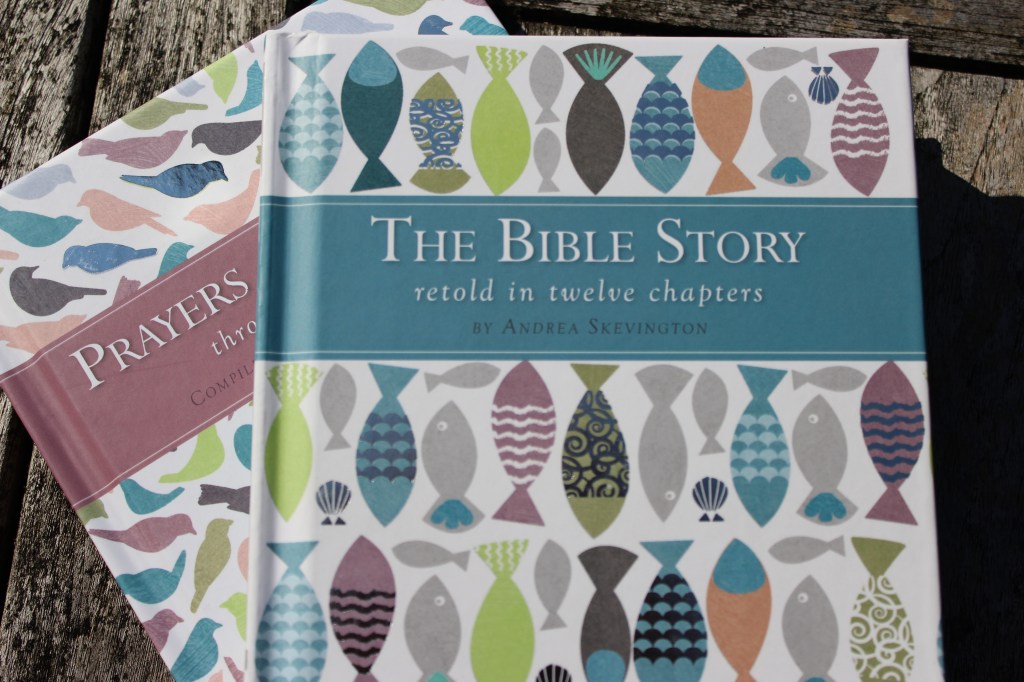
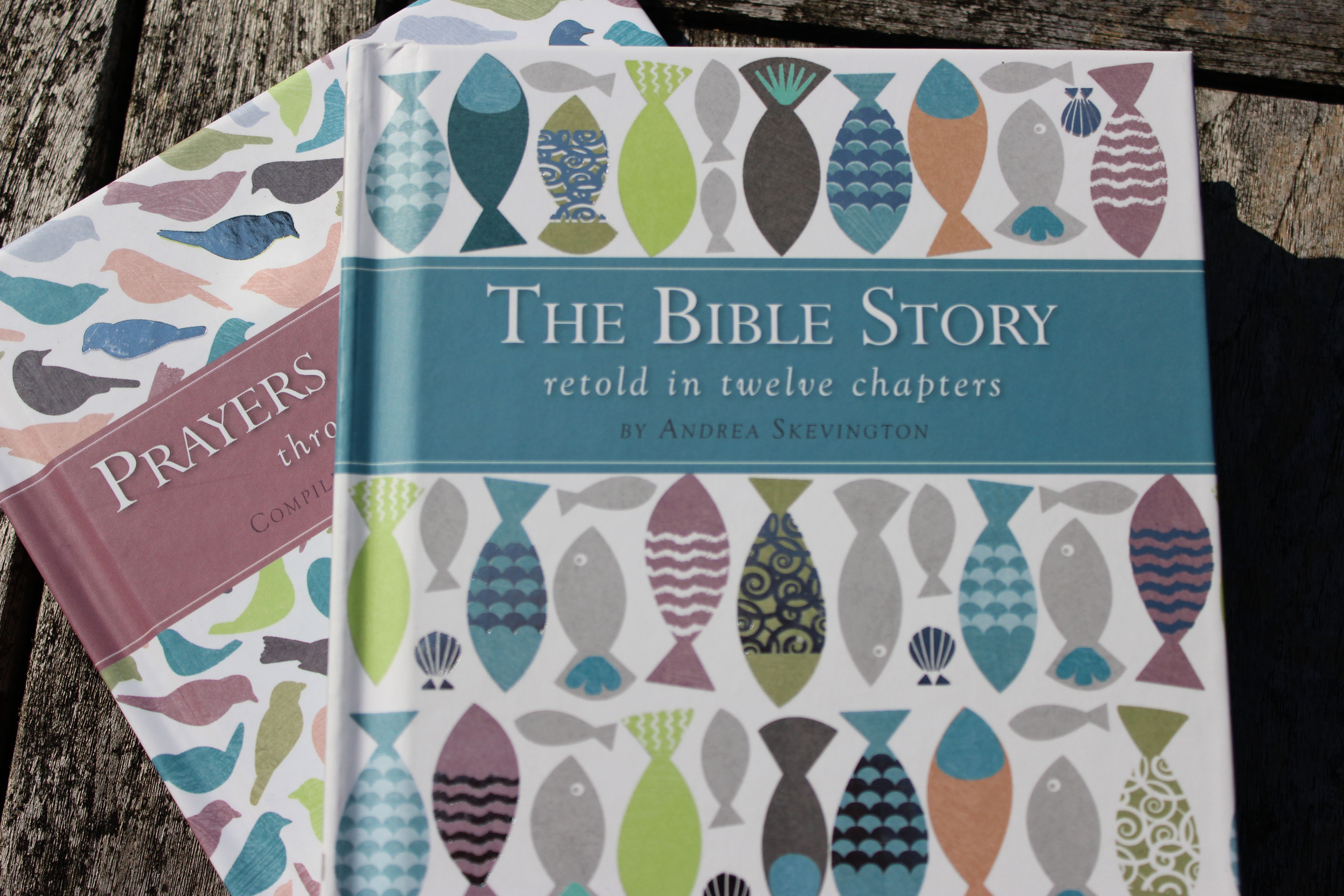
For now, here is the fragment of story we are dealing with, taken, as they all are, from my book, The Bible Story Retold.
Moses and Aaron warned Pharaoh of the terrible things that would happen if he did not set the slaves free, but he would not listen. And so, it began.
First they spoke to Pharaoh by the Nile as he went down to bathe. Moses and Aaron stood by the banks of the river and said, “This is what our God says: you must free our people to go to the wilderness. If you won’t listen, the river will become blood red, undrinkable, stinking. Egypt will be thirsty.”
Pharaoh turned away and carried on toward the bathing place. Then Aaron raised his staff and brought it down on the water with a mighty splash. The water swirled, thickened, and reddened, like blood, and gave off a foul smell. Fish floated gasping to the surface and died. But Pharaoh’s magicians could change water too, so he simply went back to the palace, unimpressed. He would not let the people go.
From “The Bible Story Retold in Twelve Chapters”, published by Lion
The next thing I’ve been thinking about in the light of this passage, is our own waterways, and whether they bring life, or death. If this difficult passage is useful, and I believe it is, one of the things that it may be teaching us is that actions have consequences. We can live harmoniously with God, with each other, with creation, or not. And those choices have consequences.
Yesterday, it was revealed that not a single one of Britain’s rivers met water quality standards. This is terrible, a tragedy for all the life that depends on rivers. And all life does depend on water. As we reflect on the ancient story of the Nile, the lifeblood of the country, turning undrinkable, we can remember how important our own rivers are, and how the actions of people, and corporations, may make them instruments of harm, rather than good. If this passage is to train us in goodness, and perhaps rebuke us, this is one way we can permit it to do so.
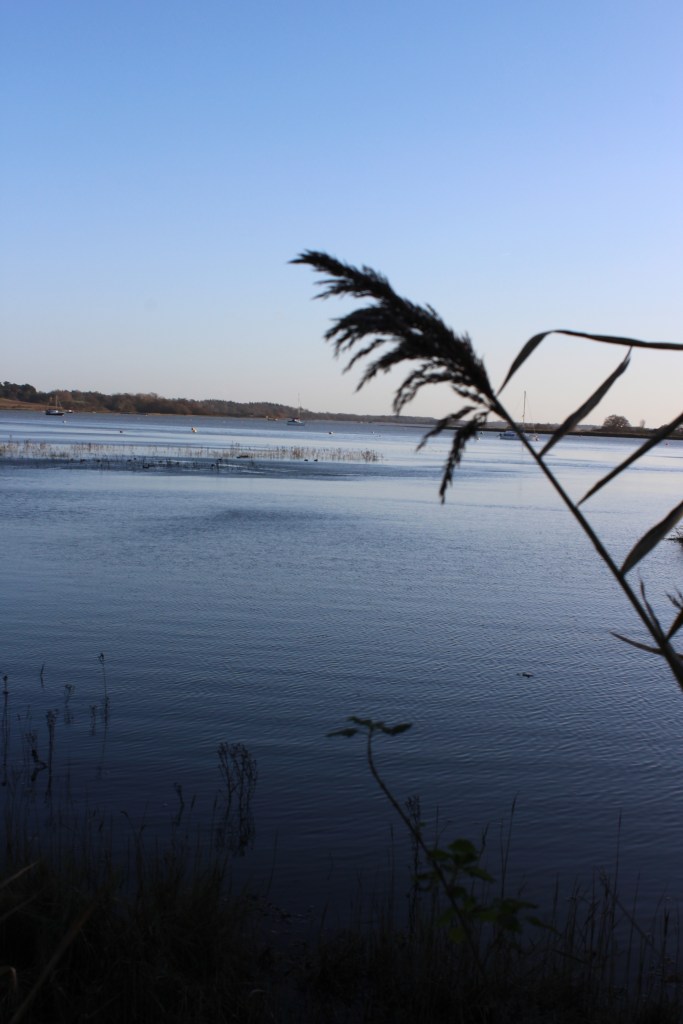
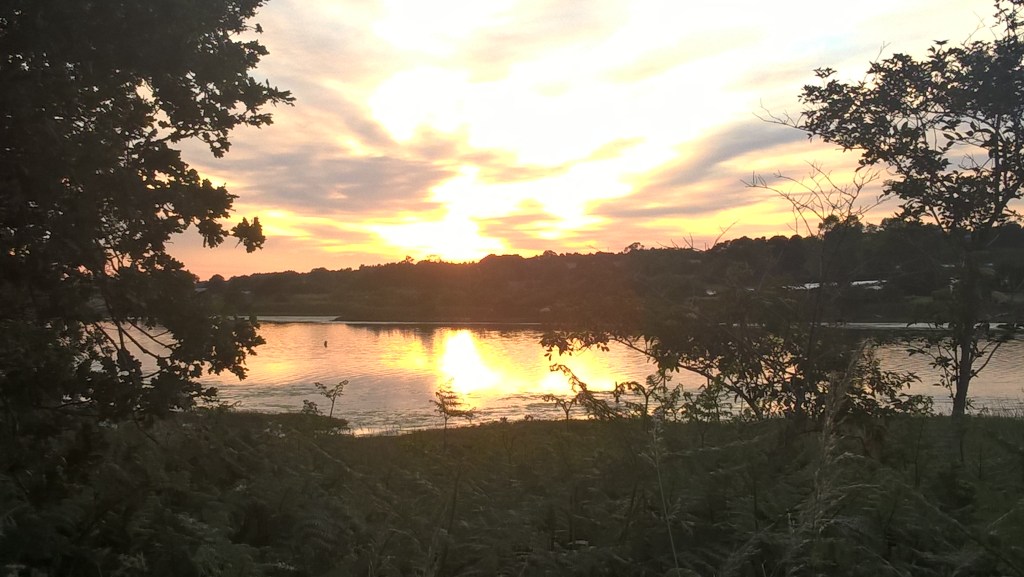
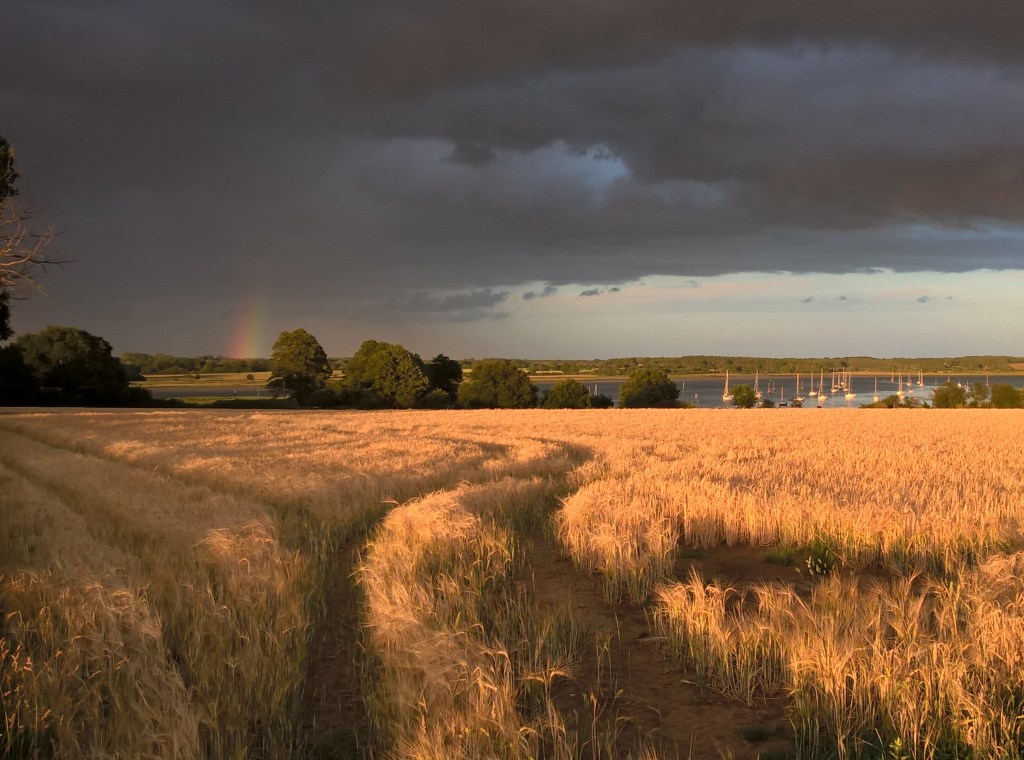
We can seek to become aquainted with our own rivers, our own watershed, and seek to care for it – perhaps with a litter pick, or perhaps with simply our respect and affection. Maybe, as we explore, we may notice things that spoil – outlet pipes, plans for unsympathetic development – and then take action. We may notice things that help – conservation efforts, stands of trees, efforts to clean up rubbish – and wish to join in. We’ve been walking our river the Deben over the lockdown, and you can read a poem about that here. If we start with love, and respect, then our care may lead to different action.
Perhaps you can see why it’s taking me a while to write my poem about this first plague! There has been much for me to think about, to prayerfully mull over. I’ll share it when it’s ready, and I hope that’ll be soon. Thank you for joining me on this Exodus journey.
Photos of the River Deben, dusk – an in-between time.
Welcome to this continuing series of poems drawn from the ancient account of Exodus. I’m finding some common ground with current events, and much wisdom, in that story. It’s an account, from the perspective of the slaves, of their journey to freedom from the Egyptians. Both Hebrew and Egyptian suffer on that journey.
It’s taking me a little time to come to meditating on the plagues that beset Egypt. In many ways, it seems to raw, too close in the time of pandemic and climate upheaval, as well as a challenge of interpretation. What does it mean, to speak of God acting in these ways?
If you’d like to read more about the story so far, you can do so here.
For now, I feel I am standing on the brink of the time of plagues. Still in the space in between, between the request Moses makes – Let my people go – and the beginnings of the consequences for Pharaoh of his stony and cruel response. But I’m nearly there. Watching the news yesterday evening, I felt like I was watching something like it beginning to unfold in real time. The pandemic is accelerating once more, beginning to break away from attempts to manage it, and many are now enduring the related sorrows of environmental destruction with Atlantic hurricanes, wildfires, and difficulties with harvest. In response, we have the understandable political upheavals that arise at a time of fear and uncertainty. On Sunday, in the UK, we watched David Attenborough’s remarkable programme on Extinction, which helped us see a little more clearly how these different elements are related, related to our lack of care for the Earth, and for each other. Even those of us who live in what we may regard as a developed country, with a tradition of plentiful resources, can see this does not protect us from the common fate. Being a great and long-lasting empire did not protect the Egyptians. We are all connected.
In some ways, this gives me hope, as we can work together on deep-level solutions to all of these, by seeking to love and tend the earth, and to act with justice and mercy towards all – all creatures, all humans. It gives me hope that we will not be stony-hearted in the face of all this difficulty, not turn to fear, but instead, to compassion, justice, mercy, and the pursuit of the welfare of all. And where we cannot work together, we can take small steps ourselves. Jesus offers abundant life, God’s call is to live with peace – shalom, justice and mercy.
For now, we are in a space in between, where there is time – but we too are faced with questions about where we will stand at this moment, and also, how we will respond to the call for justice and freedom, just as Pharaoh was.
May we, this day, seek to live within God’s shalom, within abundant life, and justice, and mercy, for ourselves and for all.
The space in between – Exodus poems 8
You stood in the space in between palace and shanty, power and poverty, ease and despair, slavery, and freedom.
Knowing the language of both, being of-them but not-of-them both, you stand, now, and with such reluctance, such unquenchable fear, in this dark no-mans-land, this swirling God-space
You make in the court of Pharaoh as you ask for mercy, and freedom. It is holy ground, where you speak with the voice of the silenced, speak with the very voice of God, but no-one takes off their shoes.
You spoke to power, and it paid no heed.
And so, YHWH, breath, life, being, I am that I am, will stretch out a hand in justice. What follows will be strange justice, A steady unfolding of consequence, stretched out like darkness over the dark land.
This is the next poem in the series, continuing to stand in that difficult moment after Moses and Aaron had asked Pharaoh to let the people go, and before they reached their freedom.
At this point, as the slaves began to stand tall, and to hope, and to make their presence felt as fully human rather than cogs in the power machine of empire, things grew worse for them. Their labour was made harder. The first poem of this pair explores the moment more, and you can read it here.
It can be hard to see the way forward…..
Here in the UK, our steps towards returning to more normal patterns of work and school, of re-invigorating the bonds of family and community, are faltering, as we see that the virus is on the rise once more. Hope deferred is hard. Steps towards “building back better” seem to be faint and hard to find. Once again, we see those calling for a better world, for respect for all people and all living things, opposed.
But, but…… we know the right dwelling place for hope is in these dark and difficult times. Hope does not belong with blind and sunny optimism, but with the courage to walk along hard and stony ways, and to act from the faith that there is a movement towards goodness and justice and flourishing in the world. What is more, by acting, we can help bring such things about. We can know that Spirit broods over the face of chaos, seeking to nurture something new, and calls forth balance, harmony, and the flourishing of life.
So, as we reflect on how hard it must have been for the slaves, to see their hopes seemingly dashed, perhaps we can draw courage for our own situations, and know that this is part of the process, and that vision, and persistence, are powerful even in the face of those who seem to hold all the power.
If you would like to read more of the story, you can do so here.
Bricks without straw II Exodus Poems
Hope. The people hoped when they knew that God had heeded their pain
Spoken through fire and thorn, Spoken to Moses – the one placed between palace and slave, of-them, but not of-them.
Shown Signs – The staff-snake, the whitened skin, and its healing.
So long, so long looked for – through four long centuries of silence and slavery.
But see now how this hope has shattered. Their deliverers, Moses and Aaron have roused Pharaoh’s wrath put a sword into his hand.
Now, the people scour the fields bent double, gathering straw to make bricks out of mud. A cruel reversal of their old story, when God moulded the first human, in God’s own image, out of the very earth.
Instead of hope’s promise – liberation, a new land, they were crushed, broken breathed. They could no more hear the consolation of the prophet.
They dared not hope. Their state was worse than before.
Thank you for following my journey through Exodus.
We live in turbulent times, times of great change. Through pandemic – plague, perhaps – and economic and social upheaval. Patterns of work are shifting, and many are seeking liberation from injustice – some long established, others growing insideously and out of sight. I feel the ancient story of Exodus has wisdom for us in our current crisis, and so I’m exploring the story through poetry, seeking to sink deep into it with my heart and imagination, and to study it with my mind. A series of poems is growing on this blog, and you can find the first of them here.
To sit alongside these poems, I’m also posting some extracts from my book, The Bible Story Retold in Twelve Chapters, its prose offering a counterpoint to the poetry. I use a similar way of working for both poems and prose – I study the original text, research, use my mind, and then I sink into contemplative and imaginative prayer, seeking to enter into the story, and see it through those different eyes.
This next small extract tells the story of Moses and Aaron before Pharaoh, which is echoed in the two poems, Bricks without straw. You can read the first here.
You can read Exodus Chapter 5, on which both the poems and the retelling draw, here.
Let my People Go
Moses and Aaron entred the soaring splendour of Pharaoh’s court to face the most powerful man on earth. “The God of Israel has said, ‘Let my people go: they must hold a festival to me in the wilderness……..'” “Who is this ‘god’ of yours?” asked Pharaoh, who was worshipped as a god himself in Egypt. “The God of my people, the Israelites. Please let us go into the wilderness….” “So, you slaves want a holiday, do you? Trying to get out of work again! You’re not going anywhere!” As Moses and Aaron left, they heard the instructions Pharaoh was giving to the slave masters. “Don’t give them any straw – they still have to make mud bricks, just as many as before, but they’ll have to collect their own straw to hold them together. If there’s any slacking, hit them as hard as you like!” The slave masters smiled cruelly. The slaves, beaten and bruised, came to see Moses and Aaron. “Now look what you’ve done! Call this a rescue plan?” Shaken, Moses prayed to God for help – and God spread out his plan before Moses, reminding him of all his promises to his people, and of the good land that would be their home. “Go on, prove it then!” roared Pharaoh, the next time Moses and Aaron came before him. “If your ‘god’ has power, let’s see it!” So Aaron threw down his staff and it turned, hissing, into a snake. Pharaoh summoned his own magicians, who performed the same marvel Aaron’s snake swallowed up the others, but still Pharaoh would not listen. And that was only the beginning.
From The Bible Story Retold in Twelve Chapters
And a prayer
Lord of Heaven and Earth, who was a friend to the slaves of Egypt, and heard their cries, we pray for all those whose lives are crushed by hard labour, by injustice, and lack of freedom. Where we carry these burdens in our own lives, we cry out, and ask that you heed our cries, as you did theirs.
We are sorry for the ways we participate in systems which are unjust, and do not lead to the flourishing of all. We ask that you help us participate in the prayer and work of your kingdom coming on Earth, as in Heaven. We pray that each day we may do justice, and love kindness, and walk humbly with you. Amen
He has told you, O mortal, what is good; and what does the Lord require of you but to do justice, and to love kindness, and to walk humbly with your God? Micha 6:8
Thank you for spending time with me on this journey today.
It’s been a little while since I shared a poem with you. August was hot, a month for resting, and exploring some of the new freedoms of a loosened lockdown to see people, and do things, that hadn’t been possible before. I also wanted to take some time to think where the Exodus Poems might be going. I knew there were more things to explore, but wasn’t quite sure what. As ever, patience and openness helps. Not forcing or worrying, but waiting for whatever it is to emerge.
And as the hot month rolled on, I felt that what I needed to write about was the moment that Moses and Aaron went to see Pharaoh to ask leave to go into the desert – “Let my people go”.
The meadow – our lawn just before mowing
It’s a key turning point, and one we often overlook in our hurry through the story. We know that this people will, in the end, find their freedom, and go to the wilderness. But what must have it been like to be in this moment, when they ask for freedom, and Pharaoh doubles down on their slavery, making it so much harder for them to work? Now, they have to make bricks without one of the main ingredients – straw. I have written two poems on this moment so far. I may find there is more to come, but I’ll share these with you. I’m also sharing the story from my Retelling, and you can read that here.
Power is not relinquished readily. As we see the rising tide of unrest in the USA, calling for civil rights, as we see the creative protests of Extinction Rebellion beginning again in the UK and elsewhere, we see how reluctant those in power, and perhaps more humanely, the systems they too are caught up in, are to change. We see the usual blame – people are lazy, not being good citizens, disruptive…. Perhaps it is instructive to see this Exodus account – unusually written from the perspective of the slave, the oppressed – and realise how instinctive, how ancient, this reaction is. Perhaps it will help those of us who seek change to anticipate, and to plan ahead. If we know how Power is likely to respond, perhaps we can use all our creativity and self discipline to remain peaceful, and compassionate, in our calls for justice.
It has also crossed my mind that the demands we are hearing in the UK for people to get back to work has something of the same desperation about it. Those who depend on the machine need the machine to keep running, just the same as before. I hear the crack of a whip in my mind. But we have had some time away from our normal rhythmns of work, and now, many who can work at home prefer to do so, finding their lives more harmonious, less harried. In time, this may provide the impetus for a shift to a more local, more sustainable, greener economy. But that is not the whole story. There are many who long to go back to work, and fear for their livelihoods. They may fear they do not have jobs to go back to. That is a very different situation. And the insistence on going back to work must seem particularly cruel for them.
In the meantime, we can return to our Exodus narrative, back to the Hebrew slaves, and consider how their situation may help us interpret current events. Their first steps towards liberation must have looked like something very different: an increase in crushing labour. The second poem on this part of the story will turn towards their experience, in particular.
Often, it seems, the beginning of hope, the beginning of progress, looks a lot like falling apart, and disaster. There is no certainty that disaster will pave the way to something new and better, but within these challenges, we can begin to remember the resurrection hope, and the dawn that follows the darkness.
Hollyhock seeds
Bricks without straw I – Exodus poems 6
A few days they asked for. A few days to journey into the wilderness, and worship. A few days to lay down burdens, to stand tall, and to freely bow.
A few days of music, and laughter, to feel the hot desert wind that hisses over the sand. To camp amongst thorns, to live free, open to immensity.
They stood in the courts of Pharaoh, they dared stand there, and ask these things. They did not draw swords, They did not rage. Instead, they stood, tall in their humanity, in their dignity, speaking of loyalties beyond those of labour to Pharaoh.
But Pharaoh could not hear. He only knew these cogs in his great machine were stopping. Not working. His heart hardened.
Lazy he called them, rebellious, and added to their burdens. Now, they must scour the fields for straw, and make bricks, as many as before.
So it is, how power responds, When asked. Resists. Clings tight, presses down its heel, strong, and cruel, certain of victory, certain of rightness. So it thinks. So it thinks.
This next in a series of poems drawn from the story of Exodus circles again around the mystery of the burning bush. Like all these poems, it draws on my meditations on the Hebrew scripture held in one hand, and an awareness of our current situation in the other. I am exploring what this ancient story may have to tell us at this critical and bewildering time.
This poem takes the delightful idea that maybe there are burning bushes all around us, and moves us to a consideration of what the voice from the burning bush said to Moses, and what that may mean for us if we are on the look out for revelation, and hope, as we go about our daily business. It follows on from Holy ground, barefoot – an earlier poem in the series.
This poem touches on an episode from the gospels, where Jesus is revealed in brightness on a mountain in the presence of Moses, and Elijah. The two stories are deeply connected. You can read about the Transfiguration here, if you would like to. It is the time of year when some churches celebrate the Festival of the Transfiguration, and my link will lead you to a beautiful blog from the Iona Community, “This new light”.
If you would like to read the story of the burning bush, you can do so in my earlier post, here. If you do, you will also find some fragments of writing by others which helped inspire this meditation.
On fire, but not burned Exodus poems 5
Do angels speak
from every bush?
Whispering in the
rustle of leaves,
perhaps,
the low hum of insects –
or louder, clearer,
more insistent.
Was that holy fire
for one place,
one purpose,
or might it
happen –
could it happen –
everywhere?
The bush on the hill
of Horeb was aflame,
we read of it –
worth turning aside
from the work of tending
sheep, or finding water,
turning aside to see.
But I glimpse, too, a deeper
Transfiguration,
unveiling,
peeling back an ordinary
moment to reveal
depth, and warmth,
brightness,
and truth.
I catch a glimpse,
a hope, of
each living thing
with a heart of life-fire,
not of burning,
not of perishing,
but of God-fire growing,
giving, sustaining, all.
Maybe, angels still speak,
louder, clearer,
telling us
to take off our shoes,
for the very earth is holy.
Telling us
of a God who has talked
with our ancestors,
those who walk behind us
speaking old wisdom
we tend to forget.
But most of all
these living flames
speak of affliction,
they spark forth
in suffering,
roused by
the pain of all things,
of a suffering people,
they call to the work of
deliverance
through
the body of one
who will listen to
this voice,
who will turn aside
to gaze on
holy flames.
I’ve been sharing with you an emerging series of poems drawn from the first chapters of Exodus, in the Hebrew Scriptures. I am finding they help give me a way of thinking about our own difficult time. Sitting alongside those, I’m writing some posts which tell the story in prose, drawing on my book, The Bible Story Retold.
It’s a powerfully revealing fragment. It shows Moses, perhaps becoming aware of the injustice his people were facing, taking violent – indeed fatal – action to defend them. This character trait of rescuing, or establishing justice, is further revealed in his actions defending the young women at the well – but this time, the incident ends with being received into Jethro’s family, and marrying one of those young women. There seems to have been some progress in how Moses uses his impulse to defend and rescue. It’s so easy, in rising up to oppose injustice, to become a mirror – demonstrating the same behaviour as that which we might oppose. Part of this narrative’s purpose is to show us different ways good ends can be accomplished. And they begin with a change in us, a change in how we see, and understand the world. This one will begin with a powerful encounter with the mysterious I Am of the burning bush.
I explore this a little more in the poem, Moses, and the Burning Bush, which you can read here.
Now, back to the prose narrative……
From Exodus 2-4
Moses never forgot his own people. He could not walk among the carved colonnades of the royal palace without shuddering, for they had been built by the slave laour of his brothers and sisters. Then, one day, at one of the great building sites, he saw an Egyptian beating an Israelite, and anger rose in him. He came to the defence of the slave, but killed the Egyptian, and gave him a hurried burial in the sand.
“So this is how he repays our kindness to him!” roared Pharaoh when he heard the news. “We brought him up as one of our own, and now he’s fighting against us, on the side of those lazy slaves!” When Moses saw Pharaoh’s anger, he ran to the desert, the land of Midian, fearing for his life.
He came to a well and sat down, gasping and exhausted. Soon, seven young women arrived to water their sheep. But some shepherds tried to drive them away and take the water for themselves. Moses came to the girls’ rescue, and helped them water their flocks. The young women returned to their father Jethro, a wealthy herdsman, and told him what had happened. Jethro welcomed his daughers’ protector into his family. Moses married one of the girls and cared for Jethro’s flocks. He learned the ways of the wilderness: where to shelter from a sandstorm, the best paths through the high places.
Then, one day, as the sheep grazed on the slopes of Mount Sinai…….
This is where the story moves to the moment of the Burning Bush.
O God,
How long must I call for help before you listen?
How can you let this wrongdoing go on…
all the fighting and the quarrelling?
Wicked people are getting the better of good people;
it is not right, it is not fair!
I will wait quietly for God to bring justice.
Even in the middle of disaster I will be joyful,
because God is my saviour.
I have continued to turn the Exodus story over in my mind, as one that may help us as we think about the multiple, colliding crises we face. I am finding it illuminating, as we consider how we might move out from the situation we find ourselves in, to the possibility of a more hopeful future. These meditations are forming the basis of a series of poems. If you would like to read the stories, you can do here.
You might like to read the other poems so far, and you can find the links here.
In this latest poem, I wonder what it must have been like for Moses, who started out so full of hope and promise, who so wanted to defend his people, to right wrongs, that he responded force against force, and killed a slavemaster. In fear, he ran, ran away from all he had known, he built a new life away from Egypt. Did he remember his brothers and sisters, did he despair of this system of oppression that he had been unable to change? It must have seemed so powerful, so resistant, too cruel to those he loved to even hope for freedom.
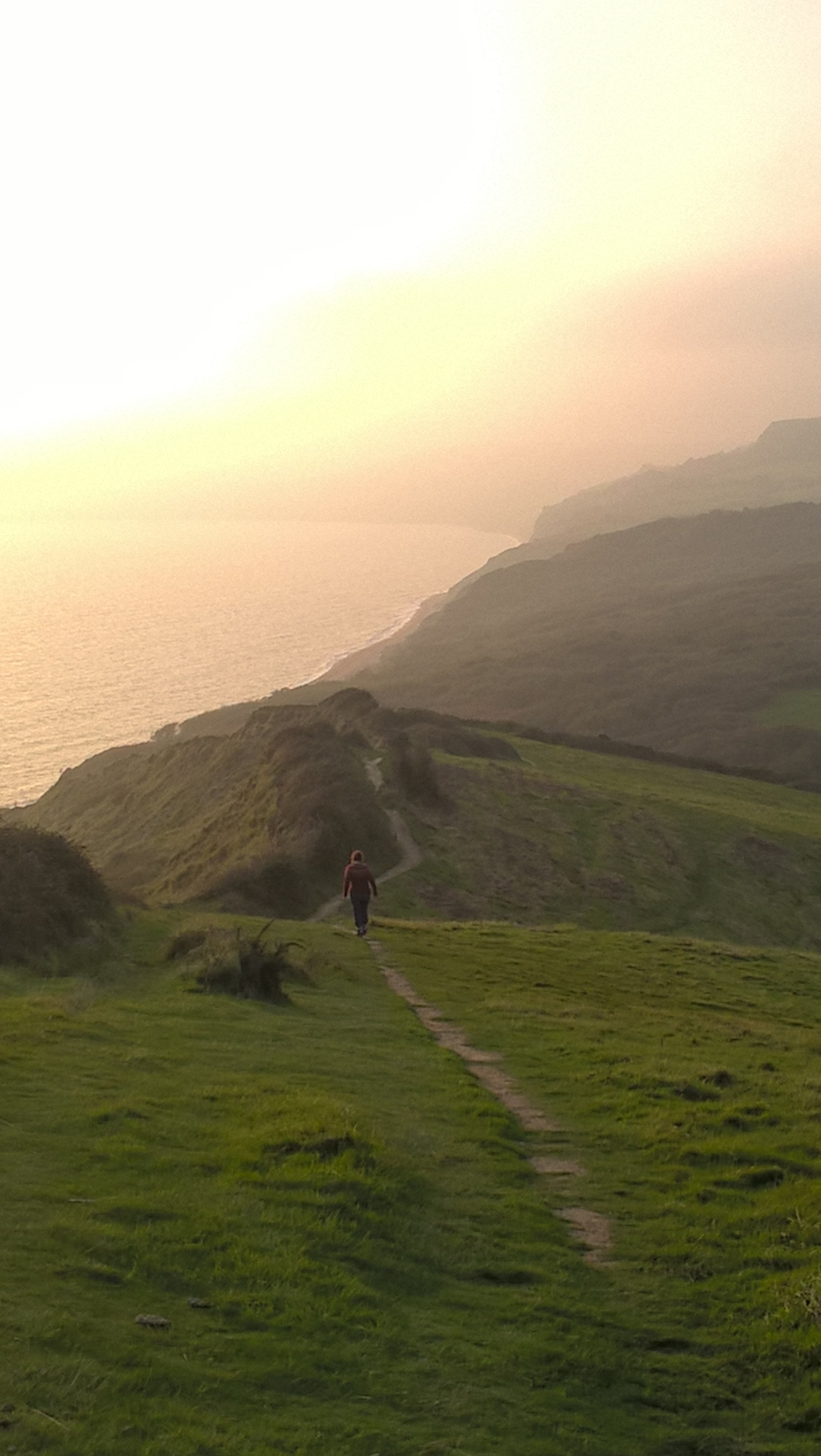
Walking down from Golden Cap, in the sunset dust of Storm Ophelia
What do we do, when it seems we’ve lost our chance to work for a more beautiful world? What do we do, when it all seems too fixed, too permanent and, too big and powerful for us to make a difference?
Maybe we can see things differently, maybe our eyes can be opened to deeper truths, as the old ones crumble before us, and something new – something that was always there – begins to emerge.
Moses and the Burning Bush
You stood on that dry mountain,
eyes narrowed against wind
and sand, scanning
the bright horizon,
looking for threat, or grazing
for those sheep.
Were you content to be a shepherd
now, Prince of Egypt?
Were you reconciled to this life
smaller than your dreams?
Did you think it was all too late,
too late to do anything
to help your brothers,
to help your sisters,
the slaves,
to reclaim your people?
Shepherd, with the bleating
of the flock about you,
did you dream still,
under the strong sun,
of what-could-or-should-have-been?
Did a new world seem impossible?
Or were you breathing
in this moment,
with the dust smell,
and the sheep smell,
and the plants thick with resin?
It was no dream,
what happened next,
no could-or-should-have-been,
that burning bush –
crackling, smoke smell,
burning, but not consumed.
In that moment you took
off your shoes, and learned a
name for God that is no name,
I am what I am.
I will be what I will be.
In a moment,
your reality peeled open,
revealing fire within,
the truth within,
giving you back
the discomfort of hope,
giving you back
your people,
and your way.
Photo from the EADT, from some time before the coronavirus crisis
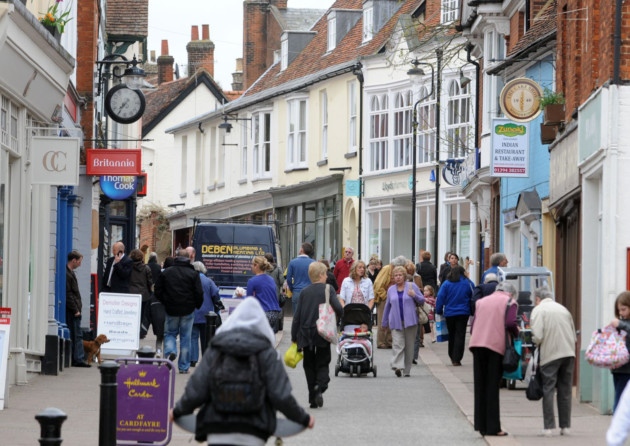
I had to go to the post office today, walking through the shopping street of the market town where I live. It was much busier than it has been, which is good for trade, but means you have to engage in a complex dance of awareness and courtesy to give people enough room, especially near those who seem to be moving to music all of their own and not noticing the paths of others. There is some anxiety even seeing your neighbours and friends, trying to remember to keep your distance, and suppress the desire to be close, to hug perhaps.
I remembered this poem as I was at the counter, which I shared with you some time ago. I remembered it as I felt the absence of the connection I associate with running errands in the town, a lack of touch, and often of looks and smiles, as we seek to navigate a world where we look different in our masks, and sometimes don’t yet recognise each other in these new guises.
It’s a poem about contact and connection through a perspex barrier, how we long for such connection, and seek to make it. It is also a poem about the gentleness we can adopt with strangers, not knowing the sadness, the burdens, they may be carrying. It seems an appropriate poem for today.
Stamps
Two of the blinds were down,
Position Closed, but yours
hovered, unreadable, just
above your head.
There was no queue,
and I approached you
cautiously,
clutching thick manila
envelopes.
Are you open? I asked.
As you raised your head,
I saw trails of tears down
your smudged cheeks,
such large heavy drops.
First class, two –
I’m so sorry. You smiled, and
I stretched out my
hand and touched
fingertips to the glass,
Passed warm coins
through, which you
held a moment,
then gave me stamps,
straightening your back.









 This next in a series of poems drawn from the story of Exodus circles again around the mystery of the burning bush. Like all these poems, it draws on my meditations on the Hebrew scripture held in one hand, and an awareness of our current situation in the other. I am exploring what this ancient story may have to tell us at this critical and bewildering time.

 Andrea Skevington