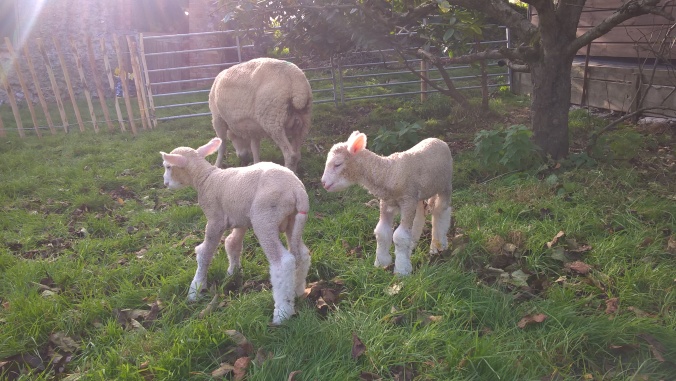
Poem: Home/Safe – Lockdown 16

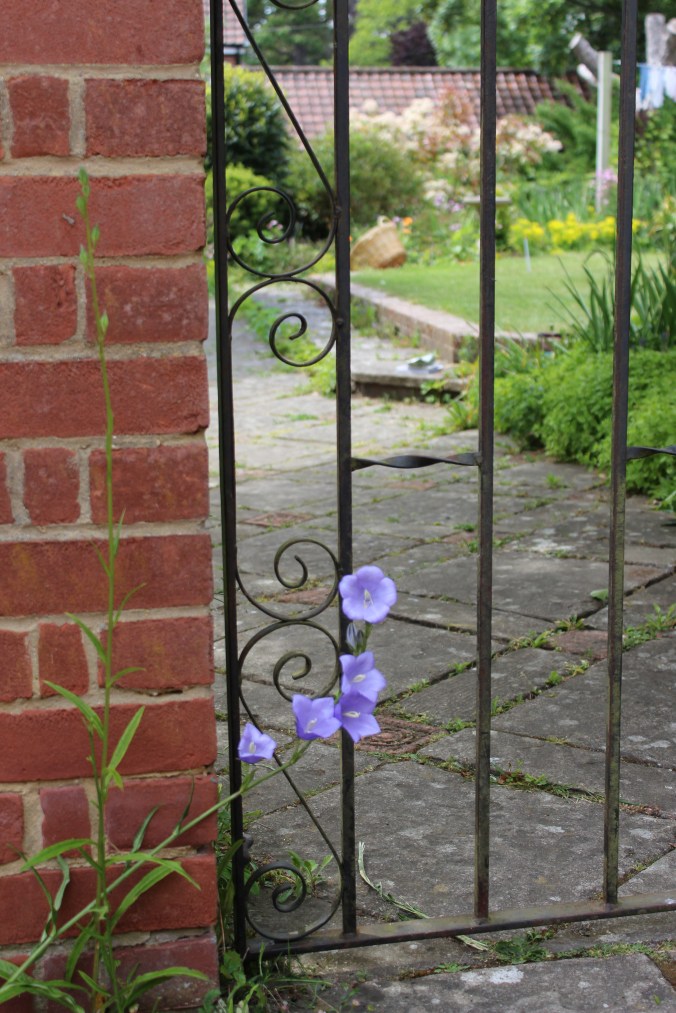
A very small poem today, the next in the Lockdown series, but written a few days ago.  It’s another moment captured. Today, on the Friday before a bank holiday, there are more cars about, but I find I am noticing the pattern of quiet in between the sounds, and holding onto that stillness, at least today, in a way I haven’t before.

IMG_1024

The feeling of safety is so important to me, as to us all, and its so good to have a place where you feel safe.  One of the things I have valued at this time is an increased feeling of safety, and peace.  I know this is not everyone’s experience.

I am glad that some action is being taken to support those who are not safe in lockdown, that the police, Boots the Chemist, and others, are opening ways for people to receive help. It’s good to find safe ways of speaking up, and for all of us, it’s so important we listen to subtle clues that someone might need help.

Here are some UK links

Government website
NHS support
Refuge helpline


IMG_0449

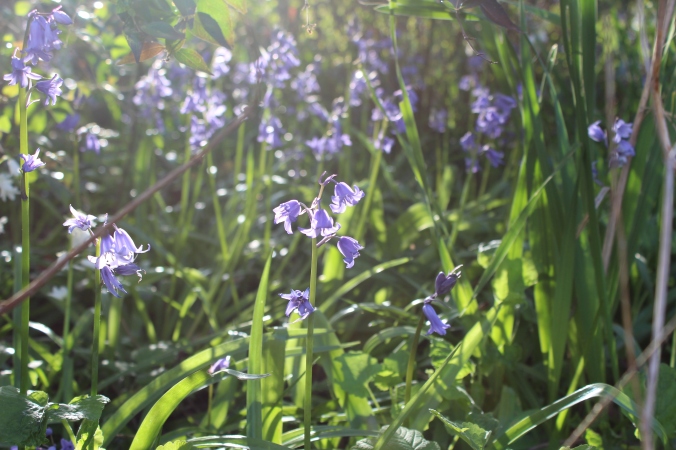
The bluebells are wilting in the heat now, but this is how they were, growing and flourishing.

May peace and safety grow, and bless our homes.  May we have safe spaces.


Home/Safe   Lockdown 16

In this quiet,
so few cars,

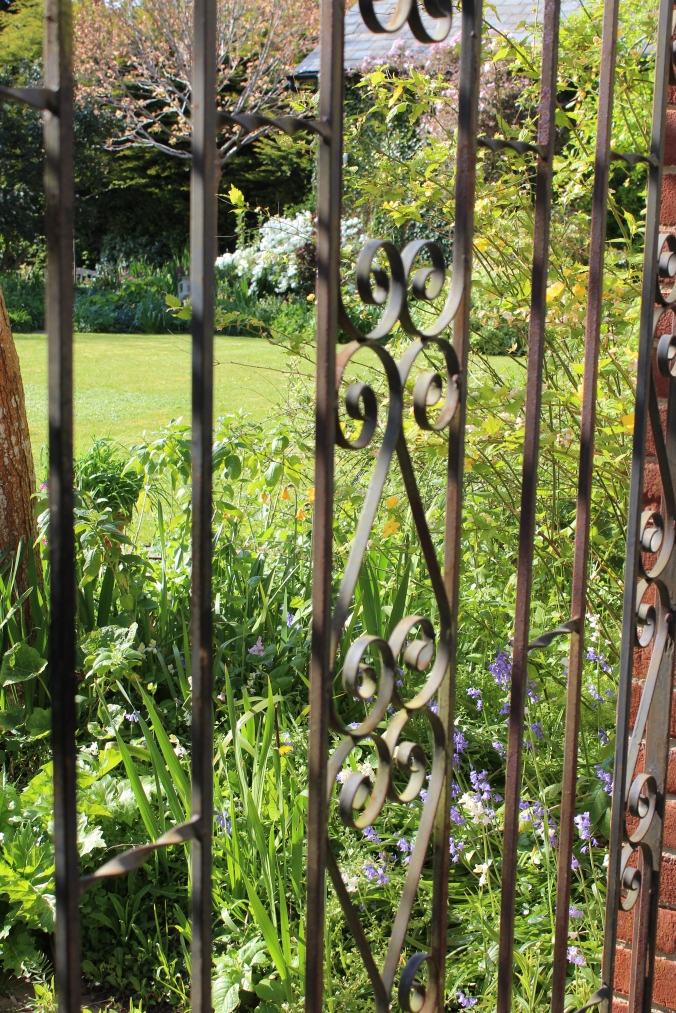
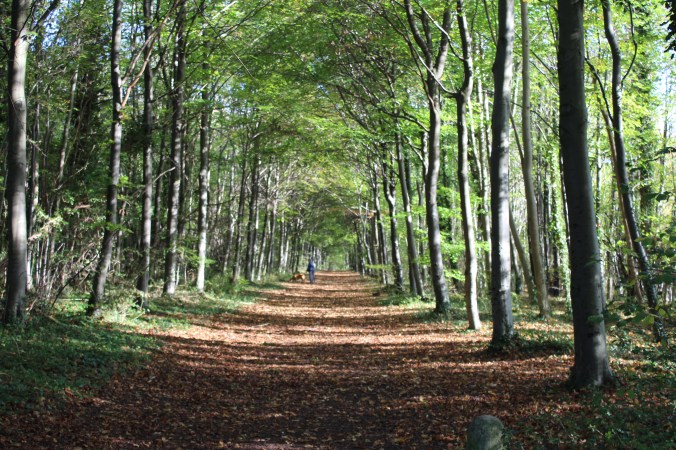
Behind this green hedgerow
my feeling of safety,
a feeling of home,
grows, along with these
bluebells.
it is a good place,
a green pasture,
and I am learning here
not to fear,
where all is well,
where there is peace.


And for when we venture out….

May God make safe to you each steep,
May God make open to you each pass,
May God make clear to you each road,
And may he take you in the clasp of his own two hands.

From Carmina Gadelica – included in my book, Prayers and Verses

Lockdown Poem on the radio!

IMG_0981

I am delighted and astonished to announce that one of my Lockdown Poems is going to be included in this week’s episode of BBC Radio 3’s wonderful  The Verb.

That’s Friday, 15th May at 22:00 BST. If you follow the link to the programme above, you’ll be able to find it on that date.  The programme is entitled birdsong.  I’m just after 20 minutes in, but if you start at the beginning, you’ll hear the nightingales…..

It’s a fascinating programme, and very beautiful.  It explores our relationship with birdsong, which has become much more intense during the lockdown, and how people have been inspired by it, and how we connect to the natural world through it.  The producer invited me to say a little bit about myself and the process, as well as reading the poem.  So I’ve been learning how to record myself on my phone, which is one of many new tech experiences of this time.  The poem is The Blackbird – Lockdown 7.

I sat on my bench quite early in the morning, and did manage to capture some birdsong in the background, which was just perfect.  The blackbird was joining in, as is only right.  It’s his poem as much as mine.

Thank you for your virtual company through these poems – there are more in the notebook, wainting to emerge.

IMG_0982

Poem: The Wood – Lockdown poems 6

Welcome back to the garden for the next in this series of Lockdown Poems.  These strange lengthening days are bringing us new experiences – some are very unwelcome, but others have something to show us, something that might help us navigate our way to a better world after….
I hope you are finding moments of tranquility.  You are welcome to come and sit on this bench in your imagination, and hear the sounds of spring.

IMG_0982

What has struck me, like so many others, is the birdsong we can hear as our human hubub has quietened.  Although we live very near a small wood, I haven’t heard the birdsong from it before – not from the back of the garden, well past dawn.  Sometimes, in May, you can hear the dawn chorus before the traffic begins, but now there is very little traffic, and the wood’s loudness is astonishing.

IMG_0980


I hope you can hear birdsong where you are.  Here’s a link to a recording of the dawn chorus in the UK if you’d like to listen

So, here’s another poem which emerged from my practice of trying to deepen into contemplative prayer, but being open to the sounds of the natural world as they speak.

The wood – lockdown 6

This April morning,
not even particularly early,
I sat on this bench,
allowing my breath to deepen,
and settling into presence,
and into Presence,

I heard, for the first time,
the sound of the wood –
not too far away,
across the grey snake
of the road.

I heard it like a distant choir,
together and rejoicing,
or an orchestra playing jazz –
wild, improvised,
I heard it as the sound of life,
reaching me even here,
across the silent road,
unquenchable,
green through the blue air,
calling the trees awake,
calling the bluebells – up, up,
and flowing round
the fragile white anemones
as they bow their many heads.


Poem: Yes – Lockdown Poems 4. For Earth Day

This is the next lockdown poem to emerge – today, here, is clear blue, but we had some stunning clouds a few days ago, and it was good to take a few moments to watch them.

It’s Earth Day, when we look to our place as part of the wonderful whole that is our home, the Earth, and look also to our responsibility to tend it.  One of the things I am experiencing in this time at home is a greater sense of connection, of love, for all that makes up the place, the ground that I’m part of here. I feel this love and connection are deeply significant.  I wonder if they are the necessary roots of a better way of living, one that acknowledges our dependence on the living Earth, and works to heal our environmental crisis, the crisis the living Earth is facing, including us.  These deep connections, this gratitude and love are, I am coming to think, more important than we know. I touched on these themes in a talk I gave at Girton College Chapel, and if you’d like to, you can read more about that here.

I hope there are ways, however small, that you can find connection with the natural world where you are.  Whether you can or not, you are welcome to join me here in your imagination, and sit in the sun.

IMG_0982


Yes, thank you – lockdown 4

The white clouds are coming now,
sails spread, a fanciful armada
on a soft southerly wind.
My skin feels the heat of the sun,
surprising. And I say thank you, and yes
to the blue and white of the sky,
to these various dark bees
among the comfrey,
heads dusted with pollen –
yes, drink your fill,
yes, thank you

To the peacock butterflies waiting
open-winged on the grass,
until another flies by,
and they rise and dance
as perfect as silent larks.
yes, and thank you

To the bright leaved hazel,
to the dark flowered fritillary lilies,
the yellow dandelions and their
white butterflies,
All, yes, thank you.

Sunday Retold: The road to Emmaus

I thought I’d share with you a reading from my book, The Bible Story Retold, and something from Prayers and Verses, as we continue thinking and praying through Easter this year.  As with all the Sunday Retold series, I hope it will be of help for all ages, wherever you find yourself.

the-road-to-emmaus-daniel-bonnell

The road to Emmaus by Daniel Bonnell

Things often emerge while walking.  Conversations can be deeper.  These two disciples, possibly husband and wife – Mary, wife of Clopas was at the foot of the cross – were leaving Jerusalem, their world fallen apart, talking over all that had happened.

Maybe, when we are out walking, we can be open to noticing the ways we need to talk through our fears and sadnesses, and then, be open to the possibility of a new perspective, a new vision, a new life.  It’s worth noticing how Jesus gave them time and space to tell them their story from their own perspective, and then, how he invited them into a new way of looking.

On the road

Two of Jesus’ followers left Jerusalem that day, walking to the village of Emmaus.  While they walked, they began to talk about all that had happened.  And as they shared their grief and bewilderment, Jesus joined them and walked with them. But they did not know who he was.
“What are you talking about?” he asked.

They stopped, and stood still on the white, dusty road. “Are you the only one from Jerusalem who doesn’t know what’s been going on?” said Cleopas.
“Tell me!” said Jesus.
“There was a prophet called Jesus of Nazareth, a true man of God. But the chief priests handed him over to be killed, and he was crucified.” Clopas paused. “We had hoped he was the one God had promised from long ago.  But then…. today, some of the women went to the tomb and came back saying it was empty, and that Jesus was alive!” For a moment, hope glimmered in Cleopas’s eyes, but then he shook his head.

“But don’t you see?” Jesus said.  “Haven’t you read the teachings of the prophets?  Don’t you know that these things had to happen?” And so he began to explain.  It was as if he were unrolling scroll after scroll along the road before them – all the Law, and all the teachings of the prophets – letting them see that the Messiah had to suffer and die and rise again.
“Stay with us, it’s getting dark!” the pair said as they came to Emmaus.  So Jesus stayed at their home.  Then, at the table, he took bread, and blessed it, and broke it to share with them.  In that breaking and sharing of bread, their eyes were suddenly opened and, with a gasp, they recognized it was Jesus who sat before them. But then he slipped from their sight.

“Did you feel it too, as we walked along? That buning – that deep, rising joy – that sudden understanding?” they asked each other as they grabbed their cloaks.  And they set off back to their friends in Jerusalem through the thickening darkness, laughing with joy, and leaving their supper on the table.

You can read the story in Luke’s gospel


From Prayers and Verses

When we are sad, help us to speak of our sorrow, and hear words of hope.  Help us know you walk with us, as you walked with the two on the Emmaus road.  Help us to recognise you in the breaking and sharing of bread, as you warm our hearts with your joy.


Please feel free to share my work, saying where it is from.

Holy Week at home – Some readings, poems, and Good Friday resources here on my blog.

Featured Image -- 5823
As we approach Easter, many people take time to focus on the journey Jesus makes towards the cross.  Our usual practices at this time are those of meeting together, and remembering together.  We can’t do that this year.  Instead, as we stay inside, for love of each other, we will have to do things differently.

Perhaps we can focus on an inner journey, something quieter, more contemplative.  As we do so, we may find, as many have before, that we get to a place of deeper connection, more grounded truth, fuller love.  We may find new meaning in Jesus’ teaching and example, of letting things fall away, of finding himself alone, of allowing.

In case it helps, I’ve gathered together some of the blog posts here that you might find help.  I will add to it as more things occur to me, and as I write and update more.

Please feel free to use any of the resources you find helpful, and to share them, saying where they are from.
A little explanation about  Easter Retold

The Retold thread of my blog gives you sections from my book, “The Bible Story Retold in Twelve Chapters”, and “Prayers and Verses” that sits alongside it.  You can get hold of these through the internet, and maybe your local bookshop if they take orders for delivery.  It’s good for all ages, and is used in family services and care homes.

The House at Bethany, the Raising of Lazarus

Many spend time with this Gospel story in Holy Week.  It’s a story that means a great deal to me.  You can find some links below.

Sunday Retold – Lazarus raised from the dead

Here you will find the readings, and some things to ponder, as well as one of my Mary at your feet poem.  If you would like to focus on the poetry, you could go here:

The ‘Mary, at your feet’ poems – Two

The ‘Mary, at your feet’ poems – Three
This last also contains a contemplative prayer/writing exercise.

There are readings, things to do, things to reflect on, in the I Am series which draws on another of my books.

Jesus said, I Am – for Lent. Chapter 5, the Resurrection and the Life

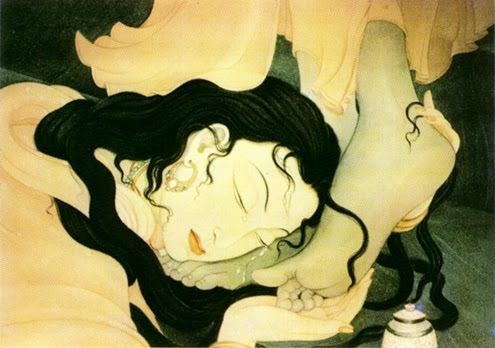
mary-anoints-the-feet-of-jesus-by-frank-wesley

Artist – Frank Wesley


Other Holy Week stories – You can find these in Chapter 11 of my retelling – both editions:  The Bible Story Retold, and The Lion Classic Bible, which share the same text.  The second of these has lovely illustrations by Sophie Williamson.

Prayers and Verses also has a section in Chapter 11 called The Road to Good Friday, which you might find useful.

Maundy Thursday – The Last Supper, Jesus washes their feet.

Retold –
Retold: Maundy Thursday

Poem- Poem: Jesus washes Judas’ feet.

We also find two of the great I Am sayings in this narrative:
Jesus said, I Am – for Lent. Chapter 6 – I am the way, the truth and the life.

Jesus said, I Am – For Lent. Chapter 7, Vine

Later in the evening, when Jesus is arrested, there is a further I Am moment:

Lent: Jesus said I Am …… Holy Week, I am he – Jesus betrayed

Jesus Washing Feet 11

Jesus Washing the Feet of his Disciples, 1898 (oil and grisaille on paper) by Edelfelt, Albert Gustaf Aristides (1854-1905) chalk and grisaille on paper 58×47 © Nationalmuseum, Stockholm, Sweden Finnish, out of copyright

Good Friday

Retold: Good Friday Retold

Now, we come to the new poems I’ve written for Good Friday – based on the seven sentences Jesus spoke from the cross. I’ve put them together with some readings, music, and art, to give you a Good Friday Meditation.  I’ve recorded the readings and poems, and they should appear on YouTube, on Good Friday, under my name.  I’ll post the links here when that happens

The poems themselves: Poems – Seven Sentences from the Cross

The meditations: A Good Friday Meditation – including 7 new poems

And I’ll add the YouTube material here.

Francisco_de_Zurbarán_Angus Dei

Angus Dei  Francisco de Zurbaran


Easter Sunday

A simple retelling: Retold: Easter Day!

If you are following in my books of Bible retellings and prayers, Chapter 12 moves us into New Life.

img_0786

Thank you for joining me.  I hope you find these things help.
Keep safe and well.
Bless you.

A Good Friday Meditation – including 7 new poems

Welcome to this Good Friday Meditation.  This year, I had been invited to lead a meditation for a group of local churches, and was hoping to be able to put together something a little like what we have below.  Instead, we will be following this meditation online, on Good Friday afternoon, and I believe others will be joining in.

I am posting it early in case you might like to join in too.  As we cannot meet together this year, you might want to find a time when you can go through the meditation, perhaps with others.  I have  put together a very simple structure: a reading from the gospel story, one of my poems based on Jesus’ words from the cross, and a response from Psalm 22.

To that I have added music suggestions, with links to YouTube.  The music reflects a variety of styles, so please feel free to go with what you like.  If you find YouTube sends you a lot of ads, do remember the “skip Ad” box, bottom right, and the mute button!  If YouTube is distracting, you can go through without music, or find something else from another source.  The music is to help lead us into prayer, contemplation, worship, so whatever helps you do those things.  I anticipate the whole thing taking about an hour, depending how we go with the music.  Of course, you can always leave music playing in a tab while reading the next section of words.

I intend to try to put something very simple, without music, on YouTube.  If it all works, it’ll be available on YouTube on Good Friday, and I’ll post the link here.  It will be 20 minutes long.  You can pause it between each section, after the Psalm 22 response, and use the music and pictures here to help you.

Here is the YouTube link

If you’d like to see the poems all in one place, without the framework, you can find those here.

If you would like to use, or share, any of my material, please feel free to do so, saying where it is from.

I hope that’s explained things!


Now, as we prepare for our Good Friday meditation, let us focus our minds on Jesus, who loves us, and suffered for us.  May we have a deeper appreciation of that love and suffering this year.  May we, despite being apart, become more aware how deeply we are loved, and connected together.

elizabeth frink

Elizabeth Frink, Chapel of the Transfiguration, St Edmundsbury Cathedral.


First sentence
Reading (from Matthew 27 27-37 and Luke 23 33-34) 
Then the governor’s soldiers took Jesus into the Praetorium and gathered the whole company of soldiers around him.  They stripped him and put a scarlet robe on him, and then twisted together a crown of thorns and set it on his head. They put a staff in his right hand and knelt in front of him and mocked him. “Hail, king of the Jews!” they said. They spat on him, and took the staff and struck him on the head again and again. After they had mocked him, they took off the robe and put his own clothes on him. Then they led him away to crucify him. As they were going out, they met a man from Cyrene, named Simon, and they forced him to carry the cross. They came to a place called Golgotha (which means The Place of the Skull). There they offered Jesus wine to drink, mixed with gall; but after tasting it, he refused to drink it. When they had crucified him, they divided up his clothes by casting lots. Above his head they placed the written charge against him: THIS IS JESUS, THE KING OF THE JEWS. Two criminals were crucified with him, one on his right and one on his left. Jesus said, “Father, forgive them, for they do not know what they are doing.”

Father forgive them, for they know not what they do

We don’t know what we do,
from the careless word that
starts a fire of anger,
to the careless killing
of a butterfly  –
who knows what
wide effects,
what winds and rains,
begin and end with just one death?

We walk in darkness, so often,
and so often, we close our eyes,
we do not wish to know.
And Jesus, seeing this,
that his life would end
with angry shouts,
with fearful washing of hands,
with indifferent playing of dice,
Knowing all this, even so, he bore
our lawful unthinking violence,
our blundering disregard for consequences.
Another would pay for our actions.

Yet as the ripple of our acts flows out,
through the world, who knows where,
so too, now, flows forgiveness,
following on, spreading and transforming,
watering dry ground, lifting burdens
and carrying them away.


Response from Psalm 22: v3-5

Yet you are holy,
dwelling in the praises of Israel.
In you our fathers trusted;
they trusted, and you delivered them.
To you they cried, and were rescued;
in you they trusted and were not put to shame
.

Music:  Salt of the Sound  Lamb of God (and Your Ways) both – 6 mins 28
https://www.youtube.com/watch?v=p_5fsX8TEp4

Francisco_de_Zurbarán_Angus Dei

Angus Dei  Francisco de Zurbaran

Second sentence
Reading (from Luke 23 39-43)
One of the criminals who hung there hurled insults at him: “Aren’t you the Christ? Save yourself and us!” But the other criminal rebuked him. “Don’t you fear God,” he said, “since you are under the same sentence? We are punished justly, for we are getting what our deeds deserve. But this man has done nothing wrong.” Then he said, “Jesus, remember me when you come into your kingdom”.  Jesus answered him, “I tell you the truth, today you will be with me in paradise.


Truly I say to you today you will be with me in paradise

Even as he hung upon the cross,
even with blood from that false crown
running down, not wiped away,
he saw the two men at his side,

One joined in mocking with the
priests and soldiers,
speaking from his pain,
and one did not, this second kept
his eyes on something else – a hope.

A hope the one he looked on was a king,
and of a kingdom where such things
as crosses are not lifted up,
a hope, even, of an end to death and pain –
this pain, this death.

And, ah, his king begins to speak,
of paradise.
What a world to gift him dying there.
A word of such sweetness, freedom, peace.
See  – clear water flowing, and flowers,
hear the sound of birds, the lazy
buzz of insects, the flutter of their wings.

What a word, at your end, to hold to,
to capture our beginning, once again.
But even more than this,
to be with him, beside the king,
seen and known,
held in the loving gaze of one who
hung up on the cross.
Might this, even this, be paradise?


Response from Psalm 22:v 27-28

All the ends of the earth shall remember
and turn to the Lord,
and all the families of the nations
shall worship before you.
For kingship belongs to the Lord.


Music: Gabriel Faure  in Paradisum from Requiem 3 mins 50 https://www.youtube.com/watch?v=rvYt-QA9vT0
IMG_0495

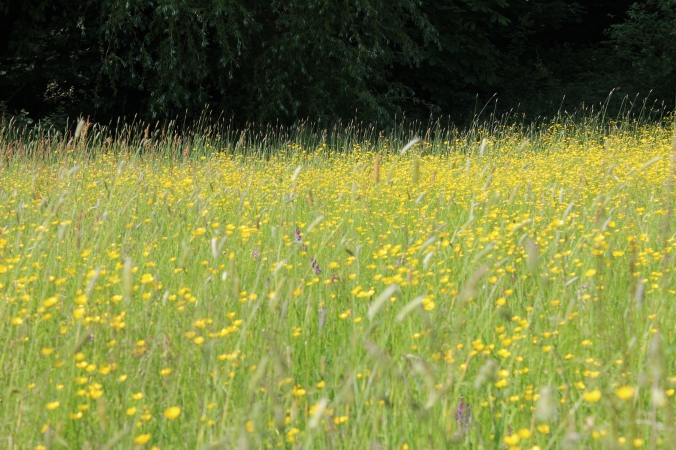
What do you think of, when you think of paradise?

Third sentence
Reading (from John 19 25-27)
Near the cross of Jesus stood his mother, his mother’s sister, Mary the wife of Clopas, and Mary Magdalene. When Jesus saw his mother there, and the disciple whom he loved standing nearby, he said to his mother, “Dear woman, here is your son,” and to the disciple, “Son, here is your mother.” From that time on, this disciple took her into his home.


Woman, behold your son. Son, behold your mother

And still he sees, looks down
towards the one who bore him, bearing this,
the pain – not her own pain – worse,
the pain of watching one you love
twisting on those wooden beams,
the nails piercing her own flesh too.

The time has come when all the
treasure of her heart is broken open,
scattered, lying in the dirt.
What use to hold in mind
the words of angels,
the wealthy gifts brought by the wise,
what preparation Simeon’s warning,
when now she sees his agony with her eyes.
But she is not alone, his friend sees too.
John, who writes it down,
bears witness, even here, even so.
They turn their gaze upon each other
and see each other with new eyes –
a mother, and a son.
Gifting them each other –
his one last act of love,
this giving, from an empty cup.
This task of care can be ours too,
to behold each other in our pain,
and in our sorrow, walk each other home


Response from Psalm 22: v 9-11

Yet you are he who took me from the womb;
you made me trust you at my mother’s breasts.
On you was I cast from my birth,
and from my mother’s womb you have been my God.
Be not far from me,
for trouble is near,
and there is none to help.


Music:  Salt of the Sound – I’ll meet you where you are/Home to you  3 mins 31  https://www.youtube.com/watch?v=kFlXL3cgI6Q

600px-Michelangelo's_Pieta_5450_cut_out_black

Pieta Michelangelo


Fourth sentence
Reading (from Matthew 27 45-46)
From the sixth hour until the ninth hour darkness came over all the land. About the ninth hour Jesus cried out in a loud voice, “Eloi, Eloi, lama sabachthani?”–which means, “My God, my God, why have you forsaken me?

My God, My God, why have you forsaken me?

You felt your generous heart forsaken,
you felt the absence of the one who helps,
who was beside you, in the beginning,
who knew you from before first light.

We know too well the sparseness
of your isolation, without light,
and companionless,
in the darkness of our own long night.
And yet, within our dark, we find you there,
Find you have waited for us long days, and years,
while our poor eyes have
grown accustomed to the dark,
have learned at last to see you through our tears.
So as you know our pain and feel it,
you break our separation with your own.
Help us see the forsaken all around us,
invisible and in darkness, but seen by you.
May we seek each other in the dark,
May we have courage to cry out,
like you, and so be found.


Response from Psalm 22: v11, 14

Be not far from me,
for trouble is near,
and there is none to help.

I am poured out like water,
and all my bones are out of joint,
my heart is like wax
it is melted within my breast

Music: Casting Crowns  Praise you in this storm 5 mins 3
https://www.youtube.com/watch?v=0YUGwUgBvTU
down_the_well_by_trilogy20-d3azhyz-701x336

Fifth sentence
Reading (from John 19 28)
Knowing that all was now completed, and so that the Scripture would be fulfilled, Jesus said, “I thirst.”

I thirst

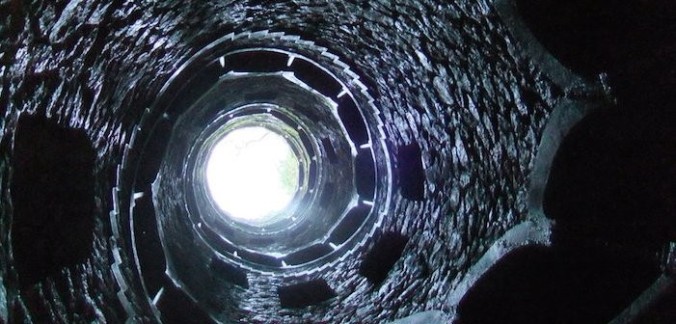
The well is deep, and you have nothing to draw with.
Where now that living water?
Where is that spring within you, gushing up
to fullness of life?
Do you remember, now,
the woman by the well?
Your deepening talk of thirst and water,
as now, again, you humbly ask another for a drink –
this time,
a sponge of sour wine?

Do you remember too, as the taste dries on your lips,
that wedding feast, where water changed to finest wine?
The richness and fullness of that beginning
soured to this cold bitterness.

You are our source, the spring of all our rivers
and still you thirst like us, need help to drink.
And so give us this grace,
that as we do for the least of these,
we may know we do for you.

May we see you
in each thirsty face.

Response from Psalm 22: v 15

My strength is dried up like a potsherd
and my tongue sticks to my jaws
you lay me in the dust of death


Music: Taise  O Lord hear my Prayer  7 mins 43
https://www.youtube.com/watch?v=LKyU5BIlxc0
IMG_0592

Sixth sentence
Reading (John 19 29-30)
A  jar of wine vinegar was there, so they soaked a sponge in it, put the sponge on a stalk of the hyssop plant, and lifted it to Jesus’ lips.  When he had received the drink, Jesus said, “It is finished.”

It is finished.

All things come to an end.
Even pain like this,
Even the anger and the cruelty of a crowd,
of us all,
even the certainty of those so certain
of God they hang a man upon a tree.
Even the punishment and scapegoating
even violence,
even death.

The work is done.
It has all been borne.
You have poured out your love, your life.
You have carried our sorrows, suffered
under our iniquities.

Your head bowed now, you sink
into the final pain of nails,
your body bears no more,
having borne all.
The work is done.

Response from Psalm 22: v 24

For he has not despised or abhorred
the affliction of the afflicted.
and he has not hidden his face from him
but has heard, when he cried to him.

Music:  Ola Gjeilo  Ubi Caritas 3 mins 30
https://www.youtube.com/watch?v=Xp3IHBSyZKY

stars in the wood


Seventh sentence
Reading (from Luke 23 44-49)
It was now about noon, and darkness came over the whole land until three in the afternoon, while the sun’s light failed; and  the curtain of the temple was torn in two. Jesus called out with a loud voice, “Father, into your hands I commit my spirit.”


Father, into thy hands I commit my spirit

There is darkness now, deep darkness,
over the face of the deep,
and no hovering like a brooding bird,
instead, the temple curtain torn in two,
from top to bottom,
and the Holy of Holies empty.

God is not found there,
but here, with this dying man
on a tree,
He calls out father, and talks of hands,
and we remember what his own hands have done,
how many were healed by their touch,
raised up and restored from cruelty and death,
and now, he too will be held in loving hands,
a reconciliation beyond our grasp,
a trust even at this moment of last breath.

Dying, he taught us to die,
dying he brought us life.
May we be reconciled, may we know
at our end, the comfort of those hands.

Response from Psalm 22: v 26

The afflicted shall eat and be satisfied
those who seek him shall praise the Lord
May your hearts live for ever.

Music:  John Tavener Svyati (trans O Holy One)  12 minutes 35
https://www.youtube.com/watch?v=yssF24v5iBs

Or a traditional hymn, such as When I survey the wondrous cross.
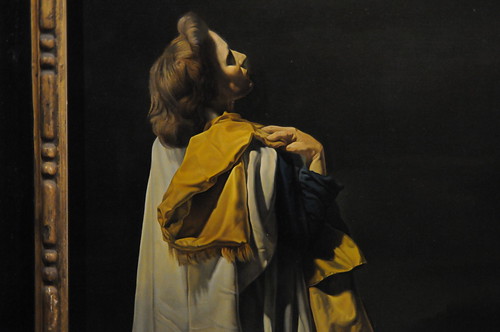
 

salvador dali crucifixion

Detail from – Crucifixion (Corpus Hypercubus) Salvador Dalí 1954
The Metropolitan Museum of Art
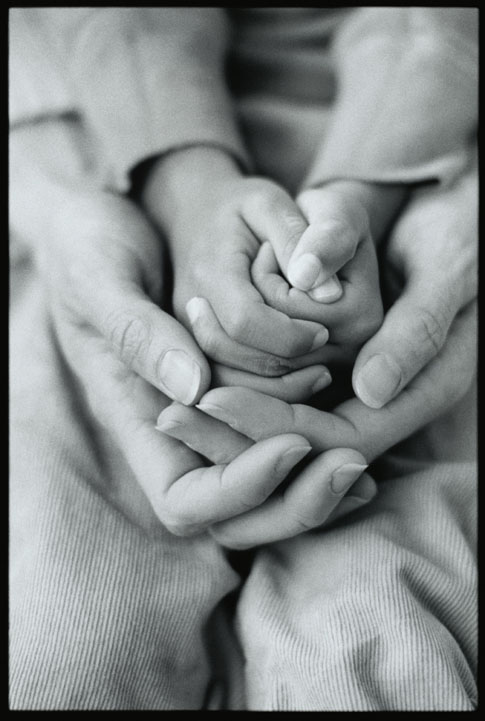
AA037808

Held


Poems – Seven Sentences from the Cross

This year, I had the privilege to be invited to lead a Good Friday meditation for a local group of churches, and began to work on a series of poems to share.

Of course, we can’t now gather together, we can’t share in the way we hoped. As the situation globally has become more serious, more confined, darker, those sentences that Jesus spoke from the cross began to take on more meaning for me.  I felt I could get a little closer to a contemplation of Jesus’ love and suffering, and see it in a new light, or even a new darkness.  These poems, emerging from that contemplation, helped me as I wrote them.  I hope they will help you in reading them, too.   Here then is the fruit of days working in the house.  I thought it might be good to have them all together, quite simply, like this.

In another post, I’ll share with you those poems as part of a structure including music and art, which you might like to use for your own meditations on Good Friday, or to share with others.  I reckon it might take about an hour to work through them, with all the readings.  I will post the link here.

I will try to learn how to make a short YouTube recording of them for Good Friday.  That will follow a simple pattern of Gospel reading, poem, response from a psalm. It will take 20 minutes.  I hope, all being well, it will be released on YouTube on Good Friday.  I’ll post a link here when it does.
And this is the link.
If you would like to share these poems, or use them in some other way, you are welcome to do so.  Please say where people can find them.


elizabeth frink

Elizabeth Frink, Chapel of the Transfiguration, St Edmundsbury Cathedral


1

Father forgive them, for they know not what they do

We don’t know what we do,
from the careless word that
starts a fire of anger,
to the careless killing
of a butterfly  –
who knows what
wide effects,
what winds and rains,
begin and end with just one death?

We walk in darkness, so often,
and so often, we close our eyes,
we do not wish to know.
And Jesus, seeing this,
that his life would end
with angry shouts,
with fearful washing of hands,
with indifferent playing of dice,
Knowing all this, even so, he bore
our lawful unthinking violence,
our blundering disregard for consequences.
Another would pay for our actions.

Yet as the ripple of our acts flows out,
through the world, who knows where,
so too, now, flows forgiveness,
following on, spreading and transforming,
watering dry ground, lifting burdens
and carrying them away.


2

Truly I say to you today you will be with me in paradise

Even as he hung upon the cross,
even with blood from that false crown
running down, not wiped away,
he saw the two men at his side,

One joined in mocking with the
priests and soldiers,
speaking from his pain,
and one did not, this second kept
his eyes on something else – a hope.

A hope the one he looked on was a king,
and of a kingdom where such things
as crosses are not lifted up,
a hope, even, of an end to death and pain –
this pain, this death.

And, ah, his king begins to speak,
of paradise.
What a world to gift him dying there.
A word of such sweetness, freedom, peace.
See  – clear water flowing, and flowers,
hear the sound of birds, the lazy
buzz of insects, the flutter of their wings.

What a word, at your end, to hold to,
to capture our beginning, once again.
But even more than this,
to be with him, beside the king,
seen and known,
held in the loving gaze of one who
hung up on the cross.
Might this, even this, be paradise?


3

Woman, behold your son. Son, behold your mother

And still he sees, looks down
towards the one who bore him, bearing this,
the pain – not her own pain – worse,
the pain of watching one you love
twisting on those wooden beams,
the nails piercing her own flesh too.

The time has come when all the
treasure of her heart is broken open,
scattered, lying in the dirt.
What use to hold in mind
the words of angels,
the wealthy gifts brought by the wise,
what preparation Simeon’s warning,
when now she sees his agony with her eyes.
But she is not alone, his friend sees too.
John, who writes it down,
bears witness, even here, even so.
They turn their gaze upon each other
and see each other with new eyes –
a mother, and a son.
Gifting them each other –
his one last act of love,
this giving, from an empty cup.
This task of care can be ours too,
to behold each other in our pain,
and in our sorrow, walk each other home


4

My God, My God, why have you forsaken me?

You felt your generous heart forsaken,
you felt the absence of the one who helps,
who was beside you, in the beginning,
who knew you from before first light.

We know too well the sparseness
of your isolation, without light,
and companionless,
in the darkness of our own long night.
And yet, within our dark, we find you there,
Find you have waited for us long days, and years,
while our poor eyes have
grown accustomed to the dark,
have learned at last to see you through our tears.
So as you know our pain and feel it,
you break our separation with your own.
Help us see the forsaken all around us,
invisible and in darkness, but seen by you.
May we seek each other in the dark,
May we have courage to cry out,
like you, and so be found.


5

I thirst

The well is deep, and you have nothing to draw with.
Where now that living water?
Where is that spring within you, gushing up
to fullness of life?
Do you remember, now,
the woman by the well?
Your deepening talk of thirst and water,
as now, again, you humbly ask another for a drink –
this time,
a sponge of sour wine?

Do you remember too, as the taste dries on your lips,
that wedding feast, where water changed to finest wine?
The richness and fullness of that beginning
soured to this cold bitterness.

You are our source, the spring of all our rivers
and still you thirst like us, need help to drink.
And so give us this grace,
that as we do for the least of these,
we may know we do for you.

May we see you
in each thirsty face.

6

It is finished.

All things come to an end.
Even pain like this,
Even the anger and the cruelty of a crowd,
of us all,
even the certainty of those so certain
of God they hang a man upon a tree.
Even the punishment and scapegoating
even violence,
even death.
The work is done.
It has all been borne.
You have poured out your love, your life.
You have carried our sorrows, suffered
under our iniquities.

Your head bowed now, you sink
into the final pain of nails,
your body bears no more,
having borne all.
The work is done.


7

Father, into thy hands I commit my spirit

There is darkness now, deep darkness,
over the face of the deep,
and no hovering like a brooding bird,
instead, the temple curtain torn in two,
from top to bottom,
and the Holy of Holies empty.

God is not found there,
but here, with this dying man
on a tree,
He calls out father, and talks of hands,
and we remember what his own hands have done,
how many were healed by their touch,
raised up and restored from cruelty and death,
and now, he too will be held in loving hands,
a reconciliation beyond our grasp,
a trust even at this moment of last breath.

Dying, he taught us to die,
dying he brought us life.
May we be reconciled, may we know
at our end, the comfort of those hands.

img_0630

The church at Selworthy Green, looking toward Exmoor


These poems owe an enormous debt to many sources.  If you are familiar with the Bible, you may find many resonances, and in some cases quotes.  I haven’t referenced these, in order to keep the flow.
However,  there is one reference I would like to acknowledge here:  in “My God, my God, why have you forsaken me?” I directly quote from R S Thomas’ beautiful poem The Other. 

It is a poem about prayer, and seems very apt to read here.

Jesus said, I Am – for Lent. Chapter 6 – I am the way, the truth and the life.

WP_20180507_20_33_10_Pro

WP_20180507_12_33_19_Pro

WP_20180503_15_07_04_Pro

This Lent, under the shadow of coronavirus, we are all giving up more than we anticipated.  Some of us are staying inside, perhaps feeling anxious, while others work to care for the sick, and to provide food and essential services for us all.  It’s a time when we need to find new ways of supporting each other, and connecting, as we thought about last week.

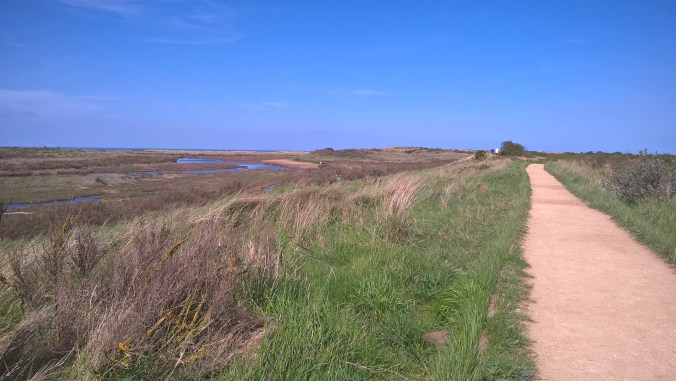
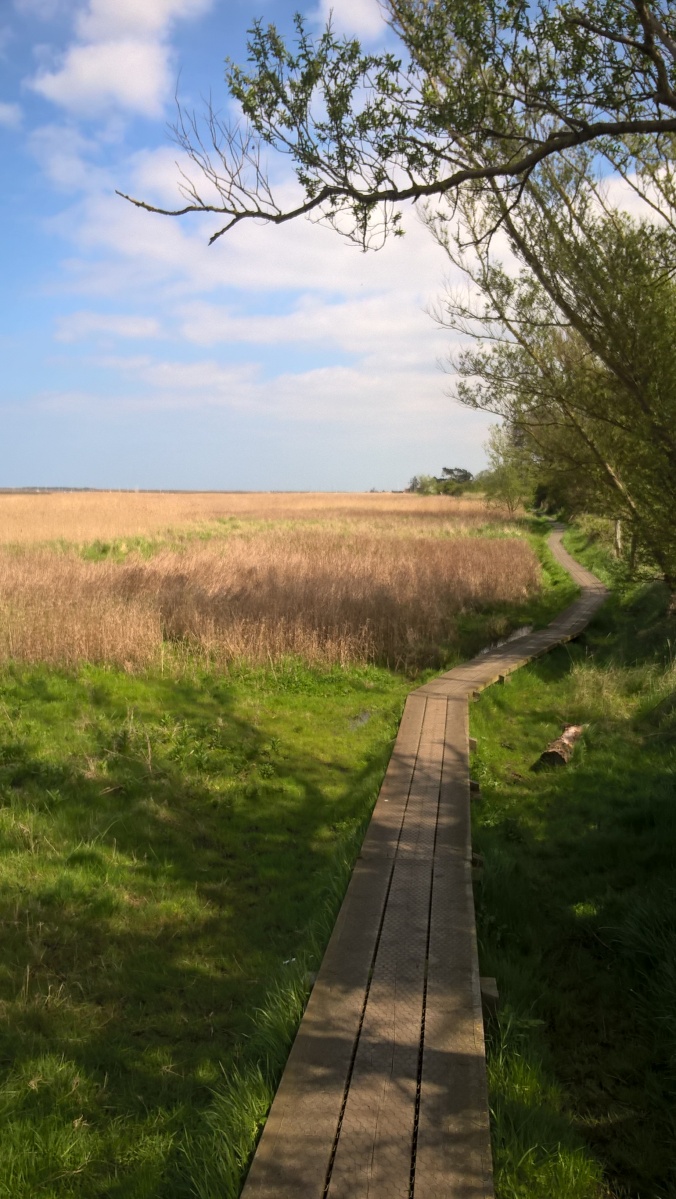
As we’re staying indoors at present, I thought I’d share with you some photos taken as we walked the Norfolk Coast Path a couple of years ago.  It’s good to remember beautiful places we’ve been to in the past, and share them, and think about good things we’ll do, with such gratitude, again soon.

I did hear an excellent idea, especially if you have children who are missing their friends and their favourite activities….. Take a large jar, and write down on pieces of paper the names of people you want to see, and things you want to do, as they come to mind and you miss them.  Make it colourful.  You’ll then have a beautiful jar to look at, and a collection of things to really look forward to doing as you pull them out of the jar, one by one, when we are outside again.

We are keeping each other safe, keeping our vulnerable people and our medical people safe, by giving up our going out and doing things.  This is a real act of love.

Back to our Lent series.  Once again, these familiar stories and words of Jesus seem to take on an added depth of meaning as we consider them from inside – inside our homes, inside this strange time we are living through.  Thank you for joining in.  I hope that, by reading and praying together, we may be aware of all that connects us.

As we enter the traditional season of Passiontide, drawing closer to the Cross, we enter too, in our reading, an intense dialogue between Jesus and his friends, in which Jesus seeks to explain the terrible thing that is going to happen.  To prepare them, and to show them the necessity for it.

We will touch on the themes of Way, Truth and Life here, and seek to work them into our days.
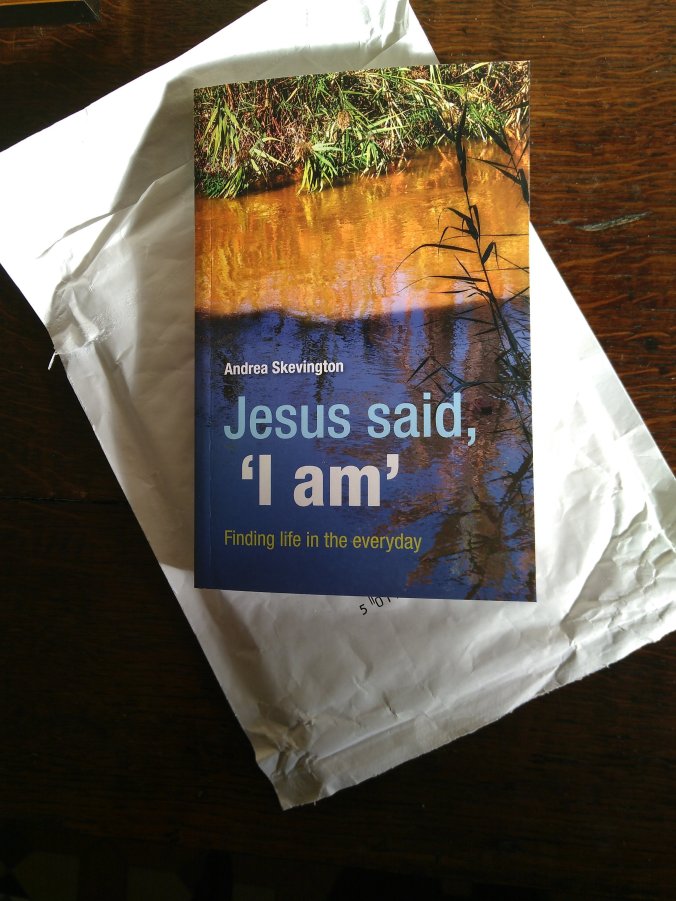
We are continuing this Lent series drawing on my book, Jesus said, I am – finding life in the everyday.

John 13- 14

jesus-washing-his-disciples-feet1

Jesus knows that the time when he will be abandoned and betrayed by his friends, and then crucified, is getting close now.  Knowing this, despite this, he loves them to the end.  Knowing that the Father had put all things into his hands, he strips and kneels and washes their feet.  He gives them bread.  In doing so and by what he says, he tries to prepare his friends for what will come – must come.  He does so with sadness and compassion.  These are dark and difficult words.  But, there is more.  There is also a vision of love, service and life itself – the way of the Spirit, the Comforter. It offers them a way they can live when Jesus is no longer with them  They do not want to see ahead to such a time.  This next ‘I am’ saying is part of all this preparation – showing them a way forward – a way that will endure.  Jesus is that way.  He will remain that way, even after.

We are not there yet, though.  We need to stand back a little and see more clearly


The towel

Jesus gets up from the table, strips off his outer clothes, wraps a towel around his waist and kneels to wash his friends’ feet.  This is part of the way ahead – the way of love and service.  It is an instruction for how they are to live when he is gone.  They are to imitate this act – and a concrete task can help us through a difficult time.  It is hard for them to receive it.  This kneeling and washing, acting like a humble servant, is part of the self-emptying way that Jesus is following, a small foreshadowing of the self- emptying of the cross.  The way of love and life passes through the darkness of death.

………

Glory

No wonder it was hard to grasp.  This is what glory looks like: tying a towel around your waist, a friend leaving to betray you with the taste of bread still in his mouth, being lifted up on a cross.

What might it mean for us, to know there is glory even here?

This encounter between Jesus and Judas – as he washed his feet, as he shared bread with him – has given me much to think about.  I wrote about it here.

However much they did not understand, his friends did seem to grasp that he was going to leave them.  That this leaving would be for their good – that it would bring them the greatest good  – was beyond them.  The loss of Jesus could not be but terrible in their eyes.

And so, he tries to frame it for them.

Something profoundly essential is happening – terrible as it is – that will ultimately work for the good.

This is the only way.

A spacious home

Jesus gives them a picture of what the good will be – a picture of the host going on ahead to prepare rooms, or dwelling places. This is why he must leave, to unlock the door, to get things ready, to open and air the rooms.  It is a large and spacious illustration, one that would conjure up Middle-Eastern principles of hospitality and welcome…..

There is an expansion in these pictures, and a deep sense that Jesus will go to considerable pains, even to the loss of his life, to bring home the sheep, to make a place in the Father’s house.  Images of hospitality abound in the other three gospels, for the kingdom – images of banquets and wedding feasts and wide tables. Here, we find these: a large and hospitable house, a generous sheepfold.

It is entirely understandable that Thomas replies, “We don’t know where you are going, so how can we know the way?”  Now is the ‘I am’ moment: “I am the way, the truth, and the life”.  Can we think of a person as a destination? For that is what we are invited to do. ….

As we seek to walk along the way of love and service, we walk along with Jesus.  We remember that the earliest name given to Jesus’ people was not Christians, but followers of the Way.  We walk with Jesus, and with each other, on this path.  That is the way.

It is Jesus who is Way, Truth and Life all. That begins to shift us to a different way of understanding what these things might be.

The reality behind it all, the reality we can trust, is love.  That is why Jesus goes on ahead through what we cannot, and then comes back for us again.

The way of love is not soft, comfortable or secure.  It will take Jesus to hell and back.  It will take him to the very worst that can be done to a human being. This is the way that humanity will see God’s outstretched arms, and be liberated to enter abundant, overflowing life.  Jesus is making the way.

Way, truth and life are here.

“In him was life, and the life was the light of all people.” John 1:14

Reflection and response

John often has parallels, patterns in his Gospel.  You might like to think about Mary kneeling to anoint Jesus’ feet (see last week’s post) and Jesus kneeling before the disciples.  You can use the pictures in each post to imagine what it would have been like to be there. You might like to think about what they have in common.

jesus-washing-his-disciples-feet1

Further Study

Exodus 12:1-28
Consider more deeply these themes of the Passover: slavery and servanthood; a meal overshadowed by death and departing. Do these help your reading of the last supper?

I am struck by the fact that the Passover celebrates liberation from slavery, and this newly formed Passover – the Last Supper – includes a command to imitate the actions of a slave – washing feet – in free loving generosity.

It might be worth opening our minds to consider how often the plagues we see in the Hebrew Scriptures are seen as connected to oppression, inequality and injustice. That’s a big theme, and a diversion from our current study, but it may be worth noticing as we consider what kind of world we want to help make when we do emerge from our time of isolation.

 
How do you respond?

Creative Response

Foot washing
You will need: water, washable pens, paper, kitchen paper.

Imagine Jesus kneeling before you to wash your feet.  Imagine you are there, in that upper room. What do you feel at first? What do you feel at the end? You might like to paint your response.

You could use washable pens on your hands, remembering things that do not fit with the command to love.  Then dip your hands in water and watch them become clean.

Thank Jesus for his loving sacrifice and his example.  Thank him for the gift of forgiveness.

Remember a time when someone offered you love, and practical service. What was that like? Remember a time when you did the same for someone else.

Think of what it means to be a leader like this.  Where do you have opportunities to lay aside status and simply serve?


Life and Service

Love
In every situation today, take this as your starting point: how can I best love and serve this person, these people?

My Father’s House
Think about times you have received hospitality, and given it.  What stays in your mind?
Can you expand your current practices of hospitality – even a small step?

For both of the above, we will need to adapt in our current circumstances, and consider acts of service and hospitality even that make space for people, hold patience when people are stressed or afraid, considering new forms of hospitality and connection online.

And below, we will all need to use the option for those who have difficulty getting about.  We can think of ways of doing a virtual pilgrimage with friends, perhaps sharing places that have meant something to us online, and describing the experience.

We can also plan what we would like to do when the time is right.

Pilgrimage

You may wish to go on a journey with a spiritual purpose and particular destination in mind.  You could travel far or go on a walking tour of local places of worship and ancient holy sites. You could use maps and photos to imagine yourself on such a journey if mobility is an issue.  You can go with friends, or alone.

Take a look after the photos for another suggestion for walking the way….

IMG_0178

IMG_0174.JPG

Featured Image -- 3040

These three are taken on a walk near Wandlebury Ring in Cambridgeshire.

Labyrinth

Make a labyrinth.  It could be a large one in the garden, temporary and marked with twis or stones, on a roll of paper or old sheet for indoors, or a small one on paper you could walk with your finger.  Walk it prayerfully, becoming aware of the presence of Jesus with you and you make your way.

Have a look online for suggestions and resources.  This might be a good project for self isolation.

Truth

In the current state of our news and social media, I think this response below is particularly relevant.  I would add to it now, as we are all empowered to generate our own content, and to share stories….. what are we spreading?  Is it true, loving, kind? Does it promote understanding or division?

It is also worth considering how much news we consume.  It is important to be well informed, but we can so easily be sucked into relentless news coverage which leaves us feeling passive and afraid.


Truth

Be on the lookout this week for where and how you learn about the world.  Look at your news sources.  Consider how you listen to more personal news from friends and colleagues.  Whom do you trust and believe? If you do not already do so, consider fact-checking, and reading and viewing things from perspectives that differ from your own.  What do you find out?

Be particularly alert to this question: does this presentation of the facts encourage love and peace between people, or fear, hatred and hostility?
Does it help or hinder me in loving God and loving others?


Thank you for reading.

Please feel free to share any of the material you find helpful, saying where it is from.

If you’d like a copy of the book, you can ask your local bookshop – some are taking phone orders and delivering, or order online.

Here are a few suggestions:

The publishers, BRF

Amazon

img_20181130_114736372319885.jpg

Bless you.  Thank you for joining me, and with each other, in this walk.

overflowing_glass_5


Jesus said, I am – for Lent. Chapter 4, the Shepherd and the Gate.

Hello again, and thank you for joining me on this walk through Lent, thinking about what it means to live in the light of the I am sayings, to go deeper into following the Good Shepherd.

We continue to follow my book.

WP_20180504_13_18_15_Pro

Leadership is once again under the spotlight, as we face another global crisis.  This time, a pandemic.  One of the things I have been noticing is that leadership, in some places, is emerging.  People and organisations are taking decisions to protect the old and the vulnerable, even as there is confusion about what to do for the best, and as there are differences among politicians as to how to interpret the science.

Maybe, as you read this, you are restricting your social engagement.  Maybe you normally attend a place of worship, or a community gathering, and are foregoing that for the sake of others, or your own health. One of the differences between this outbreak, and ones in the past, is that our isolation can be less total, that we can meet virtually, and reach out to support each other in difficulties, even when we cannot touch each other.

How to express love and community in a time when touch is problematic, when meeting is difficult or impossible for some, presents real challenges.  But thinking about how we can best support those in our communities – whether physical or on line – gives us an opportunity to perhaps do better, and be more imaginative and thoughtful, than we have before. We can build a slower, gentler, and possibly even more connected and compassionate, way of being community.

This week, we are thinking about the kind of leader Jesus was, especially to those excluded by those people who claimed religious authority.  We hold in mind the woman taken in adultery, and the man born blind, both of whom were part of our earlier reflection on Light.

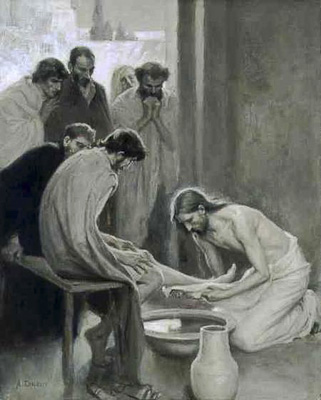
Jesus Washing Feet 11

SNM128510 Jesus Washing the Feet of his Disciples, 1898 (oil and grisaille on paper) by Edelfelt, Albert Gustaf Aristides (1854-1905) chalk and grisaille on paper 58×47 © Nationalmuseum, Stockholm, Sweden Finnish, out of copyright

As we think of the loving actions of Jesus in the picture above, we remember that we can move beyond just knowing how he demonstrated his care , to hearing the invitation to do the same, too.
It is an invitation to a way of life. And one that involves touch, and washing.  It takes some thinking through, how this might look at a time like the present, but such a meditation on the passage below might help us.


 After he had washed their feet, had put on his robe, and had returned to the table, he said to them, ‘Do you know what I have done to you?  You call me Teacher and Lord—and you are right, for that is what I am.  So if I, your Lord and Teacher, have washed your feet, you also ought to wash one another’s feet.  For I have set you an example, that you also should do as I have done to you.  Very truly, I tell you, servants are not greater than their master, nor are messengers greater than the one who sent them.  If you know these things, you are blessed if you do them.   John 13


It’s hard not to immediately call to mind the opposite of this – examples of poor leadership we may have experienced, both personally and as communities and societies – leadership which seems self-interested, and disconnected from the pain and difficulties people experience.  And we do need to acknowledge those things, and bring them into the light.

Poor leadership, or bad leadership, is very destructive of our common good, our communities, the prospects for our young people, the welfare of the vulnerable. We need good shepherds.

But, as ever, Jesus invites us to examine our own lives and ways of doing things, to think about whether we are acting as good shepherds or not, in our own sphere.


WP_20171016_16_18_46_Pro

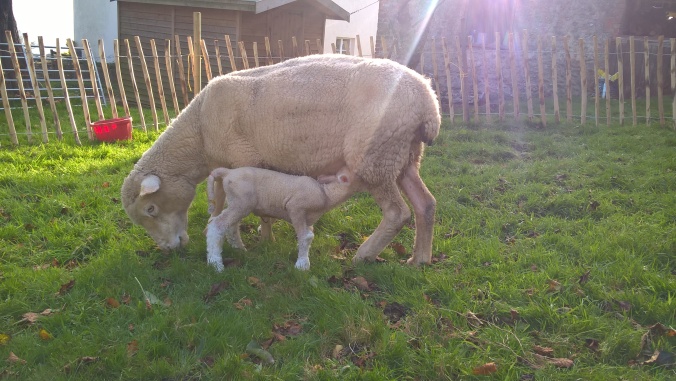
Just about all of us have responsibilities for others in some form or other, and as citizens and members of our communities we have especial responsibilities to the young, and the vulnerable.  And so, as we consider the Good Shepherd, and less good shepherds, we can hold in mind those ways our actions and our words have an impact on others, and how we can care for and nurture one another.  We are both sheep and shepherd, just about all of us, in different ways, and at different times of our lives.  We can be cared for, and care, in our turn.

John 9:35-10:31

WP_20171016_16_17_54_Pro

This saying follows on from the one before – ‘I am the light of the world’. The setting, as we saw in the previous chapter, is the Feast of Tabernacles.  The atmosphere is hostile, argumentative, challenging to Jesus….
This good shepherd story is an answer to these questions and challenges that have been rolling on over several chapters of our reading.  Jesus often responds to questioning with a story.  Stories speak to the whole person..

Once again, Jesus has a double audience for this story – the man who has received his sight, and doubtless others outside the synagogue, and the religious leaders who threw him out.  This one story, one image, of the Good Shepherd, will have been heard differently by these two groups.  Just think, the man who had received his sight, and been thrown out of fellowship, was sought out by Jesus.  He is like the lost sheep in the other gospels.  It is so good to know that this is what the Good Shepherd does – he finds one who has been rejected.  Jesus not only healed him, but later comes to restore him, care for him, include him.

Of course, all those who listened to him on both sides will have been used to hearing scriptures that talked about good and bad shepherds.  They will have know the words of Ezekiel  on the subject, as well as holding dear the memory of David, the shepherd king.

“You have not strengthened the weak, you have not healed the sick, you have not bound up the injured, you have not brought back the strayed, you have not sought the lost, but with force and harshness you have ruled them.” Ezekiel 34:4

Jesus clearly draws on a shared knowledge of this prophecy to confront those who challenged him.  They know that the prophecy continues, saying that God himself will search for the sheep, as Jesus searched for the one who can now see.  God will gather those who are lost and scattered, and will feed them with good pasture.  God will be their shepherd, will bind up the injured, will strengthen the weak.  They will be fed with justice.  And Jesus claims this role, the role of the good shepherd, for himself.

When we can be cared for by God, the power and importance of human leaders – tyrants, emperors, Pharisees – is hugely diminished. And it sets a high bar for those human leaders, those who would be a shepherd of a flock.  That nourishing, self-giving, gentle leading of the good shepherd is our standard.

Can we follow this shepherd, and learn to nurture in our turn?

img_0630

The church at Selworthy Green, with Exmoor in the distance

So, we turn, briefly, to the gate.

There is a twofold task that Jesus undertakes for us.  One is to keep us safe, to be the gate.  The other is to lead us out.  …… The shepherd would lie across the gap in the circular sheepfold at night, protecting the sheep both from wild animals and sheep-rustlers.  Jesus keeps the sheep safe……..

We need safety and refuge.  We need sanctuary.  We need to lie down and sleep in safety.  And then, as the shepherd gets to his feet and calls us out of the fold, we need to continue to find our safety in the presence of the shepherd as we step out into the new light of morning.

If God made the world, and all things hold together in Christ, we know that the shepherd knows what he is doing when he leads us out.  He knows all about the dark valley, and will not abandon us there, but it is not all dark valley.  It is also green pasture, flowing water and the kingdom coming on earth as in heaven.  Abundant life is such a marvelous promise……


Reflection and Response

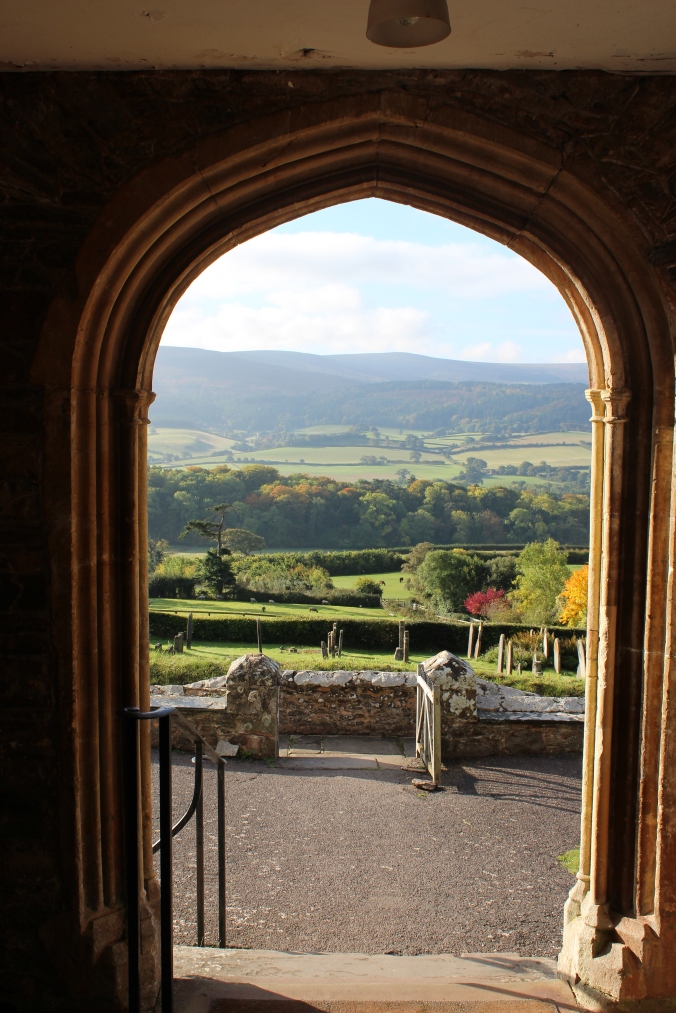
Take some time to look at the picture through the doorway above, and to reflect on on Jesus being a gate, or a door.  Sit quietly, and open your heart and mind in prayer.
What catches your attention?
How do you feel when you look at it?
Does it remind you of anything?
Can you imagine yourself walking through that landscape?
As you go out and about in your ordinary days, or as you feel drawn to a new adventure in life and faith, what does it mean to listen out for the voice of the shepherd, and to follow the Good Shepherd?  Where may he be leading you?

How comfortable can you be with not being sure about that?
Take time to commit your days and your ways to following.

Prayer for the beginning of the day:
Good Shepherd, you know what lies before me today.
Help me to hear your voice, and remain close to you.
Guide me beside still waters, keep me at peace.
Nourish me with your presence, let me have enough to give.
Let me follow you this day, and always.

Prayer during the day:
Good Shepherd, let me see you ahead of me,
and know which way to go.


Good Shepherd
Write down ways in which you have some leadership and/or influence with others.  Each of our lives touches others; we all make ripples in our ponds.

Ask God to help you learn to be a good shepherd in these situations, and to follow the good shepherd.

Write down any action or insight that comes to you. Resolve to follow it this week.

Listen/hear
Remember a time when you felt really listened to, and a time when you did not.  What was the impact of both occasions? Resolve to be a more attentive listener this week.  Give your full attention to whoever is talking to you.  Seek to understand them, really hear them, rather than putting your own point of view across.


A link to Malcolm Guite’s sonnet on the gate

If you’d like a copy of the book, you can ask your local bookshop, or order online.

Here are a few suggestions:

The publishers, BRF

Amazon

img_20181130_114736372319885.jpg

Thank you for your time and attention, for walking this way together.