Pentecost – a poem and some readings

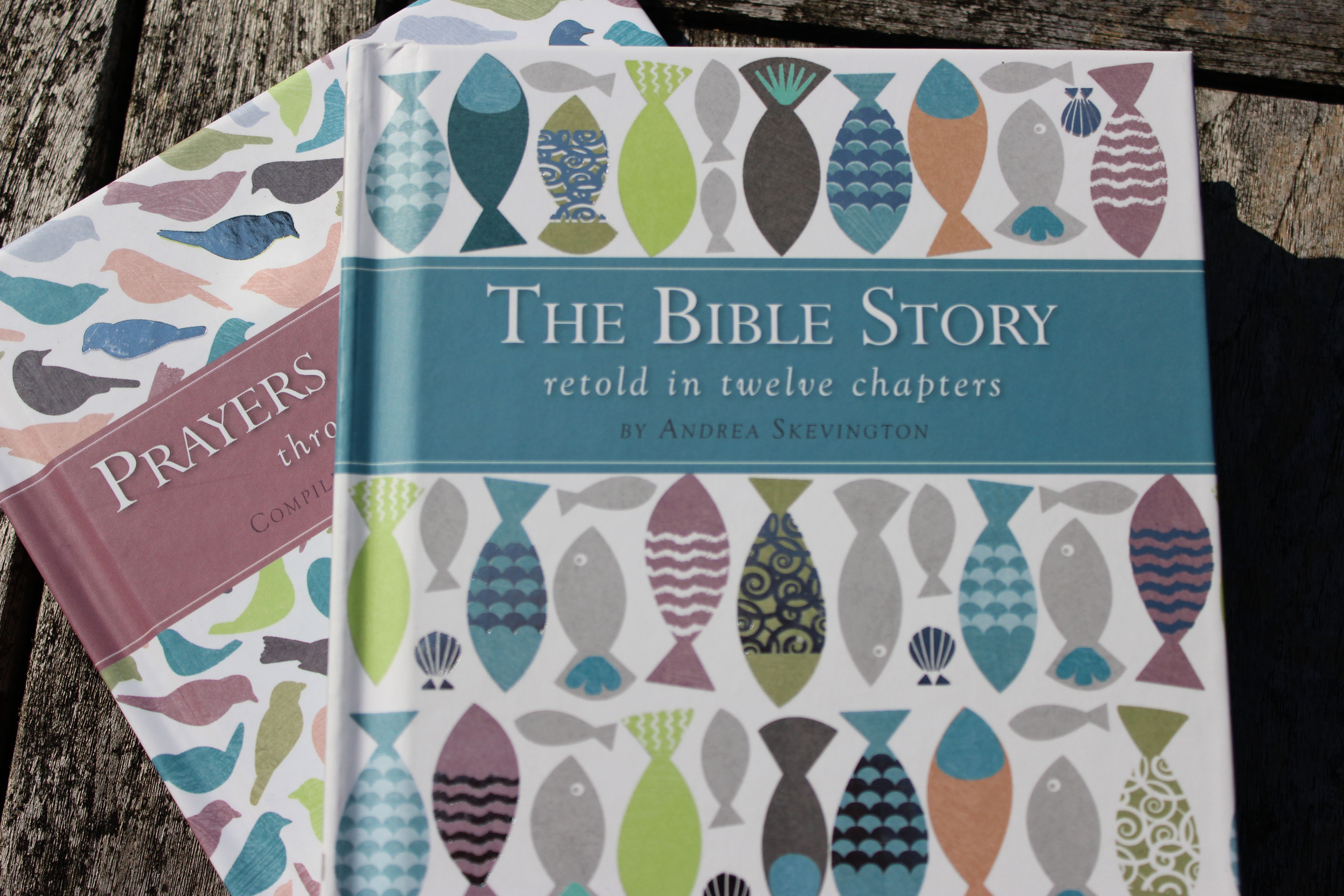
Hello! I wanted to tell you that my poem for Pentecost – when we celebrate the coming of the Spirit – has been published in this glorious book by Diana Butler Bass.
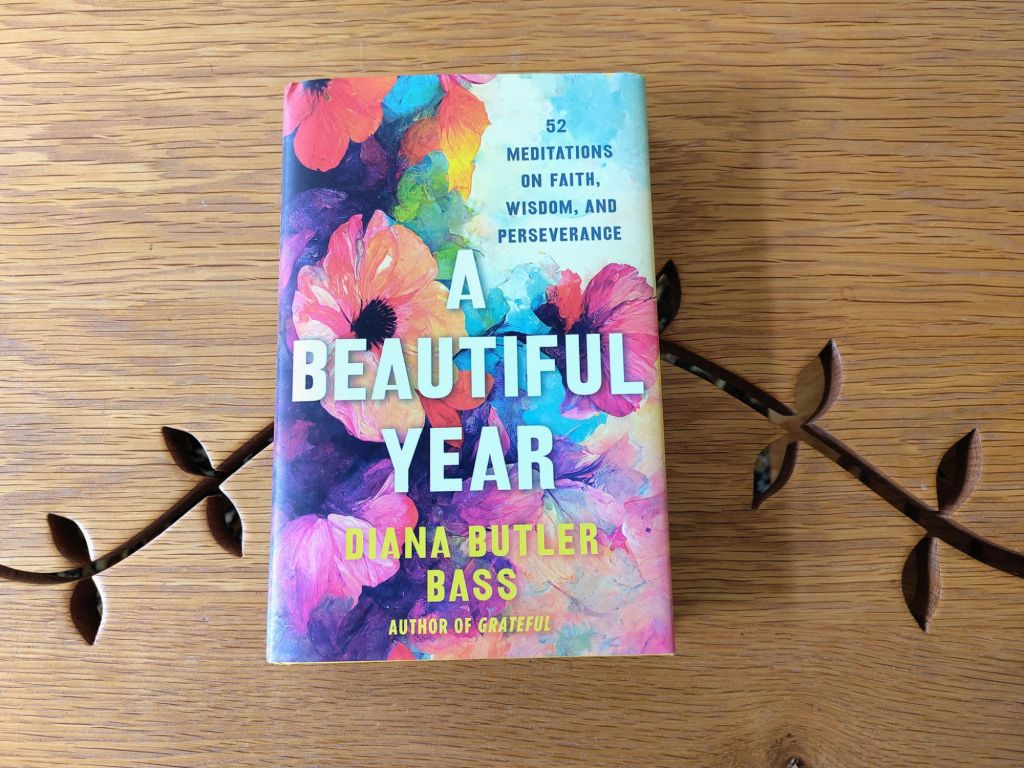
If you follow the church seasons you will find this an invaluable resource taking you through the weeks. If you don’t, you may find it refreshing and insightful. I particularly like the way she explores the radical nature of Jesus’ teachings with deep scholarship and lived experience. I heartily recommend it.
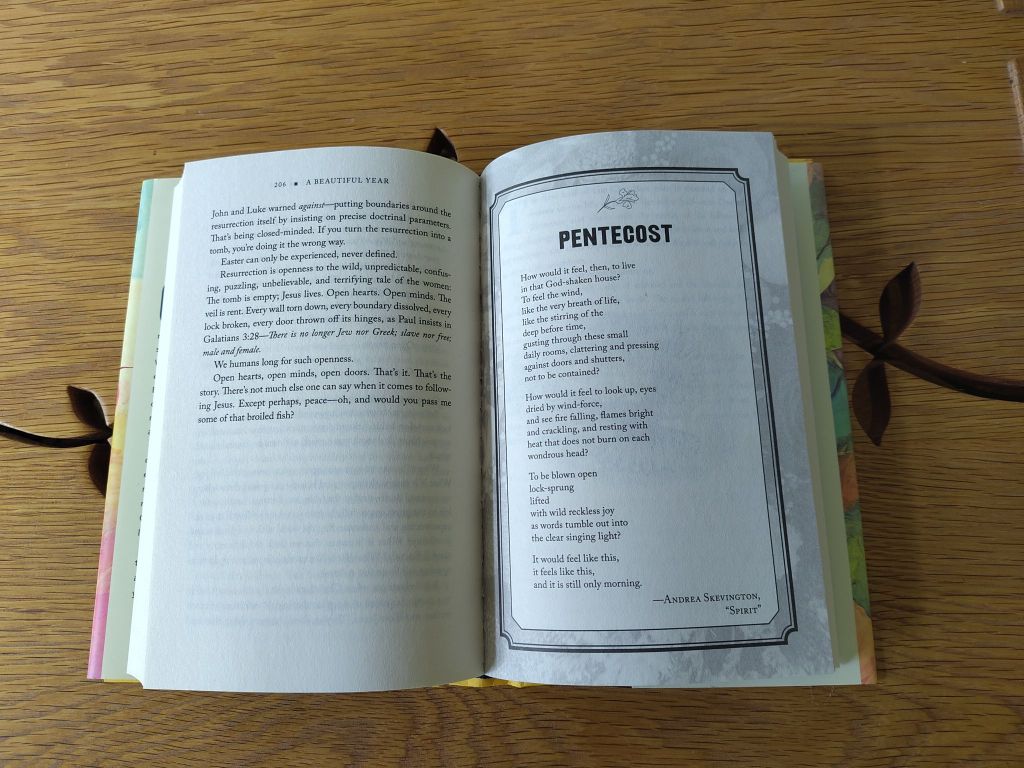
So, this poem marks the beginning of a new season in the book, and I couldn’t be more pleased. I am highly honoured to be in such company.

I’ve also included it in the manuscript for my own collection, The Year’s Circle, to be published by Wild Goose of Iona Publishing, and that’s very exciting too. I’ll let you know when I have any news of a publication date.

If you’d like to read the poem more easily, you’ll find it below – along with some other pieces that sit with it. Please feel free to use any of my work that helps you, giving my name and referring to this blog – or one of the books above. I’d love to hear about it if you do.

This image has an empty alt attribute; its file name is wp_20200614_20_52_13_pro.jpg

Both poem and reading show the way that the Spirit can burst through our shut away places and times, taking the ordinary and transforming it. I hope you find some encouragement here.

SPIRIT

How would it feel, then, to live
in that God-shaken house?
To feel the wind,
like the very breath of life,
like the stirring of the
deep before time,
gusting through these small
daily rooms, clattering and pressing
against doors and shutters,
not to be contained?

How would it feel to look up, eyes
dried by wind-force,
and see fire falling, flames bright
and crackling, and resting with
heat that does not burn on each
wondrous head?

To be blown open
lock-sprung
lifted
with wild reckless joy
as words tumble out into
the clear singing light?

It would feel like this,
it feels like this,
and it is still only morning.

Acts 2 1-4
From my book, The Bible Story Retold

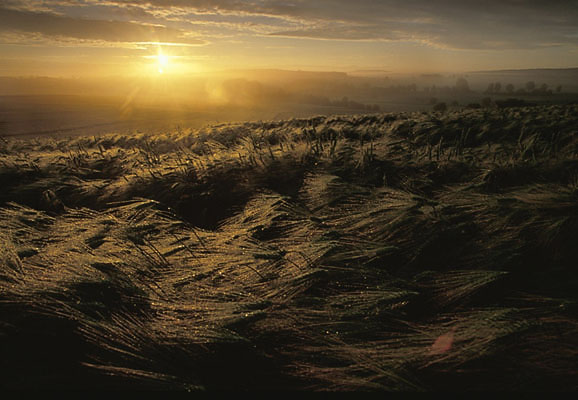
From the fields it came: the first sheaf of barley cut for that year’s harvest.  It was carried high through streets crammed with visitors, and on to the Temple. And then the priest offered it to God, giving thanks for the good land, and for the gift of harvest. For that day was the celebration of the first fruits.  It was Pentecost.
Meanwhile, the disciples were all together, waiting.  Then, suddenly, it began.  It stared with sound – a sound like the wind – but this was no gentle harvest breeze.  This was a shaking and a roaring: a sound of power, whooshing and howling about the house, rattling every door and shutter.  The sound seemed to come down from heaven itself, and filled the house as the wind fills sails.  Then, the disciples watched wide-eyed as something that looked like fire came down, and tongues of flame peeled off it and rested on each of them without burning them.  All of them were filled, for the Holy Spirit had come.  And as it happened, their tongues were loosened, and they began to speak as the Spirit gave them words.  These words were not Aramaic, their own language, but in languages that were unknown to them.
A crowd had gathered by the house because of the extraordinary sound, but then they heard voices. There were pilgrims in Jerusalem from all over the known world, and they recognized the words the disciples were speaking.
“He’s talking Egyptian!” said one.
“That one’s talking my language,” said a visitor from Crete – and the same was true for all.  Each person heard God’s praises in their own tongue.
“What can it mean?” they asked each other.  But others among the crowd joked that the disciples had been drinking.
The Twelve heard what they were saying, so Simon Peter stood up to speak to the crowds.
“Listen, I’ll tell you what’s happening.  We’re not drunk! It’s too early in the day for that! This is God’s promise come true.  Do you remember what one of the prophets wrote long ago?


I’ll pour out my Spirit on everyone – young and old.
Your sons and daughters will prophesy,
young men will have visions, and old men dreams.
All who follow me – men and women – will

be given my Spirit, and there will be wonders!
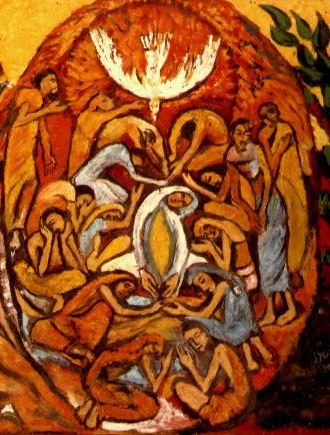
by Jyoti Sahi

And some space to reflect and respond, from my Prayers and Verses

Christ has no body now on earth but yours,
no hands but yours, no feet but yours…
Yours are the feet with which he is to go
about doing good,
and yours are the hands with which he is to
bless us now.
St Theresa of Avila 1515-82

Spirit of God
put love in my life.
Spirit of God
put joy in my life.
Spirit of God
put peace in my life.
Spirit of God
make me patient.
Spirit of God
make me kind.
Spirit of God
make me good.
Spirit of God
give me faithfulness.
Spirit of God
give me humility.
Spirit of God
give me self-control.
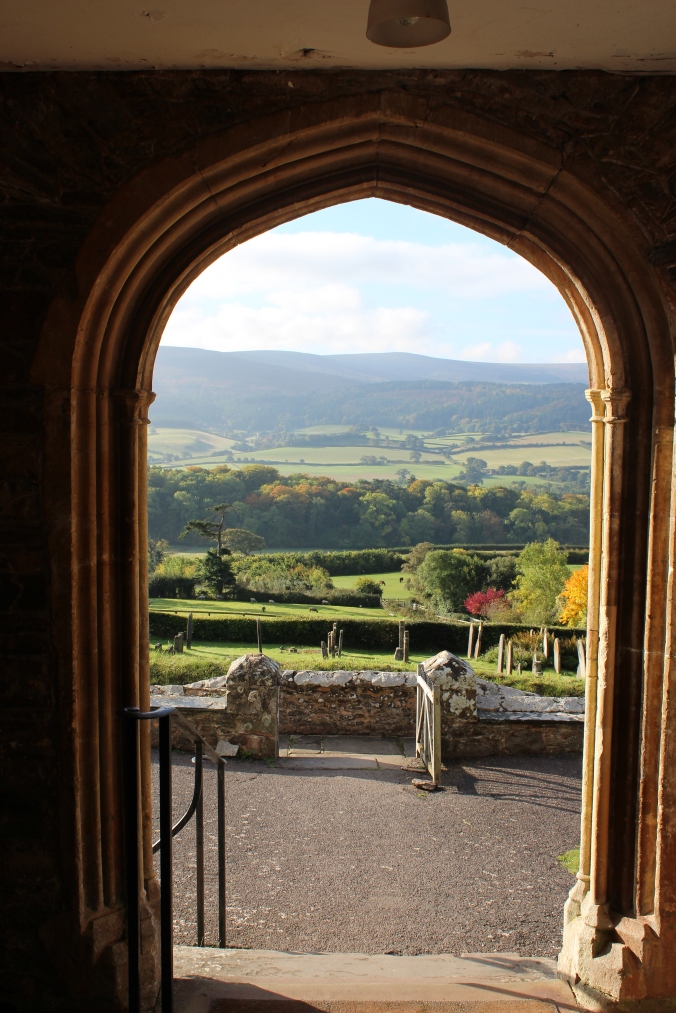
All Saints Church, Selworthy, Somerset
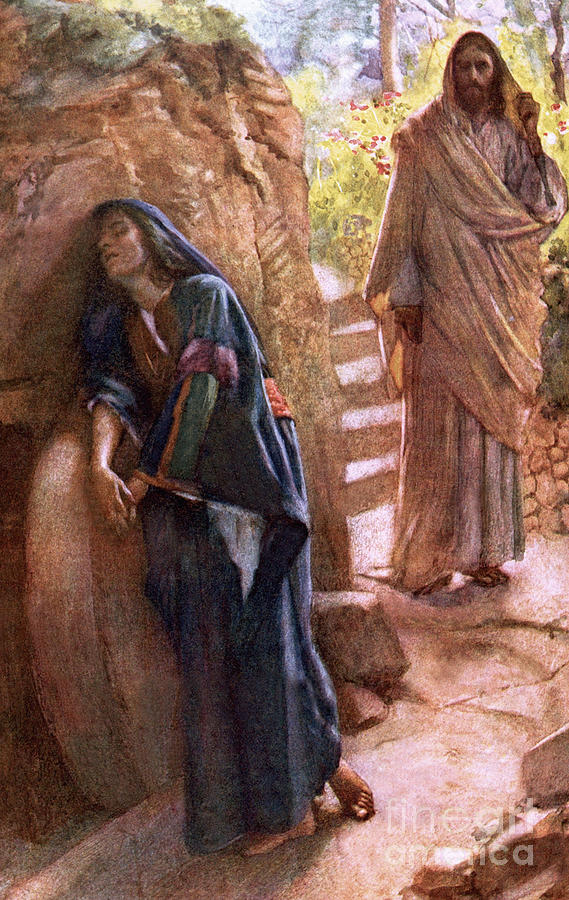
Poem: Mary in the Garden. Easter Retold

I’m sharing another poem from my collection-in-preparation with you, as promised. I started gathering and writing poems last March, and so this Easter poem – and the one to follow – were amongst the first new ones I wrote. So, quite simply, here it is….

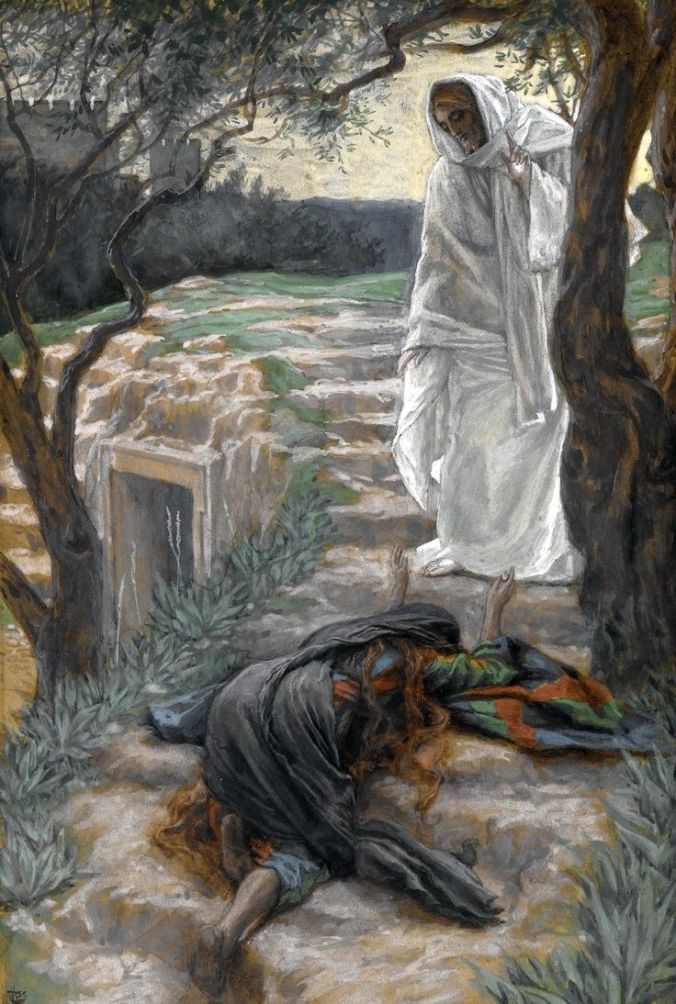
Mary Magdalene at the Sepulchre by Harold Copping

Mary in the garden

It was in the garden
that Mary stood weeping.
First light, first flush of green
spreading over the warming stones.
A quiet place, now.

Alone, shocked, bewildered,
she did not see the flowers
opening at her feet, or hear
the song of the turtledoves.

For she is one who stands
by a tomb lost, deserted, 
heavy-burdened with grief –
the weight of a million tears –
as if this grief might carry
the pain of us all.

And seeing you, she did not see,
thought you were like a
second Adam, tending the garden
in this strange new dawn.

Then, you spoke out a name
 – her own name. Mary. 
She knew you then.
What must have risen up in that
broken heart, touched as she was
by your tenderness.
Yet as your eyes met,
her hand stopped
in the warming air between you,
singing with birdsong, shining with light.

John 20:11-18, 1 Corinthians 15:21-22

If you would like to read the story, you can find more in the link below….

Easter Retold

James Tissot

Please feel free to use my poem, crediting me and this blog.

The Little Christmas Tree – the power of kindness

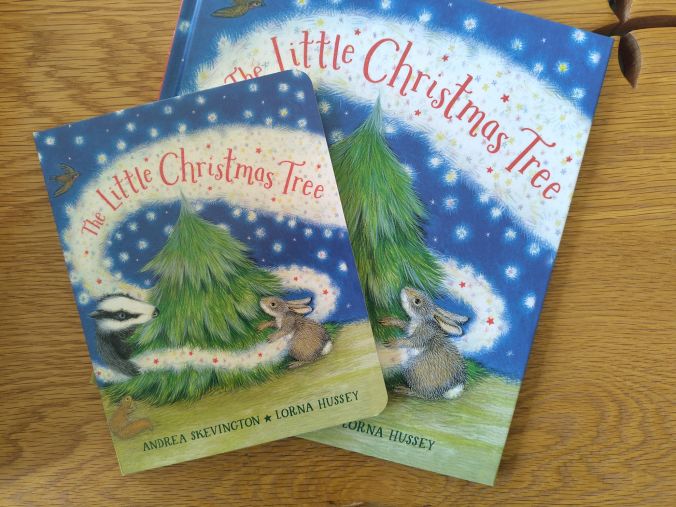
The new editions of my first story are making their way into bookshops ready for Christmas, and I know that some of you are coming across them. That’s so good, and a little bit exciting!

It’s given me the opportunity to take another read of the story, and think about it in the context of the world we’re living in now, and I’ve noticed something else.

Previously, I’ve thought about it telling a story into our shifting and stormy climate – and you can read more about that here. Today is the first day COP 30, so it seems particularly appropriate to be thinking of the importance of woods to regenerate our land, how important it is to treasure the natural world and give it space and time to return to strength and function. (If you’re not familiar with Prince William’s Earthshot Prize, I would commend that to you as a hopeful, active antidote to political wranglings – necessary as these may be.)

I’ve also thought about it as a version of Mary’s radical, prophetic message in the passage we refer to as the Magnificat, and you can read more on that here. And once again, the contrast she draws between the mighty and powerful, and the hungry, speaks directly into our unequal world.

What’s been on my mind this year is the matter of welcome – how we welcome, or not, those who have to flee their homes.

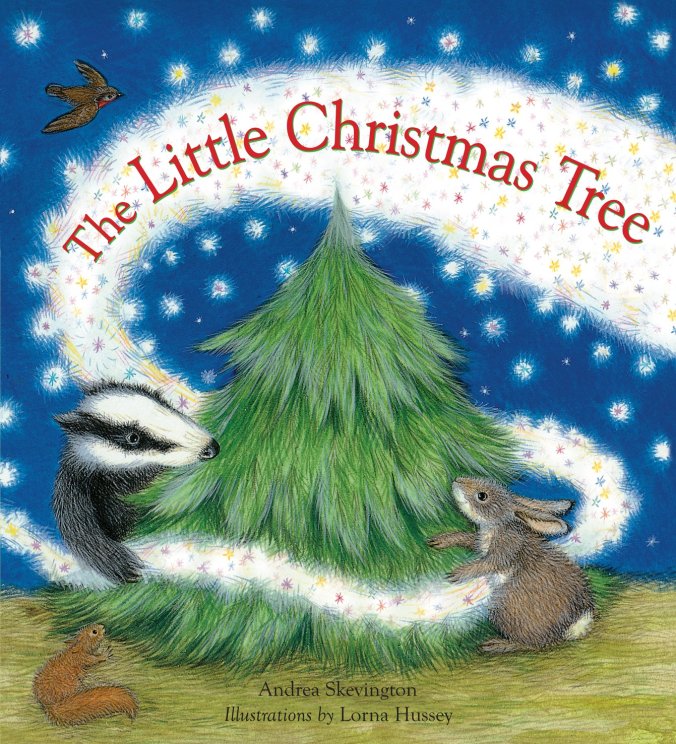
I love Lorna Hussey’s warm and intricate illustrations. Thank you Lorna!

In the story, a storm rips into the wood, and the animals are looking for a place to shelter. They find one in the branches of a little fir tree, who welcomes them in. When I first told the story to my own children years ago, I never thought such an action might be controversial, or political. It was simply a practice of kindness, empathy, hospitality. These have always been regarded as Christian virtues, and those who read the scriptures will be well aware that welcoming strangers, and treating the poor and the vulnerable with compassion, is commended again and again. These qualities are upheld by ethical systems in all cultures across the world. And yet, here we are.

Of course, the global situation is complex, and it’s vital we have good, fair systems which work for all people. Of course, those who profit from exploiting those who are seeking sanctuary should be prevented and brought to justice. Those things are part of the empathy, and the welcome. It is the shift of heart which troubles me, towards hostility and violence towards those who have in all probability already experienced a great deal of it.

Can we reconnect with our deep, inbuilt response to the troubles of others – to seek to help how and where we can? Just up the coast here in Suffolk houses are being bulldozed as the sea bites ever bigger chunks out of the coast. Of course, there’s no comparison with those in the Caribbean and Asia who are suffering the most appaling tragedies from our changing climate, but it’s enough to awaken some fellow feeling, and to imagine how little it would take to find ourselves displaced and relying on kindness – both the kindness of individuals and the kindness of efficient, just and compassionate systems.

In the story, it is the Little Christmas Tree who welcomes the animals, and we share the warmth and compassion and richness that comes from that simple act. There is real joy in it. The book ends with a kind of party.

We can think too of the first Christmas, where a displaced mother was offered somewhere to have her child, and soon after the family became refugees in Egypt running from a tyrannical and jealous Herod. I’ve written about in the link above.

There is much need of kindness, and it is as precious and profound as ever. Perhaps we can remember times when we have both given and received when in need, how good that was – difficult, sometimes, but good.

As we approach Advent, let’s see if we can cultivate kindness, and welcome, and look for local ways to help people who may need it most.

The book is available in two editions, a hardback and a board book. You can order them from your local bookshop, or the usual online places.

Here are a few links:

Direct from the publisher here

Online Bookshop.org supporting local bricks and mortar ones here in the UK here

Eden bookshop

I’m delighted that it’s widely available in the USA too.

Very unseasonal Book News! The Little Christmas Tree – a new edition and a new format

Just in case some of you are very organised people who like to plan ahead for Christmas, you might like to know that a new hardback edition of this beautifully illustrated book is coming out on August 22nd.

It was my first book and I love it, and I’m thrilled it’s coming out again for a new audience. And if you have little ones in your life who are of an age for a board book, it’s coming out as one of those too – publication date for that is 26th September. That edition is slightly abridged, but with all the delightful pictures of woodland animals by the very talented Lorna https://www.instagram.com/lornahusseyillustrator/.

To those who follow this blog from the USA, the publishers were keen to say that the book will be available over the Atlantic, too.

Both can be pre-ordered now. Pre-orders do help with publicity and planning, so if you feel inclined, it would be a great encouragement. Meanwhile, the paperback version is still available.

If you are lucky enough to have a local bookshop, they can get them for you. Here’s a link to the publisher’s website for online orders. Of course, it’s also available in all the ususal places for ordering books.

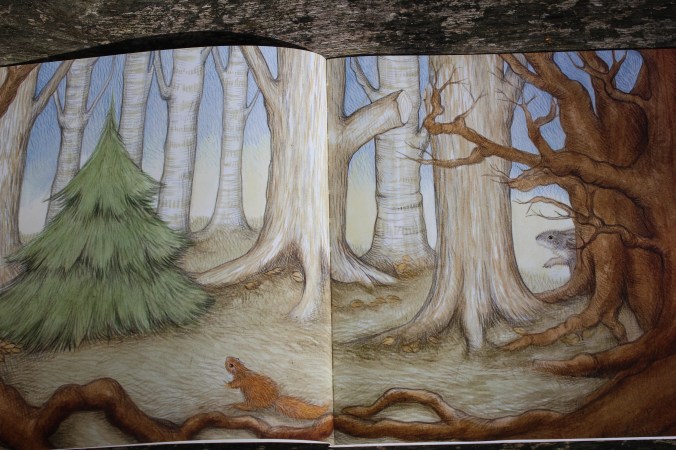
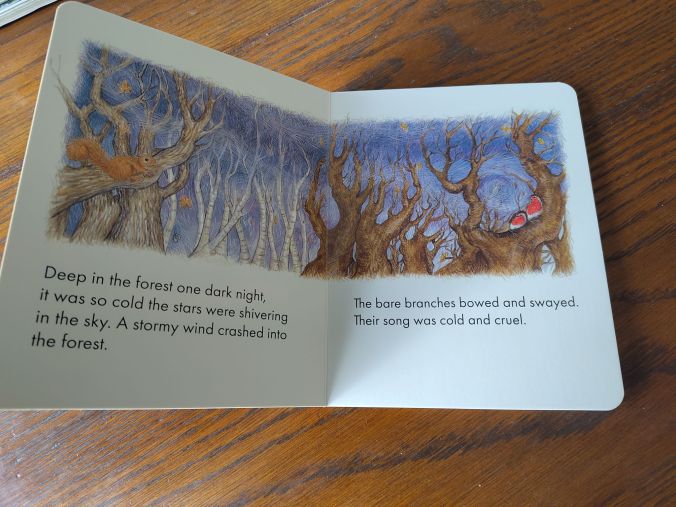
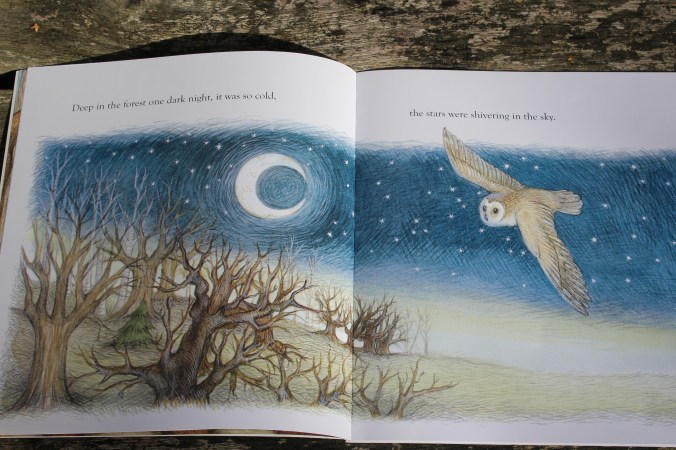
Here’s how it begins…

And you can read more about it elsewhere on my blog, for example…

The Little Christmas Tree – a beautiful BSL video telling of the story.

The Little Christmas Tree – a few pictures!

The Little Christmas Tree – I’ve been thinking ….

Thank you all for your support and encouragement. My mind has been full of the poems I’m weaving together for my poetry collection lately, and I’m aware I haven’t been posting on here quite as often as sometimes – I’ll try to keep remembering to do that! And next year, there’ll be lots to share!

Sunday Retold: Christ the King

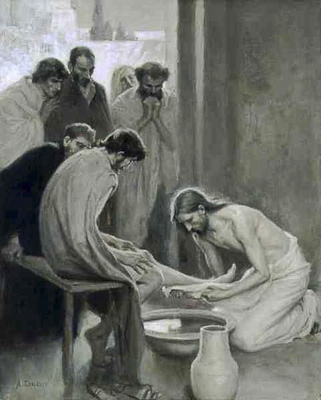
Jesus Washing the Feet of his Disciples, by Albert Gustaf Aristides Edelfelt, (1854-1905)

This week, I thought I’d share with you my retelling of the reading many churches will be following this Sunday, in the spirit of Sunday Retold.

It explores themes of power, and so follows on from last week’s poem, Stones.
This week’s reading is that electrifying encounter between Jesus and Pontius Pilate – a trial of sorts. For the flow of the storytelling, I’ve taken a longer sweep than the set reading.

So here’s the story from The Bible Story Retold

At the same time, as dawn was breaking, the council gathered – elders, chief priests, teachers of the Law – and faced Jesus.
“If you are the Christ, the promised one, then tell us!” one said, rolling the words around his mouth as if they were bitter to his taste.
“If I told you, you would not believe me,” Jesus replied, holding him in his steady gaze.
“Are you the Son of God?” they asked.
“You are right to say so.”
At this they rose to their feet with an angry roar, and carried Jesus off to the palace of Pilate, the Roman governor, who had power to sentence people to death.
“This man is a threat to the peace – he claims to be Christ, a king, and opposes Roman taxes,” the accusers called out as Pilate circled around Jesus.
“Are you the King of the Jews?” he asked. Jesus felt the cold edges of the mosaic under his bare feet.
“Yes,” he replied. “But my kingdom is not like the kingdoms of this world.”
“So, you are a king!” Pilate responded.
“Yes! That is why I came, to speak the truth. Everyone who is on the side of truth will listen to me.”
“But what is truth?” Pilate asked. Then he went out to see the leaders and the people together. “I see no reason to charge him,” Pilate said. “This man has done nothing to deserve death. I will set him free.”
“No, set Barabbas free instead!” they cired. Now, Barabbas was a rebel who had killed a man.
They shouted louder, drowning out Pilate’s words: “He’s done nothing wrong! I will release him!”
But, with rising rage, the mob shouted, “Crucify crucify!” In the end, Pilate gave in: he set Barabbas free and handed Jesus over to the guards.
The guards tormented Jesus, the one called king. They draped a fine, purple robe around him, and twisted him a crown of sharp thorns to wear. They called out, “Hail, King of the Jews!” and fell on their kneeds before him, laughing. They spat on him, and struck his head with a staff. They, they took back the robe, and led him out to be crucified in his own simple clothes

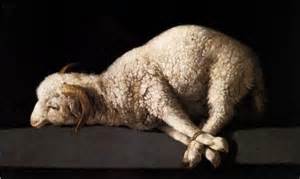
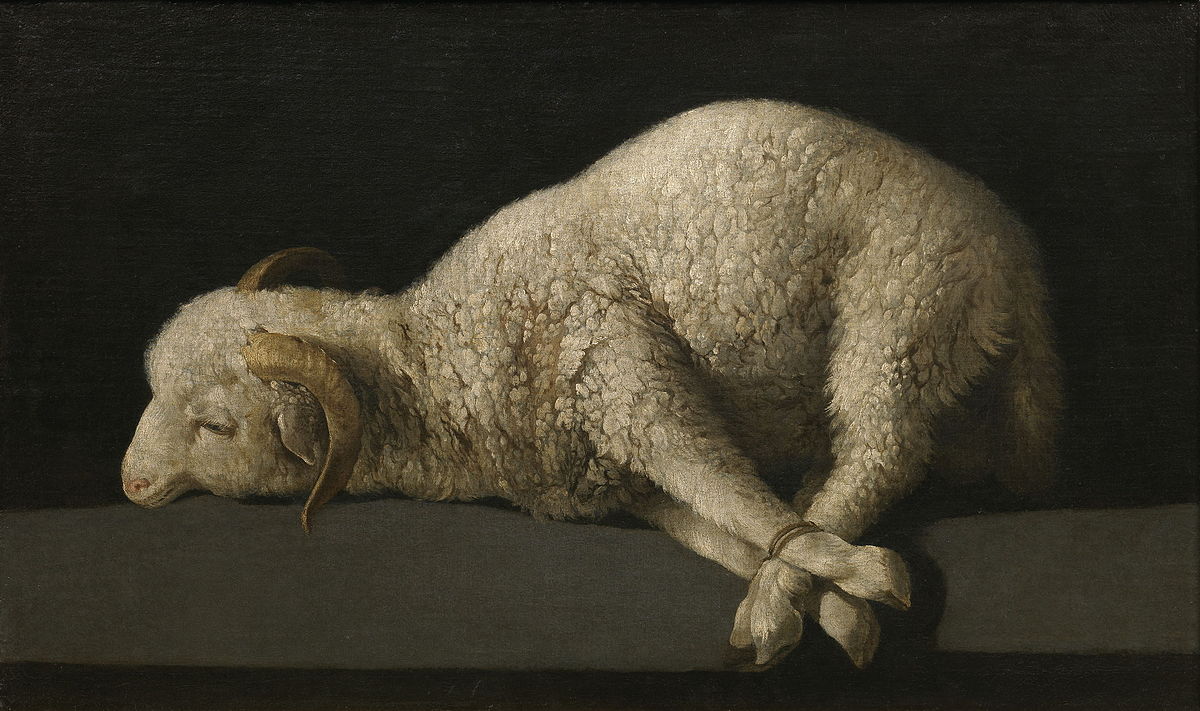
Francisco De Zurbaran

We see how those who held religious power allied themselves with the Imperial power of Rome. I expect they were sure they were being faithful, upholding the law and their traditions, defending their faith as they saw it. Being certain you are right can lead you very astray. And we see too how Pilate saw Jesus very differently, one who had done nothing wrong, and yet seemed to have little power in the face of an angry crowd.

The biggest difference of all, to my mind, is in the understanding of what power is, what a kingdom is, who a king is. Those who are embedded in the power structures of this world, and, to be honest, the rest of us too, find it hard to imagine a different kind of power. One that follows a path downwards, even to death. One that washes the feet of the followers, that does not insist on its own place, but instead works through love, in humility, in radical engagement with the world as it is. We will soon be in Advent, preparing for the coming of Jesus. At that time we think of his unity and solidarity with frail humanity, born in such a humble way, amongst the extraordinary, ordinary, beloved people of Bethlehem.

Lord Jesus,
May our lives bear the mark of love.
As we are kind, as we share, as we are gentle,
may your love be seen in us.
Help us, for this is hard for us.

Dear God,
May I welcome you as my king:
King of peace,
King of love,
King in death,
King of life.

From my book of prayers to accompany The Bible Story Retold, Prayers and Verses


Poem: Poured out and overturned – Sunday Retold: Turning the tables

Christ chasing the money changers from the temple Raymond Balze

Hello again.
Here’s another post combining a look at the reading many churches will be following on Sunday, and a poem which emerged as I read it and read it again. So it draws on my occasional series Sunday Retold, and my practice of dwelling imaginatively with the story, meditating on it, and seeing what arises.

Firstly, the Gospel reading from my retelling The Bible Story Retold in Twelve Chapters.

Jesus went into the Temple courts, and found them choked up with stalls and salesmen, ringing with the shouts of hawkers and hagglers. People were not gathering for worship: they were changing their money into special Temple coins, and buying birds for Temple offerings. Jesus grabbed the traders’ tables and threw them over. The money changers and the dove sellers shouted angrily while the coins clattered and rolled across the stone floor. “You’ve taken ‘the house of prayer’ and turnind it into a ‘den of thieves’!” Jesus said, and all fell silent at his words.
Then, the blind and the lame came to him and were healed. And children came, too, running and shounting, “Hosanna to the Son of David!” The Temple was filled with joy, and the priests and teachers of the Law drew back, muttering angrily.

From The Bible Story Retold, based on Matthew 21

One of the things I found while working on this retelling was that there was always so much more I wanted to explore – so much depth and meaning hinted at, or concealed by years and culture and translations. My practice in writing the book was to read widely, and then to meditate on the passages in the style of Lectio Divina – imagine myself into the story, and allow it to unfurl in my mind – a mind with questions, open to prompting I hope. So with this one, there was so much here about Jesus’ rage at the commodification of the things of God, making what was freely given into a commercial venture. We are so used to everything falling into the realm of money it can be hard to imagine how things could be any different, or how the realm of God might offer a radically different Way. Jesus spoke more about money than about prayer, and yet it’s a difficult subject to explore for us. So many of the ills and injustices and exploitation of the natural world we are currently experiencing suggest to me that something has gone wrong with the way we view and use money. Can we begin to dip into the realm of gift, generosity, and finding ways to do what is necessary and right? I hope so.

The Little Free Pantry at St Andrew’s Church, Melton. An example of gift, of sharing. Apologies for the soft focus!

And so, to the poem which came out of my reflections. The meaning of gift and the exchange that arose in my imagination on reading the passage was many layered, and I hope the poem can be read a number of ways depending on what chimes with you the reader. It draws from the Mattew 21 passage, as above, but also the passage early in John’s gospel (John 2).

Poured out and Overturned

Some things cannot be bought
and yet, they are. See
those neat piles of coins,
counted carefully, those inkmarks
methodically made, those
animals sold for sacrifice,
coins given for prayers, for favour,
for the words and work of God.

His carpenter’s hands gripped
the smooth grained tables and
upended them.  Poured out the
shimmering piles of coins
rolling and chiming
over the stone floor.

Some things, perhaps, once, all
are freely given – life, air, water,
growing things for food, breath,
beauty, favour, love.  So many
things we lay out in rows,
so many tables, so many
neat marks of ink or light.

Bound, we see no alternative,
cannot imagine another way,
and yet, here is a man throwing
coins to the floor, with a whip
to drive out money changers
while wooden tables lie
groaning on their sides.

Set free, then, what happens in
this space, this chaos,
with all our reckoning upended?
The blind and the lame come,
and are healed.
And the children run and shout
Hosanna.
And what is, and what will be
is all gift.
So it is, and may it be so.

John 2:13-22, Matthew 21:12-17

Elisabeth Frink, Chapel of the Transfiguration, St Edmundsbury Cathedral.

I notice that some of you good people are looking up resources for Easter on this blog. Thank you for considering my work. If it helps, here’s a link to a summary……
Please feel free to use my writing in any way that helps, mentioning my name and this blog. And do feel free to let me know, I do love to hear where it gets to!

Edit: Sunday 3rd March.

I’m absolutely delighted to find my poem below at Diana Butler Bass’ The Cottage.  She shares an informative piece on this passage which I’ve found has helped me understand what can be a puzzling story. Do read it if you haven’t already. I hope this link will take you there…..

https://open.substack.com/pub/dianabutlerbass/p/sunday-musings-b9b?utm_source=share&utm_medium=android&r=46vq

Further edit… I seem to be having difficulty clicking through on this link. She has included one of my Mary of Bethany poems in another recent post if I’ve whetted your appetite and you can’t find Overturned…. try this.

If you search for her name on this blog, you will find other poems and other links.

The First Sunday in Advent – Hope.

Waking up this morning, on the first day of Advent, there’s the lightest dusting of snow on the ground. The sun shines, and late autumn leaves glow even as the wind blows down from the north with its biting edge and splinters of ice. Apparently, short eared owls have been blowing in from Scadinavia, but I don’t think they’ve got as far south as Suffolk yet. So, it does feel like the seasons are changing, that Winter is here, and Advent comes along with its glimpses of Hope. Tradition has it that’s the theme of the first Sunday of this season, and that seems a good place to start. Our current Decembers are some distance from the old practices of having Advent as a time of quiet, reflective, waiting – a little like Lent before Easter. It’s so at odds with the flashing lights and loud shops and busyness, that understanding, but we can perhaps catch moments where those wintering practices are possible, and might help us….. pools of quiet light where we can breathe and think, where the cold sharpens our perceptions.

I’m also intrigued by the more medieval practice of putting yourself in the place of the people of Israel as they waited, not quite knowing what they were waiting for. Of not naming Jesus and Christmas, but instead allowing what we long for to be recognised and owned and prayed and worked for. In our context we join so many people throughout history who have felt the future to be shifting and uncertain, and who have longed for a kinder, gentler and more beautiful world. Taking some time to know and feel what we lack, what kind of world and lives we desire, might help us too face a troubling future with some courage and determination.

So Hope is a good place to begin.

Ah, hope. I’ve been turning over in my mind what it means to nurture hope in a world which seems increasingly unstable in climate and economics and culture. I’ve settled, for now, on making a distiction between hope and optimism. So, for me, I’m thinking of optimism as an opinion that things will work out. Something tied to outcomes. I see hope as a stance, an attitude of the heart and spirit, that it’s always worth looking for what brings life, for what is good. It does not require us to be naive about the dangers and difficulties around and within us. We are called to be as wise as serpents, and as gentle as doves – Matthew’s gospel.

Nonetheless, it’s worth working as if the world-as-it-could/should-be is here, emerging amongst us, small as the signs and growth may be. Not a glib avoidance strategy that it’s all fine, really, it’s all going to be fine…. but as a deliberate and courageous stance. I remember being very struck, on reading the Gospels at school as a teenager, with how the message I heard was about how the Kingdon of God was already here, or close at hand, or within and among us – a real and emerging presence, despite the very real difficulties.  With the cost of living crisis bringing fear and hardship, and with the climate noticiably more unstable, we need courageous hope that’s prepared to work to refashion things around us in defiance of what we see.  There is real power in such acts.

The picture of the bulbs and the bookmark at the top of this post relates to an action I took with some friends in our local high street to coincide with COP 26. We handed out bulbs and bookmarks, and encouraged people to think about ways they could plant hope. You can read more about that here. My last post shares a sliver of a project which is coincing with this year’s conference.

Little Free Pantry at St Andrew’s Church, Melton

As Advent begins, we re-read the words of the prophets together.  They often spoke into desperate, unpromising circumstances with a mixture of a vision to hold in our hearts, and actions for our hands to do.  Those actions can be prophetic themselves, speaking out and making plain God’s dream for the world – a beautiful, hopeful vision strong enough to withstand hard times – brave enough to choose to be born to a poor family, who sheltered in a stable, and had to run from a murderous tyrant.  This is how hope was offered to the world, in the infant Jesus.

During this Advent series, I’ll share with you some extracts from my books.  Here’s something from The Bible Retold , as the retelling of the Hebrew scriptures comes to an end, and we look forward..

As the walls were rebuild, so were the people.  For God was building them into a new kind of kingdom.  Isaiah the prophet wrote: “This is how to truly serve me: unbind people who are trapped by injustice, and lift up those who are ground down.  Share your food with the hungry, and clothe the cold – that is how to live in the light!”

The people listened to his words of bright hope.  “There is much darkness in the world, but your light is coming!  All nations will be drawn to you, and they, too, will shine!”
….

“A child is born to us,
a son is given.
Authority will rest
on his shoulders,
and his names will be
Wonderful Counsellor,
Mighty God,
Everlasting Father,
Prince of Peace.
His kingdom, his peace,
will roll across the lands,
and he will reign on the
throne of David for ever.”

We give thanks for the work that is being done right now, in our communities, to clothe, and feed, and seek justice.  May we have the courageous vision to join with that work of light.

From Prayers and Verses

Scatter the darkness from before our paths.

(Adapted from the Alternative Service Book)

IMG_0930.JPG

The days are dark,
Dear God, give us your true light.

The days are dark,
Dear God, give us your true life.

The days are dark.
Dear God, give us your true love.From Prayers and Verses

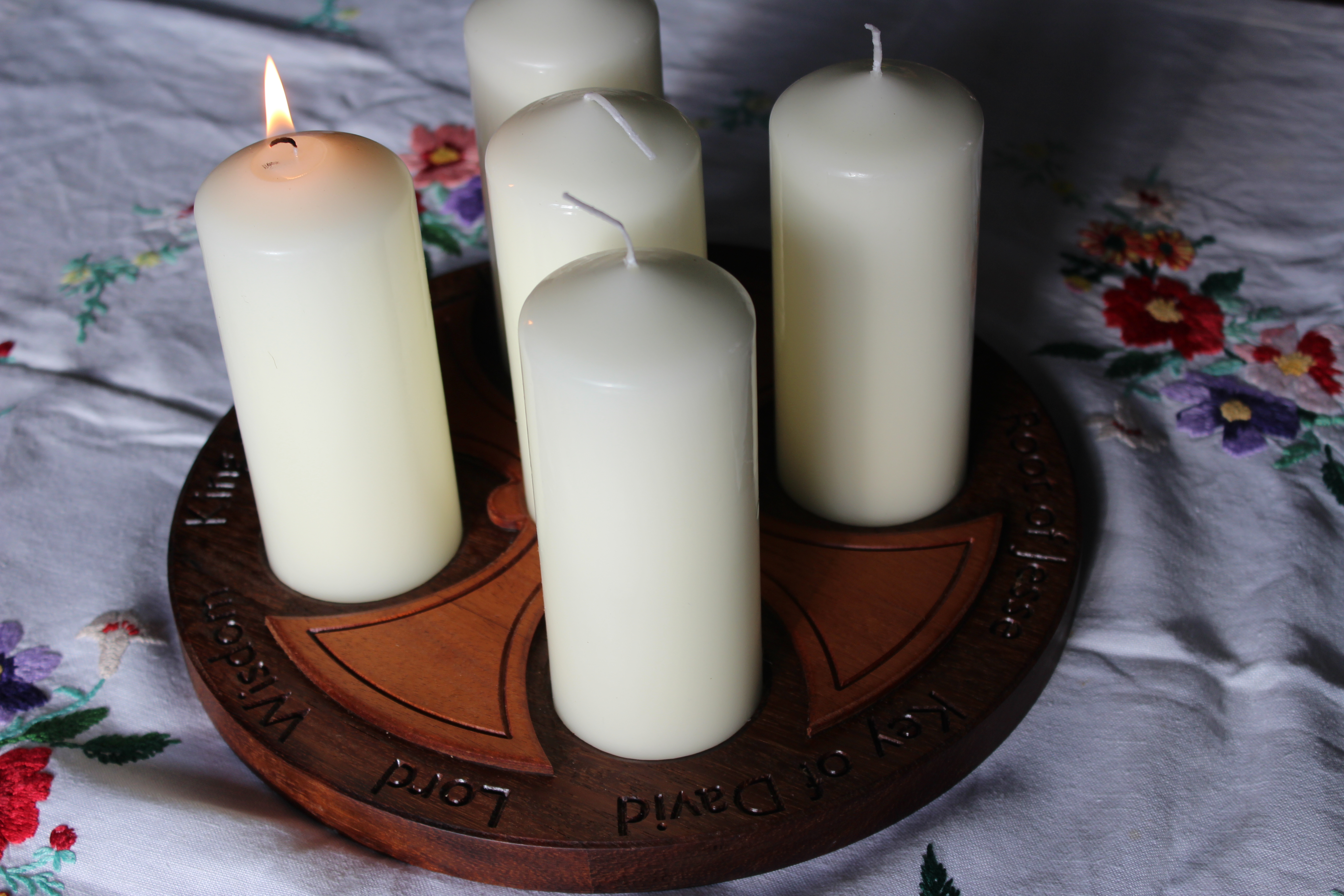
The Advent Candle Ring is from the good people at The Chapel in the Fields
It gives me great pleasure to know that the oak at the base was once a lectern, and the lighter wood on top a dining table.  The words written around it are from the ancient chants, the  “O” Antiphons. These chants came into being when people did not call for Jesus to come at Christmas, but instead used names from the Prophets – like Emmanuel, God with us – to name their hopes.  The first few centuries of the Christian Era saw these great prayers, the “O” Antiphons, sung during Advent, calling on Christ to come now, and to come again.
You can listen to the old chant, and read Malcolm Guite’s sonnet which draws on it, and much more, here.

This coming week, let’s hold on to hope, look for signs of the life of God breaking through, and see where we can be part of that move towards a more beautiful, loving, hopeful world.

Wildlife corridors – a hedge story, and a poem.

I’m really pleased to be part of Transition Woodbridge’s Wildlife Corridors project. You can read more about Transition Woodbrige here, and Wildlife Corridors here.

We’re a group of all sorts of people from about the town who are seeking to make it a bit more wildlife friendly, and learning and sharing as we go. So below, you’ll find a little story about one of our hedges which I wrote for the group’s newsletter. We’re beginning to do more of this – passing on our often falterning steps towards a different way of thinking about our gardens. Here, our hedge had a beetle problem, and we tried a gentler and more natural approach to the plague of viburnum beetles than we might have done in the past. We’re delighted that the hedgeline is gradually becoming much more beautiful, diverse, and better for a wider range of creatures than simply the dreaded viburnum beetle!

After the account, you will find a poem drawing on this same hedge, and its story of renewal.

A hedge story – from pest control to native beauty.

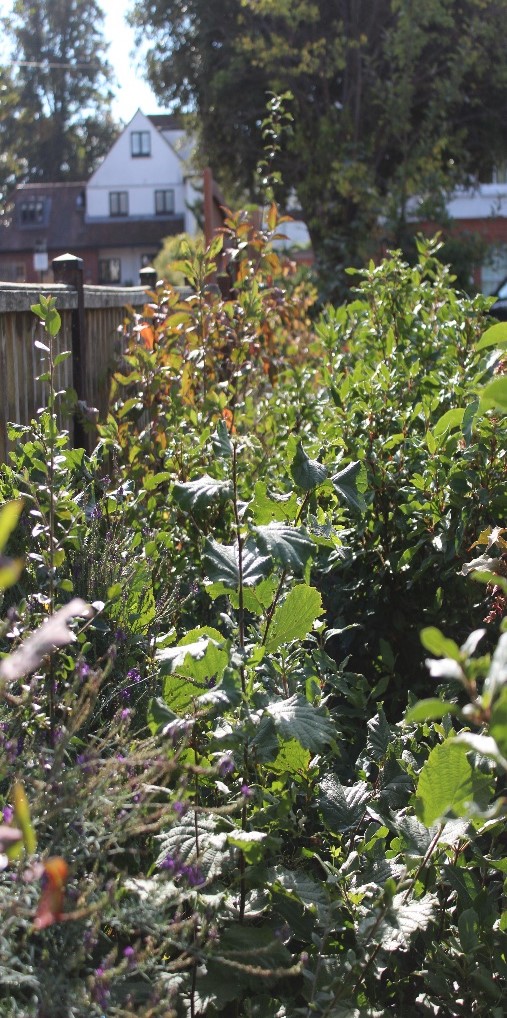
It was a thin strip of dark green, between drives and walls. Our viburnum hedge joins what’s left of the original roadside hedgerow with holm oak and wild cherry plums to the network of gardens and trees behind. A narrow corridor of life, but with precious winter flowers for the bees, and just occasionally, a wren or a bluetit nested there. It was part of the planting we inherited.

A few years ago, it began to sicken dramatically.  Viburnum beetle. It looked devastated, and I had my doubts if it would recover. We consulted the RHS website, cut away the worst of it, and scraped out some of the soil underneath where the grubs overwinter.  As I did so, I felt the poverty of the soil – it was grey, had no structure, with no visible worms or other minibeasts. So we piled on the homemade compost and autumn leaves.  We also decided to enrich it more permanently with native plants – for as it was, it could not renew itself, and the long strip of monoculture was an easy target for the dreaded beetle.

I bought some bare rooted spindle from Botanica and interspersed these with hazel that the squirrels had kindly planted around the garden. In the autumns to come, I’m hoping for a blaze of butter yellow hazel, with bright red leaves and pink/orange berries from the spindle. All to fall to the ground and feed it.

It’s limped through this year’s drought, but we’re getting there.  It’s drawn in so many more creatures already. The insects are returning.  The soil has worms, and frogs and mice make their way along it.  At night bats hunt over it, and by day, the dragonflies. Many plants are finding their way there, each making their own contribution.  At first, it was mustard garlic.  Now, there’s purple toadflax, birdsfoot trefoil, various bedstraws and all manner of other plants.  Butterflies and caterpillars, bees and hoverflies, and a healthy range of beetles are making a home here.

There’s a trellis separating our neighbour’s drive from this hedge and, in consultation with them, we’ve planted garden seeds and cuttings – vetch and perpetual sweet peas to improve the soil, honeysuckle, roses and jasmine.  Again, I hope that next year it will be truly beautiful.

And as for the beetle attack… there have been a few nibbled leaves in the last two years, but nothing more than that. And, if some of the original plants die, there is  plenty of life to take advantage of the light and air they leave.  We have moved from a dark monoculture to a diverse and increasingly native abundance, with so much more food for all life.  The viburnum still gives flower at a time of year when the natives are quiet, and deep cover too for plants and animals and birds. But the natives are making their presence felt now, and bringing so much beauty, diversity and abundance. It’s becoming a joy, and an example of how gentle care can slowly move a garden to something far more alive. I’m watching what it’s doing with real delight. What will be next?

And now the poem…..

Green ink 1
Hedge

And the garden now is my poem.
So this hedge, this long line of joy
and work, rhymes its meanings
back and forth, carries them through
seasons, through drought and cold
by bird and frog and bee. Carries
deep memory of the land, of wood
and hedgerow, orchard and field, and deep
hope too, for what may be, and
what is becoming. And growing.

For joy and work wrought it,
and renewed it, planted these
saplings of spindle and hazel
that will be red and gold as
leaves fade in late sun, fade
to such an illuminated brightness.


And I see what may be, what are,
sweet rose cuttings unfolding, and
growing, as honeysuckle twines,
and jasmine – tiny, with tiny leaves –
grows now in warmth, and sweet peas
begin their work of rising up
from hard coiled seeds.
 
All this abundance given freely
by the garden and gathered,
and tended, and shared,
as she freely gives more –
wind-blown seeds and bird-
carried berries filling the earth
to overflowing, as together we make
a line of such richness and beauty,
thought and imagining, sibilant
as the wind whips through it,
sounding like words spilling
on the page.
These words. This page.

I would write in green, I have
written in green, working
with all this life. Patient, resting
in its waiting, and growing, and fading,
ending, and beginning again.
And again. This long line of green.  

Easter readings and poems

Over the past few years, I’ve gathered and shared with you links to various readings here on the blog that tell the Easter story. Whether you are joining together with many others, or perhaps staying within a smaller household group, or a gathering of friends, I hope you will find here something that supports you, whatever you are doing..

I notice that two posts are proving particularly helpful at the moment. I’ll share links to these at the beginning, and then go through everything in a Holy Week sequence.

Do please feel free to use any of these resources, acknowledging me and this blog. It’s always good to hear about that, though, so do let me know if you can!

These are the most popular links here on the blog at the moment:

Mary of Bethany, at your feet a third time.

Seven Sentences from the Cross

The House at Bethany, the Raising of Lazarus

Many spend time with this Gospel story in Holy Week.  It’s a story that means a great deal to me.  You can find some links below.

Sunday Retold – Lazarus raised from the dead

Here you will find the readings, and some things to ponder, as well as one of my Mary at your feet poem.  If you would like to focus on the poetry, you could go here:

The ‘Mary, at your feet’ poems – Two

The ‘Mary, at your feet’ poems – Three
This last post also contains a contemplative prayer/writing exercise.

There are readings, things to do, things to reflect on, in the I Am series which draws on another of my books.

Jesus said, I Am – for Lent. Chapter 5, the Resurrection and the Life

mary-anoints-the-feet-of-jesus-by-frank-wesley
Artist – Frank Wesley

Other Holy Week stories – You can find these in Chapter 11 of my retelling – both editions:  The Bible Story Retold, and The Lion Classic Bible, which share the same text.  The second of these has lovely illustrations by Sophie Williamson.

Prayers and Verses also has a section in Chapter 11 called The Road to Good Friday, which you might find useful.

Maundy Thursday – The Last Supper, Jesus washes their feet.

Retold –
Retold: Maundy Thursday

Poem- Poem: Jesus washes Judas’ feet.

We also find two of the great I Am sayings in this narrative:
Jesus said, I Am – for Lent. Chapter 6 – I am the way, the truth and the life.

Jesus said, I Am – For Lent. Chapter 7, Vine

Later in the evening, when Jesus is arrested, there is a further I Am moment:

Lent: Jesus said I Am …… Holy Week, I am he – Jesus betrayed

Jesus Washing Feet 11
Jesus Washing the Feet of his Disciples, 1898 (oil and grisaille on paper) by Edelfelt, Albert Gustaf Aristides (1854-1905) chalk and grisaille on paper 58×47 © Nationalmuseum, Stockholm, Sweden Finnish, out of copyright

Good Friday

Retold: Good Friday Retold

Now, we come to the new poems I’ve written for Good Friday – based on the seven sentences Jesus spoke from the cross. I’ve put them together with some readings, music, and art, to give you a Good Friday Meditation. 

The poems themselves: Poems – Seven Sentences from the Cross

The meditations: A Good Friday Meditation – including 7 new poems

Here is the meditation on YouTube

Francisco_de_Zurbarán_Angus Dei
Angus Dei  Francisco de Zurbaran

Easter Sunday

A simple retelling: Retold: Easter Day!

If you are following in my books of Bible retellings and prayers, Chapter 12 moves us into New Life.

img_0786

Thank you for joining me.  I hope you find these things help.
Keep safe and well.
Bless you.

Retold: Moses, the rescuer


candles_flame_in_the_wind-otherI’ve been sharing with you an emerging series of poems drawn from the first chapters of Exodus, in the Hebrew Scriptures.  I am finding they help give me a way of thinking about our own difficult time.  Sitting alongside those, I’m writing some posts which tell the story in prose, drawing on my book, The Bible Story Retold.

This next fragment falls in between two more well-known stories – On the banks of the Nile, and The Burning Bush. You can read these by clicking on the titles.

It’s a powerfully revealing fragment.  It shows Moses, perhaps becoming aware of the injustice his people were facing, taking violent – indeed fatal – action to defend them. This character trait of rescuing, or establishing justice, is further revealed in his actions defending the young women at the well – but this time, the incident ends with being received into Jethro’s family, and marrying one of those young women.  There seems to have been some progress in how Moses uses his impulse to defend and rescue.  It’s so easy, in rising up to oppose injustice, to become a mirror – demostrating the same behaviour as that which we might oppose.  Part of this narrative’s purpose is to show us different ways good ends can be accomplished.  And they begin with a change in us, a change in how we see, and understand the world.  This one will begin with a powerful encounter with the mysterious I Am of the burning bush.

WP_20171016_16_18_46_Pro

I explore this a little more in the poem, Moses, and the Burning Bush, which you can read here.

Now, back to the prose narrative……

IMG_0609.JPG

From Exodus 2-4

Moses never forgot his own people.  He could not walk among the carved colonnades of the royal palace without shuddering, for they had been built by the slave laour of his brothers and sisters.  Then, one day, at one of the great building sites, he saw an Egyptian beating an Israelite, and anger rose in him.  He came to the defence of the slave, but killed the Egyptian, and gave him a hurried burial in the sand.

“So this is how he repays our kindness to him!” roared Pharaoh when he heard the news. “We brought him up as one of our own, and now he’s fighting against us, on the side of those lazy slaves!”  When Moses saw Pharaoh’s anger, he ran to the desert, the land of Midian, fearing for his life.

He came to a well and sat down, gasping and exhausted.  Soon, seven young women arrived to water their sheep.  But some shepherds tried to drive them away and take the water for themselves.  Moses came to the girls’ rescue, and helped them water their flocks.  The young women returned to their father Jethro, a wealthy herdsman, and told him what had happened.  Jethro welcomed his daughers’ protector into his family.  Moses married one of the girls and cared for Jethro’s flocks.  He learned the ways of the wilderness: where to shelter from a sandstorm, the best paths through the high places.

Then, one day, as the sheep grazed on the slopes of Mount Sinai…….

This is where the story moves to the moment of the Burning Bush.

And from Prayers and Verses

O God,
How long must I call for help before you listen?
How can you let this wrongdoing go on…
all the fighting and the quarrelling?
Wicked people are getting the better of good people;
it is not right, it is not fair!

I will wait quietly for God to bring justice.
Even in the middle of disaster I will be joyful,
because God is my saviour.

based on the book of Habakkuk


This post draws on the Sunday Retoldseries.