Poem: On fire, but not burned. Exodus poems 5

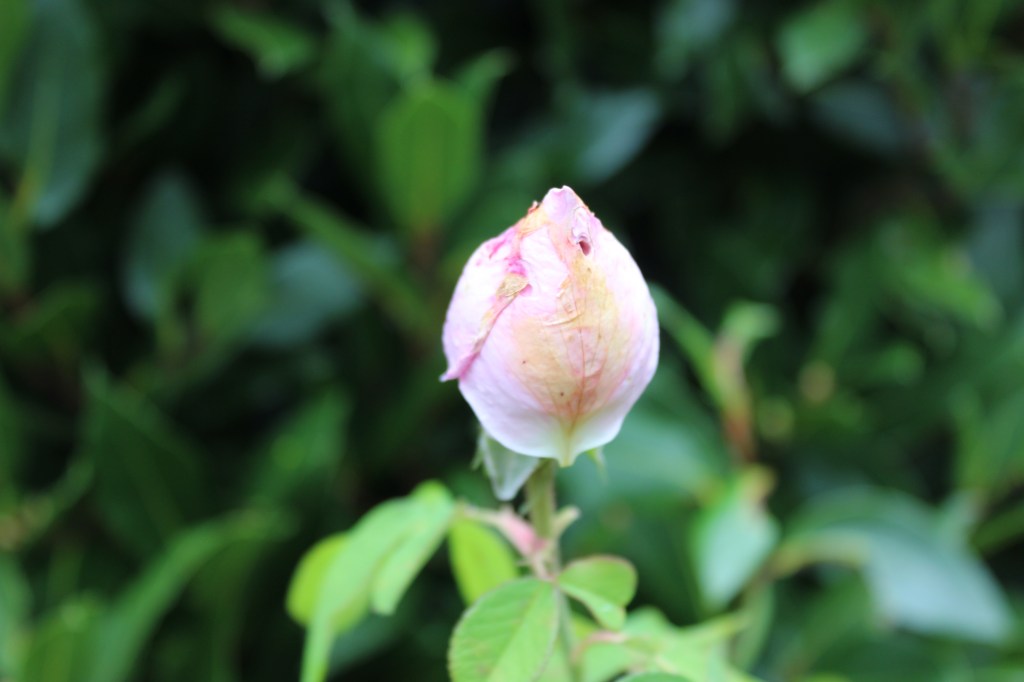
IMG_0988This next in a series of poems drawn from the story of Exodus circles again around the mystery of the burning bush.  Like all these poems, it draws on my meditations on the Hebrew scripture held in one hand, and an awareness of our current situation in the other.  I am exploring what this ancient story may have to tell us at this critical and bewildering time.

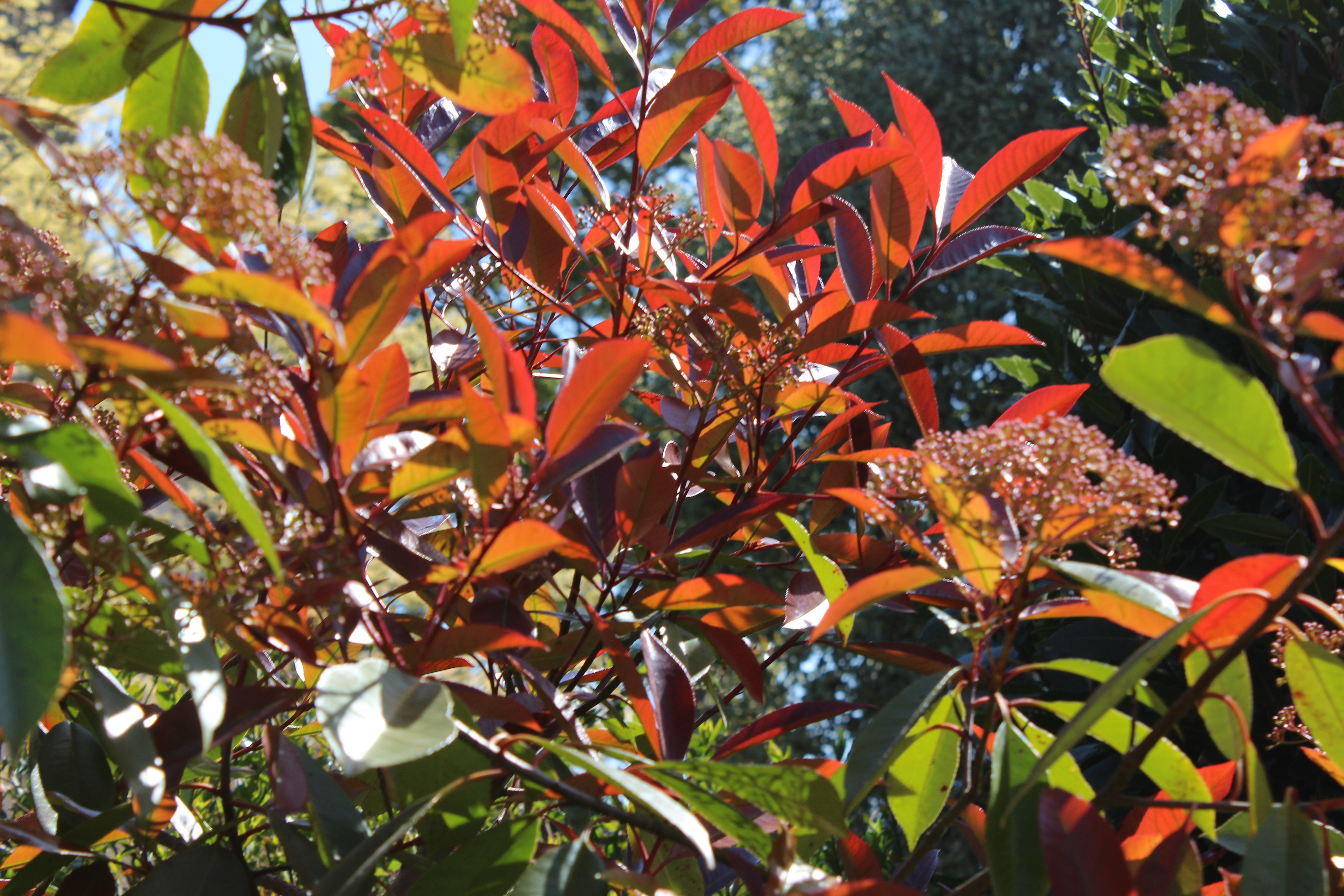
This poem takes the delightful idea that maybe there are burning bushes all around us, and moves us to a consideration of what the voice from the burning bush said to Moses, and what that may mean for us if we are on the look out for revelation, and hope, as we go about our daily business. It follows on from Holy ground, barefoot – an earlier poem in the series.

This poem touches on an episode from the gospels, where Jesus is revealed in brightness on a mountain in the presence of Moses, and Elijah.  The two stories are deeply connected. You can read about the Transfiguration here, if you would like to. It is the time of year when some churches celebrate the Festival of the Transfiguration, and my link will lead you to a beautiful blog from the Iona Community, “This new light”.

If you would like to read the story of the burning bush, you can do so in my earlier post, here. If you do, you will also find some fragments of writing by others which helped inspire this meditation.

IMG_0985

On fire, but not burned  Exodus poems 5

Do angels speak
from every bush?
Whispering in the
rustle of leaves,
perhaps,
the low hum of insects –
or louder, clearer,
more insistent.
Was that holy fire
for one place,
one purpose,
or might it
happen –
could it happen –
everywhere?

The bush on the hill
of Horeb was aflame,
we read of it –
worth turning aside
from the work of tending
sheep, or finding water,
turning aside to see.

But I glimpse, too, a deeper
Transfiguration,
unveiling,
peeling back an ordinary
moment to reveal
depth, and warmth,
brightness,
and truth.

I catch a glimpse,
a hope, of
each living thing
with a heart of life-fire,
not of burning,
not of perishing,
but of God-fire growing,
giving, sustaining, all.

Maybe, angels still speak,
louder, clearer,
telling us
to take off our shoes,
for the very earth is holy.

Telling us
of a God who has talked
with our ancestors,
those who walk behind us
speaking old wisdom
we tend to forget.

But most of all
these living flames
speak of affliction,
they spark forth
in suffering,
roused by
the pain of all things,
of a suffering people,
they call to the work of
deliverance

through
the body of one
who will listen to
this voice,
who will turn aside
to gaze on
holy flames.

Poem: Moses and the Burning Bush – Exodus Poems 4

I have continued to turn the Exodus story over in my mind, as one that may help us as we think about the multiple, colliding crises we face. I am finding it illuminating, as we consider how we might move out from the situation we find ourselves in, to the possibility of a more hopeful future. These meditations are forming the basis of a series of poems. If you would like to read the stories, you can do here.

You might like to read the other poems so far, and you can find the links here.

Poem: Pharaoh’s daughter, and the child. Exodus poems 1

Poem: God saw – and God knew. Exodus poems 2

Poem: Holy Ground, barefoot. Exodus poems

In this latest poem, I wonder what it must have been like for Moses, who started out so full of hope and promise, who so wanted to defend his people, to right wrongs, that he responded force against force, and killed a slavemaster. In fear, he ran, ran away from all he had known, he built a new life away from Egypt. Did he remember his brothers and sisters, did he despair of this system of oppression that he had been unable to change? It must have seemed so powerful, so resistant, too cruel to those he loved to even hope for freedom.

I wrote about Moses, and this encounter with God, in my book, Jesus said, I am – finding life in the everyday. You can read a little more about that, and some extracts, here, if it interests you.

WP_20171015_17_37_36_Pro

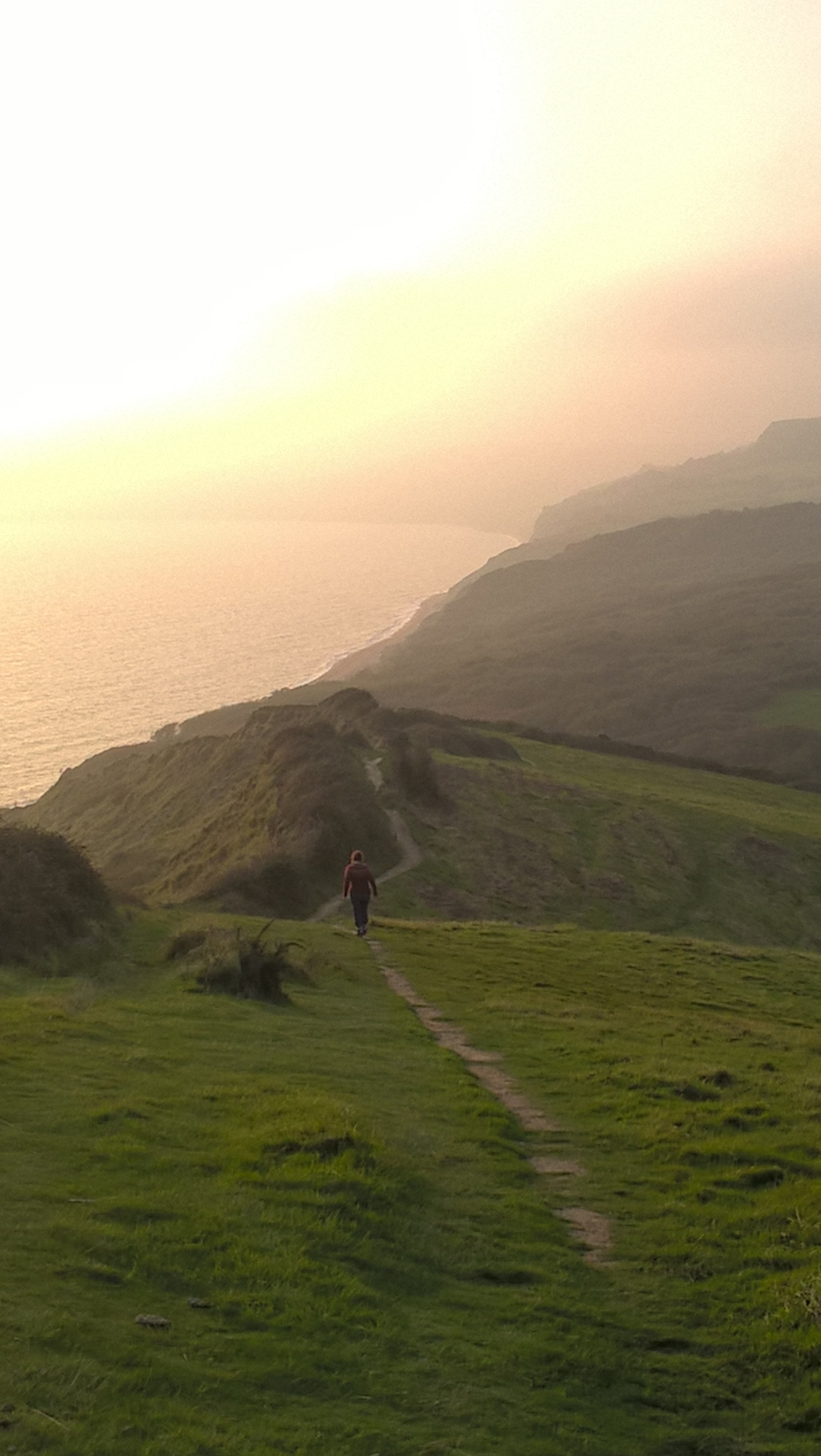
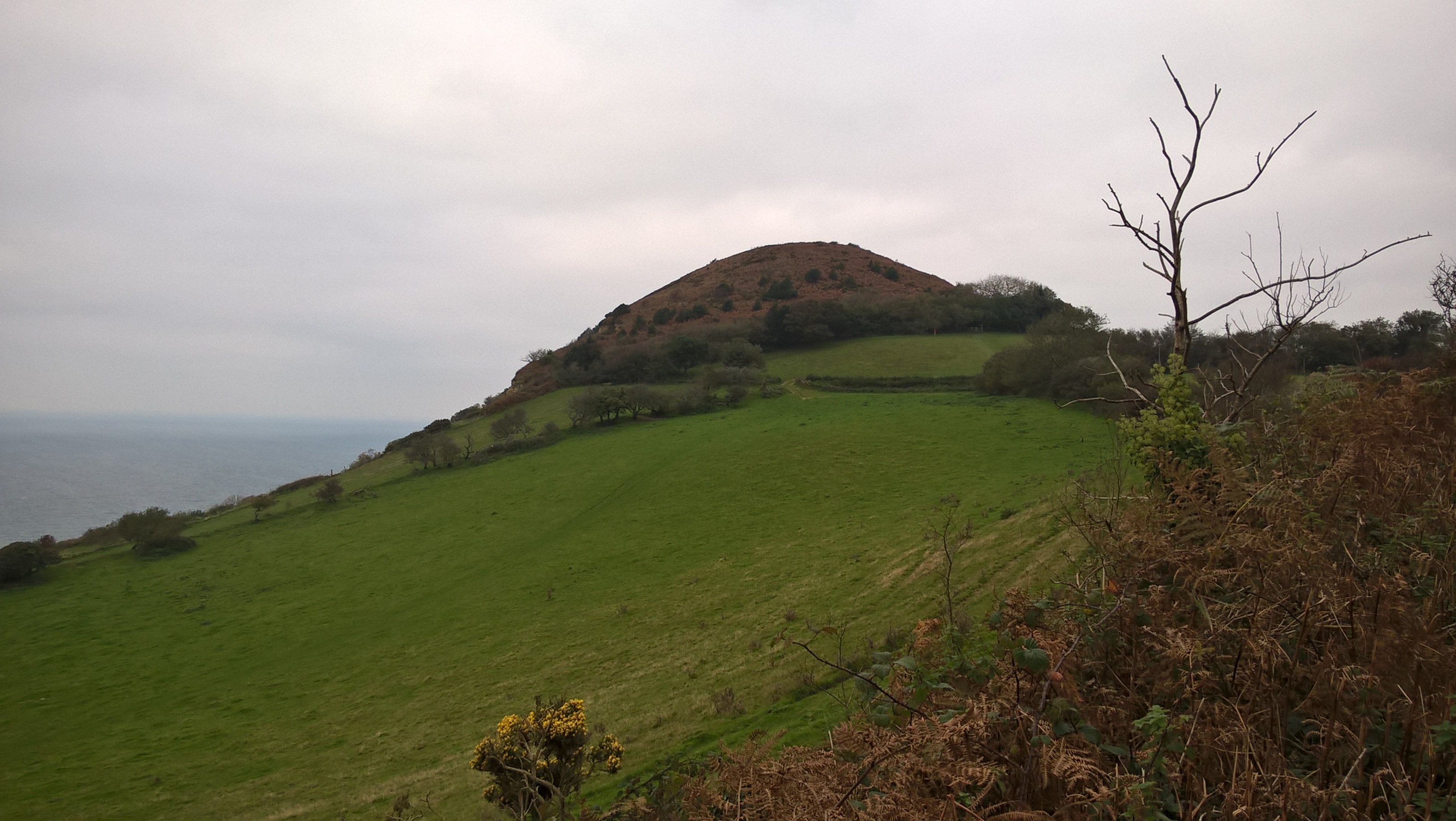
Walking down from Golden Cap, in the sunset dust of Storm Ophelia

What do we do, when it seems we’ve lost our chance to work for a more beautiful world? What do we do, when it all seems too fixed, too permanent ant, too big and powerful for us to make a difference?

Maybe we can see things differently, maybe our eyes can be opened to deeper truths, as the old ones crumble before us, and something new – something that was always there – begins to emerge.

WP_20171015_11_32_06_Pro

Moses and the Burning Bush

You stood on that dry mountain,
eyes narrowed against wind
and sand, scanning
the bright horizon,
looking for threat, or grazing
for those sheep.

Were you content to be a shepherd
now, Prince of Egypt?
Were you reconciled to this life
smaller than your dreams?
Did you think it was all too late,
too late to do anything
to help your brothers,
to help your sisters,
the slaves,
to reclaim your people?

Shepherd, with the bleating
of the flock about you,
did you dream still,
under the strong sun,
of what-could-or-should-have-been?
Did a new world seem impossible?
Or were you breathing
in this moment,
with the dust smell,
and the sheep smell,
and the plants thick with resin?

It was no dream,
what happened next,
no could-or-should-have-been,
that burning bush –
crackling, smoke smell,
burning, but not consumed.

In that moment you took
off your shoes, and learned a
name for God that is no name,
I am what I am.
I will be what I will be.

In a moment,
your reality peeled open,
revealing fire within,
the truth within,
giving you back
the discomfort of hope,
giving you back
your people,
and your way.

Poem: Holy Ground, barefoot. Exodus poems 3

img_0356

Cockle spit near the Chapel of St Peter-on-the-Wall, Essex

We come to the third poem I’ve written drawing on the early chapters of Exodus, the Bible’s second book.

I was drawn to write from this foundational story as it begins at a mighty civilisation’s turning point – a time of divided peoples, of injustice, inequality, and exploitation.  The world we are in right now seems to be at a turning poin, where things cannot go on as they are.  I’ve been seeing echoes, and warnings, and hope, in this story from long ago.

For this poem, I have continued the theme of God saw, and God knew from the previous poem which you can read here.  I have progressed the story to when Moses stood before the burning bush, and took off his sandals, for the ground is holy.

You can read more from the Exodus text here.

Some things struck me in addition to the themes I’ve explored before.  The first is, the matter of holy places and temples.  For those of us who have a practice of corporate worship, most gather in a set-aside space.  Not all – there are many gatherings in homes and coffee shops and dance studios and woods where people, together, are open to the divine.  Now, we cannot gather, and our relationship with these places is changed, as well as our relationship with our worshiping communities.  Although I know, as the poem explores, that God has no need of temples, I find that maybe I do.  I include two photos here from the ancient chapel of St Peter-on-the-wall, founded in the seventh century.  And the wall of its name, the wall it is on, is Roman, so its history is very long. There is real peace in that space.  I find my spirit soothed by such places.  And I am also finding, as the poems on this blog show, that I connect deeply with the divine in nature, too.  I am increasingly barefoot, on holy ground.  This seems a very deep and helpful truth, especially now.  It gives me hope.

A little tentatively, I have been thinking about gods and idols as I’ve been reading Exodus, and wondering what our equivalents might be. As I’ve been mulling over our economy, the systems that drive our lives that seem bigger and more powerful than any of us, I have reached for the ancient language of idol.  I have found the word Mammon comes to mind, and it says something significant for our times.  I’ve mentioned it briefly before, in my blog post on The company of bees. As a modern person, I’m aware I’m dipping my toes into something that may stir up ideas of superstition, and that I don’t really understand what these concepts of idol and god meant to those whose culture they belong to.  But I do know that now, as ever, there are forces bigger than us, which we don’t seem to control, in our daily lives.  We call them economics, or big corporations, or debt, or……. The ancient stories suggest they have feet of clay, and can fall.  They are human constructs, agreements and stories we hold in common about how the world works and what matters, they may feel immutable …. but they are not laws of physics, and we can, through collective effort, change them.

I wonder what that might look like in our current world, where these systems, or machines, or idols, seem to be demanding the sacrifice of life to their ends.  We can see this in some places with the response to coronavirus.  We can definitely see it in how we contine to destroy ecosystems and drive creatures to extinction.  Are these things really more important than life? Can we decide to do better?

Here, in this poem, I look at how the enslaved Hebrew people were forced to build temples to gods who didn’t hear them, or help them.  I wonder how many people, in today’s economies, might feel they are doing something similar, as they are made to serve the demands for more, and faster, and cheaper.

This poem, though, only touches on these things.  It turns to something more hopeful, a promise of the deep reality of the glory of God in all things,  and carries echoes Isaiah 11, and our deep hope – of the dream of God, of the kingdom we pray will come. It circles back to the beginning, to considering a holy place, where we are safe, and heard. Even when there are no places of worship available to us, these things are true.

We can be grounded in the earth, in the depth of our connection to God, and to all. God is not confined by our structures. God is encountered where we take off our shoes, and see.

img_0367

Inside the chapel (660-662 AD), looking out.

Holy Ground, barefoot.   Exodus poems 3

This people had no temple,
no worship-place.
This people built temples
for others,
for gods they dreaded,
rising in terrible power
over them, having
no regard for
their misery.

They prayed under
the weight of their burdens.
They cried out in
the unprayer of pain,
and God, having no need
of temples, heard,
as God always hears.
And God, leaning to the
brokenhearted, saw,
as God always sees.

For the very earth is holy.
The ground under our feet.
Take off your shoes and feel it,
feel the dry-ground-powder
and the sharp stones,
the infinite tiny beings
that call the earth home.
Take off your shoes.
Know you are part of
all this, part of the
the glory that fills
all things, as the waters
fill the seas.
You will be heard,
wherever you are.
You can listen,
wherever you are.
You are home.

Poem: God saw – and God knew. Exodus poems 2

img_0212

River Deben

This is the second poem I’ve written on these themes, drawing from the Exodus account of the life of Moses.  It carries with it many of the things that struck me as I was writing the first, Pharaoh’s daughter, and the child.  I have been thinking about how one group of people can be pitted against another, in fear, in believed superiority, and how, in this story, small acts of love and compassion begin the unravelling of this separation, and injustice. In particular, I have been turning over in my mind the idea that the unjust law of the Egyptians – all the Hebrew baby boys should be thrown into the River Nile – is so evil that it carries within it the necessity and means of its own overturn.  That this ark of rushes holding the baby Moses is one of the seemingly small means that begin the overthrow of an unjust system is fitting.

Once again, there are echos of the Gospel stories that tell of the beginning of Jesus’ life.  Tbe improbability, the vulnerability of a baby, cradled in less than ideal circumstances – a basket in a river, a manger in a stable – being so vital to the outworking of God’s love, challenges us in to how we think change for good might be accomplished.  Here, the urgency and reckless hope of a mother’s love, meets the compassion of a princess, and undermines an economic and political system which was cruel, and seemingly all-powerful. May we remember this, as we work for a more beautiful world.

My last post retells the story, and gives you links to the Bible passages.

But for this poem, what struck me was a few small verses at the end of Chapter 2.

During those many days the king of Egypt died, and the people of Israel groaned because of their slavery and cried out for help…. God saw the people of Israel – and God knew.

Once again, this story of emnity between groups of people, of inequality and injustice, carries warning and hope for our current situation.

What happens to any of us happens to all of us.
What might shift if we thought that was so?

wp_20161113_16_45_08_pro

Moon over the marshes at Walberswick.


God saw – and God knew   Exodus poems 2
During these many days,
the king of Egypt died –
that man who thought
himself a god, having
a god’s power of life
and death –
and God saw, and God knew.

Those living between walls
of cool marble,
dressed in linen,
making offerings to the gods,
those who floated down the Nile
while others laboured –
They thought, being rich,
being mighty, they had
the ear of God.
And God saw, and God knew.

During these many days,
those oppressed cried out –
those forced to labour,
those whose race was
feared, then despised.
They cried out,
and did they dare hope
that God saw, and God knew?

God saw and listened long.
Endlessly.  Through
many days, through
incessant lamenting,
God saw, and God knew.

So, I stand and ask, why?
why so long, those many days?
And will not soothe
myself with “perfect timing”,
or “plan”.  Under the
slavemasters’ whip,
such words sting.
And yet, God saw,
and God knew.

I lower my gaze.
Caught in the reeds,
there is a dark basket,
black as pitch,
that desperate hopeless hope,
that boychild cast by his mother
into the Nile, a loving reversal
of a cruel law –

and within that law’s dark heart –
an ark of reeds and pitch
woven tight of love –
with fists curled,
was one who would
overturn that cruelty.
A tiny child.
crying, hungry,
and alone.
And God saw,
and God knew.

Poem: Pharaoh’s daughter, and the child. Exodus poems 1

img_0212

The banks of the Deben, high tide

As I was coming to the end of writing the Lockdown Poems, a couple of things were tugging at my attention.  One was the thought of doing a series of poems on the I Am sayings, revisiting some of the prose and prayer from my book.  The other was the huge sweep of the cry for justice that is circling the world – the cry for racial, environmental, and economic justice.  One of the things the coronavirus crisis has done has been, as we’ve said before, to reveal painful things – to draw back the veil and show aspects of society that many of us have been fortunate enough to be able to overlook.

As I was looking at the origins of the I Am sayings – Moses’ experience with the burning bush – I was deeply struck by the relevance of the Exodus story  to our current world situation.  I would encourage you to read Exodus Chapters 1-3 to start with, if you can, and see what strikes you.  Many things opened up for me, and I intend to explore them imaginatively and prayerfully, inhabiting the story, and asking for wisdom. I hope I’ll return to the I Ams again, but for now, these matters seem too pressing to ignore.

We can see how the story of Exodus progresses.  It begins with forgetfulness.  Forgetfulness of the way Joseph, ex-slave, ex-prisoner, had saved the country from famine with his vision and good management, forgetfulness of how we are all interconnected, and bring gifts to our situation.  The Egyptians forgot, and were afraid.  Their enslavement of the Hebrew people is told as an act of weakness, not strength.  How that fear led to justifying the terrible law for the slaughter of baby boys – a story echoed in the Gospel here, where the baby boys of Bethlehem were killed, and Jesus’ family escaped to Egypt.  At the time of Exodus this was the known world’s richest and most powerful empire, and the process of unravelling that power and wealth seems to be begun within that unjust law. So contrary to all that is good and right in human relations was it, that it carried the seeds of its own undoing. And maybe that sheltering of the infant Jesus was, knowingly or unknowingly done, a kind of restitution.

In this story of Exodus, I’m powerfully struck how the action of one young woman changed nations. Her compassion was the point of turning. That is not to say that we measure our small acts of kindness by their global impact, or only do them if we feel there will be some kind of payback, but that this story reveals the hidden power of compassion, and can offer encouragement to us to not think better of our moments of better feeling, but to act on them – to reach out and help, offer what we can.  What those feelings and acts accomplish is, in many ways, not our business. We can offer them, release them, and what happens happens.  If we praying people, we can simply offer them to God, with no thought of future benefipayback. They can cease to be our own. Of course, we can try to be mindful of unintened negative consequences, but we seek to act from love and goodness independent of outcome for ourselves. For Pharoah’s daughter, if she survived to the time of the plagues and freedom for the slaves, this mercy to Moses may not have seemed such a good act after all.

The other thing which struck me forcibly was the fact that she acted from a place of safety, and privilege.   She did something that would have brought swift punishment if someone else had done it.  She seems to have used her safety almost without thought of the consequences, to help this one child.  We don’t know any surrounding information – what her attitude to her father’s law was before, or after.  All we know is this one thing about her. This one act.  Maybe it can encourage us to listen to one another, in different circumstances, to speak of our difficulties when we experience them, and to speak and act for others when they cannot do so for themselves.
And here is another thing our current crisis has revealed – deep wells of compassion and community, the capacity of people to act to help and support people they know, and don’t know.  The veil drawn back has shown us good, too. There is hope in this deeper reality.

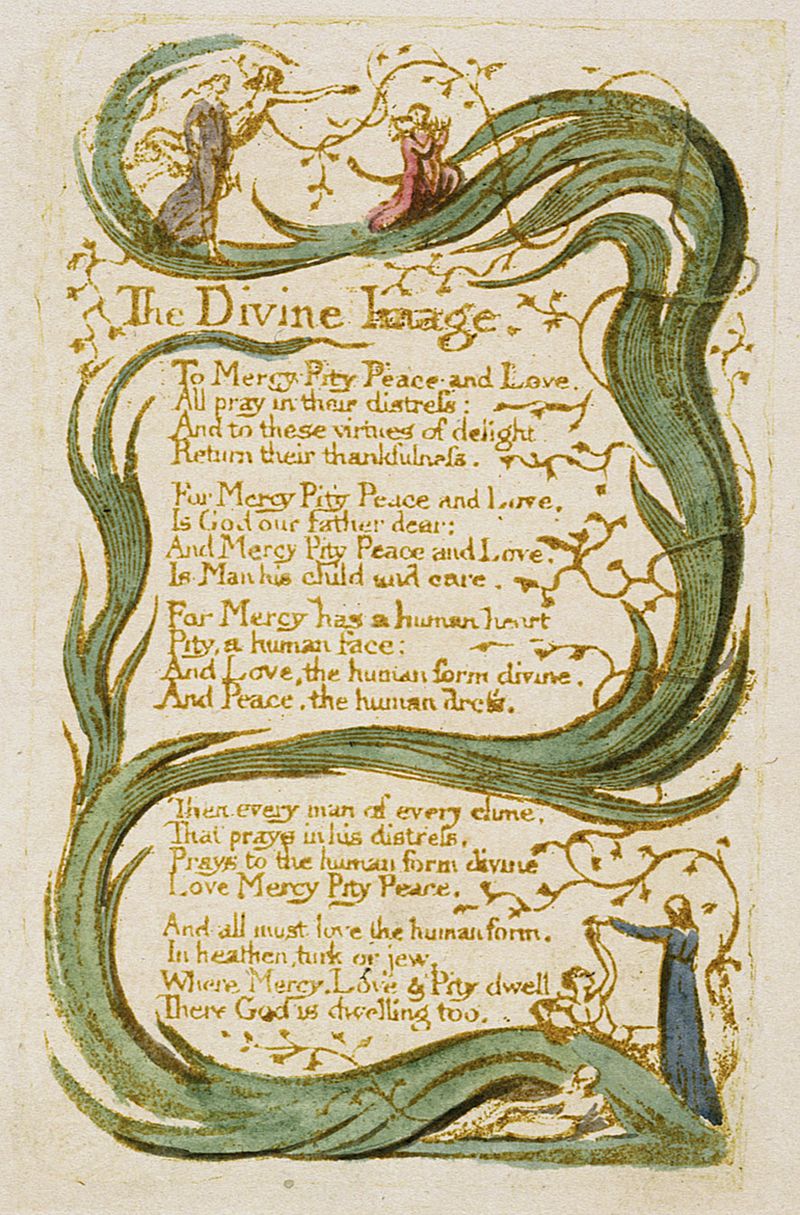
The ending of this poem carries an echo of William Blake’s The Divine Image, which is incredibly apt for our current situation. It was published in 1789, and carries its message of equality in language of the time.  It’s a powerful read.

Songs_of_Innocence_copy_G_object_12_The_Divine_Image

There are major shifts happening in the world right now, and I am attempting to listen, to keep my mind open, to pray, and to understand, and to act.

AA037808

Taken from Exodus Chapter 2

Pharaoh’s Daughter, and the child.  Exodus poems 1

You named him Moses,
drew him out of
that small ark,
a precious cargo.
Out of the Nile-reeds,
where crocodiles wait,
out of the flood and the snakes
and the hum of mosquitoes,
out of the sentence of death
your father had passed.
In that moment, your heart responded,
the moment when you heard him cry
hungry, closed in the dark
and the silence
of his pitch-black basket,
in a moment, you reached out your hand,
and touched – not a slave-child,
but simply a hungry one, alone.

From your place, at your father’s side,
standing in his love for you,
you saved one small life
from his fearful stony heart’s rage,
from the might of law and empire.

Marvellous princess, you did more.
You paid a slavewoman wages,
you acted with justice and mercy,
you saw a child, and not an enemy.

And so you are remembered,
you are thanked by generations
yet unborn
For an act of kinship with one
from a feared race,
as golden Nile-waters
swirled and eddied and
rippled outwards, outwards
from the place where you stood,
shining in the light of dawn.
Mercy bore, in you,
the beauty of a human face.

Poem for Pentecost, and some readings

Sharing again some readings, prayers and a poem, for Pentecost.

I gave a variation of this reading for  St Edmundsbury’s service, Catching the Fire.  You can watch the whole thing here.

andreaskevington's avatarAndrea Skevington

candles_flame_in_the_wind-other

Wind and fire – two of the ways people have tried to describe the Spirit.

As we approach Pentecost Sunday, I am sharing with you some readings and a poem.  Please feel free to use them if they help you, saying where they are from.

Firstly, a reading from my book The Bible Retold

From the fields it came: the first sheaf of barley cut for that year’s harvest.  It was carried high through streets crammed with visitors, and on to the Temple. And then the priest offered it to God, giving thanks for the good land, and for the gift of harvest. For that day was the celebration of the first fruits.  It was Pentecost.

Meanwhile, the disciples were all together, waiting.  Then, suddenly, it began.  It stared with sound – a sound like the wind – but this was no gentle harvest breeze.  This was a shaking and…

View original post 588 more words

Poem: Two Trees – Lockdown poems 5

IMG_0982

The next poem that came from this Lockdown is a little different from the others at first glance.  Once again, it was emerged on the page, and has had minimal tweeks.  I was intrigued to find it there.  Its subject is the trees in the Garden of Eden, and it asks tentative questions about human nature, and the human experience, which they raise for me.  I have wondered before why the fruit of the tree of knowledge of good and evil was prohibited, when so many religious systems seem very preoccupied with such knowlege.  I have wondered too how Jesus’ warnings against judging help us understand that, and balanced those warnings with the image of knowing a tree by its fruit, as he advises us to do.

I find it helps to allow the images – of trees, and fruit – to grow in our minds, and see what kind of shoots emerge. This is not a theological exploration, but a poetic instinct. Here,  I have been asking questions of myself, in a kind of uncertain echo of a chatechism, and allowed the questions to be there, partially or inadequately answered.  What if there is a choice, moment by moment – the fruit of the knowlege of good and evil, the fruit of life?  Might that have something to say to us as we seek to choose life, again and again?  Can we say yes to life, moment by moment, even in these moments?

IMG_0970

I don’t have two trees growing in the centre of my garden, but I do have this tree, whose early morning shadow delights me.  I hope you can make it out. The early light was tricky.  I thought I’d offer it to you to see if it might help give another image to add to the trees in this poem – a growing tree and its shadow.


Two trees – lockdown 5

Two trees grow in the midst of the garden; the tree of life and the tree of the knowledge of good and evil.   paraphrase from Genesis 2:9

What if we stand
in the middle of the garden,
choosing the wrong tree,
moment by moment,
again and again?
There they both grow –
tall, beautiful,
pleasing to the eye,
laden with fruit.

And we are drawn to one,
not the other, at least at first.
Wanting power to say things are
this, or that, the illusion of
control, wanting to judge,
wanting to be right.

Do we need to lay all that
hollow fruit aside in order
to eat from the tree of life?
I think so, yes,
Maybe empty-handed is better.

And what if we had made
a different choice
from the beginning?
Chosen that other tree,
unprohibited,
free.
What indeed!
And yet we did not,
and ever since, we have
hungered for its fruit.

And can we choose differently
now, each day, each moment?
I think so, yes, I think that we can
set down the fruit that
sours and spoils,
and choose life
again, and again,
and again.

Holy Week at home – Some readings, poems, and Good Friday resources here on my blog.

Featured Image -- 5823
As we approach Easter, many people take time to focus on the journey Jesus makes towards the cross.  Our usual practices at this time are those of meeting together, and remembering together.  We can’t do that this year.  Instead, as we stay inside, for love of each other, we will have to do things differently.

Perhaps we can focus on an inner journey, something quieter, more contemplative.  As we do so, we may find, as many have before, that we get to a place of deeper connection, more grounded truth, fuller love.  We may find new meaning in Jesus’ teaching and example, of letting things fall away, of finding himself alone, of allowing.

In case it helps, I’ve gathered together some of the blog posts here that you might find help.  I will add to it as more things occur to me, and as I write and update more.

Please feel free to use any of the resources you find helpful, and to share them, saying where they are from.
A little explanation about  Easter Retold

The Retold thread of my blog gives you sections from my book, “The Bible Story Retold in Twelve Chapters”, and “Prayers and Verses” that sits alongside it.  You can get hold of these through the internet, and maybe your local bookshop if they take orders for delivery.  It’s good for all ages, and is used in family services and care homes.

The House at Bethany, the Raising of Lazarus

Many spend time with this Gospel story in Holy Week.  It’s a story that means a great deal to me.  You can find some links below.

Sunday Retold – Lazarus raised from the dead

Here you will find the readings, and some things to ponder, as well as one of my Mary at your feet poem.  If you would like to focus on the poetry, you could go here:

The ‘Mary, at your feet’ poems – Two

The ‘Mary, at your feet’ poems – Three
This last also contains a contemplative prayer/writing exercise.

There are readings, things to do, things to reflect on, in the I Am series which draws on another of my books.

Jesus said, I Am – for Lent. Chapter 5, the Resurrection and the Life

mary-anoints-the-feet-of-jesus-by-frank-wesley

Artist – Frank Wesley


Other Holy Week stories – You can find these in Chapter 11 of my retelling – both editions:  The Bible Story Retold, and The Lion Classic Bible, which share the same text.  The second of these has lovely illustrations by Sophie Williamson.

Prayers and Verses also has a section in Chapter 11 called The Road to Good Friday, which you might find useful.

Maundy Thursday – The Last Supper, Jesus washes their feet.

Retold –
Retold: Maundy Thursday

Poem- Poem: Jesus washes Judas’ feet.

We also find two of the great I Am sayings in this narrative:
Jesus said, I Am – for Lent. Chapter 6 – I am the way, the truth and the life.

Jesus said, I Am – For Lent. Chapter 7, Vine

Later in the evening, when Jesus is arrested, there is a further I Am moment:

Lent: Jesus said I Am …… Holy Week, I am he – Jesus betrayed

Jesus Washing Feet 11

Jesus Washing the Feet of his Disciples, 1898 (oil and grisaille on paper) by Edelfelt, Albert Gustaf Aristides (1854-1905) chalk and grisaille on paper 58×47 © Nationalmuseum, Stockholm, Sweden Finnish, out of copyright

Good Friday

Retold: Good Friday Retold

Now, we come to the new poems I’ve written for Good Friday – based on the seven sentences Jesus spoke from the cross. I’ve put them together with some readings, music, and art, to give you a Good Friday Meditation.  I’ve recorded the readings and poems, and they should appear on YouTube, on Good Friday, under my name.  I’ll post the links here when that happens

The poems themselves: Poems – Seven Sentences from the Cross

The meditations: A Good Friday Meditation – including 7 new poems

And I’ll add the YouTube material here.

Francisco_de_Zurbarán_Angus Dei

Angus Dei  Francisco de Zurbaran


Easter Sunday

A simple retelling: Retold: Easter Day!

If you are following in my books of Bible retellings and prayers, Chapter 12 moves us into New Life.

img_0786

Thank you for joining me.  I hope you find these things help.
Keep safe and well.
Bless you.

A Good Friday Meditation – including 7 new poems

Welcome to this Good Friday Meditation.  This year, I had been invited to lead a meditation for a group of local churches, and was hoping to be able to put together something a little like what we have below.  Instead, we will be following this meditation online, on Good Friday afternoon, and I believe others will be joining in.

I am posting it early in case you might like to join in too.  As we cannot meet together this year, you might want to find a time when you can go through the meditation, perhaps with others.  I have  put together a very simple structure: a reading from the gospel story, one of my poems based on Jesus’ words from the cross, and a response from Psalm 22.

To that I have added music suggestions, with links to YouTube.  The music reflects a variety of styles, so please feel free to go with what you like.  If you find YouTube sends you a lot of ads, do remember the “skip Ad” box, bottom right, and the mute button!  If YouTube is distracting, you can go through without music, or find something else from another source.  The music is to help lead us into prayer, contemplation, worship, so whatever helps you do those things.  I anticipate the whole thing taking about an hour, depending how we go with the music.  Of course, you can always leave music playing in a tab while reading the next section of words.

I intend to try to put something very simple, without music, on YouTube.  If it all works, it’ll be available on YouTube on Good Friday, and I’ll post the link here.  It will be 20 minutes long.  You can pause it between each section, after the Psalm 22 response, and use the music and pictures here to help you.

Here is the YouTube link

If you’d like to see the poems all in one place, without the framework, you can find those here.

If you would like to use, or share, any of my material, please feel free to do so, saying where it is from.

I hope that’s explained things!


Now, as we prepare for our Good Friday meditation, let us focus our minds on Jesus, who loves us, and suffered for us.  May we have a deeper appreciation of that love and suffering this year.  May we, despite being apart, become more aware how deeply we are loved, and connected together.

elizabeth frink

Elizabeth Frink, Chapel of the Transfiguration, St Edmundsbury Cathedral.


First sentence
Reading (from Matthew 27 27-37 and Luke 23 33-34) 
Then the governor’s soldiers took Jesus into the Praetorium and gathered the whole company of soldiers around him.  They stripped him and put a scarlet robe on him, and then twisted together a crown of thorns and set it on his head. They put a staff in his right hand and knelt in front of him and mocked him. “Hail, king of the Jews!” they said. They spat on him, and took the staff and struck him on the head again and again. After they had mocked him, they took off the robe and put his own clothes on him. Then they led him away to crucify him. As they were going out, they met a man from Cyrene, named Simon, and they forced him to carry the cross. They came to a place called Golgotha (which means The Place of the Skull). There they offered Jesus wine to drink, mixed with gall; but after tasting it, he refused to drink it. When they had crucified him, they divided up his clothes by casting lots. Above his head they placed the written charge against him: THIS IS JESUS, THE KING OF THE JEWS. Two criminals were crucified with him, one on his right and one on his left. Jesus said, “Father, forgive them, for they do not know what they are doing.”

Father forgive them, for they know not what they do

We don’t know what we do,
from the careless word that
starts a fire of anger,
to the careless killing
of a butterfly  –
who knows what
wide effects,
what winds and rains,
begin and end with just one death?

We walk in darkness, so often,
and so often, we close our eyes,
we do not wish to know.
And Jesus, seeing this,
that his life would end
with angry shouts,
with fearful washing of hands,
with indifferent playing of dice,
Knowing all this, even so, he bore
our lawful unthinking violence,
our blundering disregard for consequences.
Another would pay for our actions.

Yet as the ripple of our acts flows out,
through the world, who knows where,
so too, now, flows forgiveness,
following on, spreading and transforming,
watering dry ground, lifting burdens
and carrying them away.


Response from Psalm 22: v3-5

Yet you are holy,
dwelling in the praises of Israel.
In you our fathers trusted;
they trusted, and you delivered them.
To you they cried, and were rescued;
in you they trusted and were not put to shame
.

Music:  Salt of the Sound  Lamb of God (and Your Ways) both – 6 mins 28
https://www.youtube.com/watch?v=p_5fsX8TEp4
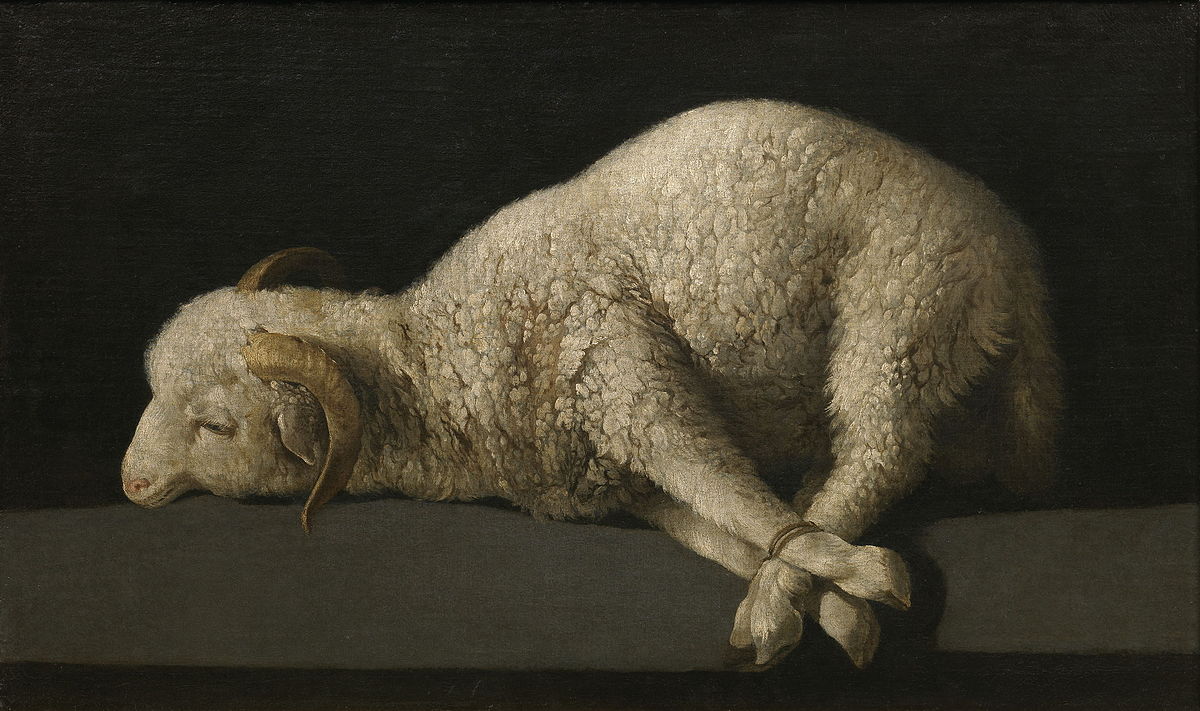
Francisco_de_Zurbarán_Angus Dei

Angus Dei  Francisco de Zurbaran

Second sentence
Reading (from Luke 23 39-43)
One of the criminals who hung there hurled insults at him: “Aren’t you the Christ? Save yourself and us!” But the other criminal rebuked him. “Don’t you fear God,” he said, “since you are under the same sentence? We are punished justly, for we are getting what our deeds deserve. But this man has done nothing wrong.” Then he said, “Jesus, remember me when you come into your kingdom”.  Jesus answered him, “I tell you the truth, today you will be with me in paradise.


Truly I say to you today you will be with me in paradise

Even as he hung upon the cross,
even with blood from that false crown
running down, not wiped away,
he saw the two men at his side,

One joined in mocking with the
priests and soldiers,
speaking from his pain,
and one did not, this second kept
his eyes on something else – a hope.

A hope the one he looked on was a king,
and of a kingdom where such things
as crosses are not lifted up,
a hope, even, of an end to death and pain –
this pain, this death.

And, ah, his king begins to speak,
of paradise.
What a world to gift him dying there.
A word of such sweetness, freedom, peace.
See  – clear water flowing, and flowers,
hear the sound of birds, the lazy
buzz of insects, the flutter of their wings.

What a word, at your end, to hold to,
to capture our beginning, once again.
But even more than this,
to be with him, beside the king,
seen and known,
held in the loving gaze of one who
hung up on the cross.
Might this, even this, be paradise?


Response from Psalm 22:v 27-28

All the ends of the earth shall remember
and turn to the Lord,
and all the families of the nations
shall worship before you.
For kingship belongs to the Lord.


Music: Gabriel Faure  in Paradisum from Requiem 3 mins 50 https://www.youtube.com/watch?v=rvYt-QA9vT0

IMG_0495

What do you think of, when you think of paradise?

Third sentence
Reading (from John 19 25-27)
Near the cross of Jesus stood his mother, his mother’s sister, Mary the wife of Clopas, and Mary Magdalene. When Jesus saw his mother there, and the disciple whom he loved standing nearby, he said to his mother, “Dear woman, here is your son,” and to the disciple, “Son, here is your mother.” From that time on, this disciple took her into his home.


Woman, behold your son. Son, behold your mother

And still he sees, looks down
towards the one who bore him, bearing this,
the pain – not her own pain – worse,
the pain of watching one you love
twisting on those wooden beams,
the nails piercing her own flesh too.

The time has come when all the
treasure of her heart is broken open,
scattered, lying in the dirt.
What use to hold in mind
the words of angels,
the wealthy gifts brought by the wise,
what preparation Simeon’s warning,
when now she sees his agony with her eyes.
But she is not alone, his friend sees too.
John, who writes it down,
bears witness, even here, even so.
They turn their gaze upon each other
and see each other with new eyes –
a mother, and a son.
Gifting them each other –
his one last act of love,
this giving, from an empty cup.
This task of care can be ours too,
to behold each other in our pain,
and in our sorrow, walk each other home


Response from Psalm 22: v 9-11

Yet you are he who took me from the womb;
you made me trust you at my mother’s breasts.
On you was I cast from my birth,
and from my mother’s womb you have been my God.
Be not far from me,
for trouble is near,
and there is none to help.


Music:  Salt of the Sound – I’ll meet you where you are/Home to you  3 mins 31  https://www.youtube.com/watch?v=kFlXL3cgI6Q
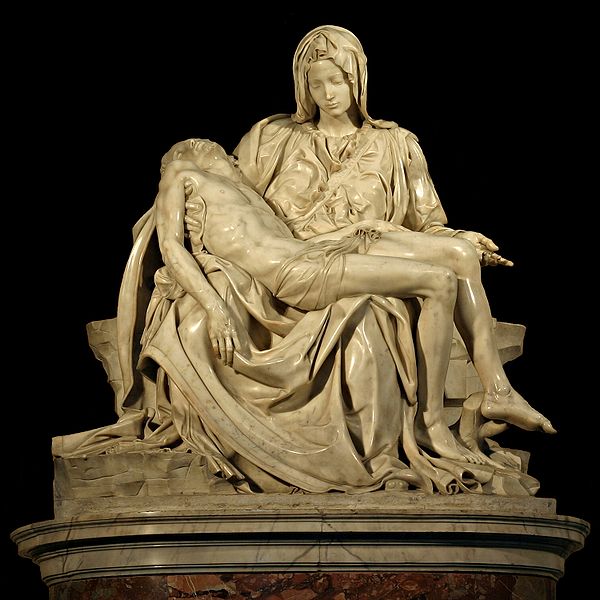
600px-Michelangelo's_Pieta_5450_cut_out_black

Pieta Michelangelo


Fourth sentence
Reading (from Matthew 27 45-46)
From the sixth hour until the ninth hour darkness came over all the land. About the ninth hour Jesus cried out in a loud voice, “Eloi, Eloi, lama sabachthani?”–which means, “My God, my God, why have you forsaken me?

My God, My God, why have you forsaken me?

You felt your generous heart forsaken,
you felt the absence of the one who helps,
who was beside you, in the beginning,
who knew you from before first light.

We know too well the sparseness
of your isolation, without light,
and companionless,
in the darkness of our own long night.
And yet, within our dark, we find you there,
Find you have waited for us long days, and years,
while our poor eyes have
grown accustomed to the dark,
have learned at last to see you through our tears.
So as you know our pain and feel it,
you break our separation with your own.
Help us see the forsaken all around us,
invisible and in darkness, but seen by you.
May we seek each other in the dark,
May we have courage to cry out,
like you, and so be found.


Response from Psalm 22: v11, 14

Be not far from me,
for trouble is near,
and there is none to help.

I am poured out like water,
and all my bones are out of joint,
my heart is like wax
it is melted within my breast

Music: Casting Crowns  Praise you in this storm 5 mins 3
https://www.youtube.com/watch?v=0YUGwUgBvTU

down_the_well_by_trilogy20-d3azhyz-701x336

Fifth sentence
Reading (from John 19 28)
Knowing that all was now completed, and so that the Scripture would be fulfilled, Jesus said, “I thirst.”

I thirst

The well is deep, and you have nothing to draw with.
Where now that living water?
Where is that spring within you, gushing up
to fullness of life?
Do you remember, now,
the woman by the well?
Your deepening talk of thirst and water,
as now, again, you humbly ask another for a drink –
this time,
a sponge of sour wine?

Do you remember too, as the taste dries on your lips,
that wedding feast, where water changed to finest wine?
The richness and fullness of that beginning
soured to this cold bitterness.

You are our source, the spring of all our rivers
and still you thirst like us, need help to drink.
And so give us this grace,
that as we do for the least of these,
we may know we do for you.

May we see you
in each thirsty face.

Response from Psalm 22: v 15

My strength is dried up like a potsherd
and my tongue sticks to my jaws
you lay me in the dust of death


Music: Taise  O Lord hear my Prayer  7 mins 43
https://www.youtube.com/watch?v=LKyU5BIlxc0

IMG_0592

Sixth sentence
Reading (John 19 29-30)
A  jar of wine vinegar was there, so they soaked a sponge in it, put the sponge on a stalk of the hyssop plant, and lifted it to Jesus’ lips.  When he had received the drink, Jesus said, “It is finished.”

It is finished.

All things come to an end.
Even pain like this,
Even the anger and the cruelty of a crowd,
of us all,
even the certainty of those so certain
of God they hang a man upon a tree.
Even the punishment and scapegoating
even violence,
even death.

The work is done.
It has all been borne.
You have poured out your love, your life.
You have carried our sorrows, suffered
under our iniquities.

Your head bowed now, you sink
into the final pain of nails,
your body bears no more,
having borne all.
The work is done.

Response from Psalm 22: v 24

For he has not despised or abhorred
the affliction of the afflicted.
and he has not hidden his face from him
but has heard, when he cried to him.

Music:  Ola Gjeilo  Ubi Caritas 3 mins 30
https://www.youtube.com/watch?v=Xp3IHBSyZKY

stars in the wood


Seventh sentence
Reading (from Luke 23 44-49)
It was now about noon, and darkness came over the whole land until three in the afternoon, while the sun’s light failed; and  the curtain of the temple was torn in two. Jesus called out with a loud voice, “Father, into your hands I commit my spirit.”


Father, into thy hands I commit my spirit

There is darkness now, deep darkness,
over the face of the deep,
and no hovering like a brooding bird,
instead, the temple curtain torn in two,
from top to bottom,
and the Holy of Holies empty.

God is not found there,
but here, with this dying man
on a tree,
He calls out father, and talks of hands,
and we remember what his own hands have done,
how many were healed by their touch,
raised up and restored from cruelty and death,
and now, he too will be held in loving hands,
a reconciliation beyond our grasp,
a trust even at this moment of last breath.

Dying, he taught us to die,
dying he brought us life.
May we be reconciled, may we know
at our end, the comfort of those hands.

Response from Psalm 22: v 26

The afflicted shall eat and be satisfied
those who seek him shall praise the Lord
May your hearts live for ever.

Music:  John Tavener Svyati (trans O Holy One)  12 minutes 35
https://www.youtube.com/watch?v=yssF24v5iBs

Or a traditional hymn, such as When I survey the wondrous cross.
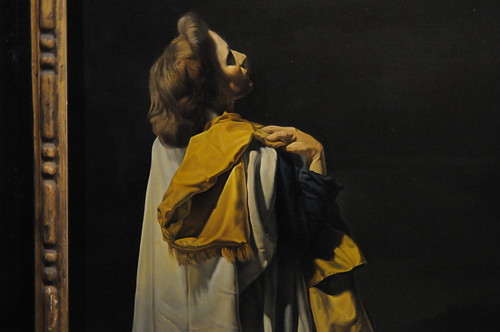
 

salvador dali crucifixion

Detail from – Crucifixion (Corpus Hypercubus) Salvador Dalí 1954
The Metropolitan Museum of Art

AA037808

Held


Poems – Seven Sentences from the Cross

This year, I had the privilege to be invited to lead a Good Friday meditation for a local group of churches, and began to work on a series of poems to share.

Of course, we can’t now gather together, we can’t share in the way we hoped. As the situation globally has become more serious, more confined, darker, those sentences that Jesus spoke from the cross began to take on more meaning for me.  I felt I could get a little closer to a contemplation of Jesus’ love and suffering, and see it in a new light, or even a new darkness.  These poems, emerging from that contemplation, helped me as I wrote them.  I hope they will help you in reading them, too.   Here then is the fruit of days working in the house.  I thought it might be good to have them all together, quite simply, like this.

In another post, I’ll share with you those poems as part of a structure including music and art, which you might like to use for your own meditations on Good Friday, or to share with others.  I reckon it might take about an hour to work through them, with all the readings.  I will post the link here.

I will try to learn how to make a short YouTube recording of them for Good Friday.  That will follow a simple pattern of Gospel reading, poem, response from a psalm. It will take 20 minutes.  I hope, all being well, it will be released on YouTube on Good Friday.  I’ll post a link here when it does.
And this is the link.
If you would like to share these poems, or use them in some other way, you are welcome to do so.  Please say where people can find them.


elizabeth frink

Elizabeth Frink, Chapel of the Transfiguration, St Edmundsbury Cathedral


1

Father forgive them, for they know not what they do

We don’t know what we do,
from the careless word that
starts a fire of anger,
to the careless killing
of a butterfly  –
who knows what
wide effects,
what winds and rains,
begin and end with just one death?

We walk in darkness, so often,
and so often, we close our eyes,
we do not wish to know.
And Jesus, seeing this,
that his life would end
with angry shouts,
with fearful washing of hands,
with indifferent playing of dice,
Knowing all this, even so, he bore
our lawful unthinking violence,
our blundering disregard for consequences.
Another would pay for our actions.

Yet as the ripple of our acts flows out,
through the world, who knows where,
so too, now, flows forgiveness,
following on, spreading and transforming,
watering dry ground, lifting burdens
and carrying them away.


2

Truly I say to you today you will be with me in paradise

Even as he hung upon the cross,
even with blood from that false crown
running down, not wiped away,
he saw the two men at his side,

One joined in mocking with the
priests and soldiers,
speaking from his pain,
and one did not, this second kept
his eyes on something else – a hope.

A hope the one he looked on was a king,
and of a kingdom where such things
as crosses are not lifted up,
a hope, even, of an end to death and pain –
this pain, this death.

And, ah, his king begins to speak,
of paradise.
What a world to gift him dying there.
A word of such sweetness, freedom, peace.
See  – clear water flowing, and flowers,
hear the sound of birds, the lazy
buzz of insects, the flutter of their wings.

What a word, at your end, to hold to,
to capture our beginning, once again.
But even more than this,
to be with him, beside the king,
seen and known,
held in the loving gaze of one who
hung up on the cross.
Might this, even this, be paradise?


3

Woman, behold your son. Son, behold your mother

And still he sees, looks down
towards the one who bore him, bearing this,
the pain – not her own pain – worse,
the pain of watching one you love
twisting on those wooden beams,
the nails piercing her own flesh too.

The time has come when all the
treasure of her heart is broken open,
scattered, lying in the dirt.
What use to hold in mind
the words of angels,
the wealthy gifts brought by the wise,
what preparation Simeon’s warning,
when now she sees his agony with her eyes.
But she is not alone, his friend sees too.
John, who writes it down,
bears witness, even here, even so.
They turn their gaze upon each other
and see each other with new eyes –
a mother, and a son.
Gifting them each other –
his one last act of love,
this giving, from an empty cup.
This task of care can be ours too,
to behold each other in our pain,
and in our sorrow, walk each other home


4

My God, My God, why have you forsaken me?

You felt your generous heart forsaken,
you felt the absence of the one who helps,
who was beside you, in the beginning,
who knew you from before first light.

We know too well the sparseness
of your isolation, without light,
and companionless,
in the darkness of our own long night.
And yet, within our dark, we find you there,
Find you have waited for us long days, and years,
while our poor eyes have
grown accustomed to the dark,
have learned at last to see you through our tears.
So as you know our pain and feel it,
you break our separation with your own.
Help us see the forsaken all around us,
invisible and in darkness, but seen by you.
May we seek each other in the dark,
May we have courage to cry out,
like you, and so be found.


5

I thirst

The well is deep, and you have nothing to draw with.
Where now that living water?
Where is that spring within you, gushing up
to fullness of life?
Do you remember, now,
the woman by the well?
Your deepening talk of thirst and water,
as now, again, you humbly ask another for a drink –
this time,
a sponge of sour wine?

Do you remember too, as the taste dries on your lips,
that wedding feast, where water changed to finest wine?
The richness and fullness of that beginning
soured to this cold bitterness.

You are our source, the spring of all our rivers
and still you thirst like us, need help to drink.
And so give us this grace,
that as we do for the least of these,
we may know we do for you.

May we see you
in each thirsty face.

6

It is finished.

All things come to an end.
Even pain like this,
Even the anger and the cruelty of a crowd,
of us all,
even the certainty of those so certain
of God they hang a man upon a tree.
Even the punishment and scapegoating
even violence,
even death.
The work is done.
It has all been borne.
You have poured out your love, your life.
You have carried our sorrows, suffered
under our iniquities.

Your head bowed now, you sink
into the final pain of nails,
your body bears no more,
having borne all.
The work is done.


7

Father, into thy hands I commit my spirit

There is darkness now, deep darkness,
over the face of the deep,
and no hovering like a brooding bird,
instead, the temple curtain torn in two,
from top to bottom,
and the Holy of Holies empty.

God is not found there,
but here, with this dying man
on a tree,
He calls out father, and talks of hands,
and we remember what his own hands have done,
how many were healed by their touch,
raised up and restored from cruelty and death,
and now, he too will be held in loving hands,
a reconciliation beyond our grasp,
a trust even at this moment of last breath.

Dying, he taught us to die,
dying he brought us life.
May we be reconciled, may we know
at our end, the comfort of those hands.

img_0630

The church at Selworthy Green, looking toward Exmoor


These poems owe an enormous debt to many sources.  If you are familiar with the Bible, you may find many resonances, and in some cases quotes.  I haven’t referenced these, in order to keep the flow.
However,  there is one reference I would like to acknowledge here:  in “My God, my God, why have you forsaken me?” I directly quote from R S Thomas’ beautiful poem The Other. 

It is a poem about prayer, and seems very apt to read here.